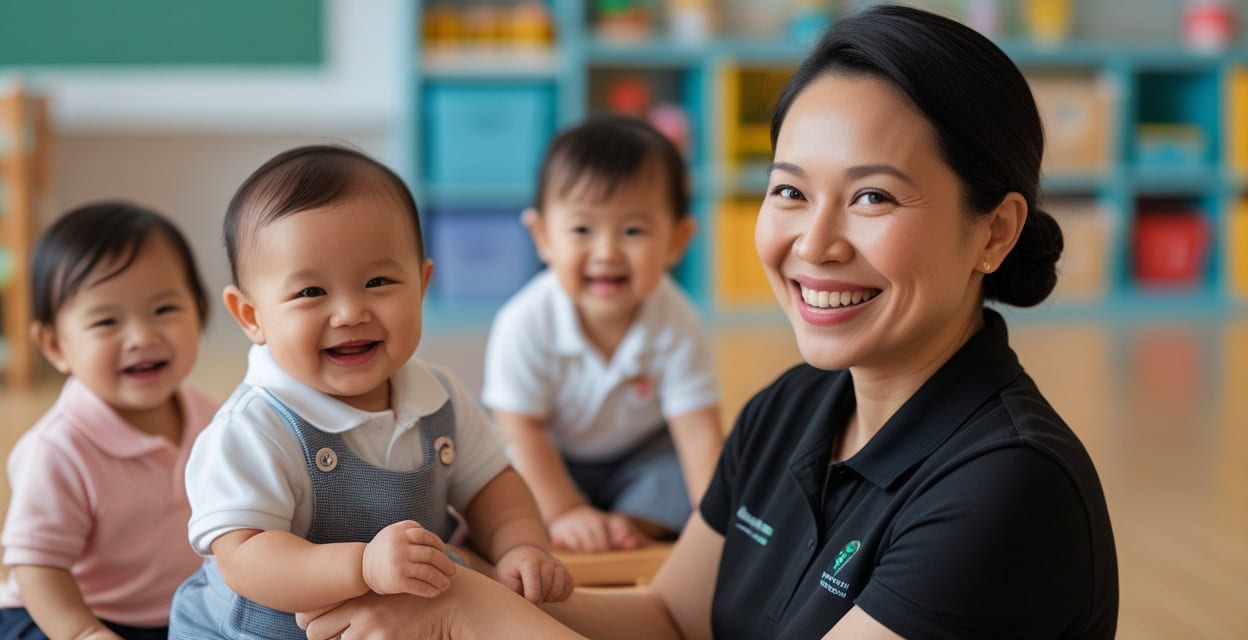
EduNanny by BUTLER Turning the First Thousand Days into a Civic Infrastructure for Safe Joyful Infancy in Singapore

EduNanny by BUTLER: A Relational, Modern Approach to Infant Care in Singapore
EduNanny by BUTLER is a Singapore-born childminding movement that reframes the first years not as a waiting room for school but as the engine room of human potential. Built for a fast-paced city-state, EduNanny blends centre-based spaces, home-based care, and distance-enabled updates to meet families where life unfolds. We operate Monday through Friday, 7am to 7pm, islandwide, with a simple, rigorous promise: professional, attachment-informed care that is safe, affordable, and accessible. From $33 per day, payable with CDA or Baby Bonus where eligible, we bring high-quality care near your life and near your work—without compromise on dignity or human connection.
This article expands on EduNanny’s core philosophy, offers practical guidance for parents and caregivers, and shares actionable insights drawn from our approach to early childhood care and development. Whether you are a parent, a caregiver, or a policy partner, you’ll find concrete steps, sample routines, and questions to ask that help translate our vision into daily practice.
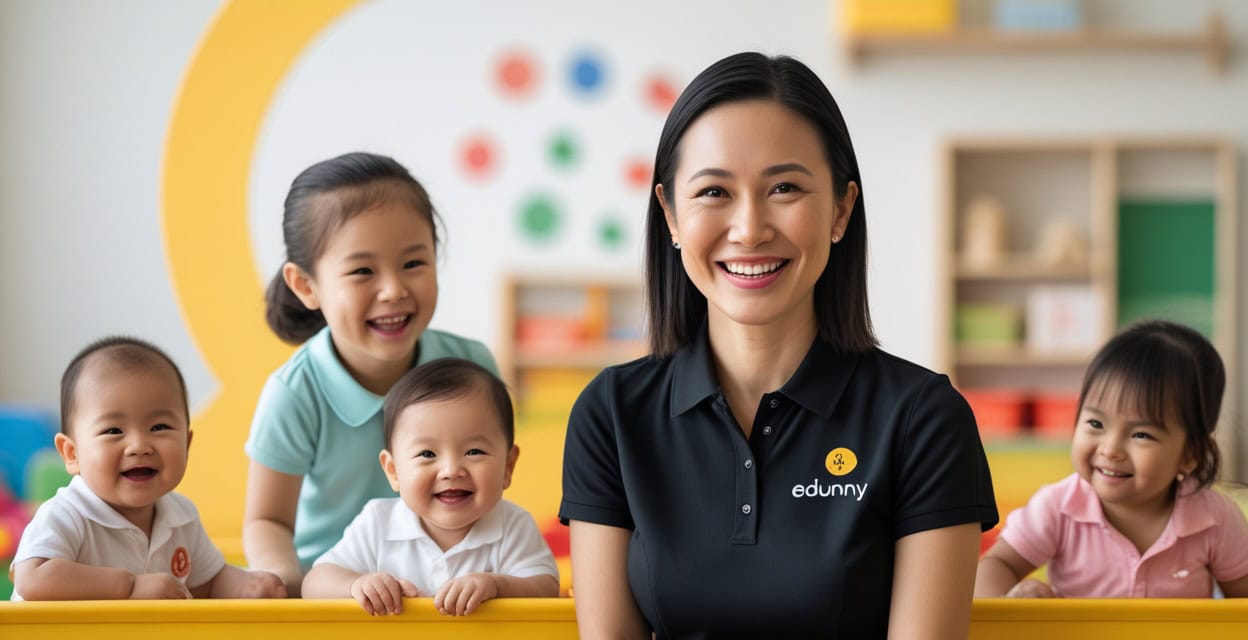
Five Anchors of EduNanny Practice
Our practice rests on five interlocking themes that guide every room, routine, and interaction: pedagogy, safety, development, happiness, and the public purpose of childminding. Each anchor informs the others, creating a coherent, humane framework for infant care.
Theme One: Pedagogy — Knee-to-Eye, Hand-to-Heart
EduNanny’s pedagogy centers the child’s horizon—meeting babies where they are, not where we wish them to be. We kneel to meet gaze, steady our hands to co-regulate, and hold a practical map of learning that grows with each child’s temperament.
Practical applications for parents and caregivers include:
- Ground, Gaze, Guide: Create a calm, predictable learning space. Begin with a five-minute window of exploration, then invite discovery with just enough support to spark curiosity without blocking initiative.
- The Pocket Curriculum: Use tiny, purposeful invitations—soft objects for mouthing, low mirrors for self-awareness, safe ramps for creeping—to translate developmental science into brief, repeatable experiences.
- Shared Language: Name feelings and actions clearly to bridge body and mind. Phrases like “You’re stretching to reach the rattle; that shows effort” help map emotion to action.
Inspiration for our approach draws from Montessori, Piaget, Vygotsky, and Bowlby—integrating respect for independence with evidence about how young minds grow. The result is a day that feels simple yet deeply educational—nurturing executive function, language, and secure attachment through everyday moments.
Actionable tip for families: request a sample week of micro-activities (5-minute engagements) designed for your child’s current interests. Track which activities spark longer attention or joyful vocalizations and discuss adjustments with caregivers weekly.
Theme Two: Safety — Eight Proof Points, Every Day
Safety at EduNanny is a culture—designed, drilled, and documented. It’s not a checklist; it’s a living practice that frees the mind for learning and exploration.
Our eight proof points:
- Trusted People: Rigorous background checks, current first-aid and infant CPR certification, and continuous supervision under a clear code of ethics.
- Right Ratio: 1:3 at all times—safety as bandwidth before it is equipment.
- Safe Sleep: ABCs of infant sleep—Alone, on their Back, in a bare Cot; frequent checks and recorded rounds.
- Space Integrity: Five‑foot sweep before sessions; outlet covers, anchored furniture, no small parts hazards; soft corners and open sightlines.
- Health Protocols: Hand hygiene, sanitisation cadence, proper diapering and bottle handling, and illness exclusion aligned with families.
- Transparent Technology: Innovation CCTV with role-based access and privacy zones for diapering and feeding, plus audit trails for accountability.
- Incident Clarity: Immediate notification, documented reports, corrective action, and learning loops for the team and family.
- Practice Rehearsals: Evacuation drills, allergy-response simulations, and scenario-based training that turn policy into reflexes.
Practical guidance for families: ask to observe a safety walkthrough, request a copy of the incident reporting template, and review how privacy zones are configured during daily operations. The goal is to see safety principles enacted in routine moments—feeding, diapering, napping, and transitions between activities.
Theme Three: Development — The Response Field
During the first thousand days, the brain wires through safe, contingent exchanges. We call our approach the Response Field—a room and routine tuned to “serve and return.”
What it looks like in practice:
- Movement Before Mastery: Low platforms and soft obstacles expand motor maps; gross motor leads fine motor.
- Senses to Sense-Making: Natural light, gentle textures, and a calm human voice reduce overwhelm and invite focus.
- Listening for Language: Caregivers echo and extend infant sounds, seed vocabulary, and connect actions to meaning (e.g., “push,” “pull,” “open”).
- Co‑Regulation First: We match breath and tone to soothe; self-regulation grows from borrowed calm.
- Small Group Richness: With 1:3, attention rotates—one infant engaged, one observed, one comforted—so each child experiences meaningful presence in every cycle.
Progress is tracked gently: daily notes for families; periodic observations aligned to developmental touchpoints; invitations adjusted to align with each child’s burgeoning interests. We emphasize personalization without hype, turning science into ordinary grace.
Practical tip for parents: request a sample daily note and a short-term developmental plan for your child (e.g., “This week, we’ll introduce first words for common objects and expand independent exploration during playtime”). Review and adjust monthly with your caregiver.
Theme Four: Happiness — The Three R’s of Joy
Happiness for infants is not entertainment; it is the felt safety that enables curiosity and learning. EduNanny’s Three R’s provide a stable climate for growth:
- Rhythm: Predictable flow—arrivals, feeds, naps, play—so the body clock can trust the day.
- Relationship: Consistent caregivers who know each baby’s signals; secure exploration emerges from trusted bonds.
- Richness: Just-right challenges—novelty without noise, repetition without boredom—so mastery feels achievable.
Practical home application: create a simple daily rhythm at home with predictable mealtimes, nap windows, and a short, comforting routine at transitions (e.g., wash hands, read a tiny book, and sing a short goodbye). Track how consistent routines affect sleep quality and caregiver responsiveness.
Theme Five: The Public Purpose of Childminding
EduNanny recognises childminders as pedagogue and protector, neighbour and nation-builder. The Maximum Employment Mandate embedded in our model is not an HR strategy; it is a social compact. We train and certify local caregivers, create dignified jobs near where people live, and provide a clear progression in practice and pay.
This is what “public purpose” looks like in daily life:
- Families gain access to quality care close to home or work—centre-based or home-based—reducing stress and commuting time.
- Infants experience stable, attuned adults and low ratios that prime readiness for preschool and beyond.
- Communities strengthen through trust: familiar faces, transparent practice, and shared responsibility for the youngest among us.
What EduNanny Means for Singapore Families
EduNanny is designed to fit the rhythms of Singaporean life—efficient, reliable, and close at hand. Here is how it translates into practical decisions for families.
Choosing Between Centre-Based, Home-Based, or Distance-Enabled Care
Close-to-life caregiving with intimate ratios (1:3) and flexible rooms that mimic a home setting. Great for families seeking warmth, consistent attachment figures, and local neighborhood care.
Practical guidance: visit multiple sites, observe the caregiver–child interactions, request a sample daily log, and assess whether the environment feels calm, predictable, and attuned to your child’s temperament.
What to Observe During a Tour
- Attention to safety basics (1:3 ratio in practice, clear sightlines, safe sleep setups).
- Quality of caregiver–child interactions (kneeling to eye level, responsive labeling of emotions, turn-taking during play).
- Room design that supports exploration without overstimulation (soft textures, natural light, accessible materials).
- Privacy and data handling in the sightline of technology (where CCTV is placed, how footage is accessed).
- Communication protocols (how daily updates are delivered, how concerns are escalated).
Reading Daily Logs and Updates
- Look for evidence of serve-and-return cycles—how caregivers read cues, respond with action, and reflect back to the child.
- Note milestones and observations tied to daily routines (e.g., “vocabulary growth during play with household items”).
- Review safety notes and health protocols—any changes in illness exclusion or contact-revisit schedules.
- Use logs as a conversation starter with your childminder—set weekly goals and celebrate small gains together.
Questions to Ask a Care Team
- What training and certifications do caregivers possess, and how is ongoing professional development supported?
- How is the 1:3 ratio maintained during transitions or during staff breaks?
- What are the procedures for health, sleep, and diapering, and how are breaches handled?
- How is privacy maintained with CCTV, and what are the zones for sensitive moments?
- What pathways exist for caregiver career progression and fair compensation?
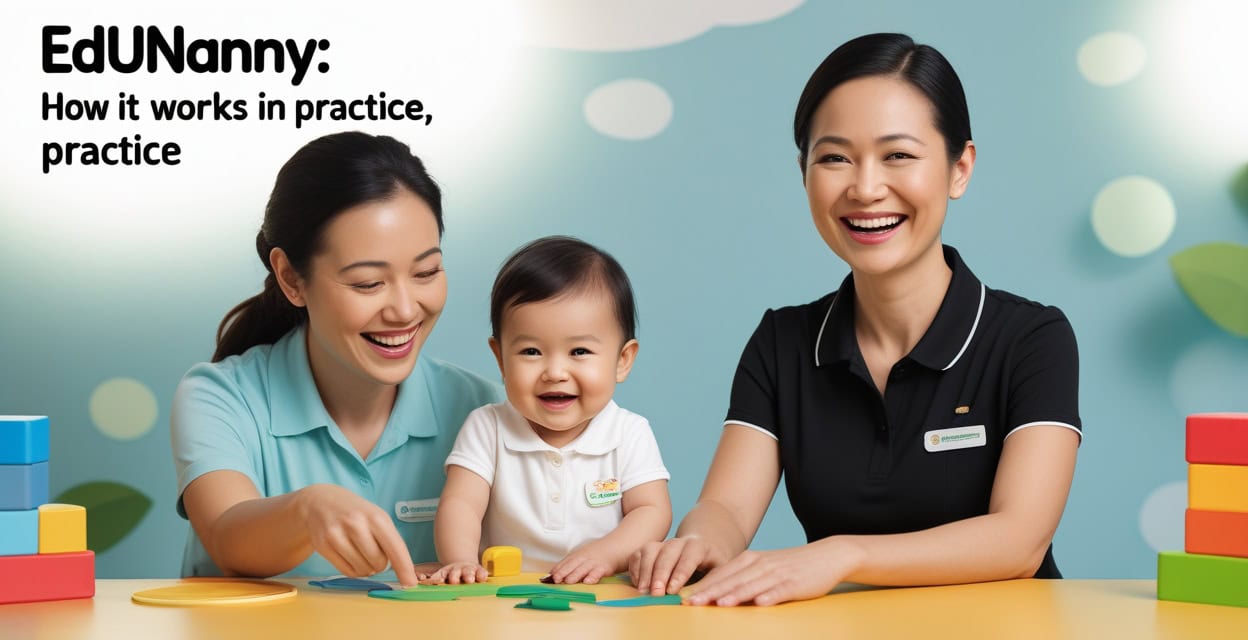
EduNanny: How It Works in Practice
EduNanny integrates excellence with accessibility, choice with accountability, and technology with humanity.
- Excellence and Quality: Modern layouts, robust training, and reflective supervision that keep standards high daily.
- Choice and Convenience: Home-based in community or home premises, centre-based in purpose-built spaces, plus distance supports to meet you where you are.
- Affordability with Accountability: Fees from $33/day, transparent pricing, CDA/Baby Bonus options where eligible.
- Availability Without Anxiety: Monday to Friday, 7am–7pm, islandwide—designed around real working hours.
- Technology that Serves People: Innovation CCTV, digital daily logs, and a secure parent app that informs without intruding; data used to improve practice, not replace judgment.
- Public-Spirited Governance: As part of the ECDA Childminding Pilot and a National Social Initiative, EduNanny is committed to learning, sharing, and lifting the sector together.

Who, What, When, Where, and How Childminding Matters
We frame childminding as a civic practice that benefits families, caregivers, employers, and the nation. Here is what that means in everyday life.
- Where: Near life—at home or in centres—so time and trust accumulate in places families already inhabit.
- How: Through a 1:3 promise, transparent practice, careful training, and rooms designed for calm exploration—supported by affordable fees, long service hours, and technology that connects rather than replaces human judgment.
Our Philosophy and Purpose, Plainly Stated
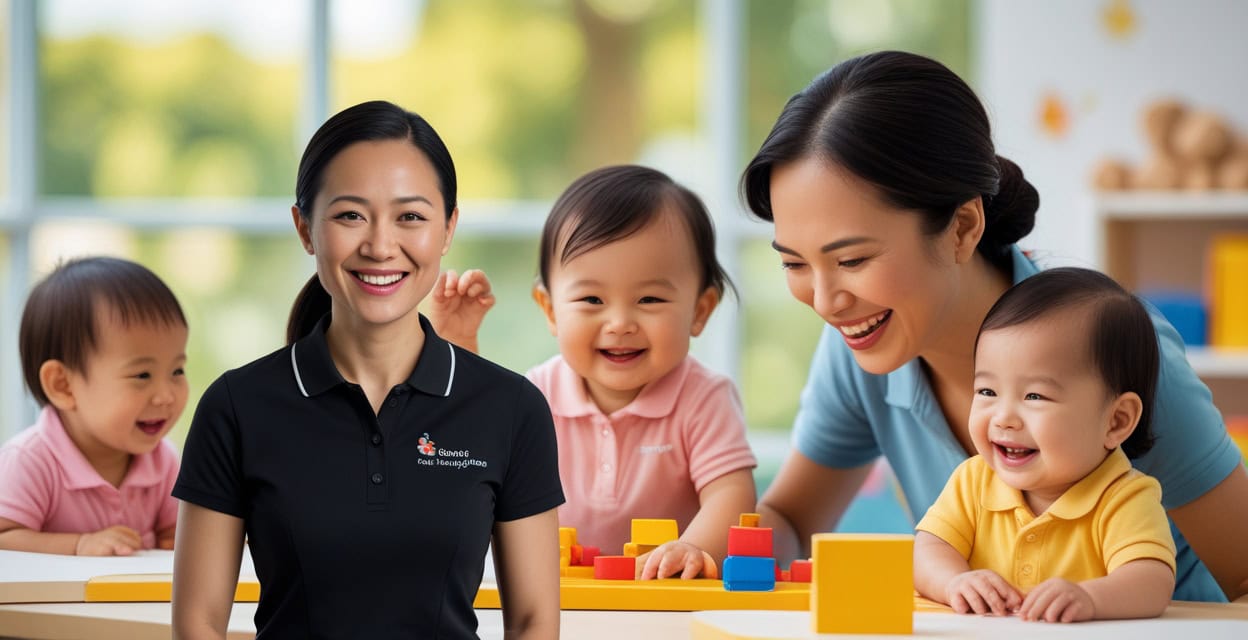
We speak plainly about what matters: infancy as a foundational human right to safety, recognition, and growth; learning that blends evidence with empathy; Singaporean life lived efficiently, reliably, and close at hand; sharing what we learn to raise the sector as a public good; and keeping costs low while maintaining high standards so quality care remains accessible, not aspirational.
To parents: you deserve a start to the day free of dread and a close of day free of guilt. To childminders: your work is brain-building, culture-shaping, and nation-strengthening; we honour it accordingly. To partners in policy and community: the returns on gentle beginnings compound for a lifetime.
Conclusion: A Call to Begin Well, Together
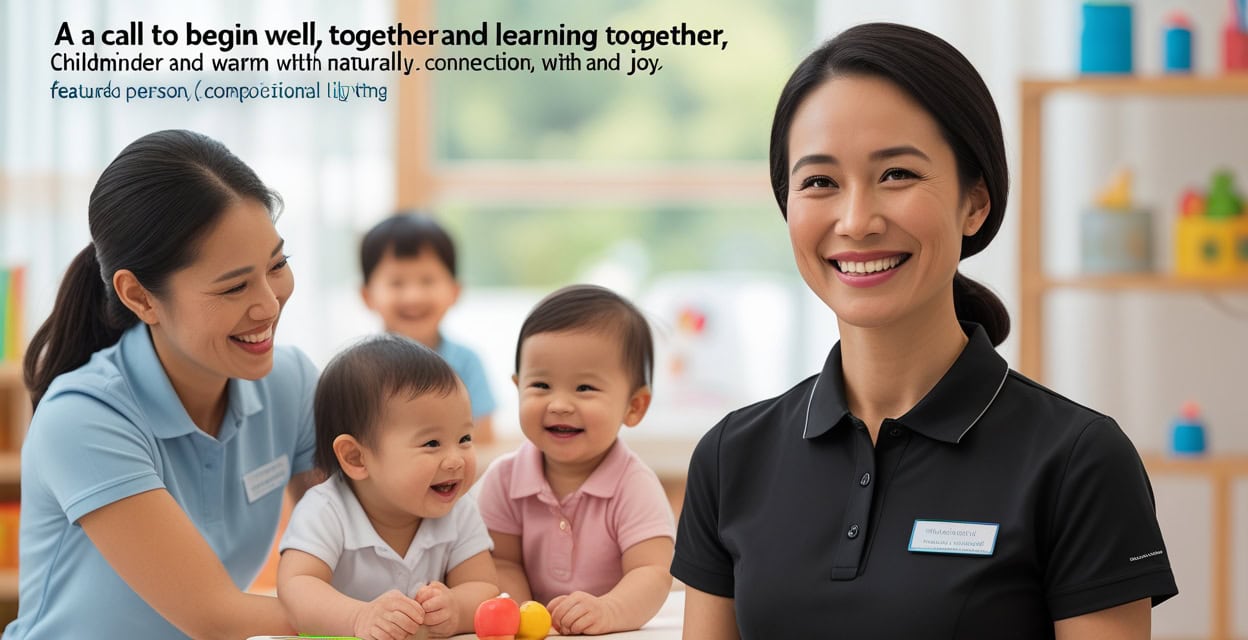
If you are a family seeking a calm, trustworthy start, visit EduNanny. Walk the rooms. Meet the childminders. See a caregiver kneel, wait, and smile as a baby takes the next tiny leap. If you are a neighbor who loves caring for little ones, train with us and make this your profession. If you are an employer or community leader, partner with us to make proximity care a practical reality for your people.
EduNanny by BUTLER stands ready: centre-based, home-based, and distance-enabled, Monday to Friday, 7am to 7pm, islandwide, with innovation CCTV, modern layouts, and an always-on 1:3 promise. Fees start from $33/day and may be payable via CDA/Baby Bonus where eligible. Learn more or enrol at EduNanny.com and Childminding.EduNanny.com.
In the quiet minutes between a cry and a calm, futures are formed. Let us make those minutes worthy of every child—and worthy of Singapore.
[#SingaporeChildminding, #OneToThreeRatio, #EarlyChildhoodDevelopment, #HomeBasedChildcareSingapore, #AffordableQualityCare]Ready to Experience Excellence?
Transform Your Family’s Journey
Discover Singapore’s leading infant care and childminding services. Expert guidance for your little one’s first thousand days.