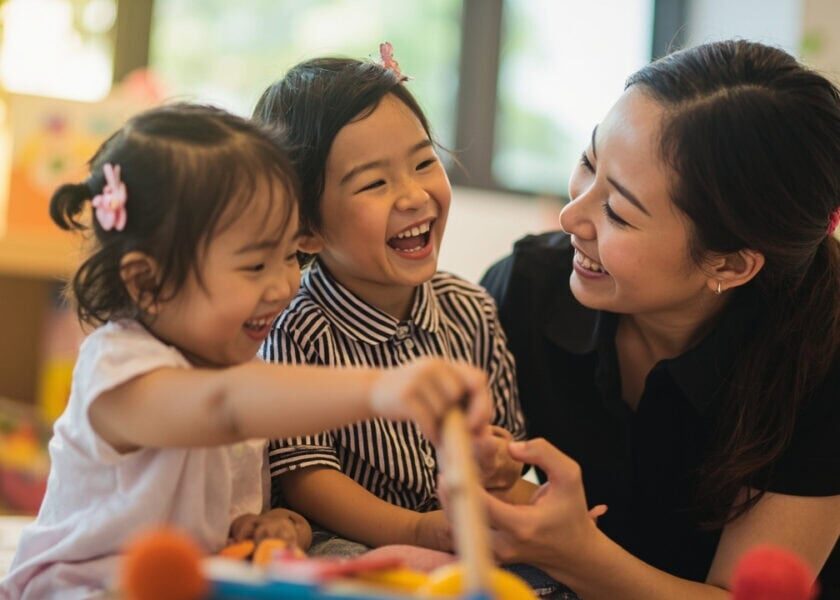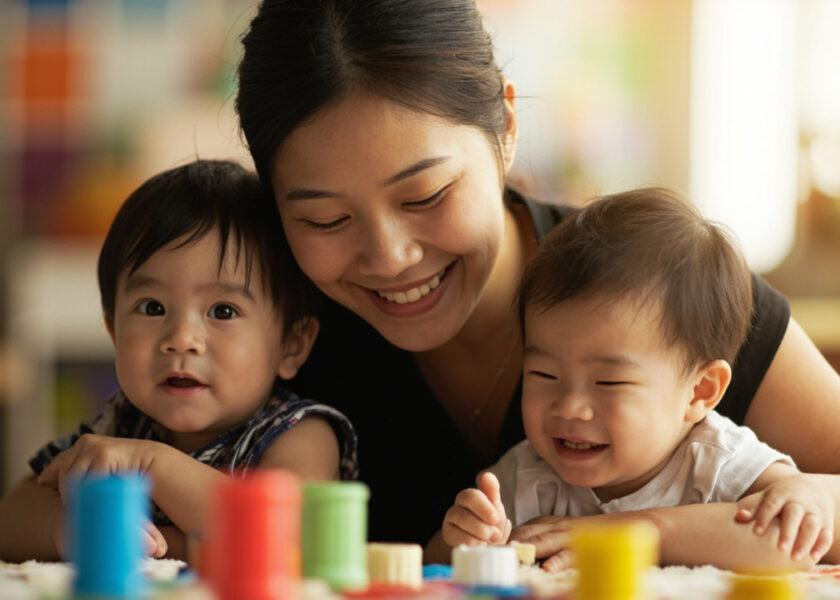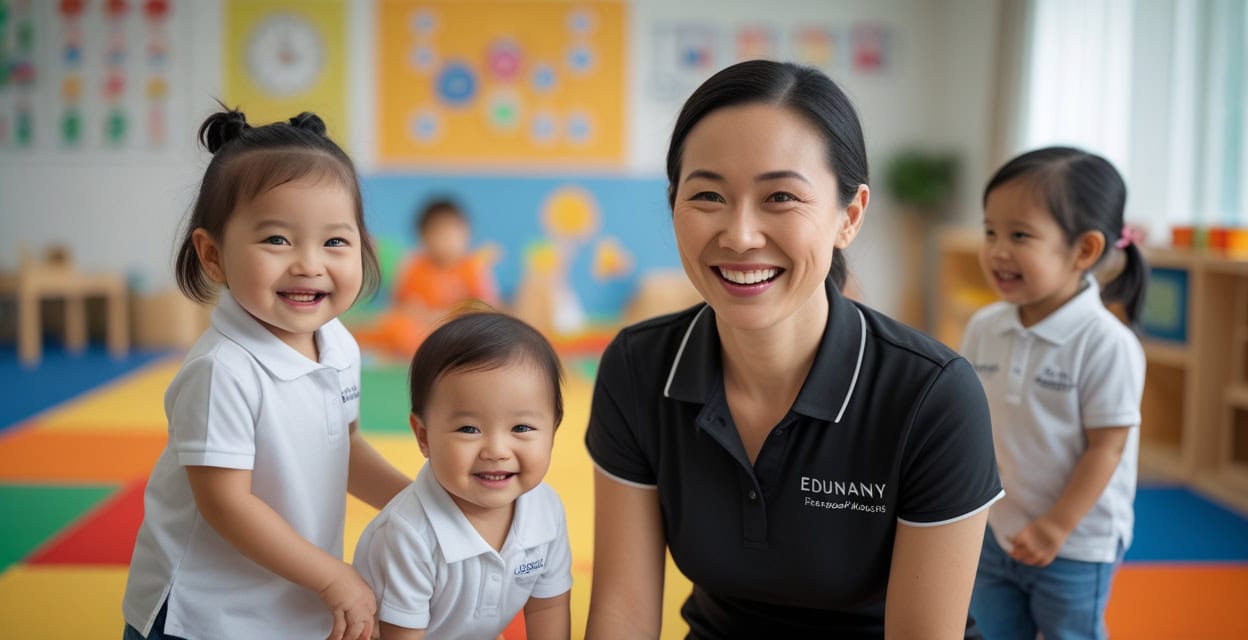
Three to One Circle and Floor Level Learning EduNanny Near Home Blueprint for Singapore First Thousand Days

EduNanny Singapore: A Fresh, Human-Scale Blueprint for Infant Care
Good evening, Singapore. Thank you for gathering to talk about the smallest citizens who carry our largest hopes. EduNanny exists for one simple reason: to make the first thousand days calm, safe, joyful, and close to home. This is a Singaporean blueprint for infant care that blends science, humanity, and neighbourhood strength—center-based, home-based, and supported at a distance. We operate islandwide, Monday to Friday, 7am to 7pm, with an ultra-low 1:3 infant ratio, and we safeguard privacy while enabling visibility through consented CCTV. Our work is part of national initiatives that expand dignified caregiving jobs where families live. This article dives deep into how that blueprint translates into practical, everyday care for families and communities.

The Three-to-One Circle: Attention that Protects and Teaches
Why this ratio matters
Infants learn through relationship before they learn through instruction. The three-to-one circle—three infants with one deeply-attentive caregiver—creates a space where subtle cues are noticed before cries erupt, and where every glance can become a learning moment. Grounded in Bowlby’s attachment theory and Pikler’s respectful care, this ratio makes security the first language of development.
Practical applications for families and centres
- Immediate soothing with a plan: When a baby signs distress, respond with a calm, predictable approach and offer a small, achievable next step (“You’re safe. Let’s try that texture next.”).
- Real-time language mapping at eye level: Narrate actions, label feelings, and echo sounds during routine tasks to build early vocabulary.
- Continuous safety scanning: With three infants known deeply, caregivers spot hazards early and support curiosity in safe ways.
- Parent partnerships: Share daily micro-observations and small milestones so families feel continuously seen.
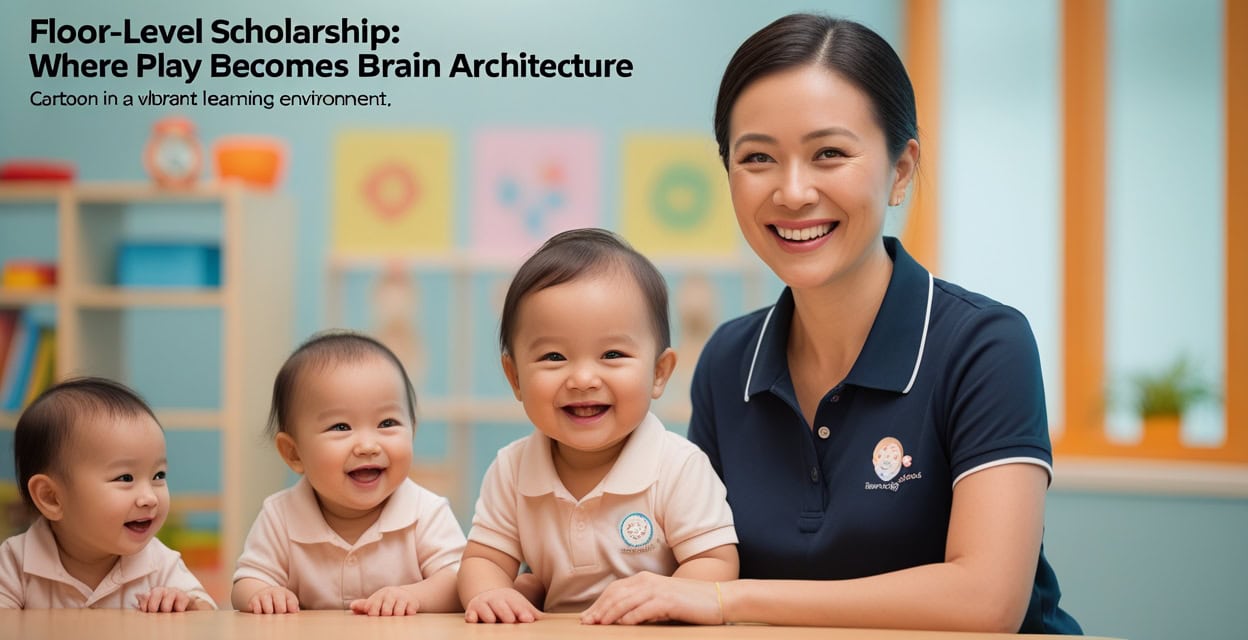
Floor-Level Scholarship: Where Play Becomes Brain Architecture
Designing learning spaces that hum with discovery
Floor-level environments transform curiosity into cognitive growth. Montessori, Froebel, and Malaguzzi remind us that environments teach best when materials are within reach and interactions are hands-on. At EduNanny, the floor is a studio, not a parking lot. Caregivers kneel more than they stand, because a knee-high view fosters respect and supports Piaget’s sensorimotor discoveries.
What floor-level scholarship looks like in practice
- Watch, Wait, Wonder: Resist rushing. Observe infants’ interests, then offer just-right challenges that invite the next small gain.
- Objects with stories: Use wooden rings, fabric books with family photos, and low mirrors to spark self-recognition and social play.
- Guided growth through scaffolding: Following Vygotsky, provide support under the effort, not over it—each small mastery opens the door to the next.
- Language-rich environments: Narrate textures, colors, and actions during play to build a living vocabulary bank.

Safety as a System: Seven Safeguards You Can See and Feel
Safety is dignity in action. It’s not posters on walls; it’s what caregivers do in quiet seconds. Our seven safeguards are designed to be observable, measurable, and continuous.
- 1) Secure access and identity checks: Controlled entry at centres and home premises with clear, verifiable processes.
- 2) Sleep safety by design: Flat, firm surfaces; supine sleep; frequent checks; controlled temperature and light; no loose bedding.
- 3) Feeding assurance: Clear allergy protocols, accurate labeling, caregiver cross-checks, and responsive feeding practices.
- 4) Hygiene and infection control: Hand hygiene rituals, routine toy and surface sanitisation, and illness-exclusion policies aligned to national guidelines.
- 5) Real-time supervision plus consented CCTV: Transparent monitoring with privacy safeguards, used for reflection and improvement.
- 6) Incident readiness: Drills, meticulous documentation, and a debrief culture that turns events into better practice.
- 7) Continuous training: Regular first aid, child protection, and reflective practice anchored in current evidence.
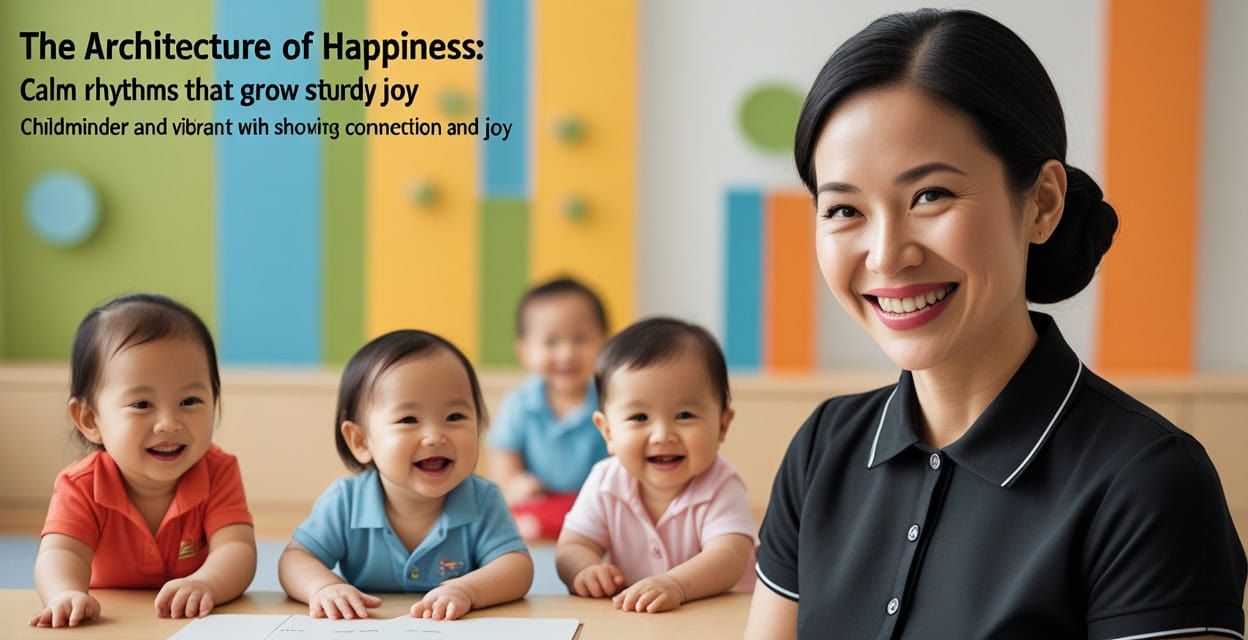
The Architecture of Happiness: Calm Rhythms That Grow Sturdy Joy
Why happiness is foundational for development
Happiness isn’t an add-on; it is the soil in which trust and exploration grow. Erikson taught that early hope and trust form the bedrock for later courage and purpose. EduNanny designs days that nurture secure bases through predictable rhythms and responsive interactions.
Daily rhythms and caregiver strategies
- Predictable arcs: Warm greetings, purposeful play, outdoor or vestibular movement, nourished feeds, unhurried naps, and reflective goodbyes.
- The caregiver voice: Slow, melodic speech; songs that carry language; and moments of quiet that respect focus.
- Emotion coaching for pre-verbal infants: Name states and offer comfort (“You look startled. I’m here.”) to help nervous systems settle with presence, not pressure.
- Joyful culture: Caregivers who feel supported, parents who are partners, and infants treated as capable from the first weeks.

The Civic Craft of Childminding: A Purpose Larger Than a Place
Childminding is a frontline profession that supports families, communities, and the nation. In Singapore’s dense towns, a trusted childminder can be the difference between coping and thriving. EduNanny’s approach foregrounds three aims:
- For infants: Secure attachment, rich sensory learning, and continuity of care across home-, centre-, and distance-based options.
- For families: Convenience near MRTs and homes, 7am–7pm coverage, affordability through CDA/Baby Bonus schemes, and clear communication with privacy-respecting visibility.
- For society: A National Social Initiative that upskills caregivers, expands dignified employment, and strengthens community ties within estates.

EduNanny’s Practical Explainer: How a Singaporean Care System Works
- Start where families live: Communities anchor caregivers and centres in accessible neighbourhoods to ease transitions at drop-off and pick-up.
- Align with science: From 1:3 ratios to floor-level environments and responsive caregiving, EduNanny implements evidence-based practice.
- Guarantee transparency: Consent-based CCTV ensures appropriate visibility for families while safeguarding privacy.
- Offer true choice: Centre-Based, Home-Based, and distance-supported coaching to suit different family rhythms and preferences.
- Keep it affordable and accessible: Pricing from $33/day, with CDA/Baby Bonus support and islandwide availability.
- Professionalise the role: Regular training, supervision, and clear pathways to career advancement.
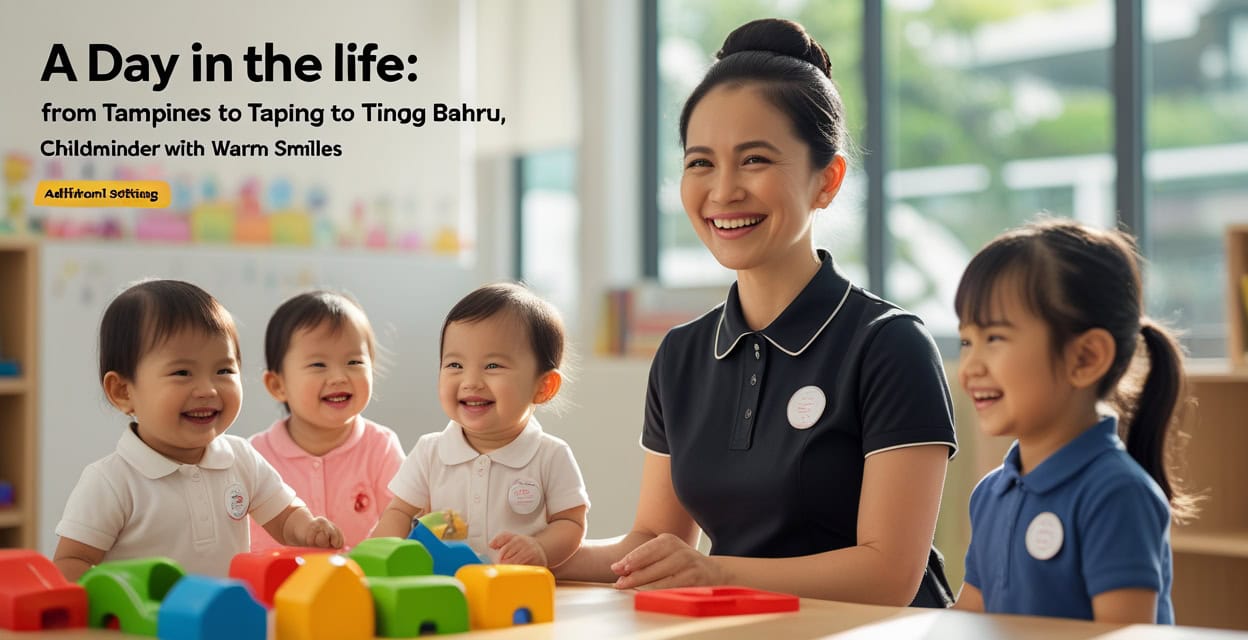
A Day in the Life: From Tampines to Tiong Bahru
Imagine a day in a neighbourhood EduNanny setting. At 7:05am, a parent hands their baby to a caregiver who knows the infant’s sleep, feeding, and sensory profile by heart. The caregiver kneels to greet at eye level—“Good morning, Jia Le. I remember you liked the crinkly book yesterday.” Breakfast is unhurried; feeds are responsive. A tummy-time mat becomes a playful lab for reach and rotation. Mid-morning, two infants play parallel with soft blocks while a third tracks sunlight on the floor; the caregiver narrates, expands, and protects. After a steady nap, there’s outdoor air or indoor vestibular play, then late-afternoon cuddles and language songs. At pick-up, the day’s story is retold, milestones celebrated, care plans adjusted, and parents truly seen.

Frequently Asked Wonderings
- Can I see what’s happening? Yes—parent communication and transparency are built into daily routines and the technology we use, with consent and privacy safeguards.
- Will my child be known? Yes—our 1:3 circle ensures every infant has a named primary caregiver who tracks progress and preferences.
- What about health? Hygiene protocols, illness exclusion policies, and sleep/feeding safety are continuous, not episodic.
- Is this sustainable for families? Our pricing from $33/day, CDA/Baby Bonus support, and 7am–7pm coverage are designed to respect budgets and work-life rhythms.

Closing: Why This Matters for Families and Singapore
Infants thrive when care is near home, when caregivers are expertly trained and continuously reflecting, and when families feel secure and included. EduNanny’s Singaporean blueprint is built on research-informed practice, respectful relationships, and a shared commitment to community wellbeing. By focusing on the three-to-one circle, floor-level learning, safety as a system, and happiness as a daily discipline, we make infant care a civic craft—one that strengthens families, estates, and the nation.

Conclusion
In thousands of small, deliberate moments—on floors, at doorways, in songs, and during nap-time quiet—we can raise a Singapore where every infant’s first feeling is safety, every day’s first task is joy, and every family’s first experience of care is trust. If this is the start you want, we welcome you. Visit EduNanny.com or Childminding.EduNanny.com. Choose Home-Based or Centre-Based. Ask for the three-to-one circle. Ask about CCTV transparency. Ask about fees via CDA/Baby Bonus. Ask us how we will know your child—because we will.
Together, in thousands of small, careful moments, we can build a Singapore where families thrive, communities strengthen, and infants bloom.
[#keyword1, #keyword2, #keyword3, #keyword4, #keyword5]Ready to Experience Excellence?
Transform Your Family’s Journey
Discover Singapore’s leading infant care and childminding services. Expert guidance for your little one’s first thousand days.