Knowing Your Child: Why More Singapore Parents Choose Developmental Care
The Quiet Question Singapore Parents Are Finally Asking
There is a moment that happens in Singapore households more often than anyone admits. It happens at the end of a workday, in the familiar handover between parent and grandparent. It happens in the pause after “How was her day?” when the answer comes back, and the parent nods, and smiles, and says thank you, and drives home with a feeling they cannot quite name.
The day was fine. She watched some television. She had her snacks. She played a little. She napped when she wanted to.
Safe. Fed. Content.
And yet, in the back seat, the child is quiet. Not unhappy. Not distressed. Just quiet in a way that doesn’t feel quite right. And the parent wonders—not for the first time—if this is enough.
Not whether the grandparent loved her. The parent never doubts that.
But whether being loved, being watched, being kept safe, is the same as being known. Being grown. Being stretched in the directions that matter most when the architecture of a life is still being built.
This is the question that most Singapore parents never ask out loud. They feel it. They carry it home at the end of every day they hand over their child to someone who loves them but cannot give them what they need. They feel it when they compare their child’s vocabulary to children in quality care, when they notice their child’s social uncertainty, when they read about early brain development and feel the distance between what they know is possible and what their child is actually receiving.
And they feel guilty for feeling it. Because grandparent care is free. Because grandparent care is family. Because grandparent care is the Singapore norm, the unspoken agreement that makes dual-income households possible, the cultural assumption that grandparents will step in and children will be fine.
But fine is not the same as thriving. And love, however genuine, is not the same as intentional developmental care.
This is the conversation Singapore parents are having with themselves. And it is time we had it out loud.
What the Science Actually Says About Early Childhood
We live in a society that has built its early childhood infrastructure on grandparent care. Singapore’s housing policies, workforce participation rates, childcare costs, and cultural traditions have all converged to make this the default setting for a generation of families.
This system has real value. Grandparent care is free. It is familiar. It keeps children within the family’s emotional orbit. It preserves cultural transmission. It is, in many cases, a genuine gift from a generation to the next.
But value and sufficiency are not the same thing.
During the first three years of a child’s life, the brain forms more than one million new neural connections every second. The experiences a child has during these years—the interactions, the language they hear, the sensory environments they navigate, the security of their attachments—these are not incidental. They are constitutive. They are building the hardware through which all future learning, behavior, and emotional life will operate.
Research from developmental neuroscience has demonstrated, with remarkable consistency, that the quality of early caregiving environments has measurable effects on brain architecture. Children who receive responsive, enriching care in the early years show stronger language development, better emotional regulation, more sophisticated social cognition, and greater cognitive flexibility in later childhood and beyond.
Children who receive adequate but unstimulating care develop along different trajectories—not because they are loved less, but because their environments are not building what they could be building.
The brain that is built in the first three years is not the brain that will be rebuilt later. It is the brain that will be lived in for life.
When a grandparent provides loving supervision, however genuine, however devoted, they are giving a child safety and warmth and family connection. These are real gifts. But they are not, by themselves, developmental care.
Developmental care requires intentional engagement with the child’s growth, guided by understanding of developmental stages, delivered with the consistency and frequency that allows learning to accumulate over time.
Being Known Versus Being Watched
There is a phrase that captures something essential about the difference between what grandparent care provides and what developmental care provides: being known versus being watched.
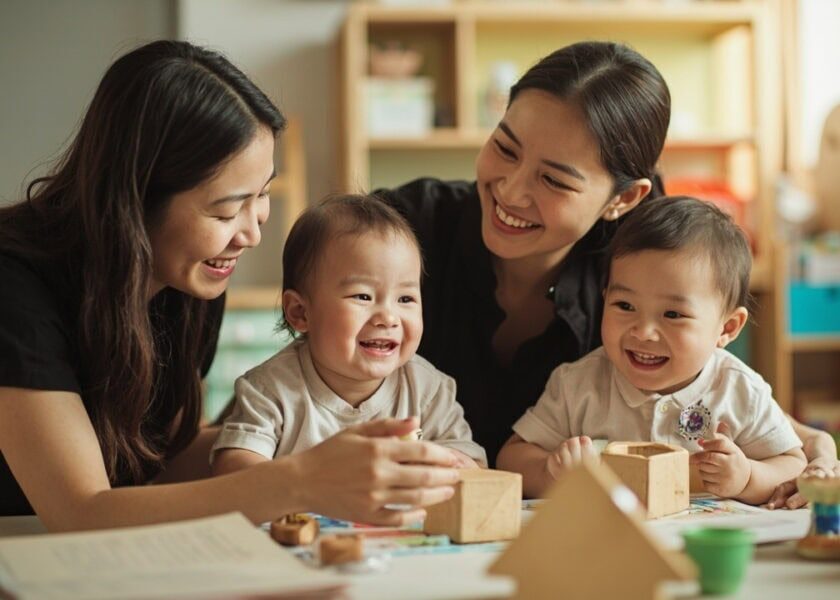
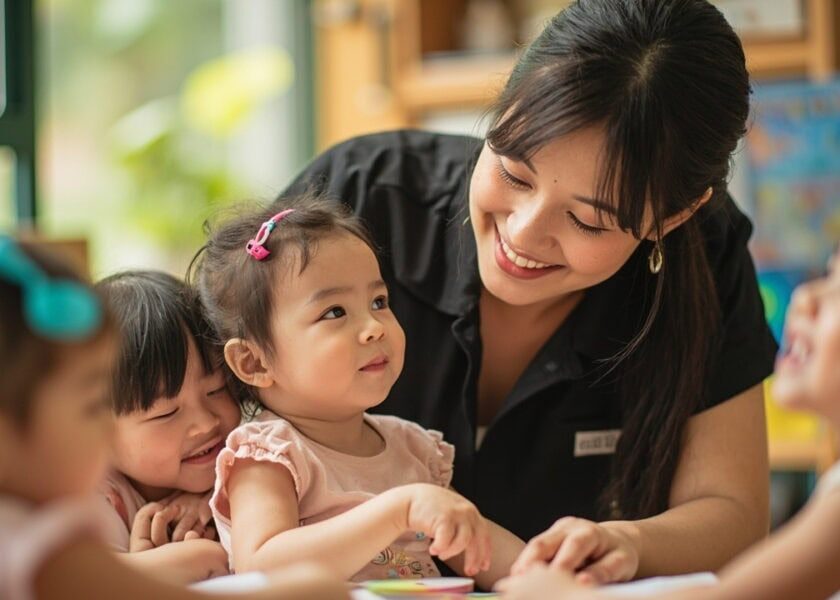
In a quality developmental care environment, the caregiver knows your child. Not just their name and their face and their schedule, but their rhythms, their temperament, their current fascinations, their emerging skills, their areas of challenge, their unique way of being in the world.
This knowledge shapes every interaction. When a caregiver knows that your child is working on spatial reasoning this month, they create experiences that support that development. When they know that your child is struggling with separation anxiety, they respond in ways that build security rather than reinforcing fear. When they know your child’s communication style, they stretch it gently toward the next level of language.
In supervision, the child is often seen as a unit to be managed. Safe, fed, happy. The goals are maintenance. The child’s individual developmental trajectory is not the organizing principle of the day.
The difference becomes visible over time. Children in developmental care environments often demonstrate stronger language skills earlier, more sophisticated play abilities, better capacity to navigate social challenges, greater emotional resilience, and more flexible thinking.
Not because they are smarter children. Because they have been in environments designed to build these capacities, with caregivers who understand how to create the experiences that develop them.
Navigating Family Expectations Honestly
Choosing to move away from grandparent care—or to supplement it with something more structured—is not a logistical decision. It is a relationship decision. It is a cultural decision. In Singapore, where filial expectations run deep and grandparent involvement in childcare is often assumed rather than negotiated, choosing to go another direction can feel like a profound act of rejection.
The guilt is real. The fear of hurting the people who love your child most is real. The cultural weight of defying expectation is real.
And the guilt, however understandable, is built on a false premise. The false premise is that what grandparents provide is equivalent to what developmental care provides, just delivered by different people with different styles.
If this were true, choosing otherwise would indeed be a rejection. But it is not true. What grandparents provide is not equivalent. It is different in kind, not just in approach.
When a parent chooses developmental care, they are not saying their family did not love their child. They are saying: I recognize that love, which my parents gave me, is not the same as developmental expertise, which my child needs.
These are not the same thing. And recognizing the difference is not betrayal. It is clarity.
How to Have the Conversation
Here is what has worked in families navigating this transition:
- Acknowledge the sacrifice. “Mum, we know you gave up your time and energy to watch the children while we worked. We know that was a gift.”
- Be honest about what you have learned. “We have been learning about early childhood development, and we now understand that the first years are different than we knew. We think our children need something more than supervision.”
- Frame it as a new chapter, not a replacement. “What you give them—family love, cultural connection, the feeling of being part of a clan—that is irreplaceable. What we want to add is the developmental dimension they need right now. We see these as complementary.”
In most cases, once grandparents see the difference in the child, once they understand that this choice is about maximizing the grandchild’s potential rather than minimizing their contribution, they become the strongest supporters.
What Quality Developmental Care Actually Looks Like
So what does this choice look like in practice? What does developmental care actually provide that even the most loving grandparent may not be able to offer?
Caregiver-to-Child Ratio
In a quality infant care environment, the caregiver-to-child ratio matters. When you have one caregiver for every one to three infants, something becomes possible that is not possible with larger groups or in more informal settings. The caregiver can attune. They can notice the subtle signals that indicate a child is reaching for a developmental leap. They can respond in real time to the interactions that build neural pathways.
Language Exposure
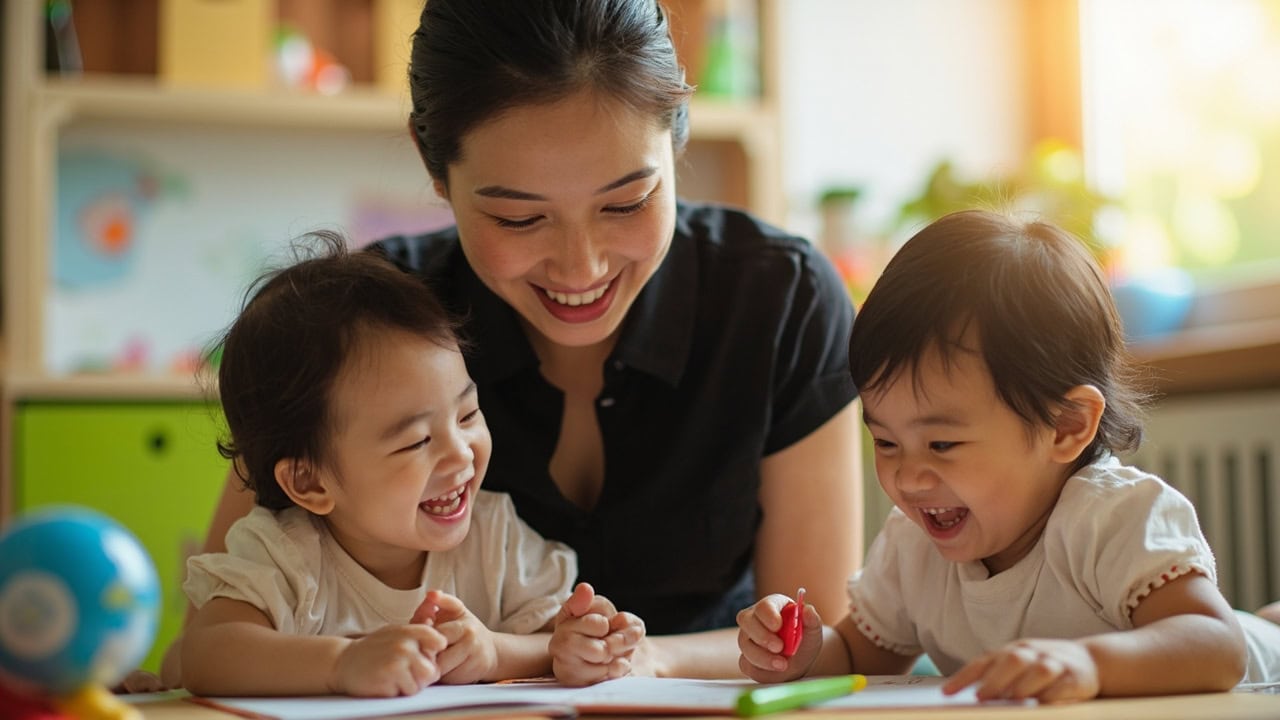
In quality care, language exposure happens constantly—not just through television or casual conversation, but through the back-and-forth of responsive interaction, the narration of experience, the expansion of vocabulary in real moments. Research consistently shows that the quantity and quality of language exposure in the early years has significant effects on later language development.
Motor and Physical Development
Motor development is supported through environments designed for the physical exploration that builds strength and coordination. Rather than a child sitting in front of a screen, developmental environments create opportunities for the crawling, climbing, grasping, and moving that builds the motor pathways the brain needs.
Social and Emotional Development
Social development begins through carefully structured peer interactions that teach children how to be with others. These are not accidental social experiences. They are intentionally designed to build the social cognition and emotional regulation skills that will serve children throughout their lives.
Developmental Tracking
Quality developmental care means tracking where each child is in their developmental journey and creating experiences that meet them there. It means noticing when a child is ready for the next challenge and creating the environment that supports them in meeting it.
This is what quality infant care and childminding looks like when it is done with genuine intentionality. Not dramatic on the surface. But transformative underneath.
EduNanny by BUTLER: A Pathway Within the ECDA Childminding Pilot
The ECDA Childminding Pilot was created to address a gap in Singapore’s childcare landscape: the need for quality, developmental, home-based and centre-based care that meets children where they are during the critical early years.
EduNanny operates within this pilot, which means their model is built around standards designed to serve the developmental needs of infants and young children—not just their supervision needs. At EduNanny, thoughtful, development-oriented care is not an add-on. It is the foundation.
The pilot offers both pathways:
- Home-based care brings trained, quality-focused caregivers directly into the family’s environment, providing continuity and familiarity while ensuring developmental intentionality.
- Centre-based care provides community spaces designed for early learning, with peer interaction and structured developmental experiences.
Either pathway serves children in ways that informal care typically cannot.
What Parents Can Expect
The infant ratio in quality care—up to one to three—is not an arbitrary standard. It is the ratio that research shows makes genuine attunement possible. When a caregiver has only three infants to attend to, they can know each one. They can track each one’s development. They can engage with each one in the responsive back-and-forth that builds language and social cognition.
Not just watching. Knowing. Not just supervising. Growing.
For parents who have spent years in the anxiety of not knowing what happens during the day, the transparency of quality care is transformative. Regular updates about developmental progress, clear communication about the child’s experiences, and where deployed, CCTV measures that allow parents to see and trust—this is not surveillance. It is partnership.
Addressing Common Concerns
Parents often ask whether this choice will damage their relationship with grandparents. Done thoughtfully, this choice can actually strengthen family relationships. When grandparents see their grandchild thriving, when they understand that this choice comes from love rather than rejection, they often become advocates.
Parents also worry about cost. The ECDA Childminding Pilot fee structures are designed with accessibility in mind. CDA and Baby Bonus funds can be utilized. The question is not whether quality developmental care is possible for your family—it is whether you have been given accurate information about the options available.
And parents sometimes wonder if they are overreacting. Your child may indeed be fine. Safe, loved, happy. But fine is not the same as thriving. This question is not anxiety. It is attention. And attention is exactly what your child deserves.
The Beginning of a New Chapter
There is a freedom that comes when a parent stops negotiating with their own conscience about what their child needs. There is a lightness that comes when the choice is made—not out of guilt, not out of obligation, not out of cultural expectation, but out of a clear-eyed understanding of what serves the child in front of you.
Parents who have made this choice often describe something unexpected: the guilt they expected never fully arrived. What arrived instead was a sense of alignment. They had been carrying the weight of knowing their child was not getting what they needed, and when they finally chose differently, the weight lifted. Not because the choice was easy. Because it was right.
You are allowed to want more than fine. You are allowed to want thriving.
You are allowed to honor your family’s love while recognizing that love is not the same as developmental expertise. You are allowed to have gratitude for what grandparents have given while choosing to give your child something additional. You are allowed to navigate family expectations without sacrificing your child’s developmental future.
In Singapore, where the cultural weight of intergenerational childcare is real and the pressures on working parents are intense, choosing differently requires courage. But courage is not the absence of fear. It is the willingness to act on your understanding of what is right, even when what is familiar is easier to defend.
Your child’s development is not a rehearsal for something more important that will come later. It is the foundation of everything. The brain that is being built in these years, in these months, in these days, is the brain your child will use to learn, to love, to work, to navigate every complexity that life will bring.
The quiet question you have been asking yourself in the car, at the end of the day, after the handover—that question deserves an answer. Your child deserves an answer.
EduNanny by BUTLER, operating within the ECDA Childminding Pilot, exists for families who want this kind of care. It is a quality, developmental, intentionally structured pathway for parents who have decided that their child’s early years deserve more than supervision.
This is not about being a perfect parent. It is about being an honest one. It is about looking at your child and asking not what feels easiest to defend, but what they actually need. And then having the courage to give it to them.
If this resonates with you, EduNanny welcomes the conversation.
EduNanny is a Singapore-based childcare and childminding service built on warmth, trust, and developmental care. To learn more about their approach, read about EduNanny’s philosophy and team, or explore their full range of services.