Fraud Blocker edunanny.com

Category: Childminding

edunanny-05575a80-d010-4e26-b41d-6da80e90ac2f
September 23, 2025

EduNanny Singapore The Near Home Movement for Safe Joyful Infancy

EduNanny by BUTLER: Close care. Clear trust. Big futures.

EduNanny by BUTLER: Close care. Clear trust. Big futures.

Good evening, friends, parents, carers, and partners in the hopeful work of raising Singapore’s youngest citizens. EduNanny is more than a service—it is a movement grounded in science, culture, and practical humanity. We exist to make infant care closer, more consistent, and deeply attuned to the rhythms of a child’s life and a family’s routines. EduNanny serves families in centre-based settings, home-based arrangements, and distance-supported care—Monday to Friday, 7am to 7pm, islandwide—so the rhythms of infant life align with the rhythms of Singaporean work and community life. We maintain an ultra-low infant-to-carer ratio of 1:3, design modern calm environments, offer transparency through CCTV, and deliver excellence at an affordable price point, from $33/day, with fees payable by CDA/Baby Bonus. As part of the ECDA Childminding Pilot and a National Social Initiative, EduNanny grows quality care and maximum employment hand in hand, so families and the broader economy prosper together.


How EduNanny makes infant care and childminding better for Singapore

How EduNanny makes infant care and childminding better for Singapore

Proximity

Infants thrive when care is near home and within familiar neighbourhood ecosystems. Proximity reduces commute stress for caregivers and preserves infants’ routines. It also strengthens language, foodways, and sensory experiences tied to local places—from HDB courtyards to hawker centres—helping children feel a sense of belonging from day one.

  • Practical steps for families: Seek near-home options first, whether in community-based centres or trusted home-based settings. Ask carers to map a child’s daily routines to the family’s schedule (meal times, nap windows, play times) and request sample day plans that align with your home routines.
  • What to observe in a near-home setting: Consistent daily rhythms, familiar foods or age-appropriate substitutions, and spaces designed to minimize long commutes for the infant’s energy, with clearly defined zones for sleep, play, and meals.
  • EduNanny practice insight: We publish transparent care logs and maintain a shared cadence with parents so you can see, in real time, how your child’s day unfolds—nurturing trust and continuity across environments.

Predictability

Predictable scheduling is a cornerstone of security for infants and peace of mind for parents. Our service windows—from 7am to 7pm, Monday to Friday, islandwide—create reliable, dignified coverage that respects caregiving work and reduces the need to negotiate between quality and logistics.

  • Implementation tip for families: Request a written daily rhythm (wake, feed, play, nap, and return) and a weekly overview that shows how caregiver-led activities align with family routines.
  • What to expect in practice: Routine-based transitions, consistent sleep setups for safe naps, and standardized feeding and diaper-change protocols across settings.
  • EduNanny advantage: Uniform standards across Centre Based, Home Based, and Distance support ensure that, regardless of setting, your infant experiences the same quality of care and communication.

Parity

Parity means quality, safety, and communication are equal across all EduNanny settings. We uphold the same high bar—1:3 ratio, clean and modern layouts, safety-by-design principles, transparent communication, and pedagogy anchored in attachment science and purposeful play.

  • What you can demand: A consistent ratio, a uniform safety checklist, and an accessible care log that records feeding, sleep, and development notes.
  • Practical example: If you switch from a centre to a home-based EduNanny arrangement, you should receive a comparable daily plan, caregiver training records, and a home-like environment that mirrors the centre’s safety and cleanliness standards.
  • EduNanny insight: We view parity as a continuous improvement process—regular audits, caregiver development sessions, and feedback loops with families to calibrate practices to each child’s unique trajectory.
Five topics for the future of infant care in Singapore

Five topics for the future of infant care in Singapore

1) Pedagogy in practice: “Observe, Invite, Name, Release”

Great pedagogy is quiet, deliberate, and deeply human. Grounded in Pikler, Bowlby, Montessori, and Vygotsky, EduNanny trains carers to apply a four-beat rhythm all day long:

  • Observe: Notice cues before crying—eye gaze, hand-to-mouth actions, arching back. We teach a 90-second attentional window so infants feel seen without shouting.
  • Invite: Offer participation rather than performing care “to” the infant. Example: “Would you like to roll to me?”
  • Name: Use simple language to label feelings and experiences. Example: “You’re frustrated; the block is stuck.”
  • Release: Step back slightly once engagement is established—give the infant space to explore and build courage.

Practical applications:

  • During feeding, narrate the process: “We’re going to have a bite now; what would you like to try first?”
  • During play, reflect the child’s interest back: “You’re exploring how to roll—shall we try again with your toy?”
  • Daily routines become micro-lessons in motor control, problem-solving, and social reciprocity.

2) Safety that you can see, hear, and verify: the Four Rings

Safety isn’t a poster; it’s a set of habits. EduNanny aligns with ECDA expectations and global best practice through four rings:

  • Ring 1: Person—Rigorous caregiver vetting, CPR/first aid training, safe sleep, milk handling, allergy protocols, and scenario rehearsals until reflexive.
  • Ring 2: Space—Low-clutter, toxin-conscious environments; sleep spaces designed for safe sleep ABCs (Alone, on Back, in Cot).
  • Ring 3: Process—Five ritual checks: Entry (health and hand hygiene), Feeding (time/log), Sleep (safe setup and interval checks), Movement (supervised floor time, no unsafe devices), Exit (transfer notes).
  • Ring 4: Proof—Innovation CCTV and digital care logs with transparent incident reporting for trust and continuous learning.

Practical tips for families during visits:

  • Ask to see caregiver certifications and an on-site safety checklist.
  • Review the play and sleep areas for cleanability, toxin-free materials, and safety gate controls.
  • Request a sample day log and the process for reporting concerns or incidents.

3) Development as five daily “nutriments”

In the first thousand days, development is a steady layering of capacities, not a sprint to milestones. EduNanny structures days around five nutriments:

  • Touch: Warm, predictable caregiving touch during routines builds body maps and security.
  • Talk: Rich, turn-taking talk—singing, labeling actions, bilingual lullabies—supports language and attachment.
  • Time: Unhurried floor-based exploration strengthens core stability, hand skills, and curiosity.
  • Try: Just-right challenges—grasping, rolling, cruising—with safe scaffolding nurture persistence and joy in mastery.
  • Tranquility: Protected sleep windows and quiet recovery moments prevent over-stimulation and support calm nervous systems.

Implementation ideas:

  • Design play sequences that alternate active exploration with quiet moments to balance arousal levels.
  • Coordinate with parents to mirror language exposure and routines at home for continuity.
  • Use simple, universal cues to teach self-regulation, such as “pause, breathe, try again.”

4) Happiness architecture: designing for small joys

Infancy happiness is about coherence and security, not entertainment alone. EduNanny builds a “Joy Budget” into every hour:

  • One song, one sunlight moment, one quiet moment of stillness in each hour.
  • Predictable micro-rituals—hello windows, goodbye waves, clean-hands rhymes—that bring transitions into comfort.
  • Sensory gentleness—natural light, soft textures, human voices over electronics—to keep arousal in the green learning zone.
  • A bilingual cuddle culture reflecting Singapore’s diversity, with infants hearing love in both English and family languages.

Measurement approach:

  • Track settling times, engagement cues, appetite, and sleep quality to assess happiness trends.
  • Share patterns with parents through simple visuals and monthly check-ins.

5) The purpose of childminders: a civic craft

A childminder is a professional and a public good, not a temporary solution. EduNanny defines the role through a Care Triad:

  • Parent: Your values lead the cadence; we co-create routines and decisions that align with your family’s priorities.
  • Childminder: A secure base in everyday life—present, predictable, proud of the craft.
  • Community: Care offered in centres or homes, backed by a National Social Initiative and a Maximum Employment Mandate that uplifts families and the workforce.

Impact in practice: When this triad is strong, parents can work with confidence, infants grow with attachment and exploration, and communities retain their social fabric and resilience.


What EduNanny offers—clearly and simply

What EduNanny offers—clearly and simply

  • Excellence across settings: Centre Based Childminding, Home Base Childminding, and Distance support—each designed to maintain the same care standard.
  • Real convenience: Monday–Friday, 7am–7pm, islandwide, including near-home premises for community-based care and home premises for comfort and ease.
  • Ultra-low ratio: 1:3 infant ratio to protect attunement and safety.
  • Safety and transparency: Modern layouts and innovation CCTV that enable peace of mind and open communication.
  • Affordability and access: From $33/day, with fees payable by CDA/Baby Bonus.
  • National alignment: A pilot within ECDA’s Childminding Pilot framework, part of a broader National Social Initiative and Maximum Employment Mandate to uplift families and the workforce.
  • Easy onboarding: Simple pathways to start—EduNanny.com and Childminding.EduNanny.com.

Implementing EduNanny in your family: practical guidance

Implementing EduNanny in your family: practical guidance

  • Start with a needs assessment: Map your family’s work hours, caregiver availability, languages spoken at home, and any dietary or health considerations for your child.
  • Choose the right setting: Centre-based, home-based, or distance-supported options can be blended to fit your child’s temperament and your logistical needs.
  • Prepare for onboarding: Gather medical records, vaccination history, emergency contact details, and any special care instructions. Schedule a trial day.
  • Establish a communication cadence: Agree on daily updates, weekly summaries, and a monthly review to discuss development milestones and any concerns.
  • Partner with carers on pedagogy: Share language preferences, play interests, nap routines, and feeding cues so the caregiver’s approach mirrors your home environment.
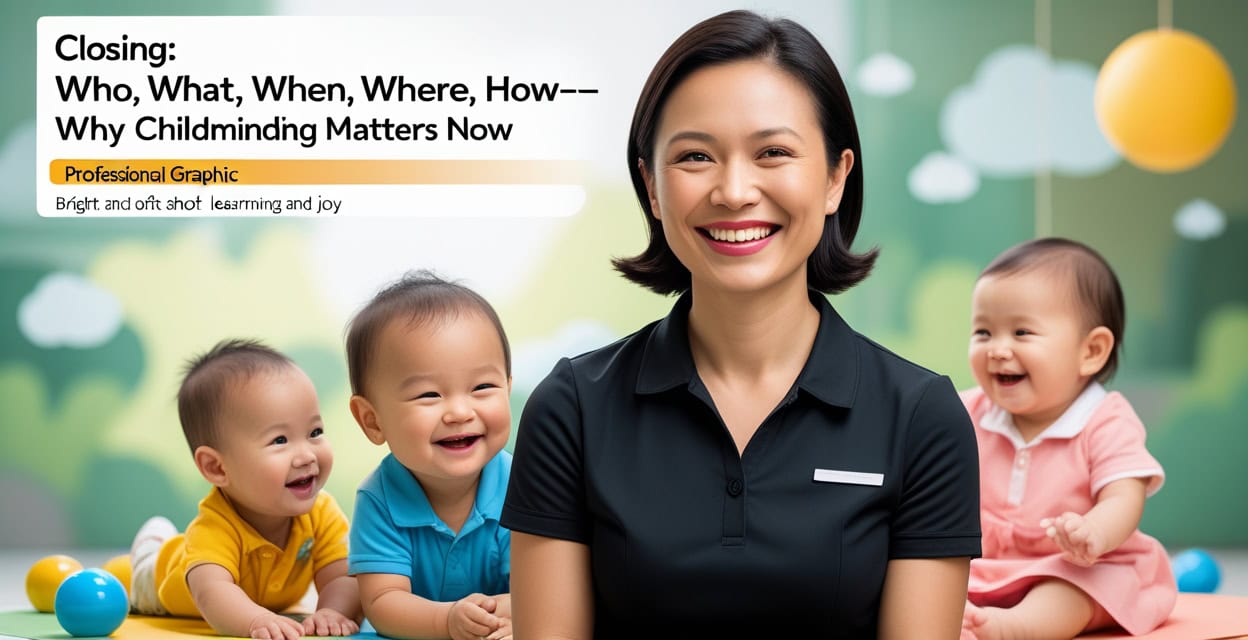
Closing: Who, what, when, where, how—why childminding matters now

Closing: Who, what, when, where, how—why childminding matters now

  • Who: Working families, single parents, caregivers between shifts, grandparents seeking support, and infants who deserve steady eyes and warm hands.
  • What: Professional childminding that treats daily care as a living curriculum—attachment, safety, language, movement, and rest woven into ordinary moments.
  • When: The vital first thousand days, when the brain writes its most durable code and when parents need reliable care the most.
  • Where: Near home—in community and home premises, and in thoughtfully designed centres—calm, clean, transparent environments.
  • How: Ultra-low 1:3 ratio; trained, proud childminders; safety by design; transparent technology; and a partnership that centers the parent’s voice.

The philosophy and purpose of EduNanny are simple and profound: to make care small enough to feel like family and strong enough to serve a nation. We exist so parents can work with confidence, infants can grow with joy, and Singapore can keep faith with its future—one quiet feed, one safe nap, one brave first step at a time.

If this is the care you want near your home, we invite you to begin today:

  • EduNanny.com
  • Childminding.EduNanny.com

EduNanny by BUTLER. Close care. Clear trust. Big futures. Thank you.


Conclusion

Conclusion

EduNanny represents a practical, evidence-based approach to infant care that honours proximity, predictability, and parity across settings. By embedding a thoughtful pedagogy, rigorous safety practices, and a developmental framework—rooted in the first thousand days—we empower families, caregivers, and communities. The Path to better infant care is collaborative: parents share values, childminders uphold professional standards, and the nation benefits from a resilient, capable future generation. Start today by exploring EduNanny options near you, and join a movement that treats care as a civic craft and everyday life as a learning horizon.

[#EduNannySingapore, #InfantCareSingapore, #EarlyChildhoodDevelopment, #ChildmindingPilot, #ECDA]

edunanny-87a9c834-5113-4b92-b29e-f3f42c674c20
September 23, 2025

EduNanny Singapore A New Standard for Infant Care and Childminding Built on Attunement and Safety by Design

EduNanny Singapore: A New Standard for Infant Care and Childminding

EduNanny Singapore: A New Standard for Infant Care and Childminding

Based on a vision of precision, trust, and heart-led care, EduNanny reimagines how Singapore cares for its youngest citizens. This article expands the core speech into an in-depth guide for parents, caregivers, and partners, offering practical, actionable insights, real-world EduNanny practices, and clear steps families can take to partner effectively with childminders and centres.


The Attuned Curriculum: Small Moments as the Big Idea

The Attuned Curriculum: Small Moments as the Big Idea

Learning begins in the subtle exchanges that happen in ordinary days. Our attuned curriculum treats every routine as a learning moment and every caregiver as a capable co‑teacher. Here’s how to apply this in daily life:

  • Care as Curriculum in Action: Turn nappy changes into language moments. Narrate the process gently, name sensations, and respond to cues (e.g., a wriggle or gaze). Tip for parents: prepare a 2‑minute language routine you can repeat with your child at home, reinforcing vocabulary used by EduNanny caregivers.
  • Duets and Turn-Taking: Feeding and caregiver‑child interactions become back‑and‑forth conversations. Practical step: during meals, pause to invite the infant to “offer” a bite or a sip; acknowledge each attempt with warm smiles and brief verbal encouragement.
  • Floor Time and Free Movement: Spaces are designed for safe exploration—rolling, reaching, and cruising with dignity. Actionable idea: create a small “movement corner” at home with a short mat, a low mirror, and soft textures to mirror the learning environment.
  • Soft Language and Naming Feelings: Narration helps internal organisation. Practice at home by labeling your child’s emotions during daily routines (e.g., “You look curious about that toy—let’s explore it together.”).
  • Documentation with Purpose: Observe first, interpret second, act third. Families can request a brief weekly summary that highlights observed cues, proposed next steps, and how the plan aligns with the child’s current interests.
  • Example Week Plan (Centre/Home Adaptable):
    • Monday: sensory exploration with natural textures; caregiver demonstrates a simple object‑cue game.
    • Tuesday: language rhythm—rhymes during diaper changes and feeding time.
    • Wednesday: joint attention activities with a caregiver and infant, using shared book time.
    • Thursday: movement invitation—safe crawling or cruising paths; parent note on home practice.
    • Friday: reflection and social play within the pod to foster early peer connection.

Safety as a Design System: Safety by Design, Not by Poster

Safety as a Design System: Safety by Design, Not by Poster

Safety at EduNanny is an integrated system that protects without compromising development. It’s a design principle applied to space, practice, and culture.

  • Layout and Zoning: Modern spaces separate sleep, feeding, and play zones while maintaining sightlines. At home, replicate this by designating quiet corners for rest, a safe play area, and a feeding nook with minimal clutter.
  • 1:3 Infant Ratio: The standard ensures attention isn’t compromised. What families can expect: consistent response times, individualized caregiving, and less crowding during transitions.
  • Transparency through Opt‑in CCTV: Real‑time visibility supports trust and reflective practice. Practical tips: discuss privacy preferences with caregivers, determine which areas are viewable, and use updates to engage in co‑planning with the care team.
  • Sleep Safety as Habit: Firm mattresses, no loose items, safe sleep positions, and regular ventilation checks. Home practice: maintain a consistent sleep routine at home to reinforce patterns learned in care settings.
  • Hygiene without Hindering Development: Emphasize handwashing, toy rotation, and outdoor time that suits weather and air quality. Actionable approach: create a simple at‑home hygiene checklist to synchronize with the caregiver’s routine.
  • Emergency Readiness: Regular drills, updated evacuation maps, staff trained in infant CPR, and post‑incident reviews for learning. Family involvement: ask for periodic safety debriefs and contribute questions for improvement.

Whole-Child Development: Deep Skills Built Quietly

Whole-Child Development: Deep Skills Built Quietly

EduNanny prioritizes core developmental capabilities over checklists, building secure foundations for lifelong growth.

  • Attachment Security: Each infant has a primary caregiver within their pod to encode consistent cues and comfort. Home practice: maintain a predictable care routine to reinforce secure attachments outside the centre.
  • Core Capacities Over Milestones: Focus on motor planning, joint attention, early problem solving, and sound awareness. Practical activity: play simple cause‑and‑effect games with safe objects to build problem‑solving joy.
  • Sensory Diet Done Right: Balance warm light, natural textures, soft acoustics, and movement invitations. Home tip: create a daily sensory moment (e.g., a soft cloth, a woodrattle, and a gentle lull) to support regulation.
  • Inclusion as Normal: Preemies and children with different abilities are integrated into the environment from day one. If you have a child with special needs, partner with EduNanny to co‑design adaptations and monitor progress collaboratively.
  • Early Screening and Timely Referral: Track development closely and partner with families for prompt support when needed. Questions to discuss with your caregiver: what screenings are in place, what red flags to watch for, and how to access early intervention services if concerns arise.

Joy and Wellbeing: The Emotional Climate We Promise

Joy and Wellbeing: The Emotional Climate We Promise

Happiness emerges from predictable, responsive care and the feeling that a child’s needs are seen and met.

  • Predictable Days and Gentle Transitions: Reducing cortisol supports curiosity and learning. Home strategy: maintain familiar routines, especially around meals, bath, and nap times, even when away from the usual environment.
  • Danger of Glitter Culture: True wellbeing is about reliable care, not constant novelty. Focus on steady warmth, patient support, and moments of quiet pride in small achievements.
  • Mood‑Centered Check‑Ins: Short wellbeing reads help caregivers respond to emotional cues. Parents can request simple mood checklists to mirror home observations (e.g., “How ready is your child for play?”).
  • Celebrating Everyday Wins: First grasp of a spoon, a shared joke, or making a new friend are milestones of joy. Capture and share these moments with families through short, thoughtful updates.

The Profession: Professionalising Childminders with Training, Mentorship, and Dignity

The Profession: Professionalising Childminders with Training, Mentorship, and Dignity

EduNanny elevates childminding into a respected career—coached, continuously learning, and close to communities.

  • Structured Training: Infant development, safeguarding, responsive caregiving, and family partnership are core modules. Action item for families: ask about training certificates and specific competency areas when evaluating a caregiver or centre.
  • Mentorship and Reflective Practice: Regular mentoring sessions and reflective practice help caregivers grow and improve. Suggestion for parents: request periodic reflective notes from caregivers and discuss future growth plans during reviews.
  • Maximum Employment Mandate: Bringing dignified jobs near home strengthens communities and reduces turnover. Home practice for families: support career continuity by sharing flexible scheduling needs and family routines with the care team.
  • Accountability with Compassion: Transparent audits, coaching, and reporting keep quality visible. Practical step: review quarterly performance dashboards together with the care team and ask for examples of improvements implemented after audits.

A Day in the Life: A Snapshot of a Tuesday in Toa Payoh

A Day in the Life: A Snapshot of a Tuesday in Toa Payoh

Imagine three infants arriving to warm, eye‑level greetings. One is teething, another discovering toes, and a third easing into a longer nap. Caregivers greet each child by name, share a quick parent update, and begin a flexible day plan. The room blends soft mats, floor‑level mirrors, and curated toys that invite exploration. After feeds, two infants move through gentle motor activities, a third enjoys a supervised walk under shade. Real‑time updates arrive on phones; a brief video captures a triumphant grasp, then nap times align with safety sightlines. The day ends with a calm, engaged goodbye—every interaction conveying: I see you, I value you, I will be here. This is the standard of excellence EduNanny aims to deliver every day.


Why Singapore Needs EduNanny Now

Why Singapore Needs EduNanny Now

Several converging forces make this moment right for EduNanny’s model:

  • Pace and Commute Realities: Shorter travel times mean more energy for development‑focused interactions in early months.
  • Trust through Transparency: Opt‑in CCTV, strong safety protocols, and a transparent cadence of updates create observable trust between families and caregivers.
  • Access and Flexibility: Centre‑based and home‑based options with distance support widen opportunities for families with varying schedules and transport needs.
  • Ecosystem Growth and Dignity: The National Social Initiative and the Maximum Employment Mandate scaffold a sustainable early‑care sector that values caregivers as professionals while supporting families.

Brief Benefits Snapshot

Brief Benefits Snapshot

  • Excellence and quality as baseline for all families, not optional upgrades.
  • Centre‑Based and Home‑Based options with Distance support for parents.
  • Convenient hours: Monday–Friday, 7am–7pm, islandwide Singapore.
  • 1:3 infant ratio across settings to ensure presence and responsiveness.
  • Innovation CCTV with modern layouts for transparency and safety.
  • Affordability from $33/day; fees payable by CDA/Baby Bonus.
  • EduNanny as a National Social Initiative under ECDA, led by BUTLER.
  • Simple enrollment and information at EduNanny.com and Childminding.EduNanny.com.

Concluding Call: Who, What, When, Where, How—and Why It Matters

Concluding Call: Who, What, When, Where, How—and Why It Matters

Who: Infants who deserve steady eyes and sure hands; parents who deserve partnership; childminders who deserve a respected profession.

What: Childminding that is rigorous in safety, gentle in tone, and purposeful in every routine.

When: From the first months onward—foundations form before memories do.

Where: Modern centres and approved homes across Singapore, close to where families live, learn, and work.

How: With a 1:3 promise, attuned pedagogy, safety by design, real‑time transparency, and affordability that opens the door rather than guards it.

Why: Because earliest relationships wire resilience, empathy, and confidence—the human qualities a future‑ready Singapore cannot outsource.

Parents, your child’s first learning environment is not a classroom. It is a relationship. EduNanny exists to make that relationship spacious, safe, and joyful—and to place it within reach of every household.

Join us. Visit EduNanny.com or Childminding.EduNanny.com. Walk our modern layouts. Meet the caregivers who will know your child’s cues as well as you do. Ask to see how transparency works, how plans are personalised, how we honour your routines at home. Enrol for a schedule that matches your life—Centre‑Based, Home‑Based, or with Distance support alongside your family care.

Let’s give Singapore’s youngest the gift that changes everything: not more noise, not more rush, but more presence. In the quiet competence of a 1:3 pod, futures take root. And in the everyday beauty of respectful care, a city keeps its promise.

[#EduNanny, #EarlyChildhoodCare, #SingaporeChildcare, #InfantDevelopment, #1to3CareRatio]

edunanny-00a13313-677c-47da-8a31-2bb7f43901d8
September 23, 2025

EduNanny A Civic Promise That Turns Infant Care Into Attunement Safety Near Home Pods

EduNanny: A Civic Promise Wrapped in Everyday Care

EduNanny: A Civic Promise Wrapped in Everyday Care

Good evenings, neighbors and families of Singapore. Before any policy or plan, there is a small, steady sound that guides our work: the breath of a sleeping infant and the gentle hum of a caregiver’s presence. EduNanny was born to protect that quiet—so families can work with confidence, infants can bloom with safety and joy, and communities can become kinder at their core.

EduNanny is a human-centered, science-led childminding movement designed for Singapore’s realities—near home, in community, and aligned with what the best developmental science has told us for over a century. Built by BUTLER and participating in the ECDA Childminding Pilot, EduNanny combines the dignity of attentive caregiving, the precision of modern design, and the inclusivity of a national social initiative that lifts families and creates jobs. We call it a civic promise wrapped in everyday care.


What EduNanny Is: A Practical, Science-Led Approach to Infant Care

What EduNanny Is: A Practical, Science-Led Approach to Infant Care

EduNanny translates big ideas into small daily actions. We embrace a 1:3 infant-to-educarers ratio to protect focused, responsive care; we shape modern spaces and home environments for safety, sensory richness, and autonomy; and we foster a near-home network that shortens distances—between parents and infants, between care and community, and between intention and impact.


The Five Ideas That Shape EduNanny in Singapore

The Five Ideas That Shape EduNanny in Singapore

1) The Attentive Triangle: Infant, Family, Childminder

Attachment is a dynamic triangle that endures busy days and changing routines. Practical steps for families and care teams include:

  • Maintain a 1:3 ratio by ensuring three infants are cared for by two or three trained educarers, coordinated by a primary caregiver who remains the daily constant.
  • Institute daily handover rituals: a brief, structured journal or checklist that captures feeding, sleep, mood, and routines, shared between home and care settings to honor the family’s voice and cultural rhythms.
  • Assign a primary caregiver for each infant to support nervous-system calm, with predictable daily routines that help the baby relax and trust the day.
  • Adopt a triad mindset in practice: welcome, nurture, and respond—so the infant experiences continuity across transitions.
  • Draw on Pikler for respectful caregiving, Montessori for prepared environments, Vygotsky for scaffolding, and Bowlby for secure attachments—then translate these into greetings, lifting, feeding, narrating, and putting down as everyday acts.

2) Safety as a Design Language, Not Just a Checklist

Safety is a choreography—quiet, layered, and constant. To implement this at home and in early-childcare spaces:

  • Design environments with clear sightlines, low fall-risk furnishings, breathable sleep spaces, and active ventilation to support healthy development.
  • Use transparent, privacy-conscious CCTV to build trust with families, paired with strict data protection and consent protocols.
  • Conduct daily hazard sweeps and weekly safety audits for sleep, feeding, solids, allergies, and emergency readiness (infant-first-aid and CPR trained).
  • Implement calm, predictable transitions—so a well-orchestrated day feels safe and soothing to the infant.
  • Equally train families in home-safety best practices, creating a shared standard of care across settings.

3) Pedagogy of Everyday Moments: Floor Before Furniture, Words Before Worksheets

In infancy, curriculum is the body, the senses, and the relationship. Practical ways to infuse development in daily routines:

  • Prioritize floor time and free movement to build strong bodies and integrated reflexes that support later cognitive skills.
  • Offer a daily language bath: rich talk in home language and English, descriptive narration, songs, and turn-taking conversations.
  • Narrate actions before performing them: “I’m going to lift you gently now,” to support infant understanding and agency.
  • Incorporate play as practice: object permanence games, cause-and-effect exploration, and rhythm-based activities woven into feeding, diapering, and tummy time.
  • Foster secure independence by designing environments that invite exploration while maintaining caregiver support and safety.

4) A Happiness Index You Can Feel

Infant happiness reflects in body language and breath, not just smiles. Build a culture of joy through:

  • Co-regulation: a caregiver’s calm voice, posture, and pace help normalize a baby’s heart rate and mood.
  • Tracking micro-signals: gaze duration, babble bursts, curiosity loops, and restful sleep as indicators of well-being.
  • Caregiver well-being: offer fair scheduling, reflective practice, ongoing training, and a sense of shared purpose to sustain joyful care.
  • Culture and identity: incorporate lullabies, stories, and rituals that honor home cultures to ease separations and support belonging.

5) Childminding With Public Purpose

Childminding is more than a service; it is civic infrastructure. Translate this into actionable steps:

  • Enable parents to work with confidence, pride, and reduced commute stress by providing near-home care options.
  • Elevate caregiving as skilled, meaningful work aligned with Singapore’s Maximum Employment Mandate, creating dignified local jobs in communities.
  • Strengthen neighbourhood resilience by building support networks near homes and workplaces—reducing stress and increasing access to trusted care.
  • Link services to national initiatives: participate in ECDA pilots, offer CDA/Baby Bonus-friendly options, and promote local, community-based care ecosystems.

A Day at EduNanny: Practical Structures for Home and Center Settings

A Day at EduNanny: Practical Structures for Home and Center Settings

Mornings: Arrival, Greeting, and Emotional Attunement

Begin with a calm, unhurried check-in. Practical tips:

  • Greet each infant with a personal ritual (name, favorite blanket, a gentle touch) to establish trust from the first moment.
  • Use a quick emotional attunement chart to note mood, energy level, and immediate needs, shared with families at handover.
  • Establish a predictable routine so caregivers and families know what to expect each day.

Mid-Mornings: Movement, Songs, and Exploration

Encourage sensory-rich experiences aligned with development milestones:

  • Incorporate gross motor sessions, music, and simple object exploration to support coordination and curiosity.
  • Provide unhurried feeding times with responsive cues—watch for satiety signals and adjust pacing accordingly.
  • Maintain language-rich exchanges in home languages where desired, reinforcing early literacy foundations.

Nap Time: Consistency, Comfort, and Individual Needs

Nap routines should be predictable and soothing:

  • Cool, quiet, and safe sleep environments with individualized soothing plans (sound, light, temperature).
  • Regular checks for safety and comfort; document sleep patterns to tailor routines for each infant.

Afternoons: Sunlight, Sensory Play, and Storytelling

Balance active exploration with calm language loops:

  • Outdoor or sensory-rich activities that support tactile and proprioceptive development.
  • Storytelling in both home languages and English to reinforce language development and cultural identity.
  • Caregiver-led storytelling with pauses to invite infant participation and choice-making.

Evening: Handoff, Reflection, and Tomorrow’s Plan

End-of-day routines should create a smooth transition for families:

  • Handoff that highlights small wonders, challenges, and a clear plan for tomorrow.
  • Brief debrief with families to ensure continuity of care and trust.

Technology With Tenderness: Tools That Support Presence

Technology With Tenderness: Tools That Support Presence

Technology should serve presence, not replace it. In EduNanny practice, we emphasize:

  • Innovative CCTV that supports parent trust and operational fidelity, with explicit consent and robust privacy safeguards.
  • Daily digital updates that focus on meaningful observations, not performative checklists.
  • Scheduled virtual windows for distant families that complement, rather than replace, in-person attunement.

Benefits of EduNanny at a Glance

Benefits of EduNanny at a Glance

  • Excellence and Quality in infant care
  • Centre-Based and Home-Based options to fit family needs
  • Near-home distance for convenience and reduced commuting time
  • Affordable options (from $33/day) to support families
  • Participation in ECDA Childminding Pilot
  • Weekdays, 7am–7pm, islandwide Singapore
  • In community and home premises with modern, safety-led design
  • 1:3 infant ratio with trained, reflective childminders
  • Innovative CCTV transparency with privacy standards
  • Public initiative: EduNanny by BUTLER as a national social program
  • Alignment with Maximum Employment Mandate—building dignified local work
  • Fees payable by CDA/Baby Bonus; learn more at EduNanny.com and Childminding.EduNanny.com

Why This Matters Now

Why This Matters Now

The earliest care is a once-only opportunity window. The brain is making synapses at a breathtaking rate, and emotional templates—safety, trust, and warmth—are being set. Get this right, and later language, self-control, learning, friendships, and resilience become easier to achieve.

EduNanny offers a practical pathway to harness this window—through trained caregivers, supportive environments, and a public purpose that places families at the center of national resilience.


Who, What, When, Where, How—Childminding Matters

Who, What, When, Where, How—Childminding Matters

  • Who: Every infant in Singapore, every working family, every caregiver seeking meaningful work.
  • What: Attuned, safe, joyful childminding that honors culture, strengthens families, and advances development.
  • When: Weekdays from 7am to 7pm—right when families most need a secure base.
  • Where: Islandwide, near home and in community—centre-based and home-based settings built for visibility, safety, and calm.
  • How: Through an excellent 1:3 ratio; trained, reflective childminders; modern, safety-led environments; transparent technology; and a partnership with parents that treats them as experts on their child.

Our Philosophy and Purpose

Our Philosophy and Purpose

EduNanny believes that the smallest circles of care shape the largest outcomes. We stand on the shoulders of Montessori, Pikler, Vygotsky, Bowlby, Erikson, and others—yet we translate their wisdom into Singapore’s neighborhoods with culturally fluent caregivers, thoughtful design, and a public promise: infants first, families respected, caregivers dignified.

We invite you to imagine a Singapore where the shortest distance between home and care is also the shortest distance between a parent’s hope and a child’s flourishing. Where safety is quiet, joy is visible, development is natural, and community is near.


Getting Involved: How Parents and Caregivers Can Engage

Getting Involved: How Parents and Caregivers Can Engage

If this future resonates with you, here are concrete steps to take today:

  • Visit EduNanny.com or Childminding.EduNanny.com to learn more about programs near you and to book site tours.
  • Contact our team to discuss a tour of an EduNanny center or to meet a home-based childminder who can accommodate your routines and lullabies.
  • Prepare a simple “handover log” for the next caregiver, including feeding cues, sleep patterns, and preferred soothing methods.
  • Discuss and codify your family’s cultural rhythms—home language use, stories, songs, and rituals—and ensure EduNanny care plans reflect them.
  • Ask about the ECDA pilot status, eligibility for subsidies, and how CDA/Baby Bonus applications can align with your chosen EduNanny option.

Conclusion

Conclusion

EduNanny offers a grounded, practical vision for infant care that respects families, honors caregivers, and advances child development. By embracing the Attentive Triangle, embedding safety in design, cultivating learning in everyday moments, measuring happiness through meaningful interactions, and grounding care in public purpose, we can make near-home, high-quality infant care accessible to all Singaporean families.

If you share this belief in the power of attentive, community-based care, join us. Bring your routines, your lullabies, and your questions. We will greet you at the door—with presence, with purpose, and with the everyday excellence your child deserves.

SEO keywords: [#keyword1, #keyword2, #keyword3, #keyword4, #keyword5]


edunanny-68b8854f-8992-49b9-9340-4ca21c974579
September 23, 2025

EduNanny Near Home A Living Standard for Safe Joyful Infants in Singapore The First Thousand Days Reimagined

Roots Close to Home: EduNanny’s Craft of Care for Singapore’s Little Citizens

Roots Close to Home: EduNanny’s Craft of Care for Singapore’s Little Citizens

EduNanny is not a building, not a gadget, and not a single curriculum tucked away in a binder. It is a living standard of care that begins where family life actually happens: near home, within reach, and in rhythm with the first thousand days. We are EduNanny by BUTLER—a centre-based and home-based childminding movement shaped by science, softened by heart, and designed for the way Singapore truly lives and works.

Our focus is simple and essential: a safe, joyful, affordable beginning for every infant, every weekday, 7am to 7pm, islandwide. A 1:3 caregiver-to-infant ratio that protects attention as if it were oxygen. Centres with modern layouts. Home-based care with neighbourhood trust. Innovation-enabled CCTV for secure, privacy-respecting visibility. Fees payable by CDA/Baby Bonus. Plans from $33/day. And a national social initiative under the ECDA Childminding Pilot to grow good jobs through a Maximum Employment Mandate while strengthening the bedrock of family life.

We are building something at once intimate and civic: small circles of care that hold big futures.


The EduNanny Promise: Safe, Joyful, Affordable Beginning

The EduNanny Promise: Safe, Joyful, Affordable Beginning

Care is infrastructure. When professional childminders operate close to families, maintain ultra-low ratios, and align daily routines with what science knows about attachment, language, sleep, and movement, we transform “childcare” into the earliest chapter of education—and into the most protective layer of social cohesion.

  • Ultra-low ratios: A 1:3 caregiver-to-infant ratio ensures attention, warmth, and timely serve-and-return interactions—even on busy days.
  • Two models that fit real life: Centre-based care with modern layouts and childminding at home within a trusted neighbourhood network.
  • Privacy-respecting transparency: Innovation-enabled CCTV provides secure visibility that respects privacy and builds calm, not concern.
  • Affordability and access: Plans from $33/day with CDA/Baby Bonus eligibility to ease the financial path for families.
  • National momentum: Alignment with ECDA’s Childminding Pilot to grow good jobs while strengthening family life.

Five Rooms of Care: The EduNanny Practice

Five Rooms of Care: The EduNanny Practice

1) Attachment and Attunement: The Quiet Engine of Development

Infants thrive when the same trusted adult reads their cues across the day. Our 1:3 ratio supports frequent, meaningful interactions that build secure bonds. We co-regulate before we co-teach—slowing to the child’s tempo, mirroring expressions, naming feelings, and moving from calm to curiosity without hurry. Care is respectful: feeding, diapering, and settling are unhurried, narrated, and consent-based, turning each moment into a trust-building lesson.

  • Practical at-home tip: Maintain a predictable daily rhythm for naps, feeds, and play. Narrate what you’re doing and name feelings to help your child build language and emotional awareness.
  • Infant cue reading: Learn your child’s cues together with your caregiver—this builds consistency across home and care settings.

2) Safety by Design: Many Layers, One Standard

Safety is a design choice as much as a protocol. Our spaces feature sightlines that keep infants visible, separate zones for sleep, exploration, and feeding, and routines that minimize cross-contamination and overstimulation. The safety toolkit includes safe sleep practices, bottle hygiene, allergy tracking, choking prevention, and regular drills. Digital assurance via secure CCTV supports oversight without intruding on privacy.

  • Home safety at a glance: Remove hazards, create quiet corners for rest, and use soft surfaces for safe exploration.
  • Health readiness: Clear illness management protocols and daily sanitation standards.
  • Transparency without compromising trust: Real-time supervisor oversight paired with privacy-respecting access.

3) Learning in the First Thousand Days: A Micro-Curriculum of Everyday Mastery

We translate developmental science into warm, repeatable daily habits. Movement and body: tummy time, floor play, and safe exploration beyond devices that rush milestones. Language and relationship: rich, continual talk; songs from Singapore’s diverse cultures; lap-reading and shared naming routines. Perception and problem-solving: heuristic play with open-ended materials and carefully sequenced experiences that match the infant’s current ways of exploring. Self-regulation: predictable rhythms and calm transitions that foster early executive function. Documentation matters: short notes, photos, and developmental observations shared with families through a daily digest.

  • Home practice idea: Create a “treasure basket” rotation with everyday items (soft fabrics, containers, safe household objects) to spark curiosity and problem-solving.
  • Family collaboration: Use a shared daily digest to celebrate small milestones and address concerns in real time.

4) Joy as a Developmental Condition, Not a Luxury

Joy is a developmental asset. Rhythm, unhurried feedings, time for movement, and quiet pockets for rest foster resilience and curiosity. Play is purposeful: peekaboo, finger rhymes, water play, and gentle music become early laboratories of memory and social connection. When safe and appropriate, micro-adventures in nature and neighbourhood spaces ground infants in community life and culture.

  • Practical tip: Build short, safe neighbourhood micro-adventures—short stroller walks to observe trees, birds, or the sky—to spark sensory exploration.
  • Inclusivity: Celebrate family languages and cultural lullabies; expose infants to diverse sounds, textures, and rhythms to normalize difference as a strength.

5) The Childminder’s Purpose: A Civic Profession with a Family Heart

Childminders are development professionals who translate science into dignity, hour by hour. Through the ECDA Pilot and our national initiative, we create meaningful jobs close to home, strengthening local economies while stabilising infant routines. Family partnership runs through every handover, with flexible scheduling, transparent communication channels, and offerings that respect the realities of modern Singaporean life. Whether centre-based or home-based, both models uphold the same safety and quality standards.

  • Engaging parents: Handover conversations that share essential cues and daily goals without overloading information.
  • Career-path clarity: Continuous professional development that supports caregivers as confident, valued professionals.
  • Access for all families: Islandwide options designed to fit commuting patterns and work schedules.

The EduNanny Advantage: What Sets Us Apart

The EduNanny Advantage: What Sets Us Apart

  • Excellence in care: Ultra-low 1:3 ratio, trained childminders, and a science-informed daily rhythm.
  • Flexible options: Centre-based and home-based care that can be located near home or along commutes for convenience.
  • Designed for safety and trust: Modern layouts, visible sightlines, and privacy-respecting CCTV.
  • Affordability with integrity: Plans from $33/day; CDA/Baby Bonus eligibility to support families.
  • National collaboration: A pilot framework that links high-quality care with local employment growth.

Daily Practice That Keeps the Promise

Daily Practice That Keeps the Promise

  • Morning welcome: A gentle arrival ritual with a familiar song, eye contact, and a brief briefing with parents to signal safety to the infant’s nervous system.
  • Care cycles: Feed–play–sleep sequences paced to each child’s cues, with narrated, warm language during caregiving moments.
  • Learning arcs: Small, planned invitations—texture baskets, mirror play, soft blocks—matched to each infant’s current developmental “why.”
  • Documentation and dialogue: Brief notes, images, and observations shared with parents; weekly check-ins for growth, concerns, and celebration.
  • Safety rituals: Sanitation, sightline checks, and secure access routines performed consistently to reinforce trust and calm.

What Parents Tell Us

What Parents Tell Us

  • “My baby’s naps and feeds are steadier; bedtime is calmer.”
  • “I feel connected even when I’m at work.”
  • “We’re not rushing anymore. Care near home and the 7am–7pm window give families their evenings back.”
  • “I know who is with my child.”

A Brief Word on Standards and Spirit

A Brief Word on Standards and Spirit

Quality in infancy is not loud. It is quiet, reliable, and kind. It shows up as a caregiver kneeling to eye level; a clean cot; a hand that waits for cues before picking up; a centre with clear sightlines and tracked allergens; a home setting where the living room becomes a morning studio and a family room again at night. It is the craft of showing up—on time, prepared, with humility to notice the smallest signals. That is EduNanny’s daily work.


Closing: Who, What, When, Where, How—Why It Matters

Closing: Who, What, When, Where, How—Why It Matters

  • Who: Infants and families across Singapore, professional childminders who serve as secure bases, and a supervisory network ensuring safety and quality.
  • What: Childminding as early education—safe sleep, responsive care, and play that builds the brain; transparent and affordable.
  • When: Monday to Friday, 7am to 7pm—reliability for working families and a focus on the first thousand days.
  • Where: Centre-based with modern layouts and oversight; Home-based care within local communities; islandwide coverage.
  • How: 1:3 infant ratio; layered safety (design, protocols, people, and privacy-respecting CCTV); a micro-curriculum of movement, language, and self-regulation; affordable access; and a national social initiative to grow good jobs and good care together.
  • Why: The country we want begins with the circles of care we create. Joy and safety are not luxuries; they are the conditions under which learning thrives. Parents deserve partners, not merely providers, and every infant in Singapore should feel—daily and unmistakably—that they are seen, safe, and ready to explore.

Conclusion

Conclusion

EduNanny invites families, caregivers, neighbours, and employers to step closer to a vision where care is infrastructure—where every morning begins with trust, every day builds development, and every evening leaves parents with time reclaimed and hearts at ease. If this vision speaks to you, explore EduNanny.com and Childminding.EduNanny.com, discover centre-based and home-based options, and learn how to enroll or partner in a national effort that treats care as the nation’s most precious commons.

[#keyword1, #keyword2, #keyword3, #keyword4, #keyword5]

edunanny-a2dd1d9d-90ef-476a-9b00-4f2f3656d23f
September 23, 2025

EduNanny Singapore Proximity Attunement and the Public Promise of Infant Care

EduNanny Singapore: A Standard, A Practice, A Promise

EduNanny Singapore: A Standard, A Practice, A Promise

EduNanny by BUTLER represents more than a service; it is a national standard for infant care in Singapore. Grounded in the ECDA Childminding Pilot, EduNanny aims to make infant care dignified, accessible, and excellent—close to home, within communities, and woven into daily life. Operating Monday to Friday, 7am to 7pm, islandwide across center-based, home-based, and distance-supported care, EduNanny maintains an ultra-low ratio of 1 infant to 3 educators. Our approach blends innovation with human connection: CCTV for live transparency, modern layouts for calm supervision, and a culture of safety, joy, and continuous learning. We welcome parents who seek a dependable daily rhythm, clear communication, and a pathway for caregiver careers that uplift the nation.


What makes EduNanny different

What makes EduNanny different

Infant care is both an intimate art and a public responsibility. EduNanny integrates timeless educational wisdom with practical, Singapore-specific realities to build trust among families, childminders, and infants.

Proximity, predictability, and daily rhythm

Care near home and in familiar community spaces reduces commute stress and supports consistent routines. Practical steps you can expect include:

  • Neighborhood placement: centers anchored near MRT lines and heartland communities, with home-based options in safe, well-lit residential spaces.
  • Predictable daily schedules: regular wake times, feeding cues, nap windows, and transitional moments that families can anticipate.
  • Routine audits: routine checks that ensure consistency across caregivers, boosting infant comfort and sleep quality.

Attuned relationships

Responsive caregiving is at the core of development. EduNanny trains for quick, accurate interpretation of infant signals and timely responsiveness. Practical examples include:

  • Signal mapping: caregivers learn to interpret hunger cues, signs of overstimulation, and early distress signals.
  • Naming and narrating: caregivers describe what they see and do, fostering early language and bonding.
  • Consistent primary relationships: one or two primary caregivers per infant whenever possible to strengthen trust.

Safety as a living practice

Safety is embedded in people, environments, processes, and proof. Key practices include:

  • People: rigorous vetting, pediatric-first-aid training, safe-sleep protocols, allergy management, ongoing mentorship, and reflective supervision.
  • Place: sightlines, defined sleep zones, safe materials, controlled lighting, temperature and noise management.
  • Process: six-step handovers, safe-sleep audits, meticulous bottle prep logs, and robust sanitation cycles.
  • Proof: CCTV transparency, digital logs, incident root-cause analysis, and regular compliance reviews.

Shared insight with parents

Transparent communication keeps parents close even when apart. Practical tools include:

  • Photo/video updates and daily notes that translate infant moments into learning opportunities.
  • Regular feedback loops and mid-day updates to align on milestones and routines.
  • Structured handovers that summarize observations, celebrations, and next steps.

Five fresh pillars for Singapore’s infants

Five fresh pillars for Singapore’s infants

EduNanny’s framework centers on five pillars that shape every day with infants in Singapore’s unique cultural and urban landscape.

The Small Science of Everyday: An Infant Care Pedagogy for Real Life

Learning happens in micro-moments. Our pedagogy emphasizes small, meaningful practices that accumulate into big developmental gains. Practical components include:

  • Slow Care, Fast Learning: Slowing touch and attention to foster body awareness and trust.
  • Floor Freedom: Floor-time on safe surfaces to support natural motor development without over-reliance on equipment.
  • Conversational Caregiving: Narrating actions and sensations to support language emergence and social learning.
  • Play Arcs: Short, open-ended play sequences with everyday objects to ignite curiosity and problem-solving.
  • Attuned Transitions: Viewing feeding, changing, and sleeping as learning moments that build autonomy.
  • Cultural Warmth: Gentle bilingual songs and familiar Singaporean words to connect infants to their world.

Safety as a Verb: Not a Poster on the Wall

Safety is a practice that evolves with the child and the environment. Practical safeguards include:

  • People: Ongoing training, mentorship, and drills to maintain a culture of safety.
  • Place: Thoughtful layouts, defined sleep zones, safe materials, and sensory-friendly lighting.
  • Process: Routine safety checks, hygiene logs, and hazard mapping with proactive prevention.
  • Proof: Live transparency through CCTV and digital records to demonstrate safety in action.
  • Real-world edges: Careful planning for outings and contingencies to never leave safety to chance.

Rhythm and Reach: A Developmental Arc that Parents Can See

EduNanny aligns with developmental science and real life. A sample arc:

  • 0–6 months: Bonding, tummy time, simple cues, safe sleep practices, caregiver gaze, and gentle sensory exposure.
  • 6–12 months: Movement exploration, object permanence games, early joint attention, and shared books.
  • 12–24 months: Language bursts, simple choices, pretend play, and social routines.
  • 24–36 months: Identity, initiative, responsibility for personal care, and cooperative play.

We document milestones with sensitivity and collaborate with parents on referrals when needed—early support is a gift, not a label.

The Architecture of Happiness: Designing Days that Invite Joy

Joy is built into daily structure. Components include:

  • Predictable rhythms: Stable cycles of activity, rest, and nourishment that infants can anticipate.
  • Warm attachment: A primary caregiver for each infant to foster recognition and trust.
  • Movement and laughter: Daily floor play, music, and simple dances that celebrate small triumphs.
  • Nature and neighborhood: Natural light, greenery, and safe, community-based loops to build a sense of belonging.
  • Two-minute wonders: Tiny rituals that brighten moments and support brain development through repeated joy.

The Purpose of Childminders: Professional, Civic, and Deeply Human

Beyond care, childminders contribute to society. Our emphasis includes:

  • Professional craft: Observation, attunement, pedagogy, and reflective practice.
  • Civic role: High-quality, accessible care near families strengthens workforce participation and community bonds.
  • Dignified employment: A Maximum Employment Mandate that creates stable careers and growth opportunities.
  • Family partnership: Clear, respectful communication and collaborative planning with parents.

The practical benefits for Singapore families

The practical benefits for Singapore families

EduNanny offers a tangible, easy-to-access framework for families seeking high-quality infant care. Benefits include:

  • Excellence and quality you can see and feel
  • Centre-Based, Home-Based, and Distance-Supported care options
  • Convenience: Monday–Friday, 7am–7pm, islandwide
  • Affordability from $33/day, with fees payable via CDA/Baby Bonus
  • Proven 1:3 infant ratio for safety and attunement
  • Innovation with CCTV transparency and digital logs
  • Modern layouts that foster calm, clear supervision and safe sleep
  • EduNanny by BUTLER under the ECDA Childminding Pilot
  • A National Social Initiative with a Maximum Employment Mandate
  • Simple onboarding at EduNanny.com and Childminding.EduNanny.com

An explainer, in the Singaporean context

An explainer, in the Singaporean context

Singapore’s pace is world-class, and so is our care for one another. EduNanny builds a care map that matches the city’s rhythm—close to MRT lines, inside heartland communities, and within thoughtfully designed home and center environments. We translate the complexity of infant care—ratios, routines, health, safety—into a dependable daily flow. Parents can focus on work, knowing their children are seen, soothed, stimulated, and safe. This is partnership, not outsourcing love.

Our approach respects Singapore’s multicultural heart. We celebrate languages, songs, and stories that reflect our shared home. Inclusive practices, clear safety standards, and honest communication are the foundation. We welcome grandparents, helpers, and extended family into the circle. We also commit to educator careers with pride, so young professionals see early-years work as a calling worthy of their talent.


A brief walk-through of a day

A brief walk-through of a day

  • Morning welcome: Warm hello, quick health check, and clear parent notes to set the day’s expectations.
  • First active window: Floor time, grasping play, and language-rich narration to invite curiosity.
  • Mid-morning rest: Safe sleep checks, gentle white noise, and a predictable lullaby to support rest.
  • Midday care: Feeding by cues, responsive pacing, and hygiene rituals that model self-care.
  • Afternoon exploration: Music, safe art activities, and optional outdoor stroller loops to connect with the neighborhood.
  • Evening handover: A clear recap of observations, celebrations, and next steps for families.

Conclusion: A reflective call to action for Singapore’s future

Conclusion: A reflective call to action for Singapore’s future

EduNanny stands for care that is professional, civic, and deeply human. By prioritizing proximity, attunement, safety, and transparent communication, we create infant environments where children thrive and parents walk into work with confidence. This is not merely a service—it is a public promise to every family: that high-quality care can be accessible, affordable, and inspiring. If you are a parent, consider touring EduNanny options and asking the right questions to find the fit that most closely matches your family’s rhythms. If you are drawn to a career in early childhood, explore the path EduNanny offers toward meaningful, lifelong work that strengthens our nation. Let us greet our smallest citizens with care that feels safe, language that invites belonging, and joy that becomes their daily expectation. Let us build this, together, with EduNanny.

Visit: EduNanny.com • Childminding hub: Childminding.EduNanny.com


Key takeaways for parents and caregivers

Key takeaways for parents and caregivers

  • Prioritize centers or home settings that maintain a clear 1:3 infant-to-educator ratio.
  • Ask about safety protocols, incident reporting, and how CCTV transparency is implemented and governed.
  • Look for a pedagogy that foregrounds attunement, language-rich interaction, and micro-moments of learning.
  • Seek a care partner that offers reliable communication, predictable routines, and family involvement.
  • Consider solutions that align care near home, within communities, and in flexible formats like distance-supported options.
[#keyword1, #keyword2, #keyword3, #keyword4, #keyword5]

edunanny-be521e02-d842-4cb2-97c4-5bbfe7c857a2
September 22, 2025

EduNanny Singapore Five Pillars Turning Everyday Care into a Civic Infrastructure for Lifelong Flourishing

EduNanny Singapore: Transforming Everyday Care into a Flourishing Life

EduNanny Singapore: Transforming Everyday Care into a Flourishing Life

In the earliest moments of life, safety and belonging are the incubators of learning. A caregiver’s chest, a steady breath, and a predictable rhythm can wire the brain for trust, curiosity, and resilience. EduNanny envisions Singapore’s care landscape as an architecture for flourishing—where everyday care becomes a deliberate, science-informed foundation for lifelong development. This article expands on that vision with practical guidance, real-world insights from EduNanny practice, and concrete steps families can take to partner with caregivers in nurturing infants and toddlers.


EduNanny: A Standard, Not a Logo

EduNanny: A Standard, Not a Logo

EduNanny is a standard of care—not merely a brand. It embodies attachment, safety, and developmental opportunities delivered by trained childminders across homes, community spaces, and modern centers. Supported by thoughtful technology and anchored in a national commitment, EduNanny operates under the ECDA Childminding Pilot as a National Social Initiative with a Maximum Employment Mandate. This structure creates dignified, skilled caregiving jobs while ensuring infants receive steady, attentive presence for strong futures.

Families are offered real choices aligned with real life: Centre-Based Childminding and Home-Based Childminding, with Distance support for remote guidance, daily coaching, and continuity of care. Services run Monday through Friday, 7am to 7pm, islandwide in both community and home settings, maintaining an ultra-low 1:3 infant ratio. Transparent, family-friendly fees are payable by CDA or Baby Bonus, and all settings adhere to consistent standards. Modern layouts, privacy-preserving CCTV options, and a curriculum grounded in both science and heart make premium-quality infant care accessible and affordable—starting from $33/day.


The Five Pillars of EduNanny: Substance Over Slogans

The Five Pillars of EduNanny: Substance Over Slogans

EduNanny focuses on five interconnected pillars that translate theory into everyday practice. Each pillar offers actionable strategies, real-world examples, and measurable expectations for families and caregivers alike.

1) Micro‑Attunement: The Small Acts That Build Big Brains

Development is built in relationships. We train childminders to notice and respond to subtle cues, shaping the infant’s sense of safety and readiness to learn.

  • A pause before lifting or moving an infant to foster anticipation and trust.
  • A mirrored coo or gentle vocalization that communicates, “I hear you” before words arrive.
  • A slow, respectful hand during diapering that transforms routine into ritual and regulation.

These micro-moments are not optional extras; they are foundational. By prioritizing attunement, we protect time and attention, reduce stress hormones, lengthen attention spans, and cultivate daily joy as a consistent rhythm rather than a fortunate outcome.

2) Safety as a Daily Ritual, Not a One-Time Checklist

Safety is a culture, not a poster. It should be palpable from the moment a caregiver and parent greet each other at handover.

  • Environment: Modern, uncluttered layouts with clear sightlines; purposeful equipment; safe-sleep designs aligned with evidence and comfort.
  • Process: Two-step handovers, written feeding and sleep logs, and daily briefings at pick-up to ensure a shared, up-to-date map.
  • Technology: Innovation-driven CCTV where appropriate—as a transparency tool, not surveillance—paired with ongoing staff training.
  • Rhythm: A 7-to-7 protocol that respects infants’ biological clocks—sleep windows, feeding cues, sensory breaks—so safety and regulation stay in harmony.

Secure beginnings require secure systems. The same safety standards travel across center and home settings to ensure consistent protection and care.

3) The Developmental Choreography: From Senses to Symbols to Self

Learning emerges through embodied action in the earliest years. EduNanny designs a Living Curriculum that aligns with the brain’s readiness, blending care, play, and guided discovery.

  • Sensorimotor mastery: ample tummy time, safe mats for exploration, and open-ended objects that invite grasp, shake, transfer, and manipulation.
  • Communication bloom: responsive serve-and-return interactions, infant-directed speech, baby sign to reduce frustration, and song as a core rhythm of language.
  • Social cognition: gentle peer presence within the 1:3 circle, turn-taking with objects, shared attention, and the foundations of empathy.
  • Self-competence: Montessori-inspired independence—low shelves, child-height mirrors, and unhurried routines that invite infants to participate in their care.

Guided by Vygotsky’s idea of the zone of proximal development, our caregivers stand in the space between what a child can do alone and what they can do with help—present, patient, and purposeful.

4) The Architecture of Happiness: Making Joy Measurable and Repeatable

Joy is not a mood board; it is a measurable atmosphere that supports resilience and well-being.

  • Familiar faces: consistent caregivers who provide a secure base.
  • Predictable flow: daily rituals—hello songs, goodbye waves, and steady language at nap-time—that create script and predictability.
  • Sensory stewardship: thoughtfully balanced stimulation—soft light, natural materials, and meaningful music—to support nervous-system learning without overwhelm.
  • Parent partnership: brief daily debriefs, a simple mobile app for logs and photos, and clear communication plans during routine changes.

Well-being is tracked with humane indicators: steady sleep patterns, longer focused play, reduced startle responses, and smoother transitions. Happiness means recovery and consistent comfort, not the absence of tears.

5) The Civic Heart of Childminding: A Public Service with a Family Soul

Childminding is community infrastructure in human form—an essential bridge enabling work-life balance, economic participation, and social cohesion. EduNanny’s ECDA pilot is designed as a National Social Initiative because the stakes are national: talent, cohesion, and health begin at the cradle.

  • Maximum Employment Mandate: professionalizing caregiving jobs, building skills, livelihoods, and dignity.
  • Accessibility with integrity: islandwide coverage, Centre-Based and Home-Based options, plus Distance guidance for continuity.
  • Affordability with transparency: pricing from $33/day, CDA/Baby Bonus eligibility, and clear inclusions so families understand value.
  • Trust by design: standardized training, uniform safety norms across settings, and privacy-forward, tech-enabled transparency.

When care is close to families, quality is high, and costs are clear, a city breathes more easily. This is more than a childcare strategy—it is a social compact.


From Theory to Practice: Day-to-Day Realities and Practical Guidance

From Theory to Practice: Day-to-Day Realities and Practical Guidance

Here is how EduNanny translates its five pillars into daily routines, policies, and interactions that families can observe, participate in, and improve upon.

Attunement in Practice: Practical Scenarios and Routines

  • Morning handover: caregiver notes the infant’s night sleep duration and morning cues; parent and caregiver align on today’s targeted activities.
  • Midday check-ins: a short video or photo highlights the child’s engagement with a sensory activity (e.g., ribbon exploration under warm light).
  • Evening debrief: a two-minute summary maps what went well and what to adjust tomorrow, ensuring continuity and shared understanding.

Safety Protocols You Can Observe

  • Environment: uncluttered spaces with purposeful design and clear sightlines for supervision.
  • Handover: two-step process with concise notes on feeding and sleep.
  • Tech transparency: CCTV where appropriate, with clear guidelines about data use and caregiver privacy.
  • Emergency readiness: posted emergency contact lists, practiced drills, and rapid incident reporting processes.

The Living Curriculum: Practical Pathways for Senses, Symbols, and Self

  • Sensorimotor play: tactile materials, movement-rich activities, and open-ended toys to stimulate exploration.
  • Language and communication: slow-paced, infant-directed speech, songs, and visual cues to support early literacy and social communication.
  • Social and emotional growth: turn-taking games, shared attention, and caregiver-led conversations that model empathy.
  • Independence and dignity: age-appropriate self-help tasks and predictable routines that empower children to participate in their care.

Joy Metrics: Measuring Well-Being Without Over-Pathologizing

  • Sleep stability: longer stretches and fewer night awakenings.
  • Play engagement: sustained focus, curiosity-led exploration, and positive affect during activities.
  • Transition ease: smoother shifts between activities and less resistance to routines.
  • Caregiver responsiveness: timely responses to cues, warmth in interactions, and consistent routines.

Public Service with a Family Soul: How EduNanny Supports Society

  • Job creation and professional development: robust training pipelines and fair wages.
  • Access and equity: islandwide services with clear eligibility and supports for diverse family needs.
  • Transparent financing: straightforward fees and benefits to help families plan and budget.
  • Consistent standards: unified quality and safety benchmarks across all settings.

A Day in the Life: Concrete Scenarios for Families

A Day in the Life: Concrete Scenarios for Families

Imagine a typical day across EduNanny’s network, with consistent routines that feel both personal and public.

  • Morning: A caregiver greets the infant by name, confirms sleep cues, and gently initiates a morning activity that fosters exploration and mood regulation.
  • Midday: A planned sensory activity is documented with a brief photo, followed by a short, child-led play break to support attention and self-regulation.
  • Afternoon: A predictable nap sequence respects the infant’s rhythms; caregivers use consistent cues and transition language to prepare for rest.
  • Evening: A quick debrief highlights progress, concerns, and adjustments for tomorrow, with parents receiving a succinct update and photo story.

What Parents Can Do Today: Practical Actions to Support EduNanny Principles

What Parents Can Do Today: Practical Actions to Support EduNanny Principles

Parents are essential partners in turning EduNanny’s framework into daily, living practice. Consider these steps to maximize outcomes for your child:

  • Share your child’s rhythms: provide up-to-date information about sleep, feeding, and comfort preferences to inform daily planning.
  • Ask to observe attunement moments: notice how caregivers pause before interactions, respond to cues, and maintain calm during routine tasks.
  • Engage in the daily debrief: review the day with your caregiver, ask questions, and note any changes in routines that affect your child.
  • Support home routines: replicate beneficial rhythms at home (e.g., predictable songs, soothing transitions) to reinforce learning and attachment.
  • Partner on development goals: discuss milestones, language learning, and social play, and align on ways to encourage progress both at care settings and at home.

For Caregivers: Training, Standards, and Professional Growth

For Caregivers: Training, Standards, and Professional Growth

EduNanny emphasizes ongoing professional development, reflective practice, and community-based accountability. Training covers attachment theory, safe-sleep practices, responsive communication, and culturally responsive care. Caregivers are supported with regular coaching, peer learning communities, and clear pathways to advancement within the maximum-employment framework.


Enrollment, Access, and How to Get Involved

Enrollment, Access, and How to Get Involved

Interested families and caregivers can engage EduNanny through established channels:

  • Visit EduNanny.com for general information and program overviews.
  • Explore Childminding.EduNanny.com for enrollment details, locations, and service formats.
  • Contact local coordinators to discuss eligibility, fees, and available slots across Centre-Based, Home-Based, and Distance coaching options.

A Closing Invitation

A Closing Invitation

Imagine a Singapore where each child’s morning begins with a caregiver who knows their song and their yawn; where policymakers envision cities built on secure relationships as a public norm; and where caregivers are honored for both skill and heart. EduNanny is precise, patient, and profoundly human—ready now to serve infants in center-based settings, home-based environments, and through distance support.

Let’s build a nation where care is not a private favor but a public investment—and where every breath on a caregiver’s chest becomes a promise kept.

For enrolment and information:

  • EduNanny.com
  • Childminding.EduNanny.com

EduNanny by BUTLER. Excellence made practical. Care made public. Joy made daily.


Conclusion: A Future Shaped by Safe, Attuned, Developmental Care

Conclusion: A Future Shaped by Safe, Attuned, Developmental Care

EduNanny offers a comprehensive, human-centered approach to early childhood care that blends attachment research, developmental science, and public policy. By prioritizing micro-attunement, daily safety rituals, a dynamic developmental curriculum, measurable happiness, and a civic-minded view of caregiving, families and care professionals can partner to shape strong futures. The practical steps outlined here—attunement in daily routines, transparent safety practices, a living curriculum, and active family-caregiver collaboration—provide a clear path toward a Singapore where the smallest citizens receive our greatest wisdom and our calmest care.

Take the next step: learn more, engage with a local EduNanny program, and consider how these principles can influence your family’s routine, your caregiver’s practice, and Singapore’s broader approach to early childhood development.

SEO keywords: [#EduNannySingapore, #InfantCareSingapore, #AttachmentTheoryInCare, #1to3Ratio, #CivicChildminding]


edunanny-4a3edf9e-1eb4-409e-92c3-37ed0b9cd25b
September 22, 2025

Near Home Care and the First Thousand Days The EduNanny Five Anchors for Safe Joyful Infancy in Singapore

Introduction to EduNanny

Introduction to EduNanny

Good evening, parents, caregivers, neighbors, and friends of Singapore’s youngest citizens. From the first door‑step handovers at 6:58 a.m. to the moment a child smiles at the day’s end, EduNanny by BUTLER stands as a civic‑m minded movement: near home, near heart, near learning. This is not just care; this is partnership—between families, communities, and professionals dedicated to the first thousand days.

EduNanny by BUTLER is a Singapore‑born initiative that treats infancy as a public trust and a family partnership. We blend established theories of child development with Singapore’s spirit of precision, inclusivity, and community. Our offering spans three modalities—Centre‑Based Childminding, Home‑Based Childminding, and Distance support—operating islandwide from Monday to Friday, 7 a.m. to 7 p.m.

Philosophy in Practice

  • We ground every interaction in respected approaches: Montessori’s independence, Piaget’s sensorimotor learning, Vygotsky’s scaffolding, Pikler’s respect for natural movement, and Bowlby’s secure attachment.
  • Childminding is a public partnership; we pursue dignified roles for caregivers, affordable access for families, and transparent care for communities.

Who We Serve and How We Help

  • Infants and toddlers receive ultra‑low 1:3 ratios to ensure presence and attention.
  • Transparency is tangible through CCTV‑based, privacy‑by‑design channels and real‑time learning journals.
  • Care environments are modern, safety‑forward, and near home to minimize transitions and maximize growth.
  • Fees are accessible and payable via CDA/Baby Bonus schemes, with affordable starting rates from $33/day.

Five Topics That Anchor Our Practice

Five Topics That Anchor Our Practice

Topic One: The Three Circles Pedagogy—Observe, Co‑Regulate, Invite

Infancy is a choreography of invitation rather than a sprint to milestones. We train every EduNanny to operate within three concentric circles:

  • Observe — Slow down to notice signals: gaze shifts, open hands, foot flexes, and the hum of attention. Observation reveals the child’s current hypothesis about the world.
  • Co‑Regulate — Calm is a shared state. Slow breathing, lowered tones, and a safe space for rest help a child feel secure enough to explore.
  • Invite — Guided challenges within the child’s zone of proximal development. Present real objects, encourage autonomy, and avoid over‑direction.

Practical tips for parents at home:

  • When a baby locks eyes with you, narrate what they’re likely thinking: “You’re looking at the spoon how it shines; what color is it?” This supports joint attention and language.
  • Offer a choice between two safe options to foster autonomy: “Would you like to shake the rattle or look at the mirror?”
  • Slowly mirror the child’s pace during play; if they pause, pause with them and label the moment: “You’re taking a breath.”

Topic Two: Safety as a Layered Net—Physical, Procedural, Relational, Digital

Safety is a system, not a policy. We build safety as a living habit that operates on multiple layers:

  • Physical: Modern layouts with clear sightlines, safe‑sleep practices, discipline of floor time, sanitation routines, fresh air checks, and materials chosen for sensory regulation.
  • Procedural: Confirmed handover rituals, strict allergy and medication controls, incident logs, regular drills, and explicit ratio discipline (1:3, always).
  • Relational: Consistent primary caregivers to foster secure attachments, calm communication, and rapid repair after incidents.
  • Digital: Real‑time transparency through CCTV, daily learning journals, and privacy‑by‑design protocols.

Practical tips for parents:

  • Ask about the handover routine: who will receive your child, how transitions are managed, and what signals indicate readiness to leave.
  • Inquire about sleep safety: nap place, lighting, temperature, and comforting routines that signal rest and security.
  • Review digital privacy policies and how information is shared with families; ensure you can access updates on any device.

Topic Three: The Micro‑Moments Method—200 Chances an Hour

Infants thrive on tiny, meaningful interactions. We translate neuroscience concepts into practical daily practice:

  • Language — Name the child’s focus: “The light moves; you’re watching the wall.” This aligns speech with attention and accelerates vocabulary growth.
  • Motor — Prioritize floor time and free movement over devices. Allow rolling, pivoting, and crawling to emerge naturally; avoid over‑assistance.
  • Sensory — Balance stimulation with stillness using high‑contrast objects, natural textures, and a rotating set of materials to reduce overstimulation.
  • Routines — Predictability lowers stress hormones; warm greetings, unhurried feedings, protected naps, and gentle goodbyes build trust.

Home application ideas:

  • Turn a routine into a sequence: “We wash hands, we pick a snack, we sing a goodbye song.”
  • Use a simple language map: label objects and actions consistently across caregivers to reinforce word meaning.

Topic Four: Joy as a Vital Sign—Measuring What Matters

Joy is a developmental indicator—an outward sign of internal security and meaningful engagement. We track joy through tangible, observable markers:

  • Settling time after arrival and the child’s ability to re‑center after a mild upset.
  • Quality of engagement: sustained gaze, vocal play, and reciprocal interactions with caregivers.
  • Relationship depth: does the child seek the caregiver’s eyes when uncertain?
  • Recovery speed: how quickly a child returns to calm after a startle or surprise?
  • Sleep integrity and feeding ease as indicators of overall well‑being.

Practical applications for families:

  • Create a joy ritual at pick‑up: a favorite song, a special handshake, or a tiny triumph celebration to reinforce security and motivation to return.
  • Provide language and culturally resonant songs in mother tongues to support bilingual development and identity.

Topic Five: The Purpose of Childminders—Profession, Neighbor, Nation‑Builder

A childminder is a professional with a public mission. We honor this through training, compensation, career pathways, and pride in service:

  • Profession — Ongoing learning in infant development, responsive caregiving, safe sleep, first aid, and family partnership.
  • Neighbor — Proximity strengthens relational continuity and supports a familiar rhythm on the block—lifting stress and increasing trust.
  • Nation‑Builder — The ECDA Childminding Pilot’s Maximum Employment Mandate translates dignified work into broad social impact; excellence becomes standard.

Program Features that Turn Promise into Practice

Program Features that Turn Promise into Practice

  • Availability — Monday–Friday, 7 a.m.–7 p.m., islandwide Singapore.
  • Modalities — Centre‑Based, Home‑Based, and Distance coaching with daily digital check‑ins.
  • Ratio — 1:3 for infants; presence and attention cannot be rushed.
  • Environments — Modern layouts, safe sleep zones, and natural materials tuned to sensory regulation.
  • Transparency — Innovation CCTV and daily learning journals for real‑time trust.
  • Accessibility — From $33/day, with CDA/Baby Bonus support where eligible.
  • Social Mission — ECDA Pilot participation and National Social Initiative status to widen access to quality care.
  • Next Steps — Visit EduNanny.com and Childminding.EduNanny.com to inquire and enroll.

A Unique Explainer: What Near‑Home Quality Really Changes

A Unique Explainer: What Near‑Home Quality Really Changes

  • For Infants — Fewer transitions, stronger secure attachment, better sleep, faster stress recovery, and richer language development through consistent serve‑and‑return with the same trusted adults.
  • For Parents — Shorter commutes, calmer handovers, transparent oversight, and a caregiver who understands your child’s morning mood and afternoon appetite.
  • For Communities — Local employment grows, blocks become safer through regular presence, and the city network becomes more supportive and watchful—in the best possible way.

A Day in the Life, the EduNanny Way

A Day in the Life, the EduNanny Way

Sample day highlights that illustrate the rhythm and practice:

  • 7:03 a.m. A caregiver kneels to a child’s level. “Good morning, Kai. Mum will be back after your afternoon nap.” Goodbye is clear, predictable, and kind.
  • 9:20 a.m. Floor time with simple materials. The caregiver narrates Kai’s actions: “Your fingers found the edge; you’re reaching.”
  • 12:05 p.m. Unhurried feeding. “We pause when you pause.” Autonomy begins here.
  • 2:15 p.m. Nap time. Dim room, comfortable temperature, low white noise, safe sleep checked twice.
  • 5:40 p.m. Pickup debrief. Today’s cues, tomorrow’s plan, one small victory. The triangle of parent, child, and caregiver grows closer in trust.

Why This Matters Now

Why This Matters Now

Singapore’s commitment to planning generations ahead aligns with EduNanny’s focus on the first thousand days—the window of maximum developmental return. Nearby, attuned, consistent care reduces parental stress, boosts workforce participation, strengthens neighborhood bonds, and helps infants form healthy expectations: “Adults respond. The world makes sense. I am safe. I can try.”


Concluding Call: Who, What, When, Where, and How Childminding Matters

Concluding Call: Who, What, When, Where, and How Childminding Matters

  • Who — Infants and families across Singapore; professional childminders who bring skill and heart; communities that become kinder through proximity.
  • What — Childminding as a disciplined, science‑guided, love‑expressing practice that protects safety, deepens attachment, and sparks development.
  • When — Weekdays, 7 a.m.–7 p.m., with emphasis on the first thousand days of life.
  • Where — Near home, in centres and home premises islandwide, with distance support for families wherever they are.
  • How — Through ultra‑low 1:3 ratios, Observe–Co‑Regulate–Invite pedagogy, layered safety, CCTV transparency, modern environments, and a social mission that dignifies the profession and lowers barriers for parents.

The Philosophy and Purpose of EduNanny Childminding

The Philosophy and Purpose of EduNanny Childminding

We believe every infant is a citizen now, and every caregiving exchange is a moment of civic education. Confidence is learned in small rooms before it is demonstrated on big stages. Care should be near home, delivered by trained professionals who know your child and your street; safety should be visible and verifiable; joy is a vital sign; and partnership with parents is the curriculum beneath the curriculum.

To the parent at 6:58 a.m., know this: when your hand leaves your child’s back, ours is already there. The room is ready. The ratio is right. The eyes are warm. The plan is personal. And the future—quietly, confidently—begins.


Conclusion

Conclusion

EduNanny is more than a service; it is a framework for nurturing capable, confident, and socially connected young Singaporeans. By placing care near home, prioritizing rigorous pedagogy, and measuring joy as a developmental signal, we create a scalable model that benefits children, families, and communities alike. If you seek a trusted partner for your child’s earliest days—one that combines research, heart, and practical support—join us in shaping a brighter future, one small moment at a time.

Join us. EduNanny.com | Childminding.EduNanny.com

[#EduNannySingapore, #InfantCareSingapore, #NearHomeCare, #EarlyChildhoodDevelopment, #ChildmindingSingapore]

edunanny-a59c3472-fdf4-455a-b409-6a576d382908
September 22, 2025

Close Care Big Futures The EduNanny Blueprint for Singapore and Its Shared Path

From Speech to Blueprint: EduNanny for Singapore’s Shared Future

From Speech to Blueprint: EduNanny for Singapore’s Shared Future

Thank you for gathering to talk about something profound yet wonderfully simple: how we care for our youngest citizens, and how that care shapes who we become as families, communities, and a nation. This article translates that conviction into a practical, educators’ blueprint for Singapore—a plan that treats early caregiving as both science and art. Here, you’ll find actionable guidance, concrete practices, and EduNanny insights for parents, caregivers, and communities who want high-quality infant care that feels close to home, humanly scaled, and professionally led.


EduNanny by BUTLER: Vision, Structure, and Principles

EduNanny by BUTLER: Vision, Structure, and Principles

What is EduNanny?

EduNanny is a national social initiative under the ECDA Childminding Pilot, designed to build a reliable neighborhood network of infant care and childminding that is close to home, humanly scaled, and professionally led. Operating Monday to Friday, 7am to 7pm islandwide across Singapore, EduNanny blends center-based hubs with thoughtfully prepared home-based environments to ensure care is excellent, convenient, affordable, and culturally grounded. The model embraces an ultra-low 1:3 infant ratio, innovative CCTV oversight, and spaces shaped for movement, calm, and joy. This is where scientific insight meets the daily poetry of caregiving.

Foundational Principles

  • Proximity and predictability: Care near home reduces stress, strengthens routines, and deepens trust between families and caregivers.
  • Professional presence: Trained caregivers, ongoing coaching, and reflective practice ensure continuous improvement and consistent quality.
  • Safety by design: Spaces, routines, and technologies that embed safety into everyday life—from layout to governance.
  • Culture and belonging: Practices rooted in Montessori-inspired environments, Pikler-inspired respectful caregiving, and attachment-based principles.
  • Affordability and access: Clear pathways to subsidies and simplified onboarding to ensure equitable access to quality care.

Five Focal Themes for the First Years

Five Focal Themes for the First Years

1) Learning through closeness and continuity

  • Why it matters: Infants wire their brains through warm, responsive relationships. Regular, attentive caregivers foster confidence and curiosity.
  • What we do: Structure days around “serve-and-return” interactions: a baby vocalizes and a caregiver responds; a gaze lingers and is described; a hand reaches and is scaffolded.
  • Practical implementation: Create simple language-rich routines: daily familiar phrases, a visual schedule at eye level, and predictable transitions (e.g., “We put your bag here, we wash hands together, we say goodbye together, and we begin”).
  • Classroom design: Montessori-inspired shelves at child height, loose parts for exploration, a quiet sensory retreat, and unhurried care moments (nappy changes, feedings) treated as language and connection invitations.

2) Safety as architecture and habit

  • Safety as a system: Every room layout, routine, and handover is designed with safety in mind.
  • Physical safeguards: Clear sightlines, infant-safe furnishings, hazard mapping, safe sleep practices, rigorous hygiene protocols, environmental checks, and emergency drill readiness.
  • Oversight and trust: CCTV for accountability, digital attendance and health logs, daily well-being updates, and transparent incident protocols.
  • Training and reflexes: First aid, choking response, allergy management, safe sleep, and risk assessment training—so safety becomes second nature.

3) Development with a calm, confident compass

  • Domains of growth: Language, motor, social-emotional, and self-regulation—supported through gentle, evidence-based routines.
  • Language: Narration, songs, bilingual exposure, picture books, and baby sign where appropriate; aiming for 30,000+ quality words heard weekly per child.
  • Motor development: Pikler-informed movement, time on the floor, open-ended materials, and safe surfaces to explore crawling and cruising.
  • Social-emotional learning: Predictable rhythms, consistent responders, naming feelings, co-regulation, and using conflicts as teachable moments.
  • Observation and partnership: Individual development journals with photos and milestones; regular caregiver-parent discussions to calibrate support at home and in care.

4) Joy as a daily metric

  • Joy as outcome: A culture of warmth, respectful tones, nap integrity, temperament respect, and opportunities for outdoor or sensory-rich movement.
  • Measuring joy: Observe engagement and well-being with simple tools, including adaptations inspired by the Leuven scale, to keep joy visible and tangible.
  • Everyday wonder: A rotating set of materials to spark curiosity without overwhelm and a space that invites play as a form of learning.

5) The vocation of childminding

  • A purpose-driven profession: EduNanny elevates childminders as neighborhood educators—guardians of secure attachment and early learning.
  • Professional development: Ongoing training, reflective practice circles, mentoring, and clinical supervision loops aligned to ECDA pilot standards and international research.
  • A national social initiative: Through the Maximum Employment Mandate, we create meaningful jobs while upholding high standards and dignified compensation, honoring cultural fluency and community ties.

EduNanny in Practice: Availability, Quality, Affordability, and Governance

EduNanny in Practice: Availability, Quality, Affordability, and Governance

Availability and access

  • Center-based and home-based options available islandwide, Monday to Friday, 7am–7pm.
  • Proximity-first approach reduces commute and preserves family routines.
  • Flexible intake and transition planning to accommodate family needs and baby rhythms.

Quality and assurance

  • 1:3 infant ratio to support sustained, meaningful interactions.
  • Modern layouts with clear sightlines and age-appropriate zones.
  • Innovative CCTV for oversight, paired with transparent reporting and daily well-being updates.
  • Continuity plans to ensure stable caregiver relationships and reliable coverage.

Affordability and ease

  • Affordable from $33/day, with fees payable via CDA/Baby Bonus where applicable.
  • Streamlined onboarding via EduNanny.com and Childminding.EduNanny.com to reduce barriers to entry.
  • Transparent pricing, clear timelines, and family-centered budgeting advice.

Governance and mission

  • EduNanny by BUTLER, under the ECDA Childminding Pilot, a national social initiative with the Maximum Employment Mandate.
  • Unified training, coaching, and audit standards across center- and home-based settings.
  • Commitment to cultural grounding, inclusivity, and continuous improvement through evidence-informed practice.

A Day in the EduNanny Way

A Day in the EduNanny Way

Picture a typical EduNanny day, designed to honor the infant’s pace while building reliable routines for families:

  • Unhurried arrivals: Calm hello, a handwashing ritual, a brief parent check-in, and a familiar object to ease separation.
  • Morning rhythm: Floor play with sensory baskets, songs and fingerplays, tummy time or cruising, and access to outdoor spaces when feasible.
  • Feeding with intention: Responsive feeding—watching cues, respecting pace, narrating for language development.
  • Rest and renewal: Individual nap plans, white noise or soft lullabies, dimmed lighting, and caregiver-initiated safety checks.
  • Afternoon discoveries: Outdoor buggy walks, water play in secure settings, textures and light exploration, gentle movement, and infant massage with parental consent.
  • Dignified endings: Care summaries, a daily highlight, and a thoughtful caregiver-parent handover.

Why Near-Home, Low-Ratio Care Changes Everything

Why Near-Home, Low-Ratio Care Changes Everything

  • Family time preserved: Shorter travel means more breakfast kisses, bedtime stories, and shared dinners.
  • Trust built through consistency: Repeated daily interactions with the same caregiver turn “care” into a relationship.
  • Infant stress reduced: Predictable environments and familiar faces support secure attachment and long-term well-being.
  • Neighborhood strength: When care is woven into community life, social capital grows alongside children’s development.

For Parents: Confidence Without Compromise

For Parents: Confidence Without Compromise

Choosing care for your baby is a leap of faith. EduNanny narrows that leap with transparent practice, rigorous safety, and a philosophy that respects you as the expert on your child. Here are practical ways to partner effectively with EduNanny:

  • Co-create routines: Share your child’s feeding, sleep, and play preferences from day one. Use a transition plan to align home and care settings.
  • Communicate consistently: Schedule regular development briefings, ask to review simple daily logs, and request photos or short videos for milestones.
  • Engage cultural practices: Bring your family traditions and languages into the daily scene; request bilingual exposure or specific cultural rituals where meaningful.
  • Observe the “serve-and-return” moments: Note how caregivers name feelings, respond to cues, and narrate activities—these become educational opportunities for you too.
  • Prepare for transitions: Introduce familiar objects from home, establish a goodbye ritual, and maintain a predictable routine during drop-offs and pick-ups.
  • Join the partnership circle: Include grandparents, helpers, or relatives in discussions about your child’s plan to ensure consistency across caregivers and home.
  • Monitor well-being: Ask for simple well-being updates, sleep logs, and milestones to track progress and catch concerns early.

For Childminders: A Profession with Purpose

For Childminders: A Profession with Purpose

EduNanny elevates the status and practice of childminders. Here are ways to maximize professional growth and impact:

  • Ongoing training: Participate in continuous education on developmentally appropriate practices, safety protocols, and language-rich routines.
  • Reflective practice circles: Regular peer discussions to share successes, troubleshoot challenges, and align with ECDA pilot standards.
  • Mentoring and supervision: Seek clinical supervision for complex cases and use feedback loops to improve daily interactions.
  • Documented practice: Maintain clear development journals and share accessible progress summaries with families to foster true partnership.
  • Community leadership: Advocate for quality standards and contribute to neighborhood networks that support families and children alike.

EduNanny: A Civic Standard We Can Be Proud Of

EduNanny: A Civic Standard We Can Be Proud Of

High-quality infant care is not a private luxury; it is public infrastructure. When infants are safe, soothed, and stimulated, parents can work with peace of mind, employers benefit from stability, and society gains resilient, capable children. EduNanny’s blended model—center hubs and home-based options—delivers excellence at scale without sacrificing intimacy. This is how a small nation can dream big for its youngest citizens.


How to Begin with EduNanny

How to Begin with EduNanny

  • Explore options: Visit EduNanny.com or Childminding.EduNanny.com to explore center-based and home-based settings near you.
  • Meet and tour: Meet your prospective caregiver, tour the space, and co-create a transition plan that respects your family’s rhythms.
  • Set rhythms: Align feeding, nap, and special needs considerations with your EduNanny team.
  • Start gently: Begin with a gradual adjustment period and review progress regularly to refine routines.
  • Build a partnership: Include extended family in planning and maintain open lines of communication for ongoing improvement.

Closing: Why Childminding Matters—Who, What, When, Where, How

Closing: Why Childminding Matters—Who, What, When, Where, How

Who: Infants and families first, supported by professional childminders and a national network that respects science and love in early development.

What: A trustworthy caregiving architecture—safe, responsive, joyful, and pedagogically sound.

When: Monday to Friday, 7am–7pm, at the pace of your family’s true rhythms through the seasons of early years.

Where: Islandwide across Singapore in modern centers and well-prepared homes—close enough to feel like an extension of family life.

How: With a 1:3 infant ratio; with innovative CCTV for safety and accountability; with Montessori- and Pikler-inspired practices; with meaningful jobs under the Maximum Employment Mandate; with affordability starting at $33/day; with a streamlined, family-friendly onboarding; and with a shared commitment to dignity, learning, and joy in everyday moments.

The philosophy behind EduNanny is simple and brave: No baby is an afterthought. Care is curriculum. Attachment is infrastructure. Joy is measurable. And the future is built in the ordinary gestures repeated with extraordinary consistency.

To every parent who wonders if quality and convenience can co-exist—yes, they can. To every caregiver who longs to practice with dignity—this is your home. And to Singapore, which has always believed that our small island can dream big for its people—this is how we begin again, together, from the very first days.


Conclusion

Conclusion

EduNanny offers a practical, evidence-informed path toward a national standard of infant care that respects families, supports caregivers, and builds strong communities. By centering proximity, safety, development, and joy, EduNanny translates research into everyday practice—making high-quality care accessible, affordable, and culturally grounded. If you are a parent, caregiver, or community partner, begin with a simple step: explore options, meet your EduNanny team, and design a transition plan that honors your child’s pace and your family’s values. The future begins with the care we provide in the first days, and the relationships we nurture along the way. Start the conversation today, and let’s build this future—one small, meaningful moment at a time.

[#earlychildhood, #infantcare, # Singaporeeducation, #neighborhoodeconomy, #childminding]

edunanny-8c037e48-2866-4ee9-9b38-8257a196e1f6
September 22, 2025

EduNanny The Proximity Pedagogy for Safe Joyful Infancy Across Singapore

Opening Vision: Nurturing Singapore’s Next Generations

Opening Vision: Nurturing Singapore’s Next Generations

Good evening, friends, partners, and parents of Singapore. This article unpacks EduNanny’s mission to place infant care and childminding at the heart of a thriving society. It translates a hopeful speech into a practical framework families can adopt, educators can execute, and communities can support. The future of a nation is quietly shaped by how we treat its youngest citizens—with safety, attunement, and dignified opportunity.


What is EduNanny?

What is EduNanny?

EduNanny by BUTLER sets a new standard in infant care and childminding in Singapore. It is purpose-built for families who value safety, attuned learning, and proximity. Our model operates Monday to Friday, 7am to 7pm, islandwide across center-based hubs and near-home pods located within communities—so care lives where families live and work.

  • Ultra-low ratios: 1:3 infant-to-educator ratio to enable deep relationships and attentive care.
  • Environment: Modern layouts designed for visibility and calm, with spaces that invite exploration and caregiver interaction.
  • Safety and accountability: Secure, privacy-respecting CCTV for transparency and peace of mind; daily activity logs for families.
  • Affordability and access: Fees designed to be accessible from about $33/day, with eligible CDA/Baby Bonus payments.
  • Public alignment: Participation under the ECDA Childminding Pilot as a national social initiative aimed at quality and dignified employment at scale.

Foundations: Heart, Science, and Proximity

Foundations: Heart, Science, and Proximity

EduNanny brings together the best of child development science with practical caregiving wisdom, anchored in the Singaporean context. Our pedagogy blends:

  • Attachment theory: Secure relationships as the foundation for lifelong learning.
  • Montessori grace and Pikler respect for movement: Respect for each child’s pace and curiosity.
  • Vygotsky’s scaffolding: Guided support that unlocks next steps in learning.
  • Caregiver wisdom: Observing cues before a monitor pings; knowing when to extend play and when to protect rest.
  • Multilingual exposure: Narration and conversation in English, Mandarin, Malay, and Tamil where possible to nurture language development in context.

The Five Commitments: Practice in Action

The Five Commitments: Practice in Action

1) An Attuned Pedagogy: Warmth, Wait, Wonder

  • Warmth: Begin every interaction with a gentle greeting, consistent voice, and eye contact; practice co-regulation to help the child feel calm and secure.
  • Wait: Allow babies to initiate; resist rushing to “fix” or “complete” tasks; give space for self-discovery, building motor planning and confidence.
  • Wonder: Design invitations for exploration—soft rattles, treasure baskets, safe mirrors, musical rhythms; narrate the world to support language growth.
  • Daily practice: Quiet floor time with low shelves, unhurried transitions, and caregiving integrated as curriculum—feeding, changing, and sleep as meaningful learning moments.

2) Safety by Design and Habit

  • Space: Clear sightlines, anchored furniture, secured cords, and cribs that meet safe-sleep standards; emphasis on minimizing hazards.
  • Practice: Regular staff training in infant CPR, first aid, safe sleep, hygiene, and food safety; routine evacuation and medical drills.
  • Transparency: CCTV for accountability, daily logs of feeds, diapers, naps, and notes; verified pick-up; posted allergy information; preventive checklists.
  • Ratios: A 1:3 ratio to ensure vigilant supervision and meaningful caregiver-child interactions.

3) Health and Development: Small Acts, Big Outcomes

  • Feeding: Breastfeeding support with safe storage and handling; immaculate formula preparation; responsive feeding cues co-created with families.
  • Sleep: Sleep routines aligned to circadian rhythms; individualized nap practices; respect for all children’s sleep needs.
  • Movement: Daily tummy time, crawling pathways, guided floor play to build gross motor skills and postural strength.
  • Language and Social Cognition: Narration, naming emotions, and interactive games that build vocabulary and early theory of mind.
  • Monitoring and Referral: Sensitive tracking of developmental markers; prompt collaboration with families to access professional support when needed.

4) Joy and Emotional Wellbeing: The Everyday Psychology of Happiness

  • Everyday joy: Music, sensory play, tender routines, and outdoor time to cultivate curiosity and resilience.
  • Micro-milestones: Celebrating first reaches, rolls, smiles—recognizing achievement as a daily practice.
  • Caregiver wellbeing: Reflective supervision, predictable shifts, mentoring, and a culture that honors the emotional labor of care.

5) The Purpose of Childminders: A Profession with Civic Meaning

  • Professionalism: Training, coaching, and career pathways that emphasize mastery and growth, not mere manpower.
  • Community proximity: Near-home operations reduce commute stress, encourage parent participation, and weave trust into daily life.
  • Social mission: The national social initiative aims to dignify caregiving work, build local capacity, and create meaningful jobs across neighborhoods.
  • Accessibility: Affordable care with scalable design to extend quality beyond a privileged few.

What Families Can Expect: Concrete Realities

What Families Can Expect: Concrete Realities

  • Modes of care: Center-based hubs, near-home pods, and distance support through virtual check-ins, parent coaching, and tele-guidance for flexible needs.
  • Hours and coverage: Monday to Friday, 7am to 7pm, islandwide, to align with modern work and life rhythms.
  • Environment: Calm, modern layouts; abundant natural light; low-to-the-ground shelves; safe sleep rooms; outdoor time where possible.
  • Technology and transparency: Secure CCTV, digital daily reports, and app-based communication with care teams.
  • Philosophy: Care as curriculum; attachment as literacy; joy as a protective factor; multilingual exposure as identity enrichment.

Why EduNanny Stands Out in Singapore

Why EduNanny Stands Out in Singapore

  • Proximity: Proximity reduces friction in transitions, enables parental involvement, and strengthens community bonds.
  • Ratios with purpose: Ultra-low 1:3 ratios make attunement practical and sustainable.
  • Unified pedagogy: Consistent experience across center hubs and near-home pods with a common language of care and learning.
  • Affordability through scale: Thoughtful design and scale to keep quality accessible to a broad population.

Q&A: The Practical Guide for Parents and Caregivers

Q&A: The Practical Guide for Parents and Caregivers

Who matters in childminding?

Infants matter most, followed by parents and childminders; employers and communities also have a stake because stable, high-quality care underpins economic participation and social well-being.

What matters?

Safety that is visible and felt, trust earned daily, an attuned pedagogy that treats every caregiving moment as a learning opportunity, transparent communication, and a professional career pathway that honors caregivers.

When does it matter?

In the earliest months and years when neural pathways are most malleable, during every feed, nap, and diaper change—and crucially when families return to work and need dependable continuity of care.

Where does it matter?

Near home and within communities: center hubs for resources, near-home pods for convenience and belonging, and digital support for flexibility and guidance across time and space.

How does it work at EduNanny?

  • 1:3 ratios to protect attention and nurture relationships.
  • Spaces designed for visibility and calm, with design choices that support caregiver observation and child exploration.
  • Staff trained in infant development, safety, and reflective practice to promote continuous growth.
  • Secure CCTV plus daily logs to make the invisible visible and to foster trust with families.
  • Reliable Monday–Friday, 7am–7pm operations with consistent scheduling to support family planning.
  • Affordability from $33/day and CDA/Baby Bonus eligibility where applicable to widen access.
  • A national social purpose under ECDA’s Childminding Pilot to scale quality, employment, and dignity in caregiving.
  • Two entry points for families and partners: EduNanny.com and Childminding.EduNanny.com for enrollment and collaboration.

Philosophy and Purpose: A Simple, Rigorous Promise

Philosophy and Purpose: A Simple, Rigorous Promise

Our guiding belief is straightforward: Every infant deserves excellence; every parent deserves peace; every childminder deserves respect. We will not trade one for another. Excellence must be close to home, transparent to families, sustainable for staff, and affordable for the public. We believe love is a practice, and practice can be taught. Singapore’s future depends on the care we provide today.


Call to Action: Experience EduNanny in Action

Call to Action: Experience EduNanny in Action

If this vision resonates, we invite you to engage actively. Visit EduNanny.com or Childminding.EduNanny.com, tour a hub, meet a childminder, read a daily log, and ask hard questions. Your child deserves answers, not promises. Let’s build a Singapore where beginnings are bright, bonds are strong, and every baby is held—safely, joyfully, and with purpose.


Conclusion

Conclusion

Singapore’s strength rests on how well we care for its youngest citizens. EduNanny offers a practical, research-informed approach that centers safety, attachment, and professional dignity while remaining accessible to families across communities. By prioritizing proximity, attuned pedagogy, and transparent practices, we can create a robust framework for early childhood that benefits children today and the nation tomorrow. Together, we can raise a city where every beginning is bright, every bond is strong, and every child is held with care and purpose.

SEO keywords: [#infantcare, #earlychildhooddevelopment, #Singaporeeducation, #EduNanny, #childminding]


edunanny-d5b4bde7-2c5d-4378-92ab-106058753a1d
September 22, 2025

Care Crafted in Singapore EduNanny and the 1 to 3 Promise for Safe Joyful Infancy Across Neighborhoods and Near Home Pods

Overview: Care, Crafted — EduNanny’s Singapore Promise

Overview: Care, Crafted — EduNanny’s Singapore Promise

In a world where early moments carve lifelong trajectories, EduNanny by BUTLER offers a deliberate, research-informed approach to infant care that is both personal and world-class. Grounded in the wisdom of foundational developmental theories and translated into daily practice, our Singapore model is designed to fit real family life: islandwide access, near-work rhythms, and a durable promise of safety, dignity, and joy. This article expands on the core principles from the Care, Crafted speech and translates them into practical guidance for families, caregivers, and communities who aim to elevate early childhood care as a public good.


The Relational Ratio: The Everyday Miracle of One-to-Three

The Relational Ratio: The Everyday Miracle of One-to-Three

The 1:3 infant-to-educator ratio is more than a staffing metric; it is a deliberate stance toward presence, tempo, and relational depth. This section translates that philosophy into actionable steps you can apply at home, during screenings, and in conversations with potential caregivers.

For Infants: Safety, Exploration, and Trust in Real Time

  • Create a “readiness moment” routine: a caregiver places a hand near the child’s chest before any lift or change of position, establishing a calm, predictable micro-ritual that signals safety.
  • Encourage safe exploration: provide age-appropriate, real-world materials (soft blocks, wooden rattles, textured fabrics) and allow time for self-discovery with responsive cues from a nearby caregiver.
  • Notice early cues: yawns, eye widening, or a new vocal sound; respond with warmth and timing—these micro-moments become the foundation of trust.

For Caregivers: Craftsmanship under a Clear Microscope

  • Practice reflective observation: each infant’s cues are data points—document what you notice, test interpretations, and adjust strategies daily.
  • Balance challenge with rest: introduce small, safe refinements that stretch a child’s abilities without overwhelming them.
  • Document continuity: maintain consistent routines and handovers so families experience a seamless care narrative from morning to evening.

For Parents: A Durable Promise You Can Rely On

  • Ask concrete questions during tours: How is a day structured? How are transitions handled? How is your child’s emotional state tracked and communicated?
  • Request micro-update routines: brief notes on notable moments (first social smile in the setting, a new sound, or a preferred comfort object) to reinforce trust at home.
  • Partner in learning: co-create a tempo for daily activities, and align on cues you want observed, named, and celebrated.

Safety as a System: From Rooms to Routines to Relationships

Safety as a System: From Rooms to Routines to Relationships

Safety is more than a checklist; it is a living system woven into environment, routines, and culture. Below are practical steps families can look for and implement, plus tips for evaluating any care setting.

Environment: Design for Clear Sightlines and Safe play

  • Layout: modern studios and home-based spaces should have distinct quiet sleep zones and active discovery zones with clear sightlines and low-slung shelving.
  • Materials: choose natural textures and non-toxic finishes; ensure cribs are firm, properly spaced, and infants are placed on their backs for sleep.
  • Maintenance: look for explicit cleaning schedules, sanitization logs, and immediate reporting channels for any spillages, injuries, or hazards.

Routine: Calm, Consistent, Culturally Sensitive Practices

  • Milk handling, diapering, diaper disposal, and sleep checks should follow written protocols with double-checks and handovers that minimize disruption and maximize calmness.
  • Emergency drills: regular, age-appropriate fire and evacuation practice with clear roles for staff; families should be shown the drill plan and privacy-compliant CCTV usage policies.
  • Parent-visible transparency: secure CCTV is used as a coaching and quality tool with protected access—families should understand what is recorded and how it informs care quality.

Culture: Safety as Relational Trust

  • Positive touch and respectful communication are core safety practices; caregivers should be trained to respond to distress with calm, compassionate language and non-threatening touch.
  • Privacy and dignity: privacy considerations during intimate care should be explained and respected in every family’s cultural context.
  • Credentialing and supervision: ongoing professional development and supervisory feedback loops ensure that safety is not just a policy, but a lived practice.

Learning Before Language: The Sensory-Motor Studio

Learning Before Language: The Sensory-Motor Studio

Early learning begins with sensation, movement, and social engagement. EduNanny designs days as conversations between a child and the world, not worksheets. Here’s how to translate this pedagogy into at-home activities and caregiver practices.

Movement: Floor Time and Safe Progressions

  • Floor time as a daily staple: provide ample space for rolling, pivoting, crawling, and cruising on safe surfaces; gradually increase complexity with age-appropriate challenges.
  • Sequence with intention: avoid rushing milestones; celebrate each micro-achievement (reaching, flipping, balancing) with a small, meaningful gesture.

Hands and Senses: Real Materials over Flashing Plastics

  • Offer a sensory cabinet: bowls with water, sand, fabric swatches, wooden blocks, and textured balls that invite exploration and language-building moments.
  • Observe texture and weight: vary materials by texture and weight to support grip development and proprioception, narrating what the child experiences.

Emotion and Attention: Short, Focused Episodes

  • Activity length matters: keep individual play episodes brief and switch to soothing transitions to maintain calm attention.
  • Narrate emotion: label feelings during play to build emotional literacy (e.g., “You look curious about that rattling cup.”).

Language: Narrative Cues and Early Vocabulary

  • Model language in context: describe ongoing actions and objects, and match tone to meaning to support comprehension and social interaction.
  • Connect gesture, gaze, and sound: pair words with actions, glances, and routines to strengthen understanding and anticipation.

Joy and Meaning: Rituals That Build Happiness

Joy and Meaning: Rituals That Build Happiness

Joy is a powerful catalyst for learning. Routine and ritual create predictable safety, which in turn unlocks curiosity. Here are ways to cultivate happiness through daily practice.

Predictable Rhythms: A Gentle Arc for Everyday Life

  • Establish a predictable sequence: feeding, play, outdoor time, and rest, so infants anticipate each phase and feel secure moving through the day.
  • Balance energy and calm: intersperse active play with quiet moments to prevent overstimulation and support regulatory systems.

Micro-Rituals: Small Moments with Big Meaning

  • Goodbye ritual: a consistent wave or a familiar song at pick-up helps transition and maintains attachment beyond the care setting.
  • Post-meal care: a warm cloth and gentle interaction after meals fosters trust and comfort during daily routines.

Attuned Touch and Voice: Individual Sensory Signatures

  • Learn each child’s preferences: some respond to firmer touch, others to soft holding—document and adapt to ensure comfort and connection.
  • Voice modulation: match pitch and tempo to the child’s cues to support calm and engagement during activities.

Outdoor Moments: Nature as a Regular Partner

  • Daily outdoor time: natural light, fresh air, and ambient sounds contribute to regulation and curiosity—target a minimum daily outdoor window.
  • Nature-led learning: use simple experiences (a leaf, a bird, a breeze) to spark questions and language development.

The Childminder’s Purpose: Craft, Ethics, and Civic Contribution

The Childminder’s Purpose: Craft, Ethics, and Civic Contribution

A childminder operates at the intersection of care, education, and social responsibility. Our framework positions this role as a skilled, dignified profession that contributes to both individual futures and national development.

To the Child: Safe, Stimulating, Trust-Building Environments

  • Provide a “secure base” for exploration: respond promptly to distress, name emotions, and celebrate effort rather than just outcomes.
  • Foster consistency: maintain continuity across activities and staff so the child feels secure in a reliable environment.

To the Family: Transparent Partnerships

  • Open communication routines: daily journals, intuitive summaries, and transparent progress notes help families stay connected to their child’s day.
  • Continuity and advocacy: support families in navigating transitions between home and care, and advocate for a child’s needs with respect and tact.

To Society: Standards, Mentorship, and Mobility

  • Mentor new colleagues: experienced educators should guide less experienced staff with constructive feedback and shared best practices.
  • View care as social mobility: demonstrate how high-quality caregiving models can elevate job satisfaction, professional standing, and community well-being.

EduNanny’s participation in the ECDA Childminding Pilot and the National Social Initiative, along with the Maximum Employment Mandate, reflects a national commitment to raising the quality of care while creating meaningful employment for Singaporeans.


How It Works for Families—Simple, Reliable, Near Your Life

How It Works for Families—Simple, Reliable, Near Your Life

Our model is designed to be straightforward and dependable, with options that respect diverse family needs while maintaining rigorous standards.

  • Choice of setting: Centre-based studios or home-based care in community premises—both designed with the same safety protocols and professional standards.
  • Hours that match work: Monday to Friday, 7am to 7pm, islandwide—because reliability is a form of love.
  • Distance-enabled partnership: Secure CCTV for transparency; digital daily journals; check-ins that offer meaningful updates without demanding constant screen time.
  • Affordability and access: Fees payable by CDA/Baby Bonus; rates from $33/day for eligible options; clear pricing with no hidden surprises.
  • Standards you can feel: A true 1:3 infant ratio, trained professionals, and supervision that supports excellence without creating pressure-cooker environments.
  • One team, many doors: EduNanny coordinates scheduling, quality, and care plans across locations to ensure a consistent child experience, even with shifting work patterns.

Practical Guidance for Parents During a Tour or Interview

  • Prepare a short list of routines you value at home and observe how the setting mirrors or adapts them.
  • Ask about staff continuity: turnover rates, onboarding timelines, and how supervision translates into daily practice.
  • Request a sample day plan: what does a typical 2–3 hour block look like for infants in play, rest, and interaction?
  • Discuss privacy and data: how CCTV footage is used, who can view it, and how families can access it securely.
  • Observe caregiver interactions: note tone, pace, and responsiveness during a brief, unforced moment of care (diapering, feeding, soothing).

Why This Matters—For Your Baby, For Your Family, For Singapore

Why This Matters—For Your Baby, For Your Family, For Singapore

When infant care is designed right, it strengthens three pillars that support a thriving society:

  • Human capital: Early calmness, curiosity, and regulation lay the groundwork for executive function, attention, and self-management as children grow.
  • Family stability: Parents who trust their child’s care can focus at work with less anxiety, contributing to healthier work-life integration and job satisfaction.
  • Social cohesion: High-quality care that’s accessible and dignified helps reduce disparities from day one, enabling broader social mobility and inclusive growth.

Who, What, When, Where, and How—Childminding That Matters

Who, What, When, Where, and How—Childminding That Matters

  • Who: Educators trained to observe deeply, respond kindly, and scaffold wisely; families seeking warmth with evidence; infants who deserve reverence and thoughtful care.
  • What: Professional childminding engineered for safety, development, and happiness—center-based, home-based, and distance-enabled, with transparent practices and reliable hours.
  • When: Start now—open weekdays 7am–7pm to fit real-life work schedules and family rhythms.
  • Where: Across Singapore, in neighbourhood settings and centres that connect families to work, play, and transit.
  • How: A system that blends rigorous standards with human grace—1:3 ratios, modern layouts, secure CCTV, careful routines, and a pedagogy that honors each child’s pace.

Our Philosophy, Your Child’s Daily Reality

Our Philosophy, Your Child’s Daily Reality

Philosophy matters when it transforms daily experience. In an EduNanny day, philosophy becomes practice—visible in the smallest acts of care and the quiet confidence of parents and caregivers alike.

  • A caregiver kneels to the child’s level and waits for eye contact before lifting, signaling respect and connection.
  • A nap is protected by darkness, quiet, and steady breathing nearby to regulate the nervous system.
  • A new food is introduced with patience and curiosity, never pressure or haste.
  • A milestone is encouraged, not hurried, with celebration that focuses on the child’s sense of accomplishment.
  • A parent receives brief, meaningful updates that name small triumphs—grasping, babbling, tracking, soothing, smiling—creating a shared narrative of progress.

An Invitation

An Invitation

If this vision resonates with you, we invite you to connect with EduNanny and explore settings near you. Visit a space, hold the materials, meet the caregivers, and ask the hard questions that matter to your family.

  • Learn more: EduNanny.com and Childminding.EduNanny.com
  • Program anchors: EduNanny by BUTLER; ECDA Childminding Pilot participant; National Social Initiative; Maximum Employment Mandate
  • Service highlights: Centre-based and home-based options; islandwide availability; Monday–Friday, 7am–7pm; ultra-low 1:3 infant ratio; secure CCTV innovation;
  • Affordability: Fees payable by CDA/Baby Bonus; affordable from $33/day for eligible options; clear pricing with no hidden surprises.

Conclusion

Conclusion

At EduNanny, excellence is found not in grand gestures but in the everyday moments that calm, teach, and delight a child. When a baby experiences safety, warmth, and timely responsiveness, trust grows; when a parent notices that trust in their chest, work and family life gain a renewed ease; and when a nation sees children who begin life with dignity and joy, the fabric of society strengthens. This is the promise of Care, Crafted—to nurture infants with the craft of skilled caregiving while binding families to a community that values care as a public good. If you share this vision, take the next step: explore spaces near you, meet the teams, and begin a partnership that will shape Singapore’s future—one good day at a time.

[#EduNanny, #InfantCare, #SingaporeChildcare, #EarlyChildhoodDevelopment, #1to3Ratio]