Cardboard and paint play safety at a community playdate for under-sixes
Short answer: at an organiser-run session, the organiser builds the stations and you look after one small corner of your own. Park a mat where you can see your child without turning round, keep your phone in your bag, check any label before communal paint comes out, and save your speech for questions rather than instructions. Health Promotion Board and KKH Injury Prevention Working Group playground guidance is blunt about the watching half: supervise your child at all times and play with age-appropriate equipment. [1] [2]
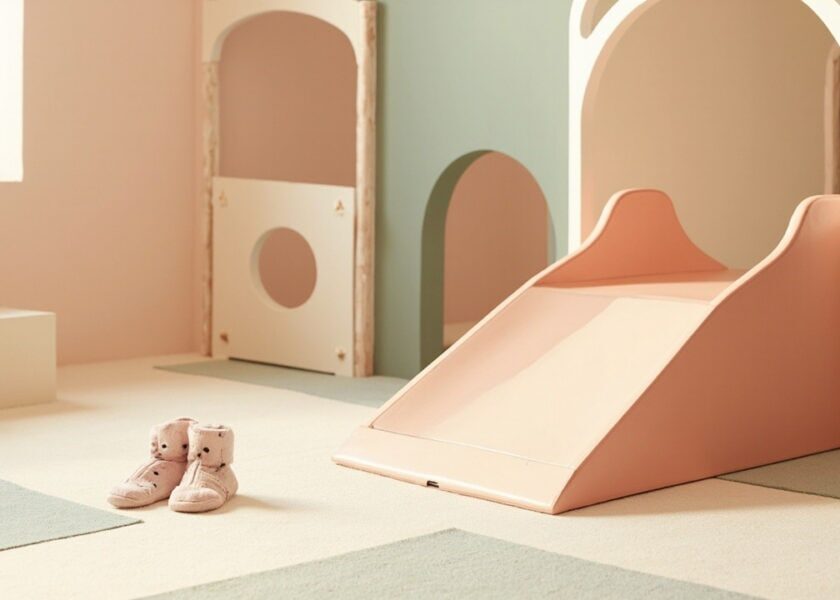
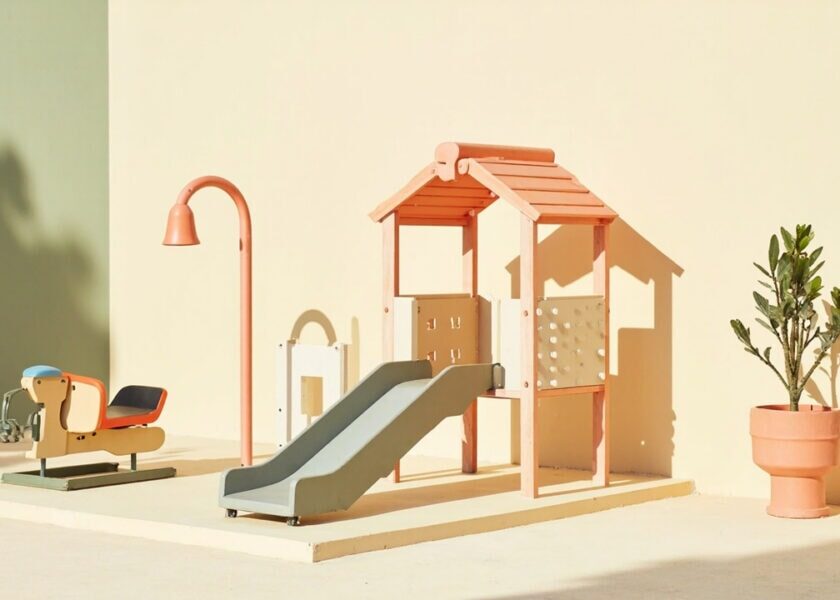
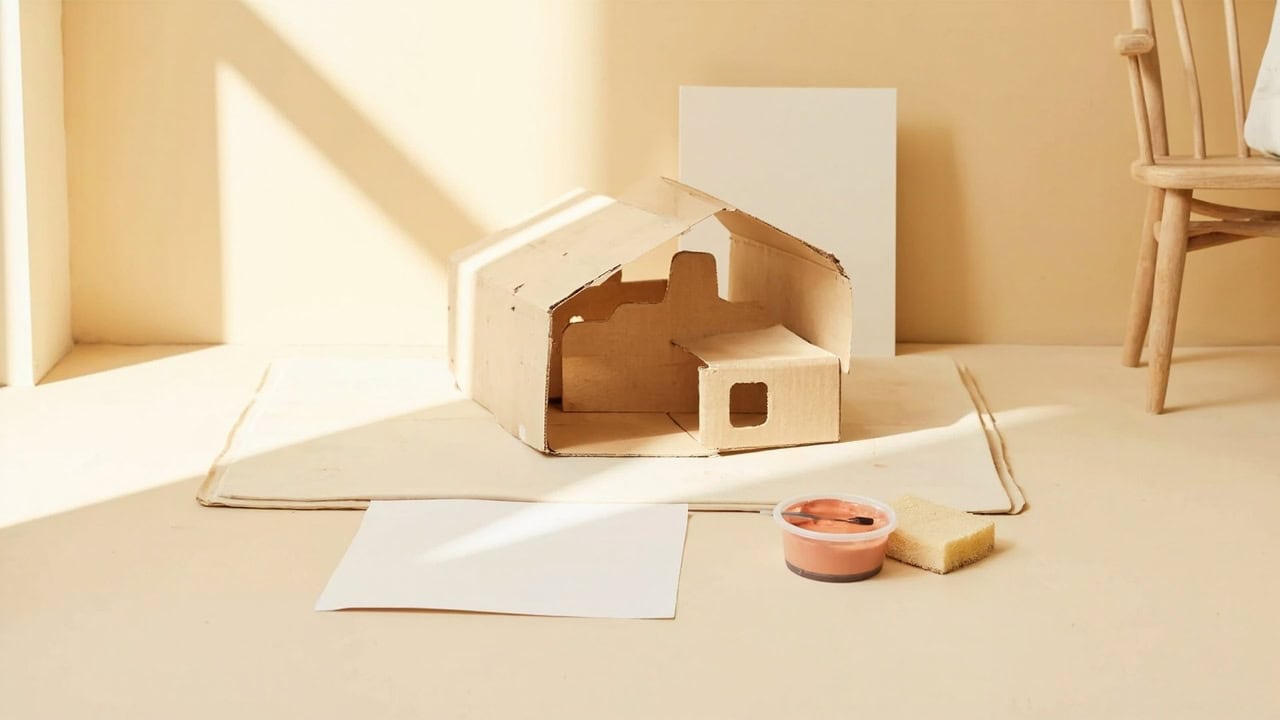
The setting is real. The Straits Times reported on 27 September 2026 that Born To Play, a free community playdate for under-sixes, would run across four sessions at Fernvale Community Club on 10 and 11 October, with children aged six and under alongside their parents and caregivers and older siblings up to eight welcome; admission was reported as free with advance registration, with walk-in entry subject to availability. The reported stations were a cardboard playground, nature play with leaves, twigs and bark, paint printing with everyday items, and a quiet tent for when a hall feels overwhelming. Details may since have changed, and none of this is booking advice. [3]
What the organiser builds, and what you build
That report is worth reading for the design, not the timetable. The sessions were described as letting curiosity lead, with no set rules and no expectation of a perfect outcome, and Yu Jiarong, quoted as a co-organiser, said that sometimes what children want is simply for adults to sit with them and be interested in their world. Charlotte Goh, Playeum's executive director, said in the same report that when adults step back, listen and respond with curiosity, they make space for children's voices and sense of agency to grow. [3]
Singapore parent guidance points the same way. HealthHub says unstructured free play is more valuable for a young child's developing brain than electronic media, and recommends chances for free movement and floor play to build motor skills such as grasp, suck, search, startle, step and crawl. HealthHub also defines independent play as a child playing on his own without parents interfering. Note the difference in setting: that describes a child alone at home, not a session where you sit beside your child. Staying close and staying quiet is not the same as taking over. [4]
Your own corner, then questions instead of instructions
Setup is the job you finish before play starts. American Academy of Pediatrics play tips for preschool-age children suggest giving children easy access to open-ended toys and everyday objects, keeping screens and devices out of reach, and providing one area where children can experiment and get messy. On ECDA's Beanstalk portal, Elsie Tan-Chua, a kindergarten principal and ECDA Fellow, writes that setting up diverse learning centres such as art corners helps children make sense of the world through play; that guidance is written for preschools, and this is an adaptation for one family corner. Two or three stations beat ten. [5] [6]
A hypothetical example, not a tested routine: you arrive with two pieces of cardboard, a tub of water-based paint you have checked and kept in its original labelled container, thick paper and crayons, and your phone in your bag. You claim one mat where you can see the entrance, set the cardboard and paint as two stations rather than five, then sit at your child's level. That part takes minutes. The rest is staying put: step in for safety or distress, and otherwise ask what they are building and why the roof needs to be that size, which is the kind of question ECDA's guidance recommends for extending play. [6] [2]
Materials you did not bring, and what you watch
In a hall you do not control, watching has extra edges. Health Promotion Board and KKH Injury Prevention Working Group guidance asks you to supervise at all times, play with age-appropriate equipment, and avoid clothes with cords or drawstrings, broken or poorly maintained equipment, and wet equipment. In practice that means knowing exactly what is in your own container, watching where your child walks on a crowded floor, and being clear that another family's child at your paint pot is not your supervision. The AAP, whose material advice here is US guidance rather than a Singapore rule, says it is best to supervise children when they use art materials. [1] [2]
Screening a communal paint pot takes under a minute. AAP guidance says to look for a statement that the material conforms to ASTM D4236, with an Approved Product seal from The Art and Creative Materials Institute, while noting this label cannot guarantee complete safety. It advises avoiding materials labelled 'Keep Out of Reach of Children' or 'Not for Use by Children', or carrying hazard warnings, and avoiding donated or found materials unless they stay in their original containers with full labelling. For tools, its nature-art ideas suggest simple safety scissors at about age three. [2] [7]
What that advice covers is labels, solvents, formaldehyde, sensitivities, ingestion and handwashing: AAP prefers water-based supplies because they do not contain chemical solvents, warns that unintentionally eating even small amounts of these solvents can be fatal, advises formaldehyde-free products because some water-based paints may contain a formaldehyde preservative, and says to avoid ingestion such as licking paintbrushes. It also notes that some water-based, cold-water dyes can cause allergic reactions after repeated exposures and suggests looking for safer alternatives, and that safe cleanup, including handwashing with soap and water, matters. Choking hazards and specific product recalls are outside what it covers, so read each product label and ask the organiser what is in every pot. [2]
Where a busy session sits in your child's day
The preschool update to the Singapore Physical Activity Guidelines asks young children to aim for at least 180 minutes of physical activity of any intensity spread throughout each day. It need not be all at once and every minute counts, with 60 minutes of that active time at moderate to vigorous intensity for children aged three and older. Intensity is described by effort: moderate means the child can talk in short sentences but cannot sing, vigorous means difficulty talking. Health Promotion Board's Childhood Health Behaviours Checklist for 4 to 6 year olds puts the same two figures to parents as tick-box questions. [8] [9]
So the active part of a shared session, carrying cardboard, fetching leaves and pressing prints, is movement at some intensity and belongs inside the day's total. How much of a quiet sitting or queueing minute you count is your own judgement, not something the guideline decides. An illustrative calculation only: in a hypothetical 90-minute stretch, 60 active minutes would be about a third of the daily 180 minutes, leaving the rest of the day to make up the difference. [8]
On screens, HealthHub reproduces Ministry of Health guidance: no screen use under 18 months other than interactive video chatting, and less than 1 hour of screen use a day outside school from 18 months to 6 years. A Ministry of Social and Family Development and Ministry of Digital Development and Information release of 31 May 2026 announced that offline activities for families would be made available on the Be Screen Smart portal from the June school holidays, and that the People's Association would provide a curated 'Playkit' to participants of its digital parenting workshops for parents with children aged 3 to 6. Those were announcements at the time, so check the portal for what is there now. [4] [10]
So: claim your own corner, bring materials in labelled containers you have checked, let your child lead while you stay close and watch continuously, and plan the handwashing. And yes, the active minutes count towards 180 minutes a day of activity at any intensity, with 60 minutes at moderate to vigorous intensity still needed from age three. What no article can tell you is whether a particular hall, organiser or pot of paint is safe or well run. [8] [1]
Read next
- Open-ended play at home: the preschooler amounts and safety checks
- HDB playground guidelines and preschool outdoor play: what changes today
- Indoor play venue checks before your first paid indoor play session
Sources
- 6737HPB_KKH Infographics 2_FA with copyright
- Choosing Safe Art & Craft Supplies for Children – HealthyChildren.org
- Free play dates for parents and pre-schoolers to bond | The Straits Times
- Parent Hub: 0-2 Years – Screen Time
- 5 Play Tips for Preschool-Age Children – HealthyChildren.org
- Beanstalk ECDA | Setting Up Learning Centres for Meaningful Play
- Nature Art: Outdoor Inspiration to Boost Your Child's Development – HealthyChildren.org
- MOVE WITH PLAY & GROW
- CHILDHOOD HEALTH BEHAVIOURS CHECKLIST
- "Screen Smart from the Start" Nationwide Movement Launched at the National Family Festival 2026 to Support Families in the Digital Age
EduNanny Editorial · AI-assisted research and writing, reviewed by our automated editorial team. Sources checked 2026-10-10. Featured image: AI-generated editorial illustration.