Breath Bridge Bloom A Near Home Promise for Singapore Infants
Introduction: What EduNanny Is and Why It Exists
EduNanny by BUTLER began with a simple conviction: the first thousand days are not a private scramble but a public promise. Infants do not ask for much—safety, attuned care, and time with an adult who sees them. But those three things must be delivered with precision. Our model combines the science of attachment with the practical dignity of everyday life. We blend centre-based, home-based, and distance support to ensure that every family in Singapore can access consistent, high-quality infant care near home, Monday to Friday, 7am to 7pm, with an ultra-low 1:3 caregiver-to-infant ratio.
We stand on the shoulders of pioneers—Montessori’s respect, Pikler’s floor-level freedom, Bowlby’s secure base, Vygotsky’s guided stretch, Froebel’s play, Malaguzzi’s hundred languages, Spock’s common sense, and Erikson’s trust. We reinterpret their wisdom for modern Singapore, then weld it to strong systems: safety by design, transparent technology, and a calm daily rhythm that turns ordinary minutes into developmental gold.
EduNanny is designed to fit the city and the family at once. This is a practical, scalable approach to infant care in Singapore: centres in communities, licensed care in homes, and distance support when guidance is needed at home or on the move. Our innovation-grade CCTV, modern layouts, flexible hours, nationally aligned standards, and fees payable by CDA/Baby Bonus reduce friction so parents can breathe, bond, and work with confidence.
Tonight, we share five core ideas that define our practice—each one a pledge to every infant and every family we serve. These are not abstractions; they are daily practices you can observe, measure, and partner with.
Topic 1: The Gentle Triad—Breathe, Bridge, Bloom
Infant pedagogy must be human-scale. Our method begins before the lesson, with the adult.
Breathe
Children borrow our nervous systems before they build their own. Caregivers arrive regulated—trained in co-regulation, micro-pauses, and calm, predictable routines. A steady breath is not a luxury; it is lesson one. Practical steps you can apply at home or in a care setting include:
- Start the day with a 60-second family breathing ritual: inhale for four counts, exhale for four, soft sigh at the end. Demonstrate to the infant with a slow, visible breath.
- Use micro-pauses between activities to assess the child’s state: “I notice you’re looking at that toy—shall we explore it together for a minute?”
- Document a short calm-down routine for transitions (diaper change, bottle, nap) and keep it consistent across caregivers and settings.
Bridge
We connect a child’s current state to the next step through warm narration and responsive touch. Vygotsky called it scaffolding; Montessori called it preparation; we call it a bridge—short, sturdy, and used often. Practical implementations:
- Narrate ongoing activity: “You’re placing the block here. Now we’ll slide the block over there.”
- Pair touch with language: gentle hand guiding a reach while naming objects and actions.
- Offer brief, meaningful choices to empower autonomy while maintaining warmth and safety: “Would you like the red ball or the blue ball next?”
Bloom
When a child is calm and connected, curiosity switches on. Only then do we invite exploration—gentle floor play, cause-and-effect toys, songs with simple patterns, and early turn-taking games that foreshadow language and social thinking.
- Set up a floor studio with varied textures and safe exploratory toys; rotate items weekly to sustain interest.
- Use predictable song structures and repetitive phrases to support memory and language acquisition.
- In turn-taking games, model waiting and then respond with positive reinforcement: “Your turn is coming—your friend is listening.”
Topic 2: Safety by Design—The Six-Layer Shield
Safety is not a poster on the wall; it is an architecture. EduNanny’s Six-Layer Shield keeps infants safe in real time.
1) People
Ultra-low 1:3 ratio. Rigorous vetting, continuous training, infant CPR/first aid, and reflective practice. We hire for skill and temperament; we keep only those who are calm under pressure and kind without prompting.
- Regular coaching cycles: quarterly workshops on soothing, handling, and responsive care.
- Shadowing periods for new caregivers to ensure consistent application of routines.
- Wellbeing checks for caregivers—supportive supervision to prevent burnout and preserve composure.
2) Space
Modern layouts with safe sleep zones, low shelves, rounded edges, finger-safe hinges, secure sanitisation, and air-quality and temperature checks. The room teaches before the adult speaks.
- Daily safety inspections and a simple room-scorecard for quick audits.
- Safe sleep zones with independent visibility for caregivers and parents during visits.
- Age-appropriate furniture that reduces clutter and risk during transitions.
3) Process
Clear routines—hand hygiene, bottle and food prep protocols, the ABC of infant sleep (Alone, on their Back, in a Cot), safe transfers, and incident drills. We rehearse so we can respond, not react.
- Checklists for each shift: feeding, sleep, diapering, skin-to-skin time, and engagement milestones.
- Incident drills with debriefs that capture learnings and prevent recurrence.
- Transparent transfer protocols between home and care settings to maintain continuity.
4) Technology
Secure CCTV with privacy safeguards; digital check-in/out; live care notes; and transparent incident reporting. We use technology to inform and reassure, not to replace presence.
- Access controls and privacy settings clearly explained to families.
- Real-time updates on feeding, sleep, mood, and development milestones through secure portals.
- Monthly safety dashboards summarising incidents and improvements.
5) Proximity
Near-home care reduces long commutes, keeps infants in familiar rhythms, and anchors families to a trusted local team. Safety improves when distance shrinks.
- Neighbourhood hubs and home-based options to enable quick access to caregivers.
- Structured handover rituals at drop-off/pick-up to maintain consistency.
- Local caregiver networks to foster familiarity and trust within communities.
6) Partnership
Parents are part of the circle. Shared plans, daily updates, consistent routines between home and care—continuity is a powerful form of protection.
- Co-created daily plans that reflect family routines and cultural practices.
- Daily briefings and weekly summaries to align on development goals.
- Joint review of concerns with a transparent approach to problem-solving.
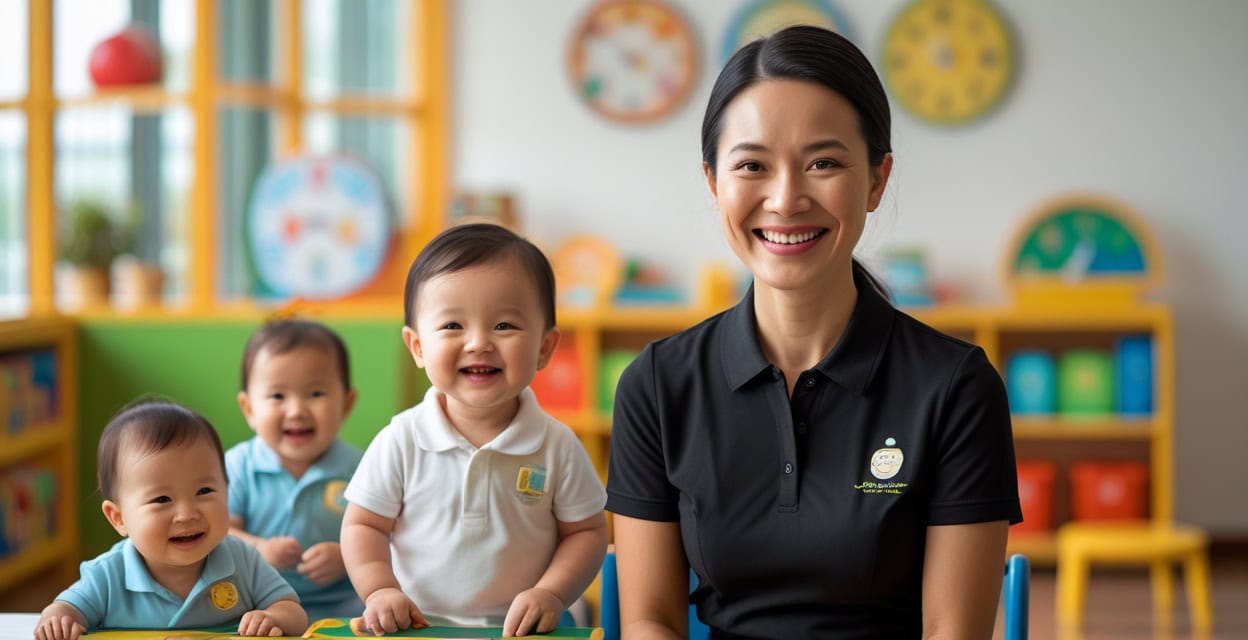
Topic 3: The Four Streams of Development—A Daily Practice
Infancy is not a race; it is a river with four streams that flow together. Our curriculum is delivered minute by minute across these streams.
Attachment Security
Attentive caregiving, predictable routines, and sensitive responses. Bowlby’s secure base becomes the launchpad for all learning. Practical applications:
- Wake-time routines that end with a comforting goodbye cue, so the child feels safe when separated.
- Responsive caregiving that notices cues (fussiness, gaze aversion, yawns) and responds promptly.
- Documentation of attachment-related milestones and parent-parental guidance on continuity at home.
Sensorimotor Exploration
Pikler’s respect for movement guides our floor practice. Tummy time becomes a joyful studio of reach, roll, and grasp. We assist only as needed to foster coordination and confidence.
- Daily floor play with varied textures, objects, and toys to encourage motor planning.
- Progressive positioning routines to support head control, trunk development, and balance.
- Observation notes on milestones and subtle shifts in movement quality.
Language-in-Context
Rich, warm talk—names for feelings, objects, actions. We use home languages alongside English to honour identity and accelerate comprehension. We narrate rather than instruct, invite rather than command.
- Conversation-rich routines: describing actions during care tasks, singing, and shared reading with interactive prompts.
- Multilingual exposure that respects family language preferences and builds foundational bilingual skills.
- Record-keeping of language exposure and comprehension cues to guide parents on at-home practice.
Emerging Autonomy
Small choices build persistence and self-efficacy—the bedrock of later problem solving. Practices include:
- Offer two safe options for a single activity to foster decision-making.
- Encourage self-feeding, dressing, and independent play within safe boundaries.
- Celebrate attempts and provide gentle scaffolding to extend effort with minimal frustration.
We are not chasing milestones; we are cultivating capacities. Outcomes include secure attachment, curiosity, attention span, joy in mastery, and the early habits of self-regulation.

Topic 4: Measuring Joy—Because Happiness Is a Developmental Need
Happiness is not a soft metric. In infancy, joy signals safety, readiness, and healthy brain chemistry. EduNanny’s “Joy Index” observes three visible markers:
- Calm: rhythmic breathing, relaxed hands, settled gaze—rest-and-digest in action, enabling growth and digestion.
- Curiosity: visual tracking, reach-and-grasp sequences, repetition with variation—the child returns to challenges that are “just right.”
- Connection: social smiles, back-and-forth cooing, seeking the caregiver’s face for reassurance—the reciprocity that builds language and empathy.
We record these signals alongside sleep, feeds, nappies, and play arcs. Parents don’t just hear that a day went well; they see how it went well, in behaviours that matter. Practical tips for parents:
- Maintain a simple Joy Index diary at home: note calm moments, curious explorations, and moments of social engagement.
- Schedule daily “face-to-face” time with the child, even across busy work days, to reinforce connection.
- Share short video clips of joyful interactions with a short note describing what was observed and what it means for development.
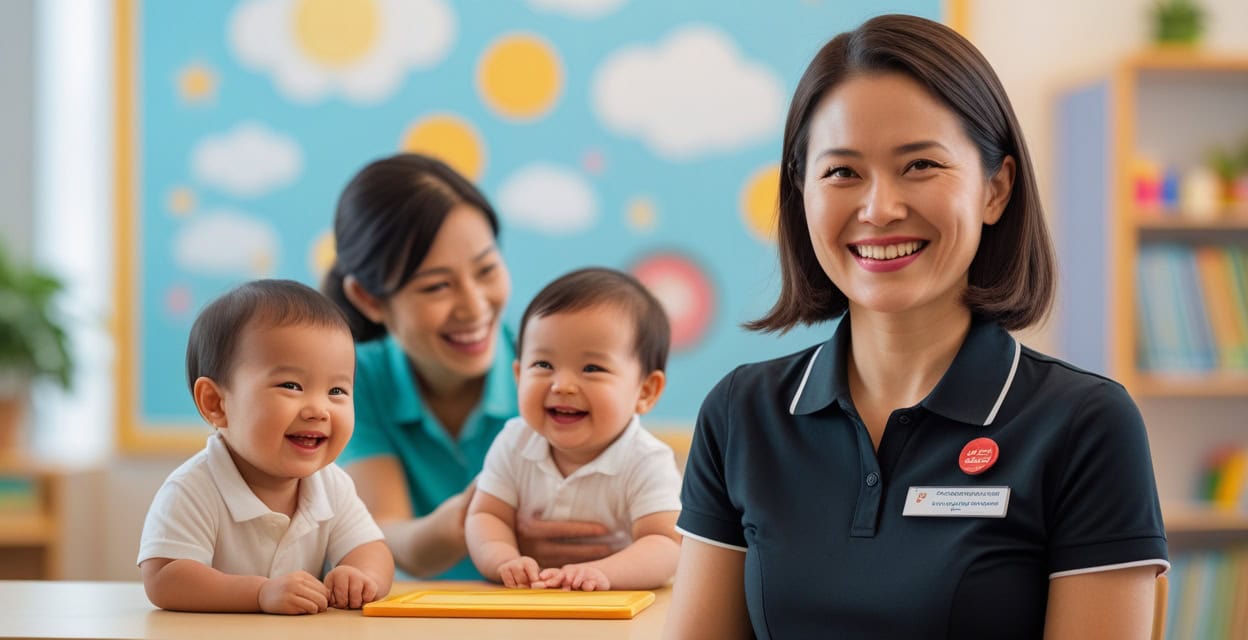
Topic 5: The Quiet Profession—What a Childminder Really Does
Childminding is a calling. It is also a craft. We teach our teams three daily verbs:
- Witness: Observe with precision. Notice the micro-moments—how a child settles, what captures attention, when frustration arises. Data begins with noticing.
- Weave: Turn observations into the next invitation. Weave routines with relationships; weave comfort with challenge; weave family culture into the day’s songs and stories.
- Widen: Gently expand the child’s world—new textures, new words, new peers—without overwhelming. A good day grows small circles just enough.
Childminders are not stand-ins for parents; they are partners, translators, and builders of reliable rhythm. Their work is invisible when done well—like good editing, it lets the author’s voice—the child’s—be heard more clearly.

Why This Model Fits Singapore—And Families Today
- Centre-Based and Home-Based: Calm, modern centres in communities and licensed home premises for families who prefer smaller settings. The same standards, scaled to your preference.
- Distance Support: Coaching and continuity at home through practical guidance and remote check-ins so routines stay steady during travel or transition.
- Hours That Work: Monday to Friday, 7am–7pm—so schedules don’t break the bond.
- Affordable Access: Fees from $33/day; payable by CDA/Baby Bonus where eligible. Quality must be reachable to be meaningful.
- Transparency and Trust: Innovation-grade CCTV, live notes, and predictable communication. We earn trust by showing our work.
- National Alignment: ECDA Childminding Pilot and National Social Initiative—EduNanny participates as part of a broader national effort to expand safe, dignified infant care options, with a maximum employment mandate that creates stable, skilled jobs in neighbourhoods across the island.
- One Standard, Many Doors: Whether you enter via EduNanny.com or Childminding.EduNanny.com, whether you choose centre, home, or distance support, you receive the same human-scale promise: safety first, attunement always, learning through relationship.
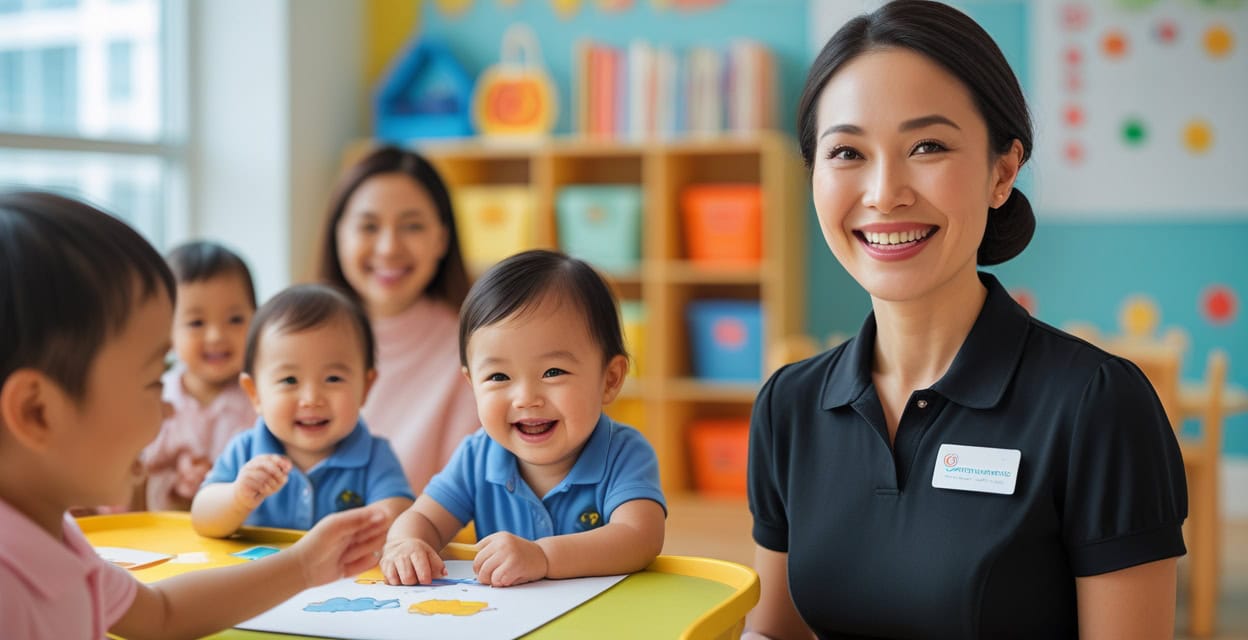
In Summary—Benefits at a Glance
- Excellence and quality at human scale
- Centre-based, home-based, and distance support options
- Monday–Friday, 7am–7pm, islandwide Singapore
- Convenient near-home locations in community and home premises
- Ultra-low 1:3 infant ratio
- Transparent innovation: secure CCTV and modern layouts
- Affordable from $33/day; fees payable by CDA/Baby Bonus (where eligible)
- A childminding pilot aligned with national goals; maximum employment mandate
- Delivered by EduNanny by BUTLER; learn more at EduNanny.com and Childminding.EduNanny.com

The Philosophy and Purpose of EduNanny Childminding
Our philosophy is simple: childhood is not rehearsal; it is life now. We therefore build days worthy of the child’s trust. We kneel to their level, not because they are small, but because respect scales down. We speak softly, not because they cannot hear, but because intimacy is the natural register of learning. We plan deliberately, not to control, but to create the conditions in which self-discovery feels safe.
EduNanny’s purpose is civic as well as personal. When an infant experiences safety, attunement, and exploration every day, Singapore gains a citizen more likely to regulate emotion, persist at tasks, empathise with others, and learn with joy. That is not a private outcome; it is public value. By bringing excellence within reach—centre-based, home-based, and distance—by operating Monday to Friday, 7am to 7pm, by staffing at 1:3, by opening doors across the island, by keeping fees affordable and payable by CDA/Baby Bonus, by embracing transparent technology and modern layouts, by participating in national pilots and employment mandates—we turn a promise into practice.
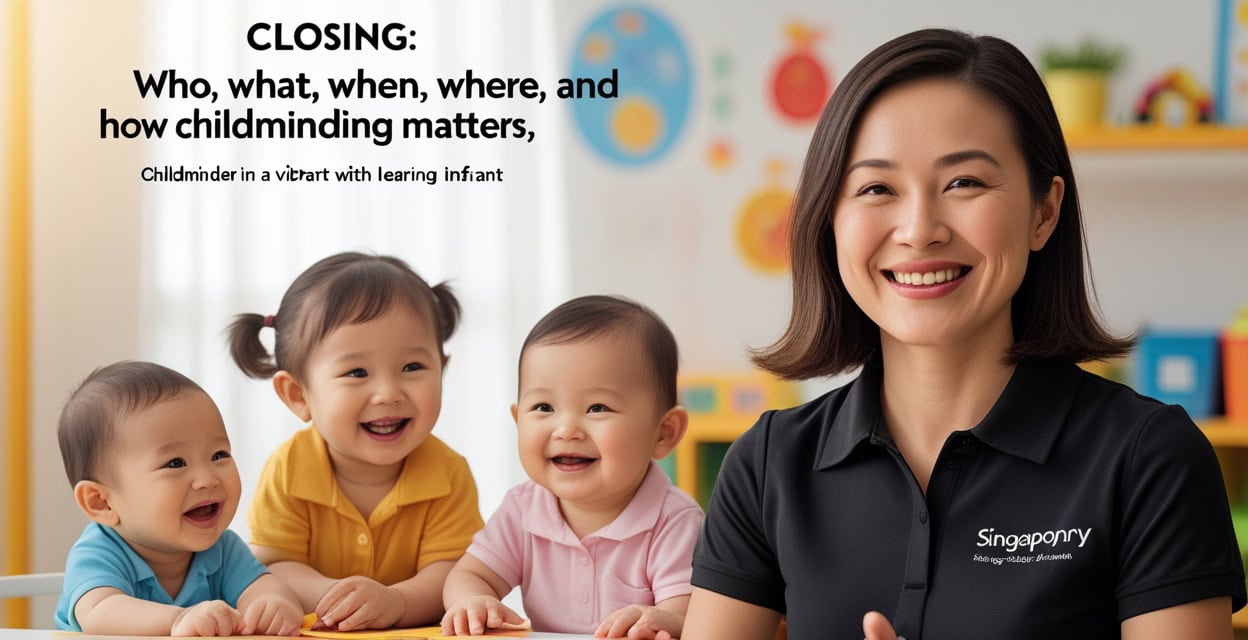
Closing: Who, What, When, Where, and How Childminding Matters
Who does childminding serve? Infants first—because they cannot wait for the world to slow down—and parents next, because a rested, confident parent is an infant’s second secure base.
What is childminding at its best? It is the daily practice of turning care into growth: safe arms, calm rooms, and invitations to explore—guided by science, shaped by culture, delivered with heart.
When does it matter most? Every morning handover, every nap transition, every bottle and burp, every diaper change, every smile returned. The first thousand days are not dramatic; they are decisive.
Where does it belong? Near home, inside neighbourhoods, in centres and licensed homes that feel familiar. Belonging begins with proximity.
How is it delivered well? With design, discipline, and devotion—design that prevents harm, discipline that keeps promises, and devotion that treats each child as a person with present dignity and future possibility.
Why EduNanny for Your Family
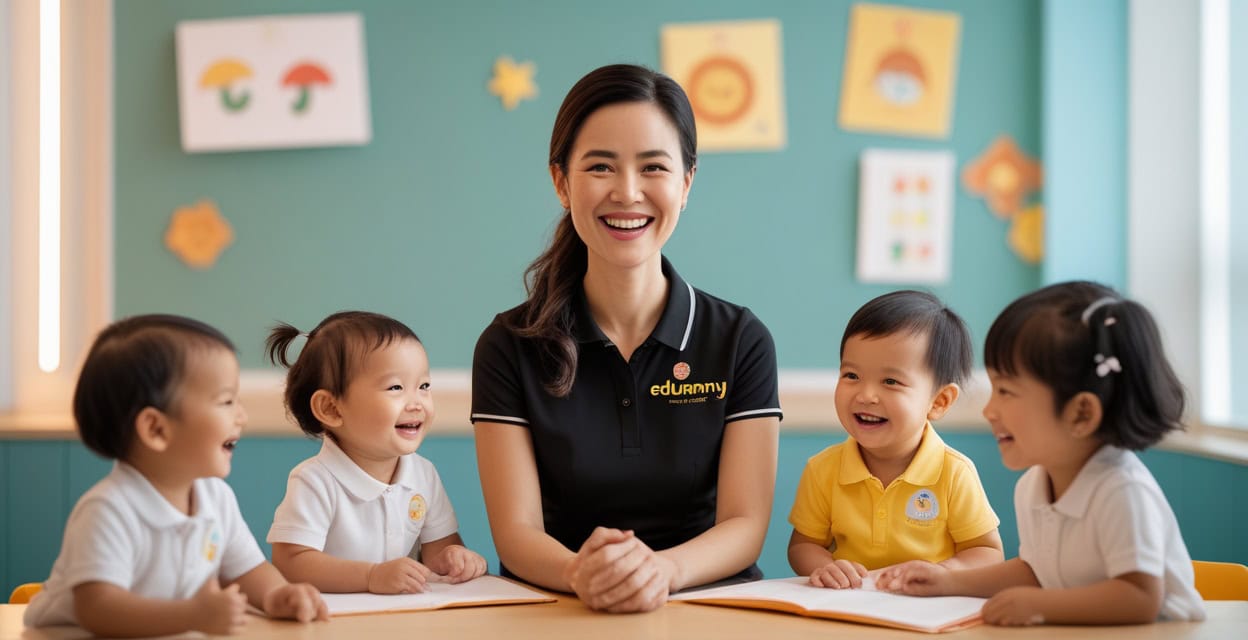
Our approach is not merely a service; it is a framework for thriving in the earliest days. We invite you to walk through a calm, modern room, meet a caregiver who turns minutes into meaning, and see your child seen. Let EduNanny be your partner in building a trusted rhythm for your family, empowering you to go to work with a light heart and return to a child who is calm, curious, and connected.
Parents of Singapore, your child’s first thousand days are a tapestry of tiny choices. Choose a partner that breathes, bridges, and helps your child bloom. Choose a team that holds safety as architecture, not slogan. Choose practitioners who witness, weave, and widen with care.
Choose EduNanny by BUTLER. Visit EduNanny.com or Childminding.EduNanny.com. Walk through a calm, modern room. Meet a caregiver who knows how to turn a minute into meaning. See your child seen. Go to work with a light heart. Come home to a baby who is calm, curious, and connected.
This is how we cradle potential and build tomorrow—quietly, expertly, together. Thank you.
[#EduNanny, #SingaporeInfantCare, #AttachmentBasedCare, #EarlyChildhoodDevelopment, #ChildmindingSingapore]Ready to Experience Excellence?
Transform Your Family’s Journey
Discover Singapore’s leading infant care and childminding services. Expert guidance for your little one’s first thousand days.