From Floor Level to a Nation EduNanny Near Home 1 to 3 Standard for Singapore First Thousand Days 2024 to 2027
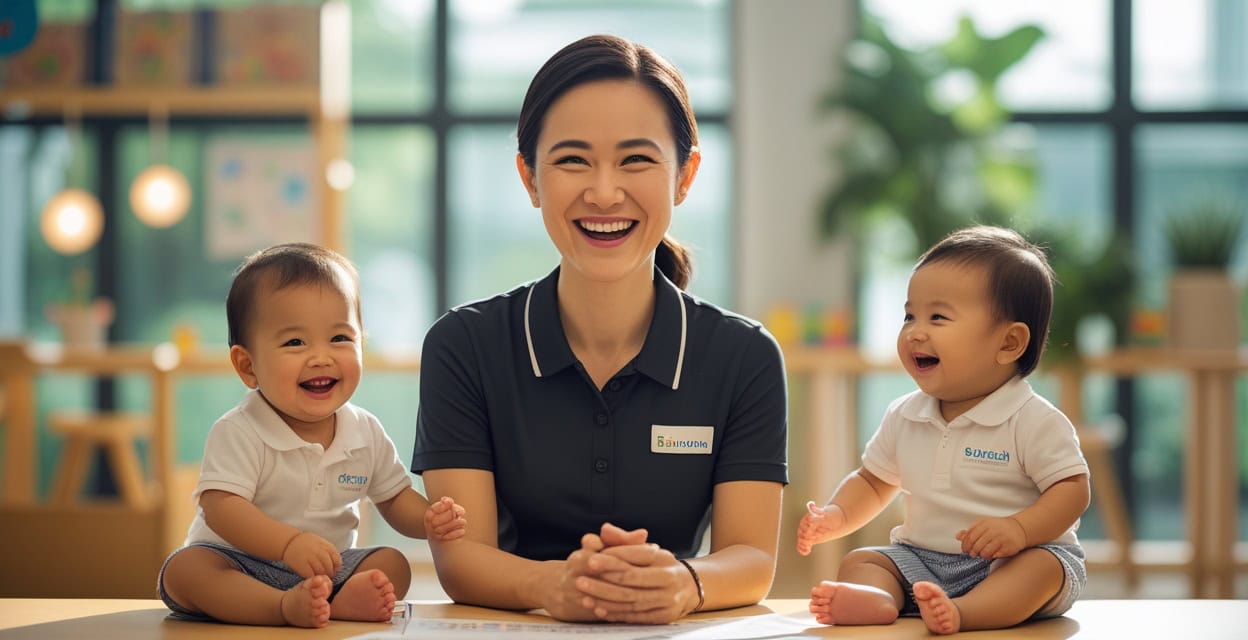
EduNanny: A New Standard for Infant Care in Singapore
In the earliest days of life, attention is the newborn’s most precious currency. EduNanny rests on a simple yet powerful premise: near‑home, unhurried, professional care that treats infants as capable learners from the first eye contact. This article translates that vision into practical guidance for parents, caregivers, and communities who want to begin well and continue with purpose.
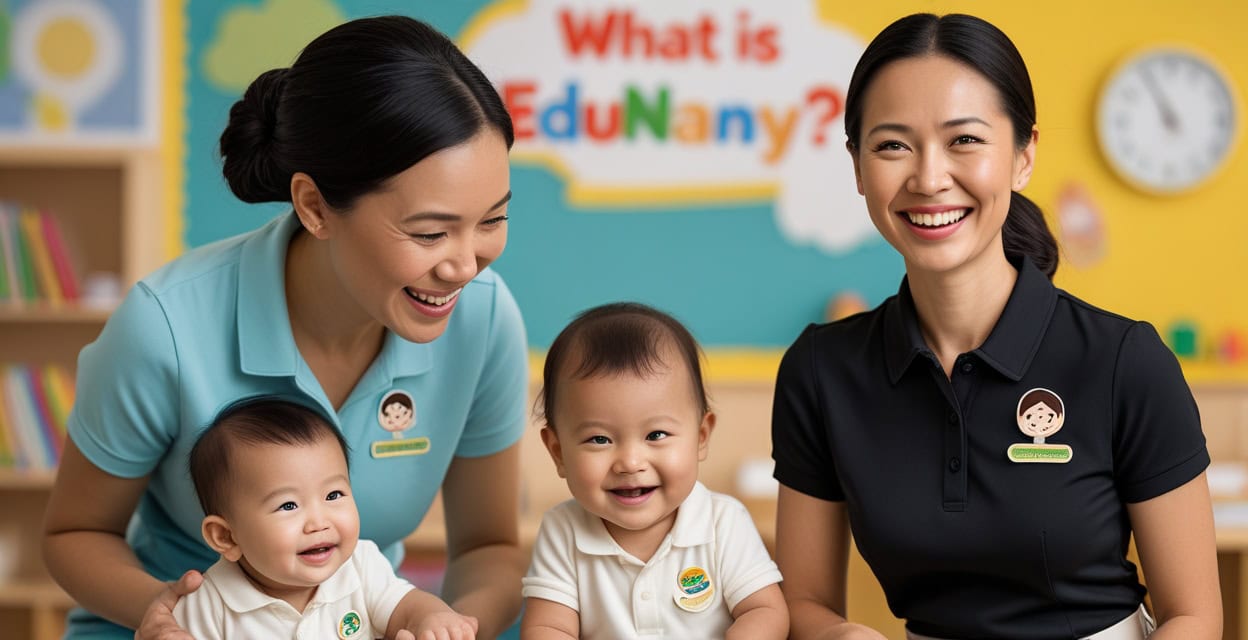
What is EduNanny?
- A national social initiative operated by EduNanny by BUTLER, aligned to the ECDA Childminding Pilot (December 2024–December 2027).
- A hybrid model of Centre-Based and Home-Based childminding with islandwide availability, Monday to Friday, 7am to 7pm, designed for working families and the realities of Singapore life.
- An excellence platform offering an infant ratio of 1:3, modern layouts, privacy‑respecting cameras for transparency, and a pedagogy shaped by Montessori, Pikler, Reggio, Piaget, Vygotsky, Bowlby, Spock, and Erikson.
- Affordable from $33/day, with fees payable by CDA/Baby Bonus where eligible.
- Built to serve families and to serve society: a Maximum Employment Mandate that dignifies childminding as a skilled profession in our neighborhoods.
- Details and enrolment: EduNanny.com and Childminding.EduNanny.com.
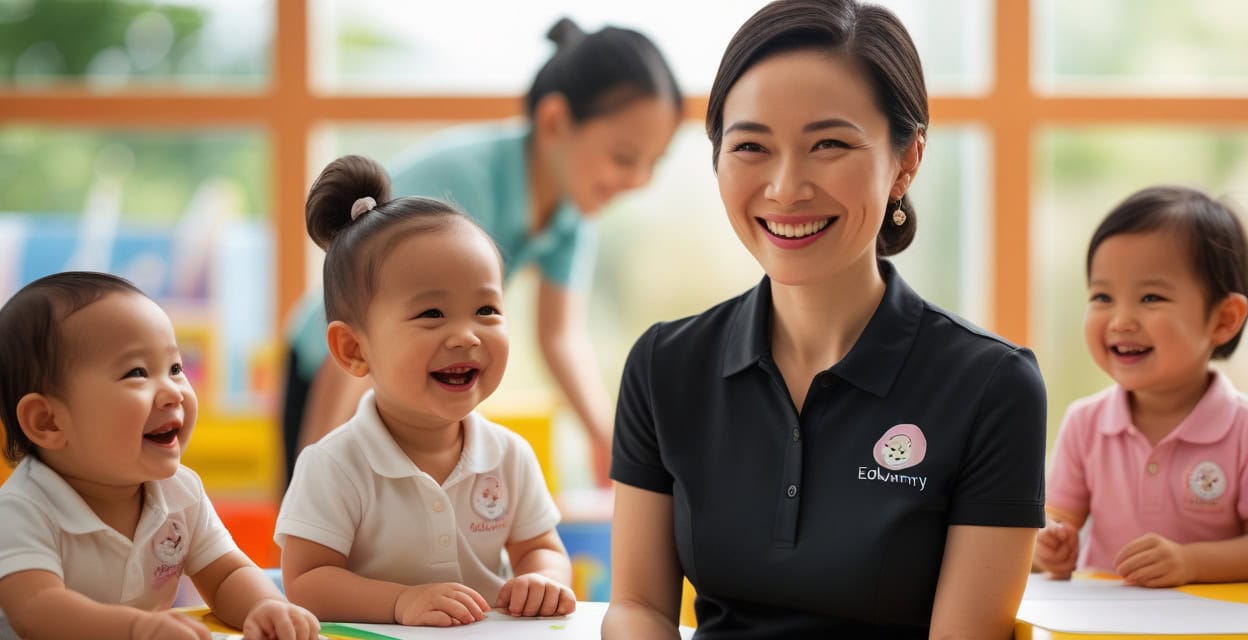
How EduNanny Makes Infant Care Great in Singapore
Singapore moves quickly; infants move more slowly. EduNanny narrows the gap by bringing care closer to home, lowering ratios, and elevating practice. Near‑home access reduces commute stress, preserves family rhythms, and strengthens neighborhood webs of trust. The 1:3 promise makes time elastic—caregivers can watch, wait, and respond without haste. Our curriculum, rooted in attachment science and floor‑level learning, turns ordinary minutes into brain-building micro‑moments.
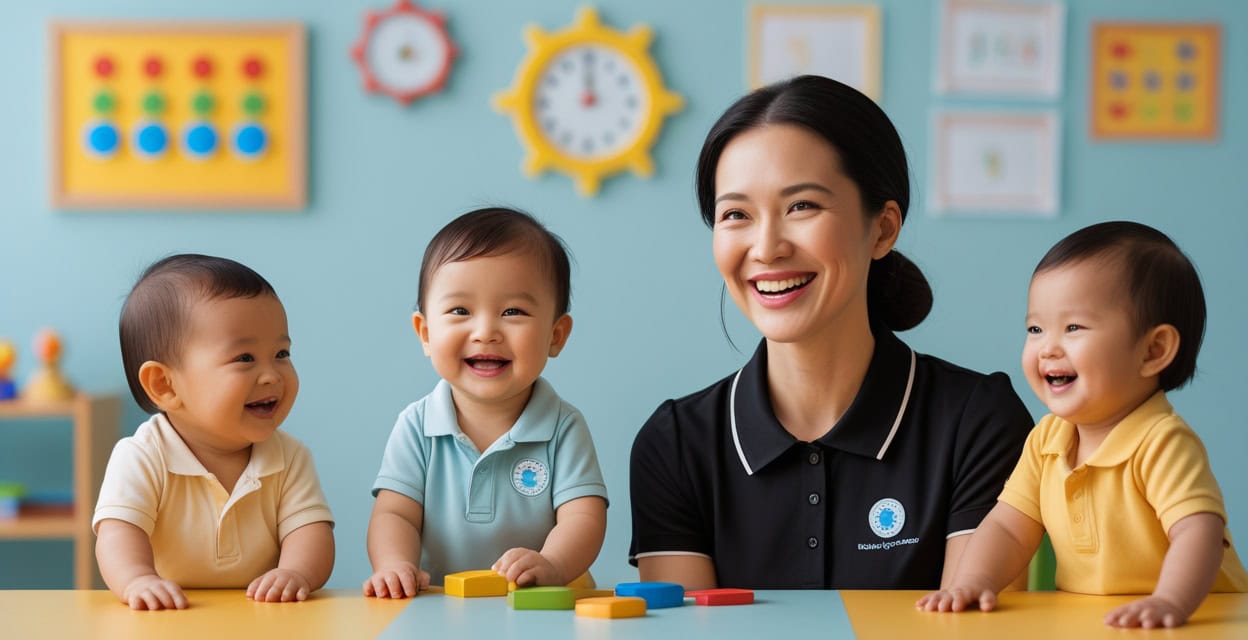
Five Topics for a New Standard
1) Pedagogy of Proximity: Attunement at Eye Level
The theory: Bowlby’s secure base, Erikson’s trust vs. mistrust, and Pikler’s respectful caregiving converge on one practice: be present, be predictable, be precise. Piaget’s sensorimotor stage reminds us that infants learn with their bodies first; Vygotsky’s scaffolding insists that learning is relational.
The practice: Implement the Notice–Name–Nurture routine. Notice the cue (a subtle grimace, a glance at a shelf). Name it (“You’re reaching for the shaker”). Nurture it (offer the object, wait for the grasp, model a gentle shake).
- Notice: Track micro‑signals during routine care (diaper changes, feeding pace, toy reach).
- Name: Verbalize what you observe in simple, concrete terms.
- Nurture: Respond with a careful, developmentally appropriate prompt or choice.
The environment: A floor‑level, prepared environment inspired by Montessori with soft zones for rolling and creeping, reachable objects, mirrored corners for body awareness, and documentation to share progress with families.
The pace: Minutes, not modules. The One‑Minute Curriculum yields 5–10 micro‑interactions per hour—tiny invitations that accumulate into language, motor planning, and self‑regulation. Examples: a caregiver labeling a toy’s function, modeling a simple mouth or hand motion, or inviting the infant to imitate a facial expression.
2) Safety by Design: Four Rings of Protection
Ring 1—Premises: Modern layouts with sightlines, safe sleep spaces, hazard mapping, clean air and light. Spaces are designed for infant ratios, not retrofitted after thought.
Ring 2—Practice: Safe sleep protocols (back to sleep, clear cots), bottle preparation with allergy checks, sun and water safety, emergency drills, and incident‑learning loops.
Ring 3—People: 1:3 staffing for infants, with ongoing training in infant CPR/First Aid, respectful handling (Pikler), and trauma‑informed care. Recruited for calm temperament and trained for clinical clarity.
Ring 4—Proof: Innovation CCTV with parent‑access moments, digital checklists, daily logs, and ECDA‑aligned audits. Transparency builds trust; trust sustains safety.
- Practical tip for families: Ask to see safety protocols, observe a walkthrough, and request a sample daily log during a trial week.
- Practical tip for caregivers: Maintain a weekly audit of spaces and update risk maps after new equipment or changes.
3) Developmental Threads: How Brains, Bodies, and Bonds Grow Together
Movement: Daily floor time for rolling, creeping, cruising; grasp–release games; bilateral coordination. Avoid propping before motor readiness.
Language: Dialogic talk during diaper changes; song loops for transitions; baby sign to bridge needs; narrative wind‑downs at naptime.
Social–Emotional: Co‑regulation rituals (breathing with a caregiver’s count of four), gentle turn‑taking, joyful “serve and return” play.
Thinking: Object permanence baskets, cause‑and‑effect trays, and gradually challenging activities within each child’s zone of proximal development.
Self‑Care Foundations: Gentle participation in dressing, hand‑washing songs, and infant‑led feeding posture with pacing—cultivating autonomy without hurry.
- Home tip: Create a rotation of safe, reachable objects to encourage exploration and fine motor development.
- Observation cue: Track progress in movement milestones and share with educators to tailor prompts.
4) The Happiness Ecology: Small Joys, Strong Nerves
Predictable rhythms: Eat, play, rest—protects developing nervous systems and reduces cortisol.
Micro‑joy as curriculum: Peekaboo, scarf play, “yes” spaces for safe adventure, and outdoor time for light and breeze.
Sleep as sacred: Darkened cot areas, white‑noise buffers, individualized nap plans, and slow wake‑ups respecting infant tempo.
Belonging: Familiar caregivers, consistent voices, and family photos at eye level to anchor safety in sameness before curiosity in novelty.
- Home practice: Establish a predictable daily rhythm with flexible timing to honor your child’s cues.
- Parent insight: Use a simple photo wall at home to anchor routines—eases transitions and strengthens attachment.
5) The Purpose of Childminders: A Civic Profession
The role: A childminder is a first teacher of trust, not merely “help.” When the nation honors this role, outcomes improve for decades.
Pathways: The EduNanny Ladder—induction, infant specialization, lead childminder, mentor, trainer. Professional identity, living wages, and scholarships foster pride and permanence.
The mandate: A Maximum Employment Mandate that grows dignified neighborhood jobs, stabilizing families and strengthening community ties.
Partnership: Parents as co‑educators. Weekly two‑way reflections: “What did we see? What might we try next?” Every infant gains a village; every village grows wiser.
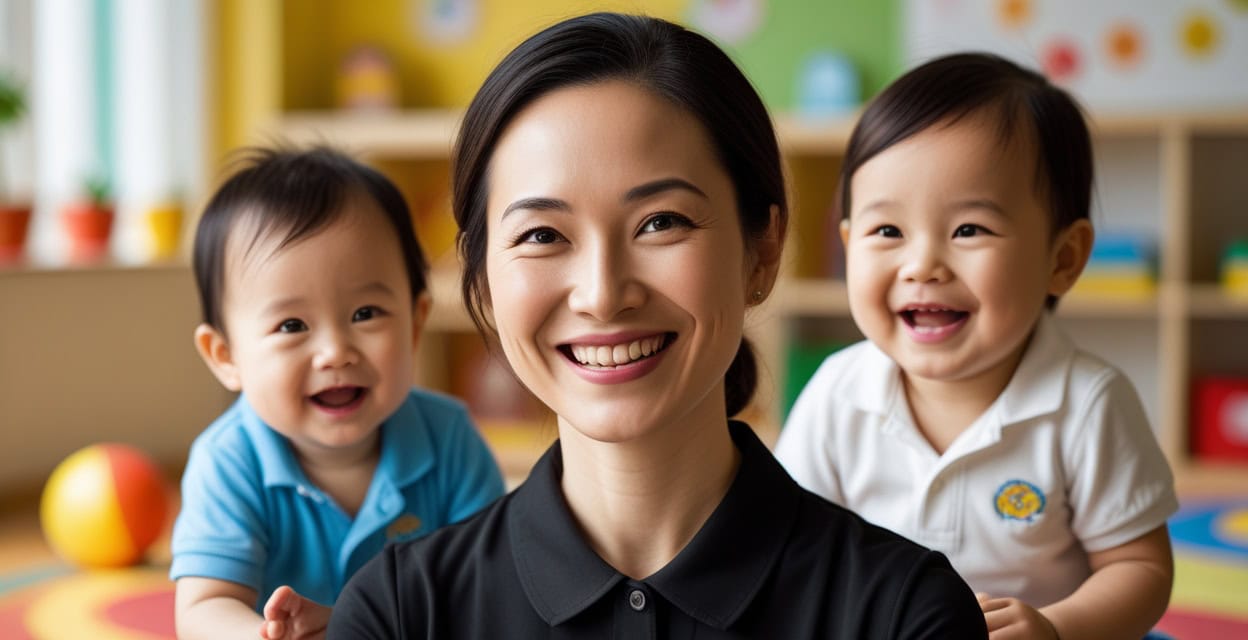
What Families Can Expect, Practically
- Availability: Monday–Friday, 7am–7pm, islandwide across community and home premises.
- Formats: Centre‑Based and Home‑Based Childminding; distance support for home days (tele‑coaching, daily routines, developmental check‑ins).
- Ratios: 1:3 infant ratio—full stop.
- Design: Modern infant layouts; floor‑level materials; calm palettes; outdoor time wherever possible.
- Transparency: Innovation CCTV, secure updates, daily notes, photos, and routine charts.
- Affordability and access: From $33/day; CDA/Baby Bonus options where eligible.
- Enrollment and info: EduNanny.com and Childminding.EduNanny.com.
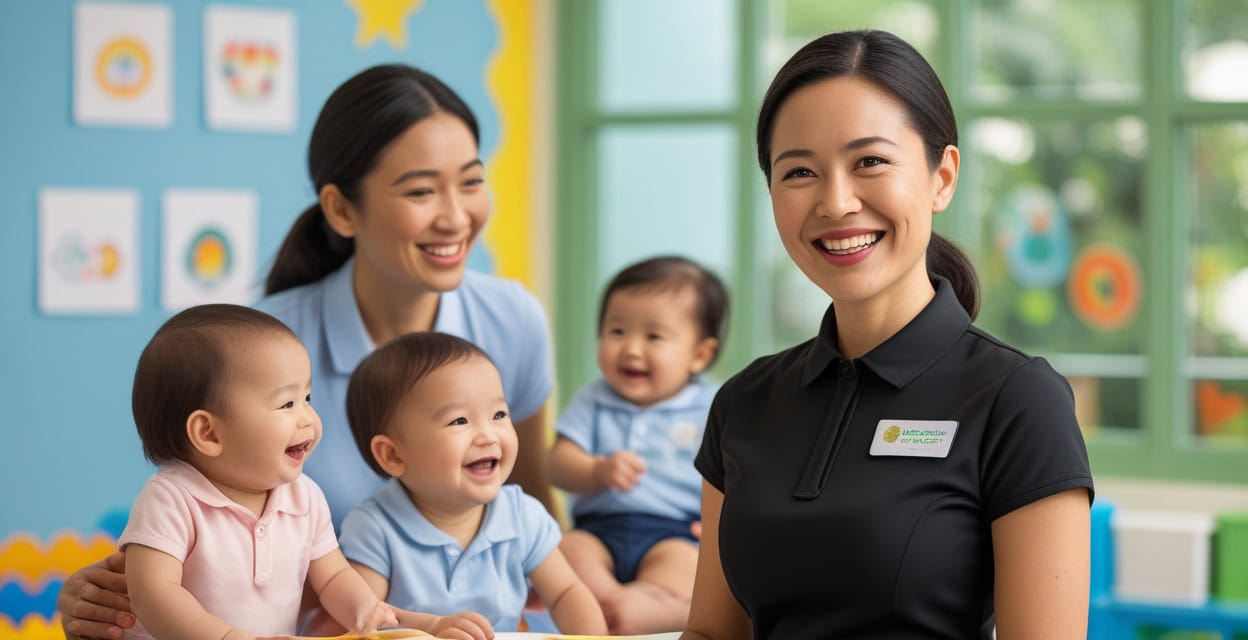
Why This Matters Now
The first thousand days are not a trend; they are the architecture of a lifetime. Synapses fire. Habits of the nervous system and heart are formed. In this window, quality is not a luxury—it is destiny.

EduNanny’s Promise
- Excellence and quality without complexity.
- Access near home for real families on real schedules.
- A workforce treated as professionals, because children deserve professionals.
- A curriculum that is humane, evidence‑led, and culturally Singaporean in its respect for family, neighbors, and a shared future.

Closing: Who, What, When, Where, How
Who does childminding serve? Infants who need steady eyes and safe hands; Parents who need reliability and respect; Childminders who deserve a profession with honor; Singapore, which needs citizens who trust, explore, and care.
What is childminding at its best? The daily, skilled craft of building secure attachment, self‑regulation, language, and motor confidence—minute by minute, floor to horizon.
When does it matter? Now, and every day across the first thousand days—because the brain does not wait for policy.
Where should it happen? Near home, in centers and homes woven into our neighborhoods, so families keep their rhythms and children keep their roots.
How do we deliver it? With the 1:3 promise; with safety by design; with the micro‑rituals of attunement; with innovation CCTV and transparent practice; with affordability from $33/day and CDA/Baby Bonus options; with Monday–Friday, 7am–7pm consistency; with Centre‑Based, Home‑Based, and Distance support that meet families where they are.

EduNanny’s Localizing Philosophy: A Call to Begin Well
EduNanny’s philosophy is humble and bold in the same breath: kneel to greet, rise to protect, and walk alongside. We marry the wisdom of Montessori’s prepared world, Pikler’s respectful tempo, Reggio’s documentation of wonder, Piaget’s discovery, Vygotsky’s scaffolding, Bowlby’s secure base, Spock’s humane counsel, and Erikson’s stages of becoming—then localize it to the cadence of Singaporean life. This is not just a service; it is a social compact that dignifies work, steadies families, and gives every infant a calm and joyful start.
We invite you to join us—parents, caregivers, employers, community leaders. Visit EduNanny.com or Childminding.EduNanny.com. Tour a space, ask hard questions, and meet the people who will kneel, every day, at eye level with your child. Small rooms can build a great republic, if we fill them with attention, safety, and delight. Let us begin well—together—one minute, one infant, one neighborhood at a time.

Conclusion
Educating begins at the cradle. By embracing near‑home, low‑ratio care, and a science‑based, human approach, EduNanny offers a practical blueprint for Singapore’s children, families, and communities. Prioritize everyday moments, safety, and professional development for caregivers, and you invest in a healthier, confident, and connected generation. Start the conversation, tour a space, and consider how EduNanny can fit your family rhythm—today and for the years to come.
Call to action: Explore EduNanny spaces, ask about the 1:3 model in your neighbourhood, and enroll for a trial week to experience the difference of attention, safety, and joy in the first thousand days.
SEO keywords: [#EduNannySingapore, #InfantCareSingapore, #EarlyChildhoodDevelopment, #1to3InfantRatio, #CivicChildminders]
Ready to Experience Excellence?
Transform Your Family’s Journey
Discover Singapore’s leading infant care and childminding services. Expert guidance for your little one’s first thousand days.