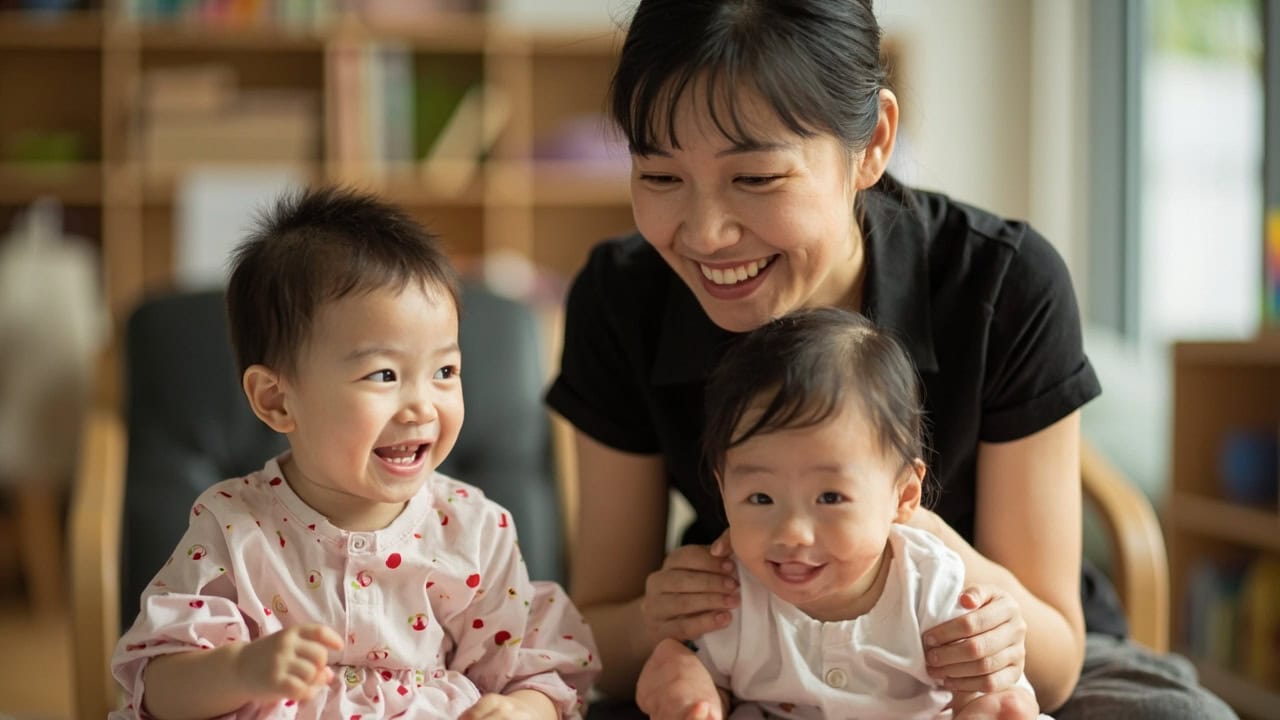
Before School Starts: Why Your Child’s Body Is the Real Foundation for Learning
The Quick Summary
Before your child writes a single letter or solves their first mathematics problem, something far more important is already happening. In the months and years before Primary One, before the school bag and the first morning uniform, your child’s body is building the very architecture that will make learning possible.
- Learning begins in the body. Before a child can read, write, or sit still, their sensory and motor systems must be mature enough to support those skills.
- Movement is curriculum. Every time your child grasps a toy, climbs, pours water, or plays with sand, they are building neural pathways that will one day make academic learning possible.
- Quality childcare is educational childcare. The right environment provides the sensory-rich experiences and purposeful movement that build the neurological foundation for school readiness.
- Your childcare choice is a learning decision. When you choose where your child spends their early years, you are choosing the environment in which their brain builds its capacity to learn.
What Singapore Gets Right (And What It Misses)
In Singapore, we have become extraordinarily good at talking about what children should know by the time they start school. We speak fluently about literacy benchmarks and numeracy expectations. We debate the merits of different primary schools with the intensity that other countries reserve for university applications. We sign our children up for music lessons, art classes, and language programmes, driven by a deep and genuine desire to give them every advantage in a world that feels increasingly competitive.
These are not the choices of anxious or negligent parents. These are the choices of parents who care profoundly about their children’s futures and who want desperately to do right by them.
But in focusing so intently on what children should know, we have largely overlooked the much more fundamental question: whether their bodies and brains are actually ready to learn.
The Hidden Foundation: Sensory-Motor Development
Here is what neuroscience has taught us over the past several decades, and what every quality early childhood educator understands intuitively: learning is not primarily a cognitive act. It is a whole-body experience that begins in the sensory systems and moves upward through the motor pathways before it ever reaches the parts of the brain we associate with reading, writing, and reasoning.
When a baby grasps a toy, they are not just playing. They are building the neural pathways that will one day allow them to hold a pencil correctly.
When a toddler learns to climb, jump, and balance, they are not just burning off energy. They are developing the vestibular and proprioceptive systems that underpin attention, focus, and the ability to sit still in a classroom.
When a preschooler pours water from one container to another, manipulates playdough, or uses child-safe scissors, they are building the fine motor control and hand-eye coordination that will make handwriting possible.
None of this looks like school. All of it is school. It is the school that happens before school, and it is the most important school your child will ever attend.
The Body as First Teacher
Sensory-motor development refers to the way a child’s nervous system learns to take in information through the senses and respond through movement. It is the process by which the body teaches the brain how to learn.
Long before a child can focus their eyes on a letter or sustain attention on a page, their sensory systems must be mature enough to filter out irrelevant information and attend to what matters. Long before a child can form letters on a page, their hands must have developed the strength, coordination, and control that come from years of grasping, manipulating, and exploring. Long before a child can sit still and listen to a teacher, their vestibular system must have developed through rolling, tumbling, climbing, and swinging.
The body is not just a vehicle for the brain. The body is the first teacher, and the lessons it teaches in those early years become the foundation for everything that follows.
The Child Who Enters Primary One Ready
The child who has developed strong sensory-motor foundations enters Primary One with something invisible but invaluable: a body that has learned to pay attention, to coordinate movement, to process sensory information efficiently, and to regulate their own state of alertness.
This child does not just have knowledge. They have the capacity to acquire knowledge. And this is the difference that matters most, because it is the difference that endures.
When children begin Primary One without these foundations, we often see children who are bright but struggle to sit still, who know the answers but cannot demonstrate them on paper, who seem inattentive or restless. The real issue is that their bodies are not yet ready for the demands of formal schooling.
We then spend enormous resources trying to address these difficulties through remediation and intervention, when the real solution would have been to build these foundations well in the first five years.
Most parents have never been taught any of this. We have been sold a vision of school readiness that focuses on what children can recite, when the real question should be whether children are neurologically prepared to learn. Sensory-motor development is the missing piece in how Singapore thinks about school readiness, and it is the piece that quality childcare is perfectly positioned to provide.
What Quality Childcare Actually Looks Like
This is why the approach of quality childcare matters so much more than most parents realise. When you choose a childcare arrangement, you are not simply choosing who will watch your child while you work. You are choosing an environment that will either support or neglect the sensory-motor foundations your child needs for later learning.
You are choosing whether your child’s days will be filled with the purposeful movement, sensory-rich play, and varied physical experiences that build neural pathways, or whether they will be spent in relative stillness and understimulation.
Here are the signs of an environment that understands how children develop:
- Children climbing and balancing on low, safe structures, building the vestibular system that will later help them sit still and attend
- Play dough, kinetic sand, and water tables, building the hand strength and tactile discrimination that will later make pencil grip possible
- Songs with hand motions and games that require crossing the midline of the body, building the neural integration that underlies reading and writing
- Messy play and sensory bins with opportunities to get hands and feet into different textures, building the sensory processing capacity that will later allow a child to filter out background noise in a busy classroom
- Plenty of outdoor time, even in our small island city, because outdoor play offers sensory experiences that cannot be replicated indoors
- A daily rhythm that balances active movement with calm rest, because the nervous system learns regulation through repetition and predictability
You might look at a programme like this and wonder whether your child is actually learning anything. Your child is learning. They are learning how to be a learner. They are building the neural infrastructure that will make all future learning possible.
What to Look For When You Choose
So what should you look for when you make this choice? Here is practical guidance for evaluating any childcare arrangement:
1. Movement and Sensory Experience
Ask about the daily schedule. How much time do children spend outdoors or in active play? Are there opportunities for climbing, balancing, jumping, and running? Are there materials that engage the senses, like water, sand, play dough, and varied textures?
2. Caregivers Who Understand Development
Ask about their training. Ask them what they believe children are learning when they play. A caregiver who can articulate why sensory-motor development matters is a caregiver who will design experiences that support it. They should understand that the way a child moves is as important as what a child knows.
3. Observation and Communication
Quality childcare is not invisible. You should receive regular updates about your child’s development, not just their eating and sleeping, but their emerging skills, their social interactions, and their developmental progress. You should feel that your child’s development is being tracked and supported, not just managed.
4. A Learning Environment, Not Just a Supervisory One
Look for evidence that daily routines are designed with development in mind. The activities of daily care themselves should be opportunities for learning. When a caregiver guides a toddler through pouring their own water, they are supporting fine motor development, building independence, and creating a learning moment disguised as a routine activity.
EduNanny’s Approach
EduNanny Singapore takes a different approach to childminding, one that is grounded in a deep understanding of why the early years matter.
As part of the ECDA Childminding Pilot, EduNanny offers both home-based and community-based pathways, giving Singapore families options that recognise the diversity of their needs. With infant ratios of up to one to three in the home-based programme, children receive the attentive, responsive care that their developing nervous systems require.
The pilot fee structures have been designed with affordability in mind, and families can access support through CDA and Baby Bonus schemes, removing unnecessary barriers to quality care. Monday to Friday care blocks provide the consistency that developing brains need, and communication transparency measures including regular updates help parents stay connected to their child’s daily experience.
The caregivers are not simply supervisors. They are trained professionals who understand child development, who know that the activities of daily care are themselves opportunities for learning, and who design their environments accordingly.
When they respond warmly and consistently to a baby’s coos and movements, they are building the secure attachment that research consistently shows is the foundation for all future learning and social-emotional development. This is what EduNanny means when it speaks of quality care: care that understands what children need and delivers it every single day.
Your Questions, Answered
“Am I overthinking this?”
You are not. The early years are genuinely foundational. The choices you make now, in these first five years, shape the neurological architecture upon which all future learning builds. This is not parental guilt to carry. It is parental awareness to use.
“Will my child fall behind if I don’t enrol them in enrichment classes?”
If those enrichment classes replace the movement, sensory play, and outdoor experiences that build sensory-motor foundations, they may actually be counterproductive. The child who has climbed, poured, jumped, and explored freely enters Primary One better prepared than the child who has been drilled on letters before their hand can hold a pencil.
“I can’t afford the most expensive childcare. Does that mean my child won’t be ready?”
Quality matters more than cost. What matters is whether the environment provides sensory-rich experiences, purposeful movement, responsive caregiving, and developmental understanding. These do not require expensive equipment. They require knowledgeable, attentive adults who structure the day around how children actually develop.
“What if my child seems behind?”
Every child develops at their own pace, and there is wide variation in what is typical. Quality childcare providers observe and track development over time, and they communicate with parents about what they see. If there are concerns, early identification allows for early support, which is always better than waiting.
Choosing With Confidence
You are not simply choosing who will look after your child. You are choosing the environment in which your child’s brain will build its capacity to learn. You are choosing whether your child will have the sensory experiences, the movement opportunities, and the developmental support that create the neurological foundation for school readiness.
This is not a choice to be made lightly, and it is not a choice that should be driven by convenience alone. But it is also not a choice that needs to feel overwhelming, because understanding what to look for makes it possible to choose with confidence.
The anxiety you feel about your child’s future is not a problem to be solved. It is an energy to be redirected. That same care, that same attention, that same desire to give your child the best possible start, can be channelled into understanding what quality childcare really provides and choosing accordingly.
You do not need to become a developmental specialist. You do not need to second-guess every decision or fill your child’s every waking moment with structured activities. You need to find a childcare environment that understands development, that prioritises the sensory-motor foundations of learning, and that treats your child as the remarkable, capable, sense-making human being they already are.
The foundations being built now, in these seemingly simple days of play and movement and sensory exploration, are the foundations that will carry your child through every challenge and every opportunity that school and life will bring.
Choose with that knowledge in your heart, and you will not go wrong.
Ready to learn more about EduNanny’s childminding programme? Whether you are exploring options for the first time or looking for a different approach, we welcome the opportunity to speak with you. Learn more about how EduNanny supports your child’s developmental foundations from the very beginning.