Fraud Blocker edunanny.com
edunanny-787f10fd-5391-4807-9be9-7f289db720a6
August 22, 2025

EduNanny Sets a New Standard for Infant Care in Singapore December 2024 ECDA Pilot
EduNanny: A New Standard for Infant Care in Singapore

EduNanny: A New Standard for Infant Care in Singapore

In the earliest days of life, every touch, every soothing voice, and every safe surface shapes a child’s brain and sense of belonging. EduNanny presents a near-home, ultra-low-ratio infant care model designed to translate timeless caregiving principles into practical daily routines. Grounded in Montessori’s respect for the child, Bowlby’s secure base, Pikler’s slow, attentive care, Vygotsky’s guided discovery, and Erikson’s trust, EduNanny offers a dignified and dependable option for families across Singapore.


What is EduNanny? A Clear, Simple Understanding

What is EduNanny? A Clear, Simple Understanding

EduNanny is a near-home, ultra-low-ratio infant care service that operates Monday–Friday, 7am–7pm, staffed by certified childminders who care for one to three infants at a time. Care occurs in carefully prepared home or community settings across Singapore. The model prioritizes safety, evidence-based practice, and affordability, with government-subsidised options and accepted subsidies to support families.

  • Ultra-low ratio: 1 childminder to 1–3 infants, enabling deep, responsive relationships.
  • Near-home micro-pods: islandwide options in community spaces or childminders’ homes.
  • Safety-first and science-led: trained carers, rigorous safety protocols, and transparent oversight.
  • Affordability: subsidised rates from $16.50 for a half day and $33.00 for a full day (before GST), with CDA/Baby Bonus accepted for subsidised hours.
  • Solicits trust through visible care: CCTV in community sites; privacy-respecting CCTV in agreed home-based areas to balance transparency with dignity.
  • Public promise: your child is seen, soothed, protected, and inspired—every single day.

How EduNanny Makes Infant Care Great in Singapore

How EduNanny Makes Infant Care Great in Singapore

EduNanny by BUTLER operates as one of three ECDA-appointed operators in the three-year national pilot (Dec 2024–Dec 2027). We deliver islandwide, near-home micro-pods designed for safety, responsive relationships, and joyful micro-learning. Every EduNanny childminder is background-checked through ECDA, trained in infant first aid and basic infant care, and supported by our quality team and concierge.

  • Community sites use CCTV by design; in-home CCTV is available by agreement to balance transparency with dignity.
  • Consistent daily health checks on arrival, with clear incident protocols and fair, timely responses.
  • No Sick Child Policy to protect every infant’s health and to guide return-to-care discussions.
  • Training and ongoing coaching ensure high standards in infant care and caregiver professionalism.
  • Transparent oversight and ongoing parent communication through EduNanny Concierge.

Five Themes That Define the EduNanny Difference

Five Themes That Define the EduNanny Difference

1) A Secure-Base Practice in Micro-Pods (1:3)

Our ultra-low ratio is not a luxury; it is the essential condition for attachment. When one adult knows three infants deeply, feeding, sleep, language, exploration, and regulation improve dramatically. The day is structured around attentive “serve-and-return” interactions—each look, gesture, or sound matched with calm presence and rich language. This is how the brain wires for trust and how confidence grows, day by day.

2) Safety You Can See, Systems You Can Trust

Safety is a visible, practical promise. Prepared environments with anchored furniture, gated zones, safe sleep surfaces, food-safety protocols, and meticulous sanitation are standard. All practitioners receive ECDA background checks, infant first aid, and basic infant-care training. Oversight is transparent, with CCTV in community spaces and privacy-respecting CCTV in agreed home areas. A No Sick Child Policy protects everyone, with tailored guidance for medical needs and medication routines.

3) A Living Pedagogy for the First Years

The EduNanny approach makes learning a natural, daily experience. Infants move with dignity, led by their own exploration; language is woven into routine care; tiny inquiries invite early problem-solving through treasure baskets, open-ended objects, and sensorial play. Even at 6–12 months, children show preferences, persistence, and mastery in safe, supported contexts. Clear nap cues and predictable routines reduce stress and boost development.

4) The Happiness Mandate

Well-being is tracked daily through cues such as eye brightness, social bids, appetite, sleep quality, and ease of transitions. Families receive concise, practical updates from the EduNanny Concierge and childminders, ensuring you know your infant’s day beyond the schedule. Thoughtful, calming environments with natural textures and soft lighting create spaces where joy and learning flourish.

5) Elevating the Childminder Profession

Childminding is a civic calling. EduNanny invests in training, reflective practice, and professional communities so childminders grow in expertise and pride. We expand meaningful, flexible roles across communities, honoring caregiving as skilled, dignified work. A partnership mindset—between childminders, families, and our quality team—co-creates a circle of care with parents invited to site visits, goal-setting, and ongoing dialogue.


A Day in the EduNanny Experience

A Day in the EduNanny Experience

  • Arrival and health check: a calm handover, a warm greeting ritual, and a quick scan of cues for sleep, mood, appetite, and any medical notes.
  • Attuned care moments: bottles and solids prepared safely; diapering treated as connection time with eye contact, narration, and choices where possible.
  • Floor-time discovery: age-appropriate invitations to explore—texture baskets, cause-and-effect toys, soft climbers for gross motor play.
  • Outdoor or fresh-air breaks: sun-safe routines and gentle sensory experiences when feasible.
  • Sleep, protected: individual cues followed, safe sleep surfaces, quiet zones, and respectful waking routines.
  • Closing the loop: a handover with highlights, cues, and guidance for tonight.

Benefits of EduNanny at a Glance

Benefits of EduNanny at a Glance

  • Ultra Low Density: maximum 1:3 ratio to ensure each infant is known and valued.
  • CCTV Provided: installed in community spaces; available by agreement in home-based caregiving areas.
  • Certified EduNanny Childminders: ECDA background-checked and trained in infant care.
  • No Sick Child Policy: protects the health of all infants; guidance for medical needs and return-to-care readiness.
  • ECDA Pilot: part of the national Childminding Pilot (Dec 2024–Dec 2027).
  • Quality and Oversight: ongoing supervision, coaching, and clear protocols.
  • Centre-Based and Home-Based Options: flexible arrangements to match family needs.
  • Distance and Convenience: near-home micro-pods across Singapore, Monday–Friday, 7am–7pm.
  • Affordability: subsidised rates from $16.50 (5 hours) and $33.00 (10 hours) before GST; CDA/Baby Bonus accepted.
  • Islandwide Availability: flexible half-day or full-day blocks; near-home care across communities.
  • Clear Information and Concierge Support: EduNanny.com family-facing resources and concierge team.
  • Career Development for Childminders: meaningful, skilled roles that strengthen communities.
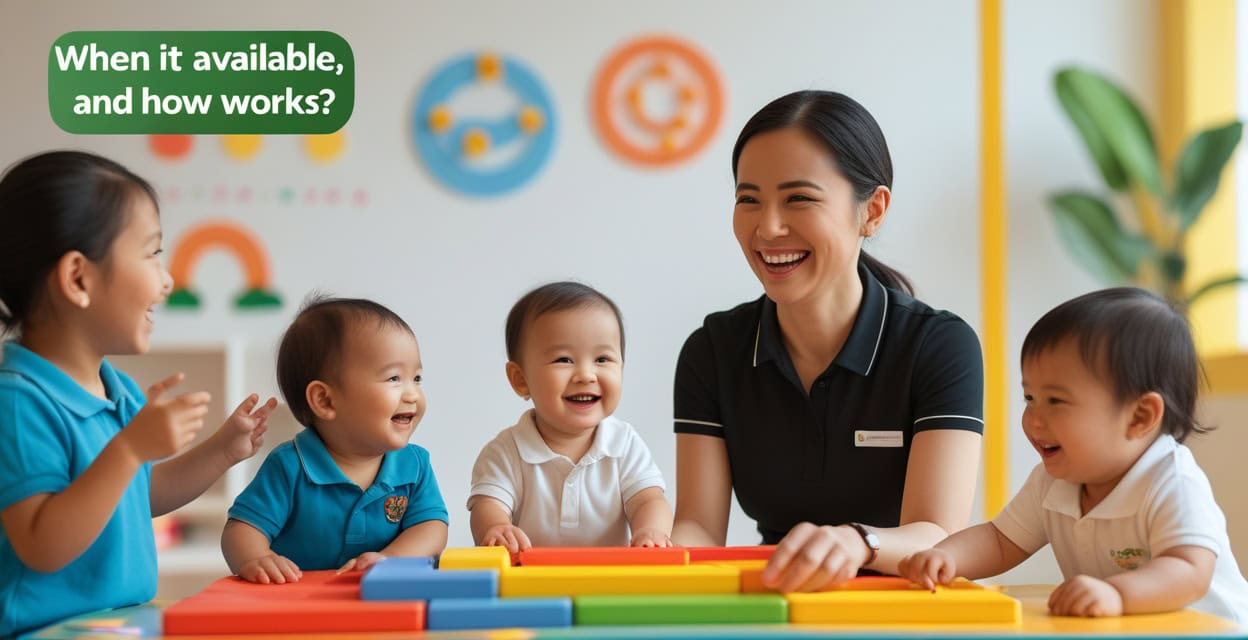
Who Qualifies, When It’s Available, and How It Works

Who Qualifies, When It’s Available, and How It Works

  • Who: Singapore Citizen infants 2–18 months who are not concurrently enrolled in ECDA-licensed infant care centres.
  • When: Mondays to Fridays, 7am–7pm; choose half-day (5 hours) or full-day (10 hours) subsidised blocks; public holidays excluded.
  • Where: at childminders’ homes or in community spaces across Singapore; each childminder cares for up to 3 infants.
  • How safe: ECDA conducts background checks on childminders (and regular household members); operators implement safety guidelines and environment checks; CCTV is standard in community spaces and available by agreement in home-based areas.
Why Childminding Matters Now

Why Childminding Matters Now

Childminding provides a stable, local solution to a large national question: how do we give every infant stability, touch, and time while supporting working families? With small ratios and consistent relationships, the first thousand days become a launchpad for language, self-regulation, empathy, and resilience. Near-home transitions are gentler for families, and rigorous safety reduces parental anxiety. This is not merely childcare; it is a public promise delivered one calm day at a time.


The EduNanny Philosophy and Purpose

The EduNanny Philosophy and Purpose

  • Safety is love in practice. Practical caregiving that protects and nurtures.
  • Joy is a developmental nutrient. Play, affection, and responsive interaction fuel growth.
  • Dignity in care. Unhurried feeding, gentle movement, and respectful sleep build lasting trust.
  • Childminders as civic professionals. Training, reflective practice, and communities strengthen families and neighbourhoods.
  • Transparency and trust. Open dialogue, clear protocols, and appropriate CCTV for safety and accountability.
  • Affordability and excellence together. National support, clear standards, and a relentless focus on the child.

How to Sign Up

How to Sign Up

  • Visit https://edunanny.com/edunanny-ecda-childminding-service/ and fill in the short form, or enquire via WhatsApp from the same page.
  • EduNanny Concierge: will respond to understand your needs and match you with suitable near-home options.
  • Site Visit: schedule a home-based or community-based visit to meet the childminder and observe routines.
  • Enrollment: complete onboarding, discuss health, routines, and Day 1 planning, and enrol with confidence.

A Closing Word

A Closing Word

Parents, your infant will not remember today’s schedule, but they will remember how the world felt in their early days: safe, warm, and ready for them. EduNanny exists to deliver that world—consistently, lovingly, and close to home. With the ECDA Childminding Pilot, Singapore is choosing a path that honours science, supports families, creates meaningful jobs, and upholds the dignity of the earliest years. Let’s build that future together—one calm handover, one attentive feeding, one joyful discovery at a time. Thank you.

SEO keywords: [#EduNannySingapore, #InfantCareSingapore, #ECDAPilot, #NearHomeCare, #ChildmindingEducation]



edunanny-6aafde8a-4b36-4d6f-bab4-4f1b533b09a5
August 22, 2025

Near Home 1 to 3 Infant Pods Pilot in Singapore December 2024 to December 2027 A Living Curriculum of Safe Joyful Attachment

Introduction: A Simple Idea with Profound Consequence

Introduction: A Simple Idea with Profound Consequence

Good evening, parents, caregivers, partners, and friends of Singapore’s youngest citizens. This moment is about more than care; it is about shaping the arc of a life, one attentive moment at a time. When infants are cared for with precision, heart, and science—close to home and within circles of trust—we set the foundation for a future nation that is resilient, verbal, confident, and inclusive.

EduNanny Infant Childminding Service, appointed by the Early Childhood Development Agency (ECDA) under Singapore’s three-year Childminding Pilot for Infants, embodies this vision. From 1 December 2024 to 31 December 2027, we serve Singapore Citizen infants aged 2 to 18 months in ultra-low-ratio pods of one to three infants, Monday to Friday, 7am to 7pm. We operate islandwide, in carefully prepared home environments and in community micro-hubs designed with safety rigor and a pedagogy of responsive care.


EduNanny's Foundational Principles

EduNanny’s Foundational Principles

  • Near-home simplicity: Dignified, reliable infant care within reach—minimizing cross-town commutes and long waits that outlast maternity leave.
  • Ultra low ratios: A 1:3 infant ratio is not a luxury; it is the condition for true attachment, observation-based learning, and safe practice.
  • Transparent trust: Certified, background-checked childminders; clear protocols; safety you can see with CCTV in community hubs and opt-in CCTV in home pods during care hours.
  • Affordability with accountability: Government-subsidised hours in half-day (5-hour) or full-day (10-hour) blocks from $16.50 and $33.00 respectively (before GST), with the ability to use CDA funds under the Baby Bonus Scheme for subsidised hours.

The Five Fresh Lenses for Infant Care

The Five Fresh Lenses for Infant Care

1) The Attuned Triad: Attachment, Autonomy, and Attuned Adults

Infants learn primarily through relationships. EduNanny’s trained childminders read cues with sensitivity, not control outcomes. We embrace:

  • Secure base care: Consistent primary caregivers within tiny pods build trust, reducing cortisol and supporting exploratory play.
  • Gentle autonomy: Even the smallest hands deserve time to try—rolling, grasping, babbling—without rush. We scaffold effort, not just outcomes.
  • Attuned pacing: Sleep, feeds, and play are individualized. We harmonize routines with evidence-based timing rather than enforcing a rigid schedule.

The daily rhythm becomes a feeling of being seen and valued—an atmosphere where a child feels capable and unhurried.

2) The Safety Ecology: Seven Rings of Protection

Safety is an ecosystem, not a checklist. EduNanny implements seven reinforcing layers:

  • People: Certified EduNanny childminders with infant first aid, basic care, food safety, safeguarding modules; ECDA conducts background checks on childminders and, for home-based care, on household members with regular access.
  • Spaces: Ultra-low density, modern layouts, age-appropriate zones, and hazard minimization aligned with industry standards.
  • Ratios: A protected 1:3 infant ratio, ensuring real vigilance and responsive care.
  • Health: No Sick Child Policy during pod hours, illness exclusion aligned to MOH/ECDA guidance; routine sanitization; safe bottle handling; and transparent incident protocols.
  • Monitoring: CCTV in community spaces as required; opt-in CCTV in home-based pods during care hours with parent–childminder agreement to balance privacy and oversight.
  • Routines: Safe sleep practices, safe transport handovers, and daily environment checks.
  • Accountability: Incident reporting, operator oversight, and clear escalation pathways for parents.

Safety is a continuous practice—not a one-time promise.

3) The Micro-Pod Method: The Science of Small

Small pods yield large developmental dividends. In a 1:3 pod:

  • Language flourishes with more conversational turns and responsive speech.
  • Motor play is safer and smarter under active supervision and guided tummy time.
  • Co-regulation becomes learnable; infants borrow calm and grow resilience through consistent attuned care.
  • Observation informs tomorrow’s plan in real time; the Living Curriculum is responsive, not prescriptive.

Our approach treats daily care as a craft of noticing and responding—hour by hour, child by child.

4) Joy as a Metric

Happiness is an observable, improvable condition. Our Joy Indicators include:

  • Warm starts: unrushed handovers and friendly greetings.
  • Engagement: sustained attention, soft eye contact, relaxed babble.
  • Emotional ease: quick repair after distress and readiness to explore again.
  • Restorative sleep: safe sleep with smooth transitions and predictable comfort.
  • Nourishment: calm, responsive feeding and healthy habits.

Daily reflections capture not just what was done, but how your infant felt during the day—turning care into meaningful growth.

5) The Civic Purpose of Childminding

Childminding is community infrastructure. Through the national pilot, EduNanny:

  • Expands access: Centre-style community hubs and home-based pods near where families live and work.
  • Elevates standards: A transparent, audited model parents can trust.
  • Enables employment: Professional pathways for certified caregivers across Singapore—our commitment to dignified careers in care.
  • Strengthens family rhythms: Flexible blocks within 7am–7pm on weekdays support working parents without eroding infant well-being.

What Parents Receive: A Clear View of Your Investment

What Parents Receive: A Clear View of Your Investment

  • Ultra-low density, ultra-low ratio pods (1:3).
  • Certified, background-checked EduNanny childminders.
  • Centre-style community hubs and home-based options.
  • CCTV provided in community hubs; opt-in CCTV in home pods during care hours.
  • No Sick Child Policy with clear illness exclusion to protect pods.
  • Monday to Friday, 7am–7pm availability islandwide (excluding public holidays).
  • Affordable government-subsidised blocks: Half-day 5 hours at $16.50, Full-day 10 hours at $33.00 (before GST).
  • Fees payable via CDA (Baby Bonus) funds for subsidised hours; choose days and blocks weekly.
  • Modern layouts, prepared environments, and a living curriculum of attuned care.
  • A dedicated EduNanny Concierge for onboarding, site visits, and ongoing support.
  • Operated by EduNanny by BUTLER under ECDA’s national Childminding Pilot.

A Day in an EduNanny Pod

A Day in an EduNanny Pod

It begins with a warm hello, a brief handover, and a familiar caregiver who understands your infant’s sleep cues and feeding pattern. Tummy time is set to quiet music; a soft mirror invites neck strength and curiosity. Feeds are unhurried and responsive. Nappy changes are gentle conversations, not tasks. A morning nap unfolds in a safe sleep zone. After wake‑up, sensory play engages little hands with soft fabrics, rattles, and face‑to‑face interactions that build language. Lunch and cuddles lead into another rest. In the late afternoon, as parents arrive, we close the day with a simple ritual: what your child enjoyed, how they calmed, and what they discovered. Every detail is threaded into a shared narrative of growth.


The Signup Process

The Signup Process

  • Visit the EduNanny ECDA Childminding Service page: edunanny.com/edunanny-ecda-childminding-service/
  • Share your preferences and infant’s profile through the provided form.
  • Receive a response from the EduNanny Concierge Team.
  • Confirm your site visit (home-based pod or community hub).
  • Enrol and choose your schedule blocks (half-day or full-day, Mondays–Fridays).

Who, What, When, Where, and How: Why Childminding Matters Now

Who, What, When, Where, and How: Why Childminding Matters Now

  • Who: Singapore Citizen infants aged 2–18 months; parents who need safe, nearby, reliable care; certified childminders uplifted by a national initiative; EduNanny by BUTLER—appointed by ECDA for this Pilot alongside partner operators.
  • What: Ultra-low-density, 1–3 infant pods grounded in safety, attachment, developmentally rich play, and joyful routines—transparent and affordable.
  • When: Weekdays 7am–7pm, in subsidised half-day or full-day blocks, from 1 December 2024 through 31 December 2027 (excluding public holidays).
  • Where: Islandwide across Singapore—in community hubs and home-based pods curated for safety and calm.
  • How: Certified training, ECDA background checks, safety protocols, CCTV in community spaces and opt-in CCTV in home pods, no Sick Child Policy, and a living curriculum that personalises care daily.

Why Now: The Importance of Early Care

Why Now: The Importance of Early Care

The first thousand days shape language, social skills, and resilience. When care is close to home, families experience reduced stress and greater continuity of attachment for infants. EduNanny’s model aligns with Singapore’s focus on high-quality early childhood development as a public good—supporting parents to work with confidence, while ensuring caregivers have meaningful, professional roles.


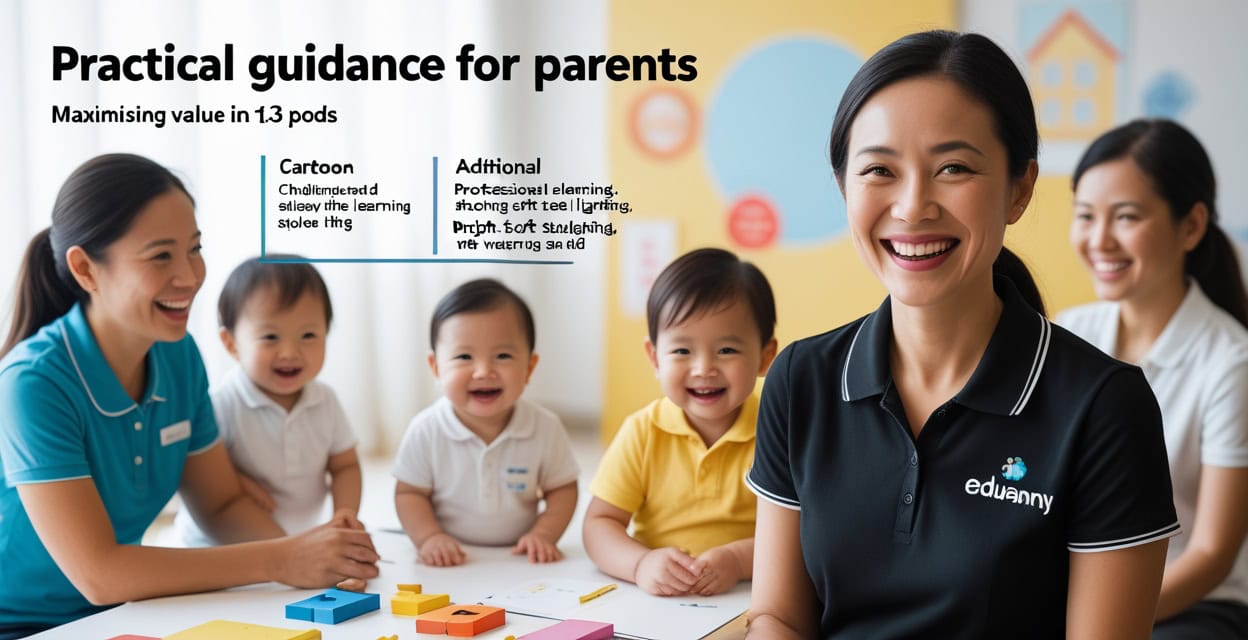
Practical Guidance for Parents: Maximising Value in 1:3 Pods

Practical Guidance for Parents: Maximising Value in 1:3 Pods

Preparing for a Transition to EduNanny

Begin the transition 2–3 weeks before starting. Create a simple scouting plan:

  • Visit a pod or hub with your infant to observe routines, caregiver interactions, and safety measures.
  • Introduce familiar objects (lovey, blanket, toy) to help comfort during handovers.
  • Maintain a consistent home routine (sleep and feeding windows) to ease alignment with pod routines.

Partnering with Your Caregiver

Establish a shared rhythm and communication channel:

  • Ask about daily notes and the living curriculum updates; request real-time adjustments when needed.
  • Set up a mutual language for cues and signals your infant uses and responds to best.
  • Agree on emergency contacts and illness protocols to ensure swift action if your child is unwell.

Home Routines That Support the Pod

Small adjustments at home compound the care in pods:

  • Maintain predictable nap windows and soothing pre‑sleep rituals.
  • Offer language-rich interaction at home—narrating actions and describing objects during play.
  • Provide consistent feeding cues and routine, reinforcing attuned pacing.

Observation Tips for Parents

Become a learner of your child’s cues:

  • Ask for daily reflections on what mattered most to your infant each day.
  • Note moments of quick repair or calm after distress—these indicate strong attunement.
  • Watch for signs of secure attachment: seeking caregiver comfort, relaxed transitions, and joyful interactions.

What to Ask During Onboarding

Use onboarding as a diagnostic for compatibility and safety:

  • How are caregivers selected and trained for infant-first care?
  • What are the precise illness exclusion criteria and sick-day policies?
  • How is daily communication delivered, and what is the cadence of updates?
  • What is the process for escalating concerns or incidents?

Safety and Health at Home

Extend EduNanny’s safety ethos to the home environment:

  • Clear No Sick Child policy; minimize exposure to illness in shared spaces.
  • Maintain clean feeding equipment and safe bottle handling routines.
  • Ensure safe sleep practices accompany daytime routines, including appropriate sleep surfaces and positioning.

Conclusion

Conclusion

EduNanny blends heart and high standards to make early care a public good, a personal relief, and a professional path for caregivers. By placing infants in small pods near home, we nurture attachment, support development, and create community standards that families can trust. If you are a Singaporean parent seeking nearby, reliable, and developmentally rich infant care, consider the EduNanny model—where presence precedes program, safety precedes speed, and relationships precede routines.

Join us in building a circle of care that faces forward with confidence. For more information and to begin the signup process, visit the EduNanny ECDA Childminding Service page, or reach out to our EduNanny Concierge team for a personalised site visit and enrolment support.

[#EduNannySingapore, #InfantCareSingapore, #EarlyChildhoodSingapore, #1to3Pod, #SingaporeParents]

edunanny-2cf9bd57-f02c-4917-bb93-904dec400cd9
August 22, 2025

Cradling a Nation with EduNanny Near Home Pods 1 to 3 December 2024 to December 2027

EduNanny: A Vision for Infant Care in Singapore — Pedagogy, Safety, and Community

EduNanny: A Vision for Infant Care in Singapore — Pedagogy, Safety, and Community

Good evening, and welcome to a conversation about beginnings — the kind that shape a nation. EduNanny by BUTLER emerges from the conviction that infant care is not merely a service, but a civic infrastructure built on science, care, and dignity. This article expands on the speech that introduced EduNanny, translating its ideals into practical guidance, actionable steps, and real-world insight for parents, caregivers, and communities across Singapore.


Introduction: Reimagining What It Means to Care for Infants

Introduction: Reimagining What It Means to Care for Infants

EduNanny brings together the wisdom of pioneers such as Maria Montessori, John Bowlby, Emmi Pikler, Lev Vygotsky, and Erik Erikson with Singapore’s commitment to safety, access, and affordability. Our ultra‑low‑ratio infant care framework—delivered in tiny pods of one to three infants, near home, in thoughtfully designed spaces or approved caregiver homes—exists to turn standards into a living promise: care that feels like trust made visible.


Our Model: Ultra-Low Ratio and Ultra-Low Density

Our Model: Ultra-Low Ratio and Ultra-Low Density

Key design principles shape every EduNanny pod and interaction:

  • Near‑home access: Pods located in community spaces and selective caregiver homes to shorten commutes and strengthen daily routines.
  • Ultra‑low ratio: 1:3 infant pods ensure deep attention, responsive care, and vigilant safety.
  • Centre-based and home-based options: Islandwide availability to fit family life and housing realities.
  • Transparent scheduling: Monday–Friday care with 5-hour (half‑day) or 10-hour (full‑day) blocks to mirror real family rhythms.
  • Affordability via subsidies: Subsidised fees before GST and accessible subsidies through CDA/Baby Bonus during subsidised hours.

The Four Pillars of EduNanny Pedagogy: Safety, Development, and Joy

The Four Pillars of EduNanny Pedagogy: Safety, Development, and Joy

We organise learning and care around four interlinked pillars, each supported by actionable practices that families can observe, participate in, and reinforce at home.

1) The Attuned Day: A Pedagogy of Gentle Rhythms

Daily routines form the primary curriculum in the first years. Practical applications include:

  • Named primary childminders who know each infant’s cues, pace, and preferred soothing strategies.
  • Predictable rhythms that allow nervous systems to rest, trust, and grow without feeling rushed.
  • Narrated care: caregivers describe actions in warm language to support early communication and secure attachment.
  • Individualized flexibility within a stable structure so transitions are smooth for each infant.

2) Safety by Design: Layers, Not Luck

Safety is a system with multiple layers:

  • Ultra‑low density and well‑designed pods to reduce noise, overstimulation, and disruption.
  • Documented infant first aid, safe sleep practices, choking prevention, and food hygiene training for childminders.
  • Environment checks: gated zones, anchored furniture, no cords, and clear sightlines for attentive care.
  • No‑Sick‑Child Policy during care hours to minimise cross‑infection within pods.
  • CCTV in community spaces and, with consent, in home settings during care hours, with secure storage and privacy protections.
  • Clear incident and feedback protocols with ECDA oversight where required.

3) Development as Relationship: Trust First, Skills Follows

Attachment is the foundation for exploration and learning. In a 1:3 pod, caregivers can sit at eye level, respond promptly, and scaffold tiny advances. Our focus areas include:

  • Motor foundations: varied floor time, safe climbing, and freedom of movement—limited use of containers except when necessary for safety or travel.
  • Language and social beginnings: multilingual songs, gentle narration, turn-taking games, and shared attention activities.
  • Self-regulation: predictable routines, responsive soothing, and short, frequent outdoor or nature-inspired moments when feasible.

We observe micro‑milestones daily and share progress with parents in a timely, respectful manner—celebrating growth without rushing development.

4) The Science of Joy: Happiness as a Foundation for Learning

Joy is not mere entertainment; it is safety felt in the body. Practical focus includes:

  • Sensory richness without overload: natural light, calm colours, breathable materials, and age-appropriate sensory experiences at humane volumes.
  • Open-ended play: simple toys, safe everyday objects, and opportunities for curiosity without over‑structure.
  • Caregiver presence: real faces, real voices, and ample floor‑time to support secure attachment and early social development.
  • Screen-free environments for infants, preserving authenticity of interaction and presence.

The Promise of Childminding: Why It Matters Now

The Promise of Childminding: Why It Matters Now

Childminding is more than a service; it is civic infrastructure at human scale. The EduNanny model addresses urgent needs in dense cities by providing near-home care that strengthens families and communities.

  • Small circles foster secure attachment and calmer bodies, supporting healthier early development and resilience.
  • Near‑home care reduces commute, restores time, and lowers burnout, with transparent routines and trust-building features like CCTV with consent.
  • A scalable approach that expands care capacity, creates meaningful employment for trained childminders, and elevates overall care quality across neighbourhoods.

What Makes EduNanny Distinctive

What Makes EduNanny Distinctive

  • Ultra-low ratio: 1:3 infant pods for deep attention and safety.
  • Ultra-low density environments: Quiet, modern layouts designed for infants’ needs.
  • Certified EduNanny Childminders: Trained in infant first aid and basic infant care; temperament and reliability assessed.
  • Background checks: ECDA verifies childminders and relevant household members.
  • CTV and privacy balance: CCTV in community spaces; consent-based options for home-based zones with secure storage.
  • No‑Sick‑Child Policy: Clear infection control to protect the pod.
  • Centre-based and home-based options: Islandwide coverage with flexible placement.
  • Fixed schedule: Monday–Friday, 7am–7pm, with half‑day or full‑day blocks.
  • Affordability: Fees of $16.50 half‑day and $33.00 full‑day before GST; CDA/Baby Bonus subsidised hours available.
  • Islandwide access: Proximity-based pod matching and careful pod fit assessment.
  • Quality assurance: Compliance with ECDA Industry Standards, operator supervision, and ongoing family feedback loops.
  • Transparency and partnership: Daily updates, developmental notes, and responsive concierge support.
  • National initiative: Part of ECDA’s three-year Pilot (Dec 2024–Dec 2027) to broaden safe, reliable infant caregiving.

A Day in the Life of an EduNanny Pod: Practical Rhythm and Routines

A Day in the Life of an EduNanny Pod: Practical Rhythm and Routines

Envision a typical day within EduNanny pods, emphasizing care as a living curriculum:

  • The handover: A calm, unrushed exchange where the caregiver notes your child’s cues, last feed, and sleep window; a familiar greeting ritual anchors trust.
  • The morning: Feeding, a narrated diaper change, then floor-time exploration—reaching, rolling, grasping, early problem-solving in natural ways.
  • The midday: Safe sleep in a quiet, monitored environment; gentle wake, cuddling, feeding, and social play with peers—storytime and early turn-taking activities.
  • The afternoon: Sensory baskets, safe exploration, and a final wind-down routine with a concise handover back to families.

Practical Guidance for Parents: Partnering with EduNanny

Practical Guidance for Parents: Partnering with EduNanny

  • Transition planning: Schedule a gradual introduction, start with shorter daily stays if possible, and bring familiar objects from home to support bonding with the named childminder.
  • Documenting progress: Use the daily notes to track routines, preferences, and early milestones; share any concerns promptly with the Concierge team.
  • Home practices that reinforce learning: 5–10 minute daily routines that mirror the pod’s rhythm—gentle reading, sing-alongs, and supervised tummy time on safe surfaces.
  • Safety reminders for families: Maintain a no‑sick policy at home before visits, ensure sleep practices align with safe sleep guidance, and follow handover protocols for changes in caregivers.
  • Communication with childminders: Keep a simple, consistent format for sharing cues and needs; acknowledge the caregiver’s observations and seek collaborative solutions.

How the ECDA Pilot Framework Supports Families

How the ECDA Pilot Framework Supports Families

  • Singapore Citizen infants aged 2–18 months not concurrently enrolled in ECDA‑licensed infant care centres.
  • What: Subsidised infant childminding by ECDA‑appointed operators—EduNanny, Kidibliss, NannyPro Care—each with up to three infants per childminder.
  • When: Monday to Friday, 7am–7pm, in 5-hour or 10-hour blocks.
  • Where: Childminders’ homes or community spaces across Singapore, matched for proximity and pod suitability.
  • How: Government subsidies to support affordable hours; ECDA conducts background checks; operators ensure safety, training, and clear protocols; families select schedules that fit their needs.

Why Now: The Role of Childminding in a Modern Singapore

Why Now: The Role of Childminding in a Modern Singapore

Infant care is a foundation for lifelong learning and health. Small, secure attachments foster resilience and curiosity, which translate into stronger attendance, better developmental outcomes, and healthier communities. EduNanny’s model helps families re-enter the workforce with confidence while ensuring infants experience consistent, high-quality care close to home.


How to Enrol with EduNanny: A Simple Path to Safe, Reliable Care

How to Enrol with EduNanny: A Simple Path to Safe, Reliable Care

  1. Visit the Enrolment Page: Explore https://edunanny.com/edunanny-ecda-childminding-service/ and complete the short form, or reach out via WhatsApp from the same page.
  2. Connect with EduNanny Concierge: A responsive team member will clarify your location, schedule preferences, and your child’s temperament.
  3. Pod Allocation and Site Visit: We propose a suitable pod and arrange a site visit to the community space or home-based setting.
  4. Placement Confirmation: Review the family agreement and safety policies (including No‑Sick‑Child and CCTV arrangements), then enrol.
  5. Transition and Onboarding: Begin care with a gentle transition plan, ensuring your infant bonds securely with their named childminder.

Closing: A Shared Promise for Singapore’s Future

Closing: A Shared Promise for Singapore’s Future

If education begins in the environment in which a child learns to trust, then EduNanny’s approach is a deliberate design. It’s a fusion of Montessori-inspired environments, Bowlby-inspired attachment, and Singapore’s commitment to practical, scalable care. By foregrounding near-home, small pods, trained caregivers, and transparent governance, we aim to nurture secure, curious, resilient children who can contribute to a vibrant future.

Let us design this together: safer care, stronger families, and a more hopeful society—one infant, one pod, one city at a time.


Conclusion

Conclusion

EduNanny offers a concrete, evidence-informed path to transforming infant care in Singapore: ultra‑low ratios, community-focused spaces, rigorous training, transparent operations, and flexible scheduling that fits real family life. By centering relationships, safety, and joyful learning, we support infants as they build the foundations of lifelong growth. For families considering early-childhood care options, EduNanny provides a model that aligns scientific insight with compassionate practice, and policy with everyday experience. Join us in shaping an environment where every infant is known by name, held with respect, and empowered to explore the world with confidence.

[#InfantCareSingapore, #EduNanny, #ECDApilot, #SmallPods, #EarlyChildhoodDevelopment]

edunanny-ca04fe62-31e6-487a-ada9-84609249e7c7
August 22, 2025

Relationship First and Safety Driven Infant Care in Singapore The EduNanny Living Curriculum during ECDA Pilot December 2024 to December 2027

EduNanny Infant Childminding Service in Singapore: A Relationship-First, Safety-Driven Approach

EduNanny Infant Childminding Service in Singapore: A Relationship-First, Safety-Driven Approach

Good evening to parents, grandparents, neighbours, and partners in care. This article expands on a vision that is as profoundly simple as it is profoundly important: how Singapore holds its youngest citizens in their very first days of learning and belonging. EduNanny, an ECDA-appointed operator under the national Childminding Pilot, is designed for Singapore Citizen infants aged 2 to 18 months. We operate near home, in small pods of one to three infants, Monday to Friday, 7am to 7pm. Our aim is safe, joyful, dignified care that fits real family life—and to translate that vision into practical, everyday practice for families.

In this guide, you’ll find actionable insights, practical examples, and EduNanny-specific practices drawn from years of infant care expertise, early-years pedagogy, and national standards. Whether you’re considering EduNanny for your child or you’re already part of the EduNanny community, this article offers concrete steps to support your infant’s development, alongside transparent information about operations, safety, and family partnership.


Why Infant Care Demands Thoughtful Design

Why Infant Care Demands Thoughtful Design

The Infancy Window: Why timing matters

Infancy is not a waiting room; it is a critical period for attachment, sensory integration, language foundations, and the seeds of self-regulation. Small improvements here yield outsized developmental gains later. Thoughtful design—small pods, trained caregivers, consistent routines—creates the conditions for secure, exploratory learning from day one.

The Small Pod Advantage: What 1:3 means in practice

  • Attunement is practical: With up to three infants, childminders can notice subtle cues—glances, yawns, or a shifting breathing pattern—and respond promptly, shaping secure attachment.
  • Language-rich routines: Individual feeding, diapering, and sleep transitions become narrated moments that build vocabulary and predictability.
  • Peer learning begins early: Infants observe peers’ attention shifts, turns-taking, and social cues, laying groundwork for later cooperative play.

What Makes EduNanny Different

What Makes EduNanny Different

EduNanny is designed to translate evidence into early childhood practice—without losing the humanity of a home-like, community-based setting. Here are the core differentiators and their everyday implications for families:

  • Ultra-low ratio: 1 childminder to a maximum of 3 infants — This enables careful attention, consistent responses, and intimate routines that respect each child’s tempo.
  • Ultra-low density pods — Small groups in home and community spaces reduce overwhelm and support calmer transitions between activities.
  • Certified EduNanny Childminders — Caregivers trained in infant care and first aid; assessed for suitability and ongoing development.
  • ECDA background checks and safeguarding protocols — Structured oversight ensures safety and accountability for families and caregivers alike.
  • CCTV for community spaces; opt-in home privacy — Transparent monitoring with privacy safeguards; real-time updates and peace of mind for parents.
  • Modern, child-safe layouts and daily risk checks — Environments designed to invite exploration while minimizing hazards.
  • No Sick Child Policy — Protects vulnerable infants and helps keep pods healthy by reducing cross-infection risk.
  • Affordability and subsidies — From $33/day (10-hour full day) and $16.50 for 5 hours (before GST); CDA/Baby Bonus can be used during subsidised hours.
  • Flexible scheduling: 5-hour or 10-hour blocks — Monday–Friday, 7am–7pm; centre-style community spaces and home-based options.
  • A national social initiative — EduNanny by BUTLER supports excellence, access, and dignified early-years employment nationwide.
  • Islandwide presence — Easy access through EduNanny.com and specific Childminding portals.

The Five Pillars of EduNanny Practice

The Five Pillars of EduNanny Practice

Learn how EduNanny translates infant development science into daily practice, with practical examples you can observe as a parent or caregiver.

1) The Science of Small: Why 1:3 rewrites the day

  • Attunement loop: Caregivers notice micro-cues—eye gaze, breathing rate, reaching hands—and respond consistently. Example: If a baby starts to fuss just after a diaper change, the caregiver offers a familiar soothing routine (rocking, gentle vocalisations) before attempting another activity, reinforcing trust.
  • Care as curriculum: Everyday routines like feeding, diapering, and sleep transitions are narrated warmly and integrated with language-rich commentary, turning ordinary care into learning moments. Example: Narrating steps—“Let’s bring you to the feeding chair; this is your bottle; tummy feels full; you’re safe here.”
  • Shared attention: Tiny pods enable infants to observe peers, practice early social communication, and receive ample adult support during social glimpses and joint attention moments.

2) Safety by Design: The five lines of protection

  • People: ECDA background checks for childminders and regular access household members; mandatory infant care and first-aid training; food safety and safeguarding protocols.
  • Place: Safe layouts with anchored furniture, secure sleep spaces, and gated, supervised areas; daily safety sweeps at opening and closing.
  • Practice: No Sick Child Policy; strict hand hygiene, safe sleep adherence, controlled meal prep, emergency drills, and prompt incident reporting to parents.
  • Proof: CCTV at community sites; opt-in home CCTV within caregiving zones during care hours; privacy-conscious oversight and periodic spot checks.
  • Partnership: Clear incident management, transparent agreements, and proactive communication to build trust.

3) A Living Curriculum of Everyday Mastery

  • Baby-led rhythms: Respect for individual sleep-wake patterns; predictable routines reduce cortisol and support readiness for learning.
  • Sensory care: Purposeful touch, tummy time, gentle vestibular play, and object exploration to support motor planning and sensory integration.
  • Language all day: Narration during caregiving, singing, labelling emotions and objects, and following infants’ vocalisations to seed language and empathy.
  • Movement with dignity: Floor-based play, careful transitions, and unhurried caregiving that promote autonomy while maintaining safety.
  • Meaningful documentation: Brief, purposeful notes and photos that celebrate progress without intrusion, supporting parent-child conversations.

4) Joy as a Vital Sign: Observing wellbeing without intrusion

  • Warmth: Shared eye contact, soft tone, and calm transitions that invite trust.
  • Agency: Infants’ active choices—reaching for a toy, selecting a fabric book, or choosing a song—and caregivers honoring those micro-choices.
  • Regulation: Consistent routines, predictable sleep and feeding patterns, and strategies to help infants self-soothe when needed.
  • Connection: Proximity-seeking behavior and delight in familiar peers; caregivers document and respond with tailored adjustments to the environment.

5) The Purpose of a Childminder: Guardians of rhythm and relationship

  • Attachment artisans: Translating routines into milestones—first smiles during a caregiver’s voice; steady handholds during tummy time as confidence grows.
  • Safety stewards: Anticipating hazards, adapting environments, and preventing incidents before they happen.
  • Community anchors: Knowing families by name and story, bridging home life and care routines to support continuity.
  • Professional caregivers: Trained, supervised, and continually developed, whose quiet leadership shapes confident, kind beginnings for every infant.

How the Childminding Pilot Supports Families

How the Childminding Pilot Supports Families

The EduNanny model is designed to fit real family life in Singapore while aligning with national guidance and community needs. Here’s what families can expect and how to plan.

  • Who: Singapore Citizen infants aged 2–18 months not concurrently enrolled in ECDA-licensed infant care centres.
  • What: Near-home childminding in pods of up to three infants, in childminders’ homes or community spaces.
  • When: 1 December 2024 to 31 December 2027; Monday–Friday; 7am–7pm.
  • Where: Islandwide access through community premises and home-based settings.
  • How: Subsidised half-day (5 hours) at $16.50; full-day (10 hours) at $33 (before GST); CDA/Baby Bonus can be used during subsidised hours.

What Parents Can Expect Day-to-Day

What Parents Can Expect Day-to-Day

Clarity, warmth, and professional care form the everyday experience. Here are practical details to help you prepare and participate confidently:

  • Morning handover rituals: A consistent, respectful greeting, a quick plan for feeds, naps, and play, and a transfer of essential information about any changes from home routines.
  • Real-time or end-of-day updates: Depending on your setting, you’ll receive updates about feeding, sleep patterns, and notable cues, with photos or brief notes as appropriate and consented.
  • Hygiene and health measures: General hygiene protocols, clean toy rotation, and prompt communication if there are mild illnesses or exposure concerns.
  • Medicine administration: If medicine is needed, dosage, timing, method, and side effects to watch for are strictly guided by parent instructions and applicable policies.
  • Continuity of care: A consistent childminder who knows your infant’s cues and celebrates small wins, even as routines occasionally adapt to the child’s development.

Practical Guidance for Parents: Preparing Your Infant and Home

Practical Guidance for Parents: Preparing Your Infant and Home

Successful partnerships rest on preparation and open communication. Use these steps to smooth transitions and maximize developmental opportunities.

  • Before enrolment: Prepare a transition plan that includes a gradual introduction to the pod, familiar objects from home (with caregiver guidance), and a preferred comfort item for the infant during early days.
  • What to bring: A labeled bag with infant necessities, a change of clothes, comfort items, a written feeding/napping schedule, and any medical or dietary instructions.
  • Handover communication: Create a simple template for daily notes: “Today’s highlights, any concerns, and a quick parent note.” This sets expectations for both sides.
  • Observing your infant: In the first weeks, track mood shifts, sleep quality, feeding tolerance, and social interactions with peers, noting what supports calm and engagement.
  • Partnering with the caregiver: Establish a routine for reporting changes in health, development milestones you’re observing at home, and questions you want answered in weekly or biweekly updates.
  • Transitioning back to work: Plan a gentle goodbye routine; consider a short, predictable drop-off window to ease separation anxiety for both child and caregiver.

Managing Health, Safety, and Wellbeing

Managing Health, Safety, and Wellbeing

EduNanny’s no Sick Child Policy is designed to protect vulnerable immunities while maintaining continuity of care. Here are practical guidelines for healthy routines at home and in the pods:

  • Illness protocol: If a child is mildly unwell, caregivers assess readiness to participate; parents may be contacted with guidance on when the child should remain home. Severe symptoms require parental decision followed by a medical note if required.
  • Medication: Follow parent-provided instructions precisely. Caregivers document administration times and dosages, with clear communication about any observed effects.
  • Sleep safety: Sleep spaces adhere to best-practice guidelines (flat, firm surfaces; no loose bedding; appropriate temperature). Staff monitor sleep patterns and adjust routines to support secure rest.
  • Nutrition and feeding: Breast milk or formula is prepared and served with attention to pasteurization, clean bottle handling, and sanitary feeding practices; solids begin only when developmentally ready and with parental guidance.
  • Infection prevention: Handwashing before handling infants, sanitized surfaces, and careful toy rotation help reduce disease spread without sacrificing joyful exploration.

Scheduling, Subsidies, and Sign-Up: A Practical Pathway

Scheduling, Subsidies, and Sign-Up: A Practical Pathway

To join EduNanny, families follow a straightforward process designed to be transparent and efficient:

  • Sign up: Visit the EduNanny sign-up page and complete the short form to initiate a concierge-assisted intake.
  • Site visit: Schedule a visit to either a home-based or community setting to observe safety, layout, and daily rhythms.
  • Enrollment and scheduling: Confirm enrollment and choose a schedule—half-day or full-day blocks, Monday–Friday, 7am–7pm. Consider alternating weeks if needed to balance family commitments.
  • Subsidies and payments: Understand CDA/Baby Bonus applicability during subsidised hours; plan billing cycles and documentation with EduNanny Concierge for a smooth subsidy claim.

A Day in the Life: A Practical View from EduNanny

A Day in the Life: A Practical View from EduNanny

While every infant’s day is unique, here is a typical flow that illustrates the EduNanny rhythm, with practical actions you can look for or discuss with your caregiver:

  • 07:00–09:00: Arrival handover, warm greetings, and a brief plan review; caregivers offer sensory-rich, language-filled interactions as infants settle in.
  • 09:00–11:00: Independent exploration and caregiver-facilitated interactions; infant-led play with safe objects, tracing sounds, and light vestibular activities to support balance and body awareness.
  • 11:00–12:30: Feeding and rest; routines are narrated, with a calm, predictable environment to minimize stress and cortisol spikes.
  • 12:30–15:00: Small-group or solitary play; safe social attention, shared gaze, and turn-taking insights begin to emerge as infants observe peers.
  • 15:00–17:00: Snack, more exploration, and a gentle wind-down routine; caregiver notes reflect progress in language, fine motor skills, and self-regulation cues.
  • 17:00–19:00: Handover wrap-up, families arrive, and caregivers communicate the day’s highlights and any follow-up plans.

Affordability, Access, and Dignity: A National Perspective

Affordability, Access, and Dignity: A National Perspective

EduNanny’s model is designed to be affordable and close to home, reducing commute stress and distributing high-quality care across neighbourhoods. It balances family needs with social infrastructure—creating dignified early-years roles across Singapore. The approach demonstrates that high-quality care can be sustainable, scalable, and deeply respectful of family routines.


Five Practical Insights Every Parent Can Use Now

Five Practical Insights Every Parent Can Use Now

  • Document and share cues: Keep a simple cue log for nappies, sleep, feeding, and mood. Share patterns with your childminder to tailor routines to your infant’s needs.
  • Consistency supports attachment: Try to maintain consistent drop-off and pick-up routines; predictability helps infants regulate emotions and reduces separation anxiety.
  • Ask about the environment: Inquire about safety features, sleep setups, toy sanitization, and daily risk checks. Request a quick walkthrough of safety protocols during your site visit.
  • Respect privacy with CCTV choices: Review opt-in arrangements for home-based care areas and understand what data is captured, how it is used, and who can access it.
  • Plan for milestones: Discuss developmental milestones you expect or observe at home (e.g., first words, standing support) and how caregiver observations can be documented and celebrated.

Real EduNanny Insights: Case Scenarios

Real EduNanny Insights: Case Scenarios

These scenarios illustrate how EduNanny’s principles translate into day-to-day practice and family collaboration.

  • Scenario A: A baby’s first feeding cue — An infant begins to grimace slightly before bottle feeding. The caregiver smoothly transitions to a calm feeding routine, narrates the process, and follows the infant’s pacing, which reduces fuss and supports a positive feeding experience.
  • Scenario B: Day-to-day communication — A parent requests a brief daily note rather than a longer report. The caregiver provides a concise summary plus one photo, establishing a reliable communication rhythm without overwhelming the family.
  • Scenario C: Sleep transitions — A caregiver notices a new nap pattern emerging and adjusts the sleep environment (lighting, noise level) to align with the infant’s cues, maintaining consistent napping opportunities.
  • Scenario D: Social development — In a pod of three infants, a caregiver guides early joint attention activities, naming objects, and providing shared gaze opportunities to foster social curiosity and language growth.

Conclusion: A Reflective Promise to Families

Conclusion: A Reflective Promise to Families

EduNanny by BUTLER offers a philosophy of care that marries science with humanity: small pods, vigilant safety, a living curriculum, and a joyful, dignified environment for every infant. This approach invites families to work alongside trained, trusted childminders to celebrate everyday moments as the building blocks of development. In the first thousand days, timing and intention matter as much as care itself. By choosing EduNanny, families invest in secure attachments, curious minds, and a community that values mothers, fathers, grandparents, and caregivers alike.

Let us continue this journey near home, at the child’s pace, with standards worthy of Singapore’s future. Thank you for considering EduNanny as a partner in your infant’s early years.


Sign up and Start Today

Sign up and Start Today

To begin your EduNanny journey, visit the following page and complete the short form, or enquire via WhatsApp for immediate assistance:

https://edunanny.com/edunanny-ecda-childminding-service/

Receive a response from our EduNanny Concierge Team, schedule your site visit (home or community setting), enrol, and choose your schedule. Make the first thousand days count—near home, at your child’s pace, with care designed for Singapore’s future.


Conclusion: Who, What, When, Where, and How Childminding Matters

Conclusion: Who, What, When, Where, and How Childminding Matters

EduNanny exists so that families can work, rest, and hope with confidence—and so that infants can grow with curiosity, calm, and connection. Together with ECDA, our childminders, and you, we are building a culture where safety is consistent, joy is visible, and development is dignified.

On behalf of EduNanny by BUTLER, thank you for entrusting us with the most important work in the world. Let us begin—near home, at child’s pace, with standards worthy of Singapore’s future.

[#InfantCareSingapore, #EduNanny, #ECDApilot, #EarlyYearsDevelopment, #ChildmindingSingapore]


edunanny-21f88519-e8b0-426b-adc6-0bd5b1ef3164
August 22, 2025

Cradling a Nation EduNanny Near Home Ultra Low Ratio Pods Redefining Singapore First Thousand Days December 2024 to December 2027

Introduction: EduNanny in Singapore’s First Thousand Days

Introduction: EduNanny in Singapore’s First Thousand Days

Thank you for welcoming EduNanny by BUTLER into your homes, your neighbourhoods, and most importantly, into the first thousand days of your child’s life. Those early days are not a waiting room for “real learning” to begin; they are the learning. They are the years when trust, curiosity, language, and self-regulation take root. The adults who surround an infant in those moments—parents and childminders—are the architects of that foundation. EduNanny’s Infant Childminding Service, appointed by ECDA under the national Childminding Pilot (1 December 2024 to 31 December 2027), is designed to be affordable, safe, reliable, and near home—delivered in tiny 1:3 micro‑pods across Singapore, Mondays to Fridays, 7am to 7pm. We exist to make everyday care as wise as it is warm; as safe as it is joyful; as practical as it is purposeful.

In this article, we deepen understanding of our model, translate child development science into practical guidance for families, and share actionable strategies you can use at home to support your child’s growth between EduNanny sessions.


The Four Truths That Guide EduNanny Infant Care

The Four Truths That Guide EduNanny Infant Care

1) The first relationships shape the brain

Attachment is not a luxury; it is survival and scaffolding. EduNanny’s ultra‑low 1:3 infant ratio enables a childminder to be emotionally present, reading cues, timing responses, and co‑regulating big feelings. Practically, this means:

  • Maintain consistent, soothing responses during periods of distress, so infants learn to trust that support will come when they need it.
  • Establish predictable routines (feeding, diapering, napping) and narrate actions to build early language and understanding of what comes next.
  • Provide a warm, responsive touch (holding, gentle patting, soft rocking) that signals safety and containment.

2) Environments teach before adults speak

Montessori and Pikler show that a thoughtfully prepared “yes‑space” invites agency. Our micro‑pods and home‑based spaces are designed to be modern, uncluttered, and scaled to the infant—facilitating exploration with safety at the core. Practical tips for parents include:

  • Set up a safe, low‑risk play area with floor‑level activities that invite reaching, grasping, and movement.
  • Rotate a small selection of age‑appropriate materials to sustain curiosity and focus.
  • Provide clear sightlines and minimal hazards to support sustained attention and independent exploration.

3) Learning is social

Vygotsky reminds us that development accelerates in the space between child and caregiver. EduNanny pods become social micro‑worlds where language, turn‑taking, and joint attention flourish. At home, you can foster this by:

  • Engaging in “parallel talk” during play, narrating actions and emotions as they occur (e.g., “You’re stacking blocks—clack, clack—big smile!”).
  • Modeling turn‑taking through simple songs and hand‑gestures, inviting the child to respond in kind.
  • Welcoming home languages and family songs, validating multilingual identities as a strength rather than a barrier to learning.

4) Joy sustains growth

Froebel placed play at the heart of early learning. A calm daily rhythm—songs, finger plays, and sensory invitations—turns routine caregiving moments into a living curriculum. In practice:

  • Incorporate playful, age‑appropriate activities during feeding, dressing, and resting times without rushing milestones.
  • Preserve a predictable, soothing pace to the day that creates a secure environment for exploration.
  • Celebrate small wins and curiosity with gentle positive reinforcement that reinforces a love of learning.

The Four Topics at the Heart of EduNanny Practice

The Four Topics at the Heart of EduNanny Practice

Topic 1: Care as Curriculum—The Pikler Rhythm

In EduNanny pods, routines are learning opportunities, not interruptions. Examples include:

  • During feeds: slow the pace, maintain eye contact, and narrate what’s happening to build vocabulary and trust. Example: “We’re feeding now. You’re sipping milk. You’re almost finished.”
  • During diaper changes: invite participation and autonomy (e.g., “Shall we lift your legs together?”) to nurture agency and cooperation.
  • During sleep transitions: protect consistent cues—dim lights, soft voice, familiar lullaby—to support self‑soothing and security.

Practical takeaway for families: map a simple daily rhythm at home that mirrors these routines, with short, meaningful interactions that reinforce attachment and self‑regulation.

Topic 2: The Prepared Surrounding—Montessori on the Floor

Education begins with the space itself. Home and community pods should be safe and stimulating without overstimulation. Design ideas include:

  • Low, open shelves with a limited rotation of materials (e.g., grasping rings, textured scarves, simple containers).
  • Horizontal frames for early stand‑alone exploration; firm floor mats to support rolling and crawling.
  • Clear sightlines and uncluttered corners to reduce hazards and invite focused attention.

Family application: curate a small set of inviting materials at your child’s reach height and rotate them weekly to sustain interest and discovery.

Topic 3: Language in the Small Group—Vygotsky’s Zone in Miniature

A 1:3 pod creates a fertile ground for language development. Techniques include:

  • Parallel talk: describe actions without directing the child’s response (e.g., “You’re tapping the drum—tap, tap”).
  • Expansion: expand a baby’s attempt at speech (“Ba” becomes “Ball—blue ball”).
  • Turn‑taking and social games: use songs and gestures to practice reciprocity.
  • Home language inclusion: honor and incorporate family languages and songs to support identity and belonging.

Topic 4: A Safety Culture, Not Just Safety Equipment

Safety is a system built from people, places, and processes. Key components include:

  • People: EduNanny childminders are assessed, certified in infant care and infant first aid, and background‑checked.
  • Places: Pods are audited for hazards; safe‑sleep practices, clear walkways, anchored furniture, and secure gates are standard.
  • Processes: Daily health checks, incident reporting, hygiene schedules, and a No Sick Child policy to protect the group. Medication plans are coordinated with parents for dosing, timing, and monitoring side effects.

What Parents Can Expect Day to Day

What Parents Can Expect Day to Day

  • A gentle rhythm: feed, play, rest—responsive to each infant’s cues.
  • Attuned interactions: caregivers at eye level, narrating, waiting, and following the child’s lead.
  • Movement milestones supported: ample floor time; avoid device‑based swings or restrictive seats as routine.
  • Sensory‑rich, screen‑free care: real textures, natural light, soft music, outdoor air where appropriate and with parental consent.
  • Transparent partnership: clear handovers, daily notes, and respectful communication when needs or routines change.

Trust, Technology, and Transparency

Trust, Technology, and Transparency

We balance safety with privacy. Key elements include:

  • CCTV in community spaces: Installed as required by ECDA; balances safety with privacy considerations.
  • Home pod CCTV: Available in line with ECDA guidance and arranged in consultation with parents and childminders.
  • Standard operating procedures: Sleep checks, hygiene cycles, and emergency response protocols, with robust incident reporting and continuous supervision by the operator.

Our approach combines vigilant safety with respectful transparency, ensuring families feel informed and in control of their child’s care environment.


The Civic Purpose of Childminding

The Civic Purpose of Childminding

EduNanny answers three national challenges at once:

  • Providing dignified beginnings for infants in ultra‑low‑ratio settings.
  • Offering parents reliable, convenient, and affordable support near home.
  • Creating meaningful employment for trained childminders—primarily women—strengthening families and neighbourhoods.

As a national initiative appointed by ECDA, EduNanny serves as a standards‑builder and a bridge between science and everyday care, work and family life, public purpose and private love.


Affordability, Access, and Eligibility under the ECDA Childminding Pilot

Affordability, Access, and Eligibility under the ECDA Childminding Pilot

  • Who: Singapore Citizen infants aged 2 to 18 months who are not concurrently enrolled in ECDA‑licensed infant care centres.
  • When: Mondays to Fridays, 7am–7pm, excluding public holidays. Half‑day (5 hours) or full‑day (10 hours) blocks; days per week vary according to family need.
  • Fees (before GST): Half‑day $16.50; Full‑day $33.00. CDA/Baby Bonus monies may be used for subsidised hours.
  • Where: Near‑home micro‑pods in community spaces and childminders’ homes—consistently capped at 1:3 infant ratio.
  • How: Delivered by certified, background‑checked EduNanny childminders who receive mandatory training in infant care and safety before deployment.

Benefits at a Glance with EduNanny

Benefits at a Glance with EduNanny

  • Ultra Low Density micro‑pods; Ultra Low Ratio 1:3 infant care
  • Certified and background‑checked EduNanny Childminders
  • CCTV provided in community pods; home‑pod CCTV available in line with ECDA guidance
  • No Sick Child policy to protect group well‑being
  • Centre‑style community pods and home‑based pods with modern layouts
  • National initiative under the ECDA Childminding Pilot (Dec 2024–Dec 2027)
  • Affordable from $33/day (full‑day, subsidised hours); CDA/Baby Bonus eligible during subsidised hours
  • Monday–Friday, 7am–7pm, island‑wide; distance, convenience, and near‑home access
  • Clear quality standards, incident protocols, and ongoing supervision by the operator
  • A pathway for dignified local employment and continuous training
  • EduNanny by BUTLER, with service details at EduNanny.com and Childminding.EduNanny.com

Our Philosophy in One Sentence

Our Philosophy in One Sentence

Inspired by Montessori’s prepared environment, Pikler’s respectful caregiving, Vygotsky’s social learning, Bowlby’s secure base, and Erikson’s trust, EduNanny turns everyday care into the quiet engine of brain development, character, and joy.


How to Sign Up

How to Sign Up

  1. Visit https://edunanny.com/edunanny-ecda-childminding-service/ and fill in the form, or enquire via WhatsApp.
  2. Receive a response from our EduNanny Concierge Team who will confirm eligibility and preferred location, days, and hours.
  3. Book a site visit to your preferred community pod or meet your home‑based childminder.
  4. Enroll and begin—half‑day or full‑day blocks, Monday to Friday, 7am–7pm, with fees payable using CDA/Baby Bonus during subsidised hours.

A Closing Word: Who, What, When, Where, and How This Matters

A Closing Word: Who, What, When, Where, and How This Matters

Who: Singapore’s youngest citizens and the adults who love them. What: A humane, carefully designed care model—one loving professional for no more than three infants—so attachment and learning can breathe. When: The first thousand days, the critical period when trust, language, and self‑control are forming. Where: Near home, in safe, modern community pods and thoughtful home settings, island‑wide. How: By uniting science, standards, affordability, and the everyday grace of a responsive childminder.


Conclusion

Conclusion

EduNanny stands at the intersection of science and everyday life, translating decades of early childhood research into practical, attainable care that families can rely on. By prioritising secure attachments, purposeful environments, social language learning, and joyful, play‑led routines within ultra‑low ratios, we aim to turn ordinary moments into extraordinary developmental opportunities. If you are a parent or caregiver, consider how a near‑home EduNanny pod could complement your family’s rhythm—creating days that feel both calm and meaningful while expanding your child’s horizon of possibilities. We invite you to take the next step: explore the sign‑up process, book a site visit, and join a nationwide movement that treats the first thousand days as the foundation for a lifetime of learning, health, and happiness.

[#EarlyChildhoodSingapore, #InfantCare, #ECDA, #EduNanny, #LowRatioCare]

edunanny-e63b9ea7-35d1-457f-a1df-8d2b4d522a2e
August 22, 2025

EduNanny Near Home 1 to 3 Infant Pods Redefining Singapore First Thousand Days Under the ECDA Pilot 2024 2027

EduNanny: A Nationally Aligned, Infant-Centric Childminding Solution for Singapore

EduNanny: A Nationally Aligned, Infant-Centric Childminding Solution for Singapore

Good morning, parents, grandparents, caregivers, and partners in care. This article expands on the EduNanny vision — a practical, safe, and developmentally rich approach to infant care that sits at the intersection of caring artistry and rigorous standards. Grounded in Montessori respect, Pikler’s gentle pace, Bowlby’s attachment, and Vygotsky’s scaffolding, EduNanny is designed to fit Singapore’s practical heartbeat of safety, clarity, and excellence. Read on for in-depth insights, actionable guidance, and real-world examples to help families navigate early care with confidence.


What is EduNanny in one sentence?

What is EduNanny in one sentence?

We are tiny, ultra‑low‑ratio 1:3 infant pods—at a childminder’s home or in community spaces—run by certified and background‑checked childminders, guided by a living curriculum of attachment and discovery, available Mondays to Fridays, 7am to 7pm, islandwide across Singapore, and made affordable under the ECDA pilot from just $16.50 for a half day or $33.00 for a full day before GST, with CDA/Baby Bonus payment available for subsidised hours.


How EduNanny Elevates Infant Care in Singapore

How EduNanny Elevates Infant Care in Singapore

EduNanny is crafted to meet families where life happens, while upholding a national safety backbone and developmentally rich everyday practice. Here are the core pillars that make EduNanny distinct:

  • Near-home, near-ordinary life: Infant pods of 1–3 children in familiar spaces reduce stress, support consistent faces, and shorten travel time.
  • Safety by design and habit: ECDA background checks, mandatory training, infant first aid, clear safety protocols, transparent incident reporting, and balanced privacy with peace of mind through CCTV in community spaces (and optional CCTV in home settings by agreement).
  • Care as curriculum: Every routine is an opportunity for attachment and learning — from diapering to feeding to social interaction — with explicit language and purposeful, developmentally appropriate provocations.
  • Affordability and predictability: Flexible blocks within 7am–7pm, five- or ten-hour options, subsidised hours through ECDA, CDA/Baby Bonus support, and transparent pricing.
  • Joy and belonging at the centre: A warm, responsive environment where infants feel safe, seen, and delighted — the groundwork for thriving resilience, curiosity, and later learning.

Five Ideas That Shape Our Practice

Five Ideas That Shape Our Practice

1) Care as Curriculum: Attunement, Autonomy, and the Quiet Power of Routine

Actionable ideas for families and practitioners:

  • Attunement cycles: Each cue is named and responded to within a supportive routine. Try pairing cues with predictable responses at home before joining EduNanny, e.g., when a baby rubs eyes, a caregiver offers a calm, comforting pause and a quiet transition to sleep.
  • Rhythmic routines over rigidity: Implement consistent but flexible daily rhythms (feeding, play, sleep) that can adapt to infant cues while providing predictability for the child and caregiver.
  • Just-right scaffolding: Caregivers provide support tailored to the infant’s current development, gradually reducing help as competence grows, inspired by Vygotsky’s zone of proximal development.
  • Language-rich care: Narrate diaper changes, feeding, and play to build early literacy and emotional vocabulary; use simple prompts for turn-taking and naming emotions.

2) Safety by Design and by Habit

Concrete safety practices you can expect and reinforce:

  • Environment: Clear sight lines, secured furniture, covered sockets, safe sleep spaces with the ABCs of infant sleep (Alone, on their Back, in a cot or safe space).
  • Hygiene and feeds: Strict handwashing, sanitation cycles, and safe preparation of formula or expressed breast milk. Have a feeding plan documented with dosage and timing if medications are involved.
  • First aid and checks: All EduNanny childminders trained in infant first aid; ECDA background checks completed; ongoing quality assurance processes in place.
  • Privacy and safety: CCTV policies designed to protect privacy while providing reassurance, with clear agreements for home-based care.
  • No Sick Child Policy: A clear policy to keep pods healthy, with prompt pick-up and guidance for families when illness occurs.

3) Weaving Developmental Threads into Daily Life

Making every moment meaningful:

  • Baseline and ongoing observations: A gentle developmental snapshot in the first week, followed by daily micro-indicators (grip, tracking, cooing, rolling, settling).
  • Monthly family check-ins: Practical next steps and timely referrals if concerns arise, framed with warmth and clarity.
  • Movement and exploration: Ample floor time, safe furniture, and a variety of graspables and textures to promote gross and fine motor development.
  • Social-emotional milestones: Tracking eye contact, turn-taking, comfort seeking, and joint attention as core markers for later learning.

4) Joy as a Vital Sign

Strategies to nurture joy and resilience:

  • Singing and language play: Lullabies and rhythm games develop language circuitry while soothing regulation.
  • Transitions with warmth: Predictable reunion moments, warm goodbyes, and “bridge notes” to maintain caregiver-home continuity.
  • Calm routines for sleep windows: Respect sleep needs with quiet, unhurried routines that reduce stress and support cognitive processing during rest.

5) The Craft and Calling of the Childminder

What makes EduNanny professionals distinctive:

  • Reflective caregiving: Ongoing professional development, coaching from EduNanny practice leads, and a culture of thoughtful practice.
  • Public trust and professional growth: Childminders uphold safety, partner with families, and contribute to a national promise for the first thousand days.
  • Career pathways: Clear opportunities for skill-building, recognition, and dignified employment in a growing caregiving workforce.

Key Benefits Parents Can Expect with EduNanny

Key Benefits Parents Can Expect with EduNanny

  • Ultra Low Density and Ultra Low Ratio: 1:3 pods for individualized attention, secure attachment, and safe play.
  • CCTV Provisions: Clear sight lines in community spaces; home CCTV by agreement, focused on caregiving areas during care hours.
  • Certified EduNanny Childminders: Trained in infant care and safety, supervised and supported by the operator.
  • No Sick Child Policy: Ensures pod health; coordinated plans and guidance for families when illness occurs.
  • Background Checks and Quality Assurance: Comprehensive checks by ECDA plus operator-level screening and continuous improvement processes.
  • National Pilot Alignment: Part of ECDA’s Childminding Pilot (Dec 2024–Dec 2027) with national standards and affordability.
  • Flexible Care Environments: Centre-based and home-based pods in community spaces and prepared homes near your doorstep.
  • Affordability and Subsidies: Subsidised hours with transparent pricing; half-day from $16.50 and full-day from $33.00 before GST; CDA/Baby Bonus support available for subsidised hours.
  • EduNanny Concierge and Discovery: Simple online discovery and onboarding at EduNanny.com and EduNanny.ecda pages for smooth access.
  • Local Workforce Uplift: Maximum employment mandate through training and professional development for local childminders.

Who Is Eligible and How It Works Under the ECDA Pilot

Who Is Eligible and How It Works Under the ECDA Pilot

The ECDA pilot framework shapes who can access EduNanny services and how hours are structured:

  • Eligibility: Singapore Citizen infants aged 2 to 18 months who are not concurrently enrolled in ECDA-licensed infant care centres.
  • Hours and Fees: Subsidised blocks within 7am–7pm, Monday to Friday (excluding public holidays); half-day (5 hours) $16.50; full-day (10 hours) $33.00 before GST. CDA/Baby Bonus may be used for subsidised hours.
  • Flexible Scheduling: Choose the number of days per week and the block length to fit your family rhythm.
  • Beyond Subsidised Hours: Extended care options available through the EduNanny team at regular operator rates.

A Day in an EduNanny Pod: What It Feels Like

A Day in an EduNanny Pod: What It Feels Like

A typical day is designed to feel like a seamless continuation of home, with thoughtful transitions and responsive care:

  • Arrival: Warm greeting, brief handover, and a familiar settling ritual to cue safety and trust.
  • Morning Rhythm: Unhurried feeding, tummy time, musical or sensory play, and a responsive nap plan based on cues.
  • Midday: Diaper care, feeding, gentle talk, followed by floor-based exploration and infant-safe sensory invitations.
  • Afternoon: Story snippets, soft movement, fresh air when appropriate, and a calm wind-down before pickup.
  • Departure: Bridge notes summarising sleep, feeds, nappies, play, and mood for continuity between pod and home.

Why Childminding Matters: Who, What, When, Where, and How

Why Childminding Matters: Who, What, When, Where, and How

  • Who: Singapore families and a new generation of certified, background-checked childminders who view care as a public trust.
  • What: Micro-pods of one to three infants — safe, affectionate, developmentally rich experiences.
  • When: Weekdays 7am–7pm, within the national ECDA pilot period (Dec 2024–Dec 2027), with flexible blocks to suit working lives.
  • Where: Near home — in prepared home settings and community spaces islandwide for easy access to care.
  • How: Through uncompromising safety, a living curriculum, and a professional, supported caregiving workforce under ECDA standards.
  • Why: The first thousand days set the architecture for resilience, curiosity, empathy, and lifelong learning.

The EduNanny Philosophy and Promise

The EduNanny Philosophy and Promise

Safety is the foundation. Attachment is the method. Play is the language. Dignity is the tone. Partnership with parents is the pathway. Excellence is the habit. EduNanny carries your child as a citizen of Singapore and a person of immense worth. We pledge to honor pace, guard safety, celebrate joy, and share meaningful steps with you as your family’s story unfolds in one-to-three micro-pods, near home, under a national umbrella of standards and affordability.


How to Sign Up: A Simple Path to Your EduNanny Pod

How to Sign Up: A Simple Path to Your EduNanny Pod

  • Step 1: Visit https://edunanny.com/edunanny-ecda-childminding-service/ and fill out the form, or enquire via WhatsApp directly from the page.
  • Step 2: Receive a response from the EduNanny Concierge Team. Share your needs, preferred locations, schedule, and infant routines.
  • Step 3: Schedule and attend a site visit — home-based pod or community setting — to see the environment, meet the childminder, and ask questions.
  • Step 4: Enrolment and onboarding. We guide you through documentation, CDA/Baby Bonus for subsidised hours, and a gentle orientation plan (including a transition week if you wish).

Closing: Building a Brighter Beginning Together

Closing: Building a Brighter Beginning Together

Parents, the daily work of caring for your baby — packing tiny bags, soothing tiny cries, celebrating tiny triumphs — is the foundation of a future with resilience, curiosity, and empathy. EduNanny stands beside you to safeguard safety, cultivate joy, and translate everyday care into lifelong learning. In one-to-three micro‑pods, near home, under a national standards umbrella, we keep faith with the first thousand days.

Let us cradle this beginning, together. Thank you — and we look forward to welcoming you and your little one to EduNanny.

SEO keywords: [#keyword1, #keyword2, #keyword3, #keyword4, #keyword5]


edunanny-3c4671b7-6908-4f4b-8783-7d6e655f12d1
August 22, 2025

December 2024 to December 2027 EduNanny Near Home 1 to 3 Infant Pods Redefining Singapore’s First Thousand Days

Introduction to EduNanny Infant Childminding

Introduction to EduNanny Infant Childminding

Before the sun fully rises, a quiet kettle hums in a neighbourhood kitchen. A tiny hand grasping a warm bottle signals the start of trust. A childminder eyes the infant at eye level, names the moment, and waits. This is where care begins—in ordinary moments made intentional. EduNanny by BUTLER honors those moments and multiplies them safely, affordably, and near home. This is more than care; it is a deliberate practice rooted in relationships, design, and national purpose.

EduNanny is an appointed operator under ECDA’s three‑year Childminding Pilot (1 December 2024 to 31 December 2027). The program aims to make infant care more affordable, safe, and reliable for working families in Singapore. We provide infant childminding for Singapore Citizen infants aged 2 to 18 months, Mondays to Fridays, 7am to 7pm, in half‑day or full‑day blocks. Our model remains intentionally small—ultra‑low density, ultra‑low ratio—so every baby is truly seen: one trained childminder caring for one to three infants at any time, in vetted home‑based settings or thoughtfully designed community hubs close to where families live and work.

What makes EduNanny different is both science and soul:

  • A 1:3 infant ratio that enables real attachment, responsive caregiving, and rich language interaction—every day.
  • Certified and background‑checked childminders trained in infant first aid, safe sleep, nutrition, and developmental attunement.
  • Clean, modern layouts designed for safety, movement, and calm, with clear sightlines and infant‑safe materials.
  • CCTV in our community hubs, with opt‑in CCTV for agreed caregiving zones in home‑based settings during service hours to balance transparency and privacy.
  • A firm No Sick Child Policy during service hours to protect every pod, guided by public health practices.
  • Islandwide access, Monday to Friday, 7am to 7pm, with flexible half‑day (5 hours) or full‑day (10 hours) blocks.
  • Affordability as a public promise: from $16.50 for half‑day or $33.00 for full‑day before GST, with fees payable via the Child Development Account (CDA/Baby Bonus) during subsidised hours.

How EduNanny Makes Infant Care and Childminding Great in Singapore

How EduNanny Makes Infant Care and Childminding Great in Singapore

EduNanny was designed to solve five persistent pain points for families: distance, density, cost, trust, and time. By reimagining the care setting and the caregiver’s role, we create environments where infants can thrive and families can breathe easier.

  • Distance: Near‑home, near‑work options in community premises and home‑based pods reduce commute stress and increase precious family time.
  • Density: Ultra‑low ratios and micro‑pods lower overstimulation and illness exposure while elevating quality, safety, and learning moments.
  • Cost: Government‑subsidised hours help keep fees affordable; parents can use CDA funds for eligible hours.
  • Trust: Comprehensive background checks (including relevant household members for home settings), mandatory training, environmental audits, and CCTV in hubs foster transparency and confidence.
  • Time: 7am–7pm scheduling in 5‑ or 10‑hour blocks aligns with working lives; our Concierge handles onboarding, site visits, and parent support efficiently.

Five Topics that Shape Our Practice

Five Topics that Shape Our Practice

1) Pedagogy of Attunement: The Observe–Name–Respond Loop

The first thousand days are about relationship, not rush. EduNanny’s living curriculum is built on an Observe–Name–Respond loop inspired by Bowlby (secure attachment), Pikler (respectful care and movement), and Vygotsky (guided participation in the child’s zone of proximal development).

  • Observe: Caregivers read cues—gaze, gesture, tone—before acting. For example, if an infant looks toward a rattle, the caregiver notes curiosity and plans a shared sonic exploration.
  • Name: Narrate the infant’s experience to co‑construct meaning—“You’re curious about that rattle; let’s see what sound it makes.”
  • Respond: Scaffold gently—slow movements, paced routines, and choices within the infant’s capability—then gradually widen those choices as competence grows.

Across diapering, feeding, floor time, and rest, this loop keeps care as learning. A 1:3 ratio creates space for responsive conversation, language growth, emotional regulation, and secure attachment. EduNanny blends Montessori’s respect for the child with contemporary neuroscience: repetition builds the brain, and warm, consistent care makes repetition joyful.

2) Safety as Design, Not a Checklist

Safety lives across people, places, and practices—seven rings that interlock to form a resilient system:

  • People: ECDA‑conducted background checks on childminders and relevant household members; mandatory infant first aid, safe sleep, hygiene, and food safety training; ongoing coaching.
  • Place: Infant‑safe layouts with grounded sockets, anchored furniture, gated zones, cleanable surfaces, and clear sightlines; routine environmental checks.
  • Practice: Hygiene protocols, bottle handling SOPs, and safe sleep practices (supine, firm mattress, no loose items).
  • Policy: No Sick Child Policy during service hours; clear incident management protocols and parent communication procedures.
  • Partnership: CCTV in community hubs; opt‑in CCTV for home zones during service hours; transparent tours and pre‑care agreements.
  • Privacy: CCTV use limited to caregiving areas and agreed hours; secure data handling to protect families and childminders.
  • Preparedness: Emergency drills, first‑aid kits, allergy plans, and clear escalation pathways.

Safety is a design discipline—quiet, competent, and continuous. Parents can participate by asking for a printed safety design summary, observing a care routine, and requesting a walkthrough of the hub’s safety checks.

3) Developmental Nutrition, Sleep, and Movement: The Daily Architecture

Infants thrive on rhythm, not rigidity. EduNanny’s micro‑pods choreograph a responsive day that balances nourishment, rest, movement, and exploration.

  • Feeding: Cue‑based feeding where possible, paced bottle feeding, safe breastmilk handling per SOP, and guided introduction to solids with safe textures and upright posture.
  • Sleep: Evidence‑based routines and safe sleep environments that are cool, dark, and calm; respect for individual sleep profiles and patterns.
  • Movement: Supervised tummy time, floor play, grasping and rolling opportunities; gentle pram walks when appropriate; sensory invitations that avoid overstimulation.
  • Joyful language: Songs, finger plays, and book snuggles; bilingual exposure when family culture calls for it.
  • Tracking: Meaningful observations shared with parents—feeding, sleep, diapers, mood, milestones—so progress is personal and relational, not performative.

Actionable tip for parents: request a sample daily rhythm plan and ask how caregivers adapt it for a teething phase, a growth spurt, or a particular sleep challenge. EduNanny’s Concierge can tailor a plan that respects your child’s current cues and family routines.

4) Happiness as a Health Metric

Happiness in infancy is not about perpetual smiles; it’s about a nervous system that returns to calm after stress. Our approach centers on co‑regulation—sharing calm to soothe big feelings—and “unrushed care.” We prioritise human voices, natural light, and unhurried touch, and we purposely reduce loud environments and excessive gear.

  • Small groups enable more turn‑taking, more attuned talk, and fewer missed cues.
  • Caregivers are trained to read subtle signals and provide timely, gentle responses that support emotional regulation.
  • Happiness as a health metric informs daily adjustments—when rooms feel overstimulating, the day is recalibrated toward calmer routines and quieter spaces.

Practical takeaway: parents can observe a calm corner in the hub, listen for reflective caregiver language, and note how distance detectors (eye contact, pacing) help a baby regain calm after a moment of distress. Shared routines of soothing and predictability build lifelong resilience.

5) The Purpose of Childminders: A New Civic Profession

The EduNanny childminder is a trained professional with a public purpose. Through the ECDA Pilot, we align their care with national standards, ongoing mentoring, and a clear career pathway. Our Maximum Employment Mandate signals a broader promise: dignified jobs for local caregivers, community roots for families, and a stronger social fabric for everyone. This is care as nation‑building—quiet, skilled, and close to home.

Actionable guidance for families exploring this pathway:

  • Ask about training milestones and ongoing coaching opportunities for a childminder—what skills are emphasized now and what supports exist for professional growth?
  • Request transparency on the carer’s career ladder, from entry‑level to advanced roles with mandatory training credits.
  • Look for a partner who views your family as part of a community, not a transaction—how are emergencies, health, and milestones communicated?

Key Benefits for Families

Key Benefits for Families

  • Ultra‑low density, ultra‑low ratio 1:3 pods that prioritize attachment and learning.
  • Certified EduNanny childminders with comprehensive background checks and mandatory training.
  • CCTV provided in community hubs; opt‑in CCTV for home‑based caregiving zones during service hours.
  • No Sick Child Policy during service hours to protect all infants.
  • Infant‑safe, clean, modern layouts designed for safety, movement, and calm sensory environments.
  • Centre‑style community hubs and home‑based options to suit distance and convenience.
  • Islandwide availability, Monday to Friday, 7am–7pm; choose half‑day (5 hours) or full‑day (10 hours).
  • Affordability from $16.50 (half‑day) or $33.00 (full‑day) before GST; CDA/Baby Bonus usable for subsidised hours.
  • A true National Initiative under ECDA’s Childminding Pilot—part of a broader social commitment to quality, access, and trust.
  • EduNanny service excellence: rapid Concierge support, clear communication, and parent partnership.
  • Information and updates at EduNanny.com and Childminding.EduNanny.com.

Eligibility and How It Works

Eligibility and How It Works

Who: Singapore Citizen infants, ages 2 to 18 months.

Where: Vetted childminders’ homes or community premises close to you, islandwide.

What ratio: 1 childminder to 1–3 infants at any time.

When: Monday to Friday, 7am to 7pm, in 5‑hour or 10‑hour subsidised blocks (excluding public holidays).

Fees: $16.50 (half‑day) or $33.00 (full‑day), before GST; CDA usable for subsidised hours.

Note: Infants cannot be concurrently enrolled in ECDA‑licensed infant care centres while on the Pilot.


How to Sign Up

How to Sign Up

  1. Visit the EduNanny page at https://edunanny.com/edunanny-ecda-childminding-service/ and fill the short form, or enquire via WhatsApp on the same page.
  2. The EduNanny Concierge Team will respond, confirm eligibility and needs, and propose nearby options.
  3. Book a site visit to meet the childminder, view the caregiving environment, and review safety and daily rhythm.
  4. Confirm your schedule (half‑day or full‑day blocks), complete enrolment, and prepare for a gentle start.

Why Childminding Matters—A Closing Reflection

Why Childminding Matters—A Closing Reflection

Who: Infants deserve small circles of steady care; parents deserve partners; childminders deserve professional respect; a nation that understands resilience begins at home.

What: Ultra‑low density, near‑home infant care that is safe, joyful, evidence‑based, and affordable, delivered by trained, background‑checked professionals within a clear national framework.

When: In the precious first thousand days—when brains wire, habits form, and family rhythms find their beat—Monday to Friday, 7am to 7pm, in the hours that help working families thrive.

Where: In carefully prepared home environments and community hubs with modern layouts, hygiene at the forefront, and eyes on what matters most.

How: With a design that places attachment first, safety in every detail, and transparency through CCTV and clear policies—alongside respectful collaboration with parents.

EduNanny’s philosophy is simple and steadfast: presence before performance, safety before speed, dignity in every detail. We believe the future is cradled in small, well‑held moments—bottles and burps, songs and sighs, naps and new words. We believe childminders are civic stewards, families are essential partners, and Singapore’s promise grows strongest when care is close, quality is high, and every infant is truly known.

To every parent weighing options, to every employer who believes in family‑friendly workplaces, and to every caregiver ready to lift our youngest citizens—we welcome you. Let’s build a quieter, kinder, smarter standard of infant care together.

Begin your journey at 1) https://edunanny.com/edunanny-ecda-childminding-service/ and 2) the EduNanny Concierge will take it from there, so you can take a deeper breath.

SEO keywords: [#keyword1, #keyword2, #keyword3, #keyword4, #keyword5]


edunanny-34d0e245-b04f-4bef-a202-1c689d4c1ef3
August 22, 2025

EduNanny Near Home Pods Redefining the First Thousand Days in Singapore 1 December 2024 to 31 December 2027

EduNanny: A New Standard for Singapore's First Thousand Days

EduNanny: A New Standard for Singapore’s First Thousand Days

Good evening to all parents, caregivers, partners, and friends. This article expands on EduNanny Infant Childminding—our near-home, ultra–low-ratio caregiving service designed for Singapore’s youngest citizens. We are proud to be appointed by ECDA under the Childminding Pilot for Infants (1 December 2024 to 31 December 2027). EduNanny operates islandwide, Monday to Friday, 7am–7pm, in childminders’ homes and selected community premises transformed into micro‑centers. This piece dives deeply into how our model works, why it matters, and how families can use it to support their child’s development from 2 to 18 months.


Introduction: What EduNanny Is, and Why It Matters Now

Introduction: What EduNanny Is, and Why It Matters Now

EduNanny Infant Childminding is a near-home, ultra–low-ratio caregiving service designed for Singapore’s youngest citizens—infants aged 2 to 18 months—delivered through tiny, human-centered “micro‑pods” of one childminder to a maximum of three infants. The aim is to transform infant care from a transient phase into a living curriculum of safety, attachment, and discovery. Our approach reflects decades of developmental science and practice—from Maria Montessori and Emmi Pikler to John Bowlby, Erik Erikson, and Loris Malaguzzi—united around one core truth: infancy is not a waiting room for childhood; infancy is childhood in motion.

EduNanny blends three commitments into daily practice: a science of attachment and development, an uncompromising safety culture, and radical convenience and affordability for working families. The result is a system that respects infants’ rhythms, honors families, and strengthens communities by bringing high-quality care closer to home.


Five Pillars: What Happens Inside an EduNanny Pod

Five Pillars: What Happens Inside an EduNanny Pod

1) The Attunement Arc: A Micro‑Pedagogy of Relationship

One childminder with up to three infants enables responsive caregiving—reading cues, pacing feeds, supporting sleep, and inviting exploration. Practices draw from Pikler’s respectful caregiving and Bowlby’s secure base to turn caregiving routines—diapering, bathing, feeding—into moments of dialogue. We slow down, name what we’re doing, and wait for the infant’s response. Developmental observation is woven into the day. We don’t “teach to the test”; we teach to the child. The childminder curates the environment rather than over‑directing the infant.

2) The Safety Continuum: From Architecture to Action

Safety begins with space and flows into protocols and people. Our approach includes:

  • Spaces: Non-slip floors, gated zones, cot-sleep guidelines, separate preparation areas for milk/food, and well-ventilated micro‑pods.
  • Protocols: Hygiene cycles, bottle and food safety, safe sleep checks, incident reporting, allergy management, and medication-by-protocol only with parent agreement.
  • People: Every EduNanny childminder is certified and background checked. ECDA conducts checks on minders and household members with regular access. Mandatory infant first aid and basic infant care training are baseline, with EduNanny modules in safe sleep, responsive caregiving, and developmental scanning.
  • Transparency: CCTV in community premises; opt‑in caregiving-area CCTV in home-based care during care hours with consent to balance privacy with peace of mind.

3) The Rhythm of Care: A Day Built for Brains and Hearts

We design daily rhythms that support robust development without rushing families. A typical day emphasizes gentle transitions, uninterrupted floor play, and responsive caregiving:

  • Morning: Gentle handover, health checks, first feed; floor time that invites reaching, rolling, and sensory exploration.
  • Midday: Unrushed feeds, safe naps in a secure space, and stroller-free indoor movement to practice core strength and balance.
  • Afternoon: Song, babble, book, cuddle; early language and socioemotional bonding; closing ritual and daily notes for parents.

This is not “busywork.” It is the choreography of development: repetition without rush, novelty without overwhelm.

4) The Joy Index: Measuring What Matters

We track the quiet signals that indicate wellbeing and growth:

  • Steady sleep-wake patterns and interest in play.
  • Growing tolerance for brief separations and eager reunions with caregivers.
  • Daily moments of curiosity, social smiles, and active exploration.

We partner with families on shared goals: identifying near milestones, home self-soothing strategies, and small changes that ease stress for both child and caregiver. Happiness emerges from safety plus competence—a child’s confident exploration leads to joyful learning.

5) The Civic Circle: Why Childminding Has a Public Purpose

Near‑home pods reduce commuting stress, strengthen neighborhood networks, and create dignified employment for trained childminders in heartland neighborhoods. Ultra‑low ratios elevate quality, while affordability through the ECDA Pilot expands access. Childminding is not simply care coverage; it is a public good. When communities invest in the first thousand days, they seed empathy, resilience, and social trust for the long term.


What Sets EduNanny Apart

What Sets EduNanny Apart

  • Ultra Low Ratio: 1 childminder to a maximum of 3 infants—ensuring true individualized attention.
  • Ultra Low Density Environments: Quiet, calm micro‑pods reduce overstimulation and infection risk.
  • Certified and Background Checked: ECDA checks plus EduNanny’s advanced care curriculum, including infant first aid and specialized caregiving modules.
  • Transparency and Safety Technology: CCTV in community premises; opt‑in caregiving‑area CCTV with consent for home-based care during care hours.
  • No Sick Child Policy: Contagious symptoms require recovery at home; we provide return‑to‑care guidance in partnership with families.
  • Public Initiative: Part of the ECDA Childminding Pilot (1 Dec 2024–31 Dec 2027) to balance safety, reliability, and affordability.
  • Centre-Based and Home-Based Options: Choose a nearby home micro‑pod or a community micro‑center designed for infant safety and comfort.
  • Islandwide Operating Hours: 7am–7pm, Monday–Friday, to fit modern working lives.
  • Affordability: Subsidies under the Pilot keep costs accessible—half-day (5 hours) from $16.50, full-day (10 hours) from $33.00 (before GST). CDA/Baby Bonus can be used for subsidised hours.
  • Modern Layouts and Tools: Purposeful sleep, feeding, and play zones; developmentally appropriate materials; parent-friendly communication tools.

Eligibility and Fees at a Glance

Eligibility and Fees at a Glance

  • Who: Singapore Citizen infants aged 2–18 months who are not concurrently enrolled in ECDA-licensed infant care centres.
  • When: Mondays–Fridays, 7am–7pm (excluding public holidays), from 1 Dec 2024 to 31 Dec 2027.
  • Where: Childminders’ homes and selected community premises across Singapore.
  • How Much: Half-day 5 hours at $16.50; full-day 10 hours at $33.00 (before GST). CDA/Baby Bonus monies can be used for subsidised hours.

A Day in the Life: Handover to Harmony

A Day in the Life: Handover to Harmony

This is a practical snapshot of how EduNanny organizes the day to support infants’ developing systems and caregiver-parent partnerships:

  • 7:45–8:30am: Arrival, health check, warm handover, first feed.
  • 9:00–10:00am: Floor play with careful observation; infants choose reachable materials; childminder narrates actions and feelings.
  • 10:00–12:00pm: Nap according to each infant’s rhythm; safe sleep checks at intervals; wake-to-cuddle transition.
  • 12:00–2:00pm: Unhurried feeding; fresh diapering with verbal cues; gentle sensory exploration.
  • 2:00–3:30pm: Books, songs, finger play; tummy time or supported sitting to build core strength.
  • 3:30–4:30pm: Second nap window or quiet rest; closing feed and calm-down routine.
  • 4:30–6:30pm: Parent debrief, daily notes, tomorrow’s plan; environment reset and sanitisation.

Practical tip for families: maintain a simple transition ritual—hand over a small item from home, share a signal you both understand, and keep a consistent name for care routines to support sense of security.


Our Safety Promise—What Parents Can Expect

Our Safety Promise—What Parents Can Expect

  • Clean, hazard-minimised spaces with safe sleep as standard practice.
  • Infant first aid readiness and clear incident protocols.
  • Transparent communication on feeding, naps, diapers, mood, and milestones.
  • Respect for family culture and routines; medications only with written instructions and agreed protocols.
  • Proactive illness prevention: No Sick Child Policy for contagious symptoms, with supportive return guidance.

How to Sign Up

How to Sign Up

Joining EduNanny is straightforward and family-centered. Here are practical steps to get started quickly:

  • Visit the official page: https://edunanny.com/edunanny-ecda-childminding-service/ and fill out the inquiry form, or contact us via WhatsApp.
  • Our EduNanny Concierge Team will reach out to understand your precise needs and help you explore options near you.
  • Schedule a site visit—choose between a home-based pod or a community micro‑center that suits your routines.
  • Enrol and secure your preferred schedule and start date; receive a care plan, onboarding checklist, and parent‑minder communication templates.

Why Childminding Matters: The Who, What, When, Where, and How

Why Childminding Matters: The Who, What, When, Where, and How

  • Who: Singapore Citizen infants, 2–18 months, during the most sensitive window for brain, body, and bond building.
  • What: Consistent, attachment-informed care in ultra‑low ratio micro‑pods that prioritize safety, responsiveness, and joyful exploration.
  • When: The ECDA Pilot runs from 1 December 2024 to 31 December 2027, weekdays 7am–7pm, with half-day or full-day blocks.
  • Where: Near your home—either in a trained childminder’s home or in a selected community micro‑center—with CCTV in community premises and opt-in home-based CCTV by consent.
  • How: With certified, background-checked childminders; clear standards; affordable fees; CDA/Baby Bonus support; and a philosophy that turns everyday care into the earliest education.

The Philosophy and Purpose of EduNanny

The Philosophy and Purpose of EduNanny

EduNanny exists to keep the first thousand days human—intimate, predictable, and purposeful. Our guiding beliefs are:

  • Safety is the precondition for learning; secure attachments enable exploration.
  • Attachment is the engine of development; consistent, responsive caregiving builds trust.
  • Play is the work of infancy; play is tolerated and guided as a meaningful pathway to learning.
  • Families are co‑educators, not bystanders; transparent collaboration yields better outcomes.
  • Community is the classroom beyond walls; social ecosystems support lifelong well-being.

When care comes closer to home and the right relationships are in place, care becomes confidence—trust that grows into curiosity and compassion.


Closing

Closing

Let us choose a beginning worthy of our children. Let us shorten the commutes, warm the care, quiet the rooms, and deepen our attention. Let us demonstrate that high quality can be both excellent and affordable, that safety can be rigorous yet kind, and that transparency can be respectful and reassuring. EduNanny invites you to see infant care as a covenant—with your child, with your family, and with the future of Singapore. Visit a pod, watch a smile form, and feel the confidence of a trusted routine. From the first handover to the first hello, we will be there—attuned, prepared, and proud to care.

To register: visit https://edunanny.com/edunanny-ecda-childminding-service/, WhatsApp our Concierge, receive your match and site visit, and enrol.

From the first handover to the first hello, EduNanny will be there—attuned, prepared, and proud to care.

[#keyword1, #keyword2, #keyword3, #keyword4, #keyword5]

edunanny-9053d130-28c1-41ce-ada8-a593fafd6a0a
August 22, 2025

From Greet to Growth EduNanny Blueprint for Safe Joyful Infant Learning in Singapore

Introduction: What EduNanny Is—and Why It Matters

Introduction: What EduNanny Is—and Why It Matters

EduNanny is a Singapore-born promise to elevate infant care and childminding wherever families live, work, and thrive. Rooted in a synthesis of renowned educational and developmental theories—Montessori’s prepared environments, Bowlby’s secure base, Vygotsky’s scaffolding, Pikler’s respectful caregiving, Erikson’s trust, Froebel’s play, Piaget’s discovery, and Spock’s steady compassion—EduNanny makes the quiet moments of care meaningful. This is not merely supervision; this is relationship-based learning that begins the moment a caregiver greets each baby by name and continues through predictable routines that cultivate curiosity, resilience, and warmth.

In this article, you’ll discover actionable strategies, practical examples, and EduNanny insights designed for parents who want high-quality care and development-rich daily experiences for their infants. The goal is simple: safe beginnings, strong attachments, and joyful learning that travels from home to centre and back again with seamless continuity.


How EduNanny Makes Infant Care and Childminding Great in Singapore

How EduNanny Makes Infant Care and Childminding Great in Singapore

In a fast, efficient city, care must be thoughtful, close to home, and aligned with families’ real life. EduNanny responds to the city’s pace with small, beautifully run circles of care that respect attachment, curiosity, and routine. Our promise is threefold:

  • Attachment-first: One caregiver truly knows your baby, day after day, and your baby learns to trust through consistent relationships.
  • Evidence-aligned: Small groups, safe sleep practices, responsive routines, and thoughtful observation inform every plan and adjustment.
  • Transparent and convenient: Live CCTV access, digital daily journals, and flexible locations ensure trust without intruding on care.

Five Topics at the Core of Our Approach

Five Topics at the Core of Our Approach

1) The Pedagogy of Attuned Care: Turning Everyday Moments into Learning

Infants grow through secure relationships, movement, and repetition. EduNanny grounds its curriculum in the daily rituals families already perform, elevating them into purposeful learning experiences.

  • Prepared environments: Low shelves, soft zones, natural materials, safe mirrors, and open floor space enable rolling, crawling, and cruising—bridging Montessori’s order with Pikler’s freedom of movement.
  • Respectful caregiving: Slow hands, narrated touch, and predictable rhythms teach infants that cues matter. For example, a caregiver says, “I’m going to pick you up now,” and waits for the moment the baby signals readiness, reinforcing trust.
  • Scaffolding and schema: Caregivers join the child just ahead of their current capability (Vygotsky) while recognizing schemas—the baby repeating actions to organize the world (Piaget). Introduce just-right challenges after careful observation.
  • Documentation for growth: Simple, consistent notes feed into individualized plans. Parents receive brief, clear updates—what was tried, what landed, what’s next—so tiny steps become a shared journey.

Practical tip for parents: Create daily micro-dragons—tiny challenges like a new grip during feeding or a new face-to-face interaction—then track how your baby responds over the course of a week. Share these notes with your EduNanny caregiver to maintain continuity.

2) The Safety Stack: People, Place, Process, Proof

Safety is an ecosystem, not a single feature. EduNanny’s safety stack integrates people, place, process, and proof to build trust that lasts beyond a single day.

  • People: All carers are screened, trained in infant CPR and choking response, safe sleep, milk handling, and allergy management. The 1:3 ratio is non-negotiable; two-adult oversight during transitions supports sensitive moments.
  • Place: Modern, well-ventilated layouts designed for visibility; certified safe sleep spaces with firm mattresses, supine sleep positions, and no loose items. Regular sanitization and temperature checks keep environments calm and safe.
  • Process: Robust entry logs, hand hygiene rituals, bottle labeling, allergy flags, and cross-contamination controls are embedded in daily practice. Routine audits help maintain highest standards.
  • Proof: CCTV access provides real-time reassurance without disrupting care. Clear incident reporting and routine safety drills create a culture of accountability.

Actionable idea: Parents can request a monthly safety snapshot showing caregiver rotations, incident-free days, and updated safety drills—a tangible measure of ongoing vigilance.

3) Development Without Rush: Building the Foundations You Can’t See Yet

The first thousand days are a foundation, not a race. EduNanny focuses on layering invisible competencies through daily experiences that feel natural to families.

  • Motor and sensory: Tummy time, grasping, cause-and-effect play, textured objects, gentle sounds, and varied light stimulation help calibrate a calm, curious nervous system.
  • Language and connection: Face-to-face “conversations” with responsive caregiver turns, singing, and bilingual or multilingual exposure cultivate early communication and social skills.
  • Self-regulation and sleep: Predictable sequences and soothing routines teach infants to interpret cues, reducing stress and building healthy sleep habits that endure.
  • Family continuity: Home routines are mirrored where possible, preserving familiarity while introducing gentle variations to expand flexibility and resilience.

Practical framework: Use a simple daily diary that marks waking moments, feedings, naps, and notable cues. Review weekly with your caregiver to align on the infant’s evolving needs.

4) Joy as a Developmental Nutrient

Happiness is not a perk; it fuels cognitive development and social growth. EduNanny embraces joy as a core developmental input.

  • Play as serious work: Froebelian play and open-ended materials empower babies to explore, experiment, and learn through exploration and curiosity, even in the messiest moments.
  • Culture and belonging: Everyday acts—singing in local languages, reading culturally relevant stories, and celebrating multicultural holidays—reduce stress and promote belonging.
  • Freedom within safety: Movement is encouraged within safe boundaries. Joy emerges when infants feel both free to explore and protected from overwhelm.

Tip for parents: Create a “joy journal” with photos or short notes about moments of curiosity. Share this with your EduNanny team to reinforce positive patterns and celebrate progress together.

5) The Public Purpose of Childminders: A Civic Role with a Human Face

Childminders are professionals shaping the nation’s future. EduNanny frames this work as a civic duty that requires training, mentorship, and reflective practice.

  • Career pathways and pride: Ongoing professional development, mentorship, and structured feedback ensure caregivers grow in competence and confidence.
  • Maximum employment, real families: Reliable 7am–7pm care supports parents’ ability to work, contributing to economic stability and social mobility.
  • Community fabric: Neighbourhood-based options, whether centre-based or home-based, shorten commutes, strengthen relationships, and reduce daily stress for families.

What Parents Can Expect—Clearly and Simply

What Parents Can Expect—Clearly and Simply

EduNanny offers transparency, reliability, and outcomes rooted in best practice. Here is what to expect when you partner with EduNanny by BUTLER under the ECDA Childminding Pilot:

  • Excellence and quality: Centre-based and home-based childminding with consistent standards and verifiable practices.
  • Availability that matches real life: Monday–Friday, 7am–7pm, islandwide, with flexible options to fit work schedules.
  • Attachment-respecting ratios: 1 caregiver to 3 infants, enabling deeper relationships and tailored care.
  • Transparent, modern environments: CCTV access, thoughtfully designed spaces, and digital updates that keep parents connected.
  • Convenience and affordability: Fees from $33/day, with CDA/Baby Bonus acceptance to ensure access to high-quality care.
  • Accountability and trust: Participation in the ECDA Childminding Pilot with clear reporting and continuous improvement.
  • Two portals for clarity: EduNanny.com and Childminding.EduNanny.com for information, enrollment, and updates.

A Day in the Life, the EduNanny Way

A Day in the Life, the EduNanny Way

Imagine a mother in Jurong who starts a workday at eight. Her infant is greeted by name, with a warm smile and an affectionate, familiar song. Bottles are checked, allergies reconfirmed, and sleep windows noted. The morning includes tummy time, songs in English and Mandarin, a shaded pram walk, and unhurried feeding. Midday brings a calm nap routine—low light, gentle words, sleep checks. A caregiver photographs a new reach for a rattle and sends a note: “Stronger core today; we’ll add a soft tunnel next week.” At pickup, the mother reviews the day’s journal and watches a CCTV clip—another layer of reassurance. Care and trust travel home together.

Practical takeaway for families: When visiting EduNanny locations, request a sample daily journal, a walkthrough of the CCTV interface, and a discussion on how your home routines translate into the centre’s care plan. These conversations build a bridge between home and care settings.


Why This Works in Singapore—Beyond the Slogans

Why This Works in Singapore—Beyond the Slogans

  • Scale through smallness: City-scale coverage achieved through very small groups to maintain consistency and intimacy.
  • Time back to families: Near-home options reduce detours, giving families minutes that can become shared stories, meals, and rest.
  • Economic sense, human sense: Affordable fees and CDA/Baby Bonus support make high-quality care accessible to more families.
  • Technology with heart: CCTV and digital logs reveal care, deepen trust, and support daily decision-making for parents and caregivers alike.

Who, What, When, Where, and How—Why Childminding Matters

Who, What, When, Where, and How—Why Childminding Matters

  • Who: Infants and the adults who center their days around them—parents and professional childminders—united by respect and professional care.
  • What: Secure, responsive care that turns daily routines into a living curriculum of attachment, movement, language, and joy.
  • When: The hours that shape everything—7am to 7pm, Monday to Friday—and the first thousand days when the brain builds scaffolding for life.
  • Where: In homes and centres across Singapore, embedded in neighbourhoods and made accessible to real families.
  • How: Through a 1:3 ratio, trained carers, safe environments, rigorous processes, and transparent technology—all delivered via EduNanny by BUTLER under the ECDA pilot, with affordability supported by CDA/Baby Bonus.
  • Why: A nation that protects its smallest citizens builds its largest future; trust and time are the currencies parents need most; dignified care passes dignity to a child.

Closing: The Promise We Carry Together

Closing: The Promise We Carry Together

If the future has a sound, it is a baby’s steady breath in safe sleep. If it has a feeling, it is the calm curiosity of a child who knows they are seen. EduNanny exists so that every family in Singapore can reach for that sound and that feeling without compromise—excellence within reach, quality without question, care without the commute.

We invite you to visit us, ask hard questions, and look into our rooms and routines. Meet the professionals who will hold your child and your hopes in the same gentle hands. Because, at heart, childminding is a shared covenant: safety, attunement, and joy—delivered with professionalism, dignity, and love. You entrust us with the most important person in your life. Together, we give Singapore what it most needs next: children who grow from secure beginnings into confident, compassionate citizens.

Explore enrolment, locations, and fees at EduNanny.com and Childminding.EduNanny.com. EduNanny by BUTLER—bringing excellent, affordable, near-home infant care to every neighbourhood, one small circle at a time.

Thank you.

SEO keywords: EduNanny Singapore, infant care Singapore, 1:3 infant caregiver ratio, Montessori-inspired infant care, secure attachment development

[#EduNannySingapore, #InfantCareSingapore, #1to3InfantCareRatio, #MontessoriInfantCare, #SecureAttachment]

edunanny-06ad2e1e-2c47-40ce-ac44-09acb320d2b8
August 22, 2025

Tiny Moments, Big Impact EduNanny Near Home Ultra Low Ratio Infant Care Pilot in Singapore December 2024 to December 2027

EduNanny Infant Childminding Service: A new standard for infant care in Singapore

EduNanny Infant Childminding Service: A new standard for infant care in Singapore

Good care for the youngest citizens is a national investment. EduNanny’s Infant Childminding Service operates under Singapore’s ECDA three-year pilot (1 December 2024 to 31 December 2027) to bring safety, joy, and accessibility to early years care near home. This article expands on our five commitments, practical daily routines, and the concrete steps families can take to experience a high-quality, humane approach to infant care.

1. Pedagogy of Attunement: A living curriculum in tiny moments

Attunement is the soil in which all development grows. In our ultra low-density pods (one to three infants), childminders observe closely and respond in real time. Practical implementations include:

  • Respectful care: unrushed feeding and diapering become bonding moments. Create a language-rich routine by narrating actions (e.g., “We’re washing hands together now.”) to build vocabulary and trust.
  • Freedom of movement: inspired by Emmi Pikler, infants are placed in open, safe floor spaces to roll, reach, and explore without over-positioning or excessive constraints.
  • Prepared environment: low shelves, natural materials, and inviting textures—Montessori-inspired order with flexible, responsive invitations to explore.
  • Co-regulation: caregivers mirror facial expressions and vocal tones, soothing with calm, predictable responses to help infants regulate emotions and build resilience.
  • Living curriculum: learning unfolds from the child’s signals, not a clock. Daily notes capture what the child does, how they respond to new stimuli, and how adults adapt the environment accordingly.

Actionable example for parents: ask your childminder for a short, daily “signal-to-meaning” log. Track one or two cues (e.g., a smile, a yawn, a stretch) and the caregiver’s response. This simple practice deepens trust and makes development transparent.

2. Safety Architecture: Built into every minute, not just the manual

Safety is a system, not a slogan. We embed safety into people, places, and practices.

  • People: all EduNanny childminders are certified, trained in infant first aid and basic care, and background-checked. For home-based care, individuals with regular access to the home are screened per pilot requirements.
  • Places: community spaces meet ECDA standards and are equipped with CCTV. Home-based pods offer opt-in, care-hours CCTV with clear privacy boundaries and parent consent.
  • Practices: safe sleep on the back, properly prepared sleep zones; stringent food safety, hand hygiene, daily health screening; incident reporting and timely parent updates; and a No Sick Child Policy to protect vulnerable infants. Medication administration is coordinated with parent-provided instructions and clear observation protocols.
  • Ratio and visibility: a maximum of three infants per trained adult ensures constant line-of-sight supervision as a norm, not an aspiration.

Practical tip for families: request a brief “safety tour” of a nearby pod and ask for a sample daily health check sheet and incident reporting template. Familiarity with these tools reduces anxiety and builds trust before enrolment.

3. Developmental Pathways: Whole-child growth in small circles of care

EduNanny designs a daily rhythm that nurtures mind, body, and heart. Concrete activities and examples include:

  • Motor and sensory: guided tummy time routines, grasp-and-release play, and safe sensory exploration with textures and sounds, calibrated to avoid overload. Practical example: rotate a soft fabric, a teether, and a rattling toy every 6–8 minutes to maintain engagement without overstimulation.
  • Language: warm “language baths” through narration, songs, and book sharing to build vocabulary and receptive understanding well before spoken words. Practice script: “I see you looking at the picture; the cat meows—meow. What sound does the dog make?”
  • Social-emotional: predictable routines and consistent caregivers to foster security, which fuels curiosity. Example: a consistent morning greeting ritual between caregiver and infant to anchor the day.
  • Emerging cognition: simple cause-and-effect play, peekaboo, object permanence, and responsive scaffolding within the zone of proximal development.
  • Observation and partnership: families receive concise notes, photos, and brief development check-ins to extend learning at home. Tip: establish a weekly 15-minute “development chat” with your childminder to review progress and share home observations.

Practical guidance for parents: bring a small, low-pressure set of toys that your child enjoys at home and discuss with your childminder how to adapt them for in-pod use. Consistency across home and pod environments strengthens learning transfer.

4. Happiness as a Design Principle: Joy is a learning state

Joy supports cognitive, social, and emotional development. We design for happiness as a daily outcome:

  • Gentle transitions: minimize stress during drop-off and pick-up with predictable rituals and a brief, warm goodbye.
  • Micro-rituals: familiar songs for nap transitions, soft greetings at bottle time, and a “you did it!” cheer for new milestones like a successful roll or reaching for a toy.
  • Rest that restores: calm, dimmed nap areas with breathing space between cots to encourage restorative sleep.
  • Attentive feeding: responsive feeding guided by infant cues and family nutrition guidance, with flexibility for dietary preferences and allergies.

Insight for parents: a joyful day often correlates with better attention and engagement. If you notice persistent fussiness after transitions, discuss possible adjustments in nap timing, feeding cues, or caregiver pairings with your childminder.

5. The Purpose of Childminders: A civic craft, not a stopgap

Childminding is deeply local and historically essential. Our pilot reframes it as a profession—structured, professional, and publicly accountable—without losing humanity.

  • Community fabric: care near home reduces commute stress and weaves infants into local neighbourhood rhythms.
  • Dignified work: a Maximum Employment Mandate supports a skilled, background-checked, continuously trained local workforce of childminders.
  • Transparency and trust: clear agreements, open communication, and CCTV options (where applicable) make trust visible and measurable.
  • Flexibility with standards: families choose half-day or full-day blocks while maintaining the same safety and quality framework across settings.

Practical family note: discuss a preferred caregiver rotation policy with your childminder in advance. Consistent caregiver pairing often yields stronger attachment and more reliable development outcomes for little ones.


How EduNanny makes infant care great in Singapore

How EduNanny makes infant care great in Singapore

  • Ultra low ratio for real relationships: 1 educator to a maximum of 3 infants enables deeper observation, safer supervision, and faster responsive action.
  • Near-home access, islandwide: pods in community spaces and home-based options bring care minutes away, not hours.
  • Affordability aligned to family rhythms: subsidised hours under the ECDA pilot: 5 hours (half-day) for $16.50 and 10 hours (full-day) for $33.00, before GST, Monday–Friday 7am–7pm, excluding public holidays. CDA/Baby Bonus applicable during subsidised hours.
  • Monday to Friday reliability: consistent weekday coverage supports working families and predictable routines for infants.
  • Safety you can see: CCTV in community spaces; opt-in CCTV in home pods with clear consent; certified childminders; background checks; No Sick Child Policy.
  • A modern, human-centred environment: thoughtfully designed spaces with clean lines, soft light, and developmentally appropriate materials.
  • A trusted operator you can reach: EduNanny Concierge Team guides you from enquiry to enrolment and remains available thereafter.

Key benefits at a glance

Key benefits at a glance

  • Ultra Low Density, Ultra Low 1:3 Ratio
  • Centre-Based (community spaces) and Home-Based options
  • CCTV in community spaces; opt-in childcare-area CCTV for home-based pods
  • Certified EduNanny Childminders; Background Checked
  • No Sick Child Policy; health screening daily
  • National Initiative under ECDA Childminding Pilot (Dec 2024–Dec 2027)
  • Excellence, Quality, and Industry Standards compliance
  • Islandwide availability; Near-home convenience and modern layouts
  • Flexible half-day (5-hour) or full-day (10-hour) blocks, Mon–Fri, 7am–7pm
  • Affordable from $33/day for full-day subsidised hours (before GST)
  • Fees payable via CDA/Baby Bonus during subsidised hours
  • EduNanny by BUTLER; innovation in CCTV and parent communication
  • Maximum Employment Mandate to grow skilled local childminders
  • Websites: EduNanny.com and Childminding.EduNanny.com

How to sign up

How to sign up

  • Visit https://edunanny.com/edunanny-ecda-childminding-service/ and fill in the form, or enquire via WhatsApp through the site.
  • Receive a response from our EduNanny Concierge Team, who will answer questions and match you to a nearby pod.
  • Confirm your appointment for a site visit (community space or home-based pod).
  • Enrol and begin your transition plan—at your infant’s pace, with our support.

A brief explainer: What the ECDA Childminding Pilot means for you

A brief explainer: What the ECDA Childminding Pilot means for you

  • Scope: A three-year national pilot (1 Dec 2024–31 Dec 2027) to grow safe, reliable, and affordable infant childminding.
  • Eligibility: Singapore Citizens aged 2–18 months not concurrently enrolled in ECDA-licensed infantcare centres.
  • Locations: Childminders’ homes or community spaces; each childminder may care for one to three infants at a time.
  • Standards: Background checks, mandatory training, child-safe environments, incident protocols, and adherence to industry standards.
  • Fees and hours: Half-day (5 hours) or full-day (10 hours) blocks during subsidised hours, 7am–7pm Monday–Friday, excluding public holidays; CDA/Baby Bonus applicable during subsidised hours.

Closing: Why childminding matters now—who, what, when, where, and how

Closing: Why childminding matters now—who, what, when, where, and how

  • Who: Families needing dependable, nearby infant care; childminders who view caregiving as a profession; and a society that acknowledges the first years as nation-building.
  • What: Ultra low-ratio, science-aligned, heart-led care that turns daily routines into developmental gold.
  • When: Monday to Friday, 7am–7pm; flexibility for half or full days, and adaptable to family needs.
  • Where: Thoughtfully prepared community spaces with CCTV and carefully assessed home-based pods close to home.
  • How: Through certified, background-checked EduNanny childminders; consistent routines; secure attachments; safety protocols; modern environments; transparent communication; and affordability powered by a national pilot.

Conclusion

Conclusion

EduNanny envisions infant care as a deliberate, research-informed practice that respects the child, supports families, and strengthens communities. By combining ultra-low ratios, a living curriculum of attunement, comprehensive safety systems, and clear pathways for families to access near-home care, we aim to turn everyday moments into durable developmental gains. If you’re seeking a trusted, professional, and compassionate start for your child, exploration of EduNanny’s ECDA pilot-based services can be a meaningful first step. Reach out, tour a pod, and begin a transition plan that respects your family’s pace and values.

Because the future does not start at school—it begins in the cradle, in the hands of a trusted adult, in a small circle of care. That is the promise of EduNanny. And it is available, near home, across Singapore.

Thank you.

SEO keywords: [#EduNannySingapore, #ECDAChildmindingPilot, #InfantCareSingapore, #UltraLowRatio, #NearHomeChildcare]