
Small Circles and Strong Beginnings EduNanny Near Home Pods Redefining Singapore First Thousand Days

EduNanny by BUTLER: Small Circles. Strong Beginnings.
EduNanny by BUTLER represents Singapore’s near‑home approach to infant care, appointed under the ECDA Childminding Pilot. This long-form article explains what EduNanny is, how it works, and how families can engage with a model built on attachment, safety, and joyful learning during the first thousand days. It translates a bold vision into practical, day‑to‑day actions that caregivers, parents, and communities can rely on.

What is EduNanny?
EduNanny is a national social initiative delivering ultra‑low‑ratio infant care — one childminder with one to three infants — in thoughtfully prepared home‑based and community micro‑centre settings across Singapore. The service operates Monday to Friday, 7am to 7pm, with Government‑subsidised half‑day (5 hours) and full‑day (10 hours) blocks. It is designed for working parents and infants aged 2 to 18 months who are Singapore Citizens and not concurrently enrolled in ECDA‑licensed infant care centres. Fees are affordable from 16.50 for half‑day and 33.00 for full‑day before GST, payable via CDA/Baby Bonus during subsidised hours.
- Ultra‑low ratio: one caregiver for 1–3 infants, kept in small, home‑like or micro‑centre environments.
- Near‑home options: home‑based pods and community micro‑centres islandwide for proximity and continuity with family routines.
- Structured hours: Monday–Friday, 7am–7pm, with flexible subsidised blocks.
- Eligibility: Singapore Citizens, 2–18 months, not enrolled in ECDA‑licensed infant care centres.
- Affordability and subsidies: fees available for subsidised hours, with CDA/Baby Bonus accepted during the subsidised window.

The Five Pillars of EduNanny’s Promise
1) Attachment architecture: one loving, consistent adult
A consistent key childminder anchors each infant’s day. We train for micro‑attunements — reading cues, matching rhythms, narrating care routines — because responsive relationships calm the nervous system and open the mind to learning. Transitions are gentle: gradual starts, familiar objects from home, and predictable routines that build trust.
2) Safety by design: preventive, visible, and calm
Safety isn’t a checklist; it’s a culture. EduNanny implements:
- Ultra‑low ratio and density to reduce crowding and overwhelm.
- Comprehensive screening and background checks for childminders, with ECDA extending checks to household members for home‑based settings.
- Mandatory training: infant first aid, basic infant care, safe sleep, food safety, choking response, and incident management.
- Environment prepared to reduce risk: gated zones, non‑toxic materials, firm flat sleep surfaces, and rigorous hygiene routines.
- Clear health policy: a No Sick Child Policy during care hours, with medical clearance required for exceptions and an operator‑approved care plan.
- Visible security measures: CCTV in community premises as required; encouraged CCTV in home‑based caregiving areas during care hours with consent; secure storage and review processes for safety incidents.
- Transparent practice: documented incident protocols, timely parent communications, and clear service agreements.
3) Developmental weave: movement, language, senses, and care routines as learning
Learning in the first year is embodied. EduNanny’s practice weaves movement, language, and senses into daily routines.
- Movement: Emmi Pikler–inspired free movement on safe, open floor spaces, away from devices; infants roll, reach, sit, and crawl when ready.
- Language: caregivers narrate care routines, sing in English and mother tongues, model turn‑taking, and read daily from cloth books to board books, with fingerplays and rhymes.
- Sensory play: natural and safe loose parts and everyday textures—spoons, scarves, soft blocks—inviting exploration and problem solving without overstimulation.
- Gentle inquiry: Vygotsky’s “just‑right help” — scaffold without rushing; respond when the infant signals readiness.
- Care as curriculum: feeding, diapering, and naptime become secure, predictable rituals that wire the brain for trust.
4) Joy as a learning engine: happiness you can feel—and see
Joy is central to development. We design for:
- Warm greetings and familiar voices—joyful recognitions that begin the day well.
- Attuned pacing: protecting deep play, following the infant’s rhythm instead of rushing through activities.
- Micro‑rituals: hello songs, nap routines, goodbye waves—small moments that structure big feelings.
- Observation and reflection: daily notes capture sleep, feeds, mood, and milestones so parents can see patterns and progress.
- Parent partnership: calm communication and transparent progress sharing strengthen trust and collaboration.
5) Civic purpose: near‑home care that strengthens families and neighbourhoods
EduNanny reduces commute for babies and parents, keeps infants in small, familiar circles, and strengthens local networks. As an appointed operator, EduNanny upholds ECDA standards while promoting local employment, training, and dignity in the caregiving profession. Each pod is a small circle of care that contributes to a larger circle of community.
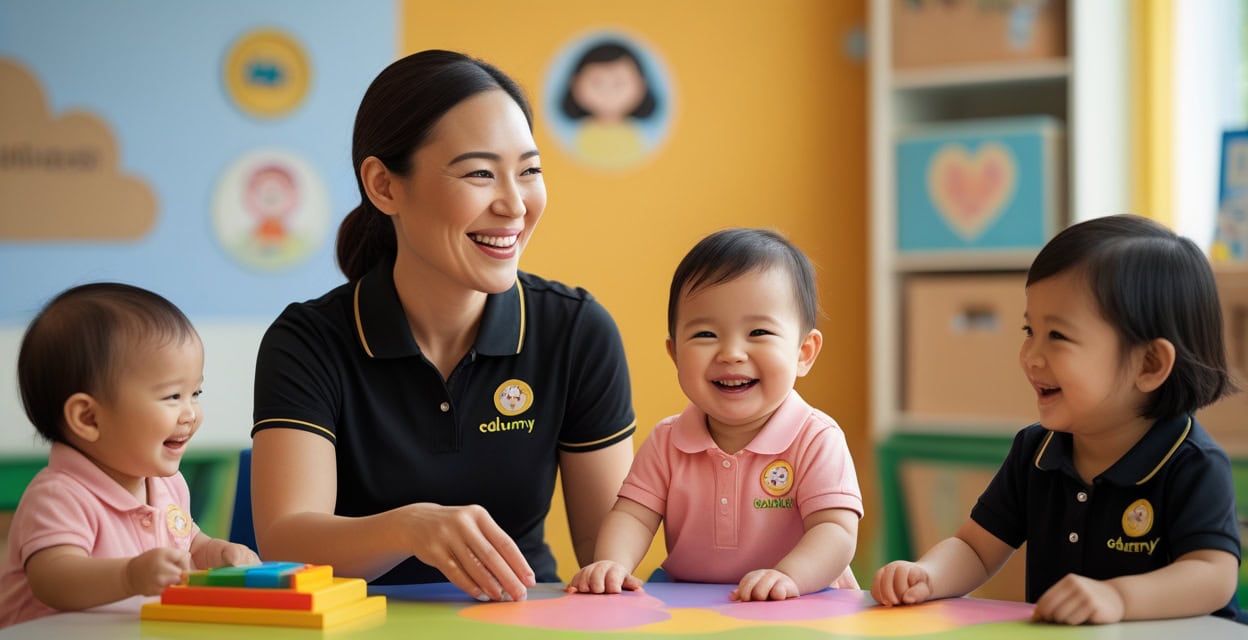
A Day in an EduNanny Pod
Every day follows a gentle, predictable rhythm that balances care and learning:
- 7:00–8:30: Gentle arrivals, greetings, handover notes, quiet sensory invitations.
- 8:30–9:30: Responsive feeding and care rituals — unhurried, narrated.
- 9:30–10:30: Floor time exploration — rolling, reaching, songs, peekaboo, mirror play.
- 10:30–12:00: Nap with safe sleep practices; slow wake and cuddles.
- 12:00–1:00: Midday feeds, hygiene, and stroller‑free outdoor air where suitable.
- 1:00–2:00: Language and music circle; tactile play with natural materials.
- 2:00–3:00: Second nap window; soothing routines.
- 3:00–4:30: Movement invitations, tummy time, social gaze, and peer interactions.
- 4:30–6:00: Final feeds, tidy‑up, calm play, and parent handovers with day summaries.
- 6:00–7:00: Extended‑day quiet care for full‑day bookings.

What Parents Tell Us They Value
- Ultra‑low ratio and density: 1:3 care in a home‑like setting rather than a large classroom.
- Choice of near‑home options: home‑based pods or community micro‑centres across the island.
- Transparent safety: certified, background‑checked childminders; CCTV in community spaces; privacy‑aware options in homes; clear incident protocols.
- Health protection: No Sick Child Policy and infection control routines; safe sleep practices.
- Professionalism and continuous improvement: national standards, ongoing training, and observation‑led care.
- Convenience and clarity: consistent hours, simple half‑day/full‑day choices, affordable rates, and CDA/Baby Bonus support during subsidised hours.
- Space design: modern, uncluttered, baby‑height layouts with natural light and safe materials.
- Relationship with a person: one key caregiver, stable rhythms, and respectful communication.

What Makes EduNanny Different
- An islandwide network of near‑home infant micro‑pods for ages 2–18 months.
- A living curriculum anchored in attachment, movement, language, and sensory inquiry.
- Safety innovation: privacy‑aware CCTV in homes where consent is given; CCTV in community spaces; robust data practices.
- An employment and training pathway for childminders — elevating capability and dignity in the profession.
- An operator ethos of excellence, transparency, and accountability—aligned with ECDA standards and oversight.

Eligibility, Hours, and Fees at a Glance
- Who: Singapore Citizens’ infants aged 2–18 months; not concurrently enrolled in ECDA‑licensed infant care.
- When: Monday–Friday, 7am–7pm; half‑day (5 hours) or full‑day (10 hours) within these hours.
- Where: Near‑home home‑based settings and community micro‑centres islandwide.
- Fees: Half‑day 16.50; Full‑day 33.00 (before GST); CDA/Baby Bonus accepted during subsidised hours. Additional care beyond subsidised hours can be discussed with the operator.

How to Enrol
Enrolment steps are designed to be simple and supportive. Please note that this section presents the process in plain terms suitable for implementation without external links in this format:
- Step 1: Visit the EduNanny enrolment page (edunanny.com/edunanny-ecda-childminding-service or Childminding.EduNanny.com) and submit the enquiry form, or inquire via WhatsApp from the page.
- Step 2: EduNanny Concierge responds, confirms eligibility, and recommends nearby pods or qualified childminders based on your location and needs.
- Step 3: Book a site visit to see the space, meet the childminder, and review safety and care plans.
- Step 4: Confirm your schedule (half‑day or full‑day; chosen days), complete enrolment, and begin a gentle, phased transition for your infant.

A Brief Word on CCTV and Privacy
EduNanny places a high priority on safety while balancing privacy:
- Community premises: CCTV is provided as required, with secure storage and clear access protocols to support safety and incident review.
- Home‑based premises: CCTV is encouraged in caregiving areas during care hours only; deployment is by consent, with privacy safeguards for household members and used strictly for safety and incident review.

A Brief Word on Health
To safeguard all infants, EduNanny operates a No Sick Child Policy during care hours. If a child is unwell, families are guided to discuss care options, medical clearance, and a re‑entry plan. When medicine administration is necessary, written instructions on dosage, timing, method, and potential side effects are required and aligned with operator protocols.

Why Childminding Matters Now
Who
Infants and families deserve consistency, proximity, and dignity in care, especially during the first thousand days when brain architecture forms and foundations for lifelong learning are laid.
What
A relationship‑first, safety‑driven model with ultra‑low ratios that blends the warmth of home with the discipline of professional practice.
When
The ECDA Childminding Pilot runs from 1 December 2024 to 31 December 2027; enrolment is open now for eligible families.
Where
Near home, islandwide — home‑based pods and community micro‑centres designed for accessibility and continuity with family life.
How
Qualified, background‑checked childminders; structured routines; prepared environments; observation‑led learning; parent partnership; and operator accountability to national standards.

The Philosophy Beneath the Practice
- We believe care is curriculum. Every feed, nap, and moment of eye contact teaches safety, language, memory, and trust.
- We believe joy is evidence. Calm, curious, and connected infants are learning beings.
- We believe small is powerful. A 1:3 pod can meet each child’s needs with precision and warmth.
- We believe parents are partners. Transparent handovers and shared goals strengthen the care circle.
- We believe this is a public good. EduNanny serves the nation’s youngest citizens with excellence, affordability, and accountability.

To Our Parents and Caregivers: You Should Not Have to Choose
You should not have to compromise proximity for professionalism, warmth for safety, affordability for quality. EduNanny exists to balance all of these — bringing science of early development, art of human attunement, and national standards into the small spaces where infants grow. Visit a pod, feel the quiet, and hear the gentle rhythm of care that signals futures begun — gently, safely, and near home.

Conclusion
EduNanny by BUTLER offers a practical, research‑informed path to high‑quality infant care that respects families’ need for proximity, affordability, and dignity. With ultra‑low ratios, evidence‑based practices, secure yet privacy‑conscious safety measures, and a clear emphasis on attachment, development, and joy, EduNanny aims to support the first thousand days with intention and care. If you are navigating the early years and seeking a near‑home option that never sacrifices safety for convenience or warmth for structure, explore EduNanny — a national promise delivered one gentle moment at a time.
EduNanny by BUTLER. Small circles. Strong beginnings. Islandwide, Monday to Friday, 7am to 7pm. Affordable from $33/day before GST, payable by CDA/Baby Bonus during subsidised hours. Certified and background‑checked childminders. Ultra‑low ratios. CCTV in community spaces and privacy‑aware options in homes. A national promise, delivered one gentle moment at a time.
[#EduNannySingapore, #InfantCareSingapore, #UltraLowRatio, #FirstThousandDays, #ECDAChildmindingPilot]