Fraud Blocker edunanny.com
edunanny-06120fd8b316c154c7007ddd646351cc
March 25, 2026

What Quality Near-Home Care Quietly Builds in Your Child

The Quiet Moment After Pick-Up: What Quality Near-Home Care Actually Builds

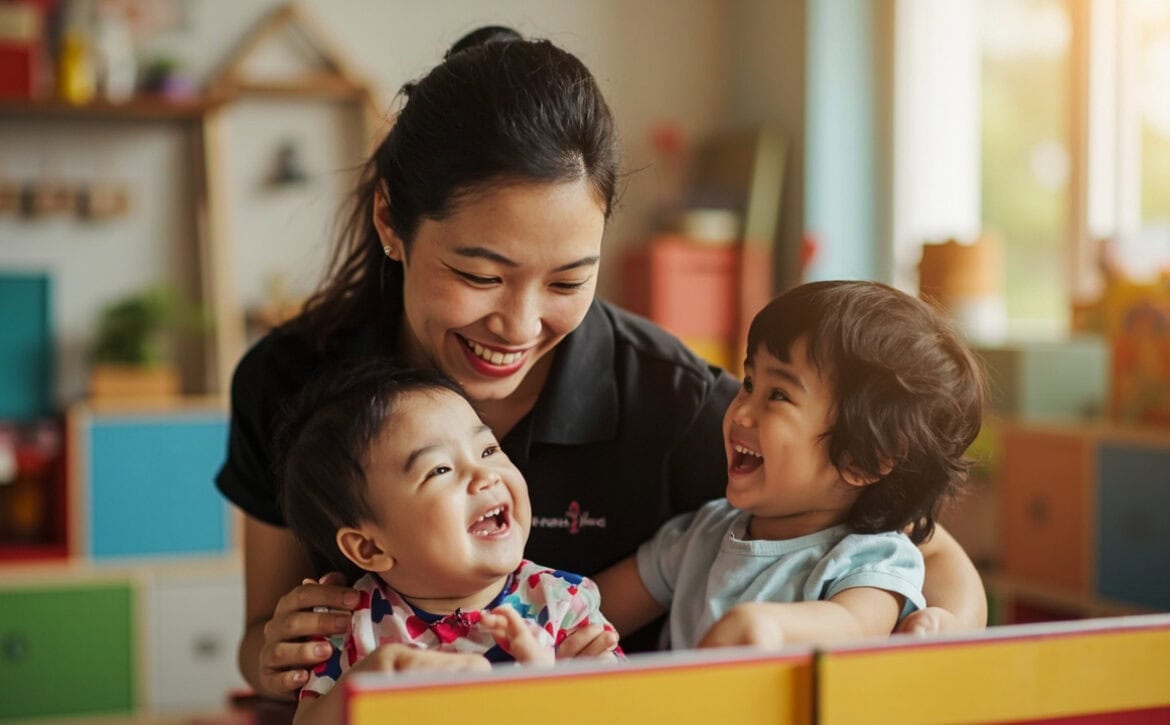
There is a moment that every parent who has chosen quality near-home care eventually recognizes. It does not announce itself. It is not dramatic. It arrives quietly, often in the ordinary minutes after you have collected your child and are walking home together, or settling into the car after a long day.

Your child says something. Makes a gesture. Responds to another child with an ease that surprises you. And you think, without quite articulating it: where did that come from?

That moment is not accidental. It is the visible edge of something that has been building for months, quietly and consistently, in the hours you were not there to witness it. It is the result of a decision you made perhaps when your child was still an infant, a decision that felt significant at the time but whose full shape you could not yet see.

You chose not just a childcare arrangement. You chose a developmental environment. And your child is now showing you what that environment has been building.

What happens in those early years does not stay in those early years. It accumulates. It shapes. It creates a trajectory.

What Quality Near-Home Care Builds Over Time

  • Secure attachment that becomes the internal working model for all future relationships
  • Emotional vocabulary built through months of consistent attunement and responsive caregiving
  • Social confidence developed through small-group interaction in a warm, managed environment
  • Language acceleration from language-rich environments where communication is a bridge, not a barrier
  • Executive function foundations constructed through routine, warmth, and supported independence
  • Preschool readiness that goes beyond academic content to include curiosity, persistence, and resilience

Why the Early Years Are Not a Waiting Room

The first thing to understand is that the early years are not a pause before real development begins. They are, in the most literal sense, the foundation. Not a metaphor for the foundation. The foundation itself.

The brain architecture that will support your child’s thinking, feeling, and relating for the rest of their life is being built right now, in these years that can feel so consuming and uncertain in the moment but are, in reality, extraordinarily generative.

Developmental science has been telling us this for decades. But what is less often discussed is this: the quality of care during these years does not merely influence outcomes. It compounds them.

A child who experiences consistent, attuned caregiving in the first two years of life does not simply feel secure in that moment. They build an internal working model of what relationships feel like, what the world is like, what they can expect when they venture out and explore. That model becomes the template. And templates, once established, tend to reproduce themselves.

How Compounding Works in Practice

In the early months, a child in quality near-home care is learning something profound: that their signals matter.

When they are hungry, someone responds. When they are distressed, someone comes. When they are curious, someone notices and names what they are looking at. This is attunement, and it is the scaffolding upon which emotional regulation will eventually be built.

The child is not learning to be quiet or to wait indefinitely. They are learning that they exist in relation to responsive others. That their needs register. That the world is, fundamentally, a place where they can make their presence known and expect to be met.

Secure children explore more. They take more informed risks. They approach new situations with curiosity rather than fear because they carry within them the quiet confidence that if things become difficult, there is a base to return to.


The Social Emergence: How Quality Care Fosters Peer Readiness

That same child, now a toddler, begins to play alongside others. In a near-home environment with a small group of children, they have opportunities to practice social interaction in a setting that is still managed, still warm, still attuned to their individual rhythms.

The toddler who has been securely attached is not necessarily a social natural, but they are more likely to attempt interaction. They are more likely to negotiate, to share, to recover from the inevitable social friction of early childhood. They have the emotional infrastructure to hold the frustration of a playmate not giving them the toy they want. They have the vocabulary, built through months of responsive caregiving, to say what they need.

In a small near-home setting, your child learns:

  • How to notice and respond to other children’s emotional states
  • How to wait, take turns, and navigate temporary disappointment
  • How to use words instead of actions when frustrated
  • How to approach a group of playing children and join in
  • How to recover from a social setback and try again

These are not lessons delivered through instruction. They are absorbed through the daily texture of supported peer interaction.

Language and Executive Function: The Capacities That Make Learning Possible

Language development follows a similar trajectory. Children in language-rich environments do not simply learn more words faster, though they do. They learn the rhythm of conversation, the back-and-forth of communication, the pleasure of being understood.

When a caregiver consistently narrates what a child is experiencing, names their emotions, and responds to their attempts at communication with genuine engagement, the child absorbs not just vocabulary but the architecture of communication itself.

A two-year-old who has experienced months of responsive caregiving enters preschool with something more valuable than a memorized vocabulary list. They enter with the understanding that communication is reciprocal—that when they speak, someone listens, and when someone else speaks, it is their turn to listen.

This is the foundation for everything that follows: classroom participation, teacher relationships, later literacy, the ability to advocate for themselves, the capacity to navigate conflict with words rather than escalation.

By the time this child approaches preschool age, these accumulated experiences begin to coalesce into school readiness—not the narrow, test-based readiness that the word sometimes implies, but a deeper readiness: the ability to be in a group, to follow a routine, to manage transitions, to persist at a task even when it is challenging, to regulate the emotions that arise when things do not go as hoped.

Executive function—the set of cognitive skills that allows us to plan, focus, manage impulses, and adapt to changing demands—is being built through the ordinary architecture of a well-structured day:

  • The consistent routine that helps a child predict what comes next
  • The warm but clear boundaries that help them understand the shape of acceptable behavior
  • The supported peer interactions that require navigation of social complexity
  • The caregiver who notices when a child is becoming dysregulated and helps them name and manage what they are feeling

What Quality Near-Home Care Looks Like in Singapore

Understanding what quality builds is one thing. Understanding what quality actually looks like in practice is another. For parents navigating options in Singapore, it helps to be specific about what to look for—not as a rigid checklist, but as a framework for discernment.

Signs of a Quality Near-Home Environment

Attunement in action: Watch for caregivers who notice what children are noticing. Who name what they see. Who respond to a child’s attempt at communication with genuine engagement rather than reflexive correction.

Emotional warmth without permissiveness: Children in quality care are not simply allowed to do what they want. They are held with warmth while being taught the shape of acceptable behavior. The boundary is clear; the relationship remains safe.

Small group dynamics: For children under three, smaller is genuinely better. In a group of one to three children, each child receives individual attention that is simply not possible in larger settings. This is not luxury—it is developmental necessity.

Consistent caregiver relationships: Your child should be building a real attachment to their caregiver over time. Frequent caregiver changes undermine the attachment security that is the foundation for everything else.

Transparent communication: You should feel informed about your child’s day—not just through formal reports, but through the kind of natural exchange that happens when a caregiver genuinely knows your child.

The EduNanny Model Within the ECDA Framework

Singapore has made significant investments in early childhood through ECDA, with regulatory standards, childcare options, and subsidy structures that recognize the economic reality of raising children here. Yet for all this infrastructure, the question of what constitutes quality care remains one that parents navigate with more uncertainty than they should have to.

For parents who want the warmth, consistency, and individualized attention of home-based care alongside the accountability, training, and transparency of a structured service, the options have been limited. The ECDA Childminding Pilot opened a pathway that honors both of these needs, and EduNanny has built its model within and around that framework.

Imagine a small, carefully prepared environment where your infant or young child is one of at most three children in the caregiver’s care. Not a room of fifteen infants managed by two overwhelmed educators. Not a home converted into a childcare facility without thought for the developmental needs of young children. But a true near-home environment: warm, predictable, attuned, and designed with the understanding that children under three need something qualitatively different from older children.

When you choose near-home care through EduNanny, you are not choosing between warmth and professionalism. You are choosing an environment where both are the baseline.

  • Monday to Friday care blocks that align with working parents’ actual schedules
  • Fee structures designed to be accessible within the Pilot framework
  • The ability to use your Child Development Account and Baby Bonus funds, which means the financial architecture Singapore has put in place to support families actually works for you
  • Transparency measures, including communication practices and, where deployed, CCTV systems that allow you to feel connected to your child’s day even when you are not physically present

This is not surveillance. It is partnership. The kind of partnership that allows you to go to work knowing that your child is not merely being watched but being cared for in the deepest sense of that word.


Addressing What Parents Actually Worry About

“How do I know quality care is actually happening when I’m not there?”

You cannot be there every moment, and no honest provider should pretend otherwise. What you can have is a system designed for transparency: regular communication about your child’s day, consistent caregivers who build real relationships with your family, and where appropriate, infrastructure that lets you see what is happening without intrusive surveillance.

“Is near-home care actually good for my child’s development, or is it just a compromise?”

The research on this is consistent: for children under three, smaller caregiver-to-child ratios are associated with better developmental outcomes across multiple domains—language, social-emotional development, attachment security. Near-home care, when delivered with quality, is not a compromise. For many children, it is genuinely optimal.

“What if my child doesn’t adjust well?”

Adjustment takes time, and it is normal. A secure, consistent caregiver who understands separation anxiety and can support your child through it without judgment or pressure makes an enormous difference. Ask potential providers how they handle transitions and adjustments. The answer reveals a great deal about their understanding of child development.

“Can I afford quality near-home care?”

Singapore has built a support structure around early childhood that you may not be fully utilizing. CDA and Baby Bonus funds can be applied through the Pilot framework, and subsidies are available depending on your circumstances. The cost conversation is worth having directly with EduNanny, because the full financial picture may be more favorable than you assume.


The Children Who Arrive Ready

Here is what we have observed, watching children move through quality near-home care over time: the children who have had this experience do not merely adapt to preschool. They arrive ready.

They have the social confidence to engage with new children and new adults. They have the emotional vocabulary to express what they need. They have the regulatory capacity to manage the inevitable transitions and frustrations of a school day.

This readiness is not about academic content. It is about the foundational capacities that make all subsequent learning possible:

  • The capacity to be curious
  • To persist
  • To recover from setback
  • To be in relationship with others

These are not soft skills. They are the hard currency of a successful life, and they are built in the early years, in the daily experiences of quality care.

What Quality Care Means for Your Child’s Future

The investment you are making is not in supervision. It is not in logistics. It is in the foundational architecture of a human life.

It is in the social confidence, the emotional regulation, the language and curiosity and executive function that will serve your child not just in preschool but in primary school, in secondary school, in their relationships, in their work, in their capacity to navigate the complexity of modern life with resilience and grace.

Caring for young children is demanding, often invisible work. The caregivers who show up day after day, who attune to children’s needs, who manage the beautiful chaos of early childhood with patience and warmth—EduNanny’s model invests in their training, creates career pathways that recognize expertise, and builds a culture that sees childminding as skilled, meaningful, and worthy of dignity.


Your Child Is Becoming Someone Extraordinary

None of this happens in a day. This is why the question of childcare is not merely a logistical question. It is a question about what environment you want to be the daily context of your child’s early development.

The child who enters preschool with social confidence, emotional vocabulary, and the beginnings of executive function did not arrive there by chance. They arrived there because for two or three years, they lived in an environment that was quietly and consistently building the capacities they now carry.

You are not merely making a logistical decision when you choose childcare. You are making a statement about what you believe your child deserves. You are investing in a trajectory that will unfold over years, in ways you can partly see and partly cannot.

The child who greets you with excitement when you collect them, who tells you about their day with new words and new stories, who plays imaginatively and negotiates conflicts with growing sophistication, who approaches new situations with curiosity rather than fear—that child is the visible evidence of accumulated experience.

When you notice something small but significant has shifted in them, know what you are seeing. You are seeing the result of months and years of consistent, warm, attuned care. You are seeing the visible edge of a developmental trajectory that began the day you made the choice to invest in quality. You are seeing who your child is becoming.

And who they are becoming is remarkable.

A Note for Parents at the Beginning of This Journey

If you are reading this while your child is still an infant, if you are in the early weeks of navigating childcare decisions, if you are feeling the weight of a choice whose full shape you cannot yet see—know this:

The decision matters. The environment you choose for your child in these early years is not interchangeable with any other environment. It is formative. It is shaping the person your child is becoming.

And you are capable of making this decision well. Not perfectly—no parent does. But well enough. With attention, with intention, with the willingness to look beneath the surface of logistics and ask what kind of developmental environment you are choosing.

Quality care is available in Singapore. It is possible to find it, to recognize it, to trust it. And when you do, something extraordinary begins to happen—not just for your child, but for your whole family.

EduNanny exists because we believe that Singapore families deserve care options that honor the significance of these early years. We have built our model around the understanding that what happens in the first thousand days of your child’s life does not stay in those first thousand days.

It compounds. It creates. It shapes who your child becomes.

Because this is the long game. And it is the most important game you will ever play.

Your child is becoming someone extraordinary. And the environment you choose is part of why.
edunanny-06120c568d76731f67509daeda8378e0
March 25, 2026

Why Singapore Parents Should Trust Their Parental Intuition

Quick Summary

  • Your instincts are valid. Research in developmental psychology and infant neuroscience confirms that parents develop a genuine, measurable ability to read their child’s emotional and physical state.
  • The gap you feel is not a failure. That uncomfortable space between what others advise and what you intuitively sense is a sign of attunement, not a parenting weakness.
  • Science supports what you already know. When you notice your child’s fatigue signals, hunger cues, or readiness for new experiences, you are processing complex, real data — not guessing.
  • Quality childcare extends your attention, not replaces it. The right caregiver becomes a trusted partner who respects and integrates with your understanding of your child.

The Science Behind What You Already Know

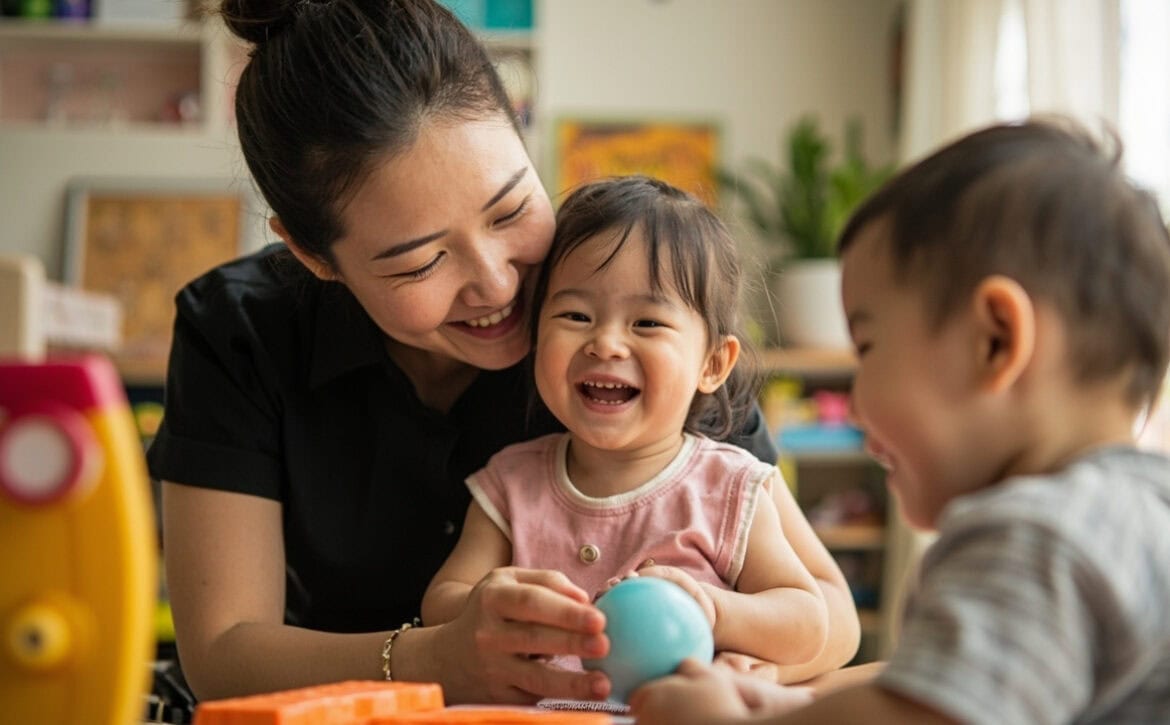
Studies in developmental psychology and infant neuroscience have shown, consistently and compellingly, that parents — particularly in those early years — develop a remarkably refined ability to read their child’s emotional and physical state.

This is not sentiment. It is not wishful thinking. It is attunement: the ongoing, dynamic process of learning to interpret a being who cannot yet use words to tell you what they need.

Researchers have long called this parental intuition, and the term carried a slightly dismissive air — as if it were a polite way of saying educated guess. But the data tells a different story.

When parents accurately read their infant’s hunger cues, fatigue signals, and threshold for stimulation, they are not guessing. They are processing complex, multi-channel information: facial expression, body tension, vocal quality, and pattern recognition built over months of close, daily contact. And arriving at a read that is often remarkably precise.

Real Examples of Attuned Parenting

  • A parent who notices their toddler is about to unravel before the meltdown arrives.
  • A mother who senses her infant is ready to transition to solids — not because of a chart but because of the way her child watches food, reaches for it, seems interested in a new kind of hunger.
  • A father who knows that his child’s particular whine means I am overtired and need to be held differently tonight.

These are not superstitions. These are data points that the parent’s brain has been quietly collecting and analyzing since birth, building a model of this specific child that no checklist and no generic developmental guide can replicate.

The parent’s unique expertise — the intimate, accumulated knowledge of this particular child — is not a soft skill waiting for validation. It is a real form of expertise that science is now beginning to explain.


The Landscape of Modern Singapore Parenting

There is a particular kind of exhaustion that Singapore parents carry, and it is not only the physical tiredness of broken sleep or the logistical marathon of ferrying a child between activities. It is the cognitive and emotional weight of navigating a landscape where every decision seems to require a panel of experts to sanction it.

Grandparents say one thing. The internet says another. A friend who is also a mother says something completely different. The clinic offers a third perspective. And in the middle of all that noise sits a parent — often with very little sleep, often navigating work pressures, often managing the expectations of an extended family — trying to figure out what is actually right for their child.

We know this landscape. It is not unique to Singapore, but it has a particular texture here. Shaped by the extraordinary value we place on family, on education, on doing right by the next generation. Shaped by a society that moves fast, where the conversation about a child’s development can feel like it starts before the birth certificate is even printed.

The modern parent in Singapore is often caught between worlds:

  • Between what the previous generation did and what current research recommends.
  • Between what looks impressive and what actually works.
  • Between the expert and the inner voice.

That gap — that persistent, uncomfortable space between what others say and what you instinctively feel — can start to feel like evidence that your own judgment is unreliable. We want to take that feeling seriously. Not to dismiss it, not to pile reassurance on top of it, but to sit with it honestly and ask a different question:

What if my ability to sense my child’s needs is not a soft instinct that needs to be validated by science — but a real form of expertise that science is now beginning to explain?

Where This Tension Becomes Real: The Childcare Decision

For many Singapore parents, the decision about who will care for their child is not simply a logistics decision. It is an emotional one. Wrapped up in guilt, in identity, in cultural expectations, in the very real question of what kind of care will honor the bond that parent has worked so hard to build.

And into this already tender space comes a flood of advice:

  • What the child needs is consistency.
  • What the child needs is social exposure.
  • What the child needs is to learn independence.
  • What the child needs is to stay close to primary attachment figures.

Here is what research actually tells us about what infants need: they need attunement. They need a caregiver who is responsive, who can read their signals, who can adjust.

And this is precisely where the modern Singapore parent is, perhaps without fully realizing it, already ahead of the curve. Because attuned parenting — the kind that responds to the child rather than the clock, that reads readiness rather than just applying a rule — is exactly what the research identifies as the foundational competency in early development.


What Quality Childminding Actually Looks Like

So if attunement is what children need, what does quality childminding look like in practice?

It begins with ratios. Research consistently shows that young children, especially in their first years, benefit enormously from smaller care environments where the adult-to-child ratio allows for genuine responsiveness. When one caregiver is responsible for fewer children, they can notice what a parent would notice — the subtle shift in mood, the early sign of tiredness, the moment when a child needs engagement versus when they need stillness.

It continues with communication. Parents consistently tell us they need:

  • Transparency. To know what is happening during the day.
  • Trust. In the person caring for their child.
  • Alignment. To feel that care is an extension of their own values and attention, not a departure from them.

And it depends on partnership. The caregiver is not a substitute for the parent. The caregiver is a trusted extension of the parent’s attention — someone who has taken the parent’s understanding of the child seriously, who communicates about what they observe, who adjusts based on the parent’s insights.

The parent who chooses childcare carefully is not abandoning their role as the primary expert on their child. They are deepening it. They are saying: I know what my child needs, and I am building the right environment for those needs to be met.


EduNanny Singapore: Built Around Your Read of Your Child

This is the question that shaped EduNanny Singapore from the very beginning. Not as a platform that tells parents what their children need, but as one that asks: how do we become a partner to the attunement you already have?

EduNanny operates within the ECDA Childminding Pilot, and this matters not just as a regulatory detail but as a philosophy. The pilot framework recognizes something that has long been understood in developmental research but not always reflected in how childcare is structured: that young children benefit enormously from smaller care environments where responsiveness is possible.

EduNanny offers up to one-to-three infant ratios in its home-based pathways, creating the kind of setting where a caregiver can notice what a parent would notice. It is care built around the rhythms of the child, not the other way around.

For parents who need both — who find that centre-based programmes and home-based care serve different purposes in their family’s life — EduNanny provides access to both pathways, community-based and centre-based, across Singapore. Because families are not uniform. Children’s needs are not uniform. A service that respects that variety is one that respects the intelligence of the parent making those decisions.

How EduNanny Supports Your Attunement

EduNanny addresses the real needs parents have through concrete, transparent practices:

  • Regular communication with families about how the day unfolds.
  • Openness about how care is delivered and how observations are shared.
  • Where deployed, CCTV measures that provide an additional layer of assurance without replacing the fundamental trust that must exist between parent and caregiver.

These are not gimmicks. They are the kind of practical considerations that let a parent breathe a little easier, that allow them to focus on their work or their own wellbeing knowing that their child is in a setting where their instincts are being respected and extended by the caregiver.

Addressing Common Concerns

Will childcare replace my bond with my child? The research on attachment tells us that what matters is not the number of hours a parent spends with a child, but the quality of attunement in those hours — and the consistency of a responsive caregiving environment overall. A childcare arrangement that extends your attunement does not compete with your bond. It supports it.

How do I know if a caregiver will really understand my child? Look for caregivers who ask about your child’s rhythms, preferences, and cues — not just schedules. Look for regular, substantive updates that go beyond “baby ate and slept well.” Look for communication that flows both ways — where your observations are welcomed and integrated.

What if I feel guilty about returning to work? The choice to engage childcare is not a failure of parenting. It is, in many cases, the most responsible and loving decision a parent can make — to build a team around their child, to ensure that the attention their child receives matches the quality of attention they would receive at home. That guilt is a signal of love, not a verdict on your choices.


Navigating Comparison Culture and Choosing With Confidence

There is another dimension to this that matters enormously in the context of modern Singapore parenting. We live in a comparison culture that is more intense than perhaps any generation before us has experienced.

Social media, parenting forums, WhatsApp groups — the relentless visibility of other people’s choices, other people’s children, other people’s outcomes — creates a background hum of evaluation that is difficult to escape.

  • A parent who is nursing an older toddler hears that breastfeeding should have ended at twelve months.
  • A parent who practices gentle parenting is told their child will lack resilience.
  • A parent who sends their child to a centre is asked why they are not keeping the child home.
  • A parent who keeps their child home is asked why they are not socialising the child.

The fire is coming from all directions, and the parent is expected to hold their ground with composure and quiet confidence.

But here is the thing about confidence that is worth stating plainly: it is not the absence of doubt. It is not a feeling of certainty that never wavers.

Real confidence in parenting is something quieter and more durable than that:

  • The ability to hold your own observations alongside other information and make a considered judgment.
  • The willingness to say, I have looked at the research, I have listened to what people I trust have to say, and based on what I know about this specific child in front of me, this is what I believe is right.
  • The willingness to act on your read of your own child even when others disagree — not out of stubbornness, but out of deep respect for the relationship you have built.

Questions Worth Asking

If you are researching childcare options, here are the questions worth asking — not just of providers, but of yourself:

  1. Who will be caring for my child, and can I see them interact with children? Look for responsiveness, warmth, and the ability to adapt to a child’s signals rather than rigid adherence to routine.
  2. What are the ratios, and why do they matter? Fewer children per caregiver means more space for attunement. Ask specifically about how the setting allows for individualized attention.
  3. How will I know what happens during the day? Ongoing, substantive communication is not a luxury — it is how your attunement extends into the hours you are apart.
  4. How will my knowledge of my child be integrated? The best childcare arrangements treat you as the primary expert. Ask how your observations, preferences, and insights will shape the care your child receives.
  5. Does this feel right for my child? Trust the same attunement that brought you this far. If something feels off during a visit, take it seriously.

Science, at its best, does not undermine that kind of confidence. It reinforces it. It says: your attunement is real. Your observations have value. Your judgment, informed by knowledge and sharpened by daily attention to your child, is a legitimate form of expertise.


Trust It

Here is the truth that sits at the heart of everything we have talked about today: your child has been communicating with you since the moment they were born. Before words, before formal milestones, before any developmental chart existed to measure them, they were telling you who they are.

And you — with all the messiness and exhaustion and uncertainty that comes with it — have been listening.

That is not a small thing. That is the most important thing.

The science is catching up to what you already know. The question now is not whether your instincts are valid. They are. The question is simply: what kind of support do you need to trust them fully and act on them with clarity?

EduNanny Singapore is here as part of that answer. Not to tell you what your child needs. To listen alongside you. To extend the care you have already begun. To be the kind of partner that takes your read of your own child seriously, communicates with you honestly, and holds your confidence in the way it deserves to be held.

Because parenting in Singapore is complex, and it is demanding, and it asks a great deal of you. But it does not ask you to set aside the most important expertise you have — your knowledge of your own child.

That expertise is not a feeling to be managed. It is the foundation on which everything else rests.

Trust it. And let us build from there.


Ready to explore childcare arrangements that honor your attunement? Connect with EduNanny Singapore to learn how our childminding pathways can extend the care you have already begun.

Learn more about EduNanny’s ECDA-registered childminding programme or return to the EduNanny homepage.

edunanny-061208dbc5d4706971a2b5bfffd1b5fa
March 25, 2026

The Childcare Question Every Singapore Parent Should Ask

Why the Childcare Decision Runs Deeper Than Logistics

Understanding that this decision is developmental—not merely logistical—is the first step toward making a choice you will feel confident about, not just next month, but in ten years.

Ten years from now, you may not remember whether the centre had convenient operating hours. But you will remember if your child walks into a Primary One classroom with quiet confidence. You will notice if she handles friendship conflicts with a composure that seems to come from somewhere deep.

These moments will not be accidents. They will be the accumulated result of thousands of small decisions made in the early years—decisions about environments, relationships, and patterns that were quietly writing themselves into your child’s developing brain.

The late Harvard economist Amartya Sen observed that people are shaped by their circumstances but also shape them in return. Children are even more porous to their environments than adults. A child in a nurturing, responsive, cognitively rich care environment is not simply being entertained or supervised. She is building the internal architecture of emotional regulation, social confidence, and the basic posture she will take toward learning itself.

Not “Where will my child go?”

But “Who will my child become under this arrangement?”

This shift in question changes everything. It moves the conversation from logistics to purpose. From convenience to intention.


What the Science Tells Us About the Early Years

There is a widespread assumption that the early years are simply a warm and fuzzy prelude to the real business of growing up—that childhood “really starts” when formal schooling begins. The science tells a different story.

From birth to around age three, a child’s brain forms more than one million new neural connections every second. This is not a metaphor. This is the actual architecture of who your child will become, built in real time, shaped by the quality of experiences, relationships, and environments she encounters each day.

Psychologists have a term for what happens next: developmental cascades. Small differences in early care quality do not simply add up—they multiply. They set off chains of consequence that ripple forward into later childhood, into adolescence, and in ways that researchers are still mapping, into adulthood.

Consider two children in different care environments. One learns in her earliest months that her needs are heard and met—that when she reaches out, someone reaches back. Another experiences responsiveness that is inconsistent: sometimes her cries are answered quickly, sometimes not. These are not trivial differences in experience. They become the foundation of how each child relates to the world.

Research shows that children who receive rich language exposure, responsive back-and-forth interaction, and age-appropriate challenges that stretch without overwhelming them arrive at Primary One with different skills—not just in literacy or numeracy, but in how they approach difficulty, how they collaborate with others, and how they see themselves as learners.

What This Means for Singapore Parents

Singapore parents are often portrayed as focused on academic outcomes, but the parents I speak with are genuinely invested in raising children who are not just successful but flourishing—children who are confident, emotionally intelligent, and capable of navigating an uncertain world with grace.

The research is reassuring: children are remarkably resilient. They do not need perfect parents or perfect caregivers. What they need is good enough—consistently good enough. They need caregivers who are warm and responsive more often than not. They need environments that are safe and stimulating more often than not.

The goal is not to eliminate all imperfection. The goal is to be intentional about the patterns you are establishing, because those patterns are the medium through which your child’s development flows.


Four Signs of Lasting Quality in Childcare

Here is a framework for evaluating any childcare arrangement—not a regulatory checklist, but the deeper signs you can feel and observe over time, even when you cannot measure them precisely.

1. Responsiveness

Does your child seem to have a relationship with her caregiver, not just a transaction? When she is upset, does she go to that person for comfort? When she makes a discovery—a butterfly on the railing, a new sound—she turns to share it.

These moments of connection are not sentimental extras. They are the building blocks of secure attachment and social-emotional development. They tell you that your child is not just being minded but being known.

2. Cognitive Richness

This does not mean flashcards or academic drills. It means a caregiver who narrates the world back to your child, who responds to her coos and babbles as if they are real conversation, who creates opportunities for age-appropriate exploration and problem-solving.

It means an environment with enough variety to stimulate curiosity and enough consistency to allow mastery. You can sense this when you walk into a space. It has a different quality. It feels alive.

3. Alignment

This is when your child’s caregiver seems to understand your family’s values, your child’s temperament, the particular rhythm that works for your household. It is not about cloning your parenting. It is about working from a shared understanding of what matters and what you are trying to build together.

When alignment exists, you will feel it. There will be trust, communication, a sense of partnership rather than handoff.

4. Developmental Momentum

This is what you see over months, not days. It is when you notice that your child is becoming more confident, more curious, more capable of managing her emotions. It is when her language develops in richness and nuance. It is when teachers or other observers notice something positive and specific about how she relates to others, how she approaches new situations.

These are the signs that the environment is not just keeping your child safe—it is building something.


What Singapore Parents Need to Hear About Guilt

I want to speak directly to something many Singapore parents feel but rarely express: the guilt that surrounds this decision.

If you have ever felt that you should be the one caring for your child, that returning to work is somehow a failure, that choosing childcare is a compromise you are making rather than a decision you are making—please hear this.

That guilt is often a sign that you are taking the decision seriously. And taking it seriously is exactly right.

But guilt is not a useful guide. It can distort judgment, lead to choices made from anxiety rather than intention, and obscure the fact that the quality of care matters more than the location of care.

A child raised by a resentful, exhausted parent who is trying to do everything is not necessarily better served than a child in a warm, skilled, nurturing care environment. What children need is not their parents’ constant presence. They need their parents’ presence of mind.

They need parents who are present when they are present, who have made thoughtful choices about the environments their children occupy, and who are secure enough in those choices to be fully engaged in the moments they do share.

Choosing childcare with a long view is not a retreat from parenting. It is a form of parenting. It is saying: I understand that my child is not just a baby who needs to be fed and changed. She is a person in the process of becoming someone. And I am going to make choices worthy of that process.


EduNanny: Designed for This Decision

EduNanny by BUTLER was created from a simple but, we believe, profound conviction: that Singapore parents deserve a childcare option designed with the same seriousness they bring to the decision itself.

Not a logistics solution. Not a marketplace to be navigated. But a genuine developmental environment, one that is held to the same standards you would hold yourself to.

We are part of the ECDA Childminding Pilot, and we say this not as a compliance badge but as a statement of commitment. The pilot exists because Singapore’s government has recognized that families need more than one pathway to quality childcare—that a one-size-fits-all centre model does not serve every family, every infant, or every stage of a child’s development.

Home-based and community-based childminding fills real gaps. It offers environments with smaller ratios, more individualized attention, and the warmth of a home rather than the scale of a centre. But it has also sometimes lacked the rigour, the oversight, and the professional standards that parents rightly expect.

Our participation in the pilot is a commitment to bringing rigour to this space without losing what makes it valuable.

How We Honour That Commitment

One of the ways we do this is through ratio. We maintain up to one-to-three infant ratios where applicable. This is not industry standard everywhere. In many centre-based settings, ratios are higher. But we believe that in the earliest months, when a child’s entire experience of the world is mediated through the quality of adult attention, lower ratios matter enormously.

When a caregiver can respond to your child—not eventually, not when she gets a chance, but in the moment, in real time—it shapes everything from emotional security to language development to the capacity for focused attention.

We also believe in transparency as a form of trust. Where deployed, our arrangements include communication measures and oversight options that allow you to stay connected with your child’s day. This is not about surveillance. It is about partnership.

When you know what your child’s morning looked like, when you receive genuine updates rather than formulaic reports, when you can ask questions and receive thoughtful answers—you are better able to continue that developmental work at home. The boundaries between care environments become permeable in the best way. Your child’s day is not a black box. It is a story you are co-authoring.

And for those moments when questions arise in the evenings, on weekends, in the spaces between formal sessions—when something your child said triggers a concern, when you wonder whether a behaviour is developmentally typical, when you simply want reassurance from someone who understands—EduNanny offers the Thomas AI Chatbot. Thomas is not a replacement for human judgment or professional medical advice. But he is a resource that is there when you need him, drawing on developmental frameworks and EduNanny’s institutional knowledge to offer guidance that is timely, relevant, and grounded in what we know about how young children grow.

Making Quality Care Accessible

We understand, because we are parents ourselves and because we have spoken at length with Singapore parents about their real lives, that affordability matters.

The ECDA Childminding Pilot includes fee structures designed to make quality home-based care accessible. Where applicable, the Child Development Account and Baby Bonus schemes can be used, so that the financial architecture of Singapore’s family support system works for you rather than adding another layer of complexity to navigate.


How to Evaluate Any Childcare Option

These criteria apply regardless of the type of arrangement you choose. Whether you are considering a centre-based infant care programme or a home-based childminding arrangement, the question is the same:

Is this building what I want built?

When you visit a potential childcare arrangement—whether a centre or a home-based caregiver—look for these signs:

  • Responsiveness: Does the caregiver seem attuned to the children in her care? Do the children seem connected to her, not just present near her?
  • Cognitive richness: Is the environment alive with language and interaction? Does the caregiver narrate, engage, and respond?
  • Alignment: Does the caregiver seem to understand your values and your child’s temperament? Can you imagine a genuine partnership rather than a transactional arrangement?
  • Developmental momentum: Ask to speak with families who have used the arrangement for several months. What do they observe over time?

Ask yourself: Would I be comfortable if I observed secretly for a day? Would I feel proud if my child’s teacher asked about her care arrangements?

The quality of a childcare arrangement is ultimately measured not by brochures or fee structures, but by the patterns it is writing into your child’s developing sense of self, her relationships, and her relationship with learning.


Choosing the Long View

There is a way of thinking about time that I find useful here. Most of us experience time as linear. Monday follows Sunday. Next year follows this one. We plan and anticipate and remember in sequence.

But there is another way to experience time, and parents know it intuitively: as a medium of influence.

The choice you make today is not just a solution to a present problem. It is an investment in a future you cannot yet see. It is a bet on who your child will become.

And here is the beautiful thing: you will know, eventually, whether that bet paid off. Not in a single dramatic moment, but in a thousand small observations over years.

You will know when your daughter handles disappointment with a grace that surprises you. You will know when your son enters a new classroom and you can see, somehow, that he is at ease in his own skin. You will know when a teacher pulls you aside and says, “There’s something special about how your child relates to others”—and you will think: yes. That is what we built. That is who we were cultivating all along.

The question you asked quietly in the early days—“Will this matter later?”—will have its answer. And when you look back, you will see that the choice you made was not just about childcare.

It was about what you believed was worth investing in. It was about your child’s dignity as a person in the process of becoming. It was about your own readiness to take the long view.

EduNanny was built for parents who take that readiness seriously. For parents who understand that love is not just a feeling—it is a set of choices, made in advance, with imperfect information, but with the best intentions and the clearest vision you can muster.

For parents who know that the days of infancy are not a blur to be survived but a foundation to be laid.

We are honoured to walk this path with you. And we are here, whenever you are ready, to begin.


If you would like to learn more about EduNanny’s approach to childminding, we invite you to read about our values and standards, or reach out to speak with our team directly.

edunanny-0612058c22b827d2f4f2a3845e52a1af
March 25, 2026

Beyond Supervision: How Singapore Parents Can Tell If Their Child Is Actually Growing

The Question Every Singapore Parent Carries (But Rarely Asks Out Loud)

There is a moment at the end of most Singapore workdays that millions of parents know well. You collect your toddler from childcare. She runs toward you with the particular joy of reunion. You sweep her up, breathe in that familiar smell, and in the brief pause before you ask “how was your day,” something surfaces beneath the relief of seeing her safe.

It is a quieter question. More important than logistics or safety reports. More fundamental than whether she ate well or slept well.

It is this: Is my child actually growing here?

Not just supervised. Not just comfortable. But developing. Building capabilities. Thriving in ways that will matter for the rest of her life.

This question lives beneath the practical considerations of location, cost, and commute. Most parents never voice it because it feels too hard to answer without expertise. So they rely on what they can measure: the clean environment, the qualified staff certificates on the wall, the cheerful photographs. These give peace of mind.

But peace of mind is not the same as informed confidence.

And Singapore parents deserve better tools to answer the question that matters most.


What Thriving Looks Like in Your Child Under Three

Here is where most parents find themselves without a map. You observe your child every day. You know her moods, her preferences, her particular ways of expressing joy or frustration. But observation without a developmental framework is like reading a book in a language you almost understand—you catch fragments, you sense the meaning, but you miss the full texture of what is being communicated.

So let us build that framework together.

1. Emotional Security: The Foundation of Everything

A child who feels safe in a care environment will show it in how she navigates the social world. She will not be without conflict or frustration—these are necessary experiences for learning. But she will have the emotional vocabulary and the underlying trust that allows her to express those feelings and recover from them.

What you might notice: She is beginning to name her emotions. She can move through a moment of upset toward resolution rather than remaining stuck in distress. When she is frustrated, she seeks comfort—and when she receives it, she visibly settles.

This is not a personality trait. It is a developmental achievement. And it happens partly because of the quality of caregiving she receives.

2. Engaged Curiosity: The Drive to Understand

A child who is developing well will show interest in the world around her. She will explore with her senses, manipulate objects with increasing precision, ask questions in the way that toddlers do—with pointing, with reaching, with the particular insistence of a child who has discovered that the world responds to her attention.

What you might notice: She reaches for interesting objects, explores how things work, watches other children with intent rather than fear. In a quality care setting, this curiosity is not left to chance. It is supported by an environment designed for discovery, by caregivers who respond to a child’s interests with materials and interactions that extend learning.

3. Social Competence: Learning to Be With Others

Social development in a child under three looks different from how it looks in an older child or adult. It is not sophisticated friendship yet. It looks like parallel play that is beginning to turn toward genuine interaction. It looks like the beginning of sharing, of turn-taking, of the early negotiations that will eventually become sophisticated social skills.

What you might notice: She watches other children with interest. She initiates small interactions—a touch, a vocalization, a gesture. She is beginning to understand herself as part of a social group, not just alongside others.

4. Language Engagement: The Joy of Being Understood

Language development in the first three years is staggeringly rapid. It happens through interaction. A caregiver who narrates the day, who sings, who responds to a child’s attempts at communication with warmth and expansion—this caregiver is doing essential developmental work, even when it looks like nothing more than conversation.

What you might notice: A growing vocabulary. Emerging sentences. Clear delight in being understood and in understanding others. You may not hear full sentences from a two-year-old, but you will hear the beginnings—the expanding sounds, the purposeful pointing, the clear attempt to communicate meaning.

5. Motor Confidence: The Body as a Tool for Discovery

A thriving toddler is a moving body, and that body is learning what it can do. The coordination, the balance, the sheer joy of physical capability that you see in a child running, climbing, manipulating small objects with her fingers—these are not just physical achievements. They are cognitive achievements. They are the foundations of confident engagement with the world.

What you might notice: She moves with growing confidence—crawling, walking, eventually running and climbing. She manipulates objects with increasing precision, discovering how things fit together, how they respond to her touch.


Why Surface Metrics Are Not Telling You the Full Story

Singapore has built a childcare infrastructure that many countries admire. The regulatory framework is robust. Safety standards are taken seriously. Options have multiplied across centres, home-based arrangements, and hybrid models.

This matters. Safety and access are foundational. No parent should have to choose between their career and the assurance that their child is physically secure.

And yet, with all this investment in options and access, a quiet gap remains. Most conversations about childcare centre on what we might call adult-centric concerns: Will my child be happy? Will I trust these people? Can I manage the logistics?

These are legitimate questions. But they have crowded out a more fundamental one: What is my child’s experience of this care? What is it building in her?

This matters because the first thousand days of life are not a waiting period before formal schooling. They are a period of extraordinary developmental activity. The architecture of language is being laid. The foundations of emotional regulation are forming. The capacity for curiosity, connection, and confident engagement with the world—these begin here, in the quality of attention and responsiveness a child receives in these earliest years.

Here is what many parents discover when they begin to look for these signs: they realize that most of the markers they have been given to evaluate childcare are insufficient.

The clean environment. The qualified staff. The regulated ratios. The cheerful photographs on the website. These things matter—but they do not tell you whether your child is actually developing in this environment. They tell you that the baseline has been met. They do not tell you about depth.

A comfortable child is safe, is fed, is not distressed. These are necessary conditions, but they are not sufficient for development. A growing child is challenged at the appropriate level, is supported through the productive struggle that leads to mastery, is receiving the kind of responsive interaction that builds neural pathways at a rate that will never again be matched in her lifetime.

Quality care is not about entertainment or even about warmth alone. It is about the deliberate cultivation of developmental opportunity in every interaction. This is the distinction that matters most. And this is where most childcare evaluation frameworks fall short.


What Developmental Quality Looks Like in Daily Care

Let us make this concrete. Imagine your end-of-day handover. Most parents experience this as a brief exchange of logistics: what your child ate, how long she slept, whether there were any incidents to report.

A developmentally responsive caregiver will not simply tell you that your child ate well and slept well. They will notice and share specific moments: the way your daughter initiated a game with another child today, the new sound she repeated with delight, the instance when she sought comfort and received it in a way that visibly settled her.

These are not anecdotes for their own sake. They are the evidence of development, made visible through attentive observation.

This is the quality of communication that distinguishes adequate care from developmental care. It is the difference between a report and a narrative. Between logistics and meaning.


How EduNanny Approaches Developmental Quality

EduNanny by BUTLER operates within the ECDA Childminding Pilot, and that pilot designation is not simply a regulatory classification. It represents a specific commitment to a model of care that allows for developmental depth.

When you have a caregiver ratio of up to one to three infants, when caregivers are not managing large groups but attending to a small number of children with focused intention, you create the conditions for the kind of responsiveness that drives development. This is not an accident. It is a design choice, rooted in the understanding that quality in infant care is not about the number of toys or the square footage of the space. It is about the quality of attention a child receives.

In the EduNanny model, whether care takes place in a home-based setting or within a community or centre-based pathway, the emphasis remains consistent: making developmental responsiveness visible and consistent.

This means caregivers are trained not only in safety and logistics but in the science of early development. It means they observe children with intention, tracking the small progressions that reveal a child is building capabilities, not just passing time comfortably. It means parents receive not just updates about meals and naps but meaningful information about their child’s engagement, curiosity, and growth.

EduNanny’s approach is built on the premise that parents deserve this kind of transparency. Where deployed, measures like CCTV provide an additional layer of assurance—not as surveillance but as transparency. A way of building the kind of trust that allows parents to relax into confidence rather than anxiety. The goal is not to watch over caregivers but to create the conditions for the open, honest relationship between parents and caregivers that serves children best.

Developmental quality and logistical accessibility are not in opposition—they must exist together for families. EduNanny operates Monday through Friday, with care blocks designed around the rhythms of working family life. Fees within the pilot structure are designed to be affordable, and for families navigating the financial realities of quality care, the usability of CDA funds and Baby Bonus contributions represents a meaningful acknowledgment that developmental quality should not be accessible only to the wealthy.

Singapore-wide relevance is built into the model because every child in this city deserves the same developmental opportunity, and because Singapore parents deserve access to care that meets this standard.


Questions to Ask in Every Handover Conversation

The good news is that you do not need a degree in child development to begin recognizing quality. There are practical things you can look for in your daily interactions that will give you real information.

  • Ask not just what your child ate, but how she ate. What was her mood? Was she engaged with the food and the social experience of mealtime?
  • Ask not just whether she napped, but how she went to sleep. Did she settle with comfort? Did she wake refreshed and alert?
  • Ask about her language. What words was she using? What was she trying to communicate? How did her caregivers respond?
  • Ask about her social world. Who did she play with? How did she handle the inevitable conflicts that arise between toddlers? How did the caregivers support her in those moments?
  • Ask about her curiosity. What captured her attention today? What did she explore? How did her caregivers extend that exploration?

These questions will tell you whether you have chosen a care arrangement that is simply adequate or one that is genuinely developmental.

And the answers you receive—or the absence of meaningful answers—will tell you a great deal about the quality of the care you are receiving.


Common Concerns Singapore Parents Have

“Is developmental quality something I can actually evaluate?”

Yes. Instincts can be educated. The more you understand about development, the more clearly you will see it. You do not need to become an expert. You need to learn a few key markers and practice observing through that lens. It is like learning to notice the quality of light in photography—at first it seems abstract, but soon it becomes automatic.

“Isn’t all licensed childcare in Singapore held to high standards?”

Licensing standards establish necessary baselines. They ensure safety, adequate ratios, qualified staff. But baselines are not benchmarks. A care arrangement can meet every licensing requirement and still be developmentally mediocre. The difference between meeting standards and exceeding them through intentional developmental responsiveness—that is the difference this article is helping you see.

“What if I cannot afford premium childcare?”

Developmental quality should not be the exclusive province of the wealthy. This is why the ECDA Childminding Pilot structure, within which EduNanny operates, was designed to make quality care accessible. CDA funds, Baby Bonus contributions, and structured fee frameworks are all part of making this achievable for working families across Singapore.

“How do I know if EduNanny is right for my family?”

The answer lies in what you are actually looking for. If you want more than safety and comfort—if you want care that is deliberately cultivating your child’s developmental potential—then EduNanny’s model is built around that goal. If you are primarily looking for the lowest-cost option or the most convenient location, there may be other choices that serve those specific needs better. But if the question you carry is “is my child actually thriving here?”—then you are asking the right question, and EduNanny structures itself around answering it.


What to Look For: A Quick Reference

Surface Marker Developmental Indicator
Clean, safe environment Environment designed for discovery and appropriate challenge
Qualified, certified staff Caregivers trained in developmental observation and responsive interaction
Child appears happy Child shows emotional vocabulary, recovery from distress, secure exploration
Regular updates on meals and sleep Updates include engagement, curiosity, social interaction, language development
Age-appropriate toys and materials Materials extended and rotated based on individual child interests
Licensed and regulated Licensed with intentional design toward developmental depth

The Question Worth Asking With Everything You Have

You are raising a person whose capacity for the rest of her life is being shaped in these earliest years. The relationships she forms now, the ways she learns to manage emotion, the curiosity that is either nurtured or discouraged, the language she absorbs, the confidence she builds in her own body—these are not trivial concerns. They are the foundations of everything that follows.

The choice you make about who cares for her while you are working, while you are building your own life and your own contribution to this city, is not a choice you make once and then set aside. It is an ongoing relationship. A partnership between your family and the caregivers you choose.

What EduNanny offers is not just a service. It is a commitment to making developmental quality observable, understandable, and consistently present. It is the recognition that Singapore parents are capable of understanding development, that they deserve information that helps them see what is actually happening with their children, and that the best care arrangements are those where parents and caregivers are true partners in a child’s growth.

As you consider your options, look deeper than the surface markers. Look at the children in the care setting—are they engaged, curious, emotionally present? Look at the caregivers—are they observing, responding, extending learning? Look at your own child after a day in care—is she tired in the way that comes from productive growth, or in the way that comes from mere stimulation without purpose?

Trust your instincts, but also trust that instincts can be educated.

The quiet question you carry—your child’s daily experience, her growth, her thriving—is the right question to carry. And it deserves a system that takes it seriously, that structures itself around the answer, that measures success not just in parental peace of mind but in the observable, meaningful development of the children in its care.

EduNanny by BUTLER was built for this. For parents who want more than safety, who want more than comfort, who understand that these early years are not a waiting period but a building period. For caregivers who are not merely watching children but cultivating their potential. For Singapore, a city that invests so much in its people, and that increasingly recognizes that investment must begin at the very start.

Your child is not just going somewhere while you work. Your child is growing. Make sure that growth is happening in a place that understands the difference, and that treats those first thousand days with the seriousness they deserve.

The question you are asking—quietly, hopefully, with all the love that drives you to want the best for your daughter—is the question that good childcare exists to answer.

And it is a question worth asking with everything you have.


If you are considering your childcare options in Singapore and want to learn more about an approach built around developmental responsiveness, we welcome the opportunity to speak with you. You can also read more about EduNanny’s approach or explore how the ECDA Childminding Pilot works.

edunanny-061205816b43ff3d603b90b292696a8f
March 25, 2026

What Quality Infant Care Gives Your Child’s Developing Brain

The Invisible Truth Every Singapore Parent Carries

There is a moment, quiet and familiar, that happens in homes across Singapore more often than anyone admits.

You pick up your child at the end of the day. You scan their face as they emerge from the arms of someone else, searching for what has changed. And sometimes, if you are paying close enough attention, you notice it: a new word they did not have this morning. A way of holding a crayon. A strange confidence in greeting the security guard. A question about something they saw, something you did not show them.

Something happened while you were not there.

You feel it before you can name it. The child who left you eight hours ago is not quite the same child who has returned. Something has been added. Something has been built.

This is not a moment of anxiety or guilt, though you may feel those too. This is a moment of genuine wonder, because your child is revealing something important: they are learning how to be a person in the world, and not all of that learning is happening under your direct gaze.

This is the invisible truth at the heart of every childcare decision. It is the question sitting beneath every Singapore parent’s search for infant care, beneath every visit to a potential caregiver’s home, beneath every conversation with a spouse about whether they are making the right choice.

It is not really a question about logistics or convenience or even safety, though those things matter. It is a question that runs far deeper:

What is my child actually becoming in the hours I am not there?

And more specifically: Will this environment serve who they are becoming, or will it simply fill time until I return?

What Quality Infant Care Actually Builds

  • The first 1,000 days of life are a unique window when your child’s brain is building the architecture that will shape how they think, feel, learn, and relate to others for the next 80 years
  • Early environments are not passive containers—they actively construct or undermine neural pathways that determine emotional regulation, social confidence, and curiosity
  • Quality care is not supervision (keeping children safe and fed); it is intentional development (building the internal capacities your child will carry for life)
  • Choosing quality childcare is not a compromise—it is a deliberate developmental investment that extends rather than replaces your parenting

The Science of the First Thousand Days

There is a reason researchers keep returning to this period—why governments and health systems worldwide have begun investing seriously in early childhood development, why the World Health Organization speaks about it with a kind of reverence that surprises many people.

It is not because young children are cute or vulnerable or deserving of protection, though they are all of those things. It is because the first thousand days represent a window of opportunity that will not open again.

When a child is born, their brain contains roughly one hundred billion neurons, nearly the full complement they will carry through adulthood. What those neurons are not yet carrying is the architecture that will shape how that brain works for a lifetime.

The connections between neurons—the pathways that form the basis of how a child thinks, feels, learns, and relates to others—are not yet established. They are waiting to be built. And they are being built, continuously, from the moment of birth, by everything the child experiences: every face they see, every sound they hear, every interaction that teaches them whether the world is predictable or chaotic, responsive or indifferent.

The Architecture Is Real

This architecture is not metaphorical. Neuroscientists can observe it. Through imaging studies and longitudinal research, they can see how different early environments produce measurably different patterns of neural connection.

Children who experience responsive, language-rich, emotionally attuned care develop more robust neural pathways for emotional regulation, for curiosity, for the capacity to trust and to be trusted. Children who experience neglectful or chaotic environments develop pathways too—but these are pathways calibrated for survival in a world that is not safe, not reliable, not warm.

The brain is extraordinarily adaptive. It builds what it needs to build based on what it encounters. This is the invisible curriculum of the early years. It operates whether we are paying attention to it or not.


What Quality Infant Care Really Means

When we speak about quality in infant care, we are not speaking about whether the toys are new or the premises are clean, though those things have their place. We are speaking about whether the environment is actively building the architecture that will serve this particular child for the next eighty years of their life. We are speaking about whether the hours spent in a care setting are hours of profound, quiet learning or hours of mere accommodation.

The difference between these two outcomes is not subtle, and it is not trivial.

Supervision vs. Intentional Care

There is a distinction that separates the genuinely developmental from the superficially adequate: the difference between supervision and intentional care.

Supervision is what you might find in an environment where children are watched, where their basic needs are met, where they are kept safe and fed and changed and entertained. A supervised child is a child who is not in danger. This matters enormously. But supervision is a floor, not a ceiling. It is the minimum requirement, the foundation upon which anything more ambitious must be built—it is not itself the building.

Intentional care is something different. It is care organized around a specific understanding of what developing human beings need to become resilient, curious, emotionally competent people. It is care that pays attention not just to what a child is doing in the moment, but to what that child is becoming over weeks and months and years.

A Story of Two Responses

Consider what happens when a child falls and scrapes their knee.

A supervisor notices the fall and tends to the scrape. The child is comforted. The wound is cleaned. The moment passes.

An intentional caregiver notices the fall, tends to the scrape—and then observes carefully how the child responds to distress. Do they seek comfort or withdraw? Do they try again or hesitate? That observation becomes the basis for a quiet response, a bit of scaffolding, a moment of warmth calibrated to help this child learn something important about failure, resilience, and the reliability of human connection.

These two responses may look similar from the outside. But what they build inside the child over time is profoundly different.

What Intentional Environments Actually Do

  • Environments where children are not merely accommodated but encountered
  • Their signals are read and responded to with attunement
  • Language is abundant, back-and-forth, and rich with genuine engagement
  • Emotional experiences are navigated with the child, not managed through distraction—so the child learns what their feelings mean and how they can be lived with
  • Social experiences are guided with skill, so children learn how to be with others, how to share, how to resolve small conflicts, how to notice another person’s feelings

These are not soft skills. These are the skills that determine, more than almost any others, how satisfied a person will be with their life at twenty-five, at forty-five, at seventy. Emotional regulation. Social confidence. The capacity for curiosity. The ability to form and maintain relationships. The resilience to recover from setback and disappointment.

These are the outcomes of early environments that understood what they were building and organized themselves accordingly.


Why Your Childcare Choice Matters More Than You Think

These capacities are not fixed at birth. They are not determined by temperament or genetics or socioeconomic circumstance in any simple way. They are built, day by day and hour by hour, in the environments where your child spends their time.

Which means they are not fixed by your choices either. They are shaped by them.

This is both a burden and a gift, and it is important to acknowledge both honestly.

The Weight and the Possibility

It is a burden because it means the early years matter in ways that can feel overwhelming. Parents in Singapore already carry extraordinary pressure: the costs of raising a child, the demands of dual-income households, the expectations of extended families, the hyperawareness of a society that compares and competes and plans relentlessly for the future. To add to this the weight of knowing that your childcare choice is shaping your child’s brain architecture can feel like too much. It can tip into anxiety, into paralysis, into second-guessing that helps no one.

But it is also a gift because it means what you choose matters. It is not predetermined. You are not trapped by circumstance or history or the limitations you perceive in yourself. You have the power to create, through the environments you choose for your child, outcomes that will compound across their entire life.

This is what premium quality infant care is, at its core. It is not a luxury or a status symbol or a reflection of parental inadequacy. It is a deliberate investment in the most important construction project that will ever be undertaken: the building of a human person.

The Fear of Being Replaced

There is a quiet anxiety that surfaces for parents, especially in those first months and years, when a caregiver is beginning to occupy a significant place in their child’s life. It is the fear of being replaced.

It is the fear that the child will come to love this other person more, or only, or instead. That the bond you have worked so hard to build will be undermined by the bond your child forms with someone else. That you will become, in some important sense, optional.

Developmental science has made very clear: your child is not a container with a fixed capacity for attachment. They are not dividing their love between you and a caregiver like someone splitting a limited resource.

Human beings are built for multiple attachments. Children who form healthy attachments with caregivers outside the home do not love their parents less. They love them more reliably, because the experience of being loved by one person teaches them that being loved is possible, and that makes them more available to receive love from another.

What Quality Care Actually Gives Your Child

A child who has experienced quality care from a confident, warm, developmentally skilled caregiver has not been stolen from their parent. They have been given a gift: an additional proof that the world contains people who will respond to them, who will see them, who will be there when they need something.

Your role as a parent is not to be the only person your child trusts. It is to be the anchor, the home base, the person whose return is always anticipated and celebrated. And you can be this anchor even when you are physically apart, because your child carries inside them the template you have given them for what love feels like.

If that template is secure and warm and reliable, then your child’s experience with a caregiver reinforces that template rather than replacing it. They are learning, through contrast and through connection, that you are their parent and this person is someone who cares for them while you are away—and both of these truths can coexist without conflict.


EduNanny: Where Developmental Science Meets Genuine Warmth

When you choose an environment that is intentionally organized around your child’s development, you are not outsourcing parenting. You are extending it. You are saying: I want my child to encounter, during the hours when I am working, the kind of responsiveness and language and warmth that will help them become who they are meant to be. I want the time they spend away from me to be time that is building them up, not just keeping them safe.

Part of the ECDA Childminding Pilot

EduNanny operates within the ECDA Childminding Pilot, a framework designed to bring professional, structured, quality-monitored home-based care to families across Singapore. This is not a casual arrangement. It is a pathway thoughtfully developed to address the specific needs of Singapore parents who want their children cared for in environments organized around development rather than mere supervision.

The pilot offers both home-based care, where a trained caregiver comes to your home, and community-based pathways where small groups of children are cared for in carefully selected settings. Both options maintain ratios that allow for genuine attention—with up to one infant per caregiver in many arrangements—so that the kind of attunement described above is actually possible rather than aspirational.

The Philosophy of Accompaniment

At the heart of the EduNanny approach is a simple but profound understanding: the caregiver is not just a service provider. The caregiver is, for many children, the first teacher they will ever have outside the family. The caregiver is a person who will, over months and sometimes years, become a significant figure in your child’s emotional life.

We select caregivers with the care that the role demands. We train them not just in safety protocols and compliance requirements, but in the developmental science that should inform every interaction with a young child. We support them in building the kind of responsive, warm, language-rich environments described earlier. And we maintain ongoing relationships with families so that care remains aligned with what each child needs as they grow and change.

Because children do change, and quality care must be prepared for that. The needs of a three-month-old are not the needs of a twelve-month-old, and neither are the needs of a twenty-four-month-old. A developmental approach to infant care means following the child, adapting to where they are, noticing what they are reaching toward and providing the scaffolding that will help them get there.

This is what EduNanny calls its philosophy of accompaniment. We are not just watching your child until you return. We are walking alongside them through their development, providing at each stage what they need to grow.

The Caregiver’s Dignity

The kind of care described throughout this article—intentional, developmentally informed, emotionally attuned—requires skill. It requires knowledge. It requires patience and observation and the ability to respond to a child’s cues with precision and warmth. It requires professional excellence.

At EduNanny, the caregivers who join the network are treated as the professionals they are. They receive training that prepares them for the complexity of the work. They receive ongoing support and development. They are recognized as essential contributors to the lives of the children and families they serve.

Because we know, and we believe you know too, that the person who cares for your child in those early years is not interchangeable or incidental. They matter in ways that will echo through your child’s entire life.

Technology That Serves Relationships

EduNanny has developed Thomas, an AI-powered assistant designed as a bridge between families and caregivers. Thomas is not designed to replace human connection. It is designed to strengthen it—helping parents stay informed in real time through meaningful communication that allows you to understand what your child’s day has been like, what they have been exploring, what has brought them joy or caused them frustration.

It helps caregivers document and reflect on the children’s development in ways that make their work more intentional. And it helps families and caregivers work together as partners, rather than as separate parties who occasionally exchange information.

Making Quality Care Accessible

The fee structures within the pilot have been designed with accessibility in mind. Families are able to utilize CDA funds and Baby Bonus payments in many cases, so that quality care is not only available to those with unlimited resources. The developmental advantages of quality early care should not be reserved for the privileged few. Every child in Singapore deserves an environment that is building them up.

Care is available across weekdays, Monday through Friday, in structured blocks that align with the realities of working parents’ lives. Communication practices are designed for transparency and trust, with regular updates that help you stay connected to your child’s day even when you are not physically present. Where CCTV measures are deployed, they are deployed not as surveillance but as transparency—so that you can feel confident about what is happening in the environment where your child spends their days.


How to Evaluate Infant Care: A Parent’s Guide

You are making a decision that deserves serious evaluation. Here are the questions that matter most:

Observe the Interactions

  • Do caregivers respond to children’s cues promptly and warmly?
  • Do they speak with children, not just at them? Is there back-and-forth conversation, even with pre-verbal children?
  • How do caregivers handle moments of distress or conflict? Is the response calibrated to help the child learn, or simply to stop the behavior?

Consider the Ratios

  • How many children per caregiver? Quality care requires attention that becomes impossible when ratios are too high.
  • Are infants given individualized attention, or are they largely managed as a group?

Ask About the Approach

  • Is there a documented philosophy that guides the care, or is it ad hoc?
  • How does the caregiver or service handle developmental milestones and transitions?
  • What does a typical day look like? Is there time for free exploration, structured activities, and rest?

Trust Your Observations

  • Visit unannounced if possible. See what the environment looks like when it is not prepared for observation.
  • Notice how children in the setting look and behave. Do they seem settled? Curious? Engaged?
  • Ask yourself: would I feel comfortable if I could not see what was happening here?

The Decision You Are Actually Making

Let me pull together everything into the clarity I hope you are carrying with you.

You are not making a logistics decision. You are making a developmental one. The environment you choose for your child in the first thousand days of their life will shape the neural architecture that they carry for the next eighty years. It will influence how they regulate their emotions, how they relate to other people, how curious they remain about the world, how resilient they are when things go wrong.

These are not small outcomes. These are the outcomes that determine whether a person flourishes.

Quality infant care—care that is intentional and responsive and developmentally informed—is not about replacing you. It is about extending the developmental support that your child receives, so that the hours you are apart are hours of building rather than hours of mere accommodation.

The caregivers who do this work are not incidental figures in your child’s life. They are essential contributors, and they deserve to be treated with the professionalism and respect that their role demands.

The Reframing to Carry With You

You are not choosing between being a good parent and using professional childcare. You are being a good parent by choosing professional childcare that understands what it is doing. You are investing, with intention and care and seriousness, in the most important construction project of your life: your child.

In Singapore, we are fortunate to be part of a society that is increasingly recognizing the importance of the early years. The ECDA Childminding Pilot represents a commitment to making quality care accessible to more families, and EduNanny is proud to be part of that commitment.

We believe that every child deserves the kind of start that will serve them for a lifetime. And we believe that parents deserve the support and peace of mind that come from knowing their child is in an environment that is genuinely serving their development.

The next time you pick up your child at the end of the day, and you see that subtle change in their face—that new word or that strange confidence or that question about something you did not show them—I want you to know what you are seeing.

You are seeing evidence of learning. You are seeing the invisible curriculum at work. You are seeing the quiet, profound, essential building of a human person.

And you are seeing proof that the choice you made was the right one.

That child is becoming. And because of the thoughtfulness you have brought to this decision, they are becoming in a direction that will serve them well.

If you are ready to explore what quality, intentional infant care looks like for your family, we invite you to begin a conversation with EduNanny. Every child’s development is unique, and we would be honored to learn about yours.

Begin your journey with EduNanny today.


To learn more about EduNanny’s approach to childcare, visit our about us page or explore the ECDA Childminding Pilot details. You can also get in touch to discuss your family’s needs.

edunanny-0612054a545138c7d07ce7cbae296334
March 25, 2026

The Singapore Parent’s Framework for Choosing Childcare That Develops

Paying for Childcare Versus Investing in Development

Here is the distinction that changes everything. There is a difference between paying for childcare and investing in development.

Paying for childcare is a transaction. It covers the cost of supervision, of meals, of a safe environment for a set number of hours. That is worth paying for, and you should not feel guilty about it.

But investing in development is something different. It is allocating resources with the intention of generating measurable returns in your child’s capacity to learn, to relate, to regulate, to thrive.

When you find a care arrangement that genuinely invests in development, you are not spending money. You are deploying it.

The first thousand days of a child’s life are not merely a period of maintenance before the real work begins. They are the period during which the architecture of the brain is being built at its fastest and most impressionable rate.

What This Actually Produces

Language acquisition, which will later determine how well your child reads, argues, negotiates, and writes, follows a trajectory largely set before the age of three. This is not a marketing claim. It is developmental reality.

Social confidence—the ability to read cues, to share, to recover from disappointment, to enter a room full of strangers and find a place within it—is not something that suddenly appears when your child turns four. It is constructed, day by day, in the moments when a trusted adult responds to their distress, celebrates their discoveries, and holds the emotional container that allows them to explore safely.

Emotional regulation, which researchers now understand as one of the most powerful predictors of academic success and relationship health in later life, is not taught in Primary One. It is learned in infancy, through the experience of being soothed, being understood, and gradually discovering that big feelings do not destroy the people who love them.

These compounding returns look like this:

  • The Tuesday afternoon twenty years from now when your child sits in a meeting and has the emotional vocabulary to disagree respectfully with a superior
  • The afternoon when they encounter a mathematical concept that does not immediately make sense, and their early childhood has taught them that confusion is temporary, not a verdict on their intelligence
  • The conversation at university when they call you, not because they need money or rescue, but because they have learned that your voice is where they find clarity

How to Evaluate What You Are Actually Paying For

Not all premium pricing reflects premium value. Some of it reflects premium marketing. Some of it reflects premium real estate costs. Some of it reflects premium ambition that never makes contact with the actual daily experience of the children in their care.

And some of it reflects genuinely elevated practice, the kind that costs more because it requires more training, more staff, more attention per child, and more ongoing refinement of method.

When evaluating what you are paying for, ask yourself what the ratio actually is. Not just the headline ratio—which in many centres is one caregiver to eight infants—but the experienced ratio:

  • How many of those eight children receive full attention in any given moment?
  • How many are in distress that goes unresponded to because the caregiver is managing the others?

An infant who is distressed needs more than a name being called across a room. They need a face, a voice, a presence that communicates: I see you, I understand that something is wrong, I am coming.

When that response is fast enough and warm enough and consistent enough, the infant begins to learn something profound about the world. It is a place where their needs register and are met. That belief, formed in the first year of life, becomes the internal working model that shapes how they relate to teachers, to friends, to romantic partners, to their own children.

The Real Cost of Under-Attuned Care

The cheapest capable option is not always the wisest investment. Singapore is a city built on prudence, on not spending what you do not need to spend. But infant care is not one of those decisions where the cheap option and the capable option are functionally equivalent.

When you are paying the minimum, you are almost always paying for something that has been cut. It may be the quality of the caregiver’s training. It may be the responsiveness of the communication with parents. It may be the variety and intentionality of developmental activities. It may be the food that is served, the way potty learning is handled, the degree to which the child’s emerging interests are noticed and built upon.

These are not luxury features. They are the substance of what is supposed to be happening during the hours that your child is in care.

And here is what is so often left out of this conversation: the cost of under-attuned care is not just the cost of what is missing. There is a cost to what it creates.

A child who spends their first year in an environment that is merely adequate, merely safe, merely supervised, is not simply waiting to develop. They are developing, every single day, in directions that will either serve them or challenge them.

  • If the caregiver cannot consistently respond to their attempts at communication, those neural pathways for language do not simply wait. They are pruned back.
  • If a child’s distress is repeatedly met with generic soothing rather than attuned response, they learn to manage their emotions alone—which can look like independence but is actually a form of adaptation to a world that does not seem to understand them.

These are not failures of parenting. They are consequences of systems that are under-resourced. But they are consequences nonetheless, and they are real.


Singapore Subsidies: What Parents Need to Know

Singapore has built a subsidy architecture that is genuinely complex and that many parents find confusing. Government subsidies exist, and they exist for good reason, because Singapore understands that childcare is infrastructure, not charity.

The ECDA Childminding Pilot is part of this infrastructure, and it is likely relevant to your situation if you are researching home-based care options.

Here is what I want you to understand: subsidies and premium care are not opposites. The question is not whether you use subsidies or whether you choose quality. The question is how subsidies can be deployed most effectively to make quality care accessible to more families.

  • Your Child Development Account (CDA) can be used
  • Your Baby Bonus can be applied
  • These are not afterthoughts but part of how the framework is designed to work

The goal is not to create an exclusive premium product for wealthy families. The goal is to make a genuinely excellent developmental environment available to any Singapore parent who recognises its value and wants to prioritise it.

When you use these tools, you are not gaming a system. You are using what the government has intentionally built to support families like yours.


What Quality Home-Based Childminding Looks Like

When your child is in a home-based care arrangement, the scale is different from a centre. For infants, that is a genuine advantage.

A home environment has the texture and complexity of real life, which is exactly what developing brains need to make sense of the world. There are not sixteen other children generating noise and stimulation at levels that can overwhelm an infant’s still-maturing nervous system. There are three, at most.

There is a caregiver who knows every child’s rhythms, every child’s preferences, every child’s current developmental focus. That knowledge is not something learned from a manual or a training course. It is earned through the accumulation of direct experience with each individual child, and it requires time and continuity to develop.

This is what I mean when I talk about the dignity of the childminder. In Singapore, there is sometimes a perception that home-based care is somehow less sophisticated than centre-based care, a relic of a previous era, an option for families who cannot access something better.

I want to challenge that perception directly. The childminder who does this work with skill and commitment is one of the most professionally demanding roles in early childhood education. They must hold attunement to multiple infants simultaneously. They must communicate with parents in ways that are honest, transparent, and emotionally intelligent. They must manage the complexity of a home environment while maintaining developmental intentionality. They must continue learning, refining their practice, responding to the individual needs of each child in their care.


Making This Decision With Clarity, Not Guilt

Even with a clear framework, even with subsidies and the best intentions, this decision is still hard. You will still feel the weight of it. There will still be moments when you wonder whether you are making the right choice, whether the money might be better spent elsewhere, whether you are projecting your own anxieties onto a decision that should be simpler.

I want to tell you that those moments of doubt are not evidence that you are failing. They are evidence that you are thinking clearly about something that matters. The parent who does not feel the weight of this decision is not more relaxed. They are less attuned to what is actually at stake.

But I also want to tell you that there is a kind of freedom that comes from this kind of clarity. When you move from asking can I afford this to asking is this the right investment, something shifts.

  • You stop apologising for wanting quality
  • You stop second-guessing your priorities
  • You stop looking at the centre that charges more and assuming it is only for people who are wealthier or more frivolous than you
  • You start asking what is it actually doing, and is that what I want for my child, and if yes, how do I make this work

That is not anxiety. That is intentionality. And intentionality is one of the greatest gifts you can give a child, because it is the thing that allows you to show up, consistently and thoughtfully, not because you have resolved all your doubts but because you have made peace with your reasons.

The Choice You Are Actually Making

You are not choosing a childcare centre. You are choosing a developmental environment for the person who will one day be your child’s entire future self.

You are allocating resources in a way that will either compound over time or depreciate. You are making a decision that you will likely think about not just in the months ahead but in the years ahead:

  • When your child begins to speak in full sentences and you hear echoes of the language environment that shaped them
  • When they enter Primary One and you see what school readiness looks like in practice
  • When they grow into someone who relates to the world with confidence or with caution, with curiosity or with fear

This is not an exaggeration. This is what early childhood investment actually produces, in real time, over real years, in real lives.

The careful thinking you are doing, the late-night calculations and the conversations with your partner about what you value and what you are willing to prioritise—that is not part of the problem. That is part of the solution. That is love, doing its work in the only language it knows when it has to be practical.

Choose carefully. Choose intentionally. Choose in a way that you can defend not just to yourself but to the person your child will become.

And know that when you do, you are not just paying for childcare. You are investing in a future that is already unfolding, one moment at a time, in the life of your child.


Ready to explore what quality home-based childminding looks like for your family? Connect with EduNanny to learn about the ECDA Childminding Pilot pathway and how subsidies can work for you.

#SingaporeChildcare #InfantCareSingapore #ChildmindingSG #EarlyChildhoodDevelopment #QualityChildcareSingapore #EduNannySG #NewParentsSingapore

edunanny-061201ed56b6555e80344e1ab04c2f4d
March 25, 2026

Why Your Child’s First Year Shapes Every Year That Follows

The Long Arc of Care: Why Your First Year Is Not Just a First-Year Decision

Every parent who has returned from maternity leave, every father who has handed their four-month-old to someone new, knows this feeling. It is the tension between what you know you need—stability for your family, support for your career, help during those overwhelming first months—and what you feel: the weight of that small, entirely dependent human being who deserves nothing less than the best.

This is the great unspoken tension of early parenthood in Singapore. And it deserves to be named clearly, because you deserve to hear it spoken aloud: the decisions you make in these early years are not just about logistics. They are about architecture.

You are not choosing a service for a year. You are shaping the foundation of a human being who will carry that foundation, whether they know it or not, into every classroom, every friendship, every challenge, every triumph for decades to come.

Quick Summary: What Every Singapore Parent Should Know

  • The first thousand days matter most. Neural connections form at a speed that will never be matched again. Early experiences literally shape brain architecture.
  • Secure attachment creates compound growth. The trust your baby develops with a caregiver becomes the launching pad for curiosity, independence, and resilience.
  • Infant care is not a standalone decision. What works at six months must evolve to serve your toddler at two and your preschooler at three.
  • Quality care compounds over time. You will see its effects not just at twelve months, but at twenty-four, thirty-six, and beyond.
  • Thoughtful is enough. You do not need to be perfect. You need to be intentional.

The Science of Secure Foundations

You may have heard that the early years are important. What you may not have heard—or what may not have been said clearly enough—is why they are important, and what that importance actually looks like in practice.

The science here is not controversial. The first thousand days of life represent a period of unprecedented brain development. Neural connections form at a speed that will never be matched again. The experiences a child has—the quality of care, the responsiveness of their environment, the security of their attachments—literally shape the architecture of their brain. This is not metaphor. This is neurobiology.

When an infant experiences consistent, warm, responsive care, their brain develops in patterns that support later emotional regulation, curiosity, and the capacity to form healthy relationships.

When that infant grows into a toddler who has been securely attached, they are able to explore the world with confidence, knowing they have a safe base to return to. When that toddler becomes a preschooler, they carry with them the social and emotional tools that allow them to engage with teachers, navigate peer relationships, and approach learning with genuine interest rather than anxiety.

What Developmental Compounding Actually Means

Compounding is not a linear equation. It does not mean that excellent early care produces a specific, measurable outcome in a direct line. It means something more subtle and more powerful: early care builds capacities—capacities that become the launching pad for everything that follows.

A child who has been held, responded to, and valued from infancy has developed a neurological and emotional foundation that allows them to:

  • Feel safe in the world
  • Trust that their needs matter
  • Recover from frustration
  • Reach out to others
  • Believe that learning is possible

These are not small things. These are the things that determine, in profound ways, how a child engages with life itself.


The Three Transitions: From Infant to Toddler to Preschooler

Here is what many parents in Singapore are not told: the childcare arrangement that works beautifully for your six-month-old may not serve your two-year-old well at all. This is not a failure. It is development. And understanding this shift is essential to making choices that will serve your family across the full arc of early childhood.

The Infant Stage (0–12 Months)

During the first year, your child’s primary needs are consistent, responsive care. They need to learn that the world is safe, that their cries bring comfort, that they are known and valued.

The caregiver’s role is to attune—to notice the subtle cues that indicate hunger, tiredness, or the need for connection—and to respond consistently. At this stage, a caregiver who can give individual attention, who can hold your baby in a way that feels warm and secure, who can match your child’s rhythms and preferences, is providing something that goes beyond safety. They are building trust. They are building the first layer of your child’s internal world.

The Toddler Stage (12–24 Months)

Somewhere around twelve months, everything changes. Your baby becomes a toddler who is learning to walk, to speak, to assert their will. The needs shift from hold me and comfort me to watch me and let me try.

Toddler autonomy is one of the most beautiful—and most challenging—developmental stages. Your toddler is discovering that they are a separate person with their own preferences, their own opinions, their own determination. They need a caregiver who can:

  • Encourage exploration without hovering
  • Set boundaries with warmth and consistency
  • Step back and let the toddler do things themselves, even when it takes longer
  • Step in with the right amount of support when frustration builds

A caregiver who was excellent at soothing your infant may not naturally shift to supporting your toddler’s growing independence. This is not a criticism. It is simply an observation about the demands of development. The question to ask is not just: is this caregiver right for my baby? It is: will this arrangement grow with my child?

The Preschool Transition (24–36 Months and Beyond)

By thirty-six months, your child is ready—emotionally, socially, cognitively—to step into a preschool environment and begin the long journey of formal learning. But this readiness does not appear suddenly. It is built over the preceding three years, layer by layer, through every interaction, every boundary, every moment of security and exploration.

A child who has been securely attached will walk into a new classroom and look around with curiosity rather than fear. A child who has learned that adults can be trusted will engage with teachers. A child who has practiced navigating peer relationships in small settings will bring those skills to the playground and the classroom.

This is the long arc in action. The seeds planted in infancy show up again and again, in new contexts, new challenges, new stages.


What Quality Childminding Actually Looks Like

Parents often ask me: how do I know if the care my child is receiving is good? The answer is not found in certificates on the wall or impressive-sounding programmes. It is found in what you observe over time.

When quality care is working, you will see:

  • Genuine affection. Your child develops real warmth for their caregiver—not instead of you, but in addition to you. This is healthy. It means your child has learned to trust and connect beyond the immediate family.
  • Growing confidence. Your child becomes more comfortable exploring, more willing to try new things, more resilient when things do not go their way.
  • Language development. New sounds, new words, new ways of expressing needs and wants. Communication grows.
  • Social awareness. Your child begins to notice others. They may comfort a crying friend. They may share a toy. They are learning that they are part of a social world.
  • Emotional regulation. Your child learns to manage frustration, to wait, to recover from disappointment. These are not innate skills. They are learned skills, and they are learned through relationships.

Safety is the baseline. What you are really building is security—the kind of security that allows a child to cry when you leave but recover quickly because they trust you will return. The kind that allows a toddler to pull away from your hand and run to the playground because they know you are watching. The kind that allows a three-year-old to walk into a new environment with curiosity rather than fear.

Questions to Ask as Your Child Grows

One of the most important things I want you to hear is this: it is okay to check. It is okay to ask, periodically, whether what you are doing now is still right for your child in a year, or two, or three. That questioning is not a sign that something is wrong. It is a sign that you are paying attention.

As your child moves through the stages of early childhood, these are the questions worth asking:

  • Is my child being challenged appropriately for their developmental stage?
  • Is the caregiver able to shift from providing comfort to encouraging independence as my child matures?
  • Is the routine still serving my child’s needs, or does it need to evolve?
  • Do I see evidence of growth—in language, in social skills, in confidence?
  • If I imagine my child six months or a year from now, will this arrangement still be a good fit?

EduNanny: A Partner Across the Full Arc

This is why EduNanny exists. Not to offer a temporary solution, but to be a consistent partner across the arc of early development.

We are part of the ECDA Childminding Pilot, which means our approach is grounded in standards designed to ensure quality and accessibility. We maintain a ratio of up to one to three for infants, because we know that attunement is not possible in a crowd. Your child is not a number in a room. They are an individual, and they deserve to be known as one.

Our care is home-based, which means your child remains in familiar surroundings, building familiarity and security while forming a relationship with their caregiver that can deepen over months and years. We also offer community-based pathways for families who find that model suits their lives better. Either way, our aim is the same: to provide care that is responsive, consistent, and designed to grow with your child.

We believe in transparency. We know that trust is built through openness, not mystery. That is why we communicate regularly with parents, why we provide updates that let you see your child’s day, and why we have implemented measures that give you visibility into how care is delivered.

We have also structured our service to work with the realities of Singapore family life:

  • Monday to Friday care blocks that align with working parents’ schedules
  • Fee structures designed to be accessible within the pilot framework
  • The ability to use CDA and Baby Bonus funds, because every dollar matters when you are planning for your child’s future

These details are not accidental. They are the result of listening to what Singapore families actually need. But they are also, I want to be clear, in service of something larger than logistics. They are in service of the long arc. They are in service of creating the conditions under which your child can grow, and you can grow alongside them, with confidence that the foundations you are building are sound.


Addressing What Singapore Parents Actually Feel

I know that this is easy to write in an article and hard to live in real life. I know that you are not just thinking about your child’s neurological development. You are thinking about whether you can afford this, whether your employer will give you the flexibility you need, whether the commute will work, whether your baby will cry when you leave, whether the caregiver will understand that your baby takes a bottle at a certain temperature and needs to be held in a certain way.

I know the pressures are real. The cost of raising a child in Singapore is not abstract. The guilt is real, too—the guilt of a working parent who wishes they could be in two places at once, the guilt of a stay-at-home parent who sometimes wonders if they are losing themselves, the guilt of any parent who has ever second-guessed a choice they made with their whole heart and still were not sure was right.

I am not here to tell you that these feelings are unfounded. They are not. The stakes are real.

But I am here to tell you that you are not powerless. And I am here to tell you that the choices you make in these early years matter, not because you have to be perfect, but because you have the opportunity to be thoughtful. And thoughtful is enough.

You Are Not Starting Over

One of the greatest fears parents have is that they will make the wrong choice and have to begin again. And while it is true that circumstances change and arrangements may need to evolve, here is what I want you to understand: the foundations you build now do not disappear when your child moves to a new stage.

Secure attachment does not vanish at twelve months. Language development does not reset at twenty-four. The confidence your child develops in infancy becomes the confidence they carry into toddlerhood and beyond. What you build now is not a temporary structure. It is a foundation that everything else rests upon.

EduNanny is designed to grow with you. To notice when your child is ready for more challenge, more independence, more stimulation. To support you when you feel uncertain. To be the steady presence that allows your child to explore and your family to breathe.

And if, at some point, you feel that a different arrangement would better serve your child—whether that means a larger centre, a different programme, or something else entirely—we will support that decision. Because we are not here to keep you. We are here to serve your child’s development. That is our purpose, and we take it seriously.


The Long Arc: What You Will See Over Years, Not Months

When you find quality care, you will see evidence of security. You will see your child develop genuine affection for their caregiver. You will see them grow in confidence, in language, in the ability to connect with others. You will see them begin to show signs of the person they are becoming.

But here is what is so often missing from conversations about childcare in Singapore: you will see these signs not just at twelve months, but at twenty-four months, at thirty-six months, at forty-eight months. The growth will compound. The foundations will show up again and again, in new contexts, new challenges, new stages.

You will look at your three-year-old in a preschool classroom and recognize the seeds that were planted in infancy. You will watch them navigate a new social situation with the social tools they developed two years earlier. You will hear them use words they learned when they were barely able to form sentences. You will see them approach a challenge with the resilience they built through every moment of supported struggle in their early years.

So here is what I want you to remember when you leave this page and return to your life, your child, your questions.

You are not just choosing childcare. You are building a foundation. The choices you make in the first year echo through the second and third. The security your child develops in infancy becomes the launchpad for their toddler curiosity and their preschool confidence. The caregiver who holds your baby today is shaping the person who will walk into a primary school classroom in five years.

The days may feel long. The nights may feel longer. But the years are short, and what you build now will echo for a lifetime.

Ready to Begin the Conversation?

If you are exploring infant care or childminding options in Singapore, EduNanny is here to walk alongside your family through the long arc of the early years. We would be honored to be the steady presence your child returns to, and the trusted partner you return to as you navigate every stage, every transition, every beautiful, challenging, fleeting year.

Reach out to learn more about how we support families from infancy through the preschool years.

edunanny-0611faa8db56f4a2fb5e11f2b59c9761
March 25, 2026

For Singapore Fathers Who Want to Be More Than Spectators in Childcare

The Gap in Singapore’s Childcare Landscape

Singapore has made extraordinary progress in how it thinks about early childhood. The parenting landscape is rich with information, support, and genuine care for infant development. There are government schemes, parent communities, quality frameworks, and an ECDA-regulated ecosystem that has raised standards across the sector.

And yet, for all this richness, there is a voice that has been largely absent from the conversation about childcare: the father’s voice. Not the voice of a helper. Not the voice of someone who defers. The voice of a parent who is making the same choices, carrying the same weight, and feeling the same fierce protectiveness over his child’s earliest years.

There is a moment, familiar to many fathers in Singapore, that arrives quietly. It happens at a playground, at a paediatric appointment, at a parenting talk where every hand raised belongs to a mother, or in the simple act of realising that every brochure, every enrollment form, every welcome email has been addressed to someone else. It is not a dramatic revelation. It is the slow accumulation of small signals that tell a father: you are welcome here, but this conversation is not really about you.

Perhaps it arrives at a childcare provider’s open house, where the presentation speaks of bonding and attachment in terms that feel meaningful but somehow coded for someone else. Or perhaps it arrives earlier, in the search itself, when a father realises he has opinions, concerns, instincts about what his child needs—and nowhere to put them.

This is not a story about exclusion. It is a story about a gap. And it is a gap that EduNanny Singapore was built to close.


What Fathers Actually Look For

What do fathers look for when they evaluate a childcare environment? It is a question worth asking seriously, because the answer reveals something important about the nature of paternal concern.

Safety and Physical Environment

Fathers tend to notice safety differently—not differently in kind, but differently in focus. They notice the physical architecture of a space: the placement of furniture, the visibility of sightlines, the way a caregiver moves around a room. They notice how a child responds when they reach for something, when they climb, when they explore.

There is a protective vigilance in fathers that is not anxiety. It is something closer to a continuous, background assessment: is this environment safe in the ways that matter most? Is the furniture anchored? Are sharp corners minimised? Can I see my child from multiple angles? These are the questions that run through a father’s mind the moment he walks through the door.

Communication and Transparency

Fathers also notice communication. How will they know what happened today? Will there be updates, photographs, honest conversations about how their child ate, slept, played, struggled, grew? They notice whether the caregiver treats their child as a person with preferences and rhythms and emerging personality, or as a task to be managed.

And they notice the quality of the caregiver’s attention: is this someone who is present, who is genuinely engaged, who will notice when my child is off, who will tell me the truth?

Caregiver Relationship and Trust

Beyond the environment, fathers evaluate the person who will be caring for their child. Can they have a real conversation with this caregiver? Does the caregiver seem comfortable being observed, being asked questions, being held accountable? Is there a sense that the caregiver genuinely enjoys this work, or is this just a job?

A father wants to know: will this person advocate for my child when I am not there? Will they notice the small things—the fever before it spikes, the frustration before the meltdown, the quiet child who needs encouragement? Will they tell me, or will I have to guess?


The Reality for Working Fathers in Singapore

There is a practical dimension to this that deserves attention. Fathers in Singapore are often working parents with demanding schedules. They may have less flexibility in their day, less ability to visit multiple providers, less time to sit through orientation sessions. And yet they are expected to make the same profound decision about their child’s care.

This creates a specific kind of pressure: the desire to be thorough, to be present in the choice, but working within constraints that do not always make that easy.

Many fathers find themselves in a difficult position. They want to be involved. They know their input matters. But the systems around them are designed for a parent with more daytime availability—appointments during work hours, orientations that require taking time off, communication that assumes someone is always reachable.

This is not a reflection of how much a father cares. It is a reflection of how childcare services have historically been structured.


EduNanny’s Approach: Engaging Fathers as Partners

This is where EduNanny Singapore takes a different approach. From the very beginning, EduNanny by BUTLER was designed not around a presumption that only one parent makes the childcare decision, but around the reality that modern families are partners in this choice.

When a father reaches out, he is not treated as an exception. He is treated as what he is: a parent with legitimate questions, meaningful concerns, and a stake in the decision that is equal to anyone else’s.

The distinction between a service that tolerates paternal involvement and one that genuinely welcomes it is significant. It shows up in how fathers are spoken to during inquiries, in whether their questions are taken seriously, in whether they are invited to visit, to observe, to ask the harder questions. It shows up in whether communication is designed to reach one parent or to reach the family.

EduNanny’s ECDA Childminding Pilot framework reflects this orientation in its structure. Home-based care, available Monday through Friday, offers a different kind of environment from institutional settings. It is smaller, more personal, and built around a ratio that allows caregivers to truly know each child in their care.

That one-to-three infant ratio is not just a compliance metric. It is a philosophy made concrete. It means that when a father drops his child in the morning, the caregiver knows that child’s name, their temperament, their current favourite toy, the sound they make when they are tired. It means that at the end of the day, the report he receives is not generic. It is specific. It is honest. It is the kind of communication that builds trust over time.

Where deployed, CCTV measures provide an additional layer of assurance—not as surveillance, but as transparency. Communication is ongoing and consistent, not reactive. Updates are given not because a parent demanded them, but because the expectation of openness is built into how care is delivered.

The CDA and Baby Bonus usability that applies within the pilot also matters here. Childcare costs are real, and for many Singapore families, the question of affordability shapes what choices are even on the table. EduNanny’s structure within the pilot fee framework is designed to make quality care accessible without forcing families to compromise on what matters most. This is practical support, but it is also something else: it is respect.


Understanding the First Thousand Days

There is a deeper question that sits beneath all of this, one that Singapore fathers carry in ways they may not always articulate. It is the question of role. In a culture where fatherhood has historically been defined by provision and presence, but not necessarily by intimacy or caregiving involvement, what does it mean to choose your child’s care? What does it mean to be the one who evaluates, who asks the questions, who stays engaged?

There are fathers in Singapore who feel the tension between what they want for their children and what is expected of them by extended family, by workplace culture, by their own upbringing. They want to be present. They want to be involved. They want their children to know them not just as the parent who comes home tired, but as the parent who knows them, who chose well for them, who was present even when work demanded something else.

This is not weakness. This is the evolution of fatherhood. It is the recognition that presence is not measured in hours alone, but in intentionality. A father who engages deeply in the choice of care, who builds a relationship with the caregiver, who stays involved in his child’s daily experience, is providing something that cannot be measured in time cards. He is providing continuity. He is providing attention. He is providing the assurance that his child is known and loved even when he is not in the room.

The first thousand days of a child’s life are not a figure of speech. They are the period in which the architecture of development is being built, in which neural pathways are forming, in which the patterns of security and exploration are being established. The choices made during this time are not trivial. They are not just logistics. They are investments in who this child will become.


What Quality Childminding Looks Like

For fathers evaluating their options, it helps to know what to look for. Quality childminding is not just about safety compliance or attractive play spaces. It is about a constellation of small practices that, together, create an environment where a child can thrive.

  • Responsive interaction: Caregivers who engage with children at eye level, who narrate what they are doing, who respond to a child’s cues rather than imposing a rigid schedule.
  • Consistent routines: Children thrive on predictability. Quality caregivers maintain consistent rhythms for feeding, sleeping, and play.
  • Individualised attention: In a small-group setting, caregivers can notice and respond to each child’s unique temperament, preferences, and developmental stage.
  • Honest communication: Updates that tell parents what actually happened—not just “they had a good day,” but specifics about meals, moods, milestones, and moments of struggle.
  • Clean, organised space: Not necessarily expensive, but thoughtfully arranged to allow exploration while maintaining safety.
  • Caregiver stability: Low turnover matters. Children need consistent attachment figures, not a rotating cast of unfamiliar faces.

Questions to Ask During a Visit

  1. What does a typical day look like for my child’s age group?
  2. How do you handle feeding, sleeping, and soothing?
  3. What happens if my child is unwell or has a medical emergency?
  4. How do you communicate with parents throughout the day?
  5. What is your training and experience in infant care?
  6. How do you approach developmental milestones?
  7. Can I observe a session before making a decision?
  8. What is your policy on parent visits and communication?

Addressing Common Concerns

Fathers often have specific concerns that go unasked because they assume these questions are outside the norm. They are not. These are some of the most common concerns that EduNanny hears from fathers.

“I work long hours and can’t always be reachable.”

This is reality for many Singapore fathers. Quality childcare should not require constant parental availability to function well. Look for a service that provides proactive updates—photos, written reports, timely communication—so that you can stay connected even when you cannot be present.

“I feel like I don’t know enough about early childhood development to evaluate properly.”

You do not need to be an expert. You need to be attentive. If something feels off—a caregiver who seems distracted, a child who seems unhappy, an environment that feels wrong—trust that instinct. You are looking for a caregiver who will be your partner in your child’s wellbeing, not a replacement for parental involvement.

“My family expects my wife to handle the childcare decisions.”

This is a real tension for many Singapore fathers. Cultural expectations, workplace pressures, and family dynamics can all create the impression that childcare is “women’s work.” But the research is clear: fathers who are actively involved in their children’s early lives make a measurable difference. You belong in this conversation. Your perspective matters. And choosing to be present is not overstepping—it is parenting.

“What if the caregiver and I don’t connect?”

This happens. Not every caregiver will be the right fit for every family, and that is okay. What matters is whether the service takes your concerns seriously and responds constructively. A quality provider will work with you to address any friction, because the relationship between caregiver and family is foundational to everything else.


You Belong Here

EduNanny was not built to replace a father’s role. It was built to support it. To make it possible for fathers to be what they want to be: not secondary, not supplementary, but central. A partner in the truest sense.

Fathers in Singapore are making these choices every day, often in silence, often without the acknowledgment they deserve. They are reading reviews. They are visiting homes. They are asking questions that reveal how much they care, even when those questions are met with shrugs or assumptions that mother will handle it.

EduNanny Singapore sees this. It sees the father who notices the hand sanitiser placement. It sees the father who asks about the caregiver’s training and then asks about it again. It sees the father who reads the daily report before his partner does, who notices the small details, who cares in a way that is quiet but absolute. It sees the father who shows up to orientation sessions with a notebook, who takes notes, who wants to understand.

This is the father that EduNanny is designed for. Not as a beneficiary of childcare, not as someone who has agreed to support a decision made elsewhere, but as an active, valued, equal partner in the most important work of early childhood: loving, raising, and preparing a child for the world.

If you are a father in Singapore who has felt, in some small moment, that the childcare conversation was not really for you, we want to say this: it is. It has always been. And the choice you are making, the care you are searching for, the questions you are asking, are not signs of doubt or intrusion or overreach. They are signs of love. They are signs of a father who knows that his child deserves the best, and who is willing to do the work to find it.

EduNanny Singapore was built for families like yours. Not in spite of your involvement, but because of it. Not as a concession to modern fatherhood, but as a recognition that fatherhood has always been this: present, protective, purposeful.

The world is catching up to what you have known all along. We are glad you are here. And we are honoured to walk this path with you.


If you are beginning your childcare search and want to understand how EduNanny Singapore supports fathers as equal partners in the decision, we welcome you to reach out. We are happy to answer your questions, walk you through the ECDA Childminding Pilot framework, and help you determine whether home-based childminding is the right fit for your family.

Your child’s care is too important to be made in silence. And you are too important to be left out of the conversation.

edunanny-0611f756b8e39e75eab0889a42e4a29f
March 25, 2026

The Hidden Costs of Singapore’s Three Childcare Paths

An Honest Map of Singapore’s Childcare Options

When Singapore parents evaluate their options, they are typically offered a framework of three choices. Grandparents. Childcare centres. Nannies or domestic helpers. Each comes with genuine advantages, and each comes with costs that do not always appear on the ledger.

The Grandparent Arrangement: Love with Invisible Costs

With grandparents, the advantage is love. Undeniable, irreplaceable love from people who share your bloodline and your history. But the costs are less visible and very real:

  • Strain on relationships that existed long before your child arrived
  • Unspoken negotiations over feeding styles, screen time, medical decisions
  • Guilt that flows in both directions—from you toward them for asking, from them toward you for not being able to say no
  • Practical finiteness: grandparents age, have their own lives, their own limitations, their own need for rest
  • Deep disruption when the arrangement ends—precisely because of how deeply attached your child has become

Childcare Centres: Structure with Ratio Constraints

With childcare centres, the advantage is structure and professionalism. Licensed facilities, trained staff, curriculum frameworks, the reassurance of regulation. But the cost is less often discussed: it is ratio. In many infant rooms, one caregiver may be responsible for several infants at once.

This is not a criticism of the caregivers, who are often dedicated and loving. It is a structural reality. When an infant is colicky at 3 p.m. and three others are hungry, the individual attunement that one child needs sometimes cannot be fully given. The institutional warmth is real, but it is not the same as individual warmth.

Nannies and Domestic Helpers: Continuity with Dependency Risks

With nannies and domestic helpers, the advantage is continuity and one-to-one care. Your child forms a bond with one person. Someone in your home learns your family’s rhythms, your child’s preferences, your parenting philosophy.

The cost is often overlooked until it becomes unavoidable: it is dependency and vulnerability. You are bringing someone into your most intimate space. You are trusting them with your child’s safety, development, and earliest understanding of the world. Screening helps, but it does not eliminate uncertainty. And when the arrangement ends—for reasons you control and reasons you do not—your child loses someone who may have been their primary attachment figure. That loss is not trivial.

Arrangement Key Advantage Hidden Cost
Grandparents Unconditional love, shared history Strained relationships, finite capacity, guilt in both directions
Childcare Centre Structure, professionalism, regulation Caregiver-to-infant ratio limits individual attunement
Nanny/Helper One-to-one continuity, home-based Vulnerability, dependency, disruption when it ends

None of these arrangements is wrong. Many families thrive within each of them. But naming their actual costs—not just their advertised benefits—is the beginning of honest thinking about what your child really needs and what you are actually choosing.


What Your Infant Actually Needs in These First Years

Here is what becomes visible when you look at these arrangements honestly: they all share a common assumption. The assumption is that care is a logistical problem to be solved. Find someone qualified. Ensure safety. Maintain schedule. Check the boxes.

But your infant is not a logistics problem. Your infant is a human being in the most critical period of their emotional and neurological development, and the quality of their care during these years will shape how they understand relationships, regulate their emotions, trust the world, and eventually venture into it independently.

This is not a claim backed by a single breakthrough study. It is a consensus that has accumulated across decades of developmental psychology, early childhood education, and neuroscience. What happens in the first thousand days—the quality of responsiveness, the consistency of attachment, the attunement between caregiver and child—leaves an imprint. Not a deterministic imprint, but a real one.

Children are resilient. Children adapt. But resilience is not the same as optimal. And Singapore parents, who invest so much in their children’s education and enrichment, sometimes invest less thought in this foundational question than they later wish they had.

Adequate Care vs. Developmentally Attuned Care

The difference matters more than most parents realise until they see it in action.

Adequate care keeps your child safe, fed, and stimulated. It meets their physical needs reliably. Your child is supervised, cared for, and returns home unharmed.

Attuned care does all of that, and it also reads your child’s signals, responds to their individual rhythms, and builds the kind of emotional foundation that allows them to eventually explore the world not because they have to, but because they feel secure enough to.

The question, then, is not which arrangement sounds most convenient. The question is which arrangement creates the conditions for that kind of attunement. And here is where Singapore’s specific circumstances become important.


Why Singapore Is Ready for Near-Home Premium Childminding

Singapore is a society in transition. We are more internationally connected and more reflective about parenting than previous generations. We have absorbed ideas from Scandinavian early childhood models, from the best of what we see elsewhere, and we want something more thoughtful for our children than what the standard pathways offer.

But we are also shaped by practical constraints: housing that makes live-in arrangements difficult, two-parent households where both work, extended families who mean well but cannot be expected to provide full-time care indefinitely, and a childcare market that has grown to serve volume rather than depth.

Singapore parents often find themselves choosing between three imperfect options not because better options do not exist, but because those options have not been visible, regulated, or professionally developed within the Singapore context—until recently.

The Near-Home Premium Childminding Model

The near-home premium childminding model that EduNanny by BUTLER offers speaks directly to this moment in Singapore’s family life. It is not a new concept globally. In many countries, home-based care provided by trained, professional childminders is the norm for infants and toddlers. But in Singapore, it has remained largely invisible, overshadowed by the institutional centre model and the helper arrangement.

The ECDA Childminding Pilot has opened a pathway for exactly this kind of care to be recognised, professionalised, and made accessible. EduNanny is building on that foundation.

What makes near-home childminding different is structural, not just philosophical. When a professional childminder provides care for up to three infants in a home setting—your home, or another home in your neighbourhood—the ratio allows for a quality of attention that larger settings cannot match.

One caregiver. Three infants at most. That means your child is not one of eight or ten in a room. They are known. Their cues are noticed. Their individual needs are seen.

There is also something about the home environment that matters for young children. It is not an institution. It does not feel like an institution. The sounds are different, the scale is different, the rhythms are different. For a young child whose sense of the world is formed by sensory experience, the difference between learning to trust in a home and learning to trust in a centre is not trivial. Both can be warm. But one is where most of life actually happens.

For an infant in their first year of life, this is not a nice-to-have. It is a different category of care.


Addressing the Real Concerns Parents Have

Let us address the fear that sits beneath the surface for many parents when they consider this option: the fear of choosing something unfamiliar.

It is natural. Singaporeans are pragmatic people. We tend to choose what we can see, what our friends have chosen, what feels like the established path. Choosing a model that is less common requires a different kind of confidence—not in the concept, necessarily, but in your own judgment.

You may wonder: will my family understand? Will my in-laws feel I am rejecting their help? Will my friends think I am being overcautious or overly ambitious? Will this actually be better, or am I just hoping it will be?

Is this just like hiring a helper?

No. A professional childminder is a trained, vetted, and continuously supported caregiver operating within a regulated framework. This is not about bringing a stranger into your home and hoping for the best. It is about a systematic approach to quality care that includes vetting, training, oversight, and accountability.

What if the arrangement ends? My child will be attached.

This is a real consideration, and it deserves a real answer. Professional childminding services understand that continuity matters. They invest in building relationships with families for the long term. And when transitions do happen—because life includes transitions—they are handled with awareness of what they mean for your child. This is different from the abrupt, unmanaged endings that can happen with individual arrangements.

My in-laws want to help. How do I explain this choice?

Many families use professional childminding alongside involved grandparents. Grandparents can remain part of your child’s life in meaningful ways that do not require them to be the primary caregivers. This can actually preserve family relationships rather than strain them—because the pressure is removed.

Does this cost more than it’s worth?

Consider what you are actually paying for: professional training, regulated ratios, transparency, consistency, and the kind of individual attention that shapes your child’s earliest experiences of being known and responded to. For families who can prioritise this window of time, the question shifts from “can we afford this?” to “can we afford not to?”


How to Evaluate Whether Your Childcare Choice Is Serving Your Child

Understanding what good care looks like helps you evaluate whether your current arrangement is truly professional or merely well-marketed. And if you have already made a childcare arrangement, asking these questions is not about guilt. It is about clarity.

Trained, Not Just Caring

A quality childminder is not just someone who loves children. They understand infant development, responsive caregiving, and the professional ethics that make this kind of work a vocation. They know the difference between soothing a baby and attuning to one. They can read cues that less trained caregivers miss.

Consistent, Not Just Kind

Your child needs to know who is coming tomorrow. A professional service creates the conditions for long-term consistency: contracts that are honoured, caregivers who are supported and retained, and communication systems that keep you informed without creating anxiety.

Transparent, Not Just Reassuring

Professional services should be able to show you how they work, not just tell you to trust them. Communication protocols, regular updates, appropriate oversight—these are not signs of distrust. They are signs of professionalism.

The Self-Evaluation Checklist

Ask yourself these questions honestly:

  • Does my caregiver notice my child’s individual cues, or do they follow a routine regardless of what my child is communicating?
  • Do I feel comfortable communicating my parenting preferences, or do I worry about conflict?
  • Does my child seem securely attached to their caregiver in a way that would make a transition difficult, and if so, do I have a plan for that?
  • Do I trust that my child’s developmental needs are being met alongside their physical needs?
  • Do I feel peaceful when I leave for work, or do I spend my mornings anxious?

If your answers reveal gaps, that is not a reason for self-criticism. It is a reason to explore what else is possible.

Here is what many parents tell us, often after their children have moved on from the childminding arrangement: they wish they had found this earlier. They describe a clarity that came in hindsight—what they sensed their child needed but could not quite articulate when they were in the thick of decision-making. They describe the relief of knowing that their child’s caregiver was trained, supported, and accountable. They describe the surprise of realising that care could feel like an extension of their own parenting, rather than a replacement for it.

That retrospective wisdom is not a source of guilt. It is a source of direction.


The Choice That Changes How You See Everything

This is about your child. Not as a project, not as a checklist of developmental milestones, but as a person whose earliest experiences of being cared for will inform their earliest experiences of the world. It is about whether they will learn, in those first thousand days, that people are reliable, that their needs matter, that the world is a place where they can be known and responded to with patience and love.

It is about you, too. About whether you can go to work in the morning with a kind of peace that is not just about logistics but about trust. About whether you can believe, genuinely believe, that your child is in a place where they are not just supervised but cherished.

And it is about Singapore. About whether this city, which has built so much and achieved so much, can also build a model of early childhood care that reflects its best values: high standards, thoughtful professionalism, genuine warmth, and a belief that every child deserves to be seen.

EduNanny by BUTLER was founded on that belief. Not as an alternative to what exists, but as an answer to what has been missing. The ECDA Childminding Pilot has made it possible for this model to exist within the regulatory framework that gives Singapore parents confidence. The professional standards, the training, the communication, the ratios—all of it is designed not to meet a minimum, but to set a new one.

The question is not what you should have done three years ago. The question is whether you are ready to make a choice now that you will not have to second-guess later. Not a perfect choice—there is no perfect choice in parenting. But a thoughtful one. One made with clarity about what you are choosing and what you are choosing not to accept.

If this article has resonated with something you have been feeling but could not quite name, we would welcome the conversation. A consultation with EduNanny is not a commitment—it is an opportunity to ask questions, understand your options, and see whether near-home premium childminding might be the right fit for your family.

Some parents know immediately. Others need more time. Both are fine. What matters is that you are asking the right questions.

You can begin by booking a consultation with our team, or learning more about how our childminding service works. We will meet you wherever you are in your decision-making journey.

Because you deserve to look back on this choice with clarity. And your child deserves to be known, from the very beginning.

edunanny-0611f3dc70c59d6f206817e194c489bf
March 25, 2026

How Singapore Working Parents Build Connection With Their Children

The Fear That Lives Behind Every Goodbye

There is a particular silence that greets you when you leave for work in the morning. Your child is still half-asleep, or perhaps already dressed and reaching for the door, and in that moment between the goodbye kiss and the closing of the door, there is a flicker of something. Not doubt, exactly. Not regret. Something quieter. A question that does not have an easy answer: Will they know I was here today? Will they feel me in the hours between when I leave and when I return?

This is the question that sits beneath the surface of so many Singapore working parents’ days. It is not a question of whether you love your child enough—we know you do, with a ferocity that is almost inconvenient for modern life. It is not a question of whether you have chosen well—most of you have thought, researched, visited, compared, and worried.

Tonight, and in this article, we want to tell you something important: the love is real, and it travels.

The Silence Is Not Your Imagination—It Is Your Love

Before we go further, let us be clear about what we are not saying. We are not saying the distance is imagined. We are not saying it does not matter that you are apart for nine, ten, sometimes twelve hours a day while your child is learning the shape of the world. That time is real. It shapes your child. It shapes you.

But here is what the science tells us, and what we at EduNanny have built our entire approach around: attachment is not broken by separation. It is sustained by consistency. It is sustained by responsiveness. It is sustained when your child learns, over and over, in a hundred small ways, that the people who love them come back, that they are thinking of them, that they remain present even when they are not proximate.

The neuroscience is actually quite reassuring on this point. When a child develops secure attachment—which research consistently shows is the foundation for healthy emotional development, for curiosity, for the ability to form meaningful relationships later in life—that security does not depend on physical presence alone. It depends on the child developing an internal working model of what it feels like to be loved: to be seen, to be responded to, to matter.

This internal model is built through repeated experiences of consistent care. And here is what is beautiful about this, for us as parents: when you place your child in quality care, you are not asking someone to replace you. You are asking someone to participate in building that model alongside you. To extend your warmth. To be, in the most literal sense, an extension of your family’s love during the hours you cannot be there.

The Sustained Connection Framework

What we are describing is something we call the Sustained Connection Framework. It is the understanding that your emotional presence in your child’s life is not measured in hours alone, but in intention, in ritual, and in the quality of the connections you cultivate on behalf of your child even when you are apart.

This framework rests on three pillars:

  1. Consistent Rituals — Predictable patterns that tell your child you are still here, even when you are not
  2. Quality Partnerships — Caregivers who extend your family’s warmth rather than substituting for it
  3. Intentional Reconnection — Deliberate moments of full presence when you are together again

When these three pillars work together, something remarkable happens. Your child does not experience your absence as abandonment. They experience it as a temporary pause in a story that continues. The thread between you does not fray—it strengthens with each intentional touchpoint you create.

What Sustained Presence Looks Like on an Ordinary Day

For many parents, the morning is the most fraught part of the day—the scramble, the resistance, the goodbye that feels rushed and inadequate. But the morning transition is also one of the most powerful touchpoints for sustained connection.

When you crouch to your child’s level and say something specific—“I love you. I will be thinking of you today. I will pick you up after your nap”—you are doing something significant. You are not just saying goodbye. You are introducing your child to the place where they will spend their day. You are telling them, through your calm and your presence in those final moments, that this is a safe place. That you have vetted it. That they can rest here.

Your child reads your emotional state with extraordinary precision. If you walk in anxious, distracted, half-checking your phone, your child registers that this place deserves caution. But if you walk in present, purposeful, warmly greeting the caregiver as a person you trust, your child begins to build the same map of safety.

During work hours, small bridges tell your child’s developing brain that your presence does not disappear when you leave a room:

  • A voice message recorded the night before that the caregiver can play when your child misses you
  • A note tucked into a pocket with a simple drawing or a heart
  • A small soft toy that carries your scent
  • A photo of you in your child’s bag, so they can “show” you their day

For a child whose sense of time is still developing, these bridges transform hours of absence into a series of manageable, connected moments.

The evening return can be one of the most potent reconnection moments of the day—if you let it. Sit on the floor when you first get home. Let your child come to you at their pace. Let them show you what they built or drew or discovered. Be fully present in a way that feels like a gift, because for your child, it is. When you do this consistently, you are showing your child that the distance did not win. That you are still here. Still theirs. Still fully engaged with their unfolding story.

The Caregiver Partnership: A Bridge, Not a Barrier

Now let us talk about the caregiver. Because this is where sustained connection either succeeds or fails.

When you choose quality care, you are choosing a person who will know your child’s rhythms, who will notice the new word they learned, who will comfort them when they fall, who will send you that photograph not because it is protocol but because they want you to feel included in your child’s day.

That caregiver becomes a collaborator in your child’s life—someone who is extending your family’s warmth rather than substituting for it. We talk about EduNanny as a three-person secure base, not a triangle of competition. The child is at the centre. The parent and the caregiver are on either side, both committed to the same thing: the healthy development of this small person who has been entrusted to all of us.

When this works—when the caregiver sends the update and you feel relief, when your child runs to greet both you and their caregiver with equal warmth, when the goodbye at the door has softened from anxiety to a simple wave because trust has been established—something remarkable is happening. Your child is learning that love is not a zero-sum resource. That they can be loved by many people without that love being diluted. That the world is a safe place full of reliable, warm adults who know their name.

EduNanny by BUTLER: Designed for Sustained Connection

EduNanny by BUTLER was designed to be this kind of care. As an ECDA-approved childminding service operating within the Childminding Pilot, we have built our model around a conviction that quality care does not compete with the parent-child bond—it amplifies it.

We offer home-based care, where your child remains in a familiar environment, often their own home, with a dedicated caregiver who has been carefully vetted, trained, and matched to your family’s values and rhythms. We also offer community and centre-based pathways, because Singapore families are not a monolith, and the right fit depends on your schedule, your neighbourhood, your child.

What remains constant across both pathways is our commitment to ratios that allow for genuine individual attention—up to one to three infants—so that your child is not just supervised but truly seen.

What This Means in Practice

  • Daily updates so you are never wondering what your child’s day looked like
  • Photos and transparent communication channels that keep you connected to the daily story
  • CCTV measures where deployed, shared with parents—not hidden behind institutional opacity
  • CDA and Baby Bonus subsidies that reduce financial friction in a decision that already carries emotional weight
  • Care blocks structured around actual working hours—because Singapore parents are navigating longer commutes and demanding careers

Beyond logistics, what EduNanny offers is a genuine partnership with you as a parent. We know that the fear we named at the beginning of this article does not disappear with a tour of our facilities or a review of our credentials. It lingers. It surfaces at traffic lights, in the middle of a meeting, at three in the morning when you cannot sleep.

So we have built communication into the architecture of our service, because a parent who trusts the care structure is a parent who can be emotionally present—not distracted by low-grade anxiety, not bracing for the worst, but genuinely connected to their child even across the distance.

How to Know If Your Childcare Is Supporting Your Bond

You might be wondering: how do I know if the care I have chosen is actually supporting my connection with my child, rather than inadvertently replacing it? The signs are actually quite clear once you know what to look for.

Signs That Care Is Supporting Your Connection

  • Your child is settling into care over time, not escalating in their distress
  • They are engaging—playing, exploring, forming relationships with their caregivers
  • They still reach for you at the end of the day, eager to show you what they have done
  • You feel welcomed into the care relationship, not shut out
  • The caregiver wants to hear about your child’s night, your concerns, your hopes
  • They see themselves as part of your team, not as a separate institution

Warning Signs That Care May Be Undermining Your Bond

  • Your child seems to be shutting down rather than just temporarily distressed
  • The caregiver is defensive when you ask questions
  • You receive scripted updates rather than genuine observations
  • Your child seems to perform for the caregiver in a way that feels rote rather than authentic
  • You feel like a visitor rather than a partner in your child’s daily life

Questions to Ask During Your Search

  1. What are the caregiver-to-child ratios? For infants, smaller numbers mean more individual attention and responsiveness.
  2. How do caregivers handle separation distress? The answer reveals their attachment-informed training and philosophy.
  3. What does daily communication look like? Updates, photos, and transparent channels signal a partner-oriented approach.
  4. How are caregivers vetted and trained? Safety is non-negotiable, but so is emotional attunement.
  5. How do they involve parents in the care relationship? You should feel like a welcome partner, not an outsider.

Quality care should feel like an open door, even when the door is closed. When you visit a potential care setting, pay attention to how the caregivers interact with children when they do not know a parent is watching. Notice how the children move and speak—are they comfortable, exploring, or withdrawn? Notice how you feel in the space—calm and welcomed, or anxious and unwelcome. Trust your instincts.

The Thread Between You

Let us return to where we began. That quiet fear. The one that does not have a name but has a weight. The fear that you are somehow losing your child by being apart from them.

We want you to know that this fear is not a sign of failure. It is a sign of how much you love them. It is the most natural response to a circumstance that is genuinely difficult—the tension between the work that provides for your family and the family you are providing for.

But here is what we have come to believe, through everything we have learned at EduNanny, through every family we have had the privilege of walking alongside: that fear does not have to be the defining feature of your relationship with childcare. It can be transformed. Not into absence of care, but into sustained presence. Not into guilt, but into intention. Not into distance, but into a connection that is actually deepened by the very structure you have chosen.

The thread between you and your child is not fragile. It is woven through every morning ritual, every mid-day check-in, every evening return, every weekend afternoon spent on the floor with trucks and stuffed animals and books you have read so many times you could recite them backwards.

The thread is woven through the caregiver who knows your child’s favourite song, who notices when they are tired or hungry or proud, who sends you that photograph not because she has to but because she wants you to feel part of this beautiful, ordinary, extraordinary day.

EduNanny is here to tend that thread with you. To be the bridge, not the barrier. To extend your family’s warmth, not to replace it. We are here because we believe that Singapore parents deserve care that is worthy of their trust, and that Singapore children deserve to grow up feeling held—by their parents, by their caregivers, and by the certainty that the people who love them are all on the same team.

You are not as far from your child as you feel. The distance is real. The connection can be too. And we are here to help you build it, one day at a time, one ritual at a time, one act of sustained presence at a time.

That is our promise. That is our purpose. And that is why EduNanny exists—not to make childcare convenient, but to make parenthood feel less lonely, and childhood feel more secure.

Ready to Explore Sustained Connection for Your Family?

If you are researching infant care or childminding in Singapore and want to understand how quality care can amplify rather than diminish your connection with your child, we invite you to take the next step.

Visit us at EduNanny to learn more about our ECDA-approved childminding services, schedule a conversation with our team, or simply explore whether we might be the right fit for your family’s needs. We are here to answer your questions, address your concerns, and walk alongside you as you build the sustained connection that matters most.

Because parenthood was never meant to be a journey you walk alone.