Fraud Blocker edunanny.com
edunanny-0628996286f29a36f95cffc45341d21c
April 11, 2026

Why Movement Builds the Neural Foundation for School Success in Singapore

What Singapore Schools Are Actually Assessing

For years, the conversation around school readiness in Singapore has centred on academic preparation — letter recognition, number sense, the ability to follow instructions, the social confidence to raise a hand in class. Parents have responded with remarkable commitment. Enrichment classes begin before children can reliably tie their shoes. Worksheets are completed at the dining table before breakfast.

The investment of time, money, and hope is enormous, and it is not misplaced. Academic preparation matters. But it is built upon something else. Something that Singapore schools have quietly been assessing all along — through physical screening, through teacher observations, through the simple, daily reality of a child who must exist in a body for six hours a day.

The foundations that allow a child to sit, to attend, to write, to regulate, to move through a school day with their nervous system intact — these are sensory-motor foundations. They are not built through workbooks. They are built through movement, through play, through the thousand small sensory experiences of early childhood.

Sensory Processing and Regulation

Sensory processing is the capacity of the nervous system to take in information from the body and the environment — through sight, sound, touch, movement, and the internal senses that tell us where our body is in space — and to organise that information into adaptive responses.

When a child can sit comfortably through the noise of a classroom, transition between activities without distress, tolerate the feel of a starched uniform or the brightness of a hall light — they are demonstrating sensory regulation. This is not a soft or abstract skill. It is a neurological function that sits at the very foundation of a child’s ability to learn.

Motor Coordination

Motor coordination follows closely. Gross motor skills — running, jumping, climbing, maintaining postural control against gravity — build the core strength that eventually allows a child to sit upright in a chair without fidgeting.

Fine motor skills — the refined grasp, the pincer movement, the wrist stability needed to control a pencil — develop through thousands of hours of sensory-rich play: digging in sand, manipulating play dough, threading beads, tearing paper, pouring water. These are not activities that prepare a child for school in the abstract. These are the activities that build the very muscles and neural pathways that writing, drawing, and cutting require.

The Neurological Link Between Movement and Cognition

Underneath both sensory processing and motor coordination is something we rarely discuss in parenting circles but that developmental science has long understood: the neurological link between physical movement and cognitive development.

When a child moves, they are not merely exercising their body. They are building the neural infrastructure that makes sustained attention, working memory, and executive function possible. The cerebellum, the basal ganglia, the sensorimotor cortex — these structures develop through movement and they are the ones that make thinking possible.

This is the hidden curriculum of early childhood. And it is the curriculum that no worksheet can teach.


The Developmental Windows That Do Not Stay Open

What makes this especially urgent is that the developmental windows for sensory-motor foundations do not stay open indefinitely.

In the first three years of life, the sensory systems of the brain are developing with extraordinary speed and extraordinary sensitivity to experience. This is not to say that development stops after age three — it does not — but the efficiency with which these pathways are established, the depth of the networks that form, the ease with which regulation becomes an automatic capacity rather than a conscious effort — these are shaped most powerfully in the earliest years.

A child who has not had sufficient opportunity to move, to explore, to experience a wide range of sensory input in a supported and responsive environment arrives at Primary One with a sensory-motor system that is simply less developed than it could have been. And this is not a failure of the child. It is a gap in what we prepared them for — a gap most parents discover only when it is already a struggle.

It is also worth noting that this is not a reflection of parenting inadequacy. Singapore parents are extraordinarily committed. The gap lies in what the system has prepared them to prioritise — and what it has left unaddressed.


What School Readiness Actually Requires

When Singapore schools conduct physical screening before Primary One, they are not merely checking height and weight. They are quietly assessing several key areas of your child’s development:

  • Postural control and core stability — can this child sit upright for extended periods?
  • Fine motor coordination — can this child hold a pencil with control?
  • Sensory regulation — can this child manage the sensory demands of a classroom?
  • Physical stamina — can this child sustain attention through a full morning?
  • Body awareness — can this child navigate spaces, manage transitions, and regulate their physical responses?

These are the questions that determine whether a child will thrive or struggle in those first months of formal education. And these are the questions that no enrichment class, no worksheet, no amount of letter recognition can answer.

A child who is academically ahead but sensorially and regulatorily underprepared will struggle in ways that are invisible to everyone except the child living them. They are not unintelligent. They are not lazy. They are experiencing a genuine mismatch between the demands of school and the readiness of their nervous system to meet those demands.


What Preparation That Actually Works Looks Like

Preparation that builds school readiness begins with a different understanding of what early childhood is for.

Early childhood is not a waiting room before school. It is not a place to accelerate academic content so that the real learning can begin. It is a unique developmental period in which the sensory-motor foundations of all future learning are being laid — not through instruction, but through embodied experience. Through a child who is moving, exploring, failing, trying again, adapting, regulating, and building the internal architecture that will carry them through every year of formal education that follows.

The Daily Sensory-Motor Curriculum of Quality Childcare

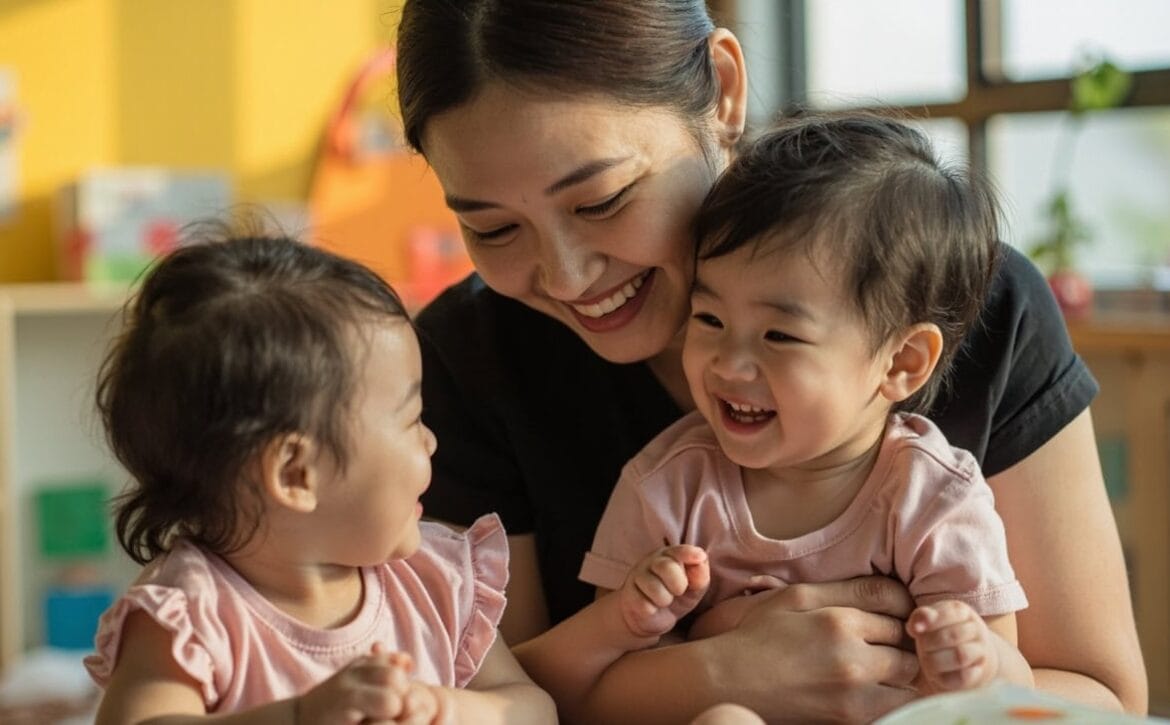
When an infant or toddler in a quality care setting spends their morning moving between activity stations — building with blocks that require grip strength, manipulating sensory materials that refine tactile discrimination, climbing structures that challenge balance and body awareness, engaging in pretend play that integrates sensory input with social and emotional processing — they are not simply being entertained. They are building the sensory-motor platform that school readiness requires.

The best infant and childcare programmes are built around what developmental science tells us about how children grow. They create environments rich in the sensory experiences that develop neural pathways. They structure movement opportunities that build motor coordination progressively. They allow unstructured play that gives children the space to explore, adapt, and self-regulate at their own pace.

Critically, they do this every single day — consistently, over time, through the full arc of early childhood — which is the only way these foundations can truly be built.

The Role of the Trained Caregiver

The caregiver in such a setting is not merely a supervisor. They are an active participant in this developmental work.

A trained caregiver observes. They notice which children seek out movement and which avoid it. They note which children become dysregulated in noisy environments and which remain calm. They see which toddlers have the hand strength to manipulate small objects and which are still working toward that capacity.

They understand that a child who struggles with transitions is not being difficult — they may be experiencing a genuine sensory regulation challenge that requires a patient, adaptive response. This is daily, invisible work. The work of noticing, responding, creating experiences that gently expand a child’s capacity, and building the sensory-motor foundations that will serve that child not just in Primary One, but in every year of learning that follows.


EduNanny Singapore: A Partner in the Earliest Years

EduNanny by BUTLER is built around the understanding that the early years are the most consequential years for sensory-motor development. Through the ECDA Childminding Pilot, EduNanny offers Singapore families access to childminding care that puts quality, trained caregivers alongside the children who need them.

The pilot makes this accessible — not as an aspiration, but as a practical reality for families navigating the real costs and logistics of quality care. Pathways exist both in home-based settings, where a child receives individualised attention in a familiar environment, and in community and centre-based settings, where collaborative learning enriches the developmental experience.

The infant ratios in quality programmes through this pilot reflect the seriousness of the commitment: where there are infants, there is the space for the responsive, individualised care their development requires. Monday to Friday care blocks give families the consistency that children’s developmental routines depend on. And for families navigating the financial reality of quality care, the pilot fee structures, combined with the usability of CDA and Baby Bonus funds, make this more accessible than many parents expect.

Communication and Trust

Throughout every interaction, EduNanny is guided by a commitment to transparency. Communication with families is ongoing, honest, and substantive — not a daily summary of meals and naps, but a real partnership in understanding each child’s developmental journey. Where deployed, security measures including CCTV reflect the non-negotiable trust that must exist between a care provider and the families they serve.

What EduNanny Is Actually Building

All of this — the pedagogy, the ratios, the training, the communication, the trust — exists for one purpose. Not to fill a childcare slot. To build something in a child that will outlast every worksheet, every enrichment class, and every milestone of the school years that follow:

  • The sensory-motor platform that makes learning possible
  • The regulatory capacity that allows a child to engage with the world without being overwhelmed by it
  • The physical, neurological, and emotional foundations that will carry them through Primary One and beyond

Choosing the Right Infant Care in Singapore

If you are researching infant care or childminding options for your child in their earliest years, here are the questions worth asking:

  1. How does this programme build sensory-motor development? Look for daily movement opportunities, sensory-rich environments, and play-based activities that develop both gross and fine motor skills.
  2. What is the caregiver-to-child ratio? For infants, lower ratios mean more individualised attention and better observation of developmental needs.
  3. What training do the caregivers have? Trained caregivers can identify sensory-motor developmental needs and respond appropriately.
  4. How does the programme communicate with families? Look for substantive, ongoing communication about your child’s development, not just daily logs.
  5. What does a typical day look like? Quality programmes balance structured activities with unstructured play and include ample opportunity for movement.

If you are wondering whether your child may already be showing signs of sensory-motor gaps — difficulty sitting still, trouble with pencil grip, overwhelm in noisy environments, fatigue after short periods of seated work — a trained caregiver in a quality programme will notice these signs and can help you understand whether your child needs additional support. The earlier these patterns are identified, the more effectively they can be addressed.


The Readiness That Matters Most

Every parent in Singapore wants their child to be ready for school. That desire is not in question. What we are only beginning to understand — and what EduNanny has made it its purpose to address — is what readiness truly means.

It means a child who can sit, attend, write, and regulate. A child whose nervous system is not overwhelmed by the sensory demands of a classroom. A child whose body is a platform for learning, not a barrier to it. A child who is not academically ahead but sensorially and regulatorily behind — and therefore struggling in ways that are invisible to everyone except the child who is living them.

This is the readiness that matters most. And this is the readiness that requires the right partner in the earliest years.

EduNanny Singapore is that partner. Not because they offer a shortcut — there is no shortcut. But because they offer the only thing that actually works: consistent, expert, developmentally informed care in the years when it matters most.

Your child’s readiness for Singapore’s schoolrooms begins long before they step into one. It begins in the first thousand days. And it begins with the people you trust to care for them during those days.

That is the readiness no worksheet can build. And that is the readiness EduNanny Singapore is here to provide.


To learn more about EduNanny’s ECDA Childminding Pilot, explore our approach to childcare, or speak with our team, we welcome you to reach out.

edunanny-06289665955f0a6945a56a2984368149
April 11, 2026

Finding Peace of Mind: A Singapore Parent’s Guide to Childcare Confidence

The Question Singapore Parents Carry After Drop-Off

There is a particular kind of silence that settles in Singapore homes on weekday mornings. The morning routine has ended. The car has pulled away from the drop-off point. And the house holds that strange, echoey quiet that only exists when small children have just left it.

In that silence, something else arrives. A thought. A question. A small, persistent wondering that sounds something like this: Did I make the right choice?

It does not announce itself loudly. But it is there, and it stays.

This is the question that Singapore parents carry long after the enrollment forms are signed, long after the centre tours are completed, long after the decision has been made and announced and celebrated. It follows them to work. It surfaces during lunch breaks when they scroll through photos on their phones. It arrives again in the evening, when they pick up their child and watch—carefully, intently—for signs, for clues, for any indication that the choice they made was genuinely right.

Today, we want to talk about this honestly. Because this question deserves honesty. And because if you are reading this, carrying the same wondering, you are not alone. You are not failing. You are being thoughtful. And that is exactly the kind of attention your child needs.


The Cultural Story We Tell Ourselves (And Why It Falls Short)

Somewhere along the way, we have created a cultural narrative about the moment parents choose childcare. That story goes like this: parents research, parents visit, parents compare, and then parents decide. Decision made, problem solved, chapter closed.

Anyone who has lived through this knows that is not where the story ends. That is where it becomes most real.

The truth is that choosing childcare in Singapore is not a single decision. It is the beginning of a long, ongoing process of watching, wondering, and slowly—sometimes very slowly—arriving at a place of earned confidence. And the parents who understand this, who feel this most deeply, are not the ones who failed to research enough or chose carelessly.

They are the ones who care the most. The thoughtful ones. The ones who read everything, visited every option, asked every question, and still—still—cannot shake the feeling that perhaps there was something they missed.

What the Emotional Journey Actually Looks Like

The journey begins with relief. Real, genuine relief. After weeks of searching, after the anxiety of not knowing, after the impossible feeling of trying to evaluate who will love and care for your child in the way you would—there is finally an answer. The paperwork is signed. The start date is set. For a brief moment, you feel a sense of completion. You did it.

And then the start date arrives, and something shifts.

The first days of childcare are a strange, tender, exhausting blur. There are tears—sometimes from your child, sometimes from you, sometimes from both. There is the handover moment: you pass your small, warm child into someone else’s arms, and the walk back to the car feels impossibly long. There is the first afternoon pickup, when you watch your child’s face for signs of distress or happiness or anything in between.

During this period, most parents describe feeling suspended in a kind of gentle limbo. They are watching, paying attention to everything: the way their child reacts on arrival, the way their child talks about the day—or does not. The quality of updates. The photos. The notes. The small fragments of information that slowly accumulate into a picture of what happens during those hours apart.

When Doubt Surfaces (And Why It Feels Like a Betrayal)

By this point, most parents are already emotionally committed to the decision they made. They chose this place for reasons that felt solid at the time.

So when doubt arrives, it feels confusing. It feels like a betrayal—of the decision, of the caregivers, of themselves. It feels like weakness or worry or a failure to trust. And so they push it down, quiet it, tell themselves that everyone feels this way, that it will pass.

But the thing about doubt is that it does not simply disappear because we wish it would. It recedes, yes. But it also resurfaces. Often at the most ordinary moments:

  • A conversation with another parent who chose differently
  • A social media post about a different approach to early childhood
  • A story shared at a gathering, about someone whose child had a difficult transition
  • Someone who changed centres after a month, or who still, eighteen months later, was not sure

These moments do not create the doubt. The doubt is already there, underneath, waiting. They simply give it air.

And so the question persists. Did I make the right choice?

Where Singapore Parents Feel This Most Acutely

In Singapore, where the cost of living is real, where career pressures are intense, where the expectations we place on ourselves as parents are shaped by generations of high achievement and careful investment in the next generation, that tension is felt more acutely.

We do not have the luxury of assuming that care will simply work itself out. We have to choose. And when we choose, we want that choice to be the right one—not just for today, but for the long arc of our child’s development, for the kind of person they are becoming.

The gap between wanting to be there and needing help to make everything work—this is not a new tension for Singapore parents. But here, it carries particular weight.


What Good Care Looks Like Over Time

Here is what we want you to know, and what we want to say clearly: the evidence of good care does emerge. It does not arrive all at once. It comes in small moments, in the details that only become visible over time.

You see it in the way your child runs to the gate in the morning, without hesitation, without tears. You hear it in the way your child talks about the day—about friends, about the person who feeds them lunch or reads them a story or holds them when they are tired.

You notice it in their sleep. In their appetite. In the way they are growing—not just physically, but in confidence, in curiosity, in the quiet security that comes from knowing, in their bones, that they are safe and loved even when you are not in the room.

This is what good care looks like over time. Not in a single tour or a single observation or a single photo. But in the accumulation of days, in the consistency of environment, in the relationship that develops between your child and the caregiver who sees them every weekday morning.

This is what quiets the doubt—not a dramatic revelation, but a slow, steady accumulation of evidence that says: this is working. Your child is happy. Your child is growing. Your child knows they are loved.

Signs Your Child Is Thriving in Their Care Arrangement

  • Transitions to childcare become easier over time, not harder
  • Your child mentions caregivers and friends by name
  • There is a predictable, comfortable routine that your child seems to anticipate positively
  • Your child’s development milestones are being observed and shared with you
  • You receive regular, genuine updates—not just perfunctory notes, but meaningful communication about your child’s day
  • Your child’s behaviour at home remains consistent; they are not showing signs of distress or regression
  • You feel comfortable asking questions and receiving thoughtful, unhurried responses

The Difference Between a Service and a Partnership

Not every childcare arrangement provides this kind of evidence over time. Some parents look for it and do not find it. Some parents change their minds, and that change is right for them and for their child. We are not here to suggest that doubt is always unfounded or that every choice, once made, will prove to be the perfect one. That would not be honest, and honesty is what you deserve.

But here is what we have observed, working alongside families in Singapore through the EduNanny programme.

The parents who are asking the question—the ones who are watching, waiting, looking for evidence—their children tend to thrive. Not because they found perfect care, but because their attentiveness, their care, their willingness to stay engaged with the process long after the decision was made—that engagement matters.

It shapes the relationship they have with their childcare provider. It creates the space for communication, for feedback, for the kind of ongoing partnership that makes good care even better over time.

This is the crucial distinction: the best childcare decision is not the perfect one. There is no perfect decision in parenting. There is only the honest recognition that you are doing your best with what you know, that you have chosen a partner you can trust, and that trust, once given, has the chance to become earned.


What EduNanny Was Built to Answer

EduNanny was not designed to dazzle during the tour. It was built to answer the question you carry with you after the tour is over. The question that stays with you in the quiet of the morning, in the car on the way to work, in the evening when you are tired and wondering if you are doing enough.

We built it for the long game—for the months and years of partnership that come after enrollment, not just the moment of decision.

Ratio That Allows Your Child to Be Truly Seen

In our infant programme, we maintain a ratio of up to one caregiver for every three infants. That is not a marketing claim. That is a structural commitment to attention, to the kind of individual care that means your child’s needs are met not just adequately, but well.

It means that when your infant is tired, someone notices. When they are hungry, when they are unsettled, when they are reaching a developmental milestone that you have been waiting for—there is someone there, fully present, who sees it and who will tell you about it.

Communication That Closes the Gap

We know that the silence between drop-off and pickup is where anxiety lives. That is why transparency matters—not as a box to check, but as a genuine commitment to keeping you informed about your child’s day.

Where our services are deployed with CCTV measures, we do so not because we have anything to hide, but because we understand that trust is built through openness, and that parents deserve to feel connected to their child’s day even when they are physically elsewhere.

Structure That Supports Consistency

The EduNanny programme operates within the ECDA Childminding Pilot, which means it is not an experiment or an approximation. It is a supported, structured pathway that meets regulatory standards and goes beyond them.

For families navigating the realities of Singapore parenting—the cost of quality care, the logistics of weekday schedules, the need for reliability—this structure matters. Our care blocks run Monday through Friday, because we know that your work does not stop on Wednesdays or operate only on alternate weeks.

The consistency is not incidental. It is foundational.

Financial Practicality as Part of the Partnership

We also know that Singapore parents think carefully about the financial dimension of these decisions. The EduNanny pilot was designed with this in mind, with fee structures that aim to be accessible and sustainable for families who need reliable, quality care.

Where applicable, your Child Development Account and Baby Bonus can be used, because we believe that financial practicality and quality care should not be opposing forces. They should work together, and we have built our programme with that integration in mind.


Questions Singapore Parents Ask (And What Honest Answers Look Like)

“What if my child cries every morning?”

Separation anxiety is normal and expected, especially in the first weeks. What matters is the trajectory. Does the crying decrease over time? Does the caregiver have strategies to help your child transition? Do they communicate with you honestly about what they observe?

A child who cries briefly at drop-off but settles quickly is very different from a child who remains distressed throughout the day. Good care providers know the difference and will tell you.

“How will I know what happens during the day?”

You should receive regular, meaningful updates—not just a daily log that says “baby slept well.” Look for updates that reflect your child’s individual day: what they ate, how they played, any moments of note. If you are not receiving this kind of communication, ask for it. A good care partner will welcome the conversation.

“What if I change my mind later?”

Some parents do need to change arrangements, and that is okay. The goal is not to trap you in a wrong choice—it is to help you find the right partnership. If you are consistently not finding evidence that your child is thriving, that is worth investigating. But give the relationship time to develop. Real evidence takes weeks to emerge, not days.

“Is this too expensive for what we’re getting?”

Cost is a legitimate consideration, not something to dismiss. Quality care requires real investment—in trained caregivers, in small ratios, in communication systems. But quality care should also be accessible. Ask about what is included in the fee, whether government subsidies apply, and how your CDA or Baby Bonus can be used.

The best partnerships are financially sustainable for families over the long term.

Questions to Ask During Your Search

  • What is the caregiver-to-infant ratio? Lower numbers mean more individual attention.
  • What does a typical day look like? Look for routine, not just activities.
  • How do you handle feeding, sleeping, and soothing? You want to know your child’s rhythms will be respected.
  • What updates can I expect, and how often? Clear communication should be promised and delivered.
  • What is your approach to child development? You want a partner who sees care as more than supervision.
  • How do you handle illness or emergencies? Protocols matter, especially with infants.
  • What happens if my child is struggling to settle? A good provider has strategies and will share them.
  • Can I visit unannounced? Openness signals confidence and trustworthiness.

Beyond the practical questions, there is one question worth sitting with: Do I trust these people with my child?

Not “is this the perfect centre” or “did I find the best option in Singapore.” But: do I trust these people? Do they seem to genuinely care about children? Do they seem patient, attentive, thoughtful?

The decision you make will be supported by the ongoing relationship you build. And relationships are built on trust—not perfection.


The Question, Answered

Here is the insight we want to leave you with today, because it has been true for every family we have had the privilege of serving, and we believe it will be true for yours as well.

The families who arrive at quiet confidence—the kind of confidence that does not need to be defended or explained or justified—are not the families who found the impossible perfect solution. They are the families who found a partner and stayed engaged with that partnership. Who asked questions. Who communicated. Who showed up, not just at pickup time, but in the ongoing, everyday work of raising a child together with the people who care for them during the hours apart.

This is what EduNanny offers. Not a solution to the search problem. Not the perfect choice that does not exist. But a partner who walks the path with you, who grows alongside your family, who answers the question you keep asking yourself not with words, but with evidence. Day after day. Month after month.

The doubt you feel is not a sign that you are failing. It is a sign that you are paying attention. And the fact that you are here, listening, thinking, caring—this tells us everything we need to know about the kind of parent you are.

You are going to be just fine. Your child is going to be just fine.

And if you choose to walk this path with us, we will make sure of it—not by promising perfection, but by showing up, every day, with care, with honesty, and with the kind of commitment that turns a decision into a partnership, and a partnership into something that lasts.

That is EduNanny. That is what we offer. And that is the question, answered.

edunanny-062892ae4e591d334b60e8a9cb67dd05
April 11, 2026

Building the Partnership That Closes the Information Gap

The Information Gap Every Parent Feels

After years of working alongside Singapore families, we have come to understand something important: the anxiety you feel after drop-off is rarely about the quality of care you have chosen. It runs deeper than that. It is about the information gap—the silence between what you know and what is actually happening in your child’s day.

It is about not being there when your child laughs at a new joke, struggles with a puzzle, or reaches for comfort from someone other than you. It is about the fear that you are becoming peripheral to your own child’s daily life—that a version of family life is unfolding without you.

This fear is not irrational. It is, in fact, perfectly rational. Because the truth is, information and presence matter—not because children cannot thrive without their parents in the room every moment, they clearly can—but because parents matter to themselves. You are not just raising a child. You are also living your own life as a parent, and that life has texture and meaning when you feel connected to what your child is experiencing.

The question, then, is not whether to delegate care. The question is: what kind of delegation preserves that connection? What kind of partnership transforms the information gap into something else entirely—a space where you remain present even while apart, where your child’s caregiver becomes not a replacement for you, but an extension of the relationship you are building together?


Supervision versus Partnership: A Critical Distinction

This is where most conversations about childcare stop short. They talk about finding someone trustworthy, about vetting caregivers, about the qualities that make a good childcare provider. And those things matter—absolutely. But they are the beginning, not the destination. They describe the foundation of a building, not the life that happens inside it.

What matters is the daily practice of partnership. Not trust as a destination—not the relief you feel when you finally believe your child is in good hands—but trust as a living process. The daily rituals, the communication rhythms, the observation-sharing practices, the co-regulation strategies that, over time, transform a childcare arrangement into something more like a genuine co-parenting relationship.

Supervision is watching a child. Partnership is sharing the child’s development. One is passive; the other is active. One keeps a child safe; the other helps a child grow.


The Daily Partnership Framework: How It Works in Practice

The Handover: Your Most Important Communication Ritual

It begins with the handover. Most families experience handover as a brief transaction—a few words exchanged at the door, a note passed over, a verbal update as you are already walking toward the car. This is understandable. Mornings in Singapore are rushed, and no one wants to linger at the threshold when there are MRTs to catch and deadlines to meet.

But the handover is actually the most important communication ritual of the day, and it deserves to be treated as such. When a caregiver and a parent take five minutes to sit together, review what happened overnight, share observations about the child’s mood and energy, and align on priorities for the day ahead—that is not a luxury. That is the architecture of partnership. That is where the day’s collaboration begins.

In a genuine partnership, the morning handover is not one-directional. It is not just the caregiver reporting to the parent. It is a two-way exchange:

  • The parent shares what happened at home—how the child slept, what they ate for breakfast, whether they seemed anxious or excited about the day, what they reached at the park yesterday.
  • The caregiver listens, absorbs, and adjusts the day’s plan accordingly.
  • The child watches this exchange and understands, even before they have the words for it, that these two adults are on the same team. That home and care are not separate worlds but part of the same ecosystem.

Observation-Sharing: The Gold You Cannot Afford to Miss

Between handovers, throughout the day, your child’s caregiver is noticing things. They are noticing that your child uses their right hand more when they are focused but switches to their left when they are relaxed. They are noticing that appetite changes when teething, that sleep patterns shift after a particularly active morning, that your child has started using a new word to express frustration instead of crying.

These observations are gold. They are the raw material of your understanding of your own child. In a genuine partnership, they do not stay with the caregiver. They are translated, shared, discussed.

At EduNanny Singapore, our caregivers are trained not just to care for children but to observe them—systematically, attentively, with the eye of someone who understands child development. These observations are then translated into communication that parents can receive, engage with, and act upon. This might come through a midday update, a photo with a note about what the child was exploring, or a brief message about a moment of breakthrough or struggle.

Co-Regulation: A Two-Way Street Between Adults

There is also co-regulation. This is a concept from developmental psychology that describes the process by which a caregiver helps a child manage their emotional state. When a child is overwhelmed, the caregiver does not simply tell them to calm down. They model calm, offer physical comfort, and help the child name and process what they are feeling. They co-regulate.

Here is what most people do not realize: co-regulation is not only something that happens between a caregiver and a child. It is also something that happens between caregivers and parents.

  • Your child’s caregiver is not just managing your child’s emotions in the moment. They are teaching your child emotional regulation strategies that you need to know about, so that you can reinforce them at home.
  • You, as a parent, are managing your own emotional experience of separation, of delegation, of not being in the room—and your caregiver needs to understand that, too.

Co-regulation is a two-way street between the adults who share responsibility for a child’s emotional world.

What does this look like in practice? It might look like a caregiver sending you a message in the middle of the day—not a status update, but a question. A question about how your child responds to transitions at home, whether they have been fighting sleep recently, what your bedtime routine looks like. The caregiver is not just sharing information. They are asking for your input, inviting you into the process, treating you as a partner rather than a client.

Or it might look like a conversation at the end of the day where the caregiver says, “I noticed something interesting today. Your child got frustrated when the tower fell, but instead of crying, they looked at me and said ‘try again.’ I wonder if you’ve been hearing that phrase at home.” And suddenly you realize that your child is importing the language of persistence from your home into their care environment, and your caregiver is noticing it, and together you are building a shared vocabulary for your child’s development.

The Shared Language That Grows Over Time

This shared language is one of the most beautiful outcomes of genuine partnership. Over months and years, families and their caregivers develop a common way of talking about the child’s progress, challenges, quirks, and joys. This language becomes a bridge.

It allows you to talk about your child with someone who sees parts of their life you cannot see, and it allows your caregiver to understand your child in the context of your family, your values, and your hopes for them.

The caregiver becomes, in the truest sense, a second pair of eyes. Not a replacement for your parental vision, but an extension of it. Someone who notices patterns you miss because you are too close, too invested, too emotionally entangled. Someone who can tell you, gently, “I think your child is going through a language explosion. Let’s see if you notice the same words at home.” Someone who sees your child in a different context and can help you understand who they are becoming in the world outside your presence.


What Quality Childminding Looks Like in Singapore

Let us be practical for a moment, because this is Singapore, and we are a practical people. All of this—the partnership rituals, the observation sharing, the co-regulation strategies, the shared language—sounds beautiful in theory. But how does it actually work? What are the structures that make it possible?

For families in Singapore, quality childminding is supported by the ECDA Childminding Pilot, a government-supported initiative that recognizes the importance of professional, structured care for young children. This pilot reflects what we have always believed: that professional, structured childminding is not a compromise. It is a choice that can serve children and families extremely well, when it is done with intention, with rigor, and with genuine partnership at its core.

Making Quality Care Accessible

For families in the pilot, fee structures are designed to be accessible. Many families find that the Community Development Council subsidies, combined with the ability to use the Child Development Account and Baby Bonus funds, make quality childminding more affordable than they expected.

For families who need flexibility, there are both home-based and centre-based pathways, depending on what suits your family’s rhythm and your child’s needs.

Why Ratios Matter

With up to one to three infants in care, your child receives the attention and attunement they deserve. This is not a numbers game. It is about the capacity to notice, to respond, to share, to partner. In a room with fewer children, every observation matters more. Every interaction can be deeper. Every moment of breakthrough can be captured and communicated.

Transparency as a Foundation for Trust

When it comes to communication, transparency builds trust, and trust builds partnership. Where CCTV measures are deployed, families have access to them—not because anyone is suspicious, but because visibility matters. The more you know about your child’s day, the more you can participate in it, even from a distance.


Addressing Common Concerns

Every parent who walks through our doors carries questions. These are the ones we hear most often.

“Will I lose connection with my child?”

You will not. What changes is the nature of that connection—not its depth, but its architecture. Through daily partnership rituals, you remain woven into your child’s life through the hours of separation. When your child falls asleep at nap time, you know. When they eat something new, you know. When they have a breakthrough in motor development or language or social play, you know. You are not an outsider looking in. You are a partner, working alongside your child’s caregiver, building something together.

“Will my child feel abandoned or confused by multiple caregivers?”

A child who knows that their parent and their caregiver are talking about them, noticing the same things, reinforcing the same strategies, speaking the same language—that child is receiving something profound. They are receiving the message that they matter to more than one person. That the adults in their life are collaborating on their behalf. That they are held by a network of attention, not just by one pair of hands.

This actually strengthens attachment security. Children who see their parents and caregivers as a coordinated team develop a more robust understanding of relationships and trust.

“Is this just for families who can’t afford to have a parent stay home?”

This is not about necessity. It is about what children actually need to thrive. Children grow best when they have multiple responsive adults in their lives, all of whom are paying attention, all of whom are communicating, all of whom are aligned. This is not a compromise born of economic reality. It is an intentional choice to build a support system that serves your child better than you could alone, because it multiplies the attention, the expertise, and the love that surrounds them.

“Will the partnership feel artificial or transactional?”

It will not. Over time, the partnership deepens beyond structures and systems. What begins as a structured communication framework becomes something more organic:

  • You find yourself texting your caregiver about a question that came up at home, and receiving a thoughtful response that helps you understand your child’s behavior differently.
  • Your caregiver starts to anticipate your child’s needs before they arise, because they have been paying attention long enough to know the patterns.
  • You begin to trust not just that your child is safe, but that their development is being observed, documented, and shared with you in a way that enriches your own relationship with them.

Reframing Delegation: What It Really Means

Delegation is not separation. It is not a failure of parenting or a necessary compromise. It is intentional partnership architecture. It is the deliberate construction of a support system that serves your child better than you could alone, because it multiplies the attention, the expertise, and the love that surrounds them.

The daily rituals, the observation-sharing, the co-regulation, the shared language—these are not extras. They are the architecture of a new kind of parenting. A parenting that is honest about the complexity of modern life, that does not pretend parents can do it all alone, that instead builds a framework of genuine collaboration so that children can thrive in a world where parents work, where families are busy, where the demands of life do not stop just because a child needs care.

Because here is what we know, after all these years of walking alongside Singapore families: you are not less of a parent for being at work. You are not less connected for being apart. You are not peripheral to your child’s life just because you cannot be present for every moment.

You are a partner. And your partnership matters more than your presence ever could.


Questions to Ask When Choosing Infant Care in Singapore

If you are researching infant care and childminding options, here are the questions worth asking:

  1. How is the handover structured? Is it a brief transaction, or a genuine two-way exchange where you share what’s happening at home and receive meaningful observations about your child’s day?
  2. What does observation-sharing look like between handovers? Are there midday updates, developmental notes, moments of breakthrough documented and communicated?
  3. How does the caregiver approach co-regulation? Do they teach emotional regulation strategies that you can reinforce at home? Do they ask about your child’s patterns, preferences, and responses to transitions?
  4. Is there a shared developmental language? Over time, do you and your caregiver develop common ways of talking about your child’s progress, challenges, and growth?
  5. What are the ratios? How many infants or toddlers per caregiver? Lower ratios mean more attention, more observation, more depth.
  6. How does the service support parental involvement? Are you kept informed, or are you included as a partner in goal-setting and progress tracking?

A Partnership Worth Building

We know that parenting in Singapore is complex. The costs are real. The pressures are real. The tension between wanting to be present for your child and needing to work, to contribute, to build a sustainable life for your family—that tension does not disappear just because you have found good childcare.

But what can change is how that tension feels. What can change is the experience of separation. What can change is the information gap, the anxiety, the fear of becoming peripheral to your child’s daily life.

EduNanny Singapore exists to change that experience. Not to replace parental involvement, but to extend it. Not to watch your child, but to share their development with you. Not to be an infrastructure service you use, but a developmental partner who walks alongside you.

We believe that every family in Singapore deserves access to this kind of partnership. That is why we have built our approach around daily co-regulation, trained our caregivers in systematic observation, and structured our communication systems to keep parents included—not just informed.

We offer to be the partner you deserve in raising your child. To be the second pair of eyes that notices what you cannot see. To be the daily communication that closes the information gap. To be the co-regulator who works with you, across environments, to build your child’s emotional world.

We offer, in short, to take your child seriously. To pay attention to them. To see them as the complete, complex, extraordinary person they are becoming. And to make sure that you see them too—even from a distance, even across the hours of separation, even in the middle of your workday, when you cannot be in the room.


Ready to explore what daily partnership looks like for your family? Learn more about EduNanny Singapore’s infant care and childminding services, and discover how we support Singapore families through the ECDA Childminding Pilot. You can also read more about our approach or get in touch with our team.

edunanny-06288eb7d346eb961d6dd0bb48d592ad
April 11, 2026

When Family Questions Your Childcare Choice A Singapore Parent’s Guide

Understanding Family Resistance in Singapore

Singapore has built an extraordinary ecosystem for families. We have parentcraft centres and child health stations, subsidies and schemes, baby bonus payments and infant care subsidies that have made quality care more accessible than ever before. And yet, for all the infrastructure created to support parents, we have spent far less time addressing one of the most persistent and emotionally charged realities of modern parenting: the generational gap in how we understand what it means to care for a child.

This tension is not new. It is, in many ways, as old as the concept of raising children outside the immediate family. But it has taken on new dimensions in Singapore, where rapid social change has meant that grandparents and parents often come from not just different eras but different worldviews about childrearing.

A grandmother who raised her children in a world where neighbourhood ties were thick and child development research was sparse may hold different convictions about what infants need than a parent who has read extensively, toured facilities, and made a deliberate decision based on evidence and fit. Neither perspective is wrong. But when they meet across a dinner table, they can feel irreconcilable.

The Love Beneath the Objection

The first thing to understand about family resistance to quality childcare is that it almost always comes from love. This is not a comfortable truth to hold when you are the parent on the receiving end of doubt. It is much easier to interpret a grandparent’s skepticism as judgment, or criticism, or a sign that you are being seen as somehow deficient as a parent.

But more often than not, what lies beneath the objection is something simpler and more tender: grandparents love your child, and they want to be needed. They look at your choice to engage professional care and they see, not malice, but a world that has changed in ways that make them feel less essential. That ache is real. And it deserves to be met with grace, not defensiveness.

The Knowledge Gap, Not the Love Gap

There is also, in many families, a genuine philosophical difference that has less to do with love and more to do with information. The grandparent who says, “Children just need to be loved, they don’t need all these programmes,” is operating from a framework that conflates survival with development.

For their generation, keeping a child fed, safe, and sheltered was the primary task. That children thrived despite limited stimulation was not evidence that stimulation was unnecessary; it was evidence that human resilience is remarkable. But we know more now. We know that the first thousand days of a child’s life are not merely a period to be gotten through. They are a foundation. And the quality of care during that window shapes not just academic outcomes but emotional regulation, social confidence, and the architecture of how a child will experience the world for the rest of their life.

This is not a comfortable thing to say to someone who raised you. But it is true. Part of navigating the family conversation is being able to hold both truths at once: that your parents raised you with the best knowledge they had, and that you are now raising your child with knowledge they did not have. Neither of you failed. You simply have different chapters of the same story.


Reframing Your Choice as a Bridge

So what does it mean to navigate this well? It means learning to reframe.

Reframing is not manipulation. It is not coaxing someone into agreeing with you through clever wordplay. It is the act of helping another person see your choice through a lens that connects to their values rather than bypassing them.

When a grandparent worries that professional childcare will make your child love them less, reframe the choice as one that is investing in their relationship with your child. When they question whether infants really benefit from structured environments, help them see that what you are seeking is not a replacement for family but a complement to it: trained caregivers who can provide the developmental scaffolding that, in previous generations, was often supplied by larger household networks that no longer exist in today’s Singapore.

Phrases That Help

  • “We’re investing in everyone being able to show up as their best selves for her.”
  • “This isn’t about anyone being not good enough. It’s about adding more good to her world.”
  • “I want her to have the village. And I want that village to include you—fully.”
  • “When she’s older, she’ll know she was loved by more than just us.”

The Power of Inclusion

Inclusion is perhaps the most powerful tool available to parents navigating family resistance. When grandparents are positioned as peripheral to the childcare decision, they become critics by default. When they are positioned as part of the child’s broader village, they become advocates.

This does not mean deferring to their preferences on matters of pedagogy or safety. It means finding genuine ways to involve them in the child’s life that are additive rather than competitive.

  • Sharing daily reports and milestone updates with extended family, not just parents
  • Inviting grandparents to caregiver meet-and-greets
  • Framing caregiver relationships as complementary to family bonds
  • Asking grandparents to contribute in ways that feel meaningful—reading to the child, sharing family stories, being the “weekend grandparent” without the daily pressure

When a grandmother can see, through regular reports and photos, that her grandchild is not just being cared for but is being noticed, engaged with, and cherished, the anxiety that drove her initial resistance begins to dissolve. She sees that this is not a rejection of her role. It is an expansion of her grandchild’s world.


When Resistance Runs Deeper

There is another dimension to this that deserves honest acknowledgment: sometimes, the resistance is not about love, and it is not about information. Sometimes, it is about control.

There are families where the objection to professional childcare is entangled with expectations about how family decisions should be made, about hierarchies of authority, about gender roles and generational privilege. These conversations are harder. They cannot be resolved with a well-framed explanation of developmental science.

In these situations, the most important thing a parent can do is get clear on their own conviction. Not defensiveness. Not guilt. Conviction. The quiet, grounded understanding that you know your child, you have done your research, and you are making this choice from a place of love that is equal to, even if different from, the love your family expresses.

Holding Firm Without Losing Grace

There is a difference between holding firm and being rigid.

Holding firm means maintaining your decision while remaining open to relationship. Being rigid means closing down, pulling away, treating your family’s concerns as an attack rather than an expression of care.

The parents who navigate this most successfully tend to be those who can hold both. They do not compromise on what they believe is right for their child. But they also do not write off their family members as impossible or irrelevant. They find the seam between principle and grace, and they walk it with patience.

This is hard. It requires emotional intelligence that is not always taught or celebrated. It requires sitting with discomfort that you did not cause and may not deserve. It requires trusting that the right decision can also be the one that costs you something in the short term.


What Quality Childcare Actually Provides

Understanding the “why” behind your decision will make it easier to communicate that conviction to your family. Quality infant and childminding care is not simply supervision. It is responsive, relationship-based care that supports development across multiple domains.

What Quality Childminding Looks Like

  • Consistent caregiver relationships — Infants attach more securely when they have predictable, attentive caregivers. This is about the child having reliable emotional anchoring.
  • Developmentally appropriate stimulation — Play, language exposure, sensory experiences, and social interaction are woven into the day, not added as afterthoughts.
  • Safe, responsive environments — Small group ratios allow caregivers to notice and respond to cues promptly. A child who is consistently heard and responded to learns that the world is trustworthy.
  • Communication with families — Regular updates, milestone documentation, and open dialogue keep parents informed and allow them to extend the care narrative into the home.

This is not about replacing what grandparents offer. It is about filling a gap that most modern Singapore families cannot fill alone.


How EduNanny Walks This Road With You

EduNanny was built with this complexity in mind. We are not naive about the fact that Singapore families are layered, intergenerational, and often navigating real tensions that cannot be simplified.

We know that choosing quality childcare is not just a logistical decision; it is a relational one. That is why our model goes beyond matching families with caregivers.

Our Commitment to Families

  • Part of the ECDA Childminder Pilot, embedded in Singapore’s broader commitment to quality home-based care
  • Thoughtful caregiver ratios designed for genuine responsiveness
  • Fee structures accessible within the pilot framework
  • Support for families in leveraging the Child Development Account and Baby Bonus schemes
  • Monday through Friday care blocks that fit working family realities
  • Communication infrastructure that keeps parents informed and families connected

But beyond the systems and structures, what we offer is partnership in its truest sense. We understand that when you bring EduNanny into your life, you are not just engaging a service. You are introducing a new element into a complex family ecosystem.

Our caregivers are trained to be thoughtful about this. They know that a grandparent’s visit is not just a logistics moment but a relationship moment. They know that the daily report you share with your family is a small bridge that can carry big meaning. They know that what they do is not simply childcare. It is the stewardship of a family’s peace of mind.

Parents who make their decision from a place of informed conviction, and who then hold that space with love and consistency, tend to find that the family tension eases over time. Not always quickly. Not without setbacks. But it eases.

Because what ultimately matters to grandparents is not childcare versus family care in the abstract. What matters to them is that their grandchild is safe, loved, and thriving. When they see that, their objections soften. When they feel that they are still part of the story, their resistance fades.

There is a phrase we sometimes use at EduNanny that captures what we are trying to do: we do not replace the village. We help the village grow.


For the Parent Carrying This Quiet Weight

If you are the parent who has been carrying this quiet weight—the one who has made what you believe is the right choice, and who has felt the sting of having that choice questioned by people you love—here is what we want you to know.

You are not wrong to want quality care for your child.

You are not disloyal for seeking support outside your family.

You are not a bad daughter or an ungrateful son because you have decided that your child’s development matters enough to act on what you know.

What you are doing is brave. It is brave to stand in your conviction when it is not mirrored by everyone around you. It is brave to sit with the discomfort of a grandparent’s tears while still holding the line on what you believe your child needs. It is brave to choose the harder path of inclusion and conversation over the easier path of avoidance or capitulation.

The parents who choose EduNanny are not parents who do not trust their families. They are parents who trust their families enough to ask for help from people trained to give it. They are parents who love their children enough to seek out the best environment for them, and who love their own parents enough to navigate the hard conversation rather than avoid it.

Singapore has always been a place that believes in family. In the strength that comes from sticking together, from honouring elders, from passing things down across generations. That belief is not wrong. It is the foundation.

What we are adding to it is the understanding that family today sometimes looks different than it did before. That love can take new forms. That support can come from unexpected places. And that choosing quality childcare for your infant is not a departure from the values your family has always held. It is their expression.

You are building something. A child, a family, a future. And you are doing it with your eyes open, your heart engaged, and your conviction intact.

That is worth everything.


Begin the Conversation With EduNanny

Whether you are just beginning to explore your childcare options or you have already made your decision and need support in navigating the family conversation, EduNanny is here for you.

We invite you to learn more about our approach, meet our caregivers, and discover how we support not just your child but your entire family system as you build the village that will raise your child well.

You do not have to do this alone. Connect with EduNanny today and take the first step toward quality care—and a family that grows together.

EduNanny is a trusted developmental childminding service in Singapore, part of the ECDA Childminder Pilot.

edunanny-06288bbf698abae52ed77fb903b87c0d
April 11, 2026

Learning to See: What Your Child Teaches You at the Nursery Gate

The Silence at the Nursery Gate: What Singapore Parents Learn to See

There is a particular kind of silence that happens at the nursery gate. You know the one. Your child is settling in, the caregiver is smiling, the room looks bright and warm and full of colour. And yet something in you hovers there, just behind your own eyes, asking a question you cannot quite finish.

You want to believe this is right. You want your child to be well. But you are not sure what you are supposed to be looking for.

You are not alone in that silence. It is one of the most honest experiences of early parenthood, and it is far more significant than we tend to acknowledge. Because what it reveals is not doubt in your instincts. It reveals something far more important: that you are paying attention. You are watching your child. You are trying to understand what is happening behind those doors when you are not there.

And that watching, that quiet effort to understand, is the beginning of something extraordinary. It is the beginning of learning to see.

A Quick Summary for Busy Parents

If you are feeling uncertain about your childcare choice, you are not guessing wrong—you are paying attention. Here is what this article explores:

  • Why the quiet doubt you feel at the nursery gate is actually the start of developing parental perceptiveness
  • How observation over time builds genuine trust—not blind faith, but earned understanding
  • What quality childcare reveals about your child through everyday behaviour, language, and social ease
  • Why you do not need to become a child development expert to know what good care looks like
  • How the right childcare environment helps your child show you who they are becoming

You Chose. Now What?

After tours and conversations and comparisons, after reading reviews and weighing options and trusting your gut as best you could, you chose. Perhaps you chose a centre-based pathway, with its structured rhythms and carefully designed learning environments. Perhaps you chose home-based care, where your child settles into a domestic warmth that feels close to family, where the caregiver becomes a familiar face in a familiar setting.

Whichever path you walked, you made a decision under conditions that no parent should have to face alone: incomplete information, genuine love, and the weight of knowing that your child’s earliest experiences of the world will be shaped by people you cannot fully know in the time you have to know them.

And so you watch. You watch how your child reacts when you say the caregiver’s name in the morning. You watch how your child sleeps after a day at care—whether the tiredness is the good kind, the kind that comes from growing. You watch what words arrive home, what songs, what games, what small habits.

Here is what most people do not tell you: that searching gaze is not a sign that you chose poorly. It is a sign that you are beginning to develop something. It is the earliest form of parental perceptiveness, and it is one of the most undervalued skills in early childhood.

What Your Child Reveals Through Daily Life

Over weeks and months, something shifts. You start to notice things. Not dramatic things. Not the kind of things that make headlines or trigger concern. Small things.

Your child begins to hum between meals, a melody that did not come from you. Your eighteen-month-old starts pointing at photographs and naming people, and you realise she has been building a social map of her world at care—and it is detailed, and it is precise.

Your child learns to wait. Not perfectly. Not without frustration. But they learn the rhythm of a group, the texture of sharing, the strange and difficult grace of taking turns.

Behaviour, language, social ease, emotional regulation—these are not performance. They are revelation. They are your child telling you, through the ordinary language of daily life, who they are becoming.

In Singapore, where children often attend childcare from infancy, these signs show up in very particular ways:

  • Language milestones—new words that emerge not from home but from the care environment, songs sung spontaneously at bath time, phrases that reflect the rhythms of group care
  • Social confidence—eagerness to play with other children, the ability to navigate small conflicts, comfort in separating from parents
  • Emotional regulation—a child who is learning to manage disappointment, to wait their turn, to express needs in words rather than tears alone
  • Attachment signals—the child who reaches up for a familiar caregiver without prompting, who waves goodbye with genuine ease, who talks about “Miss” or “Auntie” as a person they know

These are not trivial moments. These are your child’s report card, and it is written in the only language they truly know.

You Do Not Need to Be an Expert. You Need to Be an Observer.

You learn to read that report. Not because anyone taught you. Not because you have a degree in child development. But because your child, placed in the right environment, surrounded by trained and attentive caregivers, begins to show you things. And the more you see, the more you look. And the more you look, the more you understand.

This is perceptiveness. And it is one of the most powerful things a parent can develop.

Of course, this raises a question that Singapore parents carry with them every day: How do you know what you are looking at? You are not an early childhood specialist. You did not train to read the signs of developmental progress, to understand what age-appropriate social behaviour looks like, to distinguish between ordinary adjustment struggles and something that needs attention.

You are a parent. You are loving and present and trying your best, and that is exactly what your child needs. But the technical vocabulary of early development does not come standard with parenthood.

Here is the honest answer: you do not need to become an expert. You need to become an observer. An observer develops a skill that no qualification can fully replicate—the ability to notice what is present, what is absent, what is changing, what is the same. They develop what we might call an educated eye, not because they read the literature, but because they have been watching the same small person every single day, and they have been given the gift of a childcare environment that gives that small person the room to show who they are.

What Quality Childminding Looks Like in Practice

If you are researching childcare in Singapore, you deserve clarity about what separates quality care from adequate care. These are the signs that matter most:

  • Individual attention at infant ratios—In home-based childminding, ratios of up to one to three infants mean every movement, every milestone, every quiet moment of curiosity is seen. Your child is not one of many.
  • Trained, supported caregivers—Caregivers who receive ongoing development, who understand developmental milestones, who can tell you something true about your child’s day that reflects a real relationship.
  • Transparent communication—Updates shared not as formal reports but as genuine glimpses into your child’s life at care. You know what happened, and you know why it mattered.
  • Developmental responsiveness—Environments designed for how children actually learn and grow, not just for supervision. Activities, routines, and interactions that reflect understanding of early childhood development.
  • Observable evidence—The kind of care that shows up in your child’s behaviour, language, and emotional wellbeing. Not just promises on paper, but visible results in daily life.

Addressing What Singapore Parents Actually Worry About

Will I be able to tell if something is wrong?

You will. This is what growing perceptiveness does. When your child is in a quality environment with trained caregivers, you become attuned to their baseline. You notice when something shifts. A child who was sleeping well suddenly struggles. A child who was speaking freely becomes withdrawn. These are not signs that you are an anxious parent. They are signs that you know your child. And that knowledge, combined with open communication from your caregiver, is how concerns get identified early—not through expert surveillance, but through the partnership of close observation.

Is home-based care really as good as centre-based care?

Quality can exist in both pathways. What matters is not the model but the implementation. In a well-run home-based setting, your child receives individualised attention that is difficult to achieve in larger groups. In a quality centre, structured environments and peer interaction offer different but valuable benefits. The question is not where care happens, but how intentional the care is, how well your child’s individual needs are known, and how clearly that knowledge translates into responsive daily practice.

How do I know the caregiver is genuinely attentive?

You watch your child. A child who is genuinely known will show it. They will mention the caregiver by name with warmth, not anxiety. They will have language for their experiences at care. They will come home tired but settled, not distressed or shut down. And critically, your caregiver will be able to tell you things about your child that go beyond the surface—observations that reflect real attention, real relationship, real understanding of who this particular small person is.

Trust and Partnership: A Shared Language

At EduNanny Singapore, we have seen this transformation in hundreds of parents. We have watched the shift from hovering uncertainty to rooted understanding. We have seen a mother walk through our doors in the first weeks, asking careful, tentative questions about her child’s day, and then return six months later, describing her child’s social dynamics with the kind of insight and precision that would make any early childhood educator proud.

She did not suddenly gain expertise. Her child simply gave her the material to work with, and the environment gave her the space to notice it.

Quality childcare is not just about what happens to your child in your absence. It is about what your child becomes capable of revealing when they are in a space that is safe, responsive, and attuned to their development. And when your child reveals more, you grow as a parent. The two processes are inseparable.

When both parties see the same child with increasing clarity, something remarkable happens. Trust stops being a leap of faith. It becomes a shared language.

You do not have to take our word for it that quality care is happening. You can see it. You can feel it in your child’s behaviour. You can hear it in the stories they bring home, the questions they ask, the way they navigate the small social world of play. This is the kind of trust that does not require proof because it is built from the inside out.

A New Kind of Village

In Singapore, we are sometimes told that parenting is a solo endeavour. That the village is gone. That modern life has stripped away the communal wisdom that once helped new parents navigate those early, uncertain years.

There is truth in some of that. The extended family is not always nearby. The rhythms of community have changed.

But what quality childcare offers is something that responds to that reality without lamenting it. We do not pretend to be the village. We do something more deliberate. We create the conditions for a new kind of village to form—one that is built on professional expertise, genuine relationship, and the kind of perceptiveness that develops over time, in both parents and caregivers, in the shared act of watching a child grow.

The EduNanny Approach

EduNanny Singapore operates within the ECDA Childminding Pilot, which validates the idea that quality childminding deserves recognition, support, and investment. That the people who care for our youngest children deserve dignity and training and ongoing development. That Singapore families deserve real choice, grounded in real quality.

In our home-based childminding programme, your child is not one of many. Small ratios ensure that every movement, every milestone, every quiet moment of curiosity is seen. Our centre-based pathways apply the same principle of attentive observation within structured environments designed for developmental responsiveness.

We build transparency into how we operate. Communication is open, consistent, and genuine. Where deployed, CCTV measures offer an additional layer of reassurance, because we understand that modern parenthood comes with modern anxieties, and we do not dismiss those anxieties as irrational. We take them seriously. We answer them honestly.

We know that transparency is not just a policy. It is a form of respect for the trust you have placed in us.

Making Quality Care Accessible

The practical dimensions of our service are designed to make quality care genuinely accessible. Monday to Friday care blocks, affordable fee structures within the pilot programme, and the ability to use the Child Development Account and Baby Bonus funds—these are not afterthoughts. They are commitments.

We believe that every Singapore family deserves access to childcare that does not require you to choose between financial peace of mind and developmental quality. You should not have to sacrifice one for the other.

Your Child Is Teaching You to See

The childcare relationship is not one-directional. It is not simply parents trusting caregivers, or caregivers reporting to parents. It is mutual growth.

Parents grow in their understanding of their child. Caregivers grow in their understanding of each child’s individual needs. And the child grows within a web of consistent, attentive, professionally supported care that allows them to develop at their own pace and in their own way.

Everyone in this relationship becomes better at what they do. Everyone learns to see more.

The early years are not a waiting room. They are the foundation. And the foundation, when it is built well, allows you to see. It allows your child to show you who they are. It allows your caregiver to know your child well enough to tell you something true. It allows you to walk away from the nursery gate not with lingering doubt, but with the beginning of a quiet certainty that you know what good looks like, because you have been watching it grow in your own child every single day.

Your child is teaching you to see. They always have been. From the first moment they looked into your eyes, they were showing you something that no book, no class, no expert could fully articulate. They were showing you who they are.

Quality childcare does not replace that. It amplifies it. It gives your child the space, the safety, and the responsive environment to show you more. And as they show you more, you grow. Not into a perfect parent. No such thing exists. But into a parent who sees clearly, who trusts wisely, who partners with the people caring for your child because you have earned that partnership through the patient, daily act of paying attention.

That is not a small thing. That is everything.

EduNanny Singapore is here for that. For every Singapore family ready to take that next step, not with blind hope, but with open eyes and an open heart. We will walk this road alongside you, and we will help you see what you are already looking for.

If you are ready to explore what quality childminding looks like for your family, we invite you to schedule a conversation with us. No pressure. No hard sell. Just an honest discussion about what you are looking for and whether we are the right fit for your child.

Because you deserve clarity. You deserve to trust what you are seeing. And you deserve a childcare partner who will help you understand what your child is becoming.

#SingaporeParents #InfantCareSG #QualityChildcare #ChildmindingSingapore #EarlyChildhoodDevelopment

edunanny-062887c13327f4ae5c3b9e24e653c4ef
April 11, 2026

What Trained Caregivers Notice That Busy Singapore Parents Might Miss

Understanding the Observation Advantage

There is a moment that happens in the best childcare relationships. It is so quiet, so small, that most people never notice it has occurred. It is the moment a caregiver sees something about a child before the parent does.

Perhaps it is the way a thirteen-month-old pauses before reaching for a new texture, a hesitation that signals a sensory preference forming. Perhaps it is the way a child consistently gravitates toward older children, not from insecurity but because something in how they move and speak gives her a sense of calm she does not yet have words for. Perhaps it is the moment a child finally steadies herself on two feet, and the caregiver is the witness who notices first—because she is standing in the right place, with trained attention that is present and unhurried, while the parent arrives through the door with groceries and a workday still echoing in their mind.

These moments happen every day in care relationships that matter. And yet, for Singapore parents navigating who will care for their children while they work, while they build, while they try to hold everything together—these moments often carry a shadow of anxiety.

The question lives quietly beneath the surface, one many parents do not fully articulate even to themselves: if someone else is with my child for most of the day, what will I miss? What will I lose? Will I still know my own child?

Today, we want to talk about that question. Not to dismiss it, but to reframe it entirely. Because the answer, arrived at through careful observation of children, through partnership with parents, and through the quiet daily work of trained caregivers, is this: you do not have to miss anything. With the right support, you may come to know your child more clearly than you ever thought possible. Not because the caregiver replaces your role, but because she gives you back something you did not know you were losing.

The Paradox of Love and Observation

Parents know their children. This is true in a way that is deeper than knowledge as we usually understand it. You know the particular pitch of your child’s cry when she is tired versus when she is hungry. You know the way her body relaxes when she smells your skin. You know her rhythms, her preferences, her patterns of connection. This knowledge is real, profound, and built through love and proximity over months and years.

But love, paradoxically, can also blur observation.

When we love someone completely, we sometimes stop seeing them with fresh eyes. We stop noticing small changes because we are so certain we already know them. We project who they were onto who they are becoming. A tired parent arriving home after a full day may look at their child and see the baby they left that morning—not the child who spent six hours in a different environment discovering new ways to move, new ways to communicate, new ways of being in the world.

This is not a failure of love. It is simply the nature of intimacy. The person you are closest to is often the one you see least clearly, because your mind fills in the gaps with everything you already believe you know.

What Trained Caregivers Actually See

A trained caregiver operates differently. Not because she loves your child less, but because she brings a different quality of attention. Her eye is trained to notice, to document, to observe with professional precision what is actually happening in the moment. She is not filtering your child through years of memory or emotional investment. She is simply looking—carefully and consistently—at what your child is doing and who your child is becoming right now.

This is what EduNanny calls the Observation Advantage, and it is one of the most powerful gifts a caregiver can offer a family.

Consider what trained observation actually reveals:

  • A child who seems quiet and withdrawn in a familiar setting becomes animated and social in a group—revealing a preference for peer interaction that parents, who primarily see the child in the calm of home, had never registered
  • A child consistently avoids certain food textures not out of stubbornness but because of a sensory sensitivity that, once understood, allows parents to respond with patience rather than frustration
  • A child is working through a developmental leap—the frustration and regression parents see at home is actually a sign of tremendous growth happening underneath
  • Micro-shifts in how a baby communicates before words emerge—the specific gesture that signals a need, the facial expression that indicates engagement or withdrawal
  • Patterns of emotional regulation that manifest differently in group care than in one-on-one home time

These observations are not wild revelations. They are small, specific, daily truths about who your child is and how they are developing. The kinds of truths that a parent, in the blur of daily life, might quietly miss.


The Singapore Reality for Working Parents

Singapore parents face pressures that are unique in their intensity and combination. You are raising children in one of the most demanding educational environments in the world. You are working long hours in a city where childcare is not a luxury but a necessity for most dual-income families. You are navigating the pressure of milestones and development with a clarity of awareness that previous generations of parents simply did not have.

You read. You research. You worry. You plan. And at the same time, you are tired. You are doing your best. And the hours in the day are never quite enough.

Many families face a common challenge: children spend significant hours in care while parents build careers and futures. The guilt and anxiety around this arrangement are real, even when parents intellectually understand that quality care is both necessary and beneficial. What parents often lack is not reassurance in theory, but transparency in practice—knowing what actually happens during those hours, and understanding how care supports rather than replaces their parental role.

How the Observation Advantage Works in Practice

EduNanny caregivers are trained under the ECDA Childminding Pilot, a framework that sets standards for infant and child care that go beyond basic supervision. They are trained to observe, to document, to understand developmental stages, to notice sensory patterns, to track social behaviors, to read the quiet language of children who have not yet learned to say what they need.

There is something else worth naming here—the structure of care itself. EduNanny offers home-based pathways under the ECDA Childminding Pilot, with infant ratios that allow for genuine attention. Up to one caregiver for every three infants in certain configurations. This is not a bureaucratic detail. It is the condition that makes observation possible.

A caregiver responsible for six infants in a noisy, chaotic environment cannot observe carefully. A caregiver who has the time, the space, and the training to be present with small groups of children can notice what is actually happening in each child’s development. The ratio is the prerequisite. The observation is the gift.


Building Trust Through Transparent Partnership

EduNanny does something that matters enormously in the trust equation: it creates transparency. Where CCTV measures are deployed, parents can see into the care environment. Where communication is consistent, parents receive not just updates but observations—real accounts of what happened in the day and what it might mean.

This is not surveillance culture. It is partnership culture. It is the understanding that parents who trust what they cannot see are parents who are freed to work, to breathe, to be present when they are with their children rather than distracted by anxiety about what they are missing.

There is a moment—I have heard parents describe this many times—when a caregiver shares a small observation and something clicks. A parent realizes, perhaps for the first time, why their child has been so tired in the evenings. Or why they have been clingy in the mornings. Or why they have been reaching for independence in some ways while clinging to comfort in others.

The observation does not create the understanding. The parent creates the understanding, by connecting what the caregiver saw with everything they already know about their child. The caregiver simply provides the missing piece—the piece that love alone could not supply because love was too close, too certain, too sure of its own knowledge.

When this happens, parents do not feel replaced. They feel more capable. They feel seen in their role as parents, not diminished by it. They realize that the caregiver is not a substitute for their presence but an extension of their vision.


Addressing Your Real Concerns

If you are considering childcare in Singapore, the question you are asking—the one about what you will miss—is a good question. It means you care. It means you are paying attention. It means you take your responsibility as a parent seriously.

Here is what EduNanny has learned from years of walking alongside families:

“Will my child bond with the caregiver instead of me?”

The caregiver who observes these things does not become the parent. She does not replace your role or diminish your bond. What she does is become a mirror—a careful and professional mirror—that reflects your child back to you with greater clarity. When an EduNanny caregiver shares what she has observed, she is not saying that she knows your child better than you do. She is saying: here is what I saw today. Here is what your child was doing when you were not in the room, but when you were still very much in their mind and heart.

“What if the caregiver notices something concerning about my child?”

This is precisely the point. You want someone trained to notice. A caregiver who is paying careful attention to developmental patterns, sensory responses, and social behaviors is not a threat to your child—she is a partner in your child’s wellbeing. When concerns are spotted early, they can be addressed early. When strengths are identified, they can be nurtured intentionally. Either way, you benefit from professional awareness.

“Will my child feel that someone else is raising them?”

Children have never only been cared for by their parents. Human children have always been raised in webs of relationship—in extended families and communities, with caregivers who contributed not just supervision but wisdom. The idea that a child belongs entirely to the family unit and that any external care represents a failure of family is a relatively recent and largely Western construction, and it does not serve Singapore parents well.

Singapore has always been a city of families who work, who build, who rely on each other and on trusted networks to raise their children together. What EduNanny does is bring intention and professionalism to that ancient arrangement—taking the wisdom of communal childcare and wrapping it in training, standards, transparency, and developmental expertise.


What Quality Childminding Looks Like

Not all childcare is the same. Here is what separates professional observation from mere supervision:

Basic Supervision Trained Observation
Child is safe and fed Child’s sensory preferences are noted and documented
Daily routine is followed Developmental patterns across weeks and months are tracked
Parent receives general updates Parent receives specific observations tied to development
Behavior is managed reactively Behavior is understood contextually
Milestones are noted when obvious Micro-shifts in communication and behavior are identified

Questions to Ask When Evaluating Childcare

If you are evaluating childcare options in Singapore, here are questions worth asking:

  1. What is the caregiver-to-child ratio? Smaller ratios mean more individual attention, more observation, more safety.
  2. What training does the caregiver have? Look for frameworks like the ECDA Childminding Pilot that set professional standards.
  3. How does the caregiver communicate? Is it general updates, or specific observations tied to your child’s development?
  4. What documentation practices are in place? Written observations, developmental tracking, and transparent reporting indicate professional care.
  5. How is trust built? CCTV, regular updates, scheduled sharing sessions—transparency matters.
  6. What does a typical day look like? Structure should serve development, not just occupy time.

The Relational Triangle: A Partnership Built on Clarity

Think of it this way: the parent is the expert on who this child has always been. The caregiver is the expert on who this child is becoming today. Together, they form a team that serves the child better than either could alone.

EduNanny is built on a belief: the best childcare does not divide the parent and the child. It multiplies the eyes that see them. It multiplies the attention they receive. And it multiplies, in the end, the parent’s own understanding and confidence.

There is a word that comes up in discussions of early childhood development that I want to use carefully here, because it is sometimes used to justify things that are not actually good for children. The word is “investment.” We speak about investing in early childhood, investing in the first thousand days, investing in the years when the brain is most plastic and the foundations for everything else are being laid.

I do not think of EduNanny as an investment, if I am honest. An investment implies a return calculation, a measurable outcome, a transaction. EduNanny is a relationship. It is the relationship between a trained caregiver and a child. It is the relationship between that caregiver and the family. It is the daily work of observation and communication, of being present and sharing what is seen. It is messy and human and imperfect and real.

And what EduNanny caregivers observe, every day, is not just developmental data. It is the irreducible, unrepeatable, extraordinary reality of who each child is. They see a child’s way of approaching the world, their particular style of curiosity, their specific texture of connection. And they hold that knowledge carefully—not as owners but as witnesses—and then they hand it back to you, the parent, in the form of small observations and gentle insights that help you know your child even better.

You are not inadequate because you work. You are not less present because your child spends hours in care while you build a life and a future for your family. What you might be missing—and what a trained caregiver might gently point out to you—is a small piece of information, a micro-observation, a detail that, once shared, completes a picture you were already working to understand.

And when that happens, when a caregiver gives you that gift, you do not feel like a lesser parent. You feel like a wiser one. You feel like someone who is truly in partnership with the people caring for your child, not in competition with them. You feel, perhaps for the first time, that the hours apart are not a loss but a collaboration.


Finding Your Path Forward

For families concerned about the practicalities of cost, EduNanny structures its pilot fees to be accessible, and where applicable, families can access support through CDA and Baby Bonus schemes. Monday to Friday care blocks are structured around the rhythms of working families. This is not a one-size-fits-all arrangement. It is a designed fit for how Singapore families actually live and work.

Quality care is not a luxury reserved for those who can afford to feel guilty about it. It is a legitimate, professional, relationship-based choice that serves children and parents alike.

EduNanny says to parents: you do not have to choose between the care your child deserves and the life your family needs to build. You can have both. And the care your child receives can actually make you a more confident, more connected parent—not because the caregiver is doing your job, but because she is showing you who your child is becoming.

If you are a parent in Singapore researching infant care or childminding, I want you to know that your anxiety is understandable, your questions are valid, and your desire to be present for your child—even while you are physically apart from them—is a sign of deep love, not parental failure.

The answer is not to stay home and do it all yourself, if that is not the life your family is living. The answer is to find caregivers who will be your eyes when yours are tired, your professional partners when the days are long, your mirrors when you need to see your child more clearly.

EduNanny is that answer for many families in Singapore. It is not a substitute for what you give your child. It is a complement to it. And in that complement—in that carefully trained and compassionately delivered observation—you will find something you may not have expected.

You will find yourself becoming a more confident parent. A parent who understands more, worries less, and trusts the team around them. A parent who knows that even when they are not in the room, they are still, and perhaps more than ever, in the relationship that matters most.

That is what EduNanny offers. Not just childcare. A clearer, kinder, more collaborative picture of who your child is and who they are becoming.

And that is a gift worth giving—and worth receiving.


If you are ready to explore what a partnership built on trained observation and genuine transparency could look like for your family, we invite you to connect with EduNanny to learn more about our approach to infant care and childminding in Singapore.

You can also learn more about our team and what we stand for, or explore the ECDA Childminding Pilot framework that guides our work.

edunanny-062883ead9fa11a16fc6123fcc4a7478
April 11, 2026

The Mental Load Singapore Parents Carry Alone and How EduNanny Shares It

The Invisible Work Singapore Parents Carry

Let me paint the picture. It is 6:47 in the morning, and you have already done the following: checked that your child’s caregiver is confirmed for the day, mentally mapped the logistics of who drops off and who picks up, composed a message to your helper explaining changes to this week’s routine, quietly reviewed whether your child slept well enough, and wondered if today will be the day you finally get an honest answer about what actually happened at yesterday’s drop-off.

You have not had breakfast. You have not had a full thought that was entirely your own. But the day has already begun, and so has the work.

This is the invisible job. The one that has no job description, no salary, and no off switch. It is the mental calendar you keep of caregiver schedules. It is the quiet, constant assessment you run in the background about whether the care your child receives is good enough. It is the second-guessing after every pick-up, the research you do at midnight into developmental milestones you suddenly feel uncertain about, the coordination with helpers and grandparents and whoever else holds pieces of your child’s day.

I know parents who check their phones during meetings not because of the meeting but because they are waiting for the morning update. I know parents who cannot fully engage in a work presentation because they are wondering if their child cried at drop-off and whether that means something is wrong. I know parents who have never, not once, been able to leave for a weekend trip without their minds still running a diagnostic on the childcare situation back home.

This is not a parenting failure. This is a system that forgot to consider the parent.


Why Singapore Makes This Harder

Here is what makes this particularly acute in Singapore: most families cannot do this work alone. The dual-income family is not a lifestyle choice here. It is an economic reality for the vast majority of parents.

Which means that the very pressure that makes childcare coordination necessary is the same pressure that leaves parents least equipped to carry it.

You are working full days. You are commuting. You are managing careers, marriages, households, and the quiet erosion of your own sense of self. And on top of all of that, you are managing the logistics of who is watching your child.

There is a particular cruelty in this that deserves to be named, because naming it is the first step to resolving it. You worked hard to be able to afford good childcare. You researched, you visited, you asked questions, you made the best decision you could with the information you had. And then the work continued.

Because choosing childcare did not eliminate the cognitive burden. It simply added a new layer to it. Now you manage the relationship. You manage the communication. You track whether the updates are good enough. You carry the mental weight of coordinating with an arrangement that, however wonderful, still requires you to be its project manager.


What EduNanny Is (and Is Not)

Let me be clear about what EduNanny is and what it is not. EduNanny is not simply a childcare service. It is not a marketplace where parents are handed a list of caregivers and left to figure it out.

It is part of the ECDA Childminding Pilot, which means it operates within a structured framework designed to raise the standard of home-based and community-based care across Singapore. This matters because it means the care your child receives is not a private arrangement left to chance. It is part of a system with standards, with oversight, with accountability.

But what I really want to talk about is not the framework. It is the shift.

There is a profound difference between childcare that adds to your load and childcare that takes something from it.

Most childcare arrangements, however well-intentioned, require parents to do more work. You manage the schedule. You manage the communication. You manage the quality. You are the quality controller, the logistics coordinator, the communication hub. The childcare happens, and then your job begins.

EduNanny is built on a different premise. It is built on the idea that true partnership means sharing the cognitive load — not just the care of the child, but the administrative and emotional weight that parents have been quietly absorbing for years.

When you work with EduNanny, you are not gaining another responsibility. You are handing one back.


Communication, Trust, and Developmental Tracking as Cognitive Relief

Think about what this means in practice. The scheduling is managed. The caregiver coordination is managed. The daily communication that typically falls on you — the updates, the check-ins, the questions you hesitate to ask because you do not want to be difficult — that is managed.

You receive not a stream of bare updates but a genuine, proactive sharing of your child’s day, because the model is designed around communication as a core function, not as an afterthought.

When your child is in EduNanny’s care, you do not have to wonder what they ate for lunch. You do not have to piece together their day from fragments. You do not have to come home and interrogate your own memory to figure out whether today was a good day or a hard one. You are told. Proactively. Consistently. By people who understand that the update is not just information — it is relief.

The act of reliable, transparent communication is itself a form of cognitive relief. When you trust that you will be informed, you stop running the background anxiety program. You stop the mental loop of wondering. You stop the WhatsApp checks that you know are disrupting everyone’s day but that you cannot help because silence feels ambiguous and ambiguity feels dangerous.

Trust, in this context, is not just a warm feeling about your child’s safety. Trust is permission to stop monitoring. It is the cognitive relief that comes from knowing that someone else is holding the weight of attention — watching, tracking, noticing — so that you do not have to do it alone in your head all day long.

And then there is the developmental piece, which I think is often the most underestimated source of parental anxiety. Somewhere between the ages of zero and three, most parents have quietly absorbed the message that they are personally responsible for tracking every milestone.

Is my child hitting the right milestones? Am I doing enough? Should we be doing more?

These questions are relentless, and they live in the background of every parent’s mind, adding a low-grade hum of worry that is never quite loud enough to address but never quite quiet enough to ignore.

EduNanny’s model shifts this burden too. Developmental tracking is part of the service, done by trained caregivers who understand what to look for and how to document it. You do not have to run your own parallel tracking system at home. You do not have to research milestones at midnight. You have a partner who is tracking development as part of their role, sharing observations with you so that you are informed without having to carry the anxiety of wondering whether you are missing something.

This is not about replacing your role as a parent. It is about giving you back the mental space that constant worrying consumes.


What Quality Childminding Actually Looks Like

For families navigating the real financial calculations of childcare — because let us be honest, the cost of quality care in Singapore is a genuine source of stress for many parents — it helps to know what you are actually looking for.

Quality childminding is not just about supervision. It is about:

  • Sustained attention: Small group ratios matter. When your child is one of three instead of one of ten, attention is real and sustained.
  • Consistent communication: You should not have to wonder what happened in your child’s day. Updates should come to you proactively.
  • Developmental awareness: Caregivers who know what to look for and can track progress without adding to your worry.
  • Structured reliability: Care blocks that run Monday to Friday, structured around the actual rhythms of working families.

Addressing What Singapore Parents Actually Worry About

Cost and Accessibility

One of the cruelest twists of the mental load is that it often extends to financial anxiety. Parents who are already carrying the weight of coordination and communication are also carrying the weight of worrying whether the best option is the one they can afford.

EduNanny’s pilot fee structure is designed to be accessible. CDA and Baby Bonus funds are usable, which means you are not choosing between the care you want and the care you can afford. You are choosing care that was built to be within reach.

When EduNanny removes the financial ambiguity from the equation, it is not just a practical measure. It is an act of respect for the real constraints that Singapore parents face.

The Accountability Question

Parents want to know: who is actually overseeing this? EduNanny operates within the ECDA Childminding Pilot framework, which means it is not an informal arrangement. It is part of a structured system with oversight, standards, and accountability built in.

What If Something Goes Wrong?

The model is designed so that you do not have to catch problems yourself. Communication flows to you proactively. Issues are surfaced rather than buried. You have a partner who is watching alongside you, not a service you must monitor.


You Were Never Meant to Do This Alone

There is a question I want every parent considering their options to sit with.

When you imagine what your life would feel like if childcare did not add to your list — if the daily coordination, the communication, the developmental tracking, the quality monitoring, all of it was genuinely shared — what would you do with that energy?

Not the logistics of what you would do, but the feeling of it. The clarity. The breathing room. The sense that you are parenting rather than managing a childcare arrangement.

Singapore parents have been told, implicitly and explicitly, that finding good childcare is a personal project. That it is your responsibility to research, to vet, to monitor, to manage.

And so parents have been doing exactly that — working harder and harder at a job that was never supposed to be theirs.

What EduNanny is saying is something different. It is saying: that job is ours to carry too.

You chose childcare because you love your child. You manage childcare because no one else was doing it.

But you should not have to do both.

Every family deserves a childcare partner, not just a childcare service. Every parent deserves to be seen as a whole person — someone with a career, a marriage, a body that needs rest, a mind that deserves to think about something other than tomorrow’s drop-off logistics. And every child deserves to be known deeply, not just supervised adequately.

EduNanny was built for this moment. For this kind of parent, in this kind of city, carrying this kind of weight.

And now you do not have to.


If you are a parent in Singapore researching infant care or childminding and feeling the weight of what we have described here, EduNanny invites you to learn more about what a genuine childcare partnership looks like.

You can explore their approach, understand the ECDA Childminding Pilot framework, and see how a service designed around parental capacity — not just child supervision — might change what your days feel like.

Because you have been carrying enough. It is time to find a partner who will carry some of it with you.

edunanny-062880abcb250a19649d58006a193076
April 11, 2026

Seeing Your Child Fully: The Invisible Hours of Quality Care

The Hours You Cannot See: What Quality Childcare Actually Looks Like

There is a moment, familiar to every parent in Singapore, that arrives with a particular quiet weight. It is the moment you hand your child to someone else and walk away. You do it because you must—the job, the commute, the obligations that require your presence elsewhere. You do it because you trust that this is right, that your child will be safe, that the hours ahead will be good for them.

But even as you turn toward your car or the MRT platform, something stays behind in that room. Something that tugs at you with questions you cannot answer because you are no longer there to see.

What is happening right now? Is my child upset? Is she being seen for who she is, or just managed? Are they playing in ways that matter, or just passing time? Is anyone noticing the small things that I notice—the way she tilts her head when she’s curious, the way she needs a moment before she joins the group?

These questions arrive not because you doubt yourself. They arrive because you love your child with a precision that no one else can match. And so you carry that ache of not being in the room, and in its place grows something else: the imagination that fills in the blanks. Sometimes that imagination is kind. More often, in the unguarded moments of a workday, it is not.

This is the tension that lives beneath the surface of every Singapore parent’s relationship with childcare. Not whether to entrust your child to others, but what happens during those invisible hours. Not whether you can find a place that is safe, but whether your child is known.

You are not wrong to want this. You are not being difficult or anxious or overprotective. You are being a parent. And this is exactly the question that quality care should be able to answer—not by asking you to simply trust, but by showing you what trust looks like when it is deserved.


Making the Invisible Visible

Let us tell you what those hours actually contain. Not in the abstract, but in the texture of a real morning. Because when you understand what is happening in those invisible hours, the doubt does not vanish—but it transforms into something else. It becomes the kind of informed awareness that allows you to release your child into the day with something closer to peace.

A quality environment does not simply occupy a child. It welcomes them. When a child enters a space designed with intention—where the lighting is calibrated for calm, where natural materials offer texture and temperature that the body recognizes as safe, where the arrangement invites movement without overwhelming—the nervous system responds before the mind does. The child does not need to be told this place is okay. The body knows.

Inside that space, a trained caregiver is watching. Not supervising. Watching. The trained caregiver notices what most people miss: the slight hesitation before a child climbs, the change in breathing when a new adult enters the room, the way a toddler reaches for a toy and then withdraws, and what that withdrawal might mean—whether it is fatigue, uncertainty, or a small social calculation that deserves patient space rather than intervention.

These observations are professional knowledge in motion, made visible in a thousand micro-decisions across the day:

  • When to step in and when to step back
  • When to narrate what a child is doing in a voice that says I see you, and what you are doing matters
  • When to remain silent and let the child discover something alone
  • When to offer support and when to let struggle become the teacher

A parent cannot always see this happening. The moments are too small, too quick. But they accumulate. Over weeks and months, they become the foundation of a relationship between caregiver and child that is built on genuine knowledge rather than routine management.


The Social Curriculum: What Children Learn Together

The hours your child spends in quality care are also hours of social education that you cannot replicate at home, no matter how much love you bring to the work of raising them.

Children learn to be in relationship with others in the presence of other children. They learn it through the friction of sharing, the negotiation of space, the small heartbreak of a toy taken away and the small miracle of it returned. They learn it by watching how others solve problems, how adults intervene with fairness and firmness, how a group of different people finds its rhythm together.

In a quality setting, these moments are not left to chance. The caregiver holds the social curriculum in mind the same way a teacher holds a lesson plan. Not rigidly—children do not learn through coercion—but with intention.

When conflict arises, as it always does, the caregiver’s response teaches something. Do they swoop in and resolve? Or do they create the conditions for children to find their own resolution with gentle support? Do they treat a dispute over a truck as beneath notice, or do they recognize it as the first lesson in negotiation, in empathy, in the hard and beautiful work of getting along?

Children learn that they belong to a group. That their presence matters to others. That they can be comforted by peers as well as adults, and that they, in turn, can offer comfort. These are not soft skills. They are the foundations of everything that comes later—the ability to collaborate, to persist through disagreement, to feel the weight of another person’s experience and respond with something other than selfishness.


The Body Knows: Physical and Creative Development

And then there is the body. The way children come to know themselves through movement, through the challenge of climbing, balancing, pouring, tearing, pasting, building and destroying and building again.

Physical development is not separate from cognitive development. It is not a break from learning. It is learning—different, and essential, and impossible to replicate through passive observation or digital engagement.

When a child’s hands learn the resistance of clay, when her body learns the height of a step she was not sure she could climb, when his voice learns the volume required to be heard across a room full of noise—these are not activities that happen while the real learning waits. They are the real learning.

A trained caregiver does not merely provide materials and then stand back. They observe what each child needs in their physical development—more challenge or more support, more risk or more safety, more independence or more companionship. They read the child’s body the way a musician reads a score, finding the places where fluency is building and the places where frustration is rising, and adjusting their response accordingly.

The creative moments follow the same principle. When a child paints, she is not decorating. She is thinking in a language that does not yet have words. She is processing experiences, expressing feelings that have no other outlet, discovering what it means to make something that did not exist before she made it.

The trained caregiver does not evaluate this output. They witness it. They name it. They hold space for the process without rushing toward the product.

This is what quality care looks like when no one is watching. Not just safety. Not just supervision. Genuine attention to the whole child—their social hearts, their growing bodies, their minds that are building themselves through the only medium that works for them: the unhurried, sensory-rich, purposeful activity of childhood.


The Communication Bridge: From Invisible to Understood

We have told you what happens. But we have not yet addressed the bridge—the gap between what is happening and what you know.

This is where trust either forms or fractures. Parents in Singapore are not asking for miracles. They are asking for visibility. They want to know what their child is doing, how they are feeling, who they are becoming in these hours apart. They want to be partners rather than passengers in their child’s daily life.

Communication is not an add-on. It is not the newsletter that arrives at the end of the week, full of pleasant generalities that tell you nothing about the specific, irreplaceable hours your child spent in the world. Communication, done well, is the ongoing translation of invisible hours into visible understanding.

It is the daily message that says: today your child tried something new, and here is what it looked like. Here is what she said. Here is what he discovered he could do. Here is how she was when she arrived, and here is how she was when she left, and here is what we observed in between.

Parents can tell the difference between genuine observation and the paperwork of reassurance. What builds trust is the specificity that only comes from genuine attention—the kind of attention that a caregiver provides when they are not just counting heads but knowing individuals.


What EduNanny Offers: Practice, Not Just Promises

At EduNanny, this is not an aspiration. It is a practice. Through the structures built—communication rhythms, transparency measures, careful documentation of a child’s day—they work to ensure that the invisible hours are not invisible to the people who love the children most.

The belief is simple but important: parents who see what caregivers see, who understand what they understand about their child’s day, become partners in the truest sense. And children benefit when the adults in their lives are aligned, informed, and working from the same picture of who they are and who they are becoming.

Singapore parents carry more than the average weight of expectation. The hours are long. The commutes are real. The pressure to perform at work while performing at home creates a tension that is felt here with particular intensity. EduNanny operates within the ECDA Childminding Pilot, offering pathways that include home-based and community-based options, because families need different solutions and one size does not serve all.

Feature What It Means for Your Family
Care ratios up to 1:3 for infants More individual attention, deeper knowing of each child
Home-based and community-based options Flexibility to match your family’s rhythm and needs
CDA and Baby Bonus usable where applicable Financial considerations should not be a barrier to quality

These are not marketing points. They are the shape of values made practical. They are what it means to take seriously the trust you place in care arrangements.


Finding Care That Sees Your Child: A Practical Path Forward

There is a question that every parent in Singapore eventually asks, whether they voice it aloud or not: Is this right? Is this the right place? Are the people caring for my child seeing who she really is?

The answer is not simple. There is no childcare arrangement that eliminates uncertainty entirely, because raising a child is, by its nature, an act of trust extended into the unknown.

But there is a kind of care that earns that trust through what it does, not just what it promises. There is a kind of transparency that closes the gap between your imagination and reality. Here is what to look for:

  • Sensory environment: Spaces designed for calm, with natural materials and thoughtful arrangement that the body recognizes as safe
  • Trained observation: Caregivers who notice micro-moments—the hesitation, the shift in breathing, the withdrawal that means something
  • Intentional social curriculum: Conflict seen as opportunity, resolution guided rather than imposed
  • Physical and creative presence: Activity understood as learning, process valued over product
  • Transparent communication: Daily understanding that goes beyond generalities to specific observation
  • Developmental attunement: Knowing each child as an individual, not managing them as a group
  • Rhythm and structure: Daily patterns that hold and support emotional regulation

When visiting a childcare or childminding service, ask questions that reveal how they work in practice:

  1. How do you communicate with parents about their child’s day?
  2. What does a typical daily rhythm look like?
  3. How do you handle conflicts between children?
  4. What training do your caregivers have, and how is it applied in daily practice?
  5. What does free play look like, and how is it supported?
  6. How do you observe and document each child’s development?
  7. What is your caregiver-to-child ratio?

Quality care does not ask you to carry that weight by faith alone. It invites you to let them show you what they do with the hours you cannot see. To let them translate their practice into language you recognize, their observations into understanding you can trust, their care into partnership that makes the invisible visible.

The trained caregivers who hold your child in your absence are not strangers performing a service but professionals who have chosen this work because they believe in its importance. The hours your child spends in quality care are hours of genuine development—sensory, emotional, social, physical, creative—hours that are building the person they will become.

And you, as a parent, are not peripheral to this process. You are the center of it. Everything good care does is in service of the relationship between you and your child, not in replacement of it.

If you are researching infant care or childminding in Singapore, you are doing something important: you are looking for people who will hold your child with the same seriousness you do. You are looking for a place where the invisible hours are full of genuine attention, where your child is known rather than just managed, where you are a partner rather than a passenger.

EduNanny welcomes you into that invisible world. Here, your child’s day is not a mystery to be wondered about but a story to be shared. Here, you will see what we see. You will understand what we understand. And you will release your child into the day with something closer to peace.

Because when you walk away from that morning moment, you deserve to do so not with doubt, but with the quiet confidence of a parent who knows—because they have been shown—what is happening in the hours they cannot see.

Because you love your child with a precision that no one else can match. And you deserve to trust what happens when you are not in the room.

#SingaporeChildminding #InfantCareSG #QualityChildcareSingapore #ECDAChildmindingPilot #EduNannySingapore


To learn more about EduNanny’s approach to development-focused childminding and childcare, read about our team and values, or get in touch to discuss your family’s needs.

edunanny-06287d297b296e0ce6a3ea92e674395e
April 11, 2026

How Singapore Parents Are Protecting Heritage Languages Today

The Moment Every Singaporean Parent Knows

There is a moment, if you are a Singaporean parent, when you realize something has already begun to slip away.

It might happen when your three-year-old answers you in English and you notice the Malay you spoke growing up has no echo in their voice. It might happen at a family gathering, when your parents speak to your child in Mandarin or Tamil and you watch recognition flicker without quite landing.

It might happen quietly, in the ordinary rhythm of a weekday morning, when you drop your child at childcare and wonder what version of themselves will come home. What language they will have spoken. What stories they will have heard. What sense they will have made of who they are and where they belong.

This is not a dramatic fear. It does not announce itself with urgency. It is quieter than that—the persistent, gentle worry that lives beneath the surface of every Singaporean parent’s decisions about childcare, schooling, and the kind of home they want to build.

You want your child to thrive in this world—to move through it with confidence, capability, and every door open to them. But you also want them to know where they come from. To carry something with them that is older and deeper than Singapore’s gleaming skyline. To understand, in their bones, that they belong to a story that began long before they arrived and will continue long after.

This is not a small thing to ask of childcare. And yet, for too long, it is a thing that has gone unspoken in conversations about what quality early childhood care should actually deliver.


What Singapore Parents Are Actually Navigating

Let us be honest about the landscape you are raising children in. Singapore is one of the most multicultural, multigenerational, multilingual societies in the world. In almost every home in this country, families are quietly doing the work of cultural translation—deciding which traditions to keep, which languages to prioritize, which parts of their heritage are worth fighting for in a world that often moves faster than preservation can follow.

We are a nation of parents who understand, perhaps more intuitively than we admit, that language is not just communication. It is inheritance. When your grandmother speaks to your child in Hokkien and your child stares blankly, something has broken. Not irreparably—but something has broken. And you feel it in a place deeper than logic.

The Heritage Language Window Is Real

The fear is real. And it is not irrational. Research in early childhood development consistently shows that heritage language acquisition follows a critical window—most sharply in the first five years. Children who do not receive consistent, meaningful exposure to their home languages during this period often struggle to reclaim them later. The fluency that feels effortless at age three becomes effortful at age eight and, for many, simply never fully returns.

This is not a commentary on English. English is vital. English opens doors. Singaporean parents are not asking their children to choose between languages—they are asking their children to carry both. To be fluent in the language of their heritage and the language of their nation and the language of the world.

The question is not whether to raise bilingual children. The question is whether the structures around them—their daily environments—will support that aspiration or quietly undermine it.


Why Cultural Identity Is a Core Developmental Pillar

There is developmental science behind this, though I want to share it not as abstraction but as explanation for what parents already feel.

Cultural identity is not a soft concept. It is a core dimension of healthy human development. Psychologists have long understood that children who develop a strong, positive sense of their cultural identity in the early years demonstrate greater social-emotional resilience, higher self-esteem, and more adaptive coping skills as they grow. They are children who know where they stand—who carry an internal compass that helps them navigate unfamiliar territory without losing themselves.

Conversely, children who experience what researchers call cultural disconnection—who feel their heritage is invisible in the spaces where they spend their days—can develop a fragmented sense of self. They perform in one world and exist in another. They learn early that parts of who they are are not welcome, or not relevant, or not worth speaking about.

The Daily Messages Your Child Receives

This is not about ethnic pride as a slogan. It is about the daily, lived experience of a child who hears their grandmother’s language in the morning, goes to childcare, and never hears it again until evening. It is about the child who celebrates Hari Raya at home and returns to a childcare where that celebration is not acknowledged.

Quality childcare, when it is truly quality, understands that it is not neutral ground. Every environment sends messages. Every caregiver, whether they intend to or not, communicates something about what matters and what does not.

And so the question for parents is not simply: Is my child safe? Is my child learning? Is my child progressing? It is also: Does my child’s childcare see them—really see them—in the fullness of who they are?


What Quality, Culturally Intelligent Childcare Looks Like

When your child attends a childcare that understands cultural identity as foundational, something shifts. It shifts in the child, who begins to understand that their heritage is not a secret they keep at home. It shifts in the family, who sees the continuity they have been hoping for reflected back to them.

Over time, this shifts into a quiet, deep-seated confidence—a sense of self that does not fragment across languages and contexts but integrates, strengthens, and grows.

This is what we mean when we talk about cultural continuity as a developmental function. We are not asking childcare to replace the role of the family. We are asking it to partner with the family—to be a place where the languages your child speaks at home are welcomed, repeated, and built upon.

What This Looks Like in Practice

  • A caregiver who greets your child in the language your family uses at home, because she has taken the time to learn it
  • Your child’s Malay folk song finding a place in the weekly music rotation alongside English nursery rhymes
  • Your child’s drawings of their family being displayed on the wall with the same pride as everyone else’s
  • A festival calendar that includes Deepavali and Lunar New Year and Hari Raya, not as token gestures but as lived experiences the children participate in
  • A caregiver who notices when your child is code-switching and finds gentle, natural ways to bridge those contexts, reinforcing that both languages belong to your child

This is not cultural tourism. It is not a language lesson or a holiday celebration for novelty’s sake. It is the quiet, daily work of a childcare that has made a choice: to see the child as a whole person, shaped by a specific family, a specific culture, a specific heritage—and to honor that shaping rather than work against it or ignore it entirely.

Building Cross-Cultural Competence

There is another dimension to this that is often overlooked. Children in Singapore are uniquely positioned to develop cross-cultural competence—the ability to move comfortably between cultural contexts, to understand difference without fear, to build friendships across ethnic and linguistic lines.

This does not happen automatically. It happens when children are placed in environments where diversity is present, normalized, and valued. Where they learn alongside peers who may speak different languages at home, celebrate different festivals, and carry different traditions—and where all of it is treated as part of the richness of being Singaporean.

Quality childcare, in this sense, is not just about preserving your child’s heritage. It is about giving your child the capacity to belong in more than one world—to carry their own culture with pride and to extend that same respect to others.


How EduNanny Singapore Approaches Cultural Continuity

This is the question EduNanny Singapore was built to answer. Operating as part of the EduNanny by BUTLER family within the ECDA Childminding Pilot framework, we are committed to bringing quality, culturally informed home-based childcare to families across Singapore.

We offer both home-based and centre-based pathways because we understand that families are not uniform, and the right fit matters more than a one-size-fits-all solution.

What Our Model Delivers

  • Caregiver ratios of up to one to three infants mean that every child receives the attention, language engagement, and cultural responsiveness they deserve. Children develop cultural confidence not in large groups where they are one of many, but in intimate settings where they can be known.
  • Monday to Friday care blocks because for working parents, consistency is not a luxury. It is the foundation on which everything else is built.
  • CCTV measures where deployed give parents visibility into the daily life their child is living.
  • The Thomas AI Chatbot offers parents a modern tool for navigating the questions and challenges of parenting and childcare.

These are not decorative additions. They are the infrastructure of trust. Because here is the truth that every parent knows: you cannot hand over your child’s cultural development to someone you do not trust. And you cannot trust someone who is not transparent about what they are actually doing with the hours you cannot be there.

Making Quality Care Accessible

For families navigating the financial realities of quality care, our pilot fee structures remain accessible, and parents can utilize their Child Development Account and Baby Bonus where applicable. We believe that culturally intelligent childcare should not be a privilege reserved for families with significant resources.


Questions to Ask and Concerns to Address

As you evaluate your options, here are the questions that will help you understand whether a childcare truly sees your child’s cultural identity as foundational or peripheral.

  1. How does the caregiver or centre incorporate heritage languages into daily routines—not just during specific language lessons?
  2. What festivals and cultural celebrations are observed, and how are children involved in them?
  3. How does the caregiver respond when a child speaks their home language?
  4. What is the caregiver-to-child ratio, and how does that affect individual language engagement?
  5. How does the setting support multicultural friendships and cross-cultural understanding?
  6. What communication does the parent receive about cultural activities and the child’s cultural engagement?
  7. How does the caregiver learn about and respect each family’s specific cultural context and preferences?

If a childcare cannot answer these questions with specificity and genuine understanding, it may not be the cultural continuity partner your child needs.

Common Concerns Singapore Parents Raise

Can I really trust someone else with my child’s cultural development?
This is the right question to ask. Trust is not automatic—it is built through transparency, communication, and demonstrated understanding. Before you commit to any childcare arrangement, ask how the caregiver will incorporate your family’s languages and traditions. Ask to see how festivals are observed. Ask what happens when your child speaks their home language—how does the caregiver respond? The answers you receive will tell you whether cultural continuity is a genuine priority or a marketing phrase.

Will my child be fluent in English if we prioritize their heritage language?
Research does not support the idea that bilingual development harms English acquisition. In fact, studies consistently show that children who develop strong heritage language skills often transfer cognitive and literacy benefits to their second language. Your child can carry both. The question is whether the environment supports that carrying.

What if my child resists speaking the heritage language?
This is common, and it is not a sign of failure. Children sometimes resist what feels unfamiliar, especially in social settings where they want to fit in. A culturally intelligent caregiver will create natural opportunities for heritage language use without forcing it—through songs, stories, games, and everyday interactions that make the home language feel like a normal, valued part of the day rather than a chore or a correction.

Is home-based care actually better for cultural development?
Home-based care offers specific advantages for cultural continuity: smaller ratios mean more individualized attention, more opportunities for language engagement, and closer observation of each child’s cultural context. But the quality of care matters more than the setting. What matters is that whoever cares for your child understands and respects your family’s cultural framework—and has the training and support to act on that understanding consistently.


The Vision Worth Fighting For

Imagine your child at eight, or ten, or grown. Imagine them moving through the world with ease—not because they have abandoned one culture for another, but because they carry both.

They speak your heritage language fluently, because it was nurtured when it mattered most. They understand their cultural traditions, not as obligations they resent but as gifts they inherit and choose to honor. They stand in two worlds—or many worlds—and feel at home in both.

They do not feel the fragmenting anxiety that comes from cultural disconnection. They do not feel the need to choose between their family and their nation, between their heritage and their ambitions. They are whole. They are rooted. And they are ready.

This is what we are working toward at EduNanny Singapore. Not just childcare. Not just education. Cultural continuity. Developmental wholeness. The quiet, daily work of raising children who belong fully to themselves—and to the rich, multicultural world they are inheriting.


Ready to Learn More?

If you are exploring infant care or childminding options in Singapore and want to understand how EduNanny Singapore approaches cultural continuity as a core part of early childhood development, we welcome you to start a conversation with us.

You can also learn more about our approach and the ECDA Childminding Pilot framework, or read more about who we are and what we stand for.

Because the question you are asking—whether your child’s care setting will honor who they are—is not a small question. It is not a secondary consideration. It is the question that shapes everything else.

edunanny-062879b8ac1c92b386a672395c09bb69
April 11, 2026

The Real Readiness Test Your Child Faces on Primary One Day

Is My Child Ready for Primary One?

There is a moment that comes for nearly every Singapore parent, usually around the time their child turns three or four. It doesn’t arrive in the pediatrician’s clinic or the childcare orientation hall. It surfaces in the quiet of the night, in conversations with other parents, in the careful glances at what other children seem to be doing.

The question is deceptively simple: Is my child ready for Primary One?

The answer that follows almost reflexively sounds something like this: We should probably start worksheets. Phonics. Numbers. Maybe an enrichment class on the weekend. Something structured. Something that looks like school.

You are not wrong for thinking this. You are not a bad parent for wondering this. You are responding, with every ounce of love and protectiveness you have, to the world you have been given. Singapore has some of the highest-performing schools in the world, and the desire to give your child every possible advantage is not ambition—it is love.

But here is what deserves to be said clearly, because it rarely is: the preparation you have been pointed toward—the instinct to reach for worksheets and literacy drills—is preparing your child for the wrong test.

The School Readiness Truth Most Parents Never Hear

  • The real Primary One assessment is not academic. On your child’s first day, teachers watch whether they can sit still and attend, regulate their energy, process sensory demands, and coordinate their body well enough to hold a pen.
  • Literacy and numeracy depend on physical foundations. Before a child can read, their visual system must track and focus. Before they can write, their fine motor control must be developed. Before they can sit and attend, their sensory integration must be organized.
  • Movement is not preparation for learning—it is the substrate of learning. The science of embodied cognition shows that thinking, attending, remembering, and regulating are all built, first, through physical experience.
  • Quality childcare is a sensory-motor learning laboratory. Every climb, pour, messy play session, and roll down a grassy slope builds the neurological foundations that academic skills will eventually rest upon.

What Primary One Teachers Actually Assess on Day One

The test that teachers administer on that very first day of school is not a reading test. It is not a numeracy test. It is not a worksheet test.

The test is whether your child can:

  • Sit still and attend when a teacher speaks
  • Regulate their energy and modulate their excitement
  • Bring their body to a state of readiness for learning
  • Process the sensory demands of a new environment—the fluorescent lights, the ambient noise, the feel of a desk chair, the weight of a pencil
  • Coordinate their hands well enough to hold a pen with precision
  • Cross their midline to write across a page
  • Track text from left to right with coordinated eye movements

These are not soft skills. These are the actual neurological and physical foundations upon which literacy and numeracy depend. And they are not built by worksheets. They are built by bodies in motion.

The Science Behind Why Your Child’s Body Is Their First Classroom

Before a child can learn to read, their visual system must be mature enough to track and focus. Before a child can write, their fine motor system must be developed enough to control a pencil with strength and precision. Before a child can sit and attend, their sensory integration system must be organized enough to filter irrelevant stimuli and sustain focus on what matters.

Before a child can regulate their emotions in a new and challenging social environment, their proprioceptive and vestibular systems—the body’s deep sense of position and movement—must be calibrated enough to give them a stable internal experience of themselves.

The body is not a container that holds a mind that learns. The body is the mind’s instrument, its medium, its partner. In early childhood, the body is where learning actually happens.

This is the science of embodied cognition, and it is not fringe or speculative. It represents decades of developmental research distilled into a single, clarifying insight: movement is not preparation for learning. Movement is the substrate of learning.

  • When an infant crawls, they are building the neural pathways that will later support visual tracking, postural control, and the bilateral coordination required for reading and writing.
  • When a toddler climbs, they are developing the vestibular and proprioceptive systems that will later support attention, emotional regulation, and the ability to stay calm under pressure.
  • When a preschooler digs in sand, pours water, manipulates clay, climbs stairs, or rolls down a grassy slope, they are constructing the sensory-motor foundations that every academic skill will eventually rest upon.

Movement Is the Medium of Learning: Why the Sandbox Is Actually a Classroom

The most prescient school readiness curriculum is not a set of workbooks. It is a sensory-rich environment where children move, explore, climb, balance, pour, squeeze, roll, jump, and navigate with their whole bodies, every single day.

Here is what quality childcare environments actually offer:

  • The climbing structure is not an amenity. It is a precision tool for developing the muscle tone, coordination, and body awareness that will later allow a child to sit in a chair and focus.
  • The messy play table—water, sand, oats, paint, slime—is not a treat. It is sensory nutrition for a nervous system that is still learning to process and organize the world.
  • The outdoor exploration time is not a break from education. It is the education itself, happening through the body.

The Role of Trained Caregivers in Sensory-Motor Development

The caregivers in these environments are not merely supervising children. They are:

  • Reading developmental cues
  • Supporting sensory modulation
  • Scaffolding motor challenges appropriately
  • Creating the emotional safety that allows children to take the risks that development requires

A child attempting to climb a little higher than they have before needs a calm, observant adult nearby—not to do it for them, not to hover anxiously, but to be present with quiet confidence, to offer just enough support to make the attempt possible and the failure safe.

That presence is not incidental to the learning. It is constitutive of it.


What to Look For: A Parent’s Practical Guide to Quality Childcare

The pressure you feel to turn your home into a preparatory school can be reframed, redirected, released. But it also means you have to become a more discerning consumer of childcare than you may have anticipated.

Because not all childcare is created equal, and the difference matters enormously.

The sensory-motor foundations that your child needs are not built automatically. They require an environment thoughtfully designed for developmental purpose. They require caregivers who understand what they are looking at when they observe a child climbing or playing or struggling. They require a curriculum that is not merely a schedule of activities but an intentional progression of sensory and motor experiences.

Look at the Physical Environment

  • Is there space for gross motor play? Not just a small play area with a slide, but room to run, to climb, to roll, to move with freedom and intensity?
  • Is there access to outdoor spaces or natural elements—sand, water, plants, natural textures?
  • Is there a variety of materials that invite sensory exploration—things to pour, to squeeze, to manipulate, to build and dismantle?
  • Is the environment safe but not sterile? Does it look like a place where children can get appropriately messy, take appropriate risks, and test the limits of their developing bodies?

Look at the Caregivers

  • Do they observe and narrate what children are doing—not to entertain, but to reflect back what they see and support the child’s own understanding of their actions?
  • Do they allow children to struggle productively, offering support at the edge of competence but not removing the challenge that is necessary for growth?
  • Do they seem at ease with mess and movement and noise?
  • Do they understand the connection between physical development and learning readiness?

Look at the Philosophy

  • Does the childcare center or childminding service speak about development as a holistic endeavor?
  • Do they reference sensory integration, motor development, body-based self-regulation?
  • Or do they speak primarily about academic preparation, structured learning, and the early delivery of literacy and numeracy skills?

The former is not anti-academic. It is academically wiser, because it understands that the foundations must come before the building.


EduNanny by BUTLER: Where Developmental Science Meets Daily Practice

EduNanny by BUTLER was built on this understanding. Not as an afterthought, not as marketing language, but as the organizing principle of everything we do.

We are part of the ECDA Childminding Pilot, operating within a framework that reflects Singapore’s own recognition that home-based and community-based childcare pathways must be developed with the same rigor and intentionality as center-based options.

We believe that every infant and young child deserves caregivers who understand the science of their development—who can read the developmental story written in a child’s movements and behaviors, and who can create environments that serve as laboratories for the sensory-motor foundations of all future learning.

What This Means in Practice

  • Our infant ratios—up to one to three in our home-based childminding pathway—allow for the kind of individualized, responsive care that mass-market center settings often cannot provide.
  • Our caregivers are trained not merely to supervise but to observe, to scaffold, and to facilitate the physical and sensory experiences that development requires.
  • Our environments are designed with intention, with materials selected for what they offer developmentally, with spaces that allow for the movement and mess that young bodies need.

Accessibility and Transparency

We know that Singapore families face real pressures—dual-income households, demanding work schedules, the weight of educational expectation. We do not pretend otherwise. But we also believe that those pressures deserve a better answer than the default rush toward worksheets. They deserve an answer grounded in what children actually need, what developmental science actually shows, and what Primary One teachers actually assess when a child walks through their classroom door.

Our care blocks run Monday through Friday, structured to meet the realities of working families. CDA and Baby Bonus structures are applicable within our pilot framework, because we believe that quality childminding should not be a luxury reserved only for those who can afford premium pricing.

Communication systems, observation practices, and where deployed, security measures including CCTV, are in place not because we doubt our caregivers but because we understand that trust is built on clarity. You should know what your child is doing, how they are developing, and what your childminder is observing. Partnership begins with visibility.


Your Child’s Primary One Readiness Checklist

As you consider what your child actually needs, here are the questions that matter most:

  • Is your child’s sensory system organized enough to process the demands of a classroom?
  • Is your child’s motor system developed enough to support the physical requirements of reading and writing?
  • Is your child’s body-based self-regulation strong enough to sustain attention, manage energy, and navigate the social and emotional landscape of school?

Addressing Your Real Concerns

“But won’t my child fall behind if they don’t do worksheets?”

The research is clear: children who enter Primary One with strong sensory-motor foundations outperform their peers academically within one to two years—regardless of whether they had early literacy instruction. The foundations matter more than the head start. A child who can attend, regulate, and coordinate will learn to read. A child who cannot attend will struggle with reading regardless of how many worksheets they completed.

“Isn’t play just… play?”

Play is the serious work of early childhood. When your child climbs, they are building vestibular and proprioceptive systems. When they dig in sand, they are developing fine motor coordination and sensory integration. When they navigate social play, they are learning self-regulation and emotional resilience. Every seemingly simple play experience is constructing neural architecture.

“What if my child needs more structure?”

Structure and sensory-motor development are not opposites. Quality childcare provides intentional structure—a predictable rhythm of activities that includes active movement, quiet activities, outdoor time, and social interaction. This structure supports the very regulatory systems that allow children to eventually thrive in the structured environment of Primary One.


Building the Readiness That Actually Lasts

The body is the first teacher. The body is the first classroom. The readiness your child needs is not waiting to be delivered in a workbook. It is waiting to be built, carefully, intentionally, day by day, in a place that understands what building actually looks like.

That place matters. And you have the right to demand that it be excellent.

When you tour a childcare or childminding service, watch how children move through the space. Notice whether the adults seem attentive to more than just safety—whether they are reading developmental cues, supporting challenges, and creating the conditions for genuine growth. Ask about the philosophy behind the schedule. Notice whether the environment feels alive—sensory-rich, intentionally messy, designed for bodies in motion.

You are not wrong to worry about Primary One. You are right to prepare. But the preparation your child needs is not flashcards and phonics drills. It is the patient, purposeful construction of the sensory-motor foundations that will make everything else possible.

Your child’s body is already learning. The question is whether the environment around them is giving that learning the support it deserves.

If you are exploring infant care or childminding options in Singapore and want to understand how EduNanny by BUTLER approaches school readiness through developmental integrity, we welcome the conversation. Visit our website or schedule a consultation to see our home-based childminding environments and meet the caregivers who make developmental intentionality their daily practice.

Because your child deserves care that takes their future seriously—not by rushing academics, but by building the foundations that every academic skill will one day rest upon.


#SchoolReadiness #PrimaryOnePrep #SingaporeChildcare #SensoryDevelopment #EarlyChildhoodLearning