Fraud Blocker edunanny.com
edunanny-06305837c7bc0cf0fed4bb993ea37139
April 17, 2026

The Five Minutes That Shape Your Child’s Day

Quick Summary

  • The morning handover is a ritual, not just a transaction. How you leave your child shapes how their entire day unfolds.
  • Children read their parents like a text. They sense your confidence or anxiety in those five minutes more than you realise.
  • Quality handovers are learnable skills. Both you and your caregiver can grow more confident through daily practice.
  • The evening reunion matters equally. Those first twenty minutes after pickup are where your child processes their day.
  • Communication goes deeper than logistics. The best handover relationships develop a shared language that touches on your child’s emotional state.
  • The handover changes across the early years. From infant sensation to toddler protest to preschool independence, the approach evolves.
  • Your emotional state shapes the handover. The care you give yourself as a parent is part of the equation.

The Silence Before the Door: Why the Handover Hour Matters

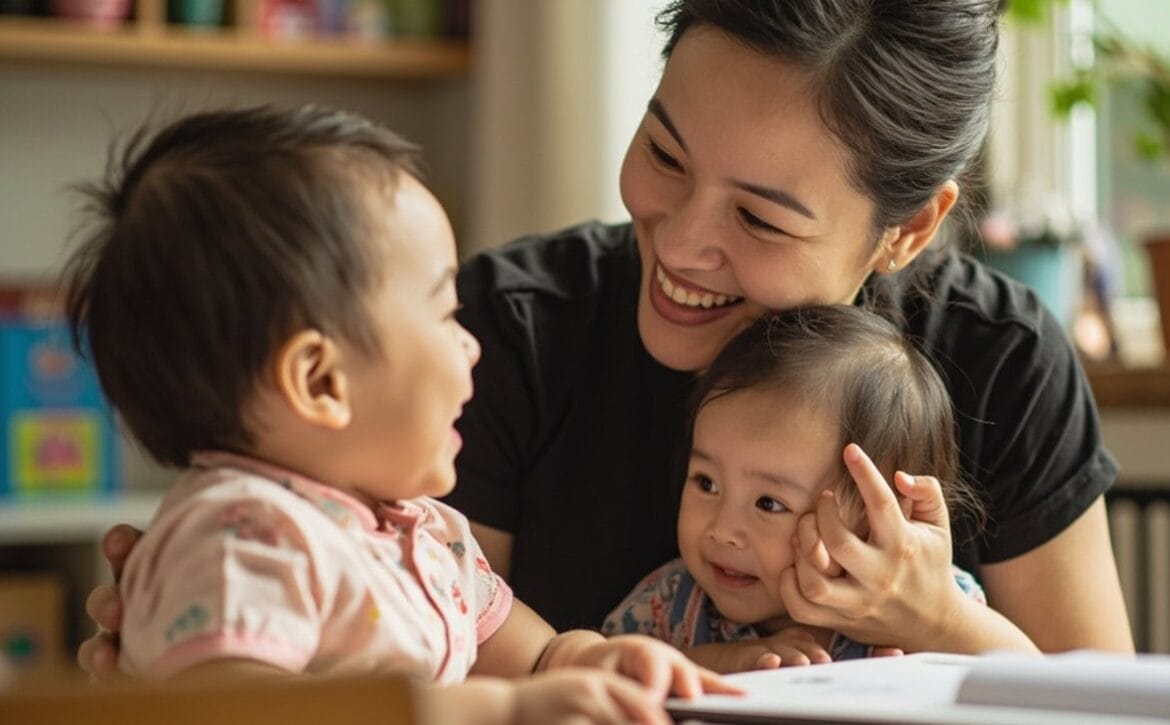
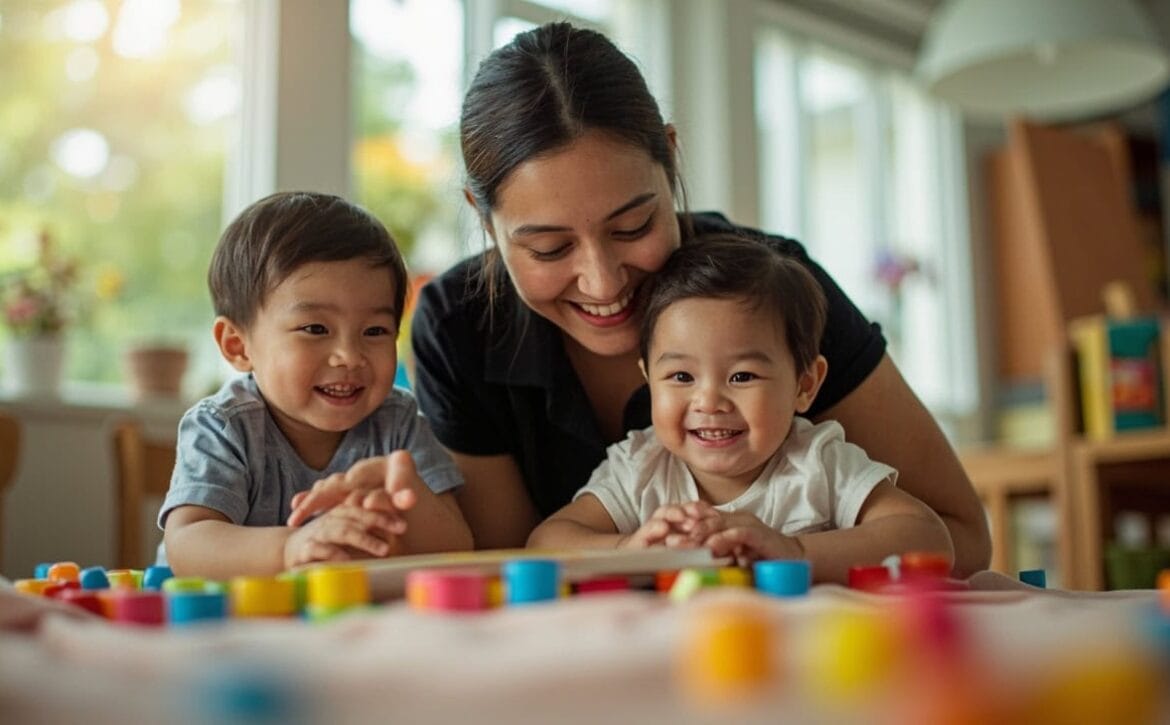
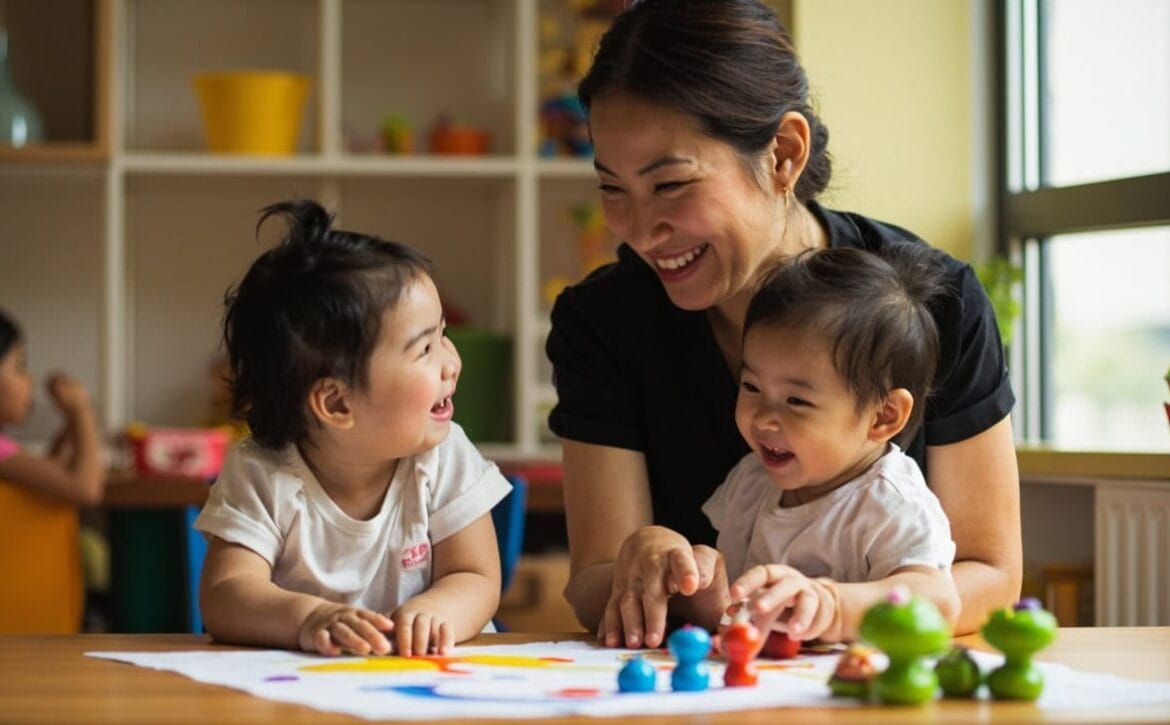
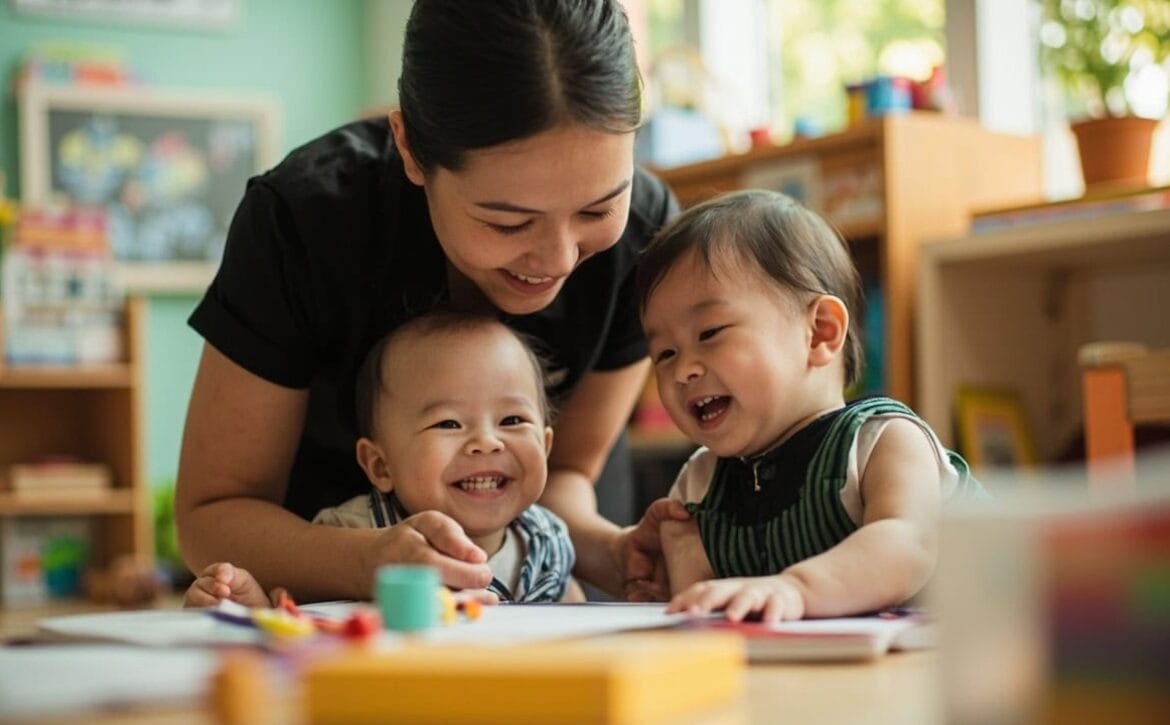
There is a silence that every Singapore parent knows. It happens somewhere between the car seat click and the classroom door. Your child is on your hip, or holding your hand, or still asleep in the pram — and you are walking toward a moment you have rehearsed in your mind a hundred times, but never quite feel ready for. The morning handover.

You have packed the bag twice. You have chosen the outfit, laid out the milk bottle, triple-checked the spare clothes. You have coached yourself to smile, to be cheerful, to say “Mummy will be back” as though those four words are a spell that will protect your child from the hours of your absence. And then you arrive, and you see the caregiver, and there is that brief, electric exchange — the passing of your child from one pair of hands to another.

We talk about choosing the right childcare centre. We talk about infant pedagogy and developmental milestones. We talk about caregiver qualifications and ratios and safety protocols. All of that matters enormously. But none of it addresses the specific, lived reality of what happens at the threshold. At the door. At the moment where you hand over not just your child but your trust, your anxiety, your hope that today will be okay.

Your child is watching how you leave. They are watching whether the caregiver receives them with warmth and presence, or whether the exchange feels mechanical and brief. And they are drawing conclusions about the world — about whether it is safe to let go, about whether the people who love them know what they are doing, about whether they can trust the person who will hold them for the next eight or nine hours.

That is a tremendous amount of weight to place on five minutes. But that is precisely the weight it carries.


What Quality Handover Looks Like: Morning and Evening

A routine handover is functional. It is the caregiver checking your child in, the parent saying a quick goodbye, the door closing. It is efficient. It is polite. It is, in many ways, perfectly adequate. Your child gets through it. The day proceeds.

But a quality handover is something else entirely. It is an act of emotional architecture.

What the caregiver brings

  • Preparing before you arrive — not just having the room ready, but being personally ready
  • Meeting your child at their level, physically and emotionally
  • Anticipating what your child might need in those first vulnerable minutes of transition
  • Not merely receiving your child, but gently inviting them into the rhythm of the day

What you bring as a parent

  • Arriving at the handover as your best self — not your most anxious self, not your guilt-ridden self
  • Those few minutes of genuine, undivided attention
  • Looking your child in the eye
  • Saying goodbye in a way that communicates: I love you, this is hard for me too, and I trust where I am leaving you

You cannot fake this. Your child reads you like a text. But you can prepare for it. You can build the muscle of presence, one handover at a time.

The evening reunion: where the day integrates

There is a particular quality to the moment you see your child at pickup. You have been thinking about them all day, of course. But you are also depleted — most Singapore working parents are running on empty by the time the clock strikes six. And there is your child — changed by their day.

What you are seeing is not simply the effect of the childcare day. You are seeing the residue of the handover. Because how your child experienced the morning goodbye — whether it felt safe or sudden, whether they were gently transitioned into the rhythm of care or simply deposited and left — that shapes how they have been living inside their day.

A child who started the morning in anxiety will often come home in a particular kind of exhaustion. Not the good tiredness of play and learning, but the heavy tiredness of vigilance, of having held themselves together in unfamiliar territory.

Those first twenty minutes after pickup are among the most important minutes of your child’s day. This is the reunification ritual. This is where your child needs you to receive them exactly as they are — not where you expect them to be.

Reading your child’s post-childcare state

  • Euphoria — Your child may come home flushed with excitement. This might mean the day went beautifully, or it might mean they have been running on adrenaline and are about to crash. Give them space to come down.
  • Clinginess — This might be a sign that the morning goodbye was harder than you thought, or it might just be where your child is developmentally. Either way, let them stay close for a while.
  • Quiet and withdrawn — Tiredness after a big day of learning and playing and being social is normal and healthy. Do not rush them back to brightness.
  • Calm and settled — Sometimes children are utterly calm in a way that makes you wonder if they even noticed you were gone. This can be a sign of a genuinely good day — and a good handover.

Learning to read your child’s post-childcare state — to meet them where they actually are — this is one of the most valuable skills you can develop as a parent.


Building a Handover Language with Your Childcare Partner

What about communicating with your child’s caregiver? This is where I want to pause, because so many parents treat the handover conversation as a weather report.

“She had her nap?” “He ate well?”

These questions are fine. They are necessary. But they are not sufficient.

A quality handover relationship is built on something deeper. It is built on the caregiver genuinely knowing your child — not just their schedule and their preferences, but their moods, their patterns, the things that make them light up, the things that make them retreat.

What you are building, over weeks and months of these daily exchanges, is a handover language. A way of communicating about your child that goes beyond the surface and touches on who they are, how they are, what they need.

  • Not just “what did my child eat” but how did my child seem today
  • Not just “did she sleep well” but did she seem herself
  • Not just updates on logistics but observations about your child’s emotional weather

When this language is strong, the handover becomes seamless. Your child experiences continuity between home and care. The caregiver becomes a true extension of your family, not a stranger in an institutional relationship. And you develop a kind of earned trust — the kind that allows you to leave your child each morning with something closer to peace than anxiety.


Navigating the Handover Across the Early Years

The handover changes. It must change — because your child is changing, developing, moving through stages that require different things from all of you.

For infants

When your child is six months old or nine months old or just turning one, the handover is not something they participate in consciously. They cannot be reasoned with or prepared through conversation. They experience the handover as pure sensation — the warmth of the person holding them, the tone of voice in the room, the sudden absence of a familiar smell.

This is why infant ratios matter so profoundly. When an infant is in a space where the caregiver has the capacity to be genuinely present — to receive your infant into their arms with full attention, not while managing three other tasks — that caregiver can create a sensory experience of safety in those first moments of the morning handover.

For infants, the evening handover is equally critical. After a full day of being in someone else’s arms, your infant comes home carrying all of that. Those first minutes of skin contact, of eye contact, of your voice and your smell and your heartbeat — this is where your infant re-anchors. Protect that time. Resist the urge to immediately check your phone or start dinner or rush into the next task.

For toddlers

A toddler at morning handover might protest loudly, might cling, might cry in that particular way that makes your heart crack open. This is not a sign that you have done something wrong. It is a sign that your child has a healthy attachment to you, and that the transition is genuinely hard.

A quality handover for a toddler means the caregiver is patient, ready to receive your child’s distress without urgency or frustration — with strategies, a game, a song, a favourite toy — to gently ease your child into the morning’s rhythm.

And a quality handover for you means leaving before your own anxiety makes it worse. It means trusting that your child will recover, that the caregiver knows what they are doing, that they are capable of holding your child’s difficult emotions.

For preschoolers

As children develop language and self-awareness, the handover dynamics shift. Your preschooler can be involved in the preparation. They can understand a simple explanation. They can carry a transitional object, a photo of you in their pocket, a ritual of a special wave from the window.

The handover becomes less about managing distress and more about building independence — while still honoring that it matters, that it is still hard sometimes, that the bridge between you and the caregiver deserves care and attention.


The Parent’s Own Transition: Honoring Your Own Experience

There is a particular kind of Singapore parent who walks into the childcare each morning carrying not just the diaper bag but an entire weight of unspoken worry.

Will today be the day my child stops crying? Will they eat? Will they miss me? Will they be okay?

This parent is often doing a remarkable job of holding it together on the surface while falling apart underneath. And by the evening, when pickup comes, that parent is often depleted in ways that make it genuinely difficult to show up as the parent their child needs.

I want you to hear this: you are not doing it wrong.

The fact that the handover is hard — that leaving your child feels like grief, that reuniting with them sometimes feels more exhausting than exhilarating — this is not evidence of failure. It is evidence of love. And it is also evidence of a very particular modern condition: the condition of the working Singapore parent who must leave their child each morning and return each evening, who lives in that hinge moment twice a day, who is doing the best they can with an arrangement that was never designed to feel easy.

The quality of your handover is shaped by your own state. When you arrive at the morning handover calm and present, your child feels it. When you arrive at the evening pickup open and available, your child feels that too.

And the way to get there is not to somehow eliminate the difficulty of working parenthood, but to build a childcare partnership that carries some of the weight for you. A trusted caregiver does not replace you. They hold the bridge open between your world and theirs, and they do it with such care and professionalism that you can, over time, let go of some of the fear.

Because here is the reframe: the handover is not something you do to your child. It is something you do with your child. You are not abandoning them. You are teaching them — slowly, across many repetitions — that goodbyes are not endings. That the people who love them can be trusted to let them go and come back. That they themselves are capable of navigating change.

And you are teaching yourself something too. That you are not failing by needing childcare. That partnership, in all its forms, is how we raise children in this world. Not by doing it all ourselves, but by building the kind of village that lets our children thrive.


How EduNanny Approaches the Handover Hour

EduNanny was built on the recognition that the handover is not a peripheral concern but a central one. That the quality of those minutes — morning and evening, every day — compounds into something enormous.

Through the ECDA Childminding Pilot, EduNanny offers pathways designed around this understanding:

  • Home-based care and community or centre-based options, giving families flexibility in how they want care delivered
  • Appropriate infant ratios — up to one-to-three in infant care arrangements — so caregivers have the capacity to be genuinely present during transitions
  • Monday to Friday care blocks that align with working parents’ schedules
  • Fee structures designed to be accessible, with the ability to use CDA and Baby Bonus funds where applicable
  • Ongoing communication that goes beyond transactional logistics
  • Transparency measures such as CCTV where deployed, building trust rather than replacing it

The caregivers themselves are professionals who understand that the handover is where trust is made or broken, where the child’s day begins and ends emotionally, where the partnership between family and childcare is either deepened or diminished.

Tomorrow morning, when you find yourself in that silence before the classroom door — the car seat silence, the bag-packed, rehearsed-cheerfulness silence — know that you are not alone. Know that the difficulty you feel is not weakness. Know that the love you carry for your child is precisely what makes this hard. And know that in your hands, in the hands of your caregiver, in the space between goodbye and hello, something extraordinary is happening.

Explore EduNanny’s childminding pathways and book a consultation today.


edunanny-0630547b2dbaa1821946b0067242c6bc
April 17, 2026

How Secure Caregiver Bonds Transform Your Child’s Development

Quick Summary: What This Article Covers

  • Why the caregiver-child relationship is the most important quality indicator in infant care
  • How relational security expands your child’s capacity to learn, explore, and grow
  • Observable signs that meaningful caregiver-child bonds are forming
  • Why consistency and small ratios matter more than most parents realize
  • How EduNanny by BUTLER structures care around relationship as a core design principle
  • Practical guidance for evaluating childcare options in Singapore

The Quiet Weight Singapore Parents Carry

Singapore parents navigate one of the world’s most demanding urban environments, where the pressure to provide, to plan, to optimize is relentless. In most cases, you are also separated from the extended family networks that once made early childhood a shared endeavor. You are making decisions about who will spend the most waking hours with your child during the years when their brain is building itself at a speed it will never again reach.

The stakes feel enormous. And yet the options, at first glance, can seem interchangeable—a centre here, a home-based arrangement there, ratios and fees and locations that blur together into a spreadsheet of compromises.

What you are really trying to find, beneath all of that, is a person. Someone who will see your child clearly. Who will respond with consistency and warmth. Who will notice when they are tired, when they are hungry, when they are on the verge of a developmental leap that will show up in their play tomorrow and their speech next month.

You are looking for a relationship.


Why the Caregiver-Child Bond Is the Foundation of Quality Care

The relationship your child forms with their caregiver is not incidental to their care. It is not a pleasant side effect of attentive staffing or a nice-to-have that supplements the “real” educational program. The caregiver-child relationship is the developmental architecture through which everything else happens.

To understand why, it helps to reconsider how we usually talk about childcare quality. We talk about ratios—how many children per caregiver—and this matters. We talk about curriculum—whether there is a structured program—and this can matter too. We talk about safety, about cleanliness, about communication apps and daily updates.

All of these are legitimate concerns. But they describe the container, not the contents. They tell you about the environment in which your child’s days unfold. They do not tell you whether your child is actually developing the internal resources that will serve them for decades.

The Science Behind Relational Security

When a child feels genuinely secure with a caregiver—not just familiar, not just comfortable, but genuinely secure—their nervous system registers a message that unlocks everything else:

The world is safe enough. I can explore it. I can venture away and come back. I can be curious because someone is watching me, and their watching feels like care, not surveillance.

Developmental science has mapped the pathways through which early relational experience shapes the architecture of the developing brain—particularly in the areas responsible for emotional regulation, social intuition, and the capacity to sustain attention.

You do not need the research to believe it. You know it from watching your own child. You know it from the way they respond after a weekend apart from a caregiver they have come to trust. You know it from the difference between a child who walks confidently into a room and a child who hangs back, assessing, uncertain.

What This Bond Teaches Your Child

The caregiver-child bond is the first template your child has for what relationships can be. It teaches them whether people are reliable, whether communication works, whether they can trust their own perceptions and feelings.

When a child enters preschool or primary school, they carry with them an internal working model of how relationships function. Do people respond when I reach out? Can I explore without losing connection? Is the world generally safe? These foundational beliefs, formed in the earliest years, shape how children engage with teachers, peers, and new learning environments for years to come.


How to Recognize Quality Relational Care

So what does it look like when this bond is actually forming? The signs are observable, though they are easy to miss if you are not looking for them.

Signs Your Child Has Formed a Genuine Bond

  • Your child seeks out their caregiver to share, not just when distressed. A leaf they found. A mark they made. A small accomplishment that requires an audience. This is different from a child who tolerates a caregiver—it is a child who values the relationship.
  • Your child is soothed more easily. Because the caregiver has become, through consistent presence and attuned response, a person who represents safety in a neurological sense. When a child knows that a particular adult will respond to their distress in a way that actually helps, they can tolerate more frustration, more novelty, more challenge.
  • There is ease in the interaction. The caregiver knows your child’s rhythms—which songs they respond to, which textures they avoid, which moments tend to trigger overwhelm. This comes from consistent, attentive presence.
  • Your child mentions the caregiver by name—and the tone carries warmth and recognition. This reflects a specific, valued relationship, not just familiarity.

Why Consistency and Small Ratios Matter

The caregiver-child bond cannot be built in fragments. It requires sustained, predictable presence—the same person, or small team, showing up with continuity over months and years.

When care is fragmented, when a child faces a rotating cast of unfamiliar faces, the developmental opportunity is lost. The child spends energy on adaptation rather than growth. The nervous system remains alert rather than settling into exploration.

This is why ratios matter. A caregiver who is responsible for too many children cannot attune to any of them fully. The capacity to notice, to respond, to remember, to adjust—that capacity is finite.

Ratio What It Allows What It Prevents
1 caregiver : 6+ children Basic supervision, safety compliance Individual attention, deep attunement
1 caregiver : 3–4 children More individual interaction Deep knowledge of each child
1 caregiver : up to 3 children Real relationship development, emotional security Nothing—this makes bonds possible

When EduNanny speaks about ratios of up to one to three in infant care, this is what is behind the number: the recognition that meaningful relationship requires real attention, and real attention requires real time.


Designing Care Around Relationship

The caregiver-child bond is not something that emerges spontaneously from good intentions. It requires a model of care that is designed around relationship as a core principle—not as an aspiration or a marketing claim, but as the organizing logic of how the service is structured.

How EduNanny by BUTLER Approaches Childminding

EduNanny by BUTLER was built on this understanding. As a participant in the ECDA Childminding Pilot, EduNanny has committed to a model of care that treats the caregiver-child bond not as a byproduct of quality staffing, but as the primary mechanism through which infant development unfolds.

This means attending to the conditions that make these bonds possible:

  • Consistency and continuity—the same caregiver, or small team, showing up predictably over time
  • Small ratios—enough time and attention for genuine attunement
  • Caregiver training and support—caregivers who understand their role as developmental partners, not supervisors
  • Transparency—where observation measures are in place, they serve as a bridge of trust between caregivers and families

What Singapore Parents Actually Worry About

The costs of quality childcare can feel prohibitive. EduNanny’s participation in the Childminding Pilot means that care is structured to be accessible within pilot fee frameworks. The usability of CDA and Baby Bonus funds further eases the financial dimension of a decision that is, at its core, emotional and developmental.

Many parents carry guilt about returning to work. Here is something important to know: the bond between your child and their caregiver is not a replacement for your bond. It is an addition to it. When your child feels secure with their caregiver, they are actually more available for connection with you, not less. The developmental work that happens in the caregiver-child relationship does not draw away from the parent-child attachment. It extends it.

Your posture toward your child’s caregiver matters. Not in the sense of managing them or overseeing them, but in the sense of welcoming them into a shared endeavor. When you communicate openly about your child’s needs, when you express genuine appreciation for the work they are doing—you are not diminishing your role. You are strengthening the relational system that your child lives in.

The best caregiver-child relationships are embedded within a broader relational ecology that includes the family. When this works well, parents report something unexpected: they feel more competent, not less. They have a partner in the enormous work of raising a child. They have someone who sees their child from a different angle and can reflect back observations that parents, in the intimacy of daily life, sometimes miss.


Practical Guidance: Questions to Ask When Evaluating Childcare

If you are weighing options, visiting centres, asking questions about ratios and curriculum—here is the question that matters most:

Will my child be known here? Not just supervised. Not just occupied. Known. Recognized. Understood as a specific, individual person with their own temperament, their own preferences, their own pace of development.

Here are questions grounded in relational quality that most parents do not think to ask:

  • Who will be my child’s primary caregiver, and how often will that person change?
  • What is the caregiver-to-child ratio, and how does that translate to individual attention?
  • How does the programme handle transitions when caregivers are absent?
  • Can I observe how my child interacts with their caregiver before making a commitment?
  • How does the caregiver describe my child’s temperament, preferences, and patterns? Can they do this from day one, or only after weeks of observation?
  • How does the programme support caregivers’ wellbeing and prevent burnout?
  • What does daily communication look like, and how is information shared about my child’s emotional state, not just their meals and naps?

Answering these questions well requires a philosophy of care that places relationship at the centre—not as a talking point, but as a design principle. It requires caregivers who understand their role as developmental partners, not as supervisors. It requires an organisation willing to structure ratios, consistency, training, and communication around the simple but demanding goal of making genuine bonds possible.


The Most Personal and Important Thing Quality Childcare Offers

There is a moment—not dramatic, not announced—that tells you something true has begun. Perhaps you noticed it on a quiet afternoon when you arrived to collect your child, and instead of the expected cry or cling, your little one looked up from the caregiver’s arms with an expression that was almost conspiratorial.

I know her. She knows me. We’re fine here.

Or perhaps it was subtler still. The way your child turned at the sound of a particular voice across the room. The way they reached for one pair of hands over another. The way they mentioned a name—spoken with a toddler’s impossible compression of meaning—that you realized mattered to them in a way you had not expected.

When you watch your child reach for their caregiver with something that looks like trust, you are seeing the result of hundreds of small, intentional interactions. EduNanny by BUTLER was built for this—not because every detail is perfect, but because the central commitment is clear: the caregiver-child relationship is the primary quality indicator in infant care, and everything else is in service of it.

Choosing childcare is ultimately choosing a relationship for your child. It is deciding who will help shape their earliest understanding of what relationships can be. It is trusting someone else with the most important work there is: helping a small human feel safe enough to explore, brave enough to learn, and secure enough to become whoever they are becoming.

You chose this for them. And now you can trust it.


Start a conversation with EduNanny by BUTLER. Learn how our childminding model is designed to make the caregiver-child relationship the foundation of everything we do, and explore how we can support your family.

edunanny-0630513f8e26829a6f7ad2488c939501
April 17, 2026

Three Generations, One Child: Navigating Childcare in Modern Singapore

Standing at the Intersection of Two Loves

There is a moment, quiet in its weight, when you realize you are caught between two things you love.

You love your child. You love your parents. And somewhere in the ordinary days of raising a little one, you find yourself wanting both to honor the way they raised you and to make different choices for your own child. Not because theirs were wrong. Not because you do not trust them. But because the world your child is growing into is not quite the world you grew up in, and the research on early childhood development has deepened in ways that shape how you think about feeding, sleeping, speaking, and playing with your infant.

This is not a failure of gratitude. This is the work of being a thoughtful parent in Singapore.

It is one of the most unspoken struggles that modern mothers and fathers carry quietly. Behind the photographs of grandmother holding the baby. Behind the Sunday lunch where your mother asks why you are not doing things the way she did. Behind the WhatsApp messages where your mother-in-law offers to take the baby more so you can rest.

You love her for the offer. You also feel the pressure of it.

You are not imagining this tension. You are not overthinking it. You are being a parent in a moment of cultural change, and that requires a kind of emotional agility that no one prepared you for.


Understanding What You Are Really Navigating

Think about what you are actually navigating. It is not just nappy changes or sleep training or whether rice cereal belongs in a four-month-old’s mouth. Those are symptoms. What is really happening is a difference in philosophy, shaped by a different era.

Your parents raised you in a world where survival was the baseline. Where children were fed, clothed, kept safe, sent to school. Where love was expressed through provision and presence. And they did this extraordinarily well. You are here because they raised you.

But the world has changed. The research has deepened. We now understand infant cognition in ways that would have seemed like science fiction to a parent raising children in the 1980s. We know that the brain is not a small adult brain waiting to grow. It is a rapidly developing organ literally shaped by every interaction, every response, every word spoken in its presence. We know that sensitive, responsive caregiving in the first year does not spoil a baby. It teaches a baby that the world is reliable. That crying brings comfort. That they are worthy of attention.

This knowledge does not erase the wisdom of grandparents. It adds to it. But when it sits alongside traditional approaches formed in a different era, with different information, it can create friction.

What you are experiencing is universal, but it feels particularly sharp in Singapore because of how central grandparents are to family life. We are shaped by something beautiful and complex: a culture where grandparents are not peripheral figures but daily presences. Where ah ma and ah gong carry knowledge in their hands that no book can fully capture.

We know this bond is not sentimental. It is developmental. Research has shown us that attachment with a secure caregiver, whoever that caregiver may be, builds the architecture of a child’s emotional life. The question is not whether grandparents matter. They do. Immensely.

The question is how we navigate the very real differences that emerge when three generations share in raising a child, and when the middle generation has come to believe, through reading, through speaking with pediatricians, through watching their own children grow, that some things need to be done differently now.

This is not a crisis. It is a transition. And transitions, though uncomfortable, are where families grow.


What Quality Childcare Looks Like in the First Thousand Days

Before we talk about conversations and family alignment, it helps to be clear about what you are holding firm on and why it matters.

The first thousand days of your child’s life carry weight you can feel but cannot always explain to someone who raised children before that phrase existed. This period from conception to age two is when the foundations of physical health, emotional regulation, and cognitive development are laid most rapidly.

What does research tell us matters most during this time?

  • Responsive caregiving. When a baby’s cries are met with consistent, warm responses, the baby learns that the world is trustworthy. This is not about spoiling. It is about building neural pathways for security.
  • Language-rich environments. The developing brain is exquisitely sensitive to the language it hears. Conversational turns, even with infants, matter for language development.
  • Safe, stimulating interaction. Babies learn through engagement, not passive observation. They need adults who respond to their cues, who narrate the world back to them, who play with them in ways that match their developmental stage.
  • Consistent, predictable routines. Young children thrive on knowing what comes next. This is not rigidity. It is the architecture of trust.

These principles may feel intuitive to you now, shaped by the parenting content you have read, the pediatrician you trust, or the observation of your own child’s development. And yet they may differ from how your parents cared for you, not because they loved you less, but because different information was available then.

Understanding this distinction matters. Your parents were not negligent. They were doing what they knew with the resources they had. You are doing the same. The difference is the resources, not the love.


A Framework for the Conversation Your Heart Has Been Avoiding

The families who move through this tension most successfully are not the ones who have no disagreements. They are the ones who learn to talk about them differently.

There is a framework that works again and again. It starts with a shift in how you understand the conversation itself. You are not trying to win an argument or prove your parents wrong. You are trying to build a shared understanding that serves your child.

And that requires something counterintuitive. It requires you to lead with listening.

Step One: Listen Before You Explain

Before you explain why you have chosen a particular approach, ask your mother or your mother-in-law about her own experience. Ask her what she was told when she was a new mother. Ask her what she worried about. Ask her what she is proudest of in how she raised you.

Listen, not to respond, but to understand. Because she is not just a caregiver with different opinions. She is a woman who carried children in her body, who lost sleep, who made decisions with incomplete information and did the best she could. That is worth honoring.

When you lead with listening, something shifts. The defensive walls come down. She stops feeling judged, and she becomes more capable of hearing you.

Step Two: Share as a Child, Not an Authority

Then you share, not as an authority telling her she was wrong, but as a daughter or son who is doing something differently because the world is different, because you have access to different information, because your child is your responsibility and you feel called to approach it this way.

The language matters. Instead of saying, “The doctor says we should not do it that way,” you might say, “I have been reading about this, and I feel more comfortable trying it this way. Can I share what I have learned with you?”

You are not dismissing her wisdom. You are adding your own to it.

Step Three: Frame Boundaries as Invitations

There are practical ways to do this. You might share articles in your family’s WhatsApp group, not as corrections, but as interesting things you are reading as parents. You might invite your mother to observe a session at your childcare provider and see what responsive caregiving looks like in practice.

You might frame certain boundaries not as rejections but as requests, coming from a place of trust. “Mum, I need your help with this, and I need your help to do it this way.”

When grandparents feel included rather than excluded, when they feel their contribution matters and that they are part of the team rather than being sidelined, resistance softens. Love is patient. Give it room to find its way.

Common Concerns That Keep You Up at Night

“I am worried about hurting my mother’s feelings when I set boundaries.”
Your mother’s feelings matter. So does your child’s wellbeing. The goal is not to minimize one at the expense of the other, but to find ways to hold both. Boundaries set with love are not rejections. They are clarifications of what you need as a parent. The sting you feel in setting them is the sting of growth, not of failure.

“My mother-in-law is very set in her ways. I do not think she will understand.”
Understanding is a process, not a single conversation. Some grandparents adapt more quickly than others. What matters is that you keep the door open, that you remain respectful and consistent, and that you model the kind of thoughtful parenting you want to see. Change often comes not from persuasion but from observation. When grandparents see their grandchildren thriving under a different approach, doubt can soften into acceptance.

“I want my child to have a close relationship with their grandparents, but I worry about inconsistency.”
Children are remarkably adaptable. They can understand that Grandma does things differently on Wednesdays, that Mama does things differently at home. What they need is not perfect uniformity but secure relationships and predictable environments in each context. What you can do is ensure that the non-negotiables, the core principles that shape your child’s development, are communicated clearly and consistently. Grandparents can be allies in this, not obstacles to it.

“What if my child prefers being with Grandma and that means I am doing something wrong?”
Children naturally enjoy novelty and different kinds of attention. A grandparent who is entirely focused on the grandchild, without the stress of parenting, may offer a different kind of experience. This is not a reflection on your parenting. It is a reflection on the unique position grandparents hold. Multiple attachments do not dilute parental attachment. They enrich a child’s emotional world.


The Village That Raises a Child: Quality Care and Family Working Together

When grandparents are involved in childcare, they are not just providing a service. They are building a relationship. And children benefit from more than one attachment. Research is clear on this. Multiple secure attachments, with different people who love the child, do not confuse a baby. They enrich a child’s emotional world.

Your mother holding your child is not a threat to you. It is a gift to your child.

But quality matters. Not the quality of love, which is immeasurable, but the quality of environment, of interaction, of developmental appropriateness. And this is where you, as the parent, have a role that cannot be shared or delegated. You are the keeper of the vision for your child’s early years.

This does not mean you cannot trust your parents. It means you stay engaged. You communicate. You find ways to involve grandparents in your child’s development that honor who they are while maintaining the consistency your child needs.

Quality childcare, whether through a center-based program or a home-based arrangement, can serve as a bridge rather than a barrier. It can provide developmental consistency while freeing grandparents to be grandparents, which is often what they want most.

When you are evaluating your childcare options, here are the questions worth asking:

  1. What is the caregiver-to-child ratio? For infants, lower ratios mean more responsive attention.
  2. What is the training and philosophy of the caregivers? Ask about their understanding of early childhood development. Are they trained in responsive caregiving?
  3. How is communication handled? Will you know what your child’s day looked like? Are there systems in place for transparency?
  4. How does the arrangement integrate with family care? The best childcare model for your family is one that complements, rather than competes with, the involvement of grandparents and extended family.
  5. What are the practical logistics? Hours, location, fees, and payment support through government schemes all affect whether an arrangement is sustainable for your family.

The right choice is not the same for every family. What matters is finding an arrangement that you can trust, that supports your child’s development, and that fits within the ecosystem of love and care your family is building.


EduNanny Singapore: Built for This Complexity

EduNanny Singapore, a service by BUTLER, operates within the ECDA Childminding Pilot framework. This matters because it means we are part of a deliberate, structured response to a real need in Singapore. The pilot recognizes what parents have been quietly asking for: home-based and community-based childcare pathways that bring quality early education into the spaces where families live and gather.

When you choose EduNanny, you are not choosing between family care and professional care. You are choosing a model that integrates both.

  • Trained childminders who understand early childhood development and responsive caregiving
  • Infant ratios of up to one to three, ensuring attentive, individualized care
  • Transparent communication protocols and, where deployed, CCTV access that allows you to remain connected to your child’s day
  • Monday through Friday care blocks that recognize the rhythms of working family life in Singapore
  • Pilot fee structures designed to make quality care accessible, with support for CDA and Baby Bonus funds

We believe that childcare in Singapore does not have to be an either-or equation. You do not have to choose between grandparent involvement and evidence-based care. These things can coexist. In fact, when they are thoughtfully integrated, they create something richer than either could offer alone.

Your child benefits from the security of knowing both grandmother and childminder. They benefit from the cultural continuity that grandparents provide and the developmental intentionality that trained caregivers bring. They benefit from a family that is aligned, even if alignment was hard-won.

We are here to support that alignment. Not by telling you what to say to your parents, but by being the kind of care provider that makes that conversation easier. When a grandparent can see, with their own eyes, that their grandchild is thriving in a warm, responsive, professionally supported environment, the anxiety that sometimes sits behind resistance begins to dissolve.

We want to be the childcare partner who earns the trust of the whole family. That includes Mum. That includes Mother-in-law. That includes the aunties who will have opinions. We want EduNanny to be something that brings families together rather than driving wedges between them.


What Are We Ultimately Trying to Give Our Children?

There is a question that sits beneath all of this, one that we do not always ask directly but that shapes so much of what parents feel.

Not just academic readiness. Not just physical safety. We are trying to give them a foundation of security from which they can explore the world with confidence. We are trying to show them, through how we care for them, that they are loved, that the world is mostly kind, that their needs matter and will be met.

Grandparents do this. Childminders do this. Parents do this. The village raises the child, as the saying goes, and the village is not outdated. It is necessary.

But a village needs coordination. It needs shared language, shared values, shared commitment to the child’s wellbeing. And in modern Singapore, where three generations may be involved in raising one child, that coordination falls to you.

It is not a small thing that you are being asked to do. You are bridging generations. You are translating knowledge across time. You are holding both love and standards in your hands and trying to honor all of it at once.

We see you. We know that this work is invisible to many but exhausting to those who do it. We know that the conversations you have rehearsed in your head at night, the ones you hope will go smoothly and sometimes do not, are acts of love too. You are not just managing childcare logistics. You are building a family culture that will shape your child’s understanding of how people who love each other work through their differences.

That matters. More than you know.

You are not wrong for wanting something different for your child. You are not wrong for wanting grandparents involved. You are not wrong for feeling the weight of both of those things at once.

The tension you feel is the tension of a family that is alive, that is evolving, that is trying to love well across generations and contexts that do not always align easily. It is uncomfortable. But it is not wrong.

What is needed is not a resolution that eliminates the tension, but a way of holding it that serves your child. Conversations that begin with listening. Standards that are held with humility. Grandparents who are invited in rather than pushed out. Quality care that complements rather than competes with family involvement.

This is the work. And it is worth doing.

EduNanny Singapore was built for families doing this work. We are not here to tell you how to parent. We are here to walk beside you as you figure it out, offering support, structure, transparency, and the kind of care that you can trust with the most important person in your life.

The village is real. The village is complicated. And the village, when tended with care, raises children who know they are deeply, solidly loved.

That is what we believe. That is what we are here for. And we would be honored to be part of your family’s story.

Explore how EduNanny Singapore can support your family’s childcare journey.


edunanny-06304d8911aba7d401acc2f58b41841d
April 17, 2026

When Your Child Has Another Person Who Truly Loves Them

“`html

The Moment Your Child Runs to Someone Else

There is a moment—perhaps you have lived it—when you realize your child has a relationship with someone who is not you. It does not arrive dramatically. It arrives the way most truths in parenting do: quietly, unexpectedly, while you are doing something ordinary.

Your child hears a car door close outside. She looks up from her blocks. Her face changes. And then she says a name—not yours, not a grandparent’s, not a relative’s—and she runs toward the door with a joy that is entirely her own.

You stand there, still holding the dishes or the morning coffee, and something complicated moves through you. Pride, perhaps. A small sting of something you did not expect. And underneath it, a relief so profound you almost do not trust it: the recognition that your child is known. That someone else, outside the walls of your home, holds a piece of her that you cannot hold.

This is the moment I want to name today. Because it is not small. It is not incidental. It is, I would argue, one of the most important experiences of early parenthood—and yet we rarely speak about it with the honesty it deserves.


Why the Caregiver Relationship Matters More Than You Think

In Singapore, we have built an extraordinary system of childcare options. Frameworks and quality indicators. Regulatory standards. We talk about school readiness and developmental milestones and caregiver ratios. All of this matters.

But beneath all of it, invisible and essential, runs a thread that determines whether any of it actually works: the relationship between your child and the person who cares for them.

When you chose your child’s caregiver, what were you actually looking for? Certifications, yes. Experience, certainly. A clean environment, proper ratios, transparent communication. These are the things we list. These are the things we ask about in interviews and on tours.

But beneath all of that, you were looking for something harder to name. You were looking for someone your child would feel safe with. Someone whose presence would feel like a continuation of home rather than an interruption of it. Someone who would notice your child—not just supervise them, not just keep them fed and changed and safe, but actually notice them. Know their rhythms. Remember their fears. Recognize when they are tired before they begin to fuss. Celebrate their small victories as though those victories matter.

This is not a service expectation. This is a relational hope. And here is what makes it so tender: you cannot be there to witness it.

You drop your child at seven in the morning. You pick them up at six or seven at night. In between, hours of their day unfold in someone else’s care.

What you want—desperately, quietly, sometimes without even admitting it to yourself—is for those hours to be filled with more than competent supervision. You want them to be filled with love. With genuine connection. With a relationship that matters to your child in the way that relationships matter to all of us: as the invisible architecture of who we become.

This is not an unreasonable hope. It is, in fact, exactly what developmental science tells us children need.


What Secure Attachment Looks Like in Practice

The research on this is not new, but it deserves repeating because we so often forget it in our practical conversations about childcare. Children do not simply need to be cared for. They need to be cared for by people who are consistent, responsive, and emotionally attuned.

They need someone who becomes a secure base—the psychologist John Bowlby called it that, and the name captures something essential. A secure base is a place a child can push away from and return to. A place that makes exploration possible because it makes return feel safe.

When a child has this kind of relationship with a caregiver, something remarkable happens:

  • They cry less at drop-off—not because they do not miss you, but because they trust the person you are leaving them with.
  • They explore more freely—the playground, the sensory table, the new activity—because they know someone is watching who will respond if something goes wrong.
  • They begin to use language in new ways, modeling themselves on the person who speaks to them with patience and interest throughout the day.
  • They learn, in the deepest sense of the word, what trust feels like.

And this trust, this early understanding that the world contains people who will catch you, shapes everything that follows. Emotional regulation. Social confidence. The willingness to try new things. The ability to form healthy relationships later in life. All of this begins in the caregiver-child bond.

Signs Your Child Has a Secure Attachment with Their Caregiver

  • They show excitement or calm recognition when arriving at their care setting.
  • They can be comforted by their caregiver when upset—not just by you.
  • They explore toys and spaces freely, checking back occasionally for reassurance.
  • They mention their caregiver in everyday conversation with warmth.
  • They show less separation distress over time, not more.

The Parent’s Side of the Bond

But here is what I want you to hear, because this is where our conversation must go beyond the developmental frame and into something more human: this is not only about what the caregiver relationship gives your child. It is about what it gives you.

There is a transformation that happens—sometimes slowly, sometimes all at once—when a parent realizes that their child’s caregiver is not just a service provider but a genuine partner in the most important work of their lives.

It begins with trust, yes. But it deepens into something more.

It begins when you start to have real conversations with your caregiver about your child’s day—not just logistics, but observations. When your caregiver tells you that your son finally mastered the shape-sorter this afternoon, and you can hear in her voice that she was genuinely delighted. When your caregiver asks about a change in routine before you thought to mention it, because she has been paying attention so closely that she knows what is normal for your daughter and what is not.

It deepens when you realize you are not navigating this alone. That someone else is invested in your child’s wellbeing with an investment that mirrors your own. That you can text a quick question at lunch and receive a thoughtful response. That when something goes wrong—a fall, a fever, a hard morning—your caregiver does not just inform you but partners with you in figuring out what it means and what to do.

This is what I mean by the caregiver bond becoming part of your family’s emotional architecture. It is not just your child who has a relationship with this person. You do, too. And that relationship—the mutual respect, the honest communication, the shared investment in the same small human—changes how you experience parenthood.

It gives you a kind of peace that is not just the absence of worry but the presence of confidence. The knowledge that someone who knows your child as well as you do is watching out for them. The relief of being truly heard by another adult when you describe something that worried you, and receiving not dismissal but attention. The unexpected comfort of having someone else who treasures your child’s small achievements, who has seen them struggle and succeed, who holds memories of your child’s day that you were not there to see.


What Quality Childminding Actually Looks Like

When you visit a childcare arrangement—whether a centre or a home-based programme—there are questions worth asking beyond the checklist of certifications and ratios. You are trying to sense something: whether the relationships between caregivers and children are real.

Here are some practical markers of genuine relational care:

  • Caregivers speak about your child as an individual. Not “the babies” or “the infants,” but your child’s name, their preferences, their rhythms, their small victories.
  • The environment feels warm, not just clean. You can sense whether children are relaxed and curious, or merely contained.
  • Communication is bidirectional. You receive updates that feel observational, not templated. You feel heard when you share concerns.
  • Caregivers ask questions about your child. They want to know about sleep routines, feeding preferences, family changes. They are building a picture, not filling out a form.
  • Transitions are handled with care. When you arrive, there is a handover moment—not a rushed exchange but a brief conversation about how the day has been.
  • Children show recognition and comfort. Not every child will run to greet their caregiver with obvious joy—some are more reserved—but there is a familiarity, a willingness to be soothed, an ease in the caregiver’s presence.

When Caregiver Relationships Must Change

And here is what we must speak about honestly, because parents feel it even when they do not say it: this relationship also makes you vulnerable.

Because the caregiver bond, when it is real, has stakes. And the thing parents in Singapore rarely say out loud is this: we are afraid of change. Not just the practical disruption—finding a new caregiver, managing the transition, adjusting schedules. But something more fundamental.

We are afraid of losing the relationship. Our children are afraid of losing it, and we are afraid on their behalf, and we wonder: if this person leaves, what happens to the bond? What happens to the security my child has built? What happens to the language they have learned to trust?

This fear is not irrational. Caregiver turnover is one of the most disruptive experiences in early childhood. It is not the disruption of logistics or the headache of paperwork. It is the disruption of attachment.

Children form real bonds with their caregivers, and when those bonds are severed—whether gently or abruptly—children grieve. The research on this is clear, and the experience of parents confirms it. You know when your child has lost someone they loved. You see it in the confusion, the regression, the search for a familiar face.

And this is precisely why caregiver continuity must be a defining quality marker for any childcare arrangement worth the name. Not just an aspiration, not just a nice-to-have, but a core commitment—one that shapes hiring decisions, scheduling practices, and organizational culture.

When transitions must happen, they should be handled with the gravity they deserve. Children should be prepared gradually. Families should receive transparency about what is coming and why. The new relationship should be built on the same foundations of consistency and attentiveness that made the previous one matter.


EduNanny’s Approach: Building Around the Bond

EduNanny Singapore is part of the BUTLER family, and we participate in the ECDA Childminding Pilot because we believe that home-based and community-based childcare, when done with genuine care and professional rigor, offers something that institutional settings often cannot: the intimacy of small ratios, the continuity of consistent caregivers, and the flexibility to build real relationships over time.

In our programme, the ratio of caregivers to infants is kept deliberately low—up to one to three in our infant spaces. This is not an accident. It is an architectural choice, designed to ensure that each caregiver can truly know each child. Can notice what the research says needs noticing. Can be present in a way that matters, not just physically but relationally.

We structure our care around Monday to Friday blocks because families in Singapore need reliability, and because children need predictability to develop trust. We make our programme accessible within the pilot fee structures, because we believe that quality caregiver relationships should not be a privilege reserved for families who can pay premium rates. The Baby Bonus CDA is usable with us, because we want to make this accessible to the families who need it most.

Beyond the specifications, we are not just running a childcare service. We are cultivating relationships. And we have built our programme around the understanding that those relationships require protection.

That protection looks like deliberate caregiver selection and retention—finding people who are not just qualified but vocationally suited, who understand that this work is relational before it is logistical. It looks like communication practices that keep parents informed without creating anxiety. It looks like technology like CCTV that serves trust rather than surveillance. It looks like a culture that values the caregiver role as a profession of dignity, not a stopgap.

This is what it means to take the caregiver bond seriously. Not just to celebrate it when it exists, but to engineer conditions for it, protect it, and mourn it appropriately when it ends.


Reframing What It Means to Share Your Child’s Care

I want to circle back now to something I mentioned at the beginning, because I think it is the most important thing in this conversation.

The caregiver relationship does not replace your bond with your child. It extends it. It gives your child a second anchor, a second person who is wholly devoted to their wellbeing during hours you cannot be present. It gives your child the gift of learning that love is not scarce, that care can come from more than one source, that the world contains adults who will show up for them.

And it gives you something I have not heard anyone name directly: it gives you permission. Permission to work, to pursue your career, to be the adult you need to be in the world—without guilt, without the constant anxious wondering about whether your child is okay. Not because you do not love them, but precisely because you love them enough to want them to have more than you alone can provide.

The caregiver your child loves is not a substitute for you. She is a complement to you. A colleague in the most important work there is.

So the next time your child runs toward the door when the car pulls up, when they say a name that is not yours and their face lights up with joy at someone else’s arrival—let yourself feel the full weight of that moment. The complexity of it. The love it contains.

You have not failed as a parent. You have succeeded in finding someone worthy of the trust you extended.

Your child has been given a gift: another person in this world who loves them.

And you have been given something too—the deep, quiet peace of knowing that when you cannot be there, someone who truly cares is.


Where Every Child Is Known, Not Just Minded

If you are a parent in Singapore exploring infant care or childminding options, we invite you to learn more about how EduNanny approaches the caregiver bond as the foundation of everything we do. Because your child’s hours matter. The relationships they contain matter. And the person who fills those hours—who greets your child with warmth every morning, who sings the songs they have come to love, who holds them when they are tired and celebrates when they triumph—deserves to be chosen with the same care you bring to every other decision in your child’s life.

Reach out to learn more about our ECDA Childminding Pilot programme. We would be honored to be part of your family’s story.

About EduNanny Singapore · Contact Us

“`

edunanny-063049fae638c9c8253da519c64170d3
April 17, 2026

The Readiness That Changes Everything for Singapore Parents

The Question Nobody Asks You About Childcare

You have toured the centres. Read the reviews. Asked the questions every parent asks: Is my child ready? Will they adapt? Are they comfortable? Will they thrive?

These are important questions. They matter. But they represent only half of what actually shapes your child’s experience in those first years of care outside your home.

The question that deserves equal weight—the one you may find yourself returning to long after enrollment—is simpler and harder: Are you ready?

Not your child. You.

Are you ready to become something more than the person who drops off and picks up? Are you ready to show up for the partnership that makes quality childcare extraordinary?


Rethinking Readiness: The Question That Changes Everything

For too long, the narrative around childcare enrollment has treated you as someone who has finished their most important work once the decision is made. You have found the right place. You have done your research. You have visited and observed and weighed your options.

And then you hand over your child, and the story is told as though you step back into the role of spectator while the professionals take over.

But that is not what the best childcare experiences are built on. And it is not what Singapore parents, when they are honest with themselves, actually want.

What you want—what parents who feel most confident and most connected tell us they want—is to remain present. Not hovering. Not anxious. Present. Involved. Thoughtful.

You want to understand the world your child is inhabiting while you are building the life that supports them. Not because you distrust what is happening, but because your child is the most important person in your life and you deserve to be more than a spectator in their earliest, most formative years.

What Partnership Actually Looks Like

Partnership is a word that gets used often in discussions about childcare, but it is rarely examined with the care it deserves. What does it mean in the daily reality of a working Singapore parent whose mornings are rushed, whose evenings are shared with tired children and quick dinners, whose weekends are precious and few?

It looks like this: you arrive at pickup, and instead of the brief, transactional exchange many parents describe—my child ate well, they napped okay, see you tomorrow—you find yourself in a conversation.

You have a question. Maybe it is about something specific you noticed at home this weekend. A new sound your baby made. A change in how your toddler responded to a situation. You mention it casually, and the caregiver pauses, nods, and tells you that they noticed the same thing beginning to emerge at care this week.

You exchange a look. Something is connecting. You are beginning to build a shared understanding of who this small person is becoming.

This is what becomes possible when both parent and caregiver are operating as active participants in a child’s development rather than one watching and one working.


The Compounding Power of Shared Knowledge

The parents who feel most connected to their children’s lives—even while working full weeks and navigating the pace of Singapore—are the ones who have stopped asking only whether their child is thriving and started asking what they themselves can bring to the relationship with their caregiver.

They share observations. They ask questions. They are curious about developmental milestones not because they are anxious but because they understand that knowledge is power and that their awareness enriches the care their child receives.

How Knowledge Builds Over Time

In the first weeks of enrollment, you are building baseline. You are learning the names of the caregivers. You are learning the rhythms of the day. The caregivers are learning your child’s cues—the particular way your baby signals hunger or tiredness, the sounds that mean contentment versus distress. This is foundational work, and it takes time.

But then something shifts.

The caregiver mentions that your child has been particularly interested in a certain texture or activity during sensory play. You go home and find yourself noticing the same interest emerging in different contexts. You mention it the next morning. The caregiver has an idea about how to extend that interest. You try something at home. The caregiver picks it up at care. The loop continues. The knowledge grows.

Over months and years, this compounding creates something remarkable: a deep, shared understanding of your child that neither you nor the caregiver could have developed alone.

  • You know your child as parent.
  • The caregiver knows your child as trusted observer and companion through the hours of your workday.
  • Together, you know your child in a way that is richer than either knowledge could be in isolation.

This is what we mean when we talk about the parent as active developmental partner. It is not about being an expert in child development. It is not about second-guessing professional caregivers. It is about recognizing that your knowledge of your child is unique and irreplaceable, and that when you share it generously, you are contributing to a picture of your child’s growth that no one else can provide.


What Quality Childminding Actually Looks Like

In Singapore, the childcare landscape offers different pathways—centre-based care, home-based arrangements, and community-based options. Each has its place. What matters most is not the format but the quality of relationship the environment makes possible.

Quality childminding is not merely supervision. It is developmental partnership from the very beginning of life.

The Signs of a Partnership-Oriented Environment

When you visit a potential childcare arrangement, look for these indicators that partnership is genuinely valued:

  • Communication flows both ways. Updates are not one-directional reports but invitations to conversation.
  • Questions are welcomed. No question is too small or too naive. Caregivers expect parents to ask.
  • Observations are exchanged. You share what you notice at home; they share what they observe during the day.
  • Trust is built through transparency. You feel you can ask anything because the relationship is built on openness, not performance.
  • Low ratios allow for depth. When caregivers have time to truly know each child, they can share meaningful observations rather than generic updates.

Moving Beyond Monitoring

Some parents equate engagement with surveillance—checking cameras, requesting constant updates, measuring their child’s experience in data points. This is not partnership. It is monitoring.

Partnership is different. It asks more of you, but it also gives more. It asks you to be curious. To share what you know. To trust that your attentive presence is making a difference even when you are not watching.

The parents who thrive in quality childcare arrangements are not the ones who monitor most closely. They are the ones who engage most thoughtfully.


EduNanny’s Approach: Partnership Built Into Daily Rhythm

EduNanny by BUTLER was built with a specific belief at its centre: childcare is not just a service for your child. It is an environment that can support your growth as a parent alongside your child’s growth.

Our participation in the ECDA Childminding Pilot reflects this conviction. The pilot pathways—whether home-based, community, or centre-based—share a common thread: they are designed around the recognition that quality care is relational.

The low infant ratios we maintain mean that caregivers can truly know the children in their care. They can observe. They can remember. They can notice the small shifts that signal growth or the need for support. And they can share those observations with parents in ways that invite conversation rather than simply reporting.

We have thought carefully about what it means to build a childcare environment that supports parental partnership rather than undermining it. Trust is foundational, and it is built through transparency and consistent communication. Where deployed, our communication measures and CCTV access exist not to surveil but to reassure, not to replace human connection but to support it.

Affordability and Access

We know that for many Singapore families, affordability is not an abstraction. The CDA transfers, Baby Bonus applications, and pilot fee structures are real considerations that affect whether quality care is accessible.

We have worked to ensure that the partnership model we believe in is not available only to those for whom cost is no object. The design of our offerings reflects a genuine belief that every child deserves to be known deeply, and that every parent deserves to be a true partner in that knowing.


Growing Alongside Your Child: The First Thousand Days

The first thousand days of a child’s life matter enormously. This is well documented and widely understood. But what is less often discussed is that the first thousand days of a parent’s engagement with quality childcare also matter.

They are the days when habits form. When the template for partnership is set. When parents either begin to see themselves as observers or as active participants in their child’s developmental journey.

The parents who emerge from those first thousand days most confident and most connected are not the ones who had all the answers. They are the ones who kept showing up with questions. Who remained curious. Who treated the relationship with their child’s caregivers as something worthy of their attention and care.

Questions to Open Deeper Partnership

Readiness is not a prerequisite. You do not need to arrive at your first day of childcare already equipped with the knowledge, the confidence, and the communication skills of an expert parent. Those things grow through the relationship itself.

Here are some questions that can open the door to deeper partnership:

  • What am I curious about in my child’s development right now?
  • What does my child do at home that I wonder about?
  • What behaviours or developments have I observed that I have not yet found the right moment to share?
  • What did my child enjoy most about their day? What seemed challenging?
  • What new skill or interest am I seeing emerge at home that might be worth mentioning?

These questions, asked with genuine curiosity and openness, are the beginning of meaningful partnership. They cost nothing but attention. And attention is exactly what your child needs from you—not perfection, not expertise, just your thoughtful, engaged presence.

Addressing the Mental Load

We know that for many Singapore parents, the idea of adding anything more to the mental load feels impossible. The logistics of childcare already represent significant administrative and emotional labour.

So let us be clear: we are not saying that if you are not asking your child’s caregiver three thoughtful questions every day, you are failing as a parent. We are not suggesting that engaged partnership is a performance or a checklist. We are not adding to the endless list of ways modern parents are told they are falling short.

Partnership grows naturally when you find the right place—a place where your curiosity is welcomed, where communication is genuine, where caregivers see themselves as collaborators rather than service providers. You begin to trust your instincts more. You begin to ask better questions. You begin to understand child development not as abstract theory but as something alive and observable in the daily evolution of the small person you know best in the world.


You Were Always Ready

Here is the truth that many parents discover only later, sometimes much later: the readiness that matters is not readiness at the beginning. It is readiness to grow. Readiness to learn alongside your child. Readiness to partner with the caregivers who have made it their vocation to nurture the young.

Readiness to trust that your curiosity and your questions and your attention are gifts, not burdens.

You were always ready. You just needed a place that knew how to receive that readiness and make it matter.

EduNanny is here for that partnership. We are here for the small morning exchanges and the detailed pickup conversations. We are here for the questions you bring and the observations we share. We are here for the long arc of years in which your child grows from infant to toddler to preschooler, and in which you grow from uncertain new parent to confident, knowledgeable partner in their development.

Are you willing to stay curious? Are you willing to share what you know? Are you willing to ask the questions that matter to you, even when they feel small or uncertain?

The answer, we believe, is already yes. It has always been yes.

If you are a parent considering childcare, or a parent already enrolled, we want you to know: your readiness is not a question of preparation. It is a question of willingness. And if this vision of childcare resonates with you—if you are ready to be more than a spectator in your child’s early years—we would welcome the conversation.

Because quality childcare is not just about where your child goes during the day. It is about who you become as a parent during those years. It is about the relationship you build with the people who care for your child alongside you. It is about the small, daily acts of communication and curiosity that, over time, become the foundation of everything that follows.

Are you ready?


At EduNanny, we believe that great childcare is built on partnership—on the quiet, daily exchanges between parent and caregiver that compound into something profound over time. Learn more about who we are or begin a conversation with our team.

edunanny-06304690e256fb88f34e2aef1a7dd3f3
April 17, 2026

The Quiet Transformation: What Enrollment Teaches You About Trust

Enrollment Is Not an Ending. It Is a Threshold.

The truth is that enrollment is not an ending. It is a threshold. And crossing a threshold changes you—not in the dramatic, movie-moment way we imagine transformation, but in the quiet, accumulating way that a river changes the shape of a stone.

Each handover shapes you. Each pickup teaches you something new. Each week that passes, you are becoming a different parent than you were the week before.

Not worse. Not less. Different.

Understanding that difference is the key to understanding what quality childcare actually offers your family. It is not a substitute for your presence. It is an expansion of it—creating conditions where both you and your child can grow in ways that proximity alone would not allow.


The Handover: Where Trust Begins

Let us begin with the handover, because that is where every parent’s private journey with childcare truly starts.

There is a ritual to it, if you let yourself notice. The arrival. The slow walk to the door. The moment when your child’s hand releases yours—and the weight of that small gesture, how it carries everything you feel about trust and fear and hope.

In those early days, every handover feels like a small act of faith. You are placing the most precious thing in your life into the arms of someone you have vetted and chosen and hoped for—and still, your heart beats faster. Still, you look back three times before you reach the car.

This is not weakness. This is love doing what love does.

But here is what many parents discover only after weeks or months: the handover ritual changes. It softens. What begins as an act of courage gradually becomes exactly what it was meant to be—a daily practice of trust, no longer forced but felt.

The goodbye becomes shorter. The wave becomes easier. And somewhere in that evolution, something shifts inside you too.

You are learning, without necessarily realizing it, that you can trust—not because you have surrendered vigilance, but because you have built a relationship with the people caring for your child that allows trust to exist alongside your love.

What Makes This Possible

The handover ritual does not soften on its own. It softens when the conditions around it support trust-building. When caregivers receive not just your child at the door but also your anxiety, your hopes, your unspoken questions—when the morning exchanges include real information about how your child slept, the teething rash you noticed last night, the new word they said over breakfast—then the handover becomes what it should be: a collaborative moment, not a relinquishing.

This communication is not administrative. It is the foundation of the trust you are building together. And in quality childcare models, that communication is taken seriously. The transparency, the regular updates, the channels that keep you connected to your child’s day—these are not luxuries. They are the scaffolding that allows you to learn how to hand over with confidence.


Reading Your Child Differently

Which brings us to what might be the most unexpected gift of quality childcare: the way it teaches you to read your child differently.

In the early months of full-time presence, you know your child intimately because you are present for every moment. You notice the hunger cues, the tired signals, the slight fussiness that means a diaper needs changing. Your knowledge of your child is immediate, observational, born of continuous proximity.

And then enrollment happens, and suddenly you are not present for most of your child’s waking hours. You pick them up at the end of the day, and they come to you with a new skip in their step, a new word in their vocabulary, a new way of solving a problem.

At first, this can feel disorienting. You wonder if you are losing something. But then—if you are paying attention—you begin to notice something unexpected. The hours apart are teaching you to see your child in a new way.

When you reunite, you are not seeing them through the lens of routine and repetition. You are seeing them fresh. You notice the small changes. You ask questions. You listen differently.

And the conversations that happen in those pickup moments—the exchanges you have with your child’s caregiver about what happened during the day, the observations they share—all of this becomes a window into your child’s expanding world.

This is what quality care offers. Not that it replaces your knowledge of your child, but that it enriches it. It adds depth and dimension. The caregiver sees aspects of your child’s personality and development that you cannot see, because they interact with your child in different contexts, different rhythms, different moods.

And when that caregiver is a trusted partner—when the relationship between you is built on respect and open communication—you begin to receive your child in a fuller way than you ever did when you were the only adult in their world.

This is the shift that many parents describe but few have words for: the move from knowing your child as someone you care for alone, to knowing your child as someone whose life includes other meaningful people—and whose life is richer for it.

The Caregiver Is Not a Replacement

The caregiver in this equation is not a replacement. This must be said clearly, because somewhere in the anxiety of enrollment, this fear lives for many parents: that by sharing your child’s hours with another adult, you are somehow being replaced. That your child will love this new person more, or differently, or in a way that diminishes what you share together.

Let us speak directly to this fear, because naming it is the only way to move through it.

The caregiver is not a replacement. The caregiver is a collaborator. The caregiver is a trusted adult who holds a piece of your child’s world with competence and care, who reports back to you with honesty and warmth, who becomes part of your child’s constellation of attachment in a way that is additive, not subtractive.

Your child does not have a fixed amount of love to distribute. Love does not work that way. What your child has is an expanding capacity to trust, to connect, to feel secure in the presence of competent adults who see them and care for them. Each meaningful relationship adds to your child’s sense of the world as a place where they are held.

And here is what is rarely said but deeply true: when you trust your child’s caregiver, you are giving your child a gift that extends far beyond the immediate hours. You are modeling trust. You are showing your child that the world contains reliable people, that relationships can be built on mutual respect, that asking for help and receiving help are both acts of strength.

Your child learns how to trust by watching you trust. And in learning to trust, your child learns how to be brave.


The Identity Shift: Who You Are Becoming

Somewhere in the weeks and months after enrollment, you realize that you are not the same parent you were before.

You are not the parent who needed to be present for every single moment to feel connected to your child. You are not the parent who carried guilt about the hours apart.

You are something else now. You are a parent who has learned that presence is not measured in hours alone. You are a parent who has learned that your relationship with your child is not diminished by the hours you are not together, but in many ways deepened by them. You are a parent who has learned to hold your child loosely enough to let them grow, and firmly enough to catch them when they need you.

The Hours Apart Give You Back to Yourself

The hours apart give you back to yourself. And that is not selfish. That is essential.

When you return to your child at the end of the day, you are returning as someone who has had a chance to breathe, to think, to be a person with her own identity and purpose. And that person—the one who has a life beyond motherhood or fatherhood—is the person your child needs you to be.

Not depleted. Not resentful. Not counting the hours until bedtime. But genuinely present, genuinely curious, genuinely delighted to see them.

Quality childcare does not take your child away from you. It gives you back to your child.

The Compounding Benefit for the Whole Family

When parents are rested, when they feel supported, when they have trusted partners in the care of their child—the entire household shifts.

The tension that builds from exhaustion and guilt and the relentless weight of full-time parenting begins to ease. Siblings feel it. Partners feel it. The grandmother who watches your child on weekends and notices the new words and the new confidence—she feels it too.

Quality childcare radiates outward. It does not isolate the child in a bubble of care. It creates a foundation of calm and confidence that the entire family rests upon.


What Quality Childcare Actually Looks Like

All of this—the emotional journey, the trust-building, the identity shift—requires the right conditions to unfold. It requires caregivers who are not just competent but genuinely devoted to the work of nurturing. It requires an environment where the child-to-caregiver ratio allows for real attention, real responsiveness, real connection.

In practical terms, here is what parents in Singapore should look for:

  • Safe, appropriate ratios: In infant care settings, up to one caregiver to three infants allows for the individual attention that babies need and parents are right to demand.
  • Consistent care blocks: Monday through Friday schedules offer the predictability that children thrive on.
  • Genuine communication: Regular updates, honest observations, transparent channels that keep you informed without creating anxiety.
  • Trained, respected caregivers: Caregivers who are valued professionals, not stopgap solutions.

The ECDA Childminding Pilot reflects a recognition at the systemic level that Singapore families need options that honor both their needs and their values. Home-based pathways and centre-based pathways each offer different textures of care—and what matters most is not which model is chosen, but that the model chosen has safe ratios, trained caregivers, and genuine communication.

The Practical Realities That Matter

Quality care is not only a philosophical ideal. For it to be accessible, it must also be financially feasible for families across Singapore. This means CDA and Baby Bonus usability, pilot fee structures designed with real families in mind, and transparency about what parents are paying for.

These are not peripheral details. They are the architecture of trust. When parents can see that the systems around them are designed with their child’s wellbeing in mind, the emotional work of handover becomes lighter. When they know that the caregiver-to-infant ratio allows for real responsiveness, the guilt that sometimes surfaces around enrollment begins to dissolve. When they receive regular updates, honest observations, genuine glimpses into their child’s day, they begin to relax into the partnership rather than grip tighter to the fear.


A Partner in This Journey

Within thoughtful childcare models, caregivers do not simply receive your child at the door. They receive the information you transmit in those morning exchanges—the tired eyes, the teething rash you noticed last night, the new word your child said over breakfast. They hold your anxieties alongside your hopes. They become, over time, trusted collaborators in the daily work of nurturing your child.

Quality infant care is built around ratios that allow for the individual attention that parents in Singapore are right to demand. Consistent care blocks offer the predictability that children need and parents rely on. And the practical realities—CDA and Baby Bonus usability, fee structures designed to be accessible—mean that quality care is within reach for families across Singapore.

But the deepest value of a trusted childcare partnership is this: a companion in the quiet, daily work of building the kind of relationship with your child that will last long after these early years are gone—the kind of relationship that is strong enough to stretch across the hours apart and strong enough to pull you close again at the end of every day.


Addressing Your Real Concerns

“Will my child feel abandoned?”

Quality care does not create abandonment. It creates security—when the environment is warm, responsive, and consistent. Children who experience reliable, loving care learn that the world is a safe place. They learn that their parents return. They learn that other adults can be trusted. This security, paradoxically, makes them more confident explorers, not more anxious clingers.

“Am I giving up something irreplaceable?”

You are not giving up your bond with your child. You are giving your child the gift of a richer world—one that includes competent, caring adults who see them in ways you alone cannot. The bond between parent and child is not a finite resource that depletes with sharing. It is a living thing that grows through trust, through communication, through the daily reunion at pickup and the stories exchanged over dinner.

“What if I never feel comfortable with this?”

The discomfort is part of the journey, not a sign that the journey is wrong. The handover ritual changes over time—but only if the conditions around it support trust. If months pass and the anxiety remains raw, that is information. It may mean adjusting expectations, improving communication with the caregiver, or reconsidering the arrangement.

But for most families who have chosen thoughtfully and partnered well, the discomfort softens into something else: a quiet confidence, a daily practice of trust.

Questions to Ask When Choosing Infant Care in Singapore

  1. What are the caregiver-to-infant ratios? Insist on numbers that allow for real responsiveness. In infant care, this should be no more than 1:3.
  2. How does communication work? Ask to see examples of daily updates. How will you know what happened during the day?
  3. What is the caregivers’ training and retention rate? Consistency matters. A revolving door of caregivers does not build the trust your child needs.
  4. How does the handover process work? Observe a morning exchange. Does it feel collaborative or transactional?
  5. Can you use CDA and Baby Bonus? Understand the financial structure before you commit.
  6. Does this feel right to you? Your instincts matter. If something feels off, keep looking.

Let That Be the Beginning

If you are standing at that threshold—the one that comes after enrollment, the one that leads into the unknown days and weeks and months of this new chapter—know that you are not alone.

Know that the anxiety you feel is love doing its work. Know that the uncertainty you carry is the weight of a responsibility you have chosen, and that you have chosen it because you want the best for your child.

Know that the person you are becoming is not less than the person you were, but a new version of that person—someone with a broader heart, a more flexible identity, a deeper trust in the people who hold your child when you cannot.

Your child is teaching you how to be a parent. Not by staying small and dependent, but by growing, by reaching out to the world, by forming new connections and mastering new skills. Your child is showing you that the parent they need is not the one who is present for every moment, but the one who is present for the moments that matter—and who trusts the people they have chosen to be present for all the others.

This is not a failure of parenting. This is parenting at its most mature. This is the parent who has learned that love is not possession but permission. Permission to grow. Permission to connect. Permission to become.

The version of yourself that grows after enrollment is waiting for you. You are already becoming her. You have been becoming her since the moment you made the decision, since the morning of the first handover, since the first time you picked up your child and noticed something new in their face.

Let that be enough. Let that be the beginning.

If you are ready to explore what partnership parenting looks like, begin with a conversation. Find out how the handover, the communication, and the care are designed to grow with you and your child.

#EduNannySingapore #InfantCareSingapore #ChildmindingSingapore #QualityChildcare #PartnershipParenting

edunanny-063043804eab2c9a7c46f1fbe2fe1eb1
April 17, 2026

After Pickup: Why Your Evenings Matter More Than You Think

Continuity Is Not Repetition

What happens after pickup is not a secondary chapter. It is not the part where childcare ends and ordinary life resumes. It is one of the most important continuations of your child’s development — and you are already at the centre of it.

The first thing to understand is that continuity is not repetition. This distinction matters more than almost anything else in how you approach your evenings.

Quality childcare builds something specific and important each day. Developmental rhythms that support concentration. Language exposure through real conversation. Secure attachment through consistent, warm care. These are not abstract outcomes. They are lived experiences that shape your child’s brain and nervous system in real time.

But here is what is easy to forget: development does not happen in isolation. It happens across environments, across relationships. And it happens most powerfully when the different parts of your child’s world are not competing with each other but reinforcing each other.

What happens at home is not separate from what happens at childcare. It is not an interruption to the good work. It is the continuation of it.

Children who experience warm, responsive, consistent care in one environment — and then encounter the same quality of warmth and responsiveness in another — are not confused by the contrast. They are consolidated by it. They are building something larger than any single relationship or setting can provide alone. They are building a sense of the world as a trustworthy place, full of competent, loving people who know them and care for them.

Your evenings and weekends matter because they are where that building continues. Not by you becoming another teacher. But by you being exactly who you already are — your child’s parent, in the context of your own home, carrying forward the same quality of presence that your child experiences during the day.

What Good Handover Looks Like

The second thing to understand is what a good handover actually does — and how it transforms the commute home from logistics into development.

EduNanny participates in the ECDA Childminder Pilot, reflecting a commitment to thoughtful, regulated care that meets real family needs. One of the practical strengths of this model is the attention that comes from small ratios — up to one to three for infants in some pathways — which means caregivers can actually know your child. They can observe, remember, and share meaningful details about the day.

What happens when a caregiver takes a few extra minutes at pickup to tell you about the song your child loved this morning, or the way they problem-solved during free play, or the new sound they are trying to make? You receive that information not as trivia, but as a gift. Because now you have something to work with. You have a thread to pull.

You can ask your child: “Did you play with the blocks today? What did you build?” And when they respond — with words or gestures or simply with the brightness in their eyes — you are participating in the same developmental arc that the morning began.

Transactional vs. Developmental Handover

This is what makes handover a bridge rather than a transaction.

  • A transactional handover covers logistics: how was the nap, what did they eat, did they finish the bottle.
  • A developmental handover is connection: what caught their attention, what challenged them, what made them laugh.

When you receive the second kind of handover, you are being invited into a conversation that started at nine in the morning and is now continuing in the car, in the lift, in your living room.

Where communication systems are deployed thoughtfully, they are not about surveillance — they are about partnership. They give you access to the world your child inhabits during the day, so that when you come together in the evening, you are not two strangers catching up. You are two people who share a child, collaborating across distance.

How Your Evening Actually Supports Development

The third thing to understand is what your evening is actually doing for your child — and what it does not need to be.

After a full day at childcare, children are often in a state of quiet overwhelm. They have been stimulated, engaged, learning, adapting. Many of them need a period of decompression before they can be their best selves again. This is not misbehaviour. This is the nervous system resetting.

The drive home, the walk from car to door, the first minutes inside — these are not neutral passages of time. They are recalibration.

  • Some children need to be held.
  • Some need ten minutes alone to eat a snack and watch something familiar.
  • Some need to tell you everything at once.

Your job is not to manage their schedule. Your job is to read what they need and respond to it.

This is not a skill you need to learn. If you have a child, you already know how to do this. The only thing that changes when you understand the developmental context is that you stop second-guessing yourself. You know that your presence, your calm attention, your willingness to meet them where they are — this is the work.

Language Grows Through Conversation

Once the recalibration happens, the evening takes its natural shape. You do not need to recreate what happens at childcare. You need to participate in the same quality of presence that makes quality care effective.

That presence is not complicated. It lives in the way you listen when your child speaks, the way you respond when they reach for you, the way you stay calm when they are not calm. It lives in the books you read at bedtime, the songs you sing without worrying about pitch, the conversations you have while making dinner.

Language grows through conversation. The first words that children speak are not learned in lessons. They are learned in the pauses between you, in the back-and-forth that makes a child feel heard.

  • When your child points at something and you name it, you are teaching them language.
  • When they say something close to a word and you repeat it back correctly, you are teaching them language.
  • When you ask them questions and wait for their answers, you are teaching them language.

When you carry that same quality of interaction into your evenings — not as a strategy, but as a natural expression of how you already relate to your child — you are reinforcing the same neural pathways. You are saying: language matters here too. Your voice matters here too. The back-and-forth between us is where meaning lives.

Security Is Built in Small Moments

The same is true for security.

When your child has a difficult moment in the evening — a meltdown over something small, a sudden wave of exhaustion and tears — and you respond with steadiness, with warmth, with presence, you are not just soothing a temporary storm. You are teaching your child that difficult feelings can be held. That the people who love them do not leave when things get hard. That they can fall apart and still be safe.

This is the same message that thoughtful caregivers communicate during the day. It is not contradictory. It is not competing. It is the same lesson, arriving from a different source, at a different time of day.

And when children receive the same lesson repeatedly, across contexts, from people they trust — they internalize it. They build the security that will carry them through school, through friendships, through the inevitable challenges of growing up.

Your evening is not a lesser version of your child’s day. It is a vital continuation of it.

Weekends: The Space Where Family Life Lives

Now let me say something about the weekend, because I think this is where a particular kind of quiet pressure lives.

Many parents feel — in the back of their minds — that weekends should somehow extend the learning of the week. That if childcare does structured, developmental work from Monday to Friday, then weekends should not be passive. There is an urge to fill the two days with intention, with purpose, with proof that the investment in quality care is being matched at home.

I want to gently relieve you of that pressure.

Weekends do not need to be educational. Weekends need to be yours.

The structure that quality childcare provides — those Monday to Friday rhythms that give your child’s day shape and predictability — is valuable precisely because it allows weekends to be different. Weekends are where your child experiences the particular texture of your family.

  • The walks you take that go nowhere in particular
  • The meals you cook together
  • The boredom and the recovery from boredom, which is itself a developmental opportunity
  • The games you invent
  • The arguments you have and resolve
  • The way your home smells, sounds, and feels in the morning light

This is not a gap in your child’s development. This is its substance.

EduNanny is not competing with your weekends. EduNanny is working so that your weekends can be what weekends should be — family time, not institutional time. The five-day rhythm is not designed to minimize your role. It is designed to support you in having the energy and peace of mind to be present on the days that belong to you.

And when you are present — truly present, without the pressure of performing development — you will find that your child is learning constantly. Not because you are teaching them, but because they are alive, and curious, and embedded in a family that loves them.

  • The language they hear at the hawker centre
  • The science they discover in a puddle
  • The social understanding they build through negotiating with a sibling over a toy

This is all real, all valid, all developmental. You do not need to add to it. You need only to be there.

The Partnership Between EduNanny and Your Family

EduNanny’s care model — whether through home-based pathways or community and centre-based options — is built around small ratios and individualized attention. The ECDA Childminder Pilot reflects a commitment to a standard of care that can actually know your child. Where EduNanny operates, the goal is not to manage children efficiently. It is to support each one individually, in ways that recognize their particular temperament, their particular needs, their particular emerging self.

This individualized care creates a unique opportunity for you at home. Because when your child has been known and responded to as an individual during the day, they come home with a stronger sense of themselves. They are more settled, more curious, more available for connection.

And when you respond to them as an individual — when you notice what they noticed, when you remember what they loved, when you adjust your evening to fit their particular needs on that particular day — you are building on the same foundation.

Practical Support for Working Families

The practical architecture matters too. CDA and Baby Bonus can be used where applicable, which means the financial logistics are not an additional burden on top of everything else. Monday to Friday care blocks acknowledge the reality of working family life. These are not glamorous details, but they matter.

When the practical architecture is solid, something remarkable becomes possible: you can stop managing logistics and start being present.

The partnership in practice looks like this:

  • The handover conversation that gives you something to work with
  • Communication systems that keep you informed without overwhelming you
  • Small ratios that mean your child is not a number but a person, known and remembered
  • A design philosophy that says: weekdays at EduNanny, weekends with family. Both matter. Both are enough.

You Are Already Doing This Right

When you understand all of this, something shifts. The fear that quality childcare replaces parental influence dissolves. It is replaced by something more accurate and more empowering: the understanding that quality childcare makes you a better partner to your child.

Because when your child is well-cared for during the day, they come home ready to receive you. And when you are well-supported — by good care, by practical arrangements, by the knowledge that your child is thriving — you have more to give in the evenings. More patience. More presence. More of the person your child needs you to be.

This is not a zero-sum equation. The hours at EduNanny do not diminish your hours at home. They enhance them.

Here is what EduNanny wishes for every parent who walks through its doors or invites its caregivers into their home: not that they become experts in child development. Not that they replicate the centre at home. But that they trust themselves — really trust themselves — to be the parent their child needs.

You already are.

The parent who wonders whether they are doing enough is, almost always, the parent who is doing a great deal. The parent who lies awake at night thinking about their child’s development is not falling short. They are paying attention. They are caring deeply. And they are, in all likelihood, already doing most of what this article describes — intuitively, naturally, without needing to be told.

What this article offers is not a new set of tasks. It is a name for what you are already doing. And a recognition that what you do after pickup is not supplementary to your child’s development. It is central to it.

Which brings me back to where I started: the moment after pickup.

You have your child in your arms. The day at childcare is behind you. The evening is ahead. And somewhere in the quiet of that transition, you are wondering — as most thoughtful parents do — whether you are doing this right.

You are.

You are doing this right when you ask your child how their day was and listen to the answer — really listen, even if the answer is a single word or a non-verbal shrug. You are doing this right when you hold them steady after a hard moment and let them know that they are safe with you. You are doing this right when you read the book at bedtime with your voice soft and your attention present, even if you are tired, even if the day has been long. You are doing this right when you are simply there — available, warm, reliable — and you let that be enough.

The commute home is not a test your child must pass. It is a bridge between two worlds — the world of EduNanny and the world of home — and you are the one who holds that bridge steady. Not because you are perfect. Not because you never make mistakes. But because you show up, day after day, with the same steady intention to meet your child where they are.

You are, and have always been, the most important part of your child’s daily life.

EduNanny is here to walk beside you in that work — not to take it from you, but to make it stronger. And the evenings and weekends you share with your child are not an extension of EduNanny’s mission. They are the mission itself, lived out in the language of your family, in the rhythm of your home, in the ordinary and extraordinary moments that make a childhood.

That is what EduNanny believes. That is what EduNanny is built for. And that is what I want you to carry with you, the next time you pick up your child and feel that quiet wondering rise: you are exactly where you are supposed to be. Your child is lucky to have you. And the work you are doing — in the evenings, on the weekends, in every ordinary moment between — is more meaningful than you know.


If you would like to learn more about how EduNanny supports families through the ECDA Childminder Pilot, or explore what EduNanny stands for, we welcome you to connect with us. We are also glad to hear from you directly at our contacts page.

edunanny-06303f7965c223d6f2d13c9e586c569a
April 17, 2026

The Sibling Effect: How Singapore Families Build Bonds That Last

The Weight Singapore Parents Carry

Singapore is a remarkable place to raise a family. It is also, by any honest measure, one of the most demanding. The cost of living. The demands of dual-income households. The distance from extended family. The sheer logistics of coordinating two small lives across different schedules, different needs, different stages of development.

Parents here carry a weight that is rarely named in the cheerful language of parenting discourse. And when you have more than one child, that weight multiplies in ways that no one fully prepares you for.

You know this already. You live it every day. But beneath the surface of all that effort is something that matters more than most parents realise until they see it working: the relationship between your children.

Not the relationship as you manage it. Not the relationship as you mediate it, referee it, negotiate it, or wish it were different. The relationship between your children themselves. The bond that exists independent of you, that belongs to them, that will shape how they move through the world long after you are no longer the centre of their lives.


What No One Tells You About Siblings

When parents enrol a second child in care, they often describe a feeling of relief, but also a new kind of anxiety. The first child was hard enough to figure out. But with two, the question shifts. How do I make sure they do not just exist in parallel? How do I help them actually become siblings in the way I hoped they would? How do I build a family, not just manage two children?

These are not trivial questions. Research consistently shows that sibling relationships are among the most enduring a person will ever have. More enduring than friendships, more daily than the parent-child bond in later years, more complicated and more potentially transformative than almost any other human connection.

The sibling relationship is the one that runs the longest. And it is built, in large part, in childhood. In shared environments. In the ordinary friction and joy of growing up alongside someone who did not choose you but will stay with you anyway.

And yet, almost no one in the childcare industry talks about this. Walk through marketing materials from most childcare providers and you will see the same frames. Your child’s development. Your child’s milestones. Your child’s individual journey. All important. All true. But none of it captures what is actually at stake for a family with two or more children.

The Fear Parents Rarely Say Out Loud

There is an unspoken fear that many parents with multiple children carry, one that rarely makes it into the conversations they have with childcare providers or even with each other. It is the fear that their children will not like each other. That they will grow up in the same house and feel like strangers. That all the effort of raising them together will result in adults who are polite to each other at holidays and nothing more.

This fear is not irrational. Sibling relationships are complex. They contain rivalry and resentment alongside love and loyalty. They are shaped by parental dynamics, by birth order, by the uneven distribution of attention that even the most attentive parents cannot fully avoid.

And in an environment where children are largely separate, managed by separate caregivers, shuttled between separate activities, the path of least resistance is parallel development. Two children growing up in proximity but not in connection.


How Quality Childcare Builds Sibling Bonds

Let us be specific about what this looks like in practice, because philosophy without implementation is just sentiment.

In a quality childcare environment, children do not just play near each other. They collaborate. They negotiate. They encounter challenges that require two sets of hands, rules that only work if everyone agrees, moments of frustration that, with a peer’s steady presence, become lessons in self-regulation that no adult could teach as effectively.

Consider what this looks like in a typical day:

  • A block structure that requires cooperation to complete. One child holds, the other stacks. Communication happens without being taught.
  • A board game with rules that demand agreement. Disagreement arises. A caregiver observes but does not intervene unless necessary. Resolution happens.
  • A shared material that both children want. Negotiation occurs. Sometimes successfully, sometimes not. Either way, emotional learning takes place.
  • A moment where one child is frustrated and another offers comfort. This is not directed. It emerges from repeated proximity and shared experience.

These are not accidents. They are engineered into the design of a well-run environment, and they happen repeatedly, across a full day of care.

When Siblings Are in the Same Environment

When siblings are in the same childcare environment, these moments multiply. Your children learn each other’s rhythms. They learn what makes their brother laugh, what frustrates their sister, when to push and when to yield. They practice being a team. They practice being a family in miniature.

The caregiver’s role is not to resolve every conflict but to create conditions where resolution becomes possible. Where siblings discover each other as collaborators, as playmates, as the first friends they will ever have.

The Sibling Co-Learning Effect

What parents consistently describe after enrolment is something they did not expect. The children come home different. Not just tired, or fed, or occupied. Different in how they relate to each other.

There is a familiarity that has deepened. A comfort with each other that makes the transition home smoother, not harder. Parents tell us they expected to pick up the work of managing their children’s relationship the moment they walked through the door. Instead, they find their children already in a rhythm of togetherness that they have been building all day.

This is the sibling co-learning effect, and it is one of the most underappreciated benefits of quality childcare for families with multiple children. Two children in the right environment do not simply each develop individually. They develop together. And the benefits of that development are greater than the sum of what each would have gained alone.


What Parents Notice After Enrollment

The families who come to us often arrive with a specific hope. They want their children to have what they themselves had with their siblings, or what they wished they had. They want the laughter that comes from a shared history. The security of knowing someone exists in the world who has known you since before you had words.

After a few months of quality care, here is what parents tell us:

  • The mornings feel lighter. Not because the logistics have changed, but because they know what is waiting for their children during the day.
  • Their children fight differently. Not less, but differently. With more awareness of each other, more capacity to work through it, more of the emotional vocabulary that comes from seeing conflict resolved in a supportive environment.
  • They feel, for the first time since having more than one child, like they have a partner in the work of raising their family.

These are not promises we make. These are observations from families who have lived it. The sibling bond is not something you can force. But it is something you can create conditions for. And those conditions, repeated day after day, build something that becomes visible even to the parents who were most worried about it.


How EduNanny Approaches Sibling Care

EduNanny operates as part of the ECDA Childminding Pilot, which means we work within a framework designed to make quality childminding accessible to more Singapore families. This is not a marketing position. It is a regulatory framework that shapes how we operate, including our approach to ratios, training, and the environment we create for siblings.

In our infant and childminding programme, caregiver ratios allow for something that becomes difficult when one adult is managing multiple children alongside household demands: the bandwidth to notice the moments between children. To step in when stepping in serves growth, and to step back when stepping back does the same.

This is not babysitting. Babysitting keeps children safe and occupied. Quality childcare keeps children safe, occupied, and in the process of becoming the people they are meant to be, together.

How We Compare to Other Options

We are sometimes asked about the difference between what we offer and what a family might find with a domestic helper or a relative caring for two children. There is no judgment in that question. Every family finds their own path.

But the distinction matters. When two children are cared for by one adult who is managing the logistics of the household alongside their development, the relationship between those children is largely reactive. It is mediated when there is conflict. It is facilitated when there is time. It is present but not actively nurtured.

In a structured childcare environment with appropriate ratios, the relationship between the children becomes part of the daily experience. Skilled caregivers understand that peer interaction is not a distraction from development but a primary vehicle of it.

What We Offer Families

Our pilot fee structures are designed with affordability in mind, and we make it straightforward to use CDA and Baby Bonus funds for care payments. We offer Monday to Friday care blocks that align with the rhythms of working families across Singapore, whether you are in the east, the north, or anywhere in between.

We provide home-based pathways for families who prefer their children to be cared for in familiar surroundings, and community or centre-based pathways where that better suits your circumstances. Communication and transparency are built into how we operate, with regular updates that let you know what your children are experiencing throughout the day.


Practical Guidance for Choosing Childcare with Multiple Children

If you are researching childcare for two or more children, here are questions worth asking that go beyond the standard developmental milestones:

  • How does the environment handle conflict between children who know each other well?
  • Are siblings placed in the same group or room, and how much of the day do they spend together?
  • What does a typical day look like for collaborative play versus parallel play?
  • What is the caregiver-to-child ratio, particularly for infants and toddlers?
  • How do caregivers support siblings in negotiating, sharing, and resolving disagreement?
  • What communication can I expect about how my children are interacting together?
  • Are there structured activities designed for pairs or groups of siblings?

The answers to these questions will tell you whether a provider sees your children as individuals to be developed, or as siblings to be nurtured in their relationship with each other.


What We Believe About Families

Every choice you make as a parent shapes the adults your children will become. The food they eat. The books you read them. The values you model. The time you give them. But some choices ripple further than others. Some choices touch not just who your children become individually, but who they become together.

Choosing a childcare environment that understands siblings is one of those choices. It is an investment in a relationship that will outlast your own lifetime. It is a statement that you believe your children’s bond with each other matters as much as their individual development.

You are already doing the work. The early mornings, the negotiating, the carrying of one child while helping another with a shoelace, the quiet prayers in the shower that today will be a good day. You are doing all of it, and you are doing it in a city that does not always make it easy.

We want to walk part of that road with you. Not as a service provider you hire and forget. But as a partner who sees what you see, worries about what you worry about, and celebrates what you celebrate when your children come home from a day of care and you can hear them laughing together in the back seat, building a world you will never fully know but will love more than anything you have ever loved.


If you are a parent in Singapore researching infant care or childminding for two or more children, we invite you to have a conversation with us. Not about our programmes, not about our pricing, but about your family. About what you are hoping for. About what you are worried about. About the sibling relationship you want your children to have.

We cannot promise outcomes. No honest childcare provider can. But we can promise attention. Observation. A daily commitment to creating the conditions for your children to become siblings in the truest sense.

That is what EduNanny is for. That is why we exist. And that is what we will keep doing, one sibling bond at a time, for every family that trusts us with the most important work there is.


Learn more about who we are or explore our ECDA-registered childminding programme for families across Singapore.

edunanny-06303c15f5923c3da5c0638af8a5c07d
April 17, 2026

The Architecture of Learning Hidden in Every Childcare Room

The Moment Every Singapore Parent Knows

There is a moment, familiar to every parent in Singapore, that happens at the threshold of a childcare door. It is the moment just after the morning drop-off, when you have handed your child to someone else, when you have walked back through the gate, and when the quiet of your car or your walk to the MRT station finally settles around you.

In that silence, a question rises. It is not a question of worry, not exactly. It is deeper than that. It is a question of curiosity. A question of wondering.

What is my child learning right now, while I am not there?

You have chosen this path. You have made a decision that thousands of parents in Singapore make every year, that the hours your child spends in the care of others are hours that matter. But knowing that intellectually and understanding it practically are two different things.

You know that quality matters. You know that the right environment shapes development. But when you try to picture what is actually happening inside that room during the hours you are apart, the picture blurs. You imagine toys, and children, and a teacher whose name you have learned. You imagine nap time, and snack time, and perhaps some version of play.

But what is the curriculum of that day? What is the room itself teaching your child? And how would you know, if you could not see it?

This is the question we want to sit with today. Not because the answer is complicated, but because it is hidden in plain sight, and because understanding it changes everything about how you choose, how you evaluate, and how you trust.


The Environment Is Not Neutral

Let us begin with a simple truth that we rarely articulate: the environment your child enters each day is not a neutral space. It is not a room that simply contains children while time passes.

It is an active teacher. It has its own curriculum, its own architecture of learning.

That curriculum is written not in books or lesson plans, but in the design of the space, the rhythm of the day, the quality of the light, the sounds that fill the room, the social structure that emerges, and the thousand small decisions about how things are arranged and when they happen.

Supervision says: Your child is safe here.

Intentional environment design says: Your child is learning, growing, and developing here, and here is how.

Understanding this distinction is not an academic exercise. It is a practical skill—the skill of reading the room, of understanding what the visible environment reveals about the invisible curriculum, of moving from wondering to knowing.

How Infants and Toddlers Actually Learn

Consider what we know about how infants and toddlers learn. They learn through sensory experience. They learn through repetition. They learn through the safety of predictability. They learn by watching, by touching, by moving through space, by observing how others respond to them.

A room that is thoughtfully designed for infant and toddler development is not a room that has been decorated. It is a room that has been engineered for learning.

Every surface, every material, every distance between a changing station and a play area, every sight line that a child can follow with their eyes, every acoustic consideration that determines whether a room is calming or overstimulating, every decision about whether natural light enters the space or whether children live under fluorescent tubes all day—these are pedagogical choices. These are curriculum decisions.

The best childcare environments make these choices deliberately, with an understanding of child development that rivals the intentionality of any primary school classroom.


Rhythm as Curriculum

Let us talk about rhythm, because rhythm is where the curriculum of childcare becomes most visible, and most powerful.

The day in a quality childcare environment has a shape. It has an architecture of time.

  • Arrival, with its particular choreography of greeting and settling.
  • Transitions into activities, and the shifting from one kind of play to another.
  • Meals, shared at a table or on a mat, with the social learning that happens when children eat together.
  • Rest, and the particular emotional work that a child does when they allow themselves to fall asleep in a place that is not their own bed, trusting that they will wake to the same faces and the same environment.
  • Departure, when the day’s curriculum is complete and parents return to collect what they have entrusted.

Every one of these moments is a learning moment.

When a child arrives and is greeted by name, they learn that they are recognized, that they matter, that this is a place that knows them.

When a child moves from free play to circle time, they learn the skill of transition, the capacity to shift their attention and body from one state to another—a skill that will serve them in every classroom and every workplace for the rest of their lives.

When a child lies down for rest in a room that smells and sounds different from home, and yet trusts that they will be okay, they build the emotional regulation that is the foundation of every skill they will ever learn.

The rhythm of the day is not a convenience for the adults. It is a curriculum for the children. The quality of that curriculum can be read in the calmness of the room, in the ease of transitions, in the way children move through the day with a sense of security that comes from knowing what comes next.


Space as Teacher

Space is where the environment becomes physical, tangible, something you can see and evaluate when you visit a childcare centre.

A quality environment for infants and toddlers is designed to be navigated. It is designed with the understanding that a child who can move freely through a space, who can choose where to go and what to engage with, who can find quiet corners and active zones, who can watch other children from a safe distance or join them in collaborative play, is a child who is learning through every choice.

What to Look For in a Space

  • Where can a child go? What can they reach? Are the materials on shelves that they can access, or are they locked away, available only when an adult distributes them?
  • Is there variety? Soft space for quiet moments, and open space for movement.
  • Is the room organized logically? Can a child predict where things are and develop the spatial cognition that underlies all later learning?
  • What materials are present? Natural materials like real wood, metal, and fabric, or hard plastics and bright colors designed for cleaning rather than learning?

These are not aesthetic questions. They are pedagogical questions about what the environment teaches a child about the world.

  • Wood blocks teach weight and balance and mathematical thinking in a way that plastic blocks never can.
  • Real fabric teaches texture and temperature and the softness of being wrapped.
  • Natural light teaches time of day, seasonal change, the relationship between outside and inside.

The Social Architecture of Learning

How many children are in the room? What is the ratio of children to adults? How are the children arranged in terms of age and developmental stage?

These questions matter because they determine what social learning is possible.

In a room that is overcrowded, where one adult is responsible for too many children, the social curriculum collapses. There is no time for the individual interactions that build language. There is no space for the adult to respond to a child’s exploratory play with the verbal richness that builds vocabulary. There is no capacity to notice when a child’s frustration is building and to intervene with the calm guidance that teaches emotional regulation.

In a room with a small group of children and a high ratio of attentive adults, something different happens.

The adult can be present in a way that is genuinely educational. They narrate what a child is doing, adding language to experience. They model the social behavior they want the child to learn. They create what developmental psychologists call a “scaffolding” environment, where the child is supported just enough to stretch toward the next skill, but not so much that they never learn to do things for themselves.


Reading the Room: A Parent’s Guide

What does this mean for Singapore parents who are making decisions about childcare? It means that the tour you take of a childcare centre is not just a visual inspection. It is an opportunity to read the curriculum of the room.

What Your Senses Tell You

When you walk through the door, notice what your senses tell you.

  • Is the room calm or chaotic?
  • Is the light natural or harsh?
  • What can you hear? The sounds of a quality environment are distinctive: the soft murmur of an adult talking to a child, the focused sounds of purposeful play, the predictable rhythms of routine. If a room sounds like a television, loud and undifferentiated, that is information.

What to Observe in the Children

  • Are they engaged, or are they waiting?
  • Are they moving through the space with purpose, or confined to a limited area?
  • Do they look relaxed, or stressed?
  • Do they show the signs of secure attachment: the ease of exploration, the willingness to try new things, the ability to separate from parents without distress?

What to Observe in the Adults

  • Are they present with the children, or are they doing something else?
  • Do they speak to the children in rich, responsive language, or is their interaction minimal?
  • Do they seem to know each child as an individual, or are they managing a group?

These observations are not difficult. You do not need a degree in early childhood education to read a quality environment. What you need is an understanding that the environment has a curriculum, and that curriculum is visible if you know what to look for.


Why This Matters Permanently

What we are describing is not a luxury add-on. It is not the kind of childcare that only wealthy families can access. It is a standard, and that standard should be available to every child in Singapore.

The reason this matters is not sentimental. It is developmental.

The first thousand days of a child’s life are not a period that can be revisited or remade.

  • The neural pathways that support language are formed in these early years.
  • The emotional regulation systems that determine whether a child can manage frustration and delay gratification are established in these early years.
  • The social skills that allow a child to navigate relationships, to cooperate, to communicate, to understand others, are built in these early years.

What happens in the environment a child spends their days in during these thousand days matters in a way that no later intervention can fully replicate.

When you choose a childcare environment, you are not just choosing where your child will spend their days. You are choosing what those days will teach them. You are choosing whether the environment will be a silent teacher of curiosity and capability, or simply a place where time passes.


What EduNanny Offers

This is what EduNanny by BUTLER offers, and this is why the approach matters.

EduNanny operates within the ECDA Childminding Pilot, a framework designed to expand the options available to Singapore families—to create pathways that are both accessible and high-quality, that recognize the real pressures parents face and the genuine developmental needs of infants and young children.

The pilot offers both home-based and centre-based pathways, because families are not all the same, and the curriculum of care must be flexible enough to meet different needs while maintaining the standards that make quality possible.

Within the EduNanny model, the ratios matter. With up to one to three for infants, the environment is designed to allow for the kind of individual attention that makes intentional learning possible.

This is not a logistical preference. It is a pedagogical requirement.

When you have a small number of children and a high ratio of knowledgeable, responsive adults, you can create the conditions for genuine development. When those conditions are present, children learn. They develop language, and social skills, and emotional regulation, and the curiosity that will carry them through school and beyond.

The fee structures within the pilot are designed to be affordable, recognizing that quality care should not be available only to families with significant resources. The use of CDA and Baby Bonus funds where applicable makes the financial architecture of care more accessible for Singapore families.

And the commitment to communication and transparency, including CCTV measures where deployed, reflects a deeper truth: that parents who understand what is happening in their child’s environment can trust more fully, and trust is the foundation of everything.


An Environment That Extends Your Family

A quality childcare environment does not replace the family. It extends it.

When a child spends their day in an environment designed for their development, they are not being taken from their parents. They are being given something that complements what parents provide.

The emotional security that a child develops in a quality childcare environment is not in competition with the attachment they have to their parents. It is built on that attachment.

A child who trusts their parents can trust the world. And a child who trusts a quality childcare environment can take that trust with them into school, into friendships, into all of the relationships that will shape their lives.

This is the deepest promise of what quality childcare offers. Not just school readiness, though that matters. Not just language development, though that matters. But the foundation of a person who is curious, and confident, and capable of building relationships, and ready to learn.


Your Checklist for Evaluating Childcare

When you visit any childcare environment, ask yourself these questions:

Dimension Look For
Sound A calm murmur of engagement, not loud, undifferentiated noise
Light Natural light, not harsh artificial lighting
Movement Children can move freely and choose their activities
Materials Natural materials present, not only plastic
Rhythm The day has a visible structure and predictable flow
Adults Caregivers are present and responsive, not distracted and transactional
Children They look engaged and secure, not restless and waiting

If you can answer these questions with confidence after a visit, you have the framework to evaluate any childcare environment. You have moved from wondering to knowing.


The Question Answered

Let us return to the moment we described at the beginning. The moment after the drop-off, when you are walking back through the gate, when the question rises: what is my child learning while I am not there?

Now you have a different relationship to that question.

You know that the answer is not hidden. It is written in the room, in the rhythm of the day, in the quality of the light and the sound and the space, in the knowledge and responsiveness of the adults who are present.

You know that you can read that curriculum. You know what questions to ask when you visit. You know what to look for. You know the difference between supervision and intentional design.

And you know that EduNanny by BUTLER is not offering a service. It is offering an environment. A carefully designed, developmentally informed, deliberately constructed environment that has its own curriculum—a curriculum that teaches through space and rhythm and relationship, a curriculum that prepares your child not just for school but for life.

The decision you make about childcare is one of the most important decisions you will make in these early years. And now you have the framework to make it with clarity.

Walk through the door of any childcare centre and read the room. Listen to the sounds. Watch the children. Watch the adults. Notice the rhythm. Notice the space. Notice whether the environment feels like it is teaching, or simply containing.

You will know.

And when you find the environment that meets this standard, you will know something else as well. You will know that the question you have been carrying—the question about what your child is learning while you are not there—has been answered not with words but with the quality of every moment your child spends in that space.

You will know that your child’s environment is actively teaching, not just babysitting. You will know that your child is in the curriculum, and the curriculum is good.

That is what quality childcare offers. That is what EduNanny by BUTLER provides. And that is what your child deserves.


If you would like to learn more about EduNanny’s approach to thoughtful, development-oriented childminding in Singapore, visit our About Us page or get in touch with our team.

edunanny-0630385ea565837eb686c191d99411d3
April 16, 2026

The Modern Singapore Village Where Grandparent Wisdom Meets Premium Early Education

The Multigenerational Reality of Singapore Childcare

Singapore is a multigenerational country in a way that is both beautiful and complicated. Three generations often share meals, space, and the daily rhythms of raising a child. Grandparents bring deep knowledge of children, hard-won wisdom accumulated over decades, and a love that has no conditions.

They know how to soothe a fever with ginger and fresh air. They know the particular music a baby makes when they are tired versus hungry. They know patience in a form that the rest of our rushed lives rarely teaches.

But something has changed in what we understand about those early years, and this is where the honest complexity begins.

A grandparent may look at a premium childcare environment and see a stranger holding their grandchild. They may wonder why a young professional is talking about developmental milestones when their own experience spans multiple children. They may feel, somewhere beneath their love, that the choice to seek outside care is a quiet statement that what they offer is not enough.

The cultural weight of this runs deep, because here, family is not just important. It is the foundation of how we understand ourselves.

So the modern Singapore parent finds themselves navigating something that has no map. They want the best for their child. They know, with increasing clarity, that the early years matter in ways their parents’ generation could not have fully understood. They see the research, they observe their child’s potential, they want to give every advantage. And they also want their mother to understand why. They want their father-in-law to feel proud rather than sidelined.


The First Thousand Days: What We Now Know

The science of early childhood development has advanced significantly in recent decades. We now understand that the first thousand days, from gestation to roughly age three, are not simply a period of waiting until a child is old enough for real learning to begin.

This is when the architecture of the brain is built. This is when neural pathways are formed at a speed that will never be matched again. This is when a child’s understanding of safety, of connection, of curiosity, of their own worth, takes root in ways that shape how they engage with the world for decades to come.

This is not to say that grandparents did not provide this. Many did, beautifully. But the evidence now shows us that children benefit from something more than love and supervision. They benefit from intentional environments, from curated sensory experiences, from responsive interactions shaped by an understanding of developmental stages.


What Grandparents Know and What Premium Care Adds

Let us begin with what grandparents actually know, because honoring that knowledge is essential to bridging anything.

Grandparents understand children in ways that no textbook can teach. They have held crying infants and discovered, through years of trial, that sometimes the only thing that works is stillness and warmth and time. They understand that children need to be seen, not just watched. They understand the language of a child’s body before the child has words, the way a toddler’s shoulders tighten before a tantrum, the particular quality of a child’s laugh when they are genuinely delighted versus performing.

They understand that trust is built in small moments, in the consistent return, in the promise that is kept. This is not replaceable knowledge. This is wisdom earned through presence and years.

What premium childcare adds is not a replacement for this wisdom. It adds a complementary layer: the understanding that comes from specialized training, from developmental science, from environments designed with intention. It adds the recognition that a child’s motor skills, their language acquisition, their social-emotional development, are not random processes but follow patterns that can be supported, nurtured, and given exactly what they need at exactly the right moment.

Supervision Versus Intentional Care

The difference can be understood simply. A grandparent supervising a child ensures that the child is safe, is fed, is loved. A premium caregiver in an environment shaped by early education principles does all of this and more.

They observe which toys draw a child’s attention and why. They note the stage of language development and create moments of interaction that stretch it gently forward. They design the environment itself, the light, the texture, the sound, the smell, so that it offers exactly what a developing brain needs to grow in all directions.

This is not a criticism of traditional caregiving. It is an expansion of what is possible.


How EduNanny Fits Into This Picture

EduNanny was built for exactly this moment in Singapore’s family story. We understand that a childcare choice is rarely made in isolation, and that for premium care to truly work, it must be a choice the entire family can eventually embrace.

This is why our model is designed with transparency at its core, why communication flows to parents not just about what their child ate, but about what they discovered, what they explored, what made them light up.

EduNanny operates as part of Singapore’s ECDA Childminding Pilot, which means we are part of a framework thoughtfully designed to address the real childcare gap in Singapore. The pilot offers pathways that include both home-based and community or centre-based options, giving families choices that fit their circumstances rather than forcing them into a single mold.

What Our Care Model Looks Like in Practice

Our ratios reflect what evidence tells us about what children need. Up to three infants for every trained caregiver, sometimes fewer depending on the setting, means that each child is known. Each cry is heard not as noise but as communication. Each milestone is celebrated because there is space to notice it.

The caregivers themselves, the childminders at the heart of the EduNanny model, are trained professionals who have chosen this work with intention. They are not babysitters filling time. They are early childhood educators in the truest sense, people who understand that the way they hold a child, the way they speak, the way they respond to a child’s frustration or wonder, is shaping the person that child will become.

Making Quality Care Accessible

The pilot fee structures are designed to make quality care accessible, and the use of CDA and Baby Bonus funds is available to ease the financial dimension of this choice. Quality should not belong only to those who can afford to strain for it.


Common Concerns and How to Address Them

“Will my parents feel like I’m rejecting their help?”

For many families, the choice for premium care is not a rejection of what grandparents offer but a recognition that different stages of a child’s development call for different kinds of support. A grandparent’s presence on weekends or evenings brings a quality of attention that is genuinely irreplaceable. What EduNanny provides during the week complements rather than competes with that relationship.

“How do I explain this to family members who don’t understand?”

Language matters. Rather than framing premium care as something better than what family can offer, consider framing it as something that adds to what family already provides.

You might say: “This doesn’t replace what you do for our child. It adds another layer of support during the week, and we see you as essential to the village we’re building.”

“Will my child feel abandoned or confused?”

When care is consistent, warm, and responsive, children thrive in these environments. The security they feel with caregivers translates into confidence to explore, learn, and grow. What matters most is the quality of the transition and the ongoing connection between home and care environment.

“Is this just for wealthy families?”

We believe every child deserves access to quality early education. The ECDA Childminding Pilot structures fees to be accessible, and CDA and Baby Bonus funds can be used to support this investment.

Practical Language for Family Conversations

If you are navigating this conversation with your own parents or in-laws, here is language that may help:

  • Invite them in: “We’d love for you to visit and see what this looks like. We’re not asking you to approve of everything, but we hope you can see why we made this choice.”
  • Acknowledge their wisdom: “What you know about our child is irreplaceable. No one else will ever have quite the bond you have with them.”
  • Be specific about what you’re choosing: “This isn’t a babysitter. It’s trained caregivers who understand child development in ways that complement what you already provide.”
  • Focus on the child: “We want our child to have every advantage we can give them, and that includes professional early education alongside the love you give.”
  • Allow time: “We understand this feels unfamiliar. We’d just ask for a chance to show you that this is something that strengthens our family, not divides it.”

Understanding Different Care Approaches

The table below offers a clear comparison of what different care settings provide. This is not meant to rank family care as inferior, but to illuminate what premium early education adds as a complementary layer.

Aspect of Care Traditional Family Care Premium Early Education
Safety and supervision Strong — family members are deeply invested Strong — trained caregivers, secure environments
Developmental intentionality Varies by individual — wisdom-based Structured — evidence-based frameworks
Socialization with peers Limited to family and occasional contact Regular peer interaction in designed settings
Caregiver-to-child ratios One-on-one, though often multitasking Small groups (up to 3 infants per caregiver)
Environmental design Home environment, not purpose-built Intentional spaces designed for development
Family continuity High — direct family relationship Complementary — enhances family bonds

Building Your Village Together

We believe that the best childcare choice is one your child’s grandmother can eventually trust. Not tolerate. Not accept grudgingly. Trust.

This is possible. We have seen it happen. It happens when parents are given the language to explain what they are choosing and why, when grandparents are invited into the understanding rather than excluded from it. It happens when a grandmother visits the center, sees the warmth, sees the intentionality, sees her grandchild thriving in a way that has added to rather than replaced what she provides.

The truth is that no single caregiver, no matter how dedicated, can provide everything a child needs. The grandparent who visits on weekends brings a different quality of attention, a different history, a different form of love. The professional caregiver brings training, environment, peer interaction, developmental structure. The parent brings the deepest bond of all.

Together, these are not competing forces. They are a village, and the child in the center benefits from every angle of care, every form of attention, every person who shows up with love and intention.

The Singapore multigenerational family is not a problem to be solved. It is a strength to be honored. The wisdom of grandparents is not an obstacle to progress. It is a foundation to build upon. And the modern parent, caught between love and aspiration, between tradition and evidence, is not alone.

There is a path through. There are words to say. There is care that earns trust, that shows rather than tells, that demonstrates through every daily interaction that premium early education and grandparent love are not enemies but allies.

EduNanny stands in that space, with families, for children. We are here for the parent who needs reassurance, for the grandparent who needs explanation, for the child who simply needs the best possible start.

Making this choice is not easy. It requires a kind of courage that does not always feel brave, because it happens quietly, in conversations over dinner, in the decision to move forward despite uncertainty. It requires parents to hold their vision for their child with confidence while remaining tender toward those who do not yet share that vision. And it requires partners who take the whole family seriously.

The first thousand days are happening now. They do not wait for family consensus. But family consensus, when it comes, is one of the great gifts a child can receive, because it means they are surrounded by people who are not divided about them, people who have found a way to offer love in complementary forms.

The village has always been real in Singapore. We are simply helping it grow a little larger, a little richer, a little more intentional about the future it is building together.


If you are exploring what quality early education could look like for your family, we welcome the conversation. No judgment, no pressure. Just an honest discussion about what your child needs and whether we might be the right fit for your village.

You can reach out to EduNanny to learn more about our childminding options, or read about our approach to see how we work with families across Singapore.