Fraud Blocker edunanny.com
edunanny-06316a7afe5e66988bf6aac71ef8b60e
April 17, 2026

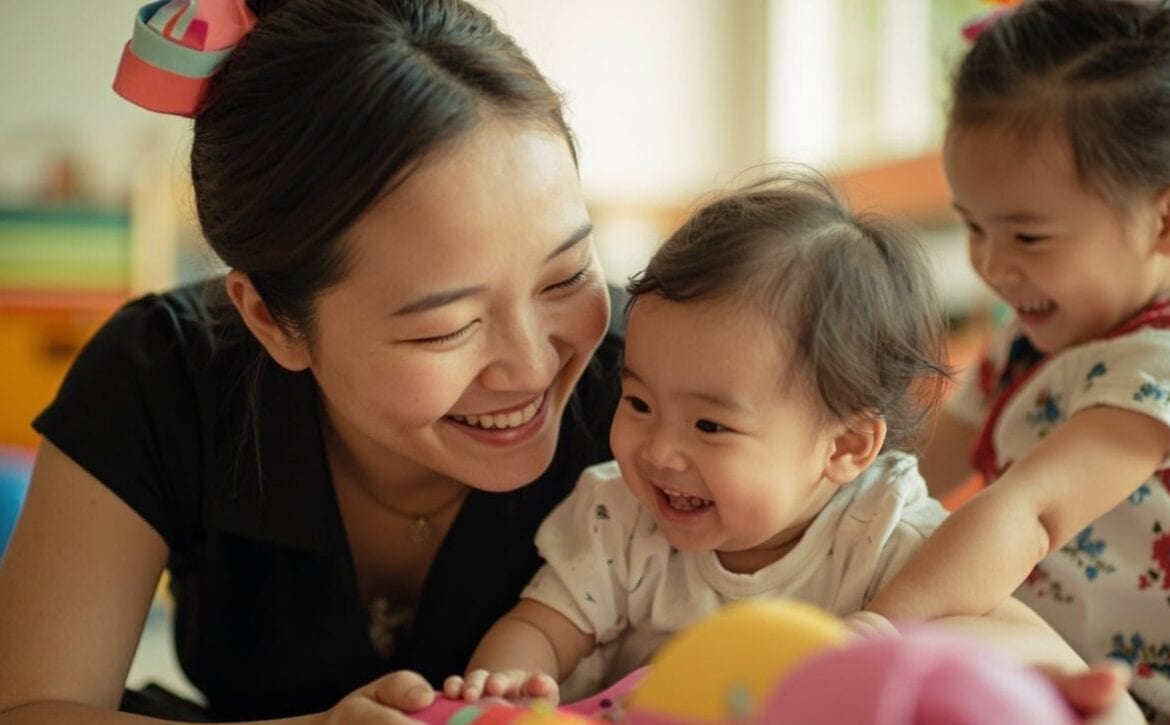
The Lasting Gift of Each Other: How Quality Childcare Shapes Sibling Bonds

Understanding the Hidden Architecture of Sibling Bonds

When we talk about siblings in the context of childcare, we usually talk about logistics. Drop-off schedules. Whether the centre can accommodate different age groups on the same day. How to manage the separate routines of a toddler and an infant. These are real concerns, and they deserve real answers.

But beneath the logistics lies something deeper. Siblings are not just people who happen to share a home and a set of parents. They are each other’s first peer relationship, their first testing ground for negotiation and compromise, for love that is not given by a grown-up but offered by someone who is also small, also learning, also figuring out how to be in the world.

That relationship does not develop in a vacuum. It develops in response to everything around it — the emotional environment of the home, the example set by parents, the rhythms and patterns of daily life. And increasingly, for Singapore children, the hours spent in the care of others.

Here is what many parents do not realise: the way a childcare environment is structured directly shapes the social-emotional skills that siblings need to connect with each other. It is not a side effect. It is not accidental.

When children are in a setting where trained caregivers understand child development, where the ratio of caregivers to children is low enough to allow genuine attention, where the daily rhythm gives children the emotional regulation they need before asking them to relate to others, something powerful happens. The children who walk out at the end of the day are not the same children who walked in. They have grown — not just in skills or milestones, but in their capacity to be with another person.

Think about what that means for siblings specifically.

When a younger child has spent the day in a warm, responsive environment where her needs were met not just physically but emotionally, she comes home less desperate. Less clingy. Less likely to compete for the attention that her older sibling also craves.

When an older child has spent the day learning to share, to wait, to express frustration in words instead of actions, to see himself as part of a group rather than the centre of the universe, he comes home more available. More generous. More ready to include his sister in his world instead of pushing her out of it.


What Quality Childminding Looks Like in Practice

The philosophy only matters if it shows up in the real world of your family. So let us be specific about what quality childcare actually looks like day to day.

In quality childcare, caregivers do not simply supervise children. They observe. They notice the child who is withdrawn and the child who is dominating. They notice when two children are circling each other with tension and when they are reaching for connection.

And they intervene in ways that teach.

A caregiver might redirect a toddler who is snatching a toy from his sibling, not by scolding but by kneeling down and saying, “I see you really wanted that. Let’s find another one for your sister.” That small moment of modelled fairness and language stays with children. They carry it home. They use it the next time a similar situation arises.

Or consider the child who has not yet learned to regulate big emotions. In a setting with high-quality caregivers, she is not left to escalate. She is held — verbally and sometimes physically — until she can find her footing again. This is not permissiveness. It is the opposite. It is taking her emotional world seriously enough to help her build the capacity to move through it.

When that child returns home to her brother, she is not a bundle of unmet needs waiting to explode. She is a child who has been soothed and can now soothe. Who has been seen and can now see.


The Evening Reunion: A Different Kind of Coming Home

There is a moment that every parent with multiple children knows well. It is the evening reunion. You have been apart all day. The children have been in childcare. You have been at work, managing your own world, counting the hours until you can hold them again. And then you are all together, and something interesting happens.

For siblings in quality care, the evening reunion is different. It is not a competition to see who can reach you first, who can tell their story loudest, who can claim the most of your attention before the other has a chance to speak.

Of course there is excitement. Of course there are squabbles. This is real life, not a highlight reel. But the texture of that time together is shaped by what happened during the hours apart.

When children have been in an environment where their individual needs were met, they return to each other differently. There is less scarcity. Less grasping. Less of the “I need this and if you take it, I have nothing” mentality that fuels sibling rivalry.

Instead, there is something closer to abundance. Each child has had his or her own morning, their own discoveries, their own small triumphs. They come to the reunion with something to share, not something to defend.

A Story from a Singapore Mother

A mother told me about watching her two daughters after a day apart. She had expected the usual chaos, the bickering over who got to sit next to her, the competing demands.

Instead, her older daughter held out a leaf she had found at childcare and said, “Look what I found for you.” Her younger daughter, instead of grabbing, simply smiled and said, “Can we put it in our garden?”

They spent the next twenty minutes building a tiny garden together on the balcony, talking and laughing and collaborating. The mother sat on the couch and watched, barely breathing, because she had not seen them this way in months.

And she realised, with something like wonder, that what had changed was not her children. What had changed was the day they had been given.


Understanding and Preventing Attachment-Disrupting Conflict

Of course, siblings fight. Anyone who has spent more than five minutes with two children knows this. Fighting is not the problem. Fighting is normal. What parents worry about is the quality of the fighting.

There is the desperate, attachment-disrupting kind that leaves both children wounded and reaching for the same parent to make them whole. And there is the ordinary, developmental kind that teaches children how to navigate disagreement and come out the other side still connected.

Quality childcare addresses the first kind.

When children are chronically unregulated because their environment does not meet their needs, every interaction becomes a potential catastrophe. The younger child takes a toy and the older child lunges — not because she is cruel but because she is depleted. She has nothing left. Every interaction is a zero-sum game because she has never experienced enough to believe that there is enough.

But when children are in environments where they are consistently seen and responded to, where the caregiver-to-child ratio is low enough to allow genuine attunement, where the day’s rhythm gives space for both stimulation and rest, something shifts.

Children still fight. They still grab and shove and say unfair things. But they recover faster. They apologise. They find their way back to each other. Because they have the internal resources to do so.

This is why the ratio matters so much. In settings where caregivers are stretched thin, where one person is responsible for too many children to notice the small moments of tension before they escalate, children do not get the scaffolding they need to develop these skills. They learn to fight harder because that is the only language they know.

In settings like those supported by the ECDA Childminding Pilot, where ratios are kept to a maximum of one to three for infants, caregivers can do what they are trained to do. They can observe, intervene, model, and guide. They can help each child feel secure enough to relate to their siblings from a place of strength rather than scarcity.


The Skills Siblings Teach Each Other

When we talk about preparing children for school, we usually focus on cognitive skills. Letters, numbers, the ability to sit still and follow instructions.

But the children who thrive in school are not necessarily the ones who arrived with the most knowledge. They are the ones who arrived with the social-emotional skills to navigate a world full of other children.

  • The ability to share
  • To take turns
  • To resolve conflicts without a teacher present
  • To see another child’s perspective
  • To be a friend

These skills are developed, first and most powerfully, in sibling relationships. A child who has learned to negotiate with a brother or sister, who has experienced both the frustration and the joy of collaborative play with a peer, who knows what it feels like to be hurt by someone you love and to forgive them and to play together again — that child has something invaluable.

She has relational intelligence. She has practice in the hardest and most important skill of all: being human with other humans.

Quality childcare builds this. Not by replacing sibling time, but by filling each child up so they have more to offer when they come together.


Why Sibling Bonds Carry Special Weight in Singapore

In Singapore, the sibling bond carries a particular significance shaped by our cultural context.

In multigenerational family structures, which remain common across Singapore despite changing household patterns, siblings are often expected to carry responsibilities for each other and for their extended family. They are not just companions in childhood. They become co-keepers of a family legacy, partners in caring for aging parents, the people you trust most in the complexity of modern Singapore life.

This is not a burden. For many Singaporeans, it is a privilege and a source of profound meaning. But it requires a foundation of genuine connection, not just obligation.

That foundation begins in childhood. It begins in the small moments, the daily rhythms, the way children learn to relate to each other before they learn to relate to anyone else. And it is shaped, in part, by the quality of care they receive when they are not in your direct presence.


How EduNanny Singapore Approaches Sibling Relationships

EduNanny understands that children do not develop in isolation. They develop in relation — to caregivers, to parents, and to the siblings who share their world.

When EduNanny’s caregivers engage with your children, they are not just caring for individuals. They are caring for a family system. They are helping each child build the internal resources they need to show up well for the others.

Through the ECDA Childminding Pilot, EduNanny provides home-based and community-based options that keep ratios low and attention high. Their caregivers are trained not just in the mechanics of infant care but in the relational work that makes sibling bonds possible.

They understand that every interaction with your child is also an interaction with your family, with the siblings waiting at home, with the future you are building together.

What Parents Can Expect

EduNanny’s commitment to transparency means you know what is happening in those hours apart. Communication is built into their approach, with measures in place to offer parents additional reassurance.

But more than the logistics, it is the philosophy that matters. The belief that children develop best in relationship. That siblings are partners in each other’s growth. That the hours you spend apart can be hours of building rather than hours of loss.

Practical Support for Singapore Families

The practical elements matter too. Monday to Friday care blocks that fit the rhythm of working life in Singapore. Fees structured to be affordable within the pilot framework. The ability to use CDA and Baby Bonus funds, because raising children is expensive and every pathway to support matters.

These are not secondary concerns. They are part of how EduNanny makes quality care accessible to families across Singapore, because every child deserves the opportunity to develop the skills that make sibling bonds possible.


Making the Choice: What to Look For

If you are researching childcare options for your family, here are the questions that matter most when it comes to sibling relationships:

  1. What is the caregiver-to-child ratio? Lower ratios mean more attention, more observation, more intervention at the moments that matter.
  2. How do caregivers handle conflict between children? Look for settings where caregivers model language and fairness rather than simply separating children or issuing commands.
  3. What does the daily rhythm look like? Quality care includes time for rest, for unstructured play, for the emotional regulation that children need before they can relate well to others.
  4. How do caregivers communicate with parents? Transparency about what happens during the day allows you to reinforce at home what is being built at childcare.
  5. How do the children seem after a day of care? The best indicator is your own observation. Do your children come home expanded or depleted? Do they have something to share or something to defend?

The Quiet, Lasting Gift of Each Other

When you choose childcare, you are not just choosing a safe place for your children while you work. You are choosing an environment that will shape who they become — not just as individuals, but as siblings. You are choosing whether they will come home depleted and desperate, fighting over scraps of your attention, or whether they will come home ready to play together, to share, to be the allies you have always hoped they would be.

This is not a small thing. It is, perhaps, one of the most important things you will decide in these early years.

You are building something that will last. A family. A set of relationships that will outlast your own lifetime and carry forward into futures you can only imagine. The choices you make now, in these early years, are part of that building. They matter more than you know.

Quality childcare does not guarantee that bond. Nothing can guarantee it. Sibling relationships, like all relationships, have their own life, their own trajectory, their own moments of fracture and repair.

But quality childcare creates the conditions for that bond to flourish. It fills each child with what they need to be generous rather than grasping. It teaches the skills of relationship that siblings practice on each other for the rest of their lives. And it returns your children to you each evening not diminished by the time apart but expanded by it — ready to play, ready to share, ready to be the siblings you always hoped they would become.

EduNanny Singapore stands with you in that work. Not as a replacement for what you provide, but as a partner in creating the conditions your children need to grow into the people they are meant to become.

People who can love. Who can connect. Who can be, for each other, what siblings are meant to be: not just family by chance, but family by choice, chosen again and again across the years.

That is what quality childcare offers your children. Not just care. Not just safety. But the quiet, lasting gift of each other.


Ready to explore what quality childminding could mean for your family?

Reach out to EduNanny Singapore to learn about their ECDA Childminding Pilot options, discuss your family’s needs, and discover how they support sibling bonds alongside individual development.


edunanny-06316381fe6bcf6a001141f471d53f52
April 17, 2026

The Tiredness Sleep Cannot Fix and Why Restoration Changes Everything

There Is a Kind of Tired That Sleep Does Not Fix

You know the one. It settles in your chest before the sun is fully up, when the weight of another day of caring for a small person presses against you and you cannot remember the last time you felt genuinely light. It sits in the space between you and your partner, where conversations have become logistics and intimacy has become logistics, and somewhere along the way the two of you became excellent co-managers of a household and forgot how to be lovers, how to be friends, how to be anything other than exhausted parents running on fumes and determination.

This tiredness is so common among Singapore parents that we have almost normalised it. We speak of it in whispers at playdates, in jokes that are only half-joking, in the way we say “managing” when we mean barely surviving. We have made peace with the depletion because we believe this is simply what parenting requires of us.

But what if this exhaustion is not a badge of honour but a warning sign? What if the very depletion you are enduring in the name of your family is the thing that is costing your family the most?

This is not a comfortable question. But it may be the most important one you ask yourself this year.


The Cultural Story We Tell Ourselves

There is a narrative woven deeply into how Singapore thinks about parenthood, and it goes like this: a good parent gives everything. A good parent sacrifices. A good parent does not need help because needing help means you are not enough.

This story lives in our grandmothers’ warnings about “leaving the child with strangers.” It lives in our mothers’ generation who stayed home or juggled careers with silent suffering because asking for support felt like an admission of failure. It lives in the way we apologise when we say we need a break, as though needing a break is something to be sorry for.

And so Singapore parents carry a quiet shame about needing childcare. Not the loud, obvious shame that announces itself, but a low hum of inadequacy that says: if I were a better parent, I would not need this. If I loved my child more, I would find a way to do this alone.

This shame is not your shame. It is a legacy — a story passed down through generations that conflated self-sacrifice with love and mistook needing help for weakness. Understanding where it comes from does not make it disappear, but it does create space to question whether it serves you anymore.


What Parental Depletion Actually Costs

Think about the last time you were truly present with your child. Not partially present — managing a toddler while mentally drafting an email, not physically in the room but emotionally elsewhere. I mean truly, fully present. When was that? How did it feel? Was it rare? Was it precious precisely because it was so difficult to access?

That presence is not a luxury. It is the thing your child needs most from you. And it is the thing that becomes impossible when you are running on empty.

When your nervous system is perpetually activated by exhaustion and stress, you cannot access the calm, regulated presence that allows a child to feel safe. You cannot be the steady anchor your child needs when you are barely keeping your own head above water.

A depleted parent is not a gift to a child, no matter how much that parent loves them. A child does not need a martyr. A child needs a parent who can show up, again and again, with patience and warmth and capacity. And that parent must first be restored in order to give what they have.

The hidden costs that add up:

  • Your health: Chronic exhaustion affects immunity, mood regulation, and cognitive function. The body keeps a record.
  • Your marriage: When both parents are depleted, the relationship that brought you together fades into logistics and fatigue.
  • Your presence: You may be physically present but emotionally absent — and children feel this more than we realise.
  • Your selfhood: You forget who you were before becoming a parent, and that forgetting has its own grief.
  • Your child’s experience: Children are exquisitely attuned to our stress. They absorb our anxiety through their nervous systems before they have words to describe what they are feeling.

The exhaustion you are carrying is not just yours. It flows through every relationship in your home.


The Counterintuitive Truth: Why Restoration Is the Best Gift to Your Child

Here is what most childcare conversations miss: they focus on what the childcare provider offers the child. And yes, safety and stimulation and development matter. But the deeper, less discussed gift of quality childcare is what it offers the parent.

Quality childcare does not replace you. It restores you.

Think about what becomes possible when you are no longer running on empty. When you have had a morning where you could drink your coffee while it was still warm. When you could shower without a child crying on the other side of the door. When you could have a conversation with your partner that was not about whose turn it was to do the night feed. When you could remember who you were before you became a parent, and maybe even spend a few hours with that person, and then return to your child carrying something other than resentment and exhaustion.

What does that parent look like when they come back? They are more patient. They are more playful. They are more present. They are more capable of meeting their child’s needs — not because they have given more hours, but because they have given better hours, hours where they are actually there.

A child whose parent is restored does not just receive attention. They receive presence. They receive the calm, attuned, emotionally available parent whose nervous system can hold space for theirs. That is not a small thing. That is everything.

There is another relationship that quality childcare restores, and we do not talk about it enough. Your partnership. Singapore parents are often so consumed by the demands of young children that they forget they were a couple before they were parents. They forget that the relationship between the two adults in the home is also infrastructure, and that infrastructure requires maintenance.

What happens when one parent, or both parents, are restored? The relationship that was fading comes back into focus. The partnership strengthens. And a child who grows up watching their parents in a healthy, connected relationship receives something no amount of individual parental attention can replace: a model of what a loving adult relationship looks like.


What Quality Childminding Actually Looks Like

If you are considering childcare options in Singapore, it helps to know what “quality” actually means in practice — not as a marketing term, but as a standard that serves both your child and your peace of mind.

Signs of Quality Childminding

  • Low ratios: For infants, fewer children per caregiver means more individual attention and safer, calmer care.
  • Consistent routines: Predictable schedules help infants feel secure and help parents plan their restoration time with confidence.
  • Transparent communication: Regular updates, open dialogue, and accessible feedback loops build trust over time.
  • Trained and vetted caregivers: Background checks, relevant certifications, and ongoing training matter.
  • Safe, clean environments: Whether home-based or centre-based, the space should meet basic safety and hygiene standards.
  • Partnership orientation: Quality childcare providers see themselves as working with parents, not replacing them. They respect your parenting choices and keep you informed.

Questions to Ask Any Childcare Provider

  • What is the child-to-caregiver ratio, especially for infants?
  • What is your approach to communication with parents?
  • What training do your caregivers receive?
  • What does a typical day look like for the children in your care?
  • How do you handle medical situations or emergencies?
  • What is your policy on parents visiting or calling during care hours?
  • How do you support parents who are struggling with the transition?

The right fit matters. Quality childcare is not about finding the most expensive option or the one with the most impressive facilities. It is about finding a partner who understands what your family needs and who can provide the reliability and warmth that allow you to actually rest.


EduNanny Singapore: Built Around Parental Restoration

EduNanny was built on a simple but often overlooked understanding: that taking care of the people who take care of others is not indulgence but wisdom. It is not a compromise of parental devotion. It is parental devotion in its most sustainable, most honest, most loving form.

EduNanny does not replace you. EduNanny restores you — back to yourself, to your child, to your partnership. It is the infrastructure that allows the parent to remain whole.

Here is what that looks like in practice for Singapore families:

  • Home-based childminding through the ECDA Childminding Pilot Programme, offering a familiar, intimate environment rather than a centre setting
  • Low ratios of up to one to three infants, ensuring focused, attentive care
  • Monday to Friday care blocks that give parents real, consistent windows of restoration
  • Affordable fee structures designed with Singapore family budgets in mind
  • CDA and Baby Bonus usability already integrated — because financial ease matters when you are making this choice
  • Transparent communication and CCTV measures where deployed, so trust is not an abstraction but a lived reality
  • Support through decision-making — because choosing childcare should not be harder than it needs to be

If everything you have read so far resonates, but you still feel uncertain, that is not weakness. That is wisdom. The decision to involve someone else in your child’s care is significant, and it deserves careful thought.

How do I know I can trust someone with my child?

Trust is built through transparency, not promises. Ask about vetting processes. Ask about training. Ask to see how caregivers interact with children. A quality provider will welcome these questions because they know that trust is earned, not assumed. At EduNanny, CCTV measures where deployed give parents visibility into daily care, and open communication channels mean you are never left wondering what is happening while you are apart.

Will my child adjust? Will this harm our bond?

Children are adaptable, and secure attachment is built through consistent, warm responsiveness — whether that comes from one caregiver or two. What does harm attachment is a parent who is perpetually depleted, irritable, and emotionally absent. Quality childcare supports your child’s development by supporting you first. A restored parent returns with more patience, more presence, more to give. That is what children feel. That is what matters.

I feel guilty even thinking about this.

The guilt you feel is not information about your character. It is a relic of a cultural story that measured parental worth by self-sacrifice. You are allowed to need help. You are allowed to want space. You are allowed to be a whole person with needs, not just a parent with obligations. The guilt may not disappear overnight, but it softens when you begin to see — in your own experience — that restoration is not taking away from your child. It is giving back to them the parent they actually need.

Is this affordable? How do Singapore families manage?

Cost is a real concern, and it should be discussed honestly. EduNanny structures its fees to be accessible, and CDA and Baby Bonus funds can be used — which already helps many families manage the expense without additional strain. The question to ask is not just “can we afford this?” but “can we afford not to?” — given what depletion is costing your health, your marriage, and your relationship with your child.

The Thomas AI Chatbot available through EduNanny helps parents navigate the questions and uncertainties that come with finding the right fit, answering questions in real time and supporting parents through the decision-making process with clarity.


You Have Permission: Your Next Steps

To the parent who has been carrying this depletion quietly, who has been wondering if something is wrong with them because they are struggling when everyone else seems to be managing, who has been apologising for needing help when they should have been celebrated for having the wisdom to know they need it — this is for you.

There is nothing wrong with you.

The exhaustion you are feeling is not proof of your love. It is proof that you have been running on a system that was never designed to sustain itself without support. The guilt you carry about needing childcare is not a sign of moral failure. It is a relic of a cultural story that no longer serves you or your family.

You are allowed to need help. You are allowed to want space. You are allowed to be a whole person with needs, not just a parent with obligations. You are allowed to be restored.

If you recognise yourself in this article — if the exhaustion is real, if the depletion is costing more than you can sustainably bear — here are some steps you can take, at whatever pace feels right for you.

  1. Give yourself permission to name what you need. The first step is acknowledging that something needs to shift. You do not need to have the full solution yet. You just need to stop pretending that what you are doing is enough when it is clearly not.
  2. Start exploring, without commitment. Research options. Ask questions. Visit providers if you can. You are gathering information, not making a final decision. Let yourself learn without pressure.
  3. Talk to your partner honestly. If you are in a partnership, have a real conversation — not about logistics, but about how you are both doing. About what you have lost. About what you need. Often, when both partners name the depletion, the path forward becomes clearer.
  4. Consider what “restored” would actually look like for you. Not as an abstract concept, but specifically. What would mornings feel like? What would you do with that time? How would you feel returning to your child? Sometimes imagining the outcome makes the choice easier.
  5. Reach out to EduNanny when you are ready. Not before you are ready, but when you are. The Thomas AI Chatbot is available now to answer questions, provide clarity, and help you understand your options. There is no obligation. There is only information.

When you allow yourself this, something extraordinary happens. The guilt softens. The exhaustion lifts — not entirely, because parenting is hard and life is hard, but enough. Enough to show up more fully. Enough to be more patient. Enough to remember who you are. Enough to love your child not just with intensity but with presence. Enough to be a partner, not just a co-parent. Enough to be the parent your child actually needs, which is not a perfect parent, not a martyr parent, but a restored one.

The family that begins with the restored parent is a family that has chosen well. It is a family that has understood that infrastructure matters. That taking care of the people who take care of others is not indulgence but wisdom.

You have permission. You have always had permission. Now it is time to give yourself permission to believe it.


If you are ready to explore what restoration could look like for your family, EduNanny Singapore is here. Not to take your place. Not to replace what you give your child. But to give you back what you need to keep giving.

Connect with EduNanny to learn more about the ECDA Childminding Pilot Programme, explore options that fit your family’s needs, or simply have a conversation about what comes next. The Thomas AI Chatbot is available to answer your questions with no pressure and no obligation.

Because you deserve to be whole. And so does your family.

edunanny-06315ffe2392e5e423f6746888f458b4
April 17, 2026

The First 30 Days of Childcare: A Singapore Parent’s Guide

Quick Summary: The First 30 Days in Brief

If you are reading this at 11pm on day three, exhausted and second-guessing everything—here is what you need to know right now:

  • Day one is not the hardest day. It has adrenaline. The hardest days are usually three through ten, when the novelty wears off and your child knows enough to miss you.
  • A calm child at pickup is not a red flag. It means their nervous system is still adapting. The child who cries when they see you is not broken—they are releasing held tension. Both responses are normal.
  • The evening of day one is often the hardest for parents. When the house is quiet and your child is asleep, the feelings you could not process while moving finally arrive. This is grief, not failure.
  • The middle weeks are not regression—they are deepening. Your child is forming a more sophisticated understanding of absence and presence. This is development, not damage.
  • You should expect more communication in the first weeks, not less. Specific, honest updates are how trust is built. “Everything is fine” is not a handoff. “She cried for twelve minutes, then let me hold her, and by snack time she was watching the other children” is a handoff.
  • Your feelings are data, not dysfunction. Exhaustion, guilt, relief, grief—these are all reasonable responses to a significant life change. You are not too attached. You are attached exactly the right amount.
  • The first month is about whether this arrangement works for your whole family. That question deserves honest answers.

If nothing else, remember this: the first thirty days are not a test of whether you should have made this choice. They are the beginning of living with it—and building something that works.


What You Will See at Pickup on Day One

You arrive at the door and your child is playing. Not crying. Not withdrawn. Playing. And instead of relief, you feel something unexpected—a cold flicker of suspicion. If they are this fine, what happened after you left? Are they performing? Are they suppressing? Are they saving their real distress for you, the person they trust enough to fall apart in front of?

Let us stop this story where it starts to spiral and tell you what is actually happening.

Your child is not fine in the way an adult is fine when they are holding it together. Your child is fine in the way a child who is still in process is fine. The stress hormones that flooded their system during your departure are still circulating. The caregiving environment is still novel enough that it occupies their full attention. The room smells different. The light comes from a different angle. There is a toy they have never seen. And in this early window, the nervous system is doing what it evolved to do: it is scanning, adapting, learning.

Then you arrive. You are familiar. You are safety. And the body, which has been holding tension all day in ways the face may not show, releases. The child who was playing calmly may suddenly cry when they see you. Not because something is wrong. Because something is finally, profoundly right. You are here. The alarm is over. And now the feelings that were held can come.

The Evening Reunion as Information

The evening reunion is diagnostic—not in a clinical sense, but in the sense that it tells you what your child is building during the hours apart.

A child who is clingy and tearful after pickup, who wants to be held and does not want to eat dinner, who wakes more easily at night—they are telling you something important. They are telling you that they feel you strongly enough to let the held feelings go. They are telling you that your departure mattered to them, and so did your return.

This is not dysfunction. This is attachment language. And the fact that they can show you this means the system is working.


The Days No One Talks About

Day one is dramatic, but day three through ten is where most parents unravel. Day one has adrenaline. You are braced for it. The tears come and you expected them. You leave and you survive.

Then you pick up and the child seems okay and you go home and you make dinner and you sit down and you feel the full weight of what just happened. This is the evening of day one. For many parents, it is the hardest evening of the entire month.

Not because anything went wrong, but because there is finally space for the feelings you could not have while you were moving. The house is quiet. Your child is asleep or close to it. And you sit with the silence and you feel something that has no name because it is made of too many things at once:

  • Relief that they seemed okay.
  • Guilt that you felt relief.
  • Grief that your child spent their day without you.
  • Pride that you did something hard.
  • Fear that you made a terrible mistake.
  • Longing to go back and undo the morning.

This is normal. This is so normal that if you do not feel it, we would wonder if you were actually present for the day. You are grieving a change. Even a chosen change is a loss. Your child is not yours in quite the same way they were yours yesterday. They are becoming someone who has a world outside you. This is what you wanted. It is also what aches.

Why Days Three Through Ten Are Harder

Now the middle days arrive and the initial adrenaline is gone and the novelty has worn thin, and your child may protest more strongly than they did on day one. The logic goes like this: if they were crying more on day five than on day one, something is wrong. They must be suffering. I should remove them before the damage accumulates.

Let us reframe what you are seeing.

Day one crying is often surface crying. The shock of the new. The confusion of an unfamiliar environment. By day five, your child knows enough to know what is missing. They know this is a place where they eat and sleep and play and where a familiar-feeling person takes care of them. And they want you in a way they did not want you on day one, because now they have context for absence.

This is not regression. This is deepening. Your child is forming a more sophisticated understanding of the world, which includes a more sophisticated understanding of what they have and what they long for.

The child who seems withdrawn on day five is often not withdrawn in a concerning way. They are conserving. The nervous system has been working hard to regulate in a new environment. They may need more downtime, more quiet, more closeness with you in the evenings. The child who seems to have rejected food or sleep is often in a stress-response state that suppresses appetite. As the weeks progress and the environment becomes familiar, these systems recalibrate.

You are not watching damage accumulate. You are watching adaptation unfold. And adaptation is not linear. It goes forward and back and forward again, each cycle building a little more stability than the last.


What Great Caregiver Communication Looks Like

In these middle days, the relationship between you and the person caring for your child becomes the most important relationship in the transition.

The Handoff That Builds Trust

Here is what great handoff communication sounds like in the first month. It does not sound like reassurance alone. It does not sound like “everything is fine” delivered with a smile and a wave. It sounds like specificity:

“After you left, she cried for about twelve minutes, and then she let me hold her, and we read a book, and by the time snack came she was watching the other children. She ate half her biscuit, which is less than usual, but that tracks with her pattern on new days.”

That is information. That is partnership. That is a caregiver who was paying attention and who trusts you to handle the truth.

In the first weeks, you should expect more communication, not less. Not because anything is wrong, but because this is the window when alignment is built. The caregiver who calls you mid-morning to say “I wanted to let you know she’s been a little clingier this morning, but she ate well and we’ve been doing the songs you mentioned she likes”—that caregiver is building the trust that will carry you through the harder conversations later.

Questions to Ask in the First Weeks

The language to use with caregivers in the first weeks that builds trust and invites honesty:

  • “Can you tell me what her morning looked like? Not the highlights—what was the full shape of it?”
  • “When she was upset, what helped?”
  • “Did she seem like herself today, or was there something different about her that you noticed?”
  • “What’s one thing I can work on with her at home this weekend based on what you saw today?”

These questions invite specificity. They signal that you are a partner, not a passive recipient of reassurance. And they give the caregiver permission to tell you the truth.

Red Flags to Watch

If at any point you feel that the communication is being minimized, or that your concerns are being waved away, or that you are being made to feel like an overprotective parent for noticing what you notice—this is a red flag. A great caregiver welcomes these conversations. You should be able to have a real one.


What Thriving Looks Like at Thirty Days

You may be imagining a child who bounces through the door happy, separation-free, never looking back. And this child does exist, and if you have one, be grateful and do not worry that they do not seem to miss you enough. But this is not the only marker of a healthy transition.

Signs the Transition Is Working

  • Your child is showing a pattern of recovery. They may cry at goodbye. They may be clingy after pickup. But the recovery time is shortening. The protests are not escalating week over week. The middle of the day shows increasing engagement and ease.
  • Your child is not dissociating. They are not vacant or frozen. They are present, even if cautiously, even if with one eye on the door.
  • Your child is forming an attachment to the caregiver. This is not a betrayal of you. It is an expansion. You are still primary. But the caregiver is becoming a known, trusted figure in your child’s world.
  • Your child is sleeping and eating with increasing consistency. The body is learning the rhythms of this new environment. Stress hormones are normalizing. Appetite is returning.
  • You are feeling less frantic. Not because your feelings do not matter, but because the arc of the first month should move you, over time, from vigilance to understanding.

Signs That Require a Real Conversation

These are not subtle. If your child shows any of the following, do not dismiss them as adjustment:

  • Consistently refusing all food and water—not just eating less but actively distressed
  • Signs of physical distress: rash, unexplained bruises, severe changes in stool or sleep patterns
  • Not just clingy but seems afraid of a specific person or room
  • Regression that is escalating week over week, not showing any pattern of recovery
  • Appearing vacant, frozen, or emotionally flat rather than tired but engaged

These are not the behaviors of a child who is learning to separate. These are the behaviors of a child who may be unsafe or overwhelmed in ways that exceed the normal stress of transition. A quality caregiver will tell you about these things proactively. They will notice and document and communicate and work with you to adjust. This is what partnership means.


Speaking About You

In the first month, you are not just managing your child’s transition. You are managing your own. And most of the guidance available to parents is about the child, which leaves a significant gap, because parents in the first month are often as dysregulated as their children.

What You May Feel

Exhaustion. This is not metaphor. You are waking more at night, even if your child is not with you, because the nervous system is heightened. You are processing complex emotions during the day when you should be working. You are carrying fear and hope and grief simultaneously. Rest is not a reward for surviving. It is a requirement for thinking clearly.

Guilt. You may feel guilty for choosing this, guilty for feeling relief when the drop-off is over, guilty for not feeling guilty enough, guilty for the times you did not linger, guilty for the times you lingered too long. Guilt is the voice of love trying to make sense of a loss, even a chosen one. Let it be there and keep doing what you are doing. The child you love is not being harmed by quality care.

Relief. If you feel relief when your child is in care, you are not a bad parent. You are a human being who needs time to work, to think, to be an adult in the world without a small person attached to your leg. Relief is not betrayal. It is recognition that you chose this for reasons that are real and valid.

Grief. This one is least named and most important. You are losing something. The all-day presence of your child. The unmediated knowing of their every need. The version of your life where they were entirely yours. This is a real loss, and the grief you feel is proportionate to what you are losing. It does not mean you made the wrong choice. It means you are in a real transition. Name it. Let it move through you. It will not stay forever.

When to Pay Closer Attention

By the end of the first month, these feelings should be settling, not because the transition is easy, but because you are becoming accustomed to the new shape of your life. If they are not, if you are still in a state of persistent distress, this is worth examining—not as a failure, but as information.

Sometimes the fit is not right. Sometimes the caregiver is not the right match. Sometimes the timing is genuinely off. The first thirty days are not just about your child’s adjustment. They are about whether this arrangement can become a sustainable partnership. And that question deserves honest answers.


What EduNanny Was Built For

EduNanny was designed with a specific understanding of what Singapore parents need and what Singapore children deserve—not as a generic childcare solution, but as a response to the specific pressures, aspirations, and realities of families here.

The ECDA Childminder Pilot represents something important: recognition that infant care is not a one-size-fits-all architecture, and that families need pathways that are flexible, accessible, and grounded in quality. EduNanny operates across these pathways—home-based care where the child is in a familiar environment with a dedicated caregiver, and community or centre-based care where a small group setting offers structured learning alongside relational warmth.

The Ratio That Makes the Difference

Up to one to three for infants. This is not an industry standard that happens to be applied here. This is a design choice that prioritizes attention.

In a room where the ratio is one to three, every cry is heard. Every meal is observed. Every developmental leap is noticed. There is no child falling through the cracks of a crowded schedule because there are not enough eyes and hands. This ratio is how attachment is protected in a group context. This is how trust is built—not just with you, but with your child, who learns in these early weeks that the people who care for them are available, responsive, and consistent.

Accessibility and Partnership

The fee structures within the pilot are designed to be affordable. Singapore parents should not have to choose between quality care and financial sustainability. CDA and Baby Bonus are usable here, because we believe that government support should flow toward the families using it, not be absorbed by administrative complexity. Monday to Friday care blocks give families the predictability they need to plan, to work, to build a life around the rhythm of reliable childcare.

But beyond structure, EduNanny is built on a philosophy of partnership. The first thirty days are not a handoff. They are a beginning. And beginnings require more than a tour and an orientation packet. They require someone who will walk the path with you. They require communication that is specific and honest, transparency that goes beyond policy into presence, caregivers who understand that the child in front of them is someone’s whole world and who take that seriously every single day.

Most parents receive one of two responses when they express anxiety about the transition. Either the anxiety is validated but not resolved—”I understand, this is so hard”—without practical guidance. Or it is dismissed—”they’ll be fine, children are resilient”—without acknowledgment of the parent’s actual experience.

EduNanny’s approach is neither of these. It is: this is hard, and here is exactly what is happening, and here is what requires action, and here is what requires patience. It is specific. It is honest. It is grounded in developmental understanding and delivered with warmth.

The caregiver who tells you that your child cried for forty minutes and then ate lunch and then fell asleep on a specific mat in a specific corner after a specific song—that caregiver is giving you something more valuable than reassurance. They are giving you a map. They are showing you the shape of your child’s day so that you can hold it in your mind and let the uncertainty shrink.

This is what EduNanny is building: not just a service, but a partnership that begins in the most vulnerable window of your family’s life and holds you through it.


The Guided Walk

You stood in the doorway that morning. You felt your child’s hand in yours, warm and trusting. You did not know what the day would hold for them, and that not-knowing was a kind of agony. You left. You drove home or back to work and the day stretched long and you thought about them.

Now imagine a different version of that same morning.

You stand in the doorway. You feel your child’s hand. You know, because you have been told what to expect, that the next hours will have a shape. You know that your child may cry and that crying is not harm. You know that the caregiver will watch, will document, will notice. You know that at pickup, your child’s behavior will tell you something real about how the day went. You know that the evening will be hard and that this is normal. You know that you can call, that communication is open, that you are not navigating this alone.

This is what EduNanny offers. Not certainty. Never certainty. But clarity. The clarity that comes from being guided through the hardest thirty days by people who have seen hundreds of families through this window and know the difference between adjustment and alarm, between separation anxiety and genuine distress, between a parent who needs reassurance and a parent who needs a real conversation.

You are doing something hard and important. You are entrusting your child to others while the nerve endings of that relationship are still raw and new. You are trusting the process even when you cannot see the outcome. You are doing what good parents do—finding the best path forward when no path is perfect.

EduNanny is here for the first thirty days and the thirty days after that and the thirty days after that. EduNanny is here because we believe that the transition into childcare should not be a leap into the dark. It should be a guided walk.

And at the end of it, when your child runs to their caregiver with the easy familiarity of someone who knows exactly where they are and who loves them—when you can leave without fear because you trust what happens in your absence—you will know that the first thirty days were not just survived. They were the beginning of something that will carry your child forward for the rest of their life: the ability to separate and return, the ability to trust and be trusted, the ability to be known by people beyond their family and to carry those relationships with strength.

This is what EduNanny is building. This is why we are here. And we would be honored to walk this path with you.

If you are ready to explore what the first thirty days could look like with a partner who understands, we invite you to begin a conversation with EduNanny. Our team is here to answer your questions, walk you through our approach, and help you determine whether we are the right fit for your family—no pressure, no obligation, just honest conversation about what you need.

Begin your conversation with EduNanny today.

#First30Days #SingaporeChildcare #InfantCareSingapore #ChildminderSG #EduNannySG #StartingChildcare

edunanny-06315c99922c65a334268bbe7006d4a7
April 17, 2026

What Quality Childcare Builds in Your Child’s Formative Years

What Quality Childcare Actually Builds

Before we go deeper, here is what research and careful observation tell us about the developmental territory your child enters when they spend their mornings in a quality care environment:

  • Peer awareness and social navigation — learning that other children have intentions, preferences, and responses different from their own
  • Emotional vocabulary and self-regulation — the scaffolding that teaches children their feelings can be named, held, and moved through
  • Curiosity and investigative disposition — building a relationship with learning itself, discovering they are capable discoverers
  • Belonging beyond the family — the identity-shaping experience of being part of something outside home
  • Emerging selfhood — revealing their temperament, learning style, and who they are beginning to become

These are not abstractions. They are real, observable, documented aspects of child development that unfold in the hours your child spends in quality care. Understanding them does not replace the comfort of seeing your child directly — but it offers something different and perhaps more valuable: a window into what is actually possible in those morning hours.


The First Weeks: Arrival, Observation, and the Beginning of Peer Awareness

Consider a child who has been in a quality childcare setting for perhaps three or four weeks. In the earliest days, this child did what most new children do: they watched. They stayed close to the caregiver, learning the geography of the room through observation. The toys. The light from the windows. The rhythms — the song before snack, the predictable sequence of the day that very young children find so deeply reassuring because it tells them the world is organized, the world is knowable, the world is safe.

And then, gradually, something shifts.

The child begins to venture further from the familiar anchor of the caregiver’s presence. They approach another child. Not to play, not yet — but to be near. To watch. To understand this other small person who also inhabits this space.

This is the beginning of peer awareness. It is one of the most significant developmental thresholds a child crosses in those first weeks and months of childcare enrollment. The child is learning, with their whole sensory and emotional self, that the world contains others. That other children have intentions, preferences, responses. That sharing space with another person is both possible and complicated. That another child might take a toy and that this matters.

The Small Social Discoveries That Shape Development

The social learning happening in quality childcare rooms is subtle but profound. A child learns, through repeated experience, that:

  • Other children have wants that differ from their own
  • Space must sometimes be shared, sometimes negotiated
  • Asking works differently than taking
  • The response of another child is not always predictable
  • Conflict is not the end of relationship — it is often the beginning of understanding

In quality care environments, there are adults present who understand what is happening in these moments. Adults who do not rush to solve every conflict, who do not swoop in and redistribute every toy, but who are paying attention — who understand that the small frustration of a taken block is also an invitation to learn. To feel. To practice. To discover that emotions, even uncomfortable ones, can be survived, named, and moved through.


Emotional Vocabulary and Self-Regulation: Building Internal Architecture

Children in quality childcare do not simply play. They build. Not just towers of blocks, but internal architectures of feeling and responding that will serve them for the rest of their lives.

Consider a Tuesday morning. A child is building with wooden blocks. Another child approaches and, without understanding the social contract yet, reaches for the base of the tower. It falls. The first child freezes.

Then — depending on many factors, including the temperament that was already visible from infancy, the support they have received in learning to regulate, the quality of the environment around them — the child does something. Cries. Protests. Reaches for the caregiver. Or perhaps, if they have been in this environment long enough and observed enough modeling, perhaps they pause, look at the other child, and say something like “My tower.”

Simple. A claim. A beginning of advocacy. The start of understanding that their own wants and needs have voice and weight.

In a high-quality environment, a caregiver notices this moment. And what happens next matters enormously. The caregiver does not diminish the feeling, does not say “it’s just a tower, don’t worry.” They acknowledge what happened. They help the child put words to what they feel. They create a small, bounded space where the social complexity of the moment can be processed — and where the child learns, implicitly and explicitly, that feelings are not too big, that adults can help, that the world can hold both the frustration and the continuation of the morning.

Self-regulation does not mean a child who never cries or never needs help. It means a child who is developing:

  • The ability to tolerate frustration without falling apart
  • The understanding that big feelings are survivable
  • The habit of reaching for a trusted adult when overwhelmed
  • The vocabulary to express what they are experiencing
  • The trust that their feelings will be received, not dismissed

These are not skills that can be taught in a single lesson. They are built slowly, through hundreds of small experiences, in environments that have the time and attention to hold them.


Curiosity, Belonging, and Emerging Selfhood

There is another dimension to this environment that deserves attention. It is the dimension of curiosity and discovery — and the conditions that make them possible.

Children are, by nature, investigators. Given an interesting object, a child will spend extraordinary amounts of time examining it. Turning it. Testing its weight, its texture, its sounds. Wondering what happens if it is dropped, thrown, hidden, given to someone else. This is not wasted play. This is cognition in action. This is the infant and toddler brain building models of how the world works.

In a high-quality childcare environment, this curiosity is not interrupted by the need for efficiency or the demands of a large group. Small ratios matter here — the 1-to-3 infant ratio in quality programs means that a caregiver can observe a child’s moment of deep engagement with a shell or a wooden spoon or a piece of fabric and recognize it for what it is: a learning moment. Can let it continue. Can perhaps offer a quiet extension — another object of similar texture, a word for what the child is experiencing — without disrupting the flow.

When children have this kind of environment — predictable rhythms that create security, warm caregivers who serve as reliable home bases, and rich materials that invite investigation — they build something precious. They build a relationship with learning itself. They learn that the world is interesting, that exploring is rewarding, that they are capable investigators of their own reality, that asking questions leads to discovery, and that adults support their curiosity, not just their safety.

Belonging Beyond the Family

Belonging is perhaps the least discussed and most important thing that quality childcare offers. Not belonging in the superficial sense — not just being in a place — but the deep, identity-shaping experience of being part of something beyond the family.

For a child’s first years, the family is the world. Mother, father, grandparents, siblings — these are the humans who exist. And then, for many children, a new world opens. Other children. A caregiver who is not family but who is trusted. A room with particular smells, particular sounds, particular ways of doing things. The beginning of a life outside the home, with its own textures and demands and pleasures.

In quality childcare, a child begins to understand:

  • I am a person who can be in a group
  • I am a person who can share space with others
  • I am a person who has preferences, who can express them, who can negotiate them
  • I am a person who belongs in more than one place

The social confidence that grows from this experience is not trivial. It is the beginning of understanding oneself in relation to others — a skill that will be practiced and refined for a lifetime.

Seeing Who Your Child Is Becoming

Children are not blank slates when they enter childcare. They arrive with temperaments — some bold, some cautious, some intensely focused, some easily distracted. And in quality childcare, these individual differences are observed, noted, and supported.

A caregiver who is truly paying attention will notice that one child is an explorer, always seeking the new and novel — and the caregiver ensures there are materials and experiences that honor this tendency. Another child may be a systematizer, wanting to understand how things work, what goes where, the rules of the room — and the caregiver provides the structure and predictability this child needs to feel secure. A third child may be deeply relational, most alive in the moments of connection with another child or an adult — and the caregiver creates opportunities for these moments, facilitates the social engagement this child is reaching for.

This is what quality care means: seeing the child as an individual, not just as a member of a group to be managed. It is the recognition that every child has their own trajectory, their own rhythm, their own way of being in the world — and that a quality environment makes space for all of these.

What children reveal in quality childcare, when given the freedom and safety to do so, is who they are beginning to become. And when parents are given windows into this — through communication, through transparency, through the small daily reports that tell them what their child discovered today — they begin to understand their child more fully. Not as an extension of themselves, not as a project to be optimized, but as a distinct person, with their own inner life, their own way of growing.


What Quality Childminding Looks Like

Understanding what children experience in quality childcare is one thing. Recognizing it when you see it is another. For parents researching options in Singapore, here is what sets genuine quality apart.

The Environment Itself

Quality childminding environments share certain characteristics:

  • Predictable rhythms — children thrive when they know what comes next. A consistent daily sequence tells young children that the world is organized and safe
  • Rich, open-ended materials — natural objects, blocks, fabric, art supplies that invite investigation rather than dictate outcomes
  • Small, manageable spaces — environments where children can move freely without being overwhelmed
  • Warm, responsive adults — caregivers who are present, attentive, and emotionally available

The Caregiver’s Role

In quality care, caregivers are observers first, watching to understand each child’s interests and developmental trajectory before intervening. They are co-learners, genuinely curious about what children are discovering and interested in joining their exploration. They are emotional anchors, available for comfort, guidance, and the kind of calm presence that helps children regulate. They are intentional facilitators, creating conditions for learning without hovering or over-directing.

Why Small Ratios Matter

Small ratios are not a luxury — they are a prerequisite for the kind of attention we have been describing. When a caregiver is responsible for fewer children, they can notice the moment of deep engagement and let it continue. They can recognize the beginning of social negotiation and be present without solving. They can respond to distress with full attention rather than divided focus. They can build the kind of consistent, trusting relationship that allows emotional growth.


The EduNanny Approach: Creating Conditions for Growth

EduNanny Singapore operates within the ECDA Childminding Pilot, a framework that recognizes something important: that the early years deserve intentional, structured support, and that quality is not accidental.

The pilot offers pathways — home-based and community or centre-based — that give families options suited to their circumstances. The staffing ratios, with up to 1 to 3 infants, mean that the observational density we have been describing is actually possible. A caregiver in this environment is not stretched across ten children, managing safety, hoping for learning. They are present. They are watching. They are available to the small moment when it arrives.

The fee structures within the pilot are designed to make this access more possible for more families. CDA and Baby Bonus usability means that the financial architecture of Singapore’s family support system can be brought to bear on early care. Monday to Friday care blocks align with the rhythms of working parents, not as an afterthought, but as a recognition of real lives.

Across Singapore, families in the pilot have access to communication and transparency measures — the small daily updates that help parents feel connected to their child’s day. These are the windows we have been describing: the reports that tell you what your child discovered, who they played with, what they reached for.

None of this is the point, exactly. The point is what these structures make possible: the environment in which your child’s story unfolds. The ratios, the training, the communication, the oversight — these are the conditions that allow the moments we have been describing to happen. The tower falling and the child learning to say “my tower.” The curiosity that leads to deep investigation. The peer navigation that teaches other people exist and matter. The belonging that grows from being part of something beyond the family.


Addressing Your Concerns and Choosing Well

Understanding what happens in quality childcare is one thing. Sitting with the feelings of choosing it is another. Let’s address some of the concerns that live quietly in the minds of parents considering this decision.

“Am I abandoning my child?”

The early years are fleeting, and no parent who loves their child takes lightly the decision to share those years with others. This feeling is real and deserves acknowledgment. You are not abandoning your child. You are making a choice — often out of love, responsibility, and the recognition that providing for your family also matters — that opens a door rather than closes one.

“What if my child is unhappy?”

Adjustment takes time. Most children go through a period of settling — sometimes weeks — before they show their true experience in a new environment. What you want to look for is not immediate ease, but genuine engagement over time. Is your child beginning to show interest in the materials? Is there evidence of growing relationships? Is the caregiver attuned to your child’s particular needs? The settling period is information, not verdict.

“How do I know what’s really happening?”

This is why transparency matters. Daily updates, regular communication, opportunities to speak with caregivers — these are not extras. They are essential windows into your child’s experience. Quality programs understand that parents need to know, and they build this communication into their approach. Ask about it. Expect it.

“Can anyone really care for my child the way I do?”

No. And that is not the goal. Quality childcare is not a replacement for family — it is a complement. A supplement. A space where the child’s world expands. The question is not whether caregivers will love your child the way you do. It is whether they will provide something different and valuable: peer interaction, consistent rhythms, rich environments, and the kind of developmental support that family life, however rich, cannot provide in quite the same way.

Questions to Ask on Your Tour

  • What is the caregiver-to-child ratio, especially for infants?
  • How do caregivers support children during moments of conflict or distress?
  • What does a typical day look like — what rhythms and sequences are in place?
  • How do you communicate with parents about their child’s day?
  • What training do caregivers have in early childhood development?
  • How do you help children who are new and still adjusting?

What to Observe

  • The ratio of caregivers to children — does it feel manageable?
  • The emotional tone — do caregivers seem warm, present, and genuinely engaged?
  • The children’s behavior — do they seem comfortable, curious, at ease?
  • The environment — is it rich with materials that invite investigation?
  • The rhythms — is there a predictable sequence to the day?

Red Flags

  • Caregivers who seem rushed, stressed, or disconnected
  • Children who appear withdrawn, consistently distressed, or unstimulated
  • Environments that feel sparse, chaotic, or unsafe
  • Ratios that seem too high for meaningful individual attention
  • Resistance to your questions or lack of transparency about daily practices

Reframing the Choice: Not Sacrifice, But Opening

Choosing childcare is often experienced as a sacrifice. A giving up. A necessary absence from your child’s life during hours that feel precious and irreplaceable.

But consider reframing this choice — not as a sacrifice, but as an opening. You are not simply handing your child over to be managed. You are opening a door to a world where your child can encounter peers, explore with support, build emotional vocabulary with attentive adults, and discover aspects of themselves that family life, however rich, cannot provide in quite the same way.

You are giving your child access to the conditions that allow growth — predictable rhythms, warm relationships, rich environments, and small ratios that mean your child is seen, not just supervised.

Quality childcare, in the vision we have been describing, is not a substitute for family. It is a complement. A supplement. A space where the child’s world expands.

And the parent who chooses this — who makes this decision with care and thought and often considerable effort — is not giving something up. They are giving their child something that the child could not get anywhere else: a room in which to grow.

You will not see most of what your child builds in these hours. The social negotiations, the small triumphs, the moments of frustration that become moments of learning — these will happen in rooms you do not enter, in mornings and afternoons that unfold beyond your view.

But perhaps, in knowing what is possible in those hours — in understanding that quality childcare is not just a service but an environment for growth — you can rest in something deeper than reassurance. You can rest in wonder.

Wonder at who your child is becoming. Wonder at the small person inside that child who is navigating, discovering, learning to say “my tower” and “please” and “I want to try.” Wonder at the fact that even in your physical absence, your child is held — by trained and attentive caregivers, by a program designed to support development, by the conditions you chose for them.

Your child is having experiences right now that will shape who they become. Not because childcare is magic, but because the right environment, the right attention, the right conditions — these matter. They have always mattered. And in quality care, they are given the seriousness they deserve.

EduNanny Singapore understands this. Not as a slogan or a marketing position, but as a daily practice. The practice of watching children. Of recognizing what they are building. Of creating the conditions for them to grow into themselves.

That is what childcare can be. And that is what your child is experiencing, in the hours you are not there, when the door closes behind you in the morning.

That is the story worth knowing. That is the story worth telling. And that is the story your child is writing, every day, in the place you have chosen for them.

If you are considering your options for infant care or childminding in Singapore, we invite you to learn more about how EduNanny creates the conditions for your child’s growth — and to discover what your child might reveal about who they are becoming.

Explore the ECDA Childminding Pilot options available through EduNanny Singapore, and take the next step in understanding what quality care can offer your child.


At EduNanny Singapore, we believe that every child deserves to be seen, held, and given the space to grow. If you have questions or would like to explore whether EduNanny is the right fit for your family, we welcome you to reach out to us.

edunanny-063159333f853571e1feb22c4d58a111
April 17, 2026

Beyond the Decision Lies the Real Childcare Work

Why Most Childcare Guidance Leaves You Unprepared

Most of the content available to parents focuses on the decision. How to choose. What to look for. What questions to ask. How to know if you made the right call.

These are important questions, and they deserve thoughtful answers. But they answer only half the question. They prepare you for the moment of choosing. They do not prepare you for the years that follow.

Here is what I have learned from walking alongside hundreds of Singapore families through the early years: the decision matters, but the ongoing work matters more. Not because the initial choice is unimportant — it is consequential and worthy of careful thought — but because childcare is not a product you purchase. It is a living arrangement. It is a partnership. It is a relationship between your family and the people who care for your child, and like all relationships, it requires attention, communication, and the willingness to grow alongside each other.


Five Predictable Inflection Points and How to Navigate Them

When Infant Care Meets the Emerging Toddler

When your child is an infant, your concerns are sensory and immediate. Is she being held enough? Is he sleeping safely? Is she fed on time? Is he engaging with the world in age-appropriate ways? These are the concerns of infancy, and they are relatively easy to observe and discuss. You can see feeding schedules, sleep logs, and diaper changes. You can ask about tummy time and sensory play and the way your baby responds to voices and faces. The communication is concrete.

But somewhere around the nine-month mark — or the twelve-month mark, or the eighteen-month mark, depending on your child’s temperament and pace — something shifts. The infant becomes a toddler. The concrete observations become less reliable. Your child is not just being fed and slept and held; she is becoming a person. She has preferences now. Struggles. A way of relating to the world that is entirely her own.

At this stage, parents often feel a subtle but unmistakable dissonance. Everything seemed fine. Nothing has gone wrong. But something feels different.

Look for these signs at this inflection point:

  • Engagement: Is your toddler animated when she talks about her day, or does she seem withdrawn?
  • Warmth: Does she describe the caregiver with warmth, or with distance?
  • Independence: Is there evidence of age-appropriate independence being encouraged — self-feeding, self-dressing, choice-making — or is she being kept in a comfort zone that no longer fits her?
  • Energy: Does the caregiver seem energized by her growing capabilities, or does the arrangement feel like it was designed for a younger child?

These are not questions with right and wrong answers. They are questions that open conversation. They are the beginning of the kind of check-in that should become a habit in your family — not a performance review of your caregiver, but a genuine exploration of whether the partnership is still serving your child as well as it should.

The conversation might sound like this: “I’ve noticed that Marcus has become really interested in doing things himself lately. How is that showing up in his day? Is there anything I can reinforce at home to support what you’re doing there?” Or: “He seems to be struggling more with transitions in the morning. Have you noticed that too? What seems to help him settle?” Notice the framing. These are not accusations. They are observations. They invite partnership rather than demanding explanation.

Language and Social Explosion

By two, most children are wordsmiths in training. They are producing sentences, asking questions, narrating their inner lives with a fluency that surprises even their parents. They are also beginning to play with other children in ways that go beyond parallel play. They are negotiating, sharing — sometimes — and experiencing social friction that requires skilled mediation.

This is where the childcare partnership can deepen or stagnate. A caregiver who was attentive to your infant’s physical needs and your toddler’s emerging independence must now become a language partner and a social guide.

  • Is your child being spoken to, not just at but with?
  • Are her questions being answered in full sentences that model vocabulary and syntax?
  • Is she being helped to navigate conflict with peers, or is she being kept apart from situations that might challenge her?
  • Does the caregiver notice her friendships, her favourites, her social style — and reflect it back to you in conversation?

When the partnership is deepening at this stage, you will notice your caregiver speaking about your child with specificity. Not just “she had a good day” but: “She spent most of the morning building with blocks and got really frustrated when they kept falling, but then she figured out a way to stack them sideways and was so proud.” These details are the evidence of attention.

The Sibling Transition

One of the most underappreciated inflection points in the early years arrives when a new baby joins a family that already has a toddler in childcare.

The dynamics shift in ways that are rarely discussed but deeply felt. Your older child may regress. She may become more clingy, more demanding, more emotionally volatile. She may act out in ways that seem inexplicable until you realise that she is not just adjusting to a new baby — she is adjusting to the fact that her world expanded while she was away.

This is a moment for honest conversation with your caregiver. Not the surface conversation — “How was her day?” — but the real conversation: “I wanted to let you know that we just had a new baby. She’s been responding to that at home, and I wonder if you’re seeing anything similar here. Is there anything I can do to support continuity between home and care?”

In a stagnating partnership, the caregiver may notice the behavioural changes and interpret them as a problem to be managed. In a deepening partnership, the caregiver notices the changes and understands them in context. They adjust their responses. They give the child extra grace. They communicate what they are seeing. They ask if there is anything at home that might be contributing to the shift.

Other Life Transitions

Beyond developmental stages, there are life transitions that reshape what your childcare arrangement needs to provide:

  • Family relocation — moving to a new neighbourhood or new home creates a rupture in routine that children feel acutely. The childcare arrangement may need to flex, or a new one may need to be found.
  • Caregiver change — whether expected or sudden, a shift in the person caring for your child requires a recalibration of the relationship that both children and parents must navigate.
  • Work changes — new jobs, new hours, new pressures alter the rhythms of the household and the expectations placed on the childcare arrangement.
  • Developmental concerns — a child’s emerging needs may call for a different approach, a different environment, or additional support.

These are not edge cases. In the course of a family’s early years, one or more of these inflection points is almost inevitable. And the families who navigate them best are the families who have already built the habit of active partnership — so that when the inflection arrives, the conversation is ready to be had.


Active Partnership Versus Passive Trust

There is a difference between passive trust and active partnership.

Passive trust is what happens when you drop your child off every morning hoping for the best, accepting that you cannot control what happens in your absence, and convincing yourself that not knowing is the same as everything being fine. Passive trust feels safe because it requires nothing of you. But it also leaves you without a map, without a language for the conversations that need to happen, and without the early signals that something may need adjustment.

Active partnership is different. Active partnership means that you bring intentionality to the relationship. You ask questions not because you distrust your caregiver but because you care about your child too much to leave anything to chance. You share what you are noticing at home. You invite your caregiver to share what they are noticing in your child’s world. You treat the arrangement as a living system that requires calibration — not a static service that either works or does not work.

Here is a question that sits underneath all of these conversations: how do you know when the partnership is working, and how do you know when something needs to change?

Signs the Partnership is Healthy

  • You feel trusted by your caregiver, and you trust them
  • Communication is regular, reciprocal, and honest
  • When you share a concern, it is received with openness rather than defensiveness
  • When your caregiver shares something they have noticed, you receive it with curiosity rather than anxiety
  • Your child is genuinely content — not perfectly behaved, because children are not meant to be perfectly behaved, but happy, growing, and secure
  • The caregiver speaks about your child with warmth and specificity
  • You feel like partners, not like client and contractor

Signs of Stagnation to Watch For

  • Communication becomes routine and surface-level — everything is fine, the day was good, nothing to report
  • Your questions are deflected or answered minimally
  • You feel reluctant to raise concerns because you are not sure how they will be received
  • Your child resists going to care but cannot articulate why
  • You find yourself making excuses for the arrangement rather than celebrating it

These are not necessarily reasons to end the partnership. Every relationship has moments of stagnation, and sometimes they can be addressed with honest conversation. But they are reasons to pay attention, to dig deeper, and to ask whether the arrangement is still serving your family as well as it should.


A Practical Framework: What to Discuss at Every Stage

The following table offers a stage-by-stage guide for the conversations that keep your childcare partnership alive and responsive.

Age Focus Areas What to Observe Sample Conversation Starters
6 months Physical development, sensory engagement, attachment signals Growing recognition of familiar faces; responsiveness to voices and sounds; reaching for objects; early preferences “What has she been enjoying most this week? I’ve noticed she seems particularly interested in sounds at home.”
12 months Language and mobility; emerging temperament Babbling with intent; pulling to stand; cruising; what soothes, frustrates, and delights her “She’s been really frustrated when she can’t reach things on her own. How is that showing up in care?”
18–24 months Social and emotional development; independence Emerging empathy; strong preferences; boundary-testing; how caregivers respond to big emotions “He seems to be asserting himself more — choosing his own clothes, refusing help. How are you supporting that?”
2–3 years Language explosion; imaginative play; peer negotiation Sentence formation; imaginative scenarios; conflict mediation; how your child is described as a person “She keeps asking why about everything at home. What’s her favourite question to explore with you?”

These are not checkpoints. They are habits. The families who do this well do not save these questions for formal reviews or annual meetings. They weave them into the daily handoffs, the quick conversations at pick-up, the messages shared through whatever communication channels are in place. They make curiosity a default mode. They assume that there is always more to know, and they approach the partnership with that assumption as their foundation.


What Quality Childminding Looks Like in Singapore

In the Singapore context, parents face a particular set of pressures that shape what quality childcare means on the ground. The dual-income reality that defines so many families here means that the hours children spend in care are significant, and the guilt and hope and worry that accompany those hours are entirely legitimate.

Quality childminding in Singapore is not just about safe supervision. It is about:

  • Individualised attention — especially in home-based settings with small ratios, where caregivers can truly observe and respond to each child’s emerging needs
  • Language-rich interaction — your child being spoken with, not just spoken to; their questions answered in full sentences; their attempts at communication acknowledged and extended
  • Developmental attunement — the caregiver noticing not just what your child does but who your child is becoming, and reflecting that back to you with specificity
  • Transparent communication — regular, honest updates that give you enough information to participate in your child’s daily life even when you are not there
  • Partnership orientation — the caregiver receiving your observations and insights as valuable contributions to the relationship, not as interference

How EduNanny Singapore Supports the Long Arc of Partnership

EduNanny Singapore was not built to answer the question of how to choose childcare alone. That question is important, and we take it seriously, but it is not the only question — and it is not the question that parents live with year after year.

The question that parents live with is: how do I keep choosing well? How do I know that what worked yesterday still works today? How do I stay connected to my child’s life when I am not in the room? How do I partner with the people who care for my child in a way that makes us all — parents, caregivers, and most importantly, the child — stronger together?

Through the ECDA Childminding Pilot, EduNanny has created structures that make quality partnership possible across multiple pathways. The home-based pathway, with its careful infant ratios of up to one to three, allows for the kind of individualised attention that makes genuine developmental observation possible. Community and centre-based pathways offer complementary environments that serve families with different needs and configurations. And across all pathways, the rhythms of check-in and conversation are built in — so that parents stay genuinely engaged with what is happening and can bring their own observations into the mix.

This is not about surveillance. Transparency measures — regular updates, open communication channels, structured check-ins — are about partnership. They are about giving you the information you need to participate in your child’s daily life even when you are not there, and to bring that information into meaningful conversation with the people who are.

What makes EduNanny different is not just the quality of the care — though the quality matters enormously. Not just the qualifications of the caregivers, though those are taken seriously. But the recognition that your family is on a journey, and that the childcare arrangement you choose today is not the arrangement you will need forever, and that what you need now and what you will need in two years and in five years is a partner who will grow with you.

Common Questions, Answered

Is it normal to still wonder if the arrangement is working? Yes. It is not just normal — it is a sign that you are paying attention. The parents who cause me the least concern are often the ones who feel the most uncertain, because uncertainty in this context is not negligence. It is love paying attention. The moment you stop wondering is the moment you stop looking — and that is when things can quietly slip.

What if I raise a concern and it creates conflict? Framing matters enormously. Approaching your caregiver with observations rather than accusations — “I’ve noticed X, how does that show up for you?” — signals that you are approaching the relationship as a partner, not a boss. If a caregiver consistently receives genuine, curious, well-intentioned questions with defensiveness, that is itself information worth noting.

What if the arrangement really does need to change? Then you change it — with care and with honesty. Not every arrangement is the right fit for every stage of your family’s life. The goal is not to defend the original choice indefinitely. The goal is to evaluate honestly, communicate openly, and make decisions in your child’s best interest at every point along the way.

How do I find the time for all of this check-in? These conversations do not need to be long. A genuine, curious question at pick-up, a brief message sharing something your child did at home that might help the caregiver understand her better, a moment of reciprocal observation — these small, daily investments are what keep the partnership alive. The families who do this well are not the families with the most time. They are the families who have made the habit automatic.


The Invitation

You made a decision under pressure. You made it with love and with the best intentions and with the information you had. That decision was not the end of the journey. It was the beginning.

The work that happens after the decision — every conversation, every check-in, every moment of honest curiosity about whether this is still working and how it could work better — this is the work that protects your child’s development. This is the work that gives you confidence instead of quiet wondering. This is the work that turns a childcare arrangement into a family partnership, and a service into a relationship that grows alongside the people it serves.

Approach your childcare not as something you chose once and now hope for the best, but as something you are actively tending, partnering with, and evolving alongside.

Because your child is worth that kind of attention.

And so are you.


If you are looking for a childcare partner who understands this long arc — who invests in communication, values your observations, and grows alongside your family — EduNanny Singapore welcomes the conversation. Learn more about our approach or reach out to connect.

edunanny-06315543e99316905c091aaf697db114
April 17, 2026

Closing the Gap After Childcare Enrollment in Singapore

The Gap After Enrollment: What Most Parents Are Not Told

There is a particular moment in the rhythm of every Singapore parent’s week that arrives without warning. It is not the morning drop-off—that is hard, but it is brief, and there are others around you doing the same thing, and the teachers are waiting at the door with gentle hands.

The moment I am thinking of comes later. It comes at the end of the day, when the classroom door opens and you step forward to collect your child, and you realize you have no idea what happened in the hours between.

You ask the question you always ask. “How was your day?” And your three-year-old says, “Good.” Or “Fine.” Or nothing at all, just a small hand reaching for yours.

And so you stand there, bag over your shoulder, other parents crowding the doorway, and you try to read something in your child’s face that might tell you whether the day was truly good, or whether there is something you need to know.

But children are not always reliable narrators of their own experiences. And so the question that stays with you is not the one your child answered. It is the one you did not know how to ask the teacher standing beside you.

This is the moment that most childcare guides do not address. They will tell you how to evaluate a centre before you enroll—the tour, the questions to ask, the ratios to verify. But the decisions made in those early weeks have a clear beginning and a clear end.

The harder, quieter, more ongoing work begins after you have made your choice. It begins in that gap between the classroom door and the car, and it continues in the weeks and months that follow, in the small daily acts of asking, listening, and showing up.


The Art of the Daily Pickup Conversation

Here is one of the most underserved skills in modern Singapore parenthood. We spend months preparing for pregnancy. We read the books, attend the classes, plan the logistics. But we rarely prepare for the art of the daily pickup conversation—the ten or fifteen minutes of exchange that, done well, can tell you more about your child’s emotional weather than any formal report ever could.

Consider what happens in most pickups. A teacher says, “She had a good day.” A parent says, “Thank you.” And both parties move toward the door, relieved that the transaction is complete.

But that ordinary, rushed, five-second exchange is a missed opportunity. Not because the teacher did anything wrong, but because neither party has been invited to go deeper.

Questions That Actually Yield Answers

What would it look like to ask better? Not “how was today,” which invites a yes-or-no answer, but something more specific:

  • “What did she seem most interested in today?”
  • “Who did she play with at recess?”
  • “Was there a moment when she seemed frustrated or upset?”
  • “What did she talk about most when you were together?”
  • “Was there anything she wanted to tell me but didn’t get the chance?”

These questions take thirty seconds longer. They signal to the caregiver that you are paying attention, that you consider their observations valuable, that you see them as a partner in understanding your child rather than a service provider completing a task.

The quality of your questions shapes the quality of the answers you receive. When caregivers sense that a parent is genuinely curious, they open up. They share the small victories—the first time a toddler used a word correctly, the way a child comforted a friend who was crying, the breakthrough moment when a formerly clingy two-year-old walked into class with confidence.

These are the details that matter. These are the ones that tell you your child is not merely being cared for but being known.


Reading Your Child’s Evening Behavior as Data

Your child tells you things too—not always in words, but in the hours after pickup, in the evening behavior that is easy to dismiss or misinterpret if you are not paying attention.

There is a particular kind of parent knowledge that no teacher can give you, no matter how good their updates are. It is the knowledge that comes from living with your child, from knowing their rhythms, their moods, the particular quality of their cry when they are tired versus when they are hungry versus when they are genuinely upset about something.

This knowledge is not a replacement for caregiver communication. It is its partner.

What Children Carry Home

After a long day of childcare, children come home carrying things. Some of them are good things:

  • The excitement of a new song they learned
  • The pride of finishing a craft project
  • The satisfaction of playing well with another child

But some of them are harder things:

  • The frustration of a conflict they did not know how to resolve
  • The sadness of a moment when they felt left out
  • The exhaustion of navigating social dynamics they are still learning to understand

These feelings do not always emerge at pickup. They emerge later—in the bath, at dinner, in the car on the way home, in the particular intensity of a bedtime that takes longer than usual.

When you notice these moments—when your child is clingier than usual, or angrier, or quieter, or simply off in some way you cannot name—you are receiving data. Not data to diagnose or worry over, but data to hold alongside the information your caregiver shared.

If the teacher mentioned a difficult moment with sharing toys and your child is circling back to that frustration at home, those two pieces of information together tell a story. They give you a window into your child’s inner life that neither source alone could provide.

This is one of the most powerful tools available to you as a parent: the ability to read your child’s evening behavior as meaningful, to trust your intuition about what they might be carrying, and to gently, without pressure, create the space for them to share if they want to.

Sometimes the sharing comes. Sometimes it does not. But the presence, the patient attention, the quiet willingness to listen—these matter more than the words that are exchanged.


Building Trust: From Partnership to Constructive Dialogue

Choosing quality care is not the end of your involvement. It is the beginning of a different kind of involvement—one that asks more of you in some ways and less in others.

It asks you to step back from the instinct to manage and step forward into the slower, more patient work of building genuine partnership with the person who cares for your child during the hours you cannot be there.

This distinction matters more than most parents realize, because the posture we bring to that partnership shapes everything that follows.

  • If we arrive at pickup as inspectors, scanning for evidence that our standards were met, the caregiver reads that.
  • If we arrive as observers, grateful for any scrap of information we are given, the caregiver reads that too.

Neither of these positions serves your child as well as a third way—the way of the capable partner who is genuinely interested in the child’s day, who asks thoughtful questions, who receives information as a collaborator rather than a judge.

The Shift from Transaction to Partnership

When you approach the caregiver relationship as a partnership, something shifts. The dynamic stops being transactional—your money for their time—and becomes something more like what it actually is: two adults who care deeply about the same small person, trying to understand that person together.

This shift does not happen automatically. It requires you to lead it, especially in the beginning, because the caregiver may be uncertain about how much sharing is welcome, what level of detail you want, whether you are the type of parent who wants updates every five minutes or the type who is comfortable with a weekly summary.

By asking better questions and receiving answers with genuine interest rather than evaluative suspicion, you signal what kind of partnership you are building. And slowly, over time, the caregiver begins to share more, to reach out proactively, to see you not as a client to be managed but as a collaborator to be trusted.

When You Need to Raise a Concern

There may come a moment when you sense something—a pattern in the way your child describes the day, a change in behavior you cannot explain, a feeling in your gut that something is off. This is where many parents go quiet. They do not know how to raise it without sounding like they do not trust the caregiver, or like they are overreacting.

So they wait. They hope it will resolve on its own. And sometimes it does. But sometimes the waiting means the issue grows, or the parent grows more resentful, or the child continues to carry something that could have been addressed with a single honest conversation.

Raising concerns constructively is not a failure of trust. It is an act of trust. It says, “I believe you are capable of hearing this, and I believe we can work on this together.”

The way you raise a concern matters enormously:

  • Frame it with curiosity rather than accusation. Instead of “You always do this,” try “I have noticed something, and I wanted to share it with you and hear your perspective.”
  • Come with specific observations rather than general complaints. “She has been waking up more anxious in the mornings this week, and she mentioned something about another child at lunch yesterday” is more actionable and less threatening than “I think there is a problem in the classroom.”
  • Leave room for their perspective. You may not have the full picture. The caregiver may have insight that changes your understanding.
  • Follow up. After raising a concern, check back in a few days. This shows that you are invested in resolution, not just in airing grievances.

A quality childcare provider welcomes this kind of dialogue. They may not always respond perfectly—no human does—but the willingness to engage, to listen, to think together about what might be happening, is a sign that you are in the right place.

And if that willingness is absent, if concerns are dismissed or defensiveness is the consistent response, that is important information too. It tells you something about the culture of the programme, about how they view the parent partnership, about whether the communication model they claim to offer is actually the one they practice.


The Compounding Effect of Daily Partnership

It is easy, in the day-to-day rhythms of pickups and evenings and weekend transitions, to lose sight of what you are actually building. Each one of those small exchanges—the question you asked, the observation you received, the concern you raised, the behavioral data you read in your child’s evening mood—is a thread.

And over time, those threads weave together into something stronger than any single moment could be.

What Your Child Is Learning

Think about what your child is learning in this rhythm:

  • They are learning that their day is important to you, even when you were not there.
  • They are learning that the adults in their life talk to each other, that information flows between home and school, that their experiences are held and remembered and understood.
  • They are learning, most importantly, that they do not have to carry their whole world alone, that there are people who are paying attention, who are curious about what happened, who care enough to ask and to listen.

This is not a small thing. In a city like Singapore, where both parents often work long hours, where the pace of life can feel relentless, where children are sometimes shuttled between programmes and caregivers with minimal overlap, this kind of consistent, daily attention is a quiet act of love.

It is not the dramatic kind that makes for social media posts or dinner party stories. It is the kind that happens in the car at 6 PM, in the bath at 7 PM, in the questions you ask and the way you listen to the answers.

It is the kind that, over months and years, builds something in your child that cannot be measured on any test but is recognized instantly by anyone who sees it: a sense of security, of being known, of knowing that the important adults in their life are paying attention.

What Quality Childminding Actually Looks Like

When we talk about quality childcare in Singapore, the conversation often starts and ends with ratios. Is the teacher-to-child ratio within ECDA guidelines? Is the environment safe and stimulating? These questions matter—they are the baseline from which quality begins.

But they are only the beginning.

Quality childminding also means:

  • Consistent, open communication between caregiver and parent—not just when there is a problem, but as a daily rhythm
  • A caregiver who knows your child as an individual: their preferences, their fears, their milestones, their friendships
  • A programme that invites your involvement, that sees you as part of the care team rather than an external visitor
  • Transparency about the day—not just that your child “had a good day,” but what made it good, what challenged them, what they discovered
  • Respect for your observations at home, treating them as valuable data that completes the picture

In infant care specifically, these elements matter even more. When your child is three months old or eight months old, they cannot tell you what happened. They cannot narrate their day or describe how they felt. They are entirely dependent on the adults around them to know and understand and communicate what occurred in the hours you were apart.


EduNanny’s Approach to Daily Partnership

EduNanny was built with this daily partnership in mind. We know that Singapore parents face a particular challenge: you want excellence in care, you research carefully, you evaluate carefully, you make the best choice you can with the information available. But you also want to stay in your child’s story.

You do not want to hand over responsibility and step back. You want to remain an active, curious, trusted presence in the daily narrative of your child’s life.

This is why the ECDA Childminding Pilot Programme, under which EduNanny operates, was designed the way it was—not just about providing home-based or centre-based care with the ratios that matter, but about building a model of communication that makes the daily partnership I have been describing achievable, not just aspirational.

When you choose EduNanny, you are choosing a programme built around the belief that:

  • You deserve to know what happened in your child’s day
  • Your observations at home matter and should be part of the ongoing picture
  • Transparency is not a feature but a foundation

This means practical things—clear communication rhythms, regular updates, open channels for both routine sharing and genuine concerns. But it also means something less tangible and, we would argue, more important: a culture that sees you as a partner, not a client.

A culture that welcomes your questions, values your insights about your own child, and treats the caregiver-parent relationship as a collaboration rather than a handoff.

Accessibility for Singapore Families

We know that quality childcare can feel expensive, especially in Singapore. That is why our pilot fee structures are designed to be affordable, and why we support the use of CDA and Baby Bonus funds—because we believe that good care should not be available only to those with significant financial resources.

We offer Monday to Friday care blocks, because we know that your work week does not follow a different calendar than your child’s needs. And we serve families across Singapore, because we believe that the kind of partnership we are describing should not depend on where you live.


Your Role Grows and Deepens

I want to return to that moment I described at the beginning. The moment at the classroom door, the bag over your shoulder, the other parents crowding around, the teacher with your child behind her, and the question you do not know how to ask.

You are not passive in that moment. Whatever uncertainty you feel, whatever doubt about your role, whatever worry about whether you are doing enough or doing it right—you are not passive.

The parent who shows up, who asks the thoughtful question, who receives the answer with genuine attention, who takes what they learned home and sits with it in the evening hours—this parent is not standing on the outside of their child’s day. They are in the centre of it. They are part of its architecture.

The care your child receives is not something that happens to them while you are away. It is something you are part of, every day, through the questions you ask, the observations you make, the trust you extend, the concerns you raise, and the consistent presence you bring to the daily rhythm of partnership.

This is not an additional burden. It is not one more thing to add to your already full plate. It is, I would argue, the most meaningful part of the whole arrangement—the part that, done well, gives your child the security they need to grow, gives your caregiver the collaboration they need to serve, and gives you something that no amount of research or decision-making can provide:

The quiet, steady confidence of a parent who knows they are exactly where they are supposed to be.


Choosing a childcare arrangement is one of the most consequential decisions you will make as a parent. It deserves careful research, thoughtful evaluation, and honest assessment of what your family needs.

But once that decision is made, a new kind of work begins—the daily, quiet, compounding work of staying present in your child’s story. Of asking better questions. Of reading the signals. Of building trust with the people who care for your child in your absence. Of showing up, again and again, with curiosity and patience and the willingness to listen.

This is the work that does not make headlines but shapes children. This is the partnership that may feel invisible in any single moment but becomes, over months and years, the foundation of your child’s sense of security.

You are already doing more of this than you realize. And the children in your care are benefiting from it more than you know.

If you are researching infant care or childminding options in Singapore and want to learn more about a programme designed around this daily partnership—where communication is a foundation, not a feature—we invite you to connect with us to learn more about how EduNanny supports families across Singapore.

edunanny-0631522197b07f2636a2cdc6d571a4b6
April 17, 2026

What No One Tells You About Your Child’s First Month in Childcare

Navigating the First Month of Childcare: What to Expect Week by Week

There is a particular quality to the silence in your car on the drive home after the first drop-off. You will notice it. The absence of your child’s voice in the backseat, the pause where their breathing usually fills the space, the strange lightness of a vehicle that no longer carries its most important weight. You will sit at a red light, and you will not know what to do with your hands, and you will wonder if you have made a terrible mistake.

I want to tell you something that may not feel true for weeks, maybe longer: you have not made a mistake. What you are feeling is the beginning of something, not the end of something.

Because here is what nobody tells you about the first month of childcare enrollment: it is not really about your child at all. Or rather, it is about your child, yes—but it is also about you. It is a passage you are walking together, and only one of you knows you are walking it.


Week One: The Goodbye That Breaks People

You walk through the door of the childcare centre or into the home where your child’s caregiver is waiting, and your child looks up at you with an expression that contains no past and no future, only the present moment of you. And then you kneel down, or you lean in, and you say the words you have rehearsed: I love you. I will come back. You are safe here.

And you mean them with every cell of your body, and your child cries anyway.

This is the moment that breaks people. Not because it is dramatic, not because something has gone wrong, but because it is so achingly ordinary. Your child cries, and you leave. You walk out the door, or you step into another room, and the sound of their cry follows you like a thread that has been cut loose.

You check your phone seventeen times before 9 a.m. not because you expect a message but because holding your phone gives your hands something to do. You sit in meetings and hear nothing. You answer emails and remember none of them. Your body is present, but your mind is back in that room, watching your child’s face as the door closes.

What Is Actually Happening in That Room

Your child is crying, and the caregiver—a trained, attentive, carefully chosen caregiver—kneels down to your child’s level. Not hovering, not forcing comfort, but present. Available. The way a lighthouse is available to a ship in fog: not steering the ship, but offering a point of reference.

Your child may cry for five minutes. They may cry for thirty. This is not a measure of damage. This is not an indication that you chose wrong. This is your child learning that the world contains more than the people they have known, and that this is survivable. This is adaptation. This is the work of a healthy, developing nervous system encountering something new and saying, through tears, I do not know this yet.

And slowly—sometimes very slowly, sometimes with surprising speed—the crying changes. Not always to contentment. Sometimes to confusion, to withdrawal, to a watchful silence that is its own kind of protest. Your child may not eat much. They may not sleep at their usual time. They may cling to the caregiver in a way that feels like a betrayal, or they may refuse the caregiver entirely and spend the day in a state of guarded, exhausted alertness.

All of this is within the range of normal. All of this is the first week.

What You Are Grieving

What matters in week one is not whether your child is happy. What matters is whether the environment is responsive.

A good childcare setting in this first week will not tell you only what you want to hear. A good childcare setting will tell you the truth: Your child cried for forty minutes this morning, and then they ate half their snack, and then they rested for twenty minutes, and they are okay.

A good caregiver will not minimize your child’s distress, but they will contextualize it. They will help you understand what you cannot see.

Here is what nobody talks about enough: the communication is for you. Not only for your child, but for you. Because your anxiety is not a separate problem from your child’s settling. Your anxiety is something your child can sense, and your child’s anxiety is something you can sense, and in week one, you are all sensitized to each other’s fear.

This is not weakness. This is attachment biology. You are wired to monitor your child, and your child is wired to monitor you, and when one of you is unsettled, the other knows.

A quality caregiver understands this. They know that part of their job is holding space for your worry, not dismissing it. They know that a text message from them—He had a difficult morning but is settling now—does more than update you on your child’s status. It regulates your nervous system. It gives your brain something to work with besides imagination. It breaks the loop of catastrophic thinking that feeds on silence.

So in week one, here is what you are doing, whether you know it or not. You are grieving something. You are releasing a version of your daily life that existed when your child was only yours, when the rhythms of their day were yours to shape. You are sitting with the fact that you cannot be in two places at once, that you have chosen or need to work, that the world requires you to divide yourself.

This is not a failure of love. This is the act of a parent who is trying to provide, to grow, to remain whole in a life that has become larger than one role.

Week one is brutal. Week one is also temporary.


Week Two: The Long Middle

By the beginning of week two, something shifts. Not dramatically. Not in a way that will make you jump up and celebrate. But you will notice something small.

Your child might settle slightly faster in the morning. They might look at the caregiver with something other than pure suspicion. They might ask a question—not necessarily about you, not necessarily about when they are going home, but a question. What is that? What are you doing?

This is enormous. The capacity to be curious in an unfamiliar place means something is opening. Something is beginning to trust.

The Evening Reunion: A Diagnostic Moment

Or perhaps your child is still struggling. Perhaps the second week looks harder, not easier. Some children spiral down before they spiral up. Some children hold themselves together at childcare and fall apart at home. Some children will not cry at drop-off but will cry the moment you pick them up, as if they have been holding something in reserve all day and now, finally, with the safe person, they can let it go.

This is not regression. This is release. This is your child saying, in the only language they know, I was scared, and I handled it, and now I am with you and I can finally stop handling it.

Watch your child when you pick them up. Watch their body:

  • Collapsed and boneless, seeking only to be held? That is overwhelm, and it will pass.
  • Manic, running wild, impossible to settle? That is discharge—nervous system release after a day of vigilance.
  • Quiet and watchful, studying your face with unusual intensity? That is recalibration. They are trying to figure out if the world is still the same, if you are still you, if they are still the child they were before.

Your job at pickup is not to fix them. Your job is simply to be there. To be the consistent, warm presence that proves they survived the day. To receive their dysregulation without panic, because your calm is the message: You are safe now. I am here. We made it.

When Doubt Deepens

By the middle of week two, most children have found some kind of rhythm, even if it is not the rhythm they had before. They know the layout of the room. They know where the toys are. They know that this person—this caregiver who is not Mommy or Daddy—has a name, has a voice, has a way of doing things that is learnable.

And parents—parents are still in the thick of it. Week two for parents is often when the doubt deepens rather than lifts. The initial shock has worn off, and now you are in the long middle where you have to live with your decision.

You second-guess the choice of centre or caregiver. You wonder if you should have waited another month, another year. You notice that your child seems tired, and you blame the childcare. You notice that your child seems happy, and you feel guilty for not being the source of that happiness. You oscillate between relief that someone is helping and grief that you need help at all.

What you are feeling is not evidence that you chose wrong. The caregiver who sends you honest updates—even updates that are hard to hear—is doing exactly what a quality caregiver should do. The transition is not a test of your child’s resilience or your own judgment. It is a passage. And passages have difficult middle sections. You do not abandon a passage just because the middle is hard.


Week Three: Evidence Emerges

Your child comes home and does something you have not seen in weeks. They play. Not the exhausted, flattened play of a child who is simply depleted, but actual play—imaginative, engaged, at-ease play.

Or they eat a full dinner, and you realize they have barely eaten anything in the past two weeks. Or they crawl into your lap and fall asleep in the middle of a sentence, and you realize they have been holding themselves awake all day, and now, finally, they feel safe enough to rest.

These are not coincidences. These are evidence.

Evidence that your child’s nervous system has begun to register this new environment as survivable. Evidence that the caregiver has built enough of a relationship that your child is not in constant vigilance. Evidence that the transition, which you feared had broken something, has actually done the opposite—it has expanded your child’s world.

The Secondary Attachment

You will also notice, probably around this time, that your child mentions the caregiver. Not you asking, not prompted, but volunteer:

Ms. Rachel says we should wash our hands before snack. Ms. Rachel has a dog named Mochi. Ms. Rachel let me help her water the plants.

This is monumental. Your child is building a secondary attachment—not replacing you, not forgetting you, but adding to their emotional world. They are learning that love is not a finite resource, that they can care about more than one person, that other adults can be trusted and kind and interesting.

And if that sentence makes you feel something complicated, I want to name that feeling. It is not jealousy, exactly. It is something older and deeper. It is the realization that your child is becoming a person with a life that includes spaces you cannot enter.

That is what parenthood is. It is a slow series of goodbyes to the fantasy that your child only needs you. And each goodbye is a gift, even when it aches.

You Are Settling Too

In week three, you may also notice that you are checking your phone less. That you can get through a work meeting without your stomach in knots. That when the caregiver sends a message, your first instinct is curiosity rather than dread.

This is you settling too. You are learning the rhythms of this new arrangement. You are developing trust—not blind trust, but earned trust, the kind that comes from seeing consistent, responsive care over time.


Week Four: The Recognition

I want to tell you about a parent I know. She walked into childcare on the first day and left her daughter, who was fourteen months old, and spent the entire drive home crying so hard she had to pull over twice.

She spent the first week certain she had made a terrible mistake. She spent the second week barely sleeping, checking her phone constantly, imagining the worst. She spent the third week starting to relax, cautiously, like someone testing thin ice.

And then one morning, in week four, she dropped her daughter off, and her daughter turned to her and said, without any drama, without any tears, See you later, Mama. And walked into the classroom.

She stood in the doorway for a moment, and she realized she was crying again—but differently now. She was crying because she understood something that she could not have understood four weeks ago.

Her daughter had not forgotten her. Her daughter had not been damaged by the separation. Her daughter had grown. And so had she.

What Week Four Offers

Not a return to who you were before enrollment, but the recognition that you have become someone new. A parent who can hold two things at once: the love that aches when you leave, and the trust that knows your child is okay. A parent who has walked through the passage and come out the other side with a child who is more capable, more flexible, more expanded than they were a month ago.

You will hear people talk about the first thousand days of a child’s life as if they are magic, and in some ways they are—the brain is developing faster than it ever will again, the capacity for connection is at its most open, the foundations for everything that comes after are being laid.

But the first thousand days are not only about what you provide directly. They are also about what you make possible. The decision to seek quality care is not an abdication of your role in those thousand days. It is an assertion of it. It is saying, I want my child to have more than just me. I want my child to have a rich, safe, stimulating environment that reflects my values, even when I am not there.


What Quality Childminding Looks Like

A word here about what quality caregivers are doing specifically during these transition weeks, because this matters.

They are not just watching your child. They are holding a kind of emotional space that allows your child to fall apart and come back together. They are tracking your child’s states—what fills them up, what dysregulates them, what soothes them, what they need more of and what they need less of.

They are communicating with you in a way that is honest and frequent enough that you do not have to fill the void with fear. They are, without fanfare, doing the work of transition.

Signs of Quality Care Over Time

Not just in the first month but beyond, quality care looks like:

  • A child who is comfortable with multiple adults, not clingy and fearful
  • A child who can separate easily and reunite easily, who has learned that people come back
  • A child who has been talked to, played with, held appropriately, and given enough stimulation to grow
  • A child who is ready—not because they have been drilled, but because they have been loved in multiple places

Finding the Right Caregiver

Ask yourself: Do they communicate honestly, even when the news is hard? Do they notice your child—really notice them, not just supervise them? Do they seem comfortable with your child’s distress, rather than flustered or dismissive? Do they send updates that help you understand your child’s day, or do they leave you to imagine the worst?

The right caregiver does not promise you a perfect day every day. The right caregiver walks the transition with you, honestly, and helps you understand what you are seeing.

Addressing Common Concerns

Will my child be damaged by the separation?

No. What you are seeing in the first weeks is not damage. It is adaptation. A healthy, attached child may cry, may protest, may seem changed—and then, with consistent, responsive care, they return to themselves and then expand beyond themselves. The children who show signs of damage are those in environments that are neglectful, unresponsive, or chaotic. A quality care setting is not a risk to your child’s attachment. It is an opportunity for its growth.

Is this abandonment?

No. Abandonment is the absence of return. What you are doing is the opposite: you are leaving your child somewhere safe and coming back. Every single day, you are proving that you come back. Your child is learning this lesson so thoroughly that it becomes part of their core understanding of the world. People leave, and then they return. I can be okay without my parents because my parents always return. That is not abandonment. That is trust.

What if my child never settles?

Some children take longer than others. Some children have harder transitions than others. But the pattern is remarkably consistent: with a quality caregiver and honest communication, children settle. It may take six weeks instead of four. It may take eight. But the trajectory, with the right environment, is always toward expansion, not collapse. If you are past week four and you are not seeing any movement toward settling—if your child is not eating better, sleeping better, or showing any signs of curiosity or ease—it may be worth exploring whether the fit is right, or whether there is something else going on that a qualified caregiver should be communicating to you.


EduNanny’s Approach to the First Month

At EduNanny, we understand what this transition requires. As part of the ECDA Childminding Pilot, our caregivers are trained not just in infant development and safety protocols, but in the specific emotional choreography of those critical first weeks.

We know that small ratios matter—up to one-to-three infants in our home-based and community pathways, so that every child receives the individual attention that transition demands. We know that communication is not optional. We send updates because silence is not neutral; silence is anxiety’s fuel. And we know that parents need reassurance as much as children need care, because you cannot separate the two.

EduNanny offers pathways designed for the realities of Singapore family life:

  • Monday to Friday care blocks that work with your work schedule
  • Home-based care for children who need a quieter, more intimate start
  • Community or centre-based care for children who thrive in a more social environment
  • CDA and Baby Bonus usability that makes quality care accessible without compromising your family’s financial wellbeing

Our support extends beyond the caregiver relationship. We are here to answer the small questions that keep parents up at night: Is this normal? What should I expect? When should I worry? These questions deserve knowledgeable, responsive answers—not silence, not waiting until morning.


This Is Where the Story Widens

I want to close by talking about what this first month really is. Not a problem to solve. Not a hurdle to get past. But a passage.

A passage for your child, who is learning that the world is larger than your arms, and that this is survivable, and that more people can love them than they knew.

A passage for you, who are learning that you can be needed and trusted to leave, that your child can miss you and be okay without you, that love does not require constant physical presence.

And a passage for the relationship between you and your caregiver—not replacing you, but partnering with you in the long project of raising this child.

The fear you feel in week one is not irrational. The doubt you feel in week two is not weakness. The tentative hope you feel in week three is not foolishness. And the recognition you feel in week four—that this was never abandonment, but expansion—that is not naive. That is the truth that you could not see from inside the passage.

You have done something brave. You have trusted someone else with the most important thing in your life. And that trust—hard-won, vigilantly maintained, regularly tested—is exactly what your child is learning from you.

They are learning that it is possible to be loved in one place and then go somewhere else and be loved again. They are learning that the world is full of Ms. Rachels and Mr. Dans, of caregivers who notice them and respond to them and keep them safe. They are learning that Mommy and Daddy come back.

They are learning this because you chose a place that teaches it. And because you walked through your own fear to let them learn it.

This is the first month. It is not the whole story. But it is where the story widens.

If you are beginning this passage with your family and would like to explore what thoughtful, development-oriented care looks like, we would be glad to hear from you.


edunanny-06314e6e8a80111e769923f46bf1a136
April 17, 2026

Beyond Safety: What Trained Caregivers Notice in Your Child

The Question Every Working Parent Carries

We live in an age where parents are told, quite rightly, to trust their instincts. To observe their child. To be attentive to developmental cues. We are encouraged to read the signs of readiness, to notice the milestones, to be present and informed.

But here is the paradox we rarely name aloud: parents are told to trust their instincts about their child, yet most have never been trained to read developmental cues. They trust what they feel. They observe what they notice. But they have no framework for interpreting what they are seeing.

And so the tension sits at the heart of every childcare decision a parent makes in Singapore. We want to believe our child is in capable hands. We need to believe it, because we have to go to work, because we have to earn a living, because we have to trust that the world will look after what we love most.

But we have no professional language for evaluating whether the person caring for our child is merely attentive, or genuinely trained. We cannot see behind the classroom door. We do not have a checklist for what developmental expertise looks like in practice.

And so we fall back on what we can assess: warmth, cleanliness, whether the centre looks organised, whether the caregiver smiles. These things matter. But they are not the whole picture.

Safe Is the Floor, Not the Ceiling

What most childcare messaging does, across the industry, is reassure parents that their child will be safe. That the caregiver will be trustworthy. That the centre will be clean and well-run. These are not small things. Safety and trust are the absolute foundation.

But they are the floor, not the ceiling.

When we stop there, we leave the most important question unanswered: What is my child learning, and who is teaching them?

The Caregiver Who Follows Routines

There is a caregiver who follows routines. She arrives, she prepares the space, she follows the schedule. Meals at the right time, naps at the right time, play at the right time. She is attentive. She is consistent. She is warm.

For many children, this is enough. Routines matter. Predictability matters. Children thrive when the world around them is reliable and calm.

The Caregiver Who Reads Developmental Opportunities

But there is another kind of caregiver. One who follows routines too, but who sees them differently. Who reads the routine not as a sequence of tasks but as a series of developmental opportunities.

She notices that a toddler who has been pulling herself up to stand for weeks is now beginning to cruise along the edge of the table with increasing confidence. She recognises that this is not just a physical achievement but a cognitive one: the child is learning about space, balance, consequence, her own agency.

She adjusts the environment accordingly, ensuring there is something safe and interesting just slightly out of reach, so that the child can practice the next step of her journey.

This caregiver does not just keep the child safe and comfortable. She creates the conditions for the child to grow.

What Trained Caregivers Notice That Others Miss

A trained caregiver notices things that an untrained observer misses. Here are some examples of what that looks like in everyday moments:

  • The moment of discovery: She notices the micro-expression of surprise when a toddler discovers that a ball rolled under the sofa and still exists even when it is no longer visible. This is the beginning of object permanence, a cognitive milestone that will underpin so much future learning.
  • The difference between reaching: She notices the way a baby moves her fingers differently when she is reaching for a toy versus reaching for a face. These are different intentions, different neural pathways, and understanding the difference matters.
  • The gathering before the attempt: She notices the slight hesitation before a ten-month-old attempts a new sound, the way her whole body gathers before the attempt. This is the child preparing to learn, and being there at that moment is not accidental.
  • Repetition as learning: She notices the play pattern that a one-year-old returns to again and again, and she understands that repetition at this age is not boredom but the brain’s way of consolidating a new skill.

These are not random observations. They are the observations of a professional who has studied child development, who knows what developmental milestones look like across domains, who understands individual temperament, and who has been trained to look with intention rather than simply with attention.

This is what makes developmental observation a professional skill. It is not something that anyone can do by caring enough, or by loving a child enough. It is a discipline. It requires knowledge. It requires practice. And it requires the habit of reflecting on what you see, rather than simply documenting it.

Professional Communication as Partnership

When EduNanny caregivers communicate with parents, they do not just report that the child napped well and ate a good lunch. They report what the child’s afternoon play suggested about her current interests, her emerging skills, her social development with peers.

They might say: “She spent almost twenty minutes today building towers with the soft blocks. She knocked them down each time and then rebuilt them with the same serious concentration. She is really working on her understanding of cause and effect, and also on her persistence. These are both important skills for her development right now.”

This is not guesswork. This is informed observation, shared in language that helps the parent understand what is happening and why it matters.

There is also a warmth that comes from personality, from instinct, from a natural affinity for children. This warmth is real and it matters. But there is another kind of warmth, one that is informed by knowledge. A caregiver who understands the significance of her smile when a baby wakes from a nap. A caregiver who knows that her tone of voice during feeding is shaping the baby’s earliest associations with trust and regulation. A caregiver who recognises that the way she greets a toddler at the beginning of the day is not just a social nicety but a moment of neurological importance.

When warmth is trained rather than instinctive, it is not less genuine. It is more intentional. And intention, in the first thousand days of life, is everything.

When a caregiver speaks about a child with professional clarity, it gives the parent a lens. Suddenly the parent sees things they did not see before. They start noticing the same patterns at home. They begin to understand their child with a depth that surprises them.

The caregiver becomes not just someone who cares for their child in their absence, but someone who helps them understand their child in their presence. That is a developmental partnership.

What EduNanny Delivers

EduNanny operates within the ECDA Childminding Pilot, which means it is part of a national initiative that takes childminding seriously as a profession, not just as a service.

Standard What It Means for Your Child
Infant ratios up to 1:3 Every baby receives the individual attention their development requires
Monday to Friday care blocks Reliable, structured support that integrates into your working life
Community and centre-based options Choose the arrangement that fits your circumstances
Singapore-wide reach Professional infant care available beyond premium districts

The pilot fee structures are designed to be accessible. CDA and Baby Bonus funding is usable, so that the financial planning families have already done for their children can be applied here, where it matters most.

EduNanny believes that professional infant care should not be a luxury reserved for families who can afford premium pricing. It should be available to any parent who wants it, who recognises its value, and who trusts that their child’s early years are worth this kind of investment.

Where CCTV measures are deployed, they serve not as surveillance but as accountability, giving parents the assurance that they can see, if they need to see, what is happening in their child’s day. But the deeper transparency is professional. It is in the quality of the updates. It is in the specificity of the observation. It is in the way caregivers are trained to speak about what they see, what it means, and why it matters for this particular child at this particular moment in their development.

Questions to Ask Before You Commit

  1. Can the caregiver explain what she observes? A trained caregiver should be able to tell you not just what happened but what it means for your child’s development.
  2. Does she speak about developmental milestones? She should be able to tell you where your child is in their developmental journey and what they are working on.
  3. Is her communication specific? “Your child played well today” is not the same as “Your child spent twenty minutes working on cause and effect with the stacking toys.”
  4. Does she adapt the environment? Trained caregivers adjust the space, materials, and interactions based on what they observe.
  5. Is there evidence of reflective practice? She should be able to share her thinking, not just her observations.

What Singapore Parents Actually Worry About

In Singapore, parents carry pressures that are particular to this place. The cost of living. The expectations of academic achievement. The long working hours. The distances between home and office. The commute that takes an hour each way on a good day.

These are real pressures. And the guilt that comes with them, the sense that you are somehow failing your child by being away from them, is a weight that no parent should have to carry alone.

Here is what we want to say to those parents: the person caring for your child does not need to be you in order to be right for your child. What your child needs is not a specific face but a specific quality of engagement.

  • They need someone who is present, who is trained, who is looking for what they need even when they cannot ask for it
  • They need someone who will notice when they are about to take their first step, and who will create the space for that step to happen safely
  • They need someone who will read their cry not as a problem to be solved but as a message to be understood

EduNanny caregivers are that someone.

This is not about replacing parents. It is about extending them. It is about giving parents an ally who shares their commitment to the child’s development, who brings professional training to the task, and who communicates in a language that parents can use to deepen their own understanding of their child.

Why the First Thousand Days Deserve This Standard

The human brain develops more rapidly in the first two years than at any other time after birth. The neural pathways that will govern learning, emotion, language, and behaviour are being laid down at a speed that will never be matched again.

What happens during these days, and crucially who is present and how they engage, has implications that echo across a lifetime.

Your child is not just a baby who needs to be fed and changed and put down for naps. Your child is a person in the most rapid and important phase of their development. Your child is building the architecture of everything they will become.

Every day, in these first thousand days, the person who is with your child during the hours you cannot be there is shaping that architecture. They are either doing it with professional intentionality or without it. They are either reading what the child needs or guessing. They are either seeing the child as a developing person or as a small human to be kept safe and content.

EduNanny caregivers see the child. They read the child. They understand what they are seeing. And they tell you about it in a way that helps you understand too.

That is not a service. That is a calling. And we treat it as such.

Your Next Step

Choosing childcare is one of the most personal, most consequential decisions a parent makes. Trust is not given, it is earned, and it is earned through consistency, through transparency, through results, through the daily small evidence that your child is known, noticed, and nurtured by someone who takes that responsibility as seriously as you do.

EduNanny is here to be that someone. Not because we say so, but because we have built the model to make it true:

  • Professional caregivers selected and trained for developmental expertise
  • Reflective practice built into every interaction
  • Clear, specific communication with families
  • ECDA-endorsed, within the Childminding Pilot framework
  • Family-accessible through CDA and Baby Bonus funding

If you are a parent in Singapore who has been asking the quiet question, who has been wondering what is happening while you are not in the room, we invite you to learn more about what professional infant care can look like when it is done with intention.

Every child deserves a trained eye. Every parent deserves a professional ally. And every first thousand days deserves to be treated as the extraordinary, unrepeatable, foundational time that it is.

That is the EduNanny promise. And we intend to keep it, one child, one family, one carefully observed and lovingly supported day at a time.

Ready to learn how EduNanny can support your family? Get in touch to schedule a consultation and discover what professional infant care looks like when it is built around your child’s development.

You can also learn more about EduNanny and our approach to developmental childminding, or return to our homepage to explore our full range of services.

edunanny-06314ad34595f2f8842e36db60ad2ef5
April 17, 2026

Why Singapore’s Top Primary Schools Value Confidence Over Content

The Question Behind the Question

This question sits at the heart of something we hear constantly from parents who come to EduNanny. Beneath all the practical concerns—quality, trust, safety—lies something deeper. Parents truly want to know whether they can have both.

Whether their child can enter school already in love with learning, genuinely excited to be there, and yet somehow ready—truly ready—for what awaits.

Most available guidance presents these goals as a binary. Either you prioritize happiness and emotional development, or you prioritize preparation and academic outcomes. The market offers either enrichment programmes that emphasize creativity and self-discovery, or rigorous academic tracks designed to give children a head start.

But this framing misses something fundamental about how children actually develop—and about what Singapore’s best primary school teachers consistently observe in the students who do not just survive the transition to Primary One but genuinely thrive there.


What Primary One Teachers Actually See

We have had conversations with educators who have spent decades in Primary One classrooms, watching thousands of children make this transition. They describe a pattern that is both revealing and, for parents, deeply reassuring.

The children who struggle in Primary One are not, more often than not, the ones who came in with less academic knowledge. They are the children who arrived without confidence—who freeze when they do not immediately know the answer, who interpret difficulty as failure, who give up too quickly, who have not yet learned that learning is something they can do.

The children who thrive are the ones who come in curious. Who are genuinely interested in what the teacher is saying. Who ask questions because they want to know, not because they are performing. Who make mistakes and try again without their sense of themselves collapsing.

They are the children who can work with others, who can wait, who can manage the social and emotional demands of a classroom—not because they have been drilled in compliance, but because they have learned, through quality early care, that the world is navigable and that they are capable of navigating it.

The children who struggle in Singapore’s academic system are not, overwhelmingly, the ones who learned too slowly or too late. They are the ones who lost the love of learning somewhere along the way. Who learned to perform rather than to understand. Who learned to fear mistakes rather than to learn from them.

Quality childcare does not compromise academic readiness. It builds the only kind that truly lasts—the kind that comes from within. The kind that says: I am a learner, and I can learn anything.


What Quality Childcare Actually Builds

Let us be specific about what this means in practice.

Security and the Neurological Foundation of Confidence

When a child feels secure in the care of a responsive adult, something essential happens in their brain. They begin to believe that the world is a place where their needs matter, where their efforts lead to responses, where reaching out produces connection.

This is not sentiment. This is the neurological basis of confidence—the foundation upon which a child will later build the courage to raise her hand in class, to try a problem she is not sure she can solve, to believe that her intelligence can grow rather than being fixed at birth.

Age-Appropriate Challenge and the Relationship with Effort

When a child is given challenges that stretch them slightly beyond their comfort zone—not worksheets before they are ready, but puzzles, conversations, social situations that require growth—they are learning that effort produces results. They are experiencing what it feels like to work toward something and achieve it.

This is not preparation for academics in the narrow sense. This is preparation for the fundamental relationship with learning that will determine how a child approaches every academic challenge they ever face.

Peer Interaction and Executive Function

When a child plays alongside other children, navigates small conflicts, learns to share, to wait, to express what they need and to hear what others need—they are not just socializing. They are building the executive functions that research consistently links to academic success: working memory, cognitive flexibility, and self-regulation.

These are not soft skills. They are the cognitive infrastructure that allows a child to sit still, focus, manage frustration, and stay on task through a forty-minute Maths lesson.

Exploration and Intrinsic Motivation

When a child is given space to explore without excessive direction, to follow their own interests, to get bored and then discover what captures their attention next—they are building the intrinsic motivation that will carry them through years of formal education long after external rewards lose their power.

They are developing the internal compass that tells them learning is worth doing, even when it is hard, even when no one is watching, even when there is no immediate reward.


How EduNanny Approaches This

EduNanny was built for parents who have looked at the choices available and felt that something was missing. Parents who sense, perhaps without being able to articulate it, that there is a deeper answer than either end of the spectrum offers. Parents who want more for their children than mere performance. Parents who want their children to thrive, not just survive.

What we have built through the EduNanny model is a response to that want—a childminding and infant care approach grounded in what developmental science tells us actually works. Not what sounds good in a brochure, but what builds children who are genuinely ready for everything that lies ahead.

We keep our infant ratios low, because children need responsive attention to build the neurological foundations of confidence. We ensure consistency of caregivers, because the security of knowing who will be there builds the safety that enables exploration. We design daily rhythms that balance structure with freedom, giving children the predictability they need to feel secure and the stimulation they need to grow.

We integrate play-based learning not as a compromise but as the serious work it is. Through play, children build the cognitive flexibility, the problem-solving skills, the social intelligence, and the intrinsic motivation that make academic learning possible.

Our approach is part of the ECDA Childminding Pilot, reflecting our commitment to the belief that quality infant and toddler care is not a luxury but a necessity for Singapore’s families. Whether care is delivered through home-based arrangements or our centre-based programmes, the principles remain consistent: responsiveness, consistency, developmentally appropriate challenge, and the understanding that these early years are when the foundation for everything is laid.

We offer Monday to Friday care blocks that work with the rhythms of working families, and we make quality care accessible through pilot fee structures and the ability to use CDA and Baby Bonus funding. This is not incidental to our mission. It matters that quality care is genuinely available to the families who need it.

We believe in transparency. Parents should know what happens in the hours they are not there. Our communication practices, including CCTV where deployed, reflect a commitment to building trust not through reassurances but through visibility.


Questions to Ask and Signs to Watch For

As you evaluate your options, here are the questions that will help you see past the brochures and understand what quality care actually looks like:

  1. How many children does each caregiver look after? Lower ratios mean more responsiveness, which builds stronger foundations.
  2. Will my child have consistent caregivers, or will they see different faces each day? Consistency builds the security that enables exploration and growth.
  3. What does a typical day look like? The best programmes balance structured activities with free play and exploration.
  4. How do caregivers respond when a child is frustrated or upset? Look for responses that validate feelings while gently helping children learn to manage emotions.
  5. Can I observe a session before enrolling? Quality programmes welcome transparency and trust.
  6. How do they communicate with parents? Regular updates help you stay connected to your child’s daily experience.
  7. What happens during free play time? Is it truly unstructured, with caregivers nearby but not hovering? Or is it tightly directed? The former builds intrinsic motivation; the latter does not.

And during pickup, watch for these signs that your child’s love of learning is being nurtured:

  • Your child runs to greet you, eager to share something. A child who has been engaged in meaningful play wants to tell you about it.
  • Your child mentions activities by name, with excitement. “We did the puzzle with the animals!” or “I played with the blocks!”—specific memories of play suggest meaningful engagement.
  • Your child seems neither overstimulated nor withdrawn. The right level of challenge produces children who are alert and calm, not exhausted or checked out.
  • Caregivers can tell you something specific about your child’s day. When caregivers know the details of your child’s experience, it suggests the attention and responsiveness that builds confidence.
  • Your child talks about other children. Social engagement and conflict navigation are part of building executive function.

The Compounding Advantage

Here is what is easy to miss when you are making decisions in the early years: the advantages of quality care compound over time.

A child who enters Primary One with genuine confidence in themselves as a learner, with the persistence to work through difficulty, with the emotional regulation to manage frustration and the social skills to collaborate with others—this child does not just have a better first year. They have a better relationship with learning that will serve them through every examination, every streaming decision, every transition and challenge that Singapore’s education system presents.

A child who believes that effort leads to growth does not just perform better academically. They recover from setbacks faster. They seek out challenges rather than avoiding them. They develop the resilience that serves them not just in school but in life.

Singapore’s education system is demanding. But it is also a system that rewards genuine understanding over rote performance, persistence over speed, and growth mindset over fixed ability. Quality early care builds exactly these capacities.

This is the compounding advantage of quality early care. It is not about getting a head start in the narrow sense of memorizing facts earlier. It is about building the inner architecture that makes every future lesson more accessible, every future challenge more navigable, every future setback more recoverable.


The Choice That Matters Most

Your concern is not a weakness. Your desire for your child to be both happy and prepared is not naive. The tension you feel between wanting your child to love learning and knowing they will face an academic system that can feel demanding and competitive is not a sign that you need to choose between two irreconcilable things.

It is a sign that you understand something true. That the kind of readiness that matters most is not about worksheets or assessments or even curriculum. It is about the internal architecture of a child who believes in themselves as a learner. Who believes that effort leads to growth. Who believes that their questions matter and their curiosity is valuable. Who believes that they can navigate difficulty and emerge stronger.

That architecture is built in these early years. By the experiences you provide. By the people you trust with your child’s care. By the daily rhythms that teach your child, day after day, that the world is a place of wonder.

Quality childcare plants the seeds of curiosity, of confidence, of a genuine love of learning. And those seeds grow into something that no academic programme can replicate and no assessment can measure: a child who will not just survive the journey through Singapore’s education system but who will find meaning and purpose in it.

A child who will ask questions in class not because they are supposed to but because they genuinely want to know. A child who will face setbacks not with defeat but with the resilience that comes from having learned, long ago, that struggle is how we grow.

Beyond any single feature or practice, what EduNanny represents is a belief about what matters most in these early years. A belief that the child who arrives at Primary One curious, confident, and hungry to learn is not an accident or a fortunate coincidence. That child was built. Through thousands of hours of responsive care. Through daily rhythms that taught them the world is safe. Through challenges that taught them they are capable. Through play that taught them learning is wonderful. Through relationships that taught them they are loved.

The choice you make in these early years is not just a childcare decision. It is one of the most consequential investments you will ever make in your child’s future—not just as a student, but as a human being who will spend a lifetime learning, growing, and discovering who they are.

We understand the weight of that. We do not take it lightly. And we are here, ready to walk this path with you.


Curious about what this looks like in practice? Schedule a conversation with our team or visit one of our centres to see these principles in action. We welcome questions, observations, and the honest conversations that help you make the right choice for your family.

When your child arrives at Primary One ready—not just academically, but emotionally, socially, and in their very core, ready to learn—that will not be a fortunate accident. It will be something we built together.

EduNanny. Where the love of learning begins.

edunanny-063147425077e5537d279f72c0cafe09
April 17, 2026

The Second Act of Trust: Navigating Singapore Childcare with Confidence

Why Your Doubt Is Wisdom, Not Weakness

The choice to place your child in someone else’s care is one of the most intimate decisions a parent makes. It involves trust at its most vulnerable—not trust in systems or institutions, but trust in a person. A person who will hold your child when they fall asleep. Who will be there when they say their first words, when they take their first steps without you watching.

In Singapore, this decision carries particular weight. The stakes feel impossibly high. The extended village we once relied on has been replaced by systems, pilots, and professionals. And yet, the parental instinct remains unchanged—deep, primal, and demanding.

No decision carried with that kind of gravity can be resolved simply by making it. Yet most of the conversation around childcare ends at the choice. As if the enrollment form were the conclusion, and not the beginning of something far more complex and ongoing.

The truth is that choosing well is only the first act. The second act—the one that unfolds over months and years—is learning to trust what you chose. And that second act is where most parents find themselves quietly struggling, without the language to name it, without the permission to acknowledge it.

Let me be clear: not all uncertainty is the same. Learning to distinguish between different types of doubt is not weakness. This is wisdom. This is the very thing that makes you a good parent.


Distinguishing Nervous System Anxiety from Genuine Concern

There is the anxiety that quickens your heartbeat when your phone stays silent too long. The wave of unease when your child clings a little tighter at the gate. This kind of uncertainty is neurological. It is your nervous system responding to the primal truth that you have placed your most vulnerable person in the care of another.

This is ancient. Automatic. And it does not discriminate between good care and poor care. It fires regardless, because it cannot tell the difference. It only knows separation.

This is not a red flag. This is biology.

And then there is the uncertainty that arises when something feels genuinely off. When a pattern shifts. When your child comes home changed in ways you cannot quite name. When the communication from your caregiver feels thin, or the environment seems to have shifted, or the care that once felt warm now feels routine.

This kind of uncertainty deserves attention. It is the instrument of your parental vigilance, and it exists to be listened to.

The challenge is that these two forms of uncertainty often arrive wearing the same clothes. They feel identical in the moment. And so parents learn to second-guess their own instincts, or worse, to override them entirely—to dismiss the quiet signal because they feel foolish for noticing it.

The Relationship Versus Outcome Test

When the feeling arrives, how do you know whether it is worth acting on? Ask whether the feeling is about the relationship or about the outcome.

Type of Uncertainty What It Looks Like What It Needs
Nervous System Anxiety Your child is thriving—meeting milestones, developing language, sleeping well, coming home happy and secure—but you still feel a low hum of unease Patience. Validation. Time. This feeling is normal, valid, and not a sign that anything is wrong.
Genuine Concern Your child shows signs of distress that are new or persistent—behavioral shifts, developmental plateaus, visible changes in their relationship with the caregiver Investigation. Communication. Curiosity rather than fear. A conversation with your caregiver to understand what you are observing.

The difference matters enormously. One requires patience. The other requires communication.


What Quality Childminding Looks Like

Understanding what quality looks like can help you evaluate whether your current arrangement is working—or whether genuine concerns warrant further conversation.

Signs of Quality Care

  • Consistent communication: You receive regular updates not just at pickup, but throughout the day. Reports are narratives, not just checklists. You feel seen as a partner, not managed as a client.
  • Responsive partnership: Your questions are welcomed and answered thoughtfully. Concerns are addressed without defensiveness. Adjustments are made when needed.
  • Observable child wellbeing: Your child shows healthy attachment, meets developmental milestones, and demonstrates security in the environment. They may have difficult mornings, but overall, they are thriving.
  • Transparent practices: You know what is happening in the care setting. Communication flows freely. There are no hidden dynamics that make you feel uncertain about what your child experiences.

Red Flags Worth Investigating

  • Persistent changes in your child’s behavior or mood that do not resolve
  • Communication that feels defensive, dismissive, or consistently sparse
  • A gap between what you are told and what you observe in your child
  • Your instinct telling you something is genuinely off, even if you cannot name it

Building Trust Through the ECDA Childminding Pilot

When communication flows freely—when you receive not just reports but narratives, when you feel seen as a partner rather than managed as a client—the uncertainty does not vanish, but it transforms. It becomes less jagged. It becomes something you can hold alongside your confidence rather than against it.

The ECDA Childminding Pilot exists because Singapore recognizes that childcare is not a solved problem. It is an evolving conversation—one that requires responsiveness, humility, and a willingness to adjust when evidence suggests a different approach. For parents, this matters: you are not working with a frozen system. You are working with a model that is learning, adapting, and improving based on what families actually need.

Within this framework, EduNanny was designed with parental uncertainty in mind—not to eliminate it, because that would be a false promise, but to hold it. The arrangement offers home-based care alongside community and centre-based pathways. With ratios of up to one to three in infant care, the intimacy of attention is preserved. With Monday to Friday care blocks, the rhythm of family life is respected.

Beyond the infrastructure, EduNanny has been designed with the emotional architecture in mind: the way a childcare arrangement can either amplify a parent’s doubt or slowly, steadily, quiet it. CCTV measures are deployed where applicable—not as surveillance, but as transparency. For parents who need to see. For caregivers who want to be seen. For the relationship to have nothing hidden. The use of CDA and Baby Bonus funds is facilitated, not buried in paperwork—because financial stress on top of emotional uncertainty is a weight no parent needs.

These are not features. These are the practical expressions of a deeper conviction: that parents deserve to be treated as thinking, feeling adults who are doing something extraordinarily difficult, and that the childcare relationship must honor that difficulty rather than minimize it.


The Long Arc of Confidence

Most childcare conversations focus on the decision moment. A moment of choice. A moment of enrollment. A moment of the first drop-off, which feels enormous. And then we imagine that at some point, confidence arrives—like a destination reached—and the uncertainty ends.

It does not work that way.

Confidence in your childcare choice is not a destination. It is a landscape. It has hills and valleys. There will be mornings when you feel completely at peace, when the drop-off is seamless and your child runs toward the caregiver with genuine delight, and you drive away thinking, yes, this is right. And there will be other mornings when the peace fractures, when your child clings and cries, when you question everything in the car, when you sit at your desk and feel the weight of what you have done.

Both experiences are real. Both are true. And neither one tells the whole story.

The caregiver who enters your home or whom your child enters each day is not a substitute for you. The caregiver is an extension of your family’s love. A hand extended to your child when your own hands must be elsewhere. A voice that speaks to your child in the hours you cannot be there. A presence that fills a gap, not a void.

When that relationship is strong, when it is built on mutual respect and honest communication, something remarkable happens. The uncertainty does not disappear, but it finds a home. It is held by the knowledge that your child’s caregiver sees you, understands you, and will tell you the truth.

The parents who settle most peacefully into their childcare choices are not the ones who stopped questioning. They are the ones who learned to hold the question differently. Who made peace with the fact that loving your child will always produce some measure of uncertainty—not because the care is inadequate, but because your love is not inadequate.


You Are Not Alone in This

There is a particular kind of silence that happens after the morning routine ends. And in that silence, the question arrives: did I choose well?

If you are sitting with that question now, I want you to know that the question itself is evidence of your fitness for this task. It shows that you are paying attention. That you are not sleepwalking through the arrangement. That the gravity of the responsibility has not been lost on you.

Post-enrollment doubt is normal. It does not mean you chose poorly. It means you care deeply. The depth of your attachment to your child is proportional to the weight of the trust you extend to others on their behalf.

Choosing well does not silence the inner questions. It never has. What it does is create the conditions for those questions to eventually soften—not because you stopped caring, but because the care you chose began to show you, day by patient day, that your child is in the right hands.

The choice you made was serious because your child is serious. The uncertainty you feel is serious because your love is serious.


If you are exploring childcare options in Singapore and want to understand what a genuine, development-oriented partnership feels like, we invite you to connect with EduNanny. Our team is here to answer your questions and help you think through what matters most to your family.

Learn more about EduNanny’s approach within the ECDA Childminding Pilot, or visit our about page to understand the values behind how we work with families.