Fraud Blocker edunanny.com
edunanny-06351fdb6de920410c410557055869e8
April 20, 2026

A Singapore Parent’s Guide to Evaluating Childcare with Confidence

The Real Question Singapore Parents Are Asking

There is a moment every parent in Singapore eventually faces. It usually comes on a Tuesday evening, after work, when the apartment is quiet and the weight of the day’s responsibilities has finally settled. You open your laptop and begin the search. Within twenty minutes, you have seventeen tabs open. You have visited websites with names that sound reassuring and names that sound impressive. You have read reviews—some glowing, some troubling, most ambiguous. You have compared ratios and fees and operating hours. And yet, the decision feels no closer than it did at the start.

This is the reality of childcare search in Singapore. It is not a lack of options. It is an excess of them, and an absence of a reliable framework for distinguishing between them. The centre that looks beautiful in photographs may feel cold when you visit. The one that seems humble may be warm, attentive, and precisely what your child needs. The brochures all use the same language: safe, nurturing, stimulating. The words begin to lose meaning.

And underneath all the logistics and site visits and open house conversations, there is a quieter question that most parents never quite articulate out loud. It is not, “Is this centre good?” It is, “Will my child be okay? Will I know if something is wrong? Will I trust myself to catch it in time?”

That question is not irrational. It is, in fact, the most honest question a parent can ask at this moment. And it deserves more than reassurance. It deserves an answer.


A Practical Framework for Evaluating Quality Childcare

When you strip away the logistics—the centre tours, the fee negotiations, the WhatsApp groups full of conflicting opinions—you find something more fundamental underneath. Parents in Singapore are not just searching for childcare. They are searching for peace of mind.

They want to trust that someone will notice when their child is unwell before the fever spikes. They want to believe that their baby’s cry will be answered quickly, warmly, consistently. They want to know that on the days when they cannot be present, their child is in an environment where they are genuinely known and genuinely cared for.

These are not demands for perfection. They are requests for attentiveness. And they are entirely reasonable.

The challenge is that most parents have never been given a clear way to evaluate whether an environment will provide this. They rely on aesthetics, on reputation, on the confidence of the marketing language. They leave visits with a feeling, but not a framework. They make decisions based on hope rather than knowledge.

Quality in infant and early childhood care is not mysterious. It is not detectable only by professionals with advanced degrees. It is visible. It is audible. It is felt. And once you know where to look, you will never return to the anxiety of guessing again.

Domain 1: What You Can Observe in Real Time

When you walk into a childcare environment—centre-based or home-based—you are not helpless. You are not at the mercy of beautiful finishes or confident marketing language. You are walking into a living ecosystem, and living ecosystems reveal themselves through behaviour.

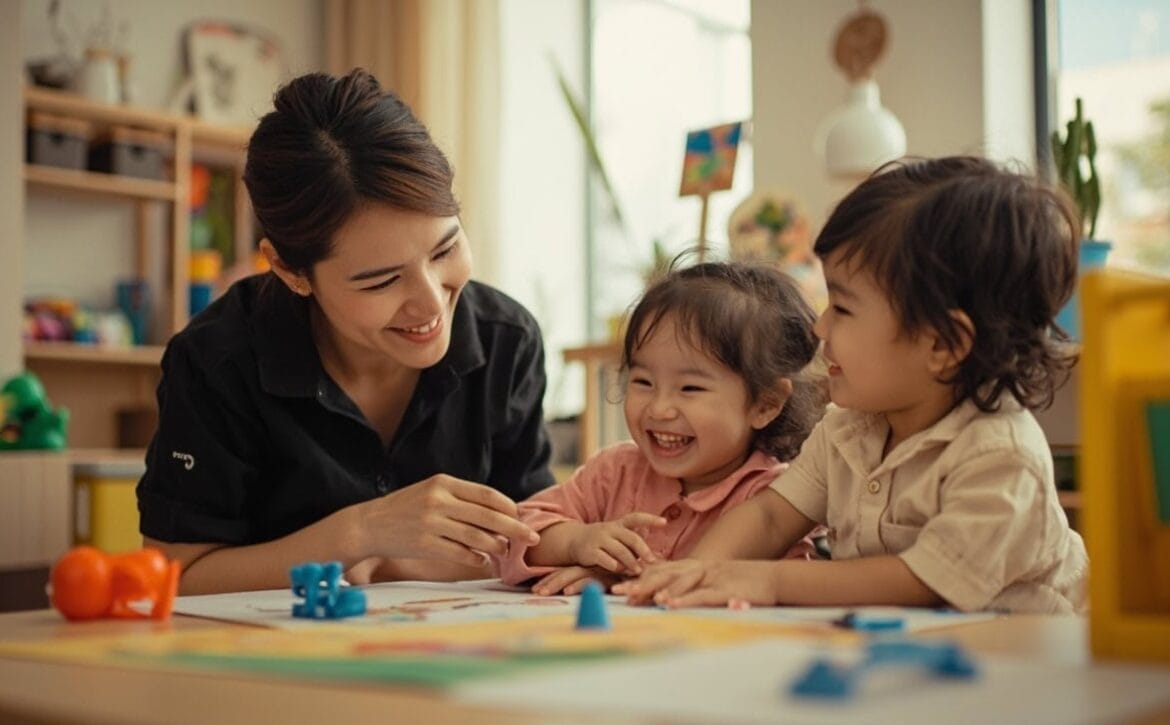
The first thing to watch is how caregivers respond to children. Not how they greet you. Not how they present their programme. How they respond to the children who are already there.

Watch a caregiver when a child approaches them unprompted. Watch their face. Watch whether their body turns toward the child, whether their expression shifts, whether there is a pause in whatever they were doing to give that child their full, unhurried attention.

This is called responsiveness, and it is the single most reliable indicator of caregiver quality that you can observe in real time.

Responsiveness is not scripted. You can tell the difference between a caregiver who is performing warmth and one who is naturally attentive. The performer will greet the child loudly and enthusiastically while maintaining their position. The naturally attentive caregiver will look up, will physically adjust, will give that child their face, their eyes, their presence. This small moment tells you something enormous about what happens in this environment when no parent is watching.

Now watch what happens when a child is upset. This is where the difference between training and understanding becomes visible.

A trained caregiver will follow a protocol. They will soothe the child, offer comfort, and move on. But a caregiver who truly understands young children will do something more subtle. They will notice the distress before it peaks. They will read the signals—the shift in tone, the change in energy, the moment when a child is beginning to escalate. They will intervene not just to calm the storm, but to prevent it.

This is the hallmark of a caregiver who is not just doing their job, but inhabiting their role.

You do not need to be a child development expert to notice these moments. You are your child’s first and most devoted student. You already know how to read them. What we are asking you to do is bring that same attention to the environment where your child will spend their days.

Domain 2: What You Ask and How Answers Reveal More Than Questions

Most parents ask questions designed to receive reassurance. Is my child safe? Will my child learn? Is this a good place? These questions are natural. They are also, unfortunately, easy to answer in ways that sound meaningful while conveying almost nothing of substance.

The questions that actually reveal quality are different. They are specific. They are sometimes uncomfortable. And they are the questions that confident, experienced caregivers will welcome rather than deflect.

Every environment has challenges. A caregiver who can speak honestly about the difficult moments—who can describe what a bad day looks like and how they handle it—demonstrates the kind of self-awareness that no amount of polished marketing can simulate. If a caregiver answers every question with perfect, rehearsed smoothness, that is not a reassuring sign. It may indicate that they have been trained to perform rather than to engage.

Ask about communication. How will you know what my child did today? Not in vague terms of “regular updates,” but concretely. What will you tell me? How will you tell me? How often? Parents deserve to know what happened in their child’s day. That means clarity, regularity, and honesty—even when the honest report is that the morning was difficult.

Ask about caregiver continuity. Will the same person care for my child every day? If the answer involves frequent rotation, ask why. Ask what the arrangement looks like in practice.

Caregiver continuity matters enormously in the first years of life. Children form attachments to specific people, and those attachments are the foundation of their sense of security, their emotional regulation, and eventually, their capacity to explore the world with confidence. A care environment that respects this will prioritise consistency. It will not treat your child’s primary attachment relationships as a logistical inconvenience.

Ask what a typical day looks like. Not the programme as it appears in the brochure, but the rhythm of an actual day. When do children eat? When do they rest? What does transition time look like—and transitions are often where the real quality of caregiving becomes visible. If a caregiver can describe the rhythm of their day with specificity and thoughtfulness, that is a meaningful signal.

Domain 3: What You Notice Over Time in Your Own Child

No single visit can tell you everything about a childcare environment. But patterns reveal themselves. Your child is an extraordinarily honest witness. They cannot hide what they feel about an environment, even if they cannot yet put it into words.

In the first weeks, some adjustment is normal. Separation is hard. New environments are stimulating and sometimes overwhelming. But what you are watching for is trajectory.

Is your child gradually settling? Are they beginning to show some ease, some recognition, some willingness to engage with the caregiver and the space? Or are they consistently distressed, consistently reluctant, showing signs that something is wrong?

A child in quality care will not be perfect every day. But they will begin to show signs of genuine connection. They will mention their caregiver by name. They will come home with small stories—not polished recountings, but fragments of enjoyment. They will be settled rather than dysregulated. They will show curiosity rather than fear.

If after several weeks, your child consistently arrives or returns in distress, if they show signs of withdrawal or aversion, if your instincts as a parent are telling you that something is off—this is not paranoia. This is data.

Your observation of your own child is the most important data point in this entire framework.


What Quality Childcare Looks Like in Singapore

Singapore parents have specific concerns that deserve specific answers. The childcare landscape here is diverse—centres, home-based care, nanny services—and each comes with its own set of considerations.

What unites quality across all these settings is not the setting itself, but the principles that govern daily life within it.

Quality care is personal. Your child is known—not as one of many, but as a specific, irreplaceable person with their own temperament, preferences, and needs. The caregiver remembers that your child hates having their face wiped, or loves being sung to during nappy changes. These small details matter because they signal genuine attention.

Quality care is consistent. Children in the first years of life are building the foundations of trust, security, and emotional regulation. Frequent caregiver changes undermine this foundation. When evaluating any childcare option in Singapore, ask about the arrangements for sick leave, public holidays, and staff turnover. How does continuity get maintained?

Quality care is communicative. You should never feel like you are guessing about your child’s day. Regular, honest updates—not just photographs, but meaningful information about your child’s mood, interactions, and development—should be standard practice.

Quality care is reflective. Caregivers who can talk about their challenges, who seek to understand rather than simply manage behaviour, who view difficulties as information rather than problems—these are the caregivers who create environments where children truly thrive.

Common Concerns Addressed

How do I know if my child is really safe? Safety is non-negotiable, but it is also not mysterious. Physical safety comes from appropriate supervision ratios, childproofed environments, and clear emergency protocols. Ask to see their procedures. Ask about the last time they conducted a safety drill. Ask what happens if your child has a medical emergency. Emotional safety comes from the quality of relationships we have already discussed—a child who feels secure will not live in constant fear. Watch for the balance.

What if I can’t visit unannounced? Not all childcare settings permit unannounced visits, and this is a reasonable policy for safety reasons. But you can still evaluate quality through other means. Ask about communication frequency. Ask for references from current parents. Request video calls during the day. The willingness to provide transparency through alternative channels is itself a signal.

My friend loved this centre but I didn’t feel it during the visit. Should I trust my gut? Yes. Every parent brings their own history, their own sensitivities, their own instincts to a visit. What feels right for one family may not feel right for another. Your discomfort during a visit is data. It may be about fit rather than quality—perhaps the environment is perfectly good but not suited to your child’s temperament. But it is worth examining carefully rather than dismissing. You know your child best.

What if I can’t afford the most expensive option? Cost is not always an accurate indicator of quality. Some of the most expensive childcare in Singapore is also the most performative. Conversely, some genuinely warm and attentive care is offered at accessible price points. What matters is what you observe, what you ask, and what you notice over time. Focus on the framework, not the price tag.


How EduNanny Equips Parents to Evaluate Quality

This framework is not about learning to catch people doing something wrong. It is not about becoming suspicious or adversarial toward the caregivers you are entrusting your child to. It is about developing what we call informed clarity—the capacity to recognise quality when it stands in front of you, and the confidence to trust yourself in that recognition.

Informed clarity is not the opposite of trust. It is the foundation of real trust. When you know what to look for, you stop relying on vague anxiety and start relying on genuine knowledge. You can ask better questions. You can interpret what you see more accurately. You can tell the difference between a polished performance and a warm, genuine environment.

EduNanny was designed with a specific conviction: that Singapore families deserve home-based and community-based childcare that meets the highest standards of professional quality, while remaining rooted in the warmth and attentiveness of a family environment.

We are part of the ECDA Childminding Pilot, which means our approach is not experimental or informal—it is structured, supported, and held to clear professional standards. We offer both home-based and centre-based pathways, so that families across Singapore can access care that fits their circumstances.

Our infant ratios are designed to ensure that every child receives the individual attention they deserve—no more than three infants per caregiver during our Monday to Friday care blocks. Our fee structures are built to be affordable within the pilot framework, and we are committed to ensuring that CDA and Baby Bonus funds can be used to ease the financial weight of quality care.

Where our programme is deployed, communication and transparency measures—including CCTV where applicable—give parents a window into their child’s day that goes beyond polite reassurance.

But beyond the specifics of our programme, what EduNanny offers is something more fundamental: a promise that you will not face this decision alone.


Building Your Decision Confidence

Here is what we have seen, working with families across Singapore: parents who use this framework do not become more anxious. They become more confident.

They stop second-guessing themselves after visits. They ask better questions and interpret answers more accurately. They develop a vocabulary for what they are looking for and a set of observations to support their decisions.

Most importantly, they stop searching for certainty—a guarantee that does not exist—and start looking for the right indicators. They learn to recognise quality when it stands in front of them.

This is not about becoming an expert in child development. It is about becoming an informed parent. And there is a significant difference.

The expert looks for credentials and programmes. The informed parent looks for responsiveness, continuity, and honest communication. The expert reads the brochure. The informed parent reads the room—and reads their child.

When you use this framework, you will find that childcare decisions become less overwhelming. Not because the options get simpler, but because your ability to evaluate them improves. You will know what questions to ask. You will know how to interpret what you see. You will know how to read your child’s signals over time.

You will still feel the weight of the decision. That is appropriate. But you will feel it from a place of clarity rather than confusion.


A Final Reflection

Singapore parents are not looking for perfection. No environment is perfect. What you are looking for is genuine connection, consistent warmth, and caregivers who are not just trained but called to this work.

You are looking for an environment where your child will be known—not as one of many, but as a specific, irreplaceable person with their own temperament, preferences, and needs.

You are looking for adults who will notice when something is wrong, who will notice when something is wonderful, and who will tell you honestly about both.

That is what we have built. That is what we maintain, every single day.

And now, with this framework, you have something you did not have before. You have a way of seeing. You know what responsiveness looks like in a caregiver’s face and body. You know what questions separate performance from substance. You know what your child’s behaviour tells you over time.

You know how to read an environment—not just its aesthetics, but its texture. You know the difference between a facility and a home. You know how to recognise caregiver continuity and emotional availability. You know how to identify red flags without becoming paranoid, and how to trust your instincts without being reckless.

When you walk into a childcare environment now, you walk in differently. Not as someone hoping for the best. Not as someone guessing. As someone who knows what quality looks like, and who trusts themselves to recognise it.

That is the difference between anxiety and clarity.

And that is what EduNanny is here to give you—not a promise that childcare will be easy, but the knowledge that when you find quality, you will know it.

Your child deserves to be known. You deserve to know that they are known.

And now, you have the eyes to see it for yourself.


If this framework resonates with you, we welcome the opportunity to speak with you. At EduNanny, we believe every Singapore family deserves to feel confident in their childcare choice—and we are here to help you find that clarity.

edunanny-06351c804c75994694e23770516e700d
April 20, 2026

Why Your Gut Feeling Matters When Choosing Childcare in Singapore

That Feeling in the Pit of Your Stomach: Why Your Instincts About Childcare Are Smarter Than You Think

There is a moment, familiar to every parent who has walked through the doors of a childcare centre in Singapore, when the research should have ended but the certainty has not arrived.

You have done the homework. You have read the reviews, compared the caregiver ratios, checked the licensing, weighed the fees. You have spoken to other parents, asked the right questions, walked through corridors with clipboards in hand or smartphones ready to take notes.

And yet, standing in that unfamiliar room with its bright walls and miniature furniture and the soft hum of a place that will hold your child for the better part of their earliest years, something does not quite settle inside you.

You find yourself wondering: Is this nervousness normal? Am I overthinking this? What am I supposed to be feeling right now?

You are not overthinking it. You are not being difficult or unreasonable or too cautious. What you are experiencing in that moment is something far more useful than anxiety. It is perception. It is your mind doing exactly what it is designed to do: taking in information from the environment, from the people, from the quality of light in a room and the way a caregiver turns toward a child, and translating that stream of sensory data into something you can feel. Something you can trust.

The question is not whether your senses are reliable. The question is whether anyone has ever told you they are worth listening to.

  • Your hesitations during a childcare visit are not irrational anxiety—they are legitimate data your nervous system is collecting
  • Environments communicate quality through details—sound, smell, light, spatial arrangement, and emotional tone tell you something real
  • Children cannot pretend to feel safe—observing how existing children inhabit a space is one of the most honest indicators of care quality
  • You already know what to look for—this article is about helping you trust what you already sense

What We Know About Early Childhood—and What Gets Lost in the Knowing

We live in an age that has given parents more information about early childhood development than any generation before us. We know about brain architecture and sensitive periods and the importance of responsive caregiving in ways that would have seemed like specialist knowledge just two decades ago. Singapore has invested heavily in parental education, in early intervention programmes, in the infrastructure of support for families with young children. This is genuinely good news. Knowledge matters. Research matters. The more we understand about how children grow, the better we can care for them.

But there is a subtle cost to all this information, and it shows up most clearly in the moment of decision. When parents walk into a childcare for the first time, they are often carrying an invisible checklist so long and so detailed that it crowds out the very capacity they most need in that moment: the ability to simply notice what is in front of them.

The checklist tells them what they should be looking for. The ratio of caregivers to infants. The curriculum on paper. The food menus and the sleep schedules and the emergency protocols. These things matter—we are not suggesting they do not. But they are not the whole story, and when they become the only story, something important gets lost. The parent who walks in with a mental scorecard walks out having collected data about a place without necessarily having perceived what the place is actually like to inhabit.

Here is what we want to say to you, as parents navigating this decision: the research you have done has prepared you for this visit in ways you may not yet recognise. Your education has sharpened your senses. It has given you a reference point against which to measure what you encounter. When something feels warm and right in a space, you now have the vocabulary to understand why. When something feels slightly off, you have the background to trust that the feeling is not irrational.

Your education as a parent has made you a more perceptive evaluator, not a more nervous one. Those two things are often confused, but they are not the same.


What You Actually Perceive When You Walk Through the Door

Consider, for a moment, what you actually perceive when you enter a room. Not what you think you should be evaluating, but what your senses are registering before conscious thought has time to intervene.

Temperature and Physical Comfort

You perceive temperature. Whether the space is too cold or too warm, whether there is a draft near the door or a pocket of chill in a corner where a child might sit. A childcare where the air conditioning is blasting directly onto a sleeping infant, or where a corner of the room remains unheated on a cool afternoon, is communicating something about attention to detail.

The Character of Sound

You perceive sound. Not just the volume, though that matters, but the character of the noise. Is there a restless, chaotic energy in the way children are audible in another room, or does the sound carry a different quality? Are the voices of caregivers present and engaged, or is there a silence that suggests children are being managed rather than accompanied?

When you hear a child cry, how long does it take before a response comes, and what is the nature of that response? Is there a shift in tone, a slowing of activity, a direct and unhurried attention? These are not trivial details. They are the texture of a day in that place.

Smell as an Honest Indicator

You perceive smell. This one makes some parents feel embarrassed to admit, as though noticing an unpleasant odour in a childcare is somehow judgmental. It is neither. Smell is one of the most primal and reliable indicators of hygiene, of attention, of whether the people running a space are taking basic care of it.

A centre that smells of damp or stale food or unwashed surfaces is telling you something true about its standards of cleanliness. A space that smells clean and warm and alive is communicating care in a language that needs no translation. In Singapore’s humid climate, where mould and mildew can establish themselves quickly, the smell of a childcare space is an honest measure of whether daily maintenance is happening as it should.

Light and Spatial Design

You perceive the quality of light and the arrangement of space. Is the room designed around the adults who work there, or around the children who inhabit it? Are the shelves at a height where a toddler can reach and choose? Is there space to move, to crawl, to spread out on the floor? Are the materials accessible and inviting, or locked away behind glass doors?

These observations are not aesthetic preferences. They are indicators of whether the environment has been designed with genuine understanding of who uses it.

The Emotional Tone You Cannot Name—but Cannot Miss

And you perceive something else, something harder to name but impossible to miss. You perceive the emotional tone of a place. The way the adults move through the space. Whether they seem hurried or settled, stressed or calm, present or performing. Whether the children in the room look comfortable in their own skin, whether they are engaged or withdrawn, whether they move through the environment with a sense of security or with a wariness that suggests they have learned to be careful.

This last perception is the one that parents most often override in themselves. They sense it, sit with it for a moment, and then reason their way out of it. Surely, they think, I cannot make a decision based on a feeling. What if I am projecting? What if I am simply tired or anxious?

But here is what years of listening to parents have taught us: that feeling is not projection. That discomfort is not anxiety. That when a parent walks into a space and something does not feel right, something genuinely is not right. The parent may not yet have the language to articulate what they are perceiving. They may not be able to point to a specific incident. But their nervous system is doing exactly what nervous systems are designed to do. It is reading the room. It is evaluating safety.

The question worth asking is not whether you should trust your instincts. The question is whether you have been given permission to act on them.


What Quality Infant Care Actually Looks Like

Before you can evaluate what you are sensing, it helps to have a framework for what quality actually means in the context of infant and childminding care. Not the textbook definition, but the felt reality of it.

The Foundation of Responsive Caregiving

Research on early childhood development tells us that the first thousand days of a child’s life are not simply a phase to be managed until formal schooling begins. They are the foundation upon which everything else is built. Not in an anxious, pressure-laden sense of school readiness, where children are measured against developmental milestones as though childhood were a race. But in a quieter, deeper sense.

The child who has been held consistently by responsive caregivers, who has learned that the world contains people who will answer when they call, who has experienced safety as a felt reality rather than an abstract concept—that child carries that experience forward into every relationship and every challenge that follows. This is what quality infant care makes possible. Not the production of extraordinary children, but the nurturing of children who feel fundamentally secure.

The Difference Between Adequate and Genuine

There is a difference between care that is technically adequate and care that is genuinely warm. Both may pass regulatory checks. Both may have reasonable ratios and clean premises. But they feel completely different to a child, and you can perceive the difference the moment you walk into the room.

In technically adequate care, tasks are completed. Children are fed, changed, stimulated, kept safe. But the emotional quality of the interaction is somewhat distant. Caregivers are professional, even kind, but there is an efficiency to their movements, a slight detachment that suggests they are managing a workload rather than building a relationship.

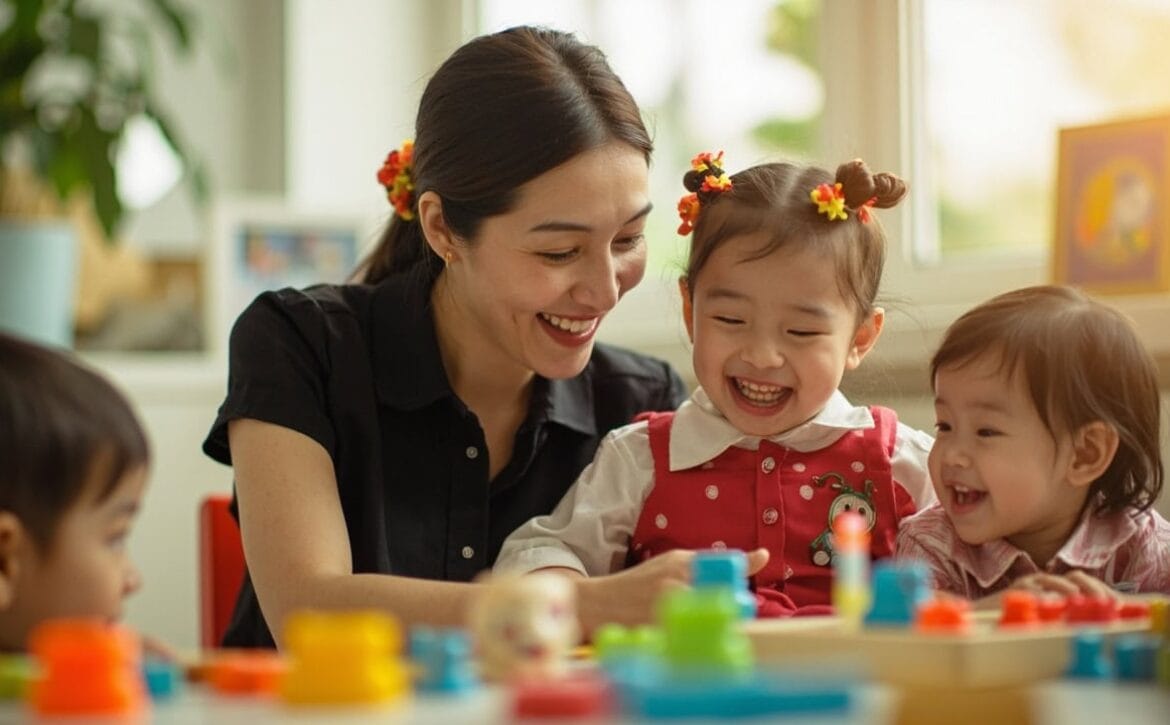
In genuinely warm care, there is a different quality of attention. You see it in the way a caregiver kneels to speak with a toddler at eye level rather than bending down from standing. You hear it in the tone of voice that slows and softens when a child is distressed. You feel it in the unhurried quality of the environment, where there is space for small moments of connection between meals and activities and transitions.

Why Ratios Matter Beyond the Numbers

In Singapore, licensing requirements specify minimum caregiver-to-child ratios for different age groups. These exist for good reason. But ratios on paper do not capture what they feel like in practice.

In a room where a caregiver is responsible for fewer children, there is more room for attention. More space for responsiveness. More capacity to notice the small shifts in mood and need that larger groups make invisible. When a caregiver can truly attend to three infants rather than six, they have time to notice when one is becoming overtired before the crying starts, to respond to a reaching hand, to engage in the back-and-forth of early communication that builds neural pathways.

When you visit a childcare and see a caregiver kneeling to speak with a toddler at eye level, or lifting an infant with unhurried hands, you are seeing what adequate time and genuine attention look like. You are perceiving the ratio in action.


How to Visit Childcare with Confidence and Trust Your Perception

There is a question that parents often carry but rarely voice: What if I am wrong? What if I walk away from a place that seemed fine and something goes wrong? What if I choose a centre based on a feeling and that feeling was misleading?

This fear is understandable. But the fear of being wrong is not unique to parents choosing childcare. It is the fear that accompanies every significant decision made under uncertainty. And the answer to uncertainty is not paralysis. It is attention.

Before You Arrive

  • Complete your background research—ratios, licensing, basic policies—so this information is not crowding your attention during the visit
  • Approach the visit with the intention to notice, not just to evaluate
  • Remind yourself that you are a capable evaluator whose perceptions carry real information

What to Observe During the Visit

  • How caregivers interact with children: Are they at eye level? Is their tone warm and unhurried? Do they respond promptly to children’s communication?
  • How children move through the space: Are they comfortable, engaged, and at ease? Do they seek out caregivers for comfort or connection?
  • Environmental quality: Is the space clean, warm, and well-lit? Are materials accessible to children at appropriate heights?
  • Sensory details: What does the space smell like? What is the character of the ambient sound? Is there a quality of calm or chaos?
  • Caregiver demeanour: Do the adults seem settled and present, or hurried and stressed? Are they interacting with each other as well as with children?

Questions to Ask Yourself After the Visit

  • Did I feel comfortable in this space, or did something feel slightly off?
  • Were the children I observed genuinely at ease, or performing for adults?
  • Could I imagine my own child here, happy and secure?
  • What specific observations am I carrying away from this visit?
  • Am I dismissing a hesitation because I feel I should, or is there a rational reason for my concern?

Distinguishing Genuine Unease from Ordinary Nervousness

The parent who visits multiple spaces, who pays attention to what they perceive in each one, who allows themselves to feel the difference between a space that resonates and a space that does not, is doing something profoundly rational. They are gathering data that no checklist can capture.

If during a visit you sense that something is not quite right—a caregiver who seems stressed, children who seem subdued, an environment that feels cold despite warm colours on the wall—do not talk yourself out of that feeling. Instead, try to get more specific about what you are noticing. Ask yourself: What exactly am I perceiving? Is it something I can name? Is it a sound, a smell, a quality of interaction?

Sometimes, giving language to a perception helps you evaluate whether it is a genuine concern or a projection. But even if you cannot name it, that does not mean it is not real. It may mean that your conscious mind has not yet caught up with what your nervous system already knows.


The EduNanny Approach: Designing for Perception

EduNanny was founded on a conviction that sits at the heart of everything we do: that parents are not passive recipients of expert advice, but active participants in the assessment of care quality. We did not build our service around the assumption that families need to be told what is best for their children. We built it around the belief that when families are given the right information, the right environment, and the right support, they are extraordinarily good at knowing what they need.

This conviction shapes how we design our visits. When you come to see an EduNanny home or community space, we do not walk you through a presentation. We invite you to be present. To notice. To bring your full attention to the room and the people in it. We want you to feel the quality of the space before we ask you to think about it. Because the feeling matters, and you already know how to read it.

Training for the Relational Dimension

Our caregivers are trained not only in the practical dimensions of infant and child care, but in the relational dimension. They understand that a child in their first thousand days is not simply developing physically or cognitively, though those things matter. The child is developing a sense of the world as a place that is safe or uncertain, welcoming or hostile, worthy of trust or requiring constant vigilance.

The caregiver who understands this does not simply keep a child fed and clean and entertained. They create an emotional environment of consistency, warmth, and genuine responsiveness. You can feel the difference between that environment and one where care is technically adequate but emotionally distant. You perceive it the moment you walk in the door.

Transparency as a Foundation of Trust

We place importance on transparency. Where CCTV measures are deployed, families have access. Where daily updates are promised, they are delivered. Where communication channels are open, they remain open. We do not offer these things as features or selling points, though we understand that they provide reassurance.

We offer them because they reflect a deeper commitment: that you should never have to wonder what your child’s day looks like when you are not there to see it. That the trust required to leave your child in someone else’s care should be built on a foundation of genuine visibility, not on hope.

What You Will Notice When You Visit

When you visit an EduNanny space, we want you to notice the children already in our care. Not because we have staged something for your benefit, but because they are living there. They are not performing for visitors. They are simply being themselves in the space they know as their daily world.

Are they comfortable? Are they engaged? Do they move through the space with ease? Do they look to the adults around them with something that resembles trust? These are the most honest indicators of quality that any visit can offer. Children cannot pretend to feel safe the way adults sometimes can.


The Search That Ends in Trust

There is a version of the childcare search that treats parents as consumers making a purchase. A version that reduces the decision to features and fees and proximity to home or office. That version is not wrong, exactly. These practical considerations matter. But they are not the whole story, and they are not the most important part.

The more important question is not what a childcare offers on paper. It is what it feels like to inhabit. What it communicates to a child who will spend thousands of hours there in the most formative period of their life. What it communicates to a parent who must leave each morning carrying the weight of trust.

You already know how to answer that question. You have always known. Somewhere between the research and the visits and the conversations with people who have walked this path before you, you developed a capacity to read a space and its people. You may not have trusted that capacity fully. You may have talked yourself out of hesitations, or talked yourself into reassurance when the evidence was mixed. But the capacity is there. It has been refined by everything you have learned and everything you have felt.

Trust it.

Trust the way a room feels when you walk in. Trust the quality of attention you observe in the caregivers. Trust the children you see moving through the space, comfortable in their own skin. Trust the feeling that settles in your chest when you find yourself imagining your child there, happy and secure.

This is not naivety. This is intelligence. The kind of intelligence that cannot be captured in a rating system or a review platform. The kind that belongs to you, as a parent, in the fullness of your knowledge and your perception and your love for the child you are trying to care for in the best way you know how.

EduNanny exists to honour that intelligence. To give it a place to land. To be the kind of care that your instincts recognise as worthy of your trust, because it is the kind of care that takes your child seriously, that takes your role seriously, and that understands what is truly at stake in these early, precious, unrepeatable years.

You are not looking for perfection. No one is. You are looking for a place where your child will be seen, and held, and responded to with warmth and consistency. You are looking for caregivers who will be partners with you in the long, rewarding work of raising a human being.

You know what that looks like. You know what it feels like. And when you find it, you will trust yourself enough to know.

We look forward to walking this path with you.


Experience what thoughtful, development-oriented childcare feels like. Visit an EduNanny community space in Singapore and let your instincts guide you. We welcome questions, we encourage observation, and we trust you to know what feels right.

#SingaporeChildcare #InfantCareSingapore #ChildminderSingapore #QualityChildcare #EarlyChildhoodDevelopment

edunanny-0635198062c0d18eb4521914b2385ade
April 20, 2026

Your Child’s Development Made Visible: A Partnership for Working Parents

The Invisible Hours: When Drop-Off Feels Like Losing Sight

There is a particular kind of wondering that happens when you drop your child at childcare and drive away. It is not guilt, exactly. It is something quieter and more tender. It is the awareness that during the hours you are in meetings, managing spreadsheets, navigating commutes, your child is somewhere else, becoming someone new.

And you are not there to see it happen.

This wondering sits beneath the surface of your day. You catch yourself scrolling through photos from the morning. You text your caregiver and then put your phone away, waiting, hoping the response will tell you something real about what your child is experiencing.

If this sounds familiar, you are not alone. This feeling is shared by every working parent I have ever spoken with. Here is what I want you to understand: you do not have to choose between being a working parent and being an informed one. You do not have to accept that your child’s growth during childcare hours is a black box, invisible and unknowable.

This article is about making your child’s development visible, trackable, and yours to celebrate.


The Shift from Wondering to Watching

Quality childcare is not separate from your child’s development. When it is done well, it is your child’s development. It is the daily, measurable, observable process of your child growing stronger, smarter, more capable, more themselves.

Developmental progress in the early years is not abstract. It is not something that happens invisibly, measurable only through assessments and screenings. It is concrete, behavioral, observable in the things your child does and says and reaches for each day.

What parents often lack is not concern for their child. They lack the shared language to understand what they are seeing, and they lack the documentation to confirm what they suspect. So they default to worry. They wonder if their child is on track. They compare, quietly, to other children. They google developmental milestones at eleven p.m. and feel more confused than before.

What parents need is developmental literacy: the ability to read your own child’s growth with confidence, and a partnership with caregivers who can help you interpret what you see.


The Four Domains of Early Childhood Development

There are four major domains of early childhood development. Each unfolds in reliable sequences, and each produces observable behaviors that you can learn to recognize.

Motor Development

You will see progression from head control to rolling to sitting to crawling to walking to running and climbing. By the time a child is four or five, they should be navigating stairs independently, pedaling a tricycle, catching a ball.

These are not just physical milestones. They reflect the maturation of the nervous system, the development of balance and coordination, the growing capacity to control one’s body in space.

What to observe:

  • Around seven months: deliberate reaching for objects, adjusting grip based on feel
  • Around twelve months: consistent response to name, showing social recognition
  • Toddler years: insistence on doing things independently, persistence at frustrating tasks
  • Preschool years: running, climbing, ball skills, stair navigation

Cognitive Development

You will see increasingly complex object manipulation, early problem-solving, and a growing understanding of cause and effect.

Infants who shake a rattle to hear the sound are already experimenting with causality. Toddlers who figure out how to open a container are building mental models of how the world works. By preschool age, children who ask “why” constantly are not just being curious. They are constructing theories about how things function.

What to observe:

  • Infants: shaking objects to produce sound, exploring how things work
  • Toddlers: figuring out mechanisms, solving simple puzzles
  • Preschoolers: asking “why” questions, inventing games with rules, understanding cause and effect

Language Development

You will see the progression from cooing to babbling to first words to word combinations to full sentences. By age three or four, most children can carry on conversations, tell simple stories, and express complex ideas.

But language development is not just about vocabulary size. It is about the ability to use language as a tool for thinking, for connecting, for making sense of experience.

What to observe:

  • Coos and vowel sounds in early months
  • Babbling with consonants around six to nine months
  • First words between twelve and eighteen months
  • Word combinations by two years
  • Conversational ability and storytelling by three to four years

Social-Emotional Development

You will see the progression from attachment to caregivers, to stranger anxiety, to parallel play, to cooperative play, to empathy and helping behavior.

A child’s ability to manage frustration, to recover from disappointment, to show concern for others: these are social-emotional competencies that emerge through relationships and are refined through practice.

What to observe:

  • Attachment formation in the first year
  • Stranger awareness and separation responses
  • Parallel play in toddler years, progressing to cooperative play
  • Empathy and helping behaviors in preschool years
  • Emotional regulation and frustration recovery

How These Domains Connect

These domains do not develop in isolation. They interweave and support each other. Language development enables social-emotional growth. Motor development opens cognitive possibilities. When children play together, they are exercising all domains simultaneously.

Development is holistic, which means that every behavior you observe is a window into your child’s entire system.


How Professional Caregivers Track Growth

In quality care, every attempt at a new skill, every breakthrough moment, every struggle that leads to growth is observed, recorded, and reflected upon. This is not casual attention. This is professional observation, informed by training and experience, with the specific purpose of understanding each child’s unique developmental trajectory.

What does this look like in practice? It might be a caregiver who notices that your child has been working on a particular puzzle for three days and finally solved it this morning. It might be documentation that tracks not just what your child can do, but what they are working toward. It might be a caregiver who recognizes that a child’s frustration during cleanup is not misbehavior but a sign that they are deep in an important project and need support managing the transition.

This documentation serves a crucial purpose. It creates a record of growth that you can review, share with your partner, and revisit over time. It allows you to see patterns and progressions that you might miss in the daily flow of pickups and drop-offs. And it gives you something invaluable: concrete evidence of your child’s development that you can hold onto, reflect on, and celebrate.

The Co-Observation Partnership

But observation is only half of the equation. The other half is what you bring.

You know your child better than anyone. You know their temperament, their preferences, their particular way of engaging with the world. You see them in unguarded moments, at home, in the evening, on weekends. You notice things that no caregiver can see: the way they process a new experience, the particular sounds they make when they are working something out, the questions they ask that reveal new levels of thinking.

When these two sources of understanding come together, something powerful happens. You gain a complete picture of your child’s development. You can see growth happening across environments, in different contexts, under different conditions. You can recognize patterns that neither you nor your caregiver would see alone.

Imagine you pick up your child from care and ask, “How was her day?” The caregiver responds, “Good.” You feel vaguely unsatisfied. You sense there is more to know, but you do not know how to ask for it.

Now imagine instead that you ask, “What was she working on today?” The caregiver responds, “She has been really focused on building towers. Today she finally built one with six blocks and stepped back to look at it, and then she knocked it down and started again, building it higher. She is working on persistence and spatial reasoning.”

Or imagine you are at home on a Saturday and your child does something remarkable, something that surprises you. But now imagine you are part of a partnership where you can share this observation with your caregiver. You send a message: “She did something today I thought you would want to know about.” And your caregiver responds with context, with understanding, with connection to what she has been observing in care.

This is the kind of partnership that transforms the experience of childcare. It is not just about trust, though trust matters. It is about shared developmental awareness. It is about both of you seeing the same child successfully, completely, and working together to support their growth.


School Readiness: What Actually Matters

When people talk about school readiness, they often mean academic readiness. Can your child recognize letters? Count to twenty? Write their name?

These things matter, but they are not the foundation of school readiness. They are the superstructure.

The true foundation of school readiness is developmental readiness.

  • Can your child’s sensory systems process the demands of a classroom?
  • Can they sustain attention for the length of a lesson?
  • Can they regulate their emotions when frustrated?
  • Can they engage in social problem-solving with peers?
  • Can they understand and follow multi-step instructions?
  • Can they find meaning in stories and express their own ideas?

These are the competencies that determine whether a child thrives or struggles in primary school. They are not academic skills. They are developmental capacities, built in the early years through play, through relationships, through the kinds of experiences that quality childcare provides.

When your child has spent their early years in an environment that supports sensory integration, that nurtures attention and persistence, that provides rich language exposure, that allows for social experimentation and emotional growth, they enter primary school ready. Not ready because they memorized letters, but ready because their nervous system is calibrated for learning. Ready because they have the foundations in place.


Bringing Development Home

The most important things you can do at home are not complicated. They do not require special equipment or structured curricula. They require presence, attention, and responsiveness.

  • Play with your child. Not as entertainment, but as a partner in their exploration. Follow their lead. Watch what they are trying to do and ask yourself what developmental capacity they are building.
  • Talk with your child constantly. Narrate your day. Read together every day. Ask questions and wait for answers. Expand on what they say. Fill their environment with language.
  • Allow your child to struggle. When they are working on something difficult, resist the urge to fix it for them. Be present, be supportive, but let them persist. The struggle is where growth happens.
  • Notice what they are noticing. When your child points at something, look at it together. When they show you something they made, examine it with genuine interest. When they tell you a story, listen as if it matters, because it does.
  • Share your observations with your caregiver. Tell them what you saw on the weekend. Ask them what they have been observing during the week. Build the bridge between home and childcare, because your child experiences both environments as part of one integrated life.

Addressing Common Parent Concerns

For some parents, the idea of trusting someone else with their child’s care is still a source of real anxiety. You wonder what happens during the hours you are not there. You imagine possibilities that may or may not be accurate. You feel the weight of responsibility, the desire to be present for every moment.

The anxiety of distance is real. But transparency is not a luxury but a necessity for modern parents. When you have windows into the day, the anxiety that was driving your wondering transforms into something else. It transforms into the comfort of understanding. It transforms into the ability to be present with your child in the evening, not because you have been worrying all day, but because you actually know what they did, how they grew, who they were with.

Caregiver qualifications matter. When you entrust your child to quality care, you are not simply outsourcing supervision. You are inviting a trained professional into your child’s developmental journey. A caregiver who understands child development, who observes systematically, who communicates clearly, who responds to your child with attunement and warmth, is doing work of genuine significance. They are not just keeping your child safe. They are supporting your child’s becoming.

What quality actually looks like:

  • Small infant ratios ensuring individual attention
  • Caregivers trained in developmental observation
  • Systematic documentation of growth
  • Clear communication practices
  • Partnership with parents as co-observers

Understanding What Quality Childcare Looks Like

EduNanny was built on a simple belief: parents should never feel like observers on the periphery of their child’s development. The hours your child spends in quality care should be hours of growth that you can see, track, and celebrate.

The EduNanny model draws on the ECDA Childminding Pilot, reflecting Singapore’s commitment to professionalizing childminding and raising standards across the sector. This means our caregivers are supported by structure, training, and oversight. Our model maintains small infant ratios, ensuring that every child receives the individual attention they deserve.

Our caregivers are trained in developmental observation. They understand the sequences of early childhood development and know how to recognize them in real time. They document what they see in ways that capture the texture of your child’s day: what captured their attention, what challenged them, what made them laugh, what they mastered, what they reached for next.

For Singapore families, this translates to thoughtful, development-oriented care available Monday through Friday, with both home-based and centre-based pathways. The pilot fee structure and the ability to use CDA and Baby Bonus funds help keep quality care accessible.


Your Child’s Development, Made Visible

Every parent carries the same secret fear. It is not that they are failing their children. Most parents know, somewhere beneath the anxiety, that they love their children fiercely and are doing their best.

The secret fear is simpler: that they will miss something. That their child will grow and change and become someone new, and that they will not be there to see it.

But here is what I want you to understand: you do not have to be present for every moment to be present for what matters. You do not have to witness every breakthrough to know that breakthroughs are happening. You do not have to sacrifice your career or your identity to be an involved parent.

What you need is a framework. You need to know what development looks like. You need partners who will observe alongside you and share what they see. You need documentation that makes growth concrete and trackable. And you need the confidence to trust that when your child is in quality care, they are not in a separate world, growing away from you.

They are in a supportive environment, growing toward the future you want for them.

The next time you pick up your child from childcare and feel that familiar wondering, do not push it away. That wondering is not a problem. It is a signal. It is your mind telling you that something important is happening and that you want to be part of it.

Let that wondering become watching. Learn what to look for. Ask better questions. Build the partnership. And trust that when your child is in quality care, growth is not hidden. It is right there, visible, waiting for you to see it.

You are not missing your child’s development. You are right in the middle of it. And with the right support, with the right partners, with the right framework, you always will be.


Curious about what developmental partnership looks like in practice? Learn more about the EduNanny approach or get in touch to start a conversation about your child’s care.

edunanny-0635153af1db3f4d9e136538c97423ca
April 20, 2026

How Singapore Parents Find Childcare That Actually Feels Right

“`html

Why Does Finding Childcare in Singapore Feel So Overwhelming?

You have navigated hospital appointments, decoded government schemes, survived the Baby Bonus maze, figured out maternity leave logistics. You are not inexperienced. And yet the childcare search feels different. It feels like trying to evaluate something you cannot fully know until you are already inside it.

Part of this is structural. Singapore has one of the world’s most competitive early childhood landscapes. Hundreds of centres, multiple models, new regulations, shifting subsidies, varied pedagogical philosophies. The sheer density of options is not a sign of dysfunction — it is a sign of genuine demand. And demand means marketing. Beautiful photographs. Carefully worded philosophies. Open houses designed to feel welcoming in exactly the ways that make you want to sign on the dotted line.

The industry knows you are emotionally vulnerable during this search. It is not malicious; it is simply responsive to the fact that you are making a decision about your child’s safety, attachment, and development during a window of time when you are also sleep-deprived and desperate for something to feel right.

This is precisely why the search requires a different approach. Not more information. Not more reviews. An evaluation lens. A way of seeing that lets you distinguish between what looks impressive and what actually matters.


What Experienced Parents Look For That First-Timers Miss

They watch the children, not the adults. Not during the performance, not when the centre director is guiding you through and every caregiver knows the schedule. They watch what happens in the periphery. They watch a child who wanders away from a play station and see whether an adult notices — whether they track the child with their eyes or their body, whether they move toward the child or wait.

They notice body language. Not just of the caregivers but of the children. Do the children look relaxed in their bodies? Are they loose, moving with ease? Or are there small tensions — children clustered near doorways, watching exits, staying close to adults in a way that suggests vigilance rather than comfort? A room can be immaculate and a child can still feel unsafe. A room can be humble and a child can feel completely at home. The furniture does not tell you. The children’s bodies do.

They pay attention to transitions. This is one of the most revealing moments in any childcare environment — between activities, between indoor and outdoor, between snack time and free play. This is where the cracks show. Where children who are not securely attached become dysregulated. Where understaffed rooms reveal themselves. Where rigid scheduling overrides responsiveness. Watch what happens during transitions and you will learn more in five minutes than in an hour of listening to a centre philosophy presentation.

They ask about caregiver continuity. Notice whether the children gravitate toward specific adults. Notice whether there is consistency. Notice whether the person who greets your child in the morning is the same person who is with them an hour later when the novelty of your visit has worn off. Consistency is not a bonus. For infants and toddlers, it is the architecture of trust.

They look for the caregiver who is not performing. The one who is just there, on the floor, doing the work. Watch how they hold a baby. Watch whether they narrate what they are doing to the child. Watch whether the child looks at ease in their arms. That relationship — the one you are not supposed to see — is the relationship your child will live inside every day.


Red Flags Parents Often Overlook Until It Is Too Late

  • A centre that resists unannounced visits or drop-ins. Transparency is not a favour centres do for parents. It is a basic standard. If a centre resists it, that is information.
  • A room where the children are not making much noise. Quiet can be a sign of good order or a sign of under-stimulation. Children at play are not silent. They are engaged, vocal, negotiating, experimenting with sound and language. If a room feels muted in ways that do not make sense, ask questions.
  • A caregiver who spends more time with you than with the children during your visit. The goal is to observe how adults relate to children when a parent is not centre stage. If the caregiver is performing for you, you are not seeing the product your child will experience.
  • Every child on the same schedule at the same time, and deviations cause visible distress in staff or children. Flexibility is not chaos. Rigidity at the expense of responsiveness is not care.
  • A centre where the director speaks primarily about curriculum and outcomes rather than about how children are as people. A philosophy that is all about development and not at all about connection will show up as mechanical in practice.

These are not automatic disqualifiers on their own. Context matters. Every centre has moments of imperfection. But they are signals. And signals are what you are learning to read.


How to Trust What You See Without Second-Guessing Into Paralysis

Your instincts are not perfect. No one’s are. But they are also not nothing. You have spent every day of your child’s life learning their signals. You know when they are hungry before they cry. You know when they are overstimulated by the way they turn their head. You know when something is not quite right in a room, even if you cannot articulate why. This is data. Real, accumulated, relational data. And it is yours.

The problem is not that parents lack instincts. The problem is that the childcare search asks you to evaluate something outside your expertise, and so you defer. You look for credentials instead of observations. You ask about curriculum instead of watching how a caregiver responds to a child who has just been pushed over by another child.

The research on what predicts developmental outcomes in early childhood consistently points toward relational quality over curricular design. Children do not thrive in environments with impressive floor plans. They thrive in environments where they are known. Where someone notices them. Where their distress is met with consistency and warmth. Where they feel safe enough to explore because someone is reliably there when they turn around.

So here is what to carry into your next visit. Do not abandon your research. But when you are in that room, let yourself feel what you feel. Notice what catches your attention. Notice what makes you tense. Notice what makes you exhale. The quality you are looking for is not something you can be told about. It is something you have to feel.


What Meaningful Caregiver Communication Actually Looks Like

This is an area where parents often settle too quickly. They accept a daily log that says “good day, ate well, napped ok” and tell themselves this is transparency. It is not. It is the minimum.

Meaningful communication is two-directional. It is the centre that sends you photos not because they have been staged for marketing but because a caregiver noticed something your child did and thought you would want to see it. It is the conversation where you can ask a specific question and receive a specific, honest answer. It is the centre that tells you when something was hard, not just when something was wonderful.

When parents and caregivers operate as genuine partners, something shifts. You stop having to guess what your child’s day looked like. You stop relying on brief end-of-day summaries that tell you nothing about how your child actually felt, what they were curious about, who they played with, what made them laugh. You gain informed trust — the kind that does not require blind faith, because you have real windows into your child’s daily world.


EduNanny by BUTLER: A Thoughtful Approach to Childminding in Singapore

Under the ECDA Childminding Pilot, EduNanny by BUTLER was designed around a straightforward conviction: parents in Singapore are separated from their infants for ten or more hours each weekday. Knowing what is happening in that time is not a luxury. It is the foundation of trust.

EduNanny operates with communication structures that treat parents as partners, not customers. Regular updates that go beyond the perfunctory. Open conversations about what your child’s day looked like — including the parts that did not go smoothly. Where CCTV measures are deployed, parents have direct access, because confidence that comes from transparency is worth more than the comfort of managed information.

EduNanny offers multiple pathways under the Childminding Pilot — home-based childminding in a domestic setting, community-based care, and centre-based options. Each pathway is designed with the same philosophy at its core: infants and young children thrive in environments where they are known as individuals, where care is relational rather than transactional, and where parents are not peripheral to the process but active participants in it.

The ratios matter. Up to one caregiver for every three infants in home-based settings, because a child’s sense of safety is built through being truly seen by a small, consistent circle of adults. The scheduling matters. Monday to Friday care blocks that serve the realities of working parents, not the convenience of a system that assumes everyone has flexibility they do not have. And for parents who qualify, CDA and Baby Bonus funds can be applied, because the financial weight of quality care should not be a barrier to accessing it.


The Search Itself Is an Act of Love

The act of searching for the right childcare is itself a form of care. Not the anxious, second-guessing version. The real version. The one that says: this matters enough that I am going to do the work. This matters enough that I am going to visit multiple places even though it is inconvenient. This matters enough that I am going to trust my instincts even when I am not sure they are enough.

You are looking for people who will love your child the way you do, even when you are not in the room. You are looking for caregivers who will notice when something is off. Who will comfort your child when they fall. Who will celebrate the small things that seem small to everyone else but are everything to a two-year-old.

EduNanny is here for parents who take this seriously. Who search with open eyes and honest hearts. Who understand that the early years are a window that does not stay open indefinitely, and that what happens in it shapes more than anyone can fully measure.

Come and see what we have built. Ask your questions. Trust your instincts. And let us show you what it looks like when a childcare community earns the confidence of the parents who trust it.

This is not about finding someone to watch your child. This is about finding people who will walk alongside you in the most important work of your life. We would be honoured to be part of that.


EduNanny by BUTLER is a registered participant in the ECDA Childminding Pilot, offering trusted, development-oriented childcare and childminding for families across Singapore. Speak with our team to learn more about what we have built — or read more about our approach.

“`

edunanny-063511c24faa1900e68faf15fc74c052
April 20, 2026

The Guilt Singapore Parents Carry Is Love Not Failure

The Weight You Carry Is Not Evidence of Failure

There is a particular silence that happens before the handover. Not the chaos of the morning rush — not the logistics of the bag, the bottle, the tiny shoes that never stay on. I am talking about the moment after: when you have walked away from the nursery door and you are standing somewhere, perhaps a lift lobby, a car park, your own office corridor, and the weight arrives. The second-guessing. The quiet negotiation with yourself that goes something like this: Is this the right choice? Will she be okay? Am I doing enough?

That moment is more universal than most Singapore parents realize. And it is far more revealing about the kind of parent you are than about the quality of the choice you have just made.

I want to begin here, because that particular ache is where this conversation needs to start. Not because EduNanny has all the answers, but because we have learned, through hundreds of conversations with parents across Singapore, that the single most important thing we can offer you is not a curriculum, not a schedule, not even a ratio. It is this: the permission to stop apologizing for a decision that was never something to apologize for in the first place.

Here is what I want you to hear, and what I want you to sit with for a moment: every ounce of that guilt you carry is love looking for somewhere to land. It is not evidence of failure. It is evidence of a parent who takes this responsibility seriously.

The mother who lies awake wondering if she should have delayed her return to work by another month — that is not a failing parent. That is a parent who is so attuned to her child’s needs that she can barely distinguish them from her own. The father who checks the nursery camera four times in an hour not because he does not trust the caregivers, but because leaving his daughter in someone else’s arms still feels like handing over something sacred — that is not weakness. That is devotion.

Singapore makes this harder than it needs to be. I say that with deep respect for this city and everything it has given us, but also with honesty. Singapore is a society that runs on achievement, on excellence, on the quiet, relentless message that you should have done more, prepared better, been more. And nowhere is that pressure more acute than in the space between parenthood and professional identity.

You are told, from every direction, that your child’s first thousand days are irreplaceable. And you are also told — by employers, by housing policies, by the sheer cost of living in one of the world’s most prosperous cities — that you need to work. These two truths are not contradictory. But the space between them is where Singapore parents live, and it is often a very lonely place.

What the Guilt You Carry Actually Means

Here is the deeper truth that Singapore parents deserve to hear, and that very few people are willing to say plainly: your emotional state as a parent is not a luxury. It is a developmental variable.

The research here is robust and quietly radical. When you are anxious, guilt-ridden, and second-guessing your choices every single day, your child feels that. Not as a conscious message — young children do not have the cognitive architecture to parse parental anxiety into words — but as an ambient emotional field. A child learns security not just from the warmth of individual interactions, but from the emotional coherence of the adults around them.

A parent who is at peace, who has made a decision and trusts it, who walks into the nursery each morning with genuine confidence that this is good — that child is learning something invaluable. They are learning what it looks like to be a person who makes thoughtful choices and then stands behind them.

What the Brain Actually Responds To

Warm, responsive, intentional caregiving — whether it comes from a parent or from a well-trained, deeply qualified caregiver in a quality environment — builds neural architecture. The brain does not know, and does not care, whether the responsive face it sees each morning belongs to a biological parent or to someone who has been thoughtfully chosen and carefully prepared for this role.

What the brain responds to is consistency, warmth, attunement, and safety. When children receive these in a high-quality setting, they do not suffer. They thrive. And the evidence is not abstract. It shows up in language development, in social confidence, in the ability to regulate emotion, in the willingness to explore the world with curiosity rather than fear.

Your child is not learning that you left. Your child is learning what it feels like to be held by a responsive, attentive adult in a safe environment. That lesson, when delivered consistently, builds the foundations for every relationship your child will ever have.

The Science Behind What You Already Feel

The research consistently shows that quality childcare — including infant care and childminding — is associated with positive developmental outcomes in language, social skills, and emotional regulation. The caveat is always “high-quality” — which is exactly why choosing carefully matters so much.

But beyond the outcomes data, there is a simpler truth worth sitting with: children who experience warm, responsive caregiving in any consistent relationship do not develop differently from those who receive the same quality of care from a parent. What matters is not who delivers the care, but the quality of the attunement, the consistency of the presence, and the safety of the environment.

What Quality Childcare Actually Looks Like

Now, let me be precise about what I mean by quality, because this is where the conversation becomes practical and not just philosophical. Not all childcare is equal. That is not a criticism of parents who have made different choices — it is simply a fact, and it is the most important variable in everything we are discussing.

The difference between a child who blossoms in a care setting and a child who merely tolerates it is not the fact of the care itself. It is the quality of the care.

Key Indicators of Quality

  • Caregiver training and qualifications — ongoing professional development, not just certifications
  • Child-to-adult ratios — in infant care, lower numbers mean deeper attention and stronger attachment
  • Environment design — stimulating, safe, and intentional in its layout for developmental stages
  • Programme philosophy — whether each child is treated as a whole human being with an inner life worth understanding, rather than a set of milestones to check off
  • Communication practices — transparency about daily routines, developmental progress, and moments of concern
  • Emotional attunement — caregivers who respond to cues, not just schedules

These are the variables that matter. And they are the reasons why choosing carefully — spending time understanding the difference between one setting and another — is not overthinking. It is thinking exactly as clearly as this decision deserves.

The People Behind the Care

I want to add something here, because it is a dimension of this conversation that Singapore’s childcare discourse has largely missed. The caregivers themselves — the childminders, the infant care professionals — deserve recognition as skilled practitioners whose work has genuine dignity and importance.

When we talk about quality care, we are not just talking about an abstract system. We are talking about specific people who have chosen to dedicate their professional lives to the care of other people’s children. That is not a small thing. It is, I would argue, one of the most consequential forms of work that exists.

The caregiver is not a peripheral figure in your child’s life during those early years. She is a primary relationship. And she deserves to be treated as such — not just by us, but by the entire ecosystem of parenting support that surrounds your family.

The EduNanny Approach: Partnership in Parenting

And this is precisely where EduNanny Singapore steps in — not as a brand that wants your business, but as a partner that genuinely understands what you are carrying.

We are part of the ECDA Childminding Pilot, which means our standards are aligned with national frameworks designed to protect and support Singapore families. We offer home-based and centre-based pathways, because Singapore families are not all the same, and the right solution for one household may not be the right solution for another.

We maintain ratios of up to one to three infants, because we believe that in those earliest, most formative years, the closeness of the care matters more than the efficiency of the programme. Our fee structures are designed to be accessible within the pilot framework, and CDA and Baby Bonus funds can be used — which means the financial conversation does not have to be another source of stress on top of everything else.

Across our settings, we hold ourselves to standards of communication and transparency that I believe Singapore parents have every right to demand. Because when you are trusting someone with your child’s first thousand days, you deserve to know exactly what is happening in those days, and you deserve to feel that your trust is well-placed.

Beyond the Logistics

Beyond the policy frameworks and the operational details, what EduNanny actually offers is something harder to quantify and more important to name. We offer a model of care that takes your guilt seriously.

Not by dismissing it. Not by telling you there is nothing to feel. But by building a system that is designed, at its very foundation, to carry some of that weight alongside you.

When you drop your child with an EduNanny caregiver, you are not handing your child to a stranger. You are bringing your child into a relationship that we have already thought through with the same care and intentionality that you bring to it. The caregiver is not a replacement for you. She is a complement to you — a skilled, trained, emotionally attuned professional who is part of an ecosystem that has your child’s development at its centre, and that has your peace of mind as one of its core objectives.

For the moments when the questions come at 2am, our Thomas AI Chatbot offers thoughtful, informed responses — not a replacement for human conversation, but a quiet ally when the anxiety is loudest and answers feel furthest away. Sometimes the thing that breaks the cycle of second-guessing is simply having a clear, honest answer at the moment you need it most.

Addressing Your Real Concerns

You may still have questions. That is reasonable, and I would expect nothing less from a parent who is thinking carefully about this decision. Let me address a few of the concerns we hear most often.

“Will my child feel abandoned?”

Not if the care is quality care, delivered by attuned, trained caregivers in a consistent, warm environment. Abandonment is a pattern of neglect, not a single relationship. Your child is building multiple attachments — with you, with your partner, with grandparents, with caregivers — and each one teaches them something different about safety, trust, and love. What matters is that each relationship has warmth and responsiveness. A quality care setting provides that consistently.

“Am I hurting my child’s development?”

The research does not support this. High-quality childcare is associated with positive developmental outcomes across language, social skills, and emotional regulation. The caveat is always “high-quality” — which is exactly why choosing carefully matters so much.

“What will people think?”

This concern is real, but it belongs to them, not to you. Social judgment in Singapore can be sharp, and the look from a stranger or a relative can feel like a verdict. But that look says far more about the person giving it than about your worth as a parent. Your child will not remember what others thought. Your child will remember feeling secure, loved, and held by adults who showed up consistently. That is what you are building.

“How do I know if the care is actually quality?”

Ask questions. Observe without announcement. Review training records and ratios. Ask about the programme philosophy. Watch how caregivers interact with children — not just when they know a parent is watching, but in the ordinary moments. Trust your instincts, but also trust evidence. At EduNanny, we welcome these questions because we know that parents who ask them are exactly the parents we want to work with.

What Your Child Learns When You Choose With Confidence

Here is what children learn when they watch their parents make a difficult choice, trust it, and step forward with confidence: they learn that love is not about proximity. It is not about being in the same room every waking moment. It is about the quality of attention, the thoughtfulness of preparation, and the courage to trust that the people you have chosen to help you raise your child are worthy of that trust.

A child who sees their parent make a considered, intentional decision about care — and then move through the world with that decision rather than against it — learns something extraordinary. They learn what it means to be a person who chooses well, and who does not apologize for it.

That child is building a model of what healthy decision-making looks like. They are learning that their parent is not perfect, but is wise. That their parent is not present every moment, but is deeply invested. That their parent makes mistakes, but also makes commitments and follows through.

These are not small lessons. These are the foundations of emotional intelligence.

Ready to Explore Your Options?

That moment after the handover. The silence in the car park. The weight you carry before you have even had your first coffee of the day. We see that moment. We have sat with parents in that moment. We have understood it not as evidence of a system that has failed them, but as evidence of parents who are doing the hardest, most important work of their lives — which is loving their children so deeply that they cannot imagine ever doing enough.

The question is not whether you should feel guilty about returning to work or placing your child in care. The question is whether the care you are choosing is worthy of the love you are bringing to it.

And if it is — if you have thought carefully, chosen intentionally, found a setting and a programme and people who reflect your values and your commitment — then the guilt you are carrying is not yours to hold. It is a residue of a narrative that tells parents, and mothers in particular, that they can never do enough unless they do everything themselves.

That narrative is not true. It is not supported by the science. It is not aligned with the reality of raising a child in a modern city like Singapore. And it is certainly not a fair measure of your worth as a parent.

The child in a quality care setting, held by a trained and attentive caregiver, surrounded by language and stimulation and warmth, is not a child who has been abandoned. She is a child who has been chosen — by you, with extraordinary care, for extraordinary reasons.

If this conversation has resonated with you, we would welcome the opportunity to continue it — not as a sales call, but as a genuine exploration of what your family needs and how EduNanny Singapore might be able to support you through the earliest, most important years of your child’s life.

Whether you are just beginning to research infant care options, or whether you are ready to take the next step, we are here. Reach out to speak with our team, explore our home-based and centre-based pathways, and discover what quality, guilt-aware childminding can look like for your family.

Because you have already proven, by the very fact that you are reading this, that you care enormously about getting this right. That is exactly the kind of parent we want to work with. And we believe, with evidence and with heart, that the choice you are considering is one you deserve to make with confidence.


EduNanny Singapore is part of the ECDA Childminding Pilot, offering home-based and centre-based childcare pathways designed around developmental value, thoughtful care, and genuine partnership with families. Learn more about our approach or connect with our team.

edunanny-06350e6b0fed0d09f5fae286165fe1d8
April 20, 2026

Why Movement Matters More Than ABCs Before Primary One

The Body-Brain Foundation Every Singapore Child Needs

Here is what most parents in Singapore do next. They enroll their child in enrichment classes. They practice letters and numbers. They read books about school readiness and download checklists. They ask: Can my child hold a pencil? Can my child follow instructions? Can my child share?

These are good questions. But they are not the first questions. They are, in a sense, the last questions.

Because before a child can hold a pencil, their hand needs to know how to hold. Before a child can follow instructions, their brain needs to know how to receive them. Before a child can share, their nervous system needs to feel safe enough to let go.

Two Systems That Determine Whether Your Child Can Learn

Consider what it means to feel your body in space. To know where your limbs are without looking at them. To sense whether you are upright or leaning, moving fast or slow, contained or falling. This capacity is called proprioception.

An infant learns proprioception by crawling, by pulling to stand, by reaching and grasping and exploring. Every time a baby pushes against the floor to crawl forward, they are building the neural pathways that will one day allow them to sit still in a chair, to write on a page, to navigate a crowded classroom without bumping into everyone around them.

Consider also what it means to balance, to process movement through space, to understand acceleration and direction. This is the vestibular system, and it lives deep in the inner ear. When a baby is rocked, lifted and lowered, rolled and tumbled, they are training this system. This is what will one day allow your child to sit upright at a desk, to track text on a page, to remain oriented in a noisy, active environment without becoming overwhelmed.

Why Body Regulation Comes First

A child who has not developed strong proprioceptive and vestibular foundations will struggle to regulate their body. And a child who cannot regulate their body will struggle to regulate their attention.

The body and the brain are not separate systems. They are one integrated system, and regulation begins in the body.

This is what neuroscientists mean when they speak of embodied cognition. The ability to think, to focus, to learn, to remain calm under pressure, to inhibit impulses, to adapt to new situations—these executive functions predict school success more reliably than early academic knowledge.

Children who have strong body regulation and sensory processing skills in the early years go on to become children who can sustain attention, manage frustration, and engage meaningfully with learning. Not because they are smarter. Because their bodies prepared their brains to learn.


Why This Matters More in Singapore

Singapore parents want the best for their children. That is not a stereotype. It is an expression of love and hope, and the deeply held belief that opportunity matters, and that the early years matter, and that what we do in these formative years echoes across a lifetime.

But we also live in a country where:

  • Indoor, air-conditioned environments are the norm
  • Young children spend significant hours in spaces with controlled temperature, controlled lighting, controlled sound
  • The natural textures, varied terrain, open air, and sensory richness of outdoor environments are not a daily given but a deliberate choice
  • Early academic expectations begin early
  • The pressure to prepare for Primary One can feel relentless

None of this is anyone’s fault. It is simply the context we are in. And the context we are in makes it more important, not less, to understand what children actually need in their bodies in order to thrive.

The Hidden Problem No Checklist Can Measure

When a child spends most of their time indoors—in strollers and car seats and high chairs and cots—they have fewer opportunities for the movement experiences that build proprioception and vestibular function.

When a child’s play environment is structured, sanitized, and contained, they have fewer opportunities for the messy, varied sensory experiences that wire the brain for flexibility and regulation.

When a child is placed in academic preparation before their body is ready, the mismatch between expectation and capacity can create stress, resistance, and a sense of inadequacy that is not deserved and not useful.

This is sensory poverty. And it has consequences for school readiness that no checklist can measure.

Reading the Signals Your Child Is Sending

When we understand sensory development, we begin to read our children’s behavior differently:

  • A child who has not had enough movement experience may appear hyperactive, when in fact they are seeking the sensory input their body desperately needs
  • A child who struggles to transition between activities may be experiencing sensory overload, not defiance
  • A child who cannot sit still in circle time may be asking, through their body, for the opportunity to move before they can be still

These are not behavioral problems. These are sensory signals. And when we learn to read them, everything changes.


What Quality Infant Care Actually Looks Like

The first years of a child’s life are not just a period to be endured until school begins. They are a window of extraordinary opportunity. The sensory foundations that will support a child’s attention, learning, and emotional regulation for the rest of their life are built in these years.

And who is present in these years, what they understand about child development, and what environment they create for the children in their care—it matters profoundly.

The Elements That Build Sensory Foundations

Quality infant care understands that movement is a necessity, not a reward. It is environments where children are not seated at tables for extended periods, but are given the freedom to crawl, climb, roll, and explore.

Quality infant care embraces messy play—the tactile experience of sand and water and clay and paint is wiring the sensory pathways that will one day allow a child to hold a pencil, use scissors, and manipulate objects with precision.

Quality infant care provides rhythm and routine—a sense of safety and predictability that allows the nervous system to settle, rather than constant novelty that keeps it on high alert.

And quality infant care understands that a child’s emotional state is inseparable from their sensory state. That a child who is regulated in their body is a child who can learn. That the work of play is not idle time but the serious, essential work of building the foundations of human capacity.

The Difference Between Supervision and Care

Supervision-Focused Care Development-Focused Care
Children are kept safe and entertained Children are kept safe while their sensory systems are actively engaged
Activities are scheduled for convenience Routine is designed to support nervous system regulation
Mess is cleaned up quickly Messy play is understood as essential sensory nutrition
Children who move a lot may be redirected to sit still Children are given the movement they need so they can later be still
Children are prepared academically for school Children are prepared bodily for the demands of learning

How Sensory Awareness Changes Your Parenting

When you understand sensory foundations, something shifts. The anxiety does not disappear, but it changes texture. It becomes less vague and more specific. Less about fear and more about understanding.

A parent who understands sensory development begins to notice their child differently:

  • They notice that their toddler’s need to climb everything is not disobedience. It is a proprioceptive need.
  • They notice that their infant’s love of being bounced is not just fun. It is vestibular training.
  • They notice that their child’s meltdown at the supermarket was not a tantrum. It was sensory overload in an environment with too much stimulation and not enough co-regulation from a trusted adult.

And when they notice these things, they can respond with compassion instead of frustration, with strategy instead of shame.

Questions a Sensory-Aware Parent Asks About Childcare

  • Does my child have opportunities for free movement throughout the day?
  • Is there messy play—sand, water, clay, paint?
  • Is there time outdoors, or at least access to varied sensory experiences?
  • Is the caregiver attuned to my child’s individual sensory needs?
  • Is there a rhythm that helps my child feel secure?
  • Are children seated for extended periods, or are they allowed to move?

EduNanny Singapore: A Thoughtful Approach to Infant Care

EduNanny by BUTLER is not simply a service. It is a commitment to a different understanding of what infants and toddlers need, and a recognition that the choices families make in these early years have lasting consequences.

EduNanny operates within the ECDA Childminding Pilot, a government-supported initiative that recognizes the importance of quality, affordable infant and toddler care for Singapore families. The pilot creates pathways for both home-based care and community or centre-based care, allowing families to choose the arrangement that best fits their lives.

What Distinguishes This Approach

In an EduNanny care setting, the infant-to-caregiver ratio is maintained at up to one to three. This is a deliberate design that allows caregivers to observe, respond, and attune to each child’s individual rhythms and needs.

In an environment where there are fewer children per caregiver, there is space for the kind of responsive interaction that builds secure attachment, language development, and emotional regulation. There is time to notice when a child is seeking movement, when they are overwhelmed by sensation, when they need comfort, when they need challenge.

The care blocks run Monday through Friday, providing the consistency and rhythm that young children need to feel safe and regulated. And because the pilot is designed with affordability in mind, fee structures are within reach for families who want quality without compromise.

Transparency and Partnership

Singapore parents often ask: How will I know what is happening when my child is in care? How can I trust?

These are not unreasonable questions. They are the questions of parents who love their children and want to make the best decisions.

EduNanny addresses this with a commitment to communication and transparency. Where CCTV measures are deployed, parents have visibility into their child’s day. Daily updates, regular reporting, and open channels of communication are built into the model, not added as afterthoughts. Parents are treated as partners, not outsiders.

What EduNanny Is Committed To

  • Environments that understand movement as a necessity, not a reward
  • Messy play and tactile exploration as essential daily experiences
  • Rhythm and routine that support nervous system regulation
  • Caregiver-to-child ratios that allow for genuine attunement
  • Responsive caregiving that builds secure attachment
  • Transparent communication with families
  • Affordable access through the ECDA Childminding Pilot framework

The Child Who Is Truly Ready

Imagine a child walking into their first Primary One classroom.

There are twenty-five other children. There is a teacher at the front. There is a whiteboard, fluorescent lighting, the hum of an air-conditioner, the distant sound of traffic outside. There are instructions to follow, a seat to find, materials to manage, social dynamics to navigate. The day is structured, expectations are clear, and the pace is fast.

Now imagine that child from the inside. Not the child who memorized their alphabet before they turned three. But the child whose nervous system is calm and regulated.

  • The child who can sit upright in their chair because their proprioceptive system has been well-developed through years of crawling and climbing and exploring
  • The child who can attend to the teacher because their vestibular system has been nurtured through movement and rhythm and play
  • The child who can manage frustration when something is hard because they have had caregivers who co-regulated with them, who taught them through presence and patience that big feelings are survivable

This is the child who is truly ready. Not the child who knows more. The child who is regulated, and grounded, and ready to learn.

That child is not built by worksheets. That child is built by experiences—by movement, and sensory richness, and responsive love, and environments that understand what developing bodies and brains actually need.

That child is built in the first thousand days. And that child is what EduNanny Singapore is working toward every single day.


Your Next Step

If you have felt that unnamed anxiety, watched your child struggle to regulate and wondered what you were doing wrong, felt the pressure of the P1 readiness race and wondered if there was something you were missing—I want you to know that you are not failing. You are simply looking in the right direction now.

The body-brain connection is not a clinical concept to be filed away. It is a practical truth that changes how we understand children, how we design care, and how we make decisions about the earliest years. When we understand it, we are not just better caregivers. We are more compassionate parents. We are parents who can see our children clearly, respond to them wisely, and trust that they are developing in the way they need to develop.

If you are exploring infant care or childminding options in Singapore, we welcome conversations with parents who want to understand what quality care looks like and what it means for their child’s development.

The first thousand days are too important to be left to chance, or to surface-level readiness checklists, or to the assumption that more academics equals better preparation. When parents are empowered with understanding, and children are supported with quality care, something extraordinary happens. The anxiety softens. The child thrives.

And the foundations that are built now will carry them—and you—through all the years to come.


Learn more about EduNanny Singapore — infant and toddler care built on developmental science, sensory understanding, and the belief that every child’s first thousand days matter. About EduNanny · The ECDA Childminding Pilot · Get in Touch

edunanny-06350ac229e79d903d3a8e85d1115a83
April 20, 2026

The Honest Truth About Returning to Work After Maternity Leave

What You Are Feeling Is Grief

What is happening is grief.

You are grieving. Even as you want to return to work, even as you have dreamed about conversations with adults and the satisfaction of competent professional effort, you are also in mourning for this version of your life. For the baby who is no longer a newborn but is not yet walking. For the days that had nowhere to be except exactly where you were. For the intimacy of being the center of your child’s world in a way that will necessarily change.

You are allowed to want both things simultaneously. You are allowed to want your career back and to want to stay home with your child. The space between those two wants is not a character flaw. It is the most honest thing about you.

And there is the guilt. The persistent, sometimes crushing guilt of the working parent. The question that arrives in quiet moments: Am I less of a parent because I am going back? Is this a betrayal? Will my child understand, someday, that I chose to leave as well as chose to stay?

The guilt tells you that love should be able to bridge any distance, that choosing to work means choosing something lesser for your child. These are lies the culture tells working parents because it has never quite known what to do with the complexity of modern family life. The guilt is real, but it is not telling you the truth.

The parent who goes back to work does not love their child less. They bring different strengths to that child. They model integration, intention, the reality that a full life contains many worthy things. They show their child that parents are whole people who contain multitudes. This is not a compromise. This is a choice made in the presence of love, not in its absence.


The Return to Work Is a Psychological Transition, Not Just a Logistics Problem

Let us talk about what makes this transition possible.

The return to work after maternity leave is a psychological re-entry into a professional identity that you have partly outgrown and partly transformed. You are not the same person who went on leave. You have been inside the most intimate form of human caretaking. You have learned to read a different kind of communication, to hold the particular vulnerability of an infant, to be present in a way that professional life rarely requires.

These are not lesser skills. They are extraordinary ones. But reintegrating them into a work context takes intention.

For Singapore parents, the practical reality has its own particular texture. You have entitlements under the Employment Act. You have considerations around infant care arrangements that differ from toddler care in meaningful ways. The question of who will care for your child during these early, formative months is not a logistical afterthought. It is one of the most consequential decisions you will make.

What the Research Says About the First Thousand Days

The research is clear that infant care quality matters profoundly. The first thousand days of a child’s life are not a marketing phrase. They are a developmental window of extraordinary significance, when neural pathways are forming at a speed that will not be matched again, when the quality of responsive care shapes patterns of attachment that influence relationships throughout life.

When we talk about infant care, we are not talking about warehousing. We are talking about the environment in which your child’s social and emotional architecture is being built.

This is why the choice of who cares for your infant deserves honest thought. You are not looking for perfection. You are looking for care that takes seriously the developmental significance of these months. You are looking for people who understand infant cues, who respond with consistency and warmth, who can hold your child with the same quality of attention you would want them to receive.


What Quality Infant Care Actually Looks Like

Quality infant care is characterized by several non-negotiable elements:

  • Responsive caregiving: Caregivers who read and respond to infant cues consistently, not reactively. Your baby learns that their communication means something, that the world responds to them.
  • Low infant ratios: Fewer infants per caregiver means more attention per child. During the first year, this ratio matters more than at any other stage.
  • Transparent communication: Regular updates about feeding, sleeping, discoveries, and difficulties. You should never wonder what your child’s day looked like.
  • Developmental intentionality: Care structured around infant needs, not just adult convenience. Routines that serve the child’s biology, not an institution’s schedule.
  • Partnership with parents: Handover conversations, consistent reporting, a relationship that treats you as the primary expert on your child.

The Real Pressures Singapore Families Face

Singapore families face real pressures. The cost of living. The expectations of professional life. The complexity of managing households in one of the world’s most expensive cities.

The assumption that quality infant care is available only to those with significant financial resources has created a false hierarchy. The belief that affordable care must mean compromised care is not just economically limiting. It is developmentally harmful, because it means families who cannot access premium options feel they are failing their children before they have even begun.

No family should have to choose between financial sustainability and developmental quality. This is the gap that matters to address.


How EduNanny Was Built for This Transition

The ECDA Childminding Pilot was designed to address this reality. EduNanny by BUTLER operates within this framework to offer home-based care with low infant ratios, sometimes as attentive as one caregiver to three infants, at fee levels designed to be accessible within the reality of Singapore family finances.

Monday through Friday care blocks, structured to align with the working week. CDA and Baby Bonus usable toward fees, because the systems that exist should actually serve families, not add bureaucratic distance.

When you leave your infant in EduNanny’s care, you are not sending your child into an opaque system. Communication is built into the model. Where deployed, CCTV measures provide an additional layer of transparency. You receive updates about your child’s day, their rhythms, their moments of discovery and difficulty.

Transparency reduces the working parent’s anxiety not by dismissing it but by meeting it. When you know what is happening, you can be present in your workday. When you receive a message or an image that shows your child thriving under attentive care, the guilt loosens its grip.

The Dimension Many Care Models Miss

There is something else that EduNanny understands that many care models miss. The return to work is not only about the child adapting. It is about the parent being supported in their own transition.

When you know your infant is in excellent hands, when you receive genuine updates, when the handover is thoughtful and the communication is consistent, you are set free to do your work with full attention. You are not spending your meeting time wondering if your baby is crying. You are not arriving at pickup riddled with anxiety.

The parent’s return and the child’s adaptation are not separate processes. They are intertwined. Quality care serves the whole family, including the parent who needs to reclaim professional identity without the weight of constant worry.


Addressing Your Worries

Will my child be okay?

The infant who will be in someone else’s care during your workday is not a different child than the one you will hold tonight. They will know your voice. They will respond to your presence. The hours apart will not erase the bond you have built in these months.

What will happen instead is something more interesting and more demanding: your child will learn that love is not measured in hours, that reliable care creates security, that the world can be a responsive place even when you are not in the room.

Am I a lesser parent for going back?

What you are doing when you return to work is not abandoning your child. You are integrating your life with intention. You are showing your child, as they grow, that families can be structured in many ways and that all of them can be full of love.

You are not choosing between your professional self and your parental self. You are becoming someone who holds both, who does not diminish either, who builds a life that contains the things that matter to you.

What if I cannot stop feeling guilty?

The grief you feel is not weakness. The guilt you carry is not evidence of moral failure. Both of those feelings are evidence that you love deeply and think carefully about your choices.

What you need now is not to be talked out of your feelings. You need to be told the truth: that millions of parents have stood where you are standing, that they have returned to work and remained deeply connected to their children, that quality care is not a substitute for your love but an extension of it.


Practical Guidance for the Final Weeks

As you approach the end of your leave, here is what matters most:

  1. Name what you are feeling. Call it grief, not guilt. Give language to the loss of this chapter before it closes. This is not self-indulgence. It is honesty.
  2. Plan the handover with intention. The transition from your care to someone else’s care deserves the same thoughtfulness you would give any significant change. Introduce your child to their caregiver gradually if possible. Share what you know about your baby’s rhythms, cues, and preferences.
  3. Choose care based on trust, not perfection. You are not looking for a replacement for yourself. You are looking for people who will care for your child with the same quality of attention you would want them to receive.
  4. Establish communication expectations early. Ask how updates will be provided. Ask about handover conversations. Ask what you should expect at the end of each day. Transparency agreements reduce anxiety for everyone.
  5. Give yourself permission to return. Not reluctantly. Not apologetically. You are not leaving your child. You are bringing your whole self, including your professional self, into a life that contains more now than it did before.

What You Are Becoming

You will come back different from maternity leave. You will come back changed in ways you cannot fully predict yet. Some of those changes will feel disorienting. You will miss things you did not expect to miss. You will discover strengths you did not know you had.

You will learn, over time, that the parent you are becoming is not lesser than the one you imagined before you had a child. You are becoming someone who holds more, who understands more, who loves in a way that has been shaped by presence and also by trust. By the willingness to let others hold what you hold most precious, because you have chosen them well.

That is not a compromise. That is a family, living and evolving and finding its way.

EduNanny is here because that complexity deserves support. Because families should not have to choose between financial necessity and developmental quality. Because the transition you are making is significant enough to warrant genuine partnership, not just a service transaction.

If you are in those final weeks, if you are standing in that quiet moment of knowing, know this: you are not failing. You are not betraying your child. You are navigating one of the most complex transitions a parent can make, and you are doing it with integrity.

You are going to be alright. And so is your child.

Ready to explore what thoughtful infant care can look like for your family? Learn more about EduNanny’s approach to childminding in Singapore and discover whether it might be the right fit for your transition back to work.

edunanny-0635070e6fb43d896e0818a328a7b0ee
April 20, 2026

What Quality Childcare Teaches You About Your Child

The Moment at the Door: What Quality Childcare Teaches You About Your Child — and Yourself

There is a moment every Singapore parent knows, and yet no one really talks about.

It happens at the door of the childcare centre, or at the threshold of the home where your child’s caregiver has already begun the morning. You have kissed your child’s forehead. You have lingered a beat too long. You have said the things you always say — be good, have fun, Mummy will come back — and then you do what you have trained yourself to do. You leave.

But something almost always makes you pause. Just for a second. You glance back through the glass, or you catch the corner of a room in your peripheral vision, and what you see there quietly unsettles everything you were afraid of.

Your child is not looking for you. Your child has already turned toward something — a toy, a question from the caregiver, another child — and in that turning there is something that looks almost like ease. Ease you did not know you were hoping for. Ease that feels like a gift and a small grief at the same time.

That is the moment this article is about. Not the moment you leave your child. The moment you begin to learn.


The Mirror That Quality Childcare Holds Up

Most conversations about childcare begin with the child. Will they settle? Will they eat? Will they make friends? These are the right questions. But for parents who eventually find themselves settled into quality care, these are not even the most important ones.

Because somewhere between the first week of tears and the third week of reluctant waves, something begins to shift — not just for your child, but for you. Quality childcare does something unexpected: it holds up a mirror.

When a parent brings their child into a quality childcare environment — whether through a home-based arrangement or a centre-based programme — they are doing something that requires enormous trust. Singapore parents know this better than most. You have likely weighed the decision from every angle. You have compared centres. You have asked questions about ratios, about qualifications, about the small rituals of the day. You have, in other words, done what thoughtful parents do. You have prepared.

What You Discover About Your Child

You learn, for instance, that your child who seems so quiet at home is actually a leader on the play mat — that they organise, that they mediate, that they notice when another child is upset before anyone else does.

You learn that your child who resists new foods at the dinner table will, in the right environment with the right encouragement, taste something completely new and ask for more.

You learn things about your child’s way of being in the world that you could not have seen from inside your own home, where the routines are yours and the rhythms are shaped by your presence.

This is what quality childcare means when we say it functions as a mirror. It does not change your child. It reveals your child to you.

What This Does for Your Anxiety

There is a second thing that happens, and it is less obvious but perhaps even more important. When you place your child in a trusted care environment, and when that environment communicates with you honestly and regularly, you begin to develop something we think of as observational fluency. You start to notice things not because someone told you to look for them, but because the rhythm of care has given you a new way of seeing.

You notice the pattern in your child’s behaviour — not just that they are tired or hungry, but that certain transitions are harder for them than others. You notice they need a longer wind-down than you realised. You notice their way of processing a new experience is to go quiet first and then burst into enthusiasm later.

And here is what this does for the anxiety that brought you to this decision in the first place. The anxiety that whispered, Am I enough? Am I leaving too much to someone else? Will my child still need me the same way?

That anxiety does not disappear. But it changes shape.

Because what you discover, through the experience of quality childcare, is that your role has not diminished. It has evolved. You are no longer the only person who knows your child. You are now the person who integrates what many people are learning about your child into a deeper, more layered understanding.

You are the parent who holds the long view. You are the person who takes the caregiver’s observation — she did something remarkable today — and sits with it at dinner, watching your daughter across the table, wondering what else she is becoming.


Why Some Childcare Arrangements Don’t Work This Way

We know that this is not how every family experiences childcare.

When the ratios are too high, when the communication is infrequent, when the caregiver is stretched too thin to notice the small moments that matter — the mirror does not function. The parent receives nothing back. They are left guessing, wondering, worrying.

And in that vacuum, the anxiety thrives. The parent feels, at the end of the day, not like a learner but like someone who has simply handed over something precious and is now waiting to see if it comes back intact.

This is precisely what quality childcare was built to address — not as a service alone, but as a philosophy of care. The relationship between a childcare environment and a family should be one of genuine partnership. When it works well, both the child and the parent are learning.


What Quality Childminding Actually Looks Like

For parents in Singapore researching infant care and childminding, it helps to understand what distinguishes quality care from arrangements that simply provide supervision.

Small Ratios That Matter

When a caregiver is responsible for fewer infants, each child is seen as an individual. One caregiver present for no more than three infants in a home-based setting means your child is not one face in a crowd. Your child is known.

Communication as a Practice, Not an Afterthought

Quality care means you receive updates not as checklist items but as genuine observations about your child’s day — their discoveries, their small victories, the moments that mattered. This communication is how the mirror stays clear.

Trained, Supported Caregivers

The caregiver in a quality arrangement is trained to notice the things that matter. They are supported by the organisation they work for. They are not burned out or stretched thin. They have the bandwidth to see your child clearly, and the skill to tell you about it honestly.

Flexibility Within Structure

Quality care adapts to the rhythms of family life. Monday to Friday care blocks, structured with the kind of transparency that lets you know what is happening on any given afternoon — these practical matters matter because when they work well, they disappear into the background.


EduNanny Singapore: Designed for This Purpose

EduNanny Singapore was built with a recognition that families in Singapore have different needs, different rhythms, and different preferences — and that quality should not be sacrificed for the sake of either convenience or idealism.

As part of the ECDA Childminding Pilot, EduNanny operates within a framework of standards, intentionality, and accountability that matters to families making one of the most significant decisions of their early parenting years.

Two Pathways, One Standard of Care

In the home-based pathway, the ratios maintained — up to three infants per caregiver — reflect a philosophy made visible. When your infant is in a home-based arrangement, they are in a carefully prepared environment where the caregiver is trained, supported, and equipped to notice the things that matter.

In the centre-based pathway, the same principle applies in a communal environment that brings its own educational richness — peer interaction, structured learning rhythms, a wider community of care. For families navigating the early years, both pathways offer something the other cannot, and both are held with equal seriousness.

Making Quality Care Accessible

Singapore parents carry real financial considerations alongside their emotional ones. EduNanny is designed to be accessible within the pilot fee structures. Your Child Development Account and Baby Bonus can be used, which means the investment in quality care is not as far from reach as it might feel when you are in the middle of researching your options.

Transparency Builds Trust

Where EduNanny centres have deployed communication tools, including real-time updates and, in applicable locations, visual access through measures such as CCTV, this is offered not because parents need surveillance of their child’s care — but because transparency builds trust, and trust is the foundation of everything else.

Support That Extends Beyond the Hours of Care

We know that the questions parents carry do not only arise between nine and five.

A question surfaces at seven in the evening when your child has been crying inconsolably and you cannot figure out why. A question comes up on a Sunday when you are wondering if a certain behaviour is normal, or concerning, or simply a phase. A question arrives at midnight when you are reading about sleep and weaning and screen time and you realise that everything you are reading was not written for your child — for this particular child, in this particular family, with this particular temperament.

Thomas, the EduNanny AI companion, sits alongside their care in those moments. Thomas is not a replacement for human guidance — he is an extension of it. He answers the small, immediate questions that arise in the spaces between drop-off and pick-up. He helps you make sense of what you observed during the day. He connects the caregiver’s notes to the broader landscape of child development, in plain language, without judgment.

Thomas means that the mentorship environment of quality childcare extends beyond the hours of care itself. It means that your learning does not stop at the door.


Addressing Your Real Concerns

If you are still reading, you are likely a parent who is genuinely weighing these decisions. So let us be direct about the concerns you may be carrying.

“Am I enough as a parent if someone else is caring for my child?”

Quality childcare does not replace your role. It reveals your role. The observations you receive from a trusted caregiver do not diminish what you know — they add to what you know. You become a more complete parent, not a lesser one.

“What if my child doesn’t settle?”

Settling takes time, and every child is different. Quality care environments are designed to be calm, consistent, and prepared for this transition. The caregiver’s trained presence helps your child find security in the new environment — and that calm, over time, becomes familiar.

“How do I know the communication will be genuine?”

Ask about it directly when you are researching options. How often will you hear from the caregiver? What does that communication look like? In quality arrangements, communication is not a bonus feature — it is a core practice.

“What if I’m making the wrong choice?”

The fact that you are asking this question — carefully, thoughtfully, with your child’s wellbeing at the centre of your thinking — is itself a sign of the parent you already are. Quality childcare is not about finding a perfect arrangement. It is about finding a trusted partner in your child’s care, and in your own growth as a parent.

Questions to Ask When Researching Childcare

  • Ask about ratios. Lower caregiver-to-infant ratios mean more individual attention and more meaningful observation.
  • Ask about communication. How will you know what your child’s day looked like? How often can you expect updates?
  • Observe the environment. Does it feel calm? Prepared? Is it designed for infants, or adapted for them?
  • Ask about caregiver training and support. A well-supported caregiver notices more. They have the bandwidth to see your child clearly.
  • Consider your family’s rhythm. Home-based and centre-based care offer different strengths. Think about what complements your family’s life.
  • Check for pilot affiliations and transparent fee structures. ECDA Childminding Pilot designation signals accountability and standards.

You Did Not Leave Your Child. You Chose a Learning Environment.

Let us return to where we began.

You stood at the door. You lingered. You kissed your child’s forehead one last time. And for just a moment, you wondered — who is my child when I am not in the room? What do they become? And what does that say about me?

Here is what it says.

It says that your child is a person in the world — full of capacities and curiosities and ways of being that your presence alone could not fully reveal. It says that you were wise enough to create the conditions for those capacities to emerge.

It says that you are not someone who left your child. You are someone who chose a learning environment for your whole family — an environment in which your child thrives, and in which you, quietly and without fanfare, become a more attentive, more perceptive, more confident parent.

The childcare arrangement does not teach your child despite you. It teaches your child alongside you. And in doing so, it teaches you.

That is not a side effect. That is the deepest purpose of the choice you are making.

Begin Your Journey with EduNanny Singapore

Quality childcare offers your family something invaluable: a trusted partner in the early years. A mirror that reveals your child. A mentor that grows alongside you.

Whether you are exploring home-based childminding or centre-based care, EduNanny Singapore is here to walk this path with you — with standards, with honesty, and with genuine care for what your family needs.

Explore our programmes and find the arrangement that fits your family.


For families seeking a trusted, development-focused approach to childcare in Singapore, EduNanny offers a starting point worth exploring. Learn more about our standards and values, or reach out to begin a conversation about what your family needs.

edunanny-06350382c4796c1766cc0381fdc90735
April 20, 2026

Finding Quiet Confidence After Singapore Childcare Decisions

The Silence After You Choose

There is a particular kind of silence that settles after you have made a decision.

You have toured the facilities, asked your questions, weighed the options, perhaps gone home and lain awake running through the same considerations again and again. You have done the research, trusted your instincts, and finally—finally—chosen. And then the door closes behind you after that last visit, and you sit in your car or stand on the sidewalk, and a quiet wondering sets in. A small voice that asks: did I get this right?

You are not alone in this. In fact, you are in very good company.

Singapore parents pour so much of themselves into finding the right care for their children. You read reviews, compare environments, observe how caregivers interact with the children already there. You notice whether the children seem at ease or on edge, whether the staff seem present or merely going through motions.

You do this because you care. Because this decision feels enormous, because your child is the most important thing in your life, and because Singapore—with its high expectations, its competitive landscape, and its long hours—asks so much of parents in ways that can feel both invisible and relentless.

So when you finally choose—when you sign the forms and receive the welcome pack and start counting down to the first day—there is a moment, and it is a completely human moment, when the certainty you felt in that decision room begins to soften. When you start to wonder if the grass might have been greener somewhere else. When you find yourself watching your child more carefully each evening, looking for signs, reading meaning into everything.

Is she tired because she was overstimulated? Is he clingier than usual? Is this normal, or is this a signal that something is wrong?

This is what we want to talk about today. Not the searching, though we know that journey well. Not the choosing, though that too carries its own weight. But the after. The quiet, uncertain space that comes after you have already made the best decision you knew how to make—and you are still waiting to feel sure.


Introducing the Confidence Gap

We call this experience the confidence gap.

And we want to tell you something important about it: that gap is not a sign that you chose poorly. It is a sign that you care deeply about getting this right. It is the mark of a parent who takes this responsibility seriously, who is paying attention, who is not sleepwalking through one of the most significant relationships your child will have in these early years.

The gap exists because you care. And it is also, we have found, the very space where the most important truths begin to reveal themselves.

Here is what we have learned from years of walking alongside parents through this transition: the confidence you are looking for does not arrive all at once. It comes in moments—small, quiet moments that, if you know what to look for, tell you everything you need to know.

We call these moments trust signals.


Trust Signals: The Evidence That Speaks for Itself

A trust signal is not the same as a reassurance. A reassurance is someone telling you that everything is fine, that you have nothing to worry about, that your child is happy and safe and thriving. Reassurances can be given by anyone, and they are easy to give and easy to receive with a polite nod and a lingering doubt.

A trust signal is something you observe yourself. It is evidence. It is the kind of thing that makes you pause, not because someone told you to notice it, but because something in you recognized its significance in the moment it happened.

The caregiver who stops to truly see

One parent told us about the moment her daughter ran to her caregiver at pickup, not to say goodbye, but to show her something—a bug she had found on the playground. The caregiver stopped what she was doing, got down to the child’s level, and said, “Tell me about this.”

That moment was not scheduled. It was not part of any curriculum or assessment. It was a caregiver who was genuinely present, who cared about what this child cared about, who made a small child feel seen.

The caregiver who knows your child as an individual

Another parent described how, when she asked the caregiver how her son’s day had been, the caregiver did not say “He had a great day.” She said, “He ate well but he seemed a little tired this afternoon, so we took it slower during outdoor time. I think he might be coming down with something—let’s keep an eye on it.”

Specific knowledge. Real attention. The kind of detail that only comes from actually being there, actually watching, actually knowing this child as an individual.

What your child tells you in words—and in silence

The child who, after a few weeks, stops clinging at drop-off. Not because she has given up, but because she has learned that the transition will happen, and it will be okay, and there is something familiar and comfortable waiting for her on the other side.

The child who starts using words you have never taught her, or singing songs with hand motions you do not recognize, or describing a friend at “school” with a name and a story and a joy that is entirely her own.

These are not just cute anecdotes. These are the fingerprints of genuine care, of an environment where your child feels safe enough to explore, to learn, to grow.

Trust signals are designed, not accidental

When you see these moments—when you feel that small click of recognition that says, this is right, this is working—you are seeing trust signals. And they are not accidents. They are the result of design. Of intention. Of caregivers who have been trained not just to watch children but to truly see them, who have been supported by systems and structures that make it possible to give each child the attention they deserve.

Because here is the truth that we have built our work around: you cannot ask parents to trust a system that has not been designed to earn that trust. You cannot ask parents to relax into confidence when the conditions for confidence do not exist.


Understanding the Transition Period

The transition takes time. There will still be mornings when drop-off feels hard, when your child cries and you wonder if this is normal, if this is okay, if you are doing the right thing.

We want you to know that those mornings are part of the process too. They do not mean you chose poorly. They mean you are in the middle of something, and the middle is always the hardest part.

But we also want you to know that it changes. That the child who cries at drop-off will, in time, run to their caregiver with the same trust they run to you. That the parent who spent the first weeks watching anxiously will, eventually, stop watching quite so hard—because they no longer need to. Because the evidence has accumulated. Because the trust signals have done their quiet work.

This is what we mean when we talk about moving from anxious observation to quiet confidence. It is not that you stop caring. It is that the caring transforms. It becomes less about checking and more about trusting. Less about wondering and more about knowing.

Not because someone convinced you, but because you saw it for yourself, day after day, until the doubt you carried in the beginning has quietly, gently, been replaced by something else.

Something like peace.

Something like the deep breath you take when you realize that your child is in a place that sees her, that knows her, that welcomes her. That this was the right call, and you can finally let yourself believe it.


What Quality Childminding Looks Like in Practice

If you are currently researching infant care in Singapore, here are the observable indicators that matter most:

  • Caregiver presence: Do caregivers engage with children at eye level? Are they on the floor playing, not just supervising from a distance?
  • Individual knowledge: Can the caregiver tell you something specific about your child’s day—moods, preferences, interactions—not just “everything was fine”?
  • Child comfort: Do the children appear at ease? Are there signs of genuine play and exploration, not just compliance?
  • Transition warmth: How does the caregiver handle drop-off? Is there a genuine handover moment, or is it rushed?
  • Consistent relationships: Is your child building familiarity with the same caregiver(s), or encountering constant rotation?

Questions worth asking during visits

  1. Ask about caregiver ratios. How many children per caregiver? Lower ratios typically mean more individual attention.
  2. Observe the environment. Are children engaged in genuine play or primarily being managed? Do caregivers seem present or rushed?
  3. Ask what a typical day looks like. A thoughtful answer reflecting children’s rhythms is more reassuring than a rigid schedule or a vague one.
  4. Notice how your child responds during any trial visit. Watch their body language, their comfort level, their curiosity about the space.
  5. Ask about communication practices. How will you know what happened during the day? How are concerns communicated?
  6. Ask about caregiver consistency. Will your child have primary relationships with specific caregivers?
  7. Trust your instincts. If something feels off during a visit, take it seriously. If something feels warm and genuine, pay attention to that too.

Addressing common concerns

“How do I know my child is truly safe?”
Safety is the baseline, not the aspiration. Parents need to feel it, to observe it, to come to their own conclusions based on evidence they can trust. This means transparency measures that exist not to surveil but to assure—giving parents visibility into the hours they are not there.

“What if my child cries every morning?”
Morning separation anxiety is a normal part of the transition for many children. What matters is how it is handled—whether the caregiver meets your child with patience and warmth, and whether, over time, your child develops genuine comfort with the routine. Crying at drop-off that persists without responsive caregiving is a different matter than a transition period with consistent, warm support.

“How do I evaluate this when I can’t be there?”
You evaluate it through trust signals—the observable evidence we have described. The caregiver who remembers your child’s favorite song. The friend your child made. The way she reached for the door handle when you pulled up, already knowing, in some deep place, that she will be okay.

“Is home-based care as good as centre-based?”
The right fit is the one that works for your child and your life. Both pathways can offer quality care. The question is not whether one format is inherently superior, but whether the specific arrangement—its ratios, its caregiver quality, its culture—genuinely meets your child’s needs and your family’s circumstances.


The EduNanny Approach

At EduNanny by BUTLER, we designed our approach with this very journey in mind. We know that parents do not need us to tell them that their children are safe—they need to feel it, to observe it, to come to their own conclusions based on evidence they can trust.

This is why we participate in the ECDA Childminding Pilot, which reflects our commitment to the standards and accountability that matter. It is why we maintain ratios that allow our caregivers to genuinely know each child—not just their schedules and preferences, but their moods, their interests, their unique ways of expressing joy and frustration and wonder.

Where deployed, our transparency measures—including thoughtful communication practices and CCTV in designated spaces—exist not to surveil but to assure. Because parents deserve to know what is happening in the hours they are not there, and because we believe that what we do should stand up to observation.

This is also why we offer both home-based and community or centre-based pathways, because families are not all the same, and the right fit is the one that works for your child and your life. Our care blocks run Monday through Friday, because we know the rhythms of working parents in Singapore and the importance of reliable, consistent schedules.

And it is why we have worked to ensure that our fees, within the pilot framework, remain accessible—so that quality care is not only for families with extensive resources. The CDA and Baby Bonus usability options exist for a reason: because we believe the financial logistics of childcare should not add another layer of anxiety to an already complex decision.

All of this is not accidental. It is the architecture of trust. It is how we work to create the conditions in which trust signals can multiply and grow, in which your child’s ease becomes visible and audible, in which your own observations confirm what you hoped was true.


From Doubt to Quiet Confidence

We believe that childminding is not a service transaction. It is a relationship—one that involves your child, your family, your trust, your hopes. And relationships, the real ones, take time. They require showing up, over and over, until the other person believes you will keep showing up. Until they relax into the knowledge that you are there, that you care, that this is a place where they are safe to be exactly who they are.

That is what we are building, every day, with every family who entrusts their child to us. Not a perfect system—there is no such thing—but one that is designed with integrity, that takes seriously the weight of what has been given to us, that aims to be worthy of the trust you extend when you make that first decision and then extend again each morning when you hand your child over.

If you are in that silence right now—if you have chosen and you are waiting to feel sure—we want you to know that your doubt is not a flaw. It is proof of how much this matters to you.

And we want you to know that the signals you are looking for are real. They are there. They are happening, perhaps even as we speak, in the small moments you have not yet noticed.

You chose. And you chose well.

The confidence will come—not all at once, but in waves, in glimpses, in the accumulating evidence of a child who is thriving not just in spite of your decision but because of it.

That is what we are here for. Not to tell you that you can stop worrying. But to make sure that, when the worry fades, it fades because the truth has shown itself clearly enough that you can finally, fully, rest.

That is the promise we make. And we intend to keep it, one trust signal at a time.


Ready to explore your options?

If you would like to learn more about how EduNanny supports families through this transition—with both home-based and centre-based pathways designed to build genuine trust—our team is happy to answer your questions and help you find the right fit for your family.

Schedule a consultation to discuss your needs, ask your questions, and see whether our approach aligns with what you are looking for.

You can also learn more about EduNanny and our commitment to thoughtful, development-oriented childcare in Singapore.

edunanny-063501790460b4fb440cbc0549835a1d
April 20, 2026

The Seasons of Early Parenthood No One Warns You About

The Moment No One Warns You About

There is a moment that almost no parent expects.

It does not happen on the first day. It does not happen during the morning goodbye, the small hand releasing yours at the door. Parents brace for that moment. They steel themselves for the tears, the guilt, the quiet devastation of leaving their child for the first time. They prepare, in the way we prepare for a known storm.

But the moment that catches them off guard comes later. Three weeks in. Six weeks in. When the novelty has worn away and the child has settled and something in the household has gone quiet — and the parent realises the quiet is coming from inside them.

This is where we begin today.

Not with the child at the door, but with you — the parent standing still in your kitchen at some ordinary morning hour, wondering if you made the right choice. Not with the first cry at drop-off, but with the unexpected grief that surfaces in the shower two weeks later, when no one is watching.

If you are reading this during the thick of it — between feedings, between meetings, while your child is asleep and the house is finally still — here is a map of what most parents experience in their first year of childcare:

  • Season One — Separation: The planning, the logistics, the forward momentum. You are busy. You are managing. Grief is held at arm’s length.
  • Season Two — Doubt: Around weeks three to six, the child’s adjustment begins — and yours arrives. This is the most vulnerable and least discussed period.
  • Season Three — Trust: By month three, evidence accumulates. You start to see your child through new eyes. Partnership with caregivers deepens.
  • Season Four — Transformed Identity: At the end of the first year, you look back and realise you are not the same parent who walked through those doors.

Knowing these seasons exist does not make them easier. But it can make them feel less like failures and more like passages — which is exactly what they are.


Why Most Parenting Guidance Misses Half the Picture

Most parenting guidance begins with the child. We are told about attachment, about brain development, about the importance of the first thousand days in ways that are true and important and often overwhelming. We read about school readiness and executive function and the science of early childhood in ways that can leave a parent feeling like a project manager rather than a person.

That guidance matters. But it addresses only half the question.

The other half is you — the parent who has made the decision to return to work, or to return to something, and who is now standing at the beginning of a year that will change you in ways you cannot yet anticipate.

The child will adjust. Children are remarkably resilient, wired for adaptation, capable of forming new attachments and thriving in new environments. This is well documented and, for most parents, reassuring to witness.

What is less documented — and what catches parents off guard — is the parallel journey of the parent. The interior experience. The quiet, unacknowledged, deeply personal process of becoming a working parent in Singapore, with all the grief and doubt and gradual restoration that this entails.


Season One: Separation

It begins before the first day, really. It begins in the weeks of planning — the searching for childcare, the touring of centres, the meeting of caregivers, the hours spent trying to imagine how your child will fit into the new world you are building around them.

There is a particular kind of energy in this season. A forward momentum. A problem-solving mode. Parents are busy during separation. They are researching, deciding, preparing. There is something almost protective about all this activity — a way of keeping grief at arm’s length by filling every available hour with logistics.

In Singapore, this season also involves navigating a specific landscape. The search for infant care means weighing centre-based options against home-based arrangements, understanding ECDA licensing requirements, comparing caregiver ratios, and working through subsidy structures. Parents who enter this process well-prepared often feel a sense of control — and that sense of control is, in itself, a form of emotional protection.

And then the child starts, and the logistics continue for a while. The mornings become a choreography of bottles and changes and the careful negotiation of departure. Parents are still busy. Still managing. Still braced.

Many children adjust relatively quickly. They find their rhythm in the new environment, form small attachments, begin the work of learning what this new life will mean. The drop-offs that felt impossible in week one start to ease. Settles grow longer. The child’s body begins to show a new ease.

And the parent, who has been bracing for the storm, finds that the storm has come anyway. It has simply moved location. It is now inside them.


Season Two: Doubt

It is often around the third week that the parent’s season shifts. This is the most vulnerable period in the first year, and it is also the least discussed.

Parents are not supposed to doubt. They have made the decision, they have found what they believe is quality care, and they are paying for it with their time away from their child. To doubt feels like a betrayal of that decision, of the child, of the caregiving team they have chosen.

And yet doubt comes anyway.

The doubts take particular forms. They are not, primarily, about whether the childcare centre is safe or whether the caregivers are kind. Parents have usually done their research. They have visited, they have asked questions, they have trusted their instincts.

The doubts that arrive in the third to sixth week are different. They are about identity. They are about purpose. They are about the strange and often unrecognised grief of returning to work — not the grief of leaving the child, but the grief of leaving the parent you were when you were home with them.

The bottle that used to be yours to give. The nap that used to happen in your arms. The afternoon walk that no one else took. The way your child looked at you in the middle of an ordinary Tuesday morning with a recognition so total it felt like being seen by the whole world.

This grief is quiet and deep and frequently misunderstood. It is not about childcare quality. A parent can love their child’s caregivers, can trust them completely, can see their child thriving — and still feel the ache of no longer being the one who is there for the small moments, the ones that mattered most.

This grief is not a sign that childcare was the wrong choice. It is a sign that you loved something enough for its ending to matter.

Why Singapore Parents Carry This Particularly Heavily

The return to work in Singapore is often not gradual. There are demands, expectations, a rhythm of professional life that does not pause for emotional adjustment. Parents return to meetings and deadlines and performance reviews while their hearts are still in the process of letting go.

They are expected to be present in both worlds simultaneously — at the boardroom table and at the high chair — and they are often praised for their efficiency, their resilience, their ability to juggle. What is rarely acknowledged is the private cost of that juggling. The hours of low-grade grief that move through a parent during this season, invisible to everyone except themselves.

Parents in Singapore also navigate particular pressures around educational timelines — the awareness that childcare decisions now connect to school registration, to future pathways, to a horizon that feels both urgent and distant. All of this adds weight to a transition that is already emotionally demanding.

If you are in this season right now, know this: what you are feeling is not a warning sign that something is wrong. It is the normal, expected, deeply human response to one of the most significant transitions a family can make.


Season Three: Trust

By the third month, many parents find that they have entered a new season without quite noticing the transition. The grief is still there, but it has changed in texture. The sharp edges have softened. Parents begin to notice that they are not just surviving the transition — they are growing through it.

They are learning new things about their child. Things they could not have seen when they were with the child all day, every day. The perspective that comes from distance allows them to see their child more clearly in some ways.

They notice strengths they had overlooked. Interests that emerged in a group setting. Social qualities that shine when a child is among peers. A caregiver shares that their child was the first to help another child pick up a fallen toy — and the parent hears this and thinks, I did not know that about you.

They begin to feel something like pride. And curiosity. And a renewed sense of their child’s capacity.

This is the season of trust. It does not arrive all at once. It builds slowly, through accumulated evidence, through consistent care, through the slow revelation of a childcare team’s competence and warmth.

It is in this season that the quality of communication with the childcare team becomes not just helpful but essential. When a parent is struggling with doubt and grief, they need to be seen by the people who are caring for their child. They need to know that those people understand what they are going through — that they are partners in this transition rather than simply service providers.

They need the small daily reassurances that come through photographs and notes and the quiet observations that show them who their child is becoming in their absence. A caregiver who notices and shares that your child reached for a toy today, smiled at a familiar song, slept especially well after a morning of active play — that message is more than an update. It is evidence that the child’s day had texture and care and attention. It is proof that the parent’s decision was honoured by the people who received it.

This is not about surveillance or accountability. It is about trust. And trust, in this season, is the antidote to doubt.


Season Four: Transformed Identity

The fourth season arrives at the end of the first year, and it is the one that surprises parents most of all.

By this point, the child has settled into their care arrangement with ease. The drop-offs are no longer difficult. The routines are established. And the parent, looking back over the months, realises that they have been through something that has changed them.

This is the season of transformed identity. It is not a dramatic transformation. It is a quiet one, a gradual one — the kind of growth that you only notice when you look back and realise how far you have travelled.

The parent who entered this year was someone who was afraid of leaving their child. The parent who emerges twelve months later is someone who has learned to trust — in their child, in their caregivers, in their own capacity to make decisions and live with them.

They have learned that love is not diminished by distance but can actually grow through it, finding new forms and new expressions. They have learned that they are not less of a parent for working, but differently present — present in ways that their child needs and that they could not have imagined at the beginning.

They have learned that they are, themselves, a developing person — one whose relationship with their child deepens not in spite of childcare but through it.

What This Shift Requires

Parents who have been through this year often describe a fundamental shift in how they understand their role. They began the year seeing childcare as something they were outsourcing. By the end, they understand it as something they are participating in — a partnership, a shared responsibility, a village that has expanded to hold their family in new ways.

This shift does not happen automatically. It happens when the childcare relationship is genuine — when caregivers are attentive, when communication is consistent, when parents feel seen and heard and included even when they are not physically present. It happens when the village is not just for the child, but for the parent too.


What Quality Infant Care Looks Like

After reading about the seasons, you may find yourself asking: how do I know if the care arrangement I am considering will support me through this — not just my child?

Here are some markers of quality care that address both the child’s development and the parent’s emotional experience:

  • Caregiver ratios that allow for genuine attention. In infant care, lower ratios mean caregivers can observe, respond, and connect — not just manage. For parents, this also means more detailed, personal communication rather than generic updates.
  • Communication that flows both ways. A quality caregiver team will not only send updates but invite them. They will ask about your child’s preferences, note changes at home that might affect behaviour at care, and remember details across days and weeks.
  • Observation practices that are consistent and meaningful. Quality care means your child’s day is documented — not to create work, but because attention is what care looks like when it is done well. Photographs, anecdotal notes, milestone records.
  • Transition support that acknowledges the whole family. The first days and weeks should include a plan for how the child settles — but also how parents are supported through that same period. A team that checks in on the parent, not just the child.
  • A culture of partnership. You should feel like you are working with your child’s caregivers, not handing off to them. Questions are welcomed. Observations are shared. Your input is valued.
  • Transparency about the day’s rhythm. You should be able to answer the question: what did my child’s day look like? Not in general terms, but with specific, textured detail.

These markers matter because the parent’s experience of childcare is not separate from the child’s experience. When a parent feels connected to their child’s care, that feeling flows through the household. When a parent feels anxious, disconnected, or unsupported, the child feels it too — even if they cannot name it.


Walking This Together

EduNanny was built with all four seasons in mind — not only the child’s adjustment, but the parent’s. Our approach to infant care and childminding recognises that parents are not machines that can be switched from home mode to work mode without some period of recalibration.

We know that the weeks following enrollment are weeks of profound emotional significance. And we have designed our practices to support both the child and the family through this transition.

Our caregiver ratios mean that every child receives the attention they need, and that every parent receives the communication they deserve. Our observation protocols mean that the small moments of your child’s day are noticed, recorded, and shared — because those moments are not small to you, and they are not small to us.

We participate in the ECDA Childminding Pilot, which means our practices are aligned with Singapore’s national standards for quality care. We offer both home-based and centre-based pathways, because every family’s situation is different, and the right arrangement is the one that works for your particular life.

Our fee structure, combined with accessible subsidy options, means that quality care is available to more families across Singapore. For many households, the question of affordability is not abstract — it is pressing, and it deserves a practical answer.

But beyond the structures and the ratios, what we offer is something simpler and more profound: we offer to hold your family through the seasons. To be the trusted presence that witnesses your child’s first words and first steps. The team that receives your child every morning and returns them every evening changed and growing. We offer to see you, too — the parent who is also changing, also growing, also becoming someone new through this experience.

Questions You Might Still Be Holding

“What if I never feel comfortable leaving my child?”
Discomfort in the early weeks is not a warning sign — it is the evidence of love. The parents who feel nothing when they drop their child at childcare are not the parents who worry. The worry is a feature, not a bug. It means you care. And care, given time and evidence, can become trust.

“How do I know if the caregiver is really connecting with my child?”
Look for specificity. A caregiver who can tell you that your child has a favourite way of being held, or that they reach for the red block every time, or that they are comforted by a particular song — that caregiver is paying attention. Attention is connection.

“What if I feel guilty for months?”
You might. And that is okay. Guilt is not a sign of failure. It is the shadow of love, and it will soften as you settle into your new normal. If the guilt becomes overwhelming and persistent, that is worth speaking about — with your caregiver team, with other parents, with a professional if needed. You do not have to carry it alone.

“What if my child doesn’t settle well?”
Every child’s timeline is different. Some children settle within days. Others take weeks. A quality caregiver team will work with you to understand your child’s specific needs, adjust the approach, and keep you informed throughout. Settling is not a race.

“Is infant care really worth the cost?”
This is a question many Singapore parents grapple with. The honest answer is that quality matters more than setting at this age. What infants need is responsive, consistent, warm care — and that can exist in both home-based and centre environments. The right question is not centre versus home, but whether the specific arrangement you are considering provides the attention, communication, and partnership that will support both your child and you.


If you are reading this while your child is in the early weeks of a new care arrangement, and you are in the thick of Season Two — the doubt, the grief, the quiet devastation of ordinary mornings — know that you are not doing it wrong.

You are in a passage. It has a beginning and it has an ending, even if you cannot see the ending from where you are standing.

The parent you were before this year began loved your child. The parent you are becoming after this year ends also loves your child — differently, maybe more, certainly in ways you have not yet discovered. The transition between those two parents is the passage. It is uncomfortable. It is necessary. And it is not permanent.

You will find your rhythm. You will receive the message from the caregiver about the toy, the song, the nap — and you will feel something loosen in your chest. You will start to notice your child’s strengths through the eyes of someone who loves them differently than you do, and you will be glad. Not immediately. Not every day. But eventually, and then more and more often.

The year ahead will ask everything of you. It will also give you more than you can imagine.

If you would like to learn more about how EduNanny supports families through every season of this journey, we would be glad to hear from you.

And if you are curious about who we are and what guides our approach, you can read more about us here.