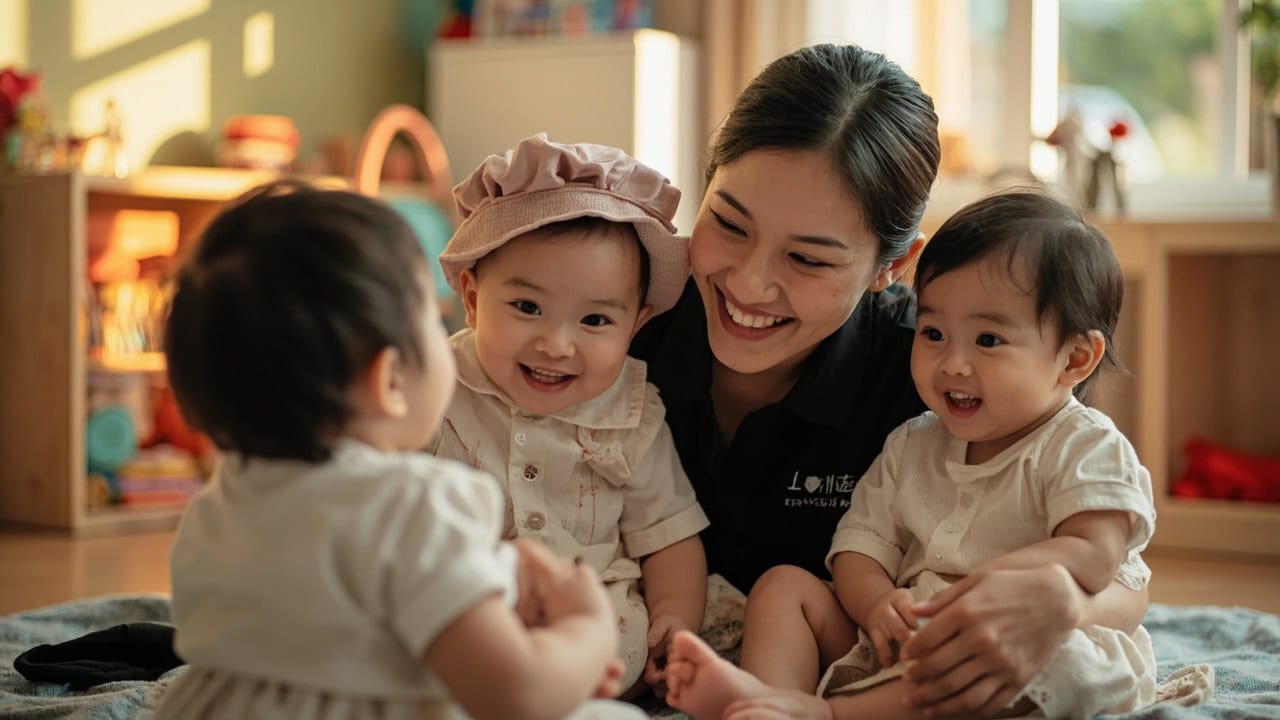
What Your Child Brings Home Reveals About Their Day
The Evening Window: What Your Child’s Homecoming Reveals About the Quality of Their Care
You know the moment. You walk through the childcare door after a full day at work, scanning the room until you find your child. They look up. You feel that rush before you even think.
Maybe they run to you. Maybe they keep playing for a moment, comfortable enough not to rush. Maybe they look at you with the kind of recognition that says, there you are. I knew you’d come.
That moment is not the end of the day. It is the beginning of the most important hours your child will spend outside of childcare itself. And if you have never thought about it that way before, this article is for you.
- The evening hours between pickup and bedtime are the most revealing window in a working parent’s day
- You cannot see what happened during care hours—but you can see what comes home with your child
- Evening difficulty is often a sign of healthy development, not childcare failure
- Quality childcare creates children who come home curious, confident, and transformed
- The bridge between quality care and your home starts with simple, intentional evening rituals
Reading the Evening Window: What You Are Actually Looking At
Every parent carries questions through the workday. Was today a good day? Did they eat enough? Did they cry? Did someone notice when they were tired or frustrated or excited about something new?
These are not anxious obsessions. They are the natural, deeply human questions of a parent who loves their child and cannot be in two places at once.
Here is what most parents do not realize: the answers to those questions are not always waiting for you in a daily report or a photograph sent mid-morning. Sometimes the answers arrive in the evening, in the way your child climbs into your lap or pushes you gently away because they want to do it themselves now.
Sometimes the answer is in a new word. A new gesture. A new way of relating to the world around them that you did not teach them at home.
You cannot see the classroom. You cannot see the caregiver’s face when your child learns to stack blocks for the first time. But you can see the residue of all of that when you sit together in the quiet of your own living room, and your child reaches for a book and says, read this one. And you realize they have been waiting all day to bring that book into this moment with you.
That is the evening window. And it tells you everything.
Signs of Quality Care You Can See in the Evening
- Increasing confidence at pickup over weeks and months, not just the immediate greeting
- Curiosity rather than depletion—a child who wants to explore and share rather than collapse
- New vocabulary and phrases that emerged during the day
- Spontaneous sharing—bringing you something they made or discovered
- Comfortable independence—wanting to do things themselves that they learned at care
- Secure attachment—able to show a full range of emotions because they feel safe with you
When Evening Is Hard: A Crucial Reframe
Here is where many parents quietly suffer without knowing it. Evening difficulty does not mean childcare failure.
It means your child is alive. It means they are processing. It means their mind and nervous system are doing the extraordinary work of a developing child, and that work is not always quiet or convenient or easy to witness.
The toddler who resists bedtime fiercely after a full day may be showing you the healthy frustration tolerance they built in a safe environment.
The baby who seems unsettled in the early evening hours may be absorbing everything they experienced—every face, every sound, every new texture—and their body is doing the work of integration.
The child who is moody or clingy or uncharacteristically sensitive after care may be telling you they are safe enough with you to fall apart. Only children who feel secure fall apart with their parents.
This is not a failure of care. This is the evidence of a child whose care is working.
So when you find yourself in a difficult evening and feel that quiet dread—did something go wrong today? Did they not get enough attention? Did something happen that I need to fix?—sometimes the answer is simpler and more beautiful than that.
Your child had a big, full, developmental day. They are bringing the residue of that day to you, because you are home, because you are safe, because you are the person they trust most in the world.
What looks like difficulty is sometimes just the overflow of a day that was full of good things.
Building the Bridge: How to Extend Quality Care Into Your Home
You do not need to recreate the classroom. You do not need to become your child’s second caregiver. But you can build a bridge between the world they lived in all day and the world they are coming home to.
Start at Pickup: The Conversation That Matters
Not the logistics—though those matter—but the real exchange. What did they love today? Was there a moment when they were particularly engaged? What song did they ask for at naptime?
These are not small talk questions. They are reconnaissance. They are the way you gather intelligence about your child’s inner world so you can meet them there when you get home.
- If your caregiver tells you your child was fascinated by a particular book, bring that book out at bedtime
- If they mention a game your child invented with another child, ask about it
- If they say your child was especially gentle with a new toy, name that quality back: I heard you were being really gentle today. That is something I would love to see myself.
You are not replicating childcare at home. You are creating continuity. You are telling your child: the world that cared for you this morning is the same world I belong to. And together, all of these caring spaces make one safe world for you to grow up in.
Evening Rituals: The Architecture of Trust
Evening rituals matter. Not because routines are magic, but because rhythm is reassuring.
When your child knows that after dinner comes bathtime, and after bathtime comes the same three books and the same goodnight song, they begin to build an internal architecture of trust. They know what comes next. They can relax into the sequence.
And that relaxation is what makes room for curiosity, for connection, for the spontaneous moments of joy and silliness that make your evenings together feel alive.
Quality care builds that same architecture during the day. Your evening rituals extend it into your home. Together, these two worlds—care and family—create the consistent, warm, developmentally rich environment that your child needs to thrive.
What Quality Care Creates Over Time
The quality signal is not a perfect evening. The quality signal is your child’s increasing confidence over time.
Watch how they move through the rooms. Listen to the words they’re using that weren’t there a week ago. Notice whether they bring you something unprompted—a toy, a question, a look that says, I want to show you something.
These are not small things. These are the signals of a child who spent their day in an environment that did something to them. That shaped them. That grew them.
- The way they greet you with more ease at pickup each month
- The way they come home curious rather than depleted
- The way they move through your home like it belongs to them, because they have spent their day in a place that helped them believe the world belongs to them too
That is what quality childcare builds. And you will see it most clearly in the evening, if you know how to look.
What Makes This Possible: The Caregiver Connection
All of this—the evening window, the visible changes, the bridge between care and home—depends on one thing above all else.
It depends on the person who spent the day with your child. The caregiver who knows your child’s rhythms, who notices when they’re hungry before they cry, who can read the difference between tiredness and frustration, who speaks to your child in a way that makes them feel seen and valued and safe.
| What You May Wonder | What Quality Care Creates |
|---|---|
| Was my child noticed today? | A caregiver who responds to your child’s individual cues, not just group schedules |
| Did they learn anything? | Language, skills, and curiosity that emerge at home in the evening |
| Are they emotionally secure? | A child who can show their full range of feelings because they feel safe |
| Will I know what happened? | Regular communication that helps you read the evening window with confidence |
How EduNanny Singapore Approaches the Evening Window
At EduNanny Singapore, we were founded on a single conviction: that every child deserves a caregiver who brings knowledge, attention, and genuine warmth to every single day. Not as a luxury. As a baseline.
We are part of the ECDA Childminding Pilot, and we operate within that framework because we believe the standards it represents—the intentionality, the structure, the focus on quality—are what families in Singapore actually need.
What This Means for Your Evenings
Our infant ratios of up to 1 to 3 mean your child is not one of twelve in a room. They are one of one, two, or three. Which means when your child takes their first wobbly step or discovers a new sound or needs comfort, there is a caregiver right there, ready to see it and respond.
We believe in transparency. Regular communication between our caregivers and families is not an add-on. It is built into how we operate. At some of our centres, CCTV is in place because we know that trust is not built on promises alone. It is built on openness.
You deserve to know what your child’s day looked like, because that knowledge is what allows you to walk through your own door tonight and read the evening window with confidence.
Making Quality Care Accessible
We know that excellent care must be accessible. The pilot fee structure is designed with that in mind. CDA and Baby Bonus funds can be used with our services, because we do not want financial barriers to stand between your child and quality care.
Monday to Friday care blocks align with the rhythms of working families, not around them. And across Singapore, we are growing in a way that serves real communities where real families live and work and raise their children.
A Tool That Thinks About Your Evenings Too
We developed the Thomas AI Chatbot to support parents and caregivers with guidance, answers, and resources whenever they need them. It does not replace human warmth. But it means that when you have a question at 8 p.m. and your caregiver is off duty and your child is finally asleep, you have somewhere to turn.
We are thinking about your evenings too.
What to Look for When Choosing Infant Care in Singapore
If you are researching childcare options, here are the questions that will serve you best—not just for peace of mind, but for the quality of your evenings together.
- Ask about caregiver ratios. How many children per caregiver? Smaller ratios mean more individual attention and responsiveness.
- Ask about communication. How will you know what your child’s day looked like? What reporting or sharing happens, and how often?
- Observe the goodbye. When you drop your child in the morning, notice how they are received. Are they seen as an individual?
- Notice your evenings. After a few weeks, pay attention to what your child brings home. New words? New confidence? New curiosity? These are your quality signals.
- Ask about caregiver consistency. Will your child have consistent caregivers who know them over time, or rotating staff?
The Evening Window: Your Child Shows You Who They Are Becoming
Every evening, somewhere in Singapore, a working parent walks through their front door with their child. The day is over. The separation is healed. And for a few hours, before dinner and bathtime and bedtime, it is just the two of you in a space that belongs to your family.
In that space, something happens that no photograph can capture and no daily report can fully describe.
Your child shows you who they are becoming.
The curiosity they brought home from care. The words they learned. The way they build something with their hands and then show you with such pride. The way they ask for you—Daddy, Mama, Nai Nai—and the way they settle when you respond.
The way they sleep more peacefully because they spent their day in a place that helped them feel secure.
This is what quality childcare creates. Not just a safe space while you work. Not just a place where your child is fed and rested and kept from harm.
It creates a child who comes home transformed. Who brings the richness of their daytime world into the warmth of their evening world. Who is growing in every direction—intellectually, emotionally, socially—and who is delighted to share that growth with you, their parent, the person who chose this care in the first place.
The evening window is not a burden to manage. It is a gift to receive.
And when you know how to read it, you realize that quality childcare was never about filling your absence. It was about multiplying your presence. Every good day your child spends in quality care adds something to who they are when they walk through your door. And every evening you spend together—building rituals, sharing discoveries, reconnecting after the day apart—adds something to who they will become.
That is why EduNanny exists. Not to replace you. To work alongside you. To be the daytime partner that makes your evening moments possible. And to give you, every single night, the quiet but unmistakable evidence that your child is not merely being cared for.
They are being raised. By you. And by us. Together.
If you are exploring childcare options in Singapore, learn more about how EduNanny supports working families with infant care and childminding aligned to ECDA Childminding Pilot standards.