Reclaiming Your Voice in Singapore’s Parenting Culture
The Cultural Weight Singapore Parents Carry
Singapore has long been celebrated as a place where children thrive—where education is valued, where families are close, where the structures of support run deep across generations. These are real strengths, and they have shaped a culture of parenting that genuinely reflects what many people love about family life here.
But alongside these strengths, there are narratives that have accumulated over decades. Passed down like heirlooms. Treated as settled wisdom even when no one has examined them in a very long time.
You have heard them. Your parents probably heard them too:
- Children should not be sent away too young.
- Family is best.
- Early independence means something is wrong.
- A good mother stays.
- The curriculum will be too hard later if you don’t start early.
- Your child needs to be ready. Your child needs to be ahead. Your child needs to be more.
These messages arrive from every direction. From grandparents who raised their children differently and believe that love means doing it their way. From neighbours who comment on what they see through the window. From social media feeds that show you other families’ curated choices and make yours feel like a comparison you are losing.
They arrive from a school system that is genuinely demanding and from a society that takes pride in achievement—and from a deeper cultural current that says: this is what good parents do, and you will know you are a good parent if your child succeeds.
The conflict is not that these voices are malicious. Most of them come from care. Most of them come from people who want your child to do well.
The conflict is that you are being pulled in directions that do not all point the same way—and somewhere in that pulling, you lose contact with the most important voice you have: your own.
Where This Pressure Really Comes From
Here is what we want you to consider: many of the expectations you feel around childcare in Singapore are inherited, not chosen.
They are the residue of a particular moment in this country’s history—when resources were scarce and education was the pathway out, when multigenerational households were the norm and outside help was a luxury, when the world was smaller and the choices were fewer. They are not wrong, exactly. They made sense once. But they are not necessarily true for you, in your life, with your child, in this decade.
When your mother says she raised four children without any formal childcare and they all turned out fine, she is telling you something real: that love and care can happen outside institutions, that children are resilient, that family bonds matter.
What she may not be accounting for is that her situation was different—that you may not have the same support network she had, that your work demands may not leave the same flexibility, that you may be one person doing what once took a village that no longer exists. She is offering her truth, but it may not be your truth.
When a friend tells you that the infant care centre she chose uses a curriculum that will give your daughter an advantage, she is reflecting a real anxiety—one that has been amplified across this entire country until it sounds like common sense.
The question is not whether you care about your child’s future. Of course you do.
The question is whether the decisions you are making are actually yours—whether they reflect what you believe about childhood and development and learning, or whether they are echoes of fears and expectations that belong to someone else.
Why Feeling This Conflict Is a Sign You’re on the Right Track
Let us be precise about what we are not saying. We are not saying that cultural expectations are wrong and your instincts are always right. We are not saying that grandparents should be ignored, that tradition has no value, that you should disregard all advice and follow only your feelings. That would be its own kind of naivety, and it would not serve you well.
What we are saying is something more specific: the tension you feel is not a sign of weakness or confusion. It is a sign that you are thinking. It is evidence that you are taking seriously the responsibility of shaping another human life.
The parent who feels no conflict, who follows every expectation without question, may simply not be examining what they are doing. The parent who feels the pull of different directions—who hears their mother and also reads the research and also looks at their child and also considers their own capacity—is doing the harder, more honest work of deciding what they actually believe.
The first thousand days—and the years that follow, before your child begins formal schooling—are when the foundations are laid. Not just for academic readiness, but for trust, for security, for the ability to learn, for the sense that the world is a place where they are held and known.
The choices you make in these years are real choices. They have weight. And they should be made by you—with the best information you can gather, with the wisdom of others you trust, but ultimately by you.
What Quality Infant Care Looks Like—and Why It Matters
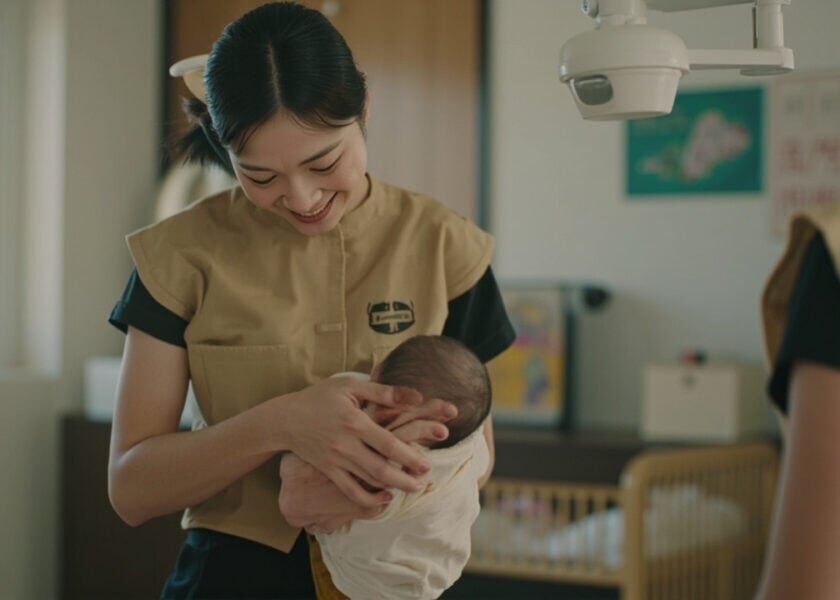
When your child is an infant, the stakes feel highest—and the weight you carry can feel heaviest. Infants cannot yet tell you what they need in words. They communicate through cry and through stillness, through the reaching of their hands and the turning of their heads, through the way they settle or don’t settle when they are held.
Reading an infant requires attention. It requires patience. It requires a caregiver who can attune to one small person at a time—who is not so overwhelmed by numbers that they cannot notice the subtle shifts that tell you something is wrong, or something is beautiful, or something is changing.
A child who is hungry does not always cry loudly. Sometimes they root quietly, or stare at nothing, or make a small sound that is easy to miss. A child who is about to fall asleep gives signals that, if caught, can make the difference between a child who is soothed into rest and a child who becomes overtired and dysregulated.
These are not dramatic moments. They are the ordinary texture of infant life. But they matter enormously, because the infant’s experience of being met, of being understood, of feeling that the world is a place that responds to them—this is the foundation of trust that will last a lifetime.
Here is what quality care can do when it is chosen with intention, not compliance:
- It can honour the relationship between you and your child while also honouring your need to work, to rest, to be a full human being rather than a parent who is always giving and never receiving.
- It can offer your child a rich environment—structured enough to support development, warm enough to support attachment, safe enough that you can breathe.
- It can become a continuation of what you are doing at home. A partnership in your child’s care. A choice you made because it was right for you, not because someone told you it was right.
When childcare aligns with your actual values—your understanding of how children learn, your belief in what they need in these early years, your respect for their personhood even as they are small—it stops being a source of anxiety and becomes something else.
We have watched parents transform when they stop trying to meet everyone else’s expectations and start making decisions that actually reflect who they are. The relief is not just emotional. It changes the quality of their presence with their children, the quality of their communication with their extended families, the quality of their own inner life.
When you are acting from conviction rather than compliance, you carry yourself differently. Your children feel that.
The Concerns You Actually Carry—and How to Move Through Them
When we think about the families we work with, what strikes us is not the diversity of their circumstances but the universality of something underneath.
Almost all of them arrive carrying something heavy.
The working mother who feels guilty for leaving her infant, even though she knows intellectually that she is providing for her family and that her child is in good hands.
The father whose own parents do not understand why he would choose formal childcare when family is available.
The couple who disagree with each other, because their different cultural backgrounds have given them different scripts, and they are trying to write their own.
The single parent who has no village and is building one from scratch, one choice at a time.
These are not failing parents. These are parents who are doing the work of figuring out what kind of family they want to be. And they deserve support that meets them where they are—not judging their choices, not adding to the weight they carry, but helping them see more clearly what they actually believe and how they might actually live it.
You do not have to resolve this weight by abandoning your instincts or by abandoning the wisdom of those who came before you. You resolve it by distinguishing between what is yours and what is not.
Ask yourself, for every piece of advice you receive: Whose experience does this reflect? Whose fears does this carry? Does this align with what I actually believe about my child and my family?
Practical Steps for Choosing Infant Care in Singapore
If you are researching your options and feeling overwhelmed, here is some honest guidance:
1. Start with your actual circumstances, not ideal circumstances
Your friend’s situation is not your situation. Your mother’s experience is not your experience. Consider: What does your work require? What support network do you actually have? What are your child’s specific needs? The best choice is the one that fits your real life.
2. Distinguish between inherited expectations and chosen values
Before evaluating childcare options, take time to understand what you actually believe about early childhood. What matters most to you in these early years? What kind of person do you want your child to become? When you know your values, you can evaluate options against them rather than against someone else’s checklist.
3. Ask the questions that matter to you
What is the caregiver-to-child ratio? How do caregivers communicate with parents? What does a typical day look like? How is the environment designed to support infants’ development and security? There are no perfect answers, but there are answers that align with what you believe and answers that don’t.
4. Trust the feeling of fit
When you visit a potential childcare arrangement, pay attention to how you feel. Do you feel seen, or pressured? Do the caregivers seem attentive, or rushed? Does the environment feel warm, or institutional? You know your child better than anyone. Trust that intuition.
5. Remember that you can change your mind
No choice is permanent. If something isn’t working for your family, it is okay to reconsider. Good parenting includes the willingness to learn and adapt.
The EduNanny Singapore Approach
We want to be honest about what we are and what we are not.
EduNanny Singapore is part of the ECDA Childminding Pilot, which means we operate within a framework that takes the regulation and safety of childcare seriously. We offer both home-based and community-based pathways, because families are not all the same and their needs are not all the same.
For infants, we maintain a ratio of up to one caregiver to three children—a ratio that allows for genuine attention, for responsiveness, for the kind of care that does not feel rushed or transactional.
Our fees are structured to be affordable within the pilot framework, and we accept CDA and Baby Bonus payments, because childcare should not be accessible only to families with significant means. These are not marketing points. They are reflections of a belief that good childcare should be available to all Singapore families who need it.
We operate Monday through Friday, in care blocks designed to support working parents, and we communicate transparently with families about what is happening during the day. Where CCTV measures are deployed, they are deployed not as surveillance but as transparency—for parents who want to know, who worry, who need the reassurance that comes from seeing.
But beyond these practical details, which we share because they are real and because you deserve to know them, there is something else we are trying to offer.
We are trying to be the kind of partner that supports parents who think carefully. Not parents who follow scripts. Not parents who are looking for the one correct answer. Parents who feel the weight of this decision and who want to make it well—with clarity, with confidence, with a sense that they have been heard and understood in the complexity of what they are navigating.
You Are Not Alone in This
We want to close by returning to where we began, because that is where the real work is.
You carry a weight. We know you do. It is the weight of caring deeply about something you cannot fully control. It is the weight of love that makes every decision feel enormous. It is the weight of a culture that has opinions about what you should do, and family members who have invested in how you raise your children, and a child inside you—your own inner parent, perhaps—who sometimes knows what is right but is not always brave enough to say it out loud.
This requires a kind of honesty that is uncomfortable. It means you may have to hold your ground when others disagree. It means you may have to explain yourself to people who did not ask for an explanation. It means you may have to accept that your choices will not please everyone, and that pleasing everyone was never the goal.
But here is what becomes possible when you make choices from clarity rather than compliance:
- You become a more present, more grounded, more confident parent.
- You become a model for your child of what it looks like to know yourself, to trust yourself, to live according to your values even when it is hard.
- You become part of something larger—a quiet, growing movement of parents who are redefining what good parenting looks like in Singapore, not by rejecting tradition but by interrogating it, not by dismissing wisdom but by choosing which wisdom to carry forward.
We are honoured to walk alongside families in this work. Not as experts who have all the answers—we do not—but as partners who are paying attention, who are learning alongside you, who believe that the right childcare arrangement is not the one that checks every box or follows every expectation.
It is the one that fits. The one that allows your child to flourish and you to breathe. The one you can defend not because someone told you it was correct, but because you have thought about it carefully and you know why you chose it.
If you are researching infant care or childminding in Singapore and want to have an honest conversation about what might work for your family, we invite you to reach out.
We will not tell you what to choose. We will not add to the weight you already carry. But we will listen, and we will share what we offer honestly, and we will support you in making the decision that is actually yours to make.
Because the weight you carry is not the problem. It is evidence of your care.
And care, when it is thoughtful and honest and brave, is the most important thing you will ever give your child.
Your children are lucky to have you. And you do not have to figure this out alone.
Explore EduNanny Singapore’s infant care and childminding options and discover how we support families who are making thoughtful, intentional choices for their children’s early years. Learn more about our approach to quality childcare in Singapore.
#SingaporeChildcare #InfantCareSG #ParentingInSingapore #ChildmindingSingapore #EduNannySG