The Signals That Tell You Your Child Is Thriving in Care
Quick Summary: What Your Child Feels in Quality Childcare
- Children are active interpreters, not passive recipients of care. They feel everything long before they can name it.
- Safety is signalled through behaviour — relaxed shoulders, exploratory play, turning to a caregiver for connection rather than distress.
- Being seen is different from being supervised. Quality care means a caregiver who notices, responds, and recognises your child’s individual rhythms.
- Consistent relationships build confidence. Trust grows from familiarity, and confidence is built through felt experience, not instruction.
- Your child’s inner experience shapes everything — their relationship with learning, with people, and with themselves.
The World Before Words: How Children Experience Care
Here is something we don’t often say aloud, but every parent knows in their bones: children experience the world before they can name it. Long before a child can tell you that a room feels warm or that a caregiver makes them feel safe, they are already registering every detail.
The tone of a voice. The way someone’s hands hold them — firmly enough to feel secure, gently enough to feel loved. The feeling of being greeted in the morning with genuine attention, or being left standing unnoticed at the door while a caregiver tends to something else. For a child under three, these sensations are the entire language of their world.
This is the first thing we must understand if we are to truly see quality childcare from the inside: young children are not passive recipients of care. They are active interpreters. They are watching, feeling, drawing conclusions about themselves and the world with every hour they spend in a care environment.
A child who is in the right setting is not just being kept busy. That child is forming an understanding of their own worth, their own agency, their own place in the world — and they are doing it long before they ever set foot in a classroom.
What Safety Looks Like: Reading Your Child’s Signals
Consider what happens when a child walks into a new environment for the first time. There is uncertainty. There may be a moment — perhaps only a few minutes, perhaps longer — where everything is strange. The faces are unfamiliar. The sounds are new.
And then, something shifts. A caregiver kneels down to their level, not looming above but meeting them where they are. A voice speaks softly, and there is patience in it — not the patience that rushes, but the patience that waits. Slowly, almost imperceptibly, the child’s body begins to relax. The shoulders drop. The grip on a parent’s leg loosens. And something remarkable happens: the child decides, on the basis of this first real interaction, whether this place is safe.
That decision is not made in words. It is made in behaviour. It is made in the way a child begins to explore a shelf of toys, one eye still on the caregiver across the room. It is made in the way a toddler who was clinging to their mother’s skirt is suddenly, unexpectedly interested in what another child is building on the mat.
These are not random behaviours. They are signals. Understanding what those signals mean is one of the most powerful things a parent can learn — because those signals are your window into your child’s inner experience of care, even when you are not there to see it.
When a child signals safety, it looks like this:
- They begin to play independently but not anxiously — absorbed, not merely distracted.
- They turn to a caregiver not in distress but in the ordinary way a person turns to someone they trust — for confirmation, for shared delight, for a moment of connection.
- They are curious. They are willing to try things that are slightly unfamiliar.
- They do not need to be constantly redirected, not because they are being managed, but because they feel settled enough to follow their own natural interest in the world.
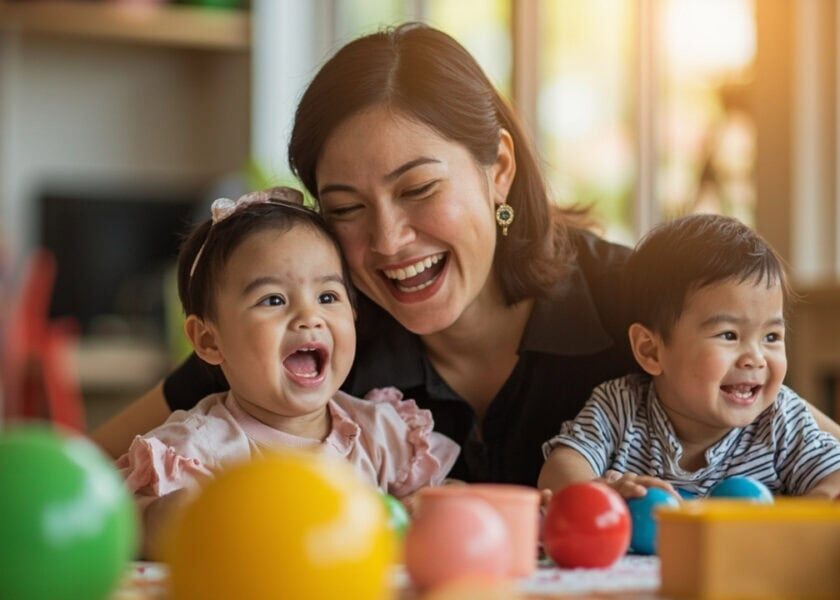
- They greet their caregiver in the morning as someone who is genuinely glad to see them — not just resigned, not just habituated, but actually pleased.
Supervised vs. Seen: The Profound Difference
This is the profound difference between a child who is being supervised and a child who is being seen.
Supervision is about what happens to a child’s body — that they are in the right place, that they do not wander, that they are fed and rested on schedule. But being seen is something else entirely.
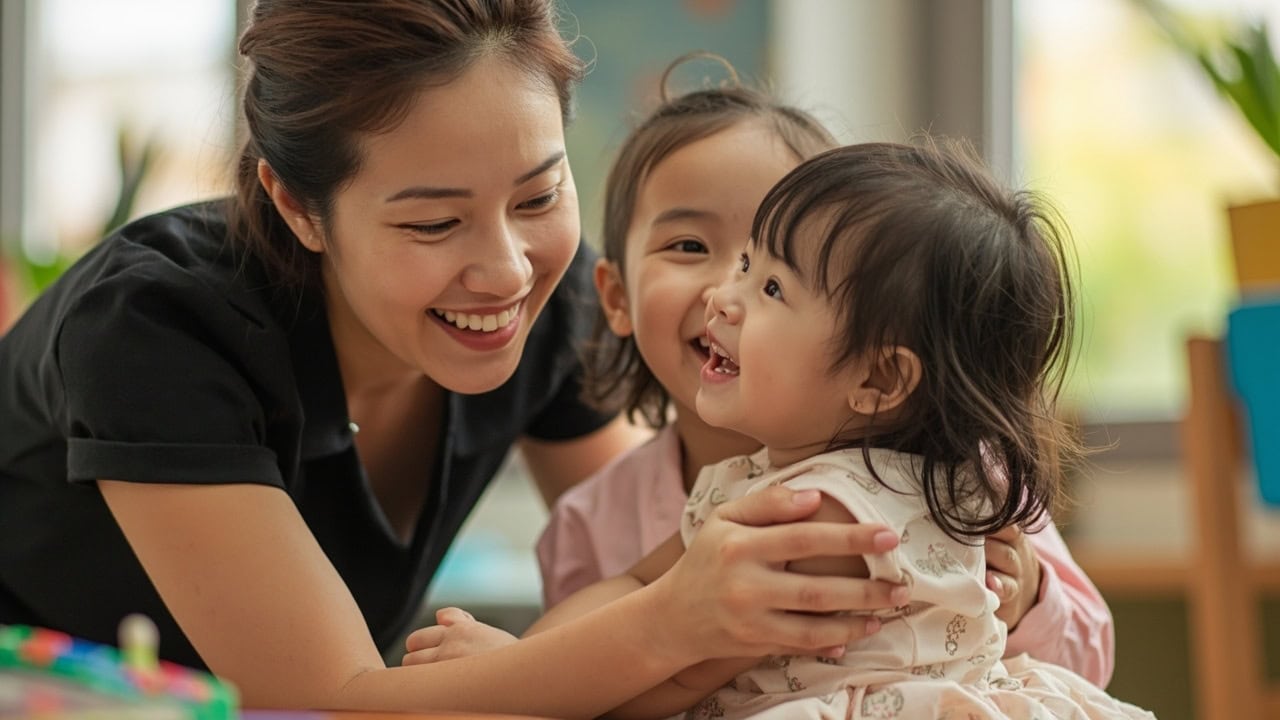
It is the experience of a caregiver who notices when a child is trying to stack a block tower for the fifth time and is about to knock it over with triumph rather than frustration — and who responds with delight rather than intervention.
It is the caregiver who recognises that a child’s sudden clinginess this morning is not “bad behaviour” but a message — perhaps a growth spurt, perhaps a dream, perhaps just a day when the world feels a little too big. And who responds to the message, not just the behaviour.
A child who is managed follows rules, completes transitions, stays within designated areas. It is not a harmful experience — but it is an incomplete one.
A child who is seen is a participant in their own care. Their interests shape the activities. Their emotional states are met with understanding rather than correction. Their growing independence is encouraged and trusted.
And the result of that — the result that no curriculum can manufacture and no amount of adult direction can replicate — is a child who feels, in the very core of their being, that they matter.
Consistency and Trust: The Foundation of Confidence
This is where the relationship between a child and a consistent caregiver becomes not just important, but foundational. Developmental understanding consistently tells us what parents intuitively understand: young children need stability to thrive.
They need to know that the face that greeted them yesterday will be there today, and tomorrow, and the day after. Not because familiarity is comfortable — though it is — but because familiarity is the soil in which trust grows. And trust is the platform from which everything else takes flight.
When a child has a consistent, warm caregiver relationship, something extraordinary happens over time. The child begins to feel a sense of security that is not dependent on a parent’s physical presence. This is not a rejection of the parent — it is a beautiful and necessary expansion of the child’s emotional world.
The child learns, through hundreds of small interactions, that the world contains people who will respond to them with kindness and patience. And that knowledge, quietly absorbed, becomes the foundation of what we call confidence.
What confident children actually look like:
- They have learned, through experience, that they are capable of affecting the world around them.
- Their curiosity matters to the people around them.
- Their attempts are worthwhile.
- Making mistakes is safe.
This kind of confidence cannot be taught. It can only be felt. It is built, brick by brick, in the thousands of moments when a caregiver responds to a child’s frustration with calm, to a child’s curiosity with encouragement, to a child’s silence with patient presence.
Quality Childminding in Singapore: What It Actually Looks Like
For Singapore parents, the question of what happens in the care environment is not trivial. You are navigating a world that moves quickly — professional demands, financial realities, the weight of wanting to be present for your child while also building a life that can support them well.
Imagine your child in a small, warm home-based setting — not a large institution but a genuine home, one that has been thoughtfully prepared for young children to explore. There are toys, yes, but there is also something more important: there are routines that feel predictable without being rigid, because young children find deep comfort in knowing what comes next, but they also need room to move, to choose, to lead their own play.
Now imagine a caregiver who knows your child well enough to notice when they are on the verge of a breakthrough — a new word, a new physical skill, a new way of relating to another child. And who responds in a way that extends that moment, that celebrates it, that makes your child feel not just competent but recognised.
That kind of response is not scripted. It is only possible when a caregiver truly knows a child — and it is only possible when there are enough children in the environment for that knowledge to be cultivated.
Signs your child is thriving in care — not just attending it:
- They seem genuinely happy to see their caregiver in the morning.
- They talk about their day, or a child who is not yet verbal seems lighter, more engaged, more at ease in the evening.
- The caregiver knows small details about your child — their favourite song, the way they like their food cut, the stuffed animal they cannot sleep without.
These are not small things. These are the evidence.
It is also worth noting: these signals do not appear immediately. They do not appear on the first day or even the first week. They build over time, as your child’s nervous system gradually settles into the new environment and the relationship with the caregiver deepens. This is normal. This is healthy. The child who takes time to warm up is not a child who is struggling — they are a child who is cautious, who is observing, who is doing exactly what they should be doing before they commit to trusting a new place.
The ECDA Childminding Pilot: Pathways Worth Understanding
For families in Singapore, the ECDA Childminding Pilot offers pathways — home-based and community-based — that recognise families have different needs, different circumstances, different configurations of support.
The pilot fee structures are designed to be affordable, and in many cases, CDA and Baby Bonus subsidies are usable, which means that quality care is within reach for families who need it. Monday to Friday care blocks provide the consistency that children thrive on, and the flexibility of the pathway options means that you can find a model that fits your family’s rhythm rather than forcing your family into a model that was designed without you in mind.
This matters. Because the stress of navigating childcare options — figuring out what is available, what is affordable, what is actually good for your child — is itself a burden that Singapore parents carry with remarkable resilience, but should not have to carry alone.
How EduNanny by BUTLER Creates Conditions for Your Child to Thrive
EduNanny by BUTLER has built its approach around a conviction that is deceptively simple but deeply considered: every child deserves to be known, not just watched.
Their approach to childminding in Singapore reflects this understanding. Home-based and community-based care, when done with quality and intention, can offer something that is genuinely different from larger centre settings. A smaller environment. A ratio that allows a caregiver to know each child as an individual — to understand their rhythms, their preferences, their particular ways of expressing joy and frustration and wonder.
What EduNanny’s approach creates space for:
- Caregivers who are trained and devoted, not just present.
- Small ratios that allow genuine attention to each child’s individual experience.
- Communication practices designed to keep parents connected to their child’s day.
- Home-based settings that feel warm and prepared, not institutional.
- Routines that are predictable without being rigid — room for the child to lead their own play.
When a service like EduNanny is thoughtful about its pricing, its pathways, and its accessibility, it is not just making a business decision. It is making a statement about who it believes should have access to quality care. And that statement, that commitment, is worth noticing.
The Real Question You Are Asking
Your child is not a project. Your child is not a list of developmental milestones to be ticked off or a performance to be optimised. Your child is a human being with an inner life — rich, complex, and entirely real — who is experiencing every single day of their earliest years with a depth of feeling that we sometimes underestimate because they cannot articulate it in words we understand.
Quality care honours that inner life. It treats the child’s emotional experience as worthy of attention, not as a distraction from the “real” work of learning. It understands that a child’s sense of safety is not a soft, sentimental concern but the very platform on which all learning is built.
When a child feels safe, they explore. When they explore, they learn. When they learn, they grow. And when they grow in an environment where they are genuinely seen — where their individuality is recognised and their developing self is treated with respect — they become children who believe, in the marrow of their bones, that they are capable, and that the world is worth exploring.
The question you are asking when you drop your child at the door of a care environment is not really about childcare at all. It is about whether your child is going to be okay. Whether they are going to be happy. Whether they are going to grow into someone who trusts themselves and trusts the world around them.
And the answer to that question — the real answer — is not found in the facilities or the curriculum or the credentials on the wall. It is found in the moment-to-moment quality of your child’s experience. In whether the person caring for them is present. In whether they are seen. In whether the environment is shaping your child’s inner world with the same care and intentionality that you shape it at home.
You are already paying attention to the right things. But when you choose quality care — care that is built on consistency and warmth, on small ratios and real communication, on caregivers who are trained and devoted and present — you are not choosing between your child and the world. You are choosing to let your child have both: your love at home, and a world outside that is ready to welcome them with the same care, the same attention, and the same belief in who they are becoming.
If you are a parent sitting with this decision — whether to begin, whether to change, whether to trust — know that the question you are carrying is a good one. It means you care deeply. It means you are paying attention to the things that matter most.
The place you are looking for exists. Your child will tell you, in their own way, whether they have found the right place. They will tell you in the lightness of their play, in the ease of their transitions, in the way they greet their caregiver in the morning as someone who is genuinely glad to see them.
Listen to those signals. Trust them. And know that when you choose quality care, you are making a statement about what you believe your child deserves: to be known, to be seen, and to grow in an environment that welcomes who they are becoming.
That is not a compromise. That is a gift.
Explore how EduNanny by BUTLER creates environments where children are truly seen — and learn more about the ECDA Childminding Pilot pathways available to your family. If you have questions or would like to begin a conversation, the EduNanny team is here to help.