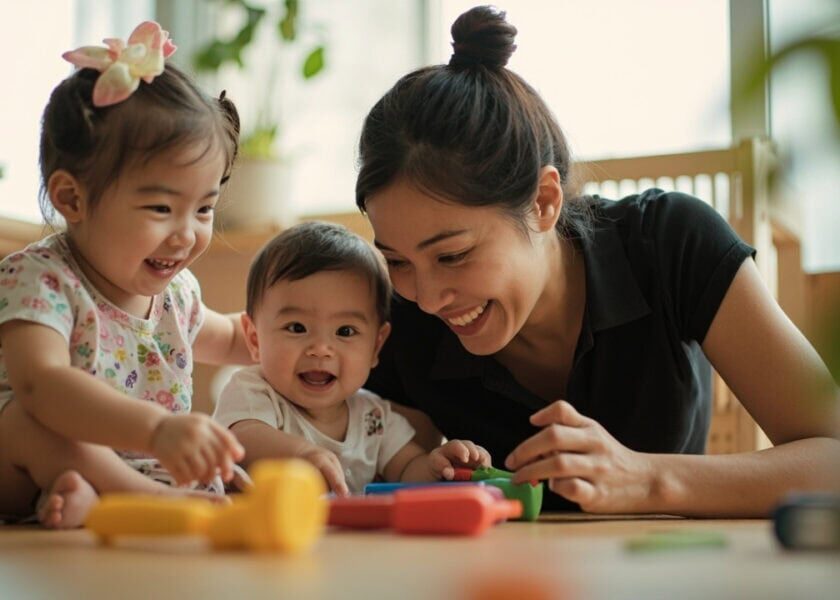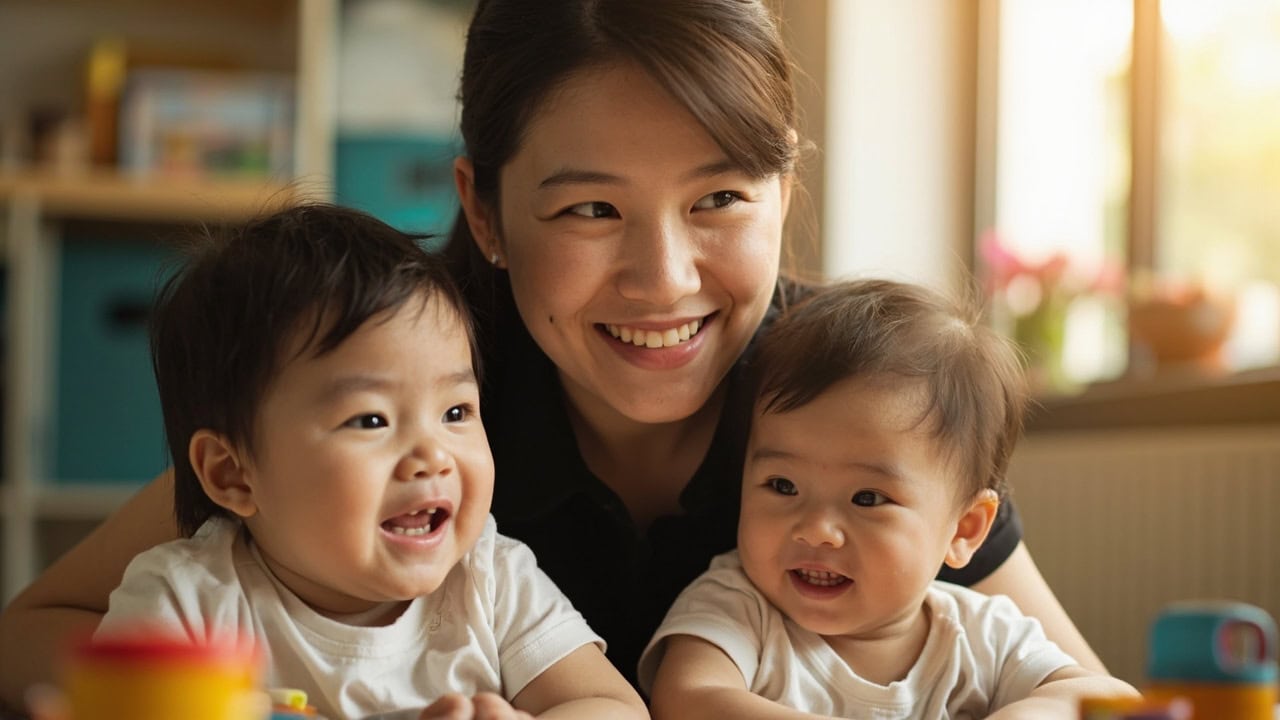
What Your Child Is Quietly Building While You Are Away
The Silence Every Working Parent Knows
There is a particular silence that every working parent knows. It happens in the morning, when you slip out before your child is fully awake. Or in the afternoon, when you are in a meeting and you know they are somewhere else, learning to be without you for a few hours.
That silence is not empty. It is full of a question that you carry quietly through your day: Is my child okay? More than that, deeper than that: Is my child growing? Am I missing it?
You are not missing it.
That is the truth that most childcare conversations never quite say plainly, because they are too busy reassuring you that your child is fine, that they are happy, that the transition was smooth. And those things matter. But they are not the whole story.
The whole story is far more remarkable than fine. The whole story is what is actively being built inside your child during those hours when you are not there to see it. And understanding that story changes everything about how you walk through that silence in the morning.
What quality childcare quietly builds
- Emotional regulation — Your child learns to manage big feelings in consistent, responsive care environments.
- Social confidence — Peer interaction builds skills that home alone cannot replicate.
- Cognitive curiosity — Meaningful play builds neural pathways for thinking, problem-solving, and questioning.
- Independence — Guided challenges build competence and confidence.
- Resilience — Navigated small disappointments build the capacity to recover from failure.
These are not assumptions. They are documented outcomes of quality early childhood environments. And they are being built right now, in the hours when you are not there.
What Quality Childcare Actually Builds
Emotional Regulation: The Architecture of Managing Feelings
When your child is in a quality childcare environment, something profound is happening in their emotional world. They are learning, through hundreds of small interactions across months and years, that the world is a place where their needs are heard and met.
Not perfectly. Not instantly. But consistently. Responsively.
A child who learns to regulate their emotions in a consistent care environment builds an internal architecture that allows them to manage disappointment, wait for what they want, recover from frustration, and find their way back to equilibrium.
You will see this emerge. The child who used to dissolve into tears when a toy was taken away and now takes a breath and asks for it back. The child who used to need you desperately to fall asleep and now settles with their caregiver because they have learned that bedtime is safe, that someone will be there, that the world does not abandon them when they close their eyes.
Social Confidence: Learning to Be Human Together
Simultaneously, in that same room, your child is learning something equally vital about their place among other people. Social confidence develops nowhere more effectively than in the company of peers under the guidance of warm, skilled caregivers.
Your child is learning to read other children’s faces, understand that others have feelings just like theirs, recognize that sharing is a negotiation rather than a loss, and feel that being in a group of small people is not overwhelming but interesting.
These are not skills that parents can easily replicate at home. Because social confidence requires other children. It requires a small community of peers who are all figuring out the same things at the same time.
You will notice this too. The playdate that used to end in tears will start to end in plans for the next one. The child who hung back at the playground will begin to venture toward the group. The child who did not know how to ask for what they wanted will find a voice.
Cognitive Curiosity: The Love of Learning Itself
There is also, in quality childcare, a third construction happening: cognitive curiosity and the love of learning itself.
This is not about flashcards or academic pressure. It is about your child discovering that their actions have consequences, that the world responds to them, that asking questions opens doors, and that trying something hard and failing and trying again is not shameful but thrilling.
You will see this emerge at home.
- The child who comes home with paint on their sleeves is building the neural pathways that will eventually support scientific reasoning and creative thinking.
- The child who spends an hour stacking blocks and knocking them down is learning about gravity, balance, persistence, cause and effect.
- The child who asks why the sky is blue or how the tap works is practicing the questioning habit that underlies all genuine learning.
Independence and Resilience: Venturing from a Secure Base
Quality childcare builds independence — not the cold, premature independence that pushes children away from attachment, but the healthy, age-appropriate independence that comes from a secure base. The kind that grows when a child feels safe enough to venture, supported enough to try, and trusted enough to do.
In a quality childcare environment, your child is given the gift of small challenges. They are encouraged to put on their own jacket, even though it takes time. They are allowed to climb the low structure and feel the thrill of height, because a skilled caregiver is nearby. They are given the space to try to fix a conflict with another child before an adult intervenes.
You will see this at home. The child who suddenly insists on doing things themselves. The child who wants to pour their own drink, even though it spills. The child who, when faced with a stuck zipper, does not immediately dissolve into tears but tries something, then tries something else.
These small frustrations — the toy that is being used by someone else, the puzzle piece that will not fit, the caregiver they prefer who is not available today — are not crises. They are opportunities. Under the guidance of skilled, warm, responsive caregivers, your child learns that frustration is survivable. That sadness passes. That the world contains boundaries and limits and other people who have needs too.
They learn that they can feel strong emotions and still be okay. This is resilience — the capacity to encounter difficulty and not be destroyed by it.
Seeing Growth at Home
Every one of these developmental foundations has a signature. A way of appearing in your home life that you will recognize if you know what to look for.
- You will not see the peer interaction that built your child’s social confidence. But you will see the playdate where your child holds a friend’s hand.
- You will not see the hundreds of times a caregiver helped your child regulate their big feelings. But you will see the child who, one day, takes a breath and says I am angry but I am okay.
- You will not see the mornings of guided exploration and meaningful play. But you will see the child who asks why, and why, and why again, with genuine intellectual hunger.
These are the bridges. And once you see them, once you understand that the behaviors you see at home are not random or mysterious but are the visible results of invisible developmental work, everything changes.
The silence in the morning is no longer empty. It is full of something being built. And you are not missing it. You are investing in it.
For Parents in Singapore: The Real Pressures, The Real Solutions
For parents in Singapore, this choice comes with its own particular pressures. The cost concerns. The commute logistics. The cultural expectations. The desire to be present and the necessity of being elsewhere.
These are real pressures, and they deserve to be met with real solutions, not just reassurance.
The ECDA Childminding Pilot
Singapore has built systems specifically to support parents in this choice. The ECDA Childminding Pilot is one of them — a carefully structured framework designed to make quality childminding accessible and affordable for Singapore families.
Within this framework, parents can choose pathways that fit their circumstances:
- Home-based childminding — where a trained childminder comes to you in the familiar warmth of your own home
- Centre or community-based care — where your child benefits from a structured environment with other children
Both pathways, when delivered with developmental intention, can build the foundations we have discussed. The key is quality of environment, quality of caregiver, and quality of attention.
Making It Affordable
Fee structures within the pilot are designed to be within reach for families who need them. Payment through CDA and Baby Bonus is available, because Singapore has built these systems to support parents in exactly this choice — and quality providers make use of those systems fully.
The Ratios That Change Everything
In quality infant care settings, the ratio of caregivers to children determines what is actually possible.
With up to one caregiver for every three infants, the kind of responsive, individualized attention that builds emotional regulation and social confidence becomes genuinely possible. Your child is not one of fifteen. They are one of one, two, or three.
That changes everything about the quality of attention they receive.
What Quality Childminding Actually Looks Like
Beyond structures and systems, there is something that matters more than any feature list. It is a philosophy of childminding that takes development seriously — not as a marketing claim, but as a daily practice.
Every caregiver. Every environment. Every routine and transition. Designed with one question in mind: What is this building in this child?
When your child arrives in the morning, they are not just being minded. They are entering a developmental environment where the caregiver understands that:
- Crying is communication, not a problem to be silenced
- Separation is a skill to be learned with patience and support
- Play is work — the most important work of early childhood
- Every small challenge is an opportunity for growth
- The child in front of them is not merely being cared for but is actively becoming someone
Communication That Builds Trust
For parents who worry about what happens during those hours, quality providers build systems for communication and transparency that reflect their understanding that trust is earned, not assumed.
This means regular, meaningful updates about your child’s day, clear channels for you to ask questions and receive thoughtful responses, documentation of milestones and moments that you might otherwise miss, and transparent processes that give parents a window into their child’s environment.
You are not handing your child into a black box of uncertainty. You are placing them in a known, accountable environment where you can see what is being built.
Choosing Quality: Questions That Matter
If you are beginning to research your options in Singapore, here are the questions that matter most:
- What is the caregiver-to-child ratio? For infants, lower ratios mean more responsive attention. This is not negotiable for quality.
- Are caregivers trained in child development, not just childcare? There is a difference between someone who can keep a child safe and someone who understands what they are building.
- What does a typical day look like? Quality environments have routines that balance care, play, rest, and meaningful engagement — not just screens and snacks.
- How do they handle emotional moments? Listen for answers that reflect understanding of development, not just behavior management.
- How do they communicate with parents? You should feel informed, not left guessing.
- Can you observe before you commit? Quality providers welcome this. They want you to see what they are doing.
- What do the children look like? Not just whether they are clean and safe, but whether they seem engaged, curious, at ease. Watch their faces.
Addressing Your Real Concerns
Will my child feel abandoned? Separation anxiety is real, and it deserves to be treated seriously. But it is also a phase — and quality childcare helps children move through it. When caregivers are warm, consistent, and responsive, children learn that parting is temporary. That you always come back. That the world contains other trusted adults who will meet their needs.
How do I know what is actually happening? Ask about communication practices before you choose. Quality providers will have clear, consistent ways of sharing your child’s day — not just a photo at the end, but meaningful updates that help you understand what your child is experiencing and learning.
Is it worth the cost? This is a question only you can answer for your family. But consider what is being built: the foundations of emotional regulation, social confidence, cognitive curiosity, independence, and resilience. These are not small things. They shape your child’s capacity for relationship, for learning, for navigating the complexity of life.
What if my child gets sick or has a problem? Ask about health protocols, emergency procedures, and how providers handle illness. Quality settings have clear systems for this. And quality caregivers understand that they are partners with you in your child’s wellbeing.
The Sound of Growth
If you are a parent in Singapore, and you are carrying the quiet fear that your child is developing without you, I want you to know something.
You are not failing. You are not missing the most important parts.
You are making a choice that, when made with intention and supported by quality, builds in your child exactly what you want them to have. Not despite your absence, but through the hours that your child spends in an environment designed for this purpose.
The silence in the morning is not a loss. It is the sound of your child building something.
And when you understand what is being built — when you see the bridges between what happens in childcare and what you see at home — the silence changes. It becomes the sound of growth. The sound of your child becoming someone who is emotionally capable, socially confident, intellectually curious, independently capable, and resilient enough to navigate a complex world.
Emotional regulation. Social confidence. Cognitive curiosity. Independence. Resilience. These are not nice-to-haves. They are the foundations of everything your child will become.
When you evaluate cost, look at what is being purchased. Not just supervision. Not just safety. But developmental investment in your child’s future.
Your child is growing. You are not missing it. You are investing in it.
And that investment, made with care and supported by people who understand child development deeply, is one of the greatest gifts you will ever give.
Growing What Matters, Together
EduNanny by BUTLER was built around a simple belief: that quality childminding should be accessible to every Singapore family that needs it. Operating within the ECDA Childminding Pilot, they offer pathways — home-based, community, and centre-based — designed with developmental quality as the non-negotiable foundation.
With caregiver-to-infant ratios that allow for genuine responsiveness, payment options through CDA and Baby Bonus, and a philosophy that treats every interaction as an opportunity to build what matters, EduNanny is here to walk this path alongside you.
Because you are not outsourcing your parenting. You are expanding it. And you deserve support that understands the difference.
If this article has resonated with you, and you would like to explore what quality childminding could look like for your family, EduNanny is ready to answer your questions, address your concerns, and help you understand your options.
Your child is growing. Let us help you see it.