The Readiness Your Child Needs for Primary One Success
What We Mean When We Talk About School Readiness
In Singapore, the question of school readiness weighs heavily on many parents in the months before Primary One registration opens. The industry has responded accordingly: preparation classes, brush-up programmes, and school-readiness workshops of every kind. Lists of literacy benchmarks, numeracy expectations, and motor skill checklists are easy to find.
Parents compare. Parents worry they have not done enough. Parents wonder if they started too late.
But what matters most is this: the readiness that will serve your child in Primary One and beyond is not the readiness that shows up on a test. It is the readiness that allows your child to walk into a new environment and feel, even if nervous, even if hesitant, that they belong there.
This readiness is built over years, in daily interactions, in the texture of ordinary mornings and afternoons, in the small moments when a child learns that leaving a familiar place does not mean abandoning the people who love them. That new places can be explored. That teachers can be trusted. That friends can be made. That mistakes are survivable.
The Singapore Reality for Working Parents
Singapore has one of the highest rates of dual-income households in the world, which means that from the earliest months of life, most of our children spend their waking hours in the care of someone other than their parents. For some families, that is a grandparent or relative. For many, it is a childcare centre or a licensed home-based caregiver.
The prevalence of this arrangement has normalised it, but normalisation has not made it easy. If anything, it has added layers of complexity to the already weighty question every parent carries: Am I doing right by my child?
In the early years, that anxiety tends to focus on safety. Is my baby being watched? Is the environment clean? Is the caregiver attentive? These are legitimate concerns, and they matter enormously.
But as children grow, as they move from infant care into toddlerhood and toward formal schooling, the questions evolve. Now parents ask: Is my child learning? Is my child developing on track? Will my child be ready for Primary One?
There is an emotional dimension to this transition that deserves to be acknowledged, because too often we talk about childcare and schooling as if parents are not also navigating an enormous personal shift.
Your child growing up is not a neutral experience. It is joyous and bittersweet and full of moments that catch you off guard.
One morning, your four-year-old tells you they do not need you to walk them to the classroom anymore. One afternoon, they come home with a story about something they figured out on their own, and you feel both proud and strangely displaced. One evening, they ask about Primary One, and you realise they are both excited and afraid, and you do not know which feeling to address first.
If you feel this, you are not alone. You are not doing something wrong. This ambivalence is a sign of how much you love your child, and how seriously you take your role in their life.
How Quality Childcare Builds Readiness Over Time
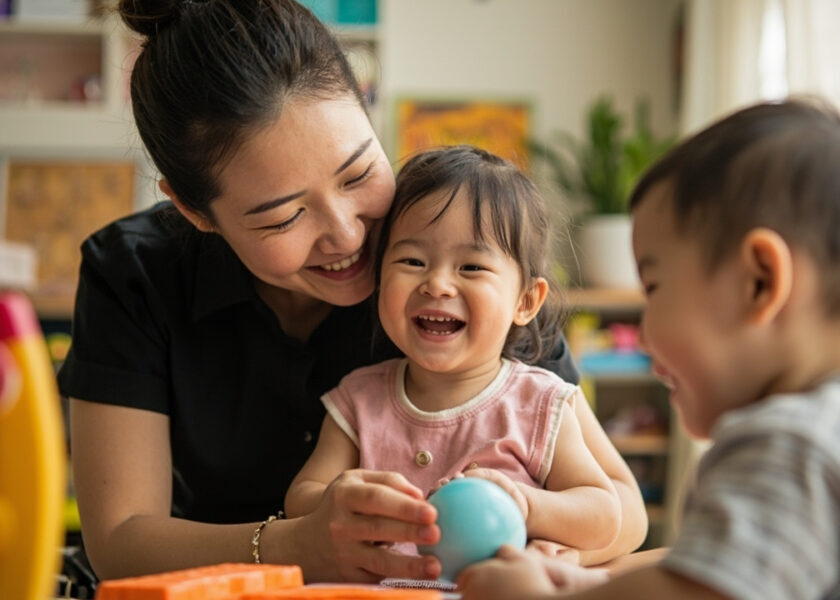
When we talk about quality childcare, we mean care that understands child development, that structures the day not just for supervision but for growth. The kind where every song, every story, every shared meal, and every minor conflict on the playground is seen as an opportunity to build the capacities your child will need for the years ahead.
We mean caregivers who are not just watching children but observing them. Who understand individual rhythms. Who notice when a child is ready to tackle a challenge and when they need support. Who communicate with parents not just about what their child ate for lunch, but about who their child is becoming.
In Singapore, families are fortunate to have a growing number of such programmes. Centre-based care offers children the opportunity to learn alongside larger groups of peers and benefit from structured curricula. Home-based care is also gaining recognition precisely because of its intimacy, its ability to replicate a family-like environment, and its small ratios that allow for deeply individualised attention.
What This Looks Like Every Day
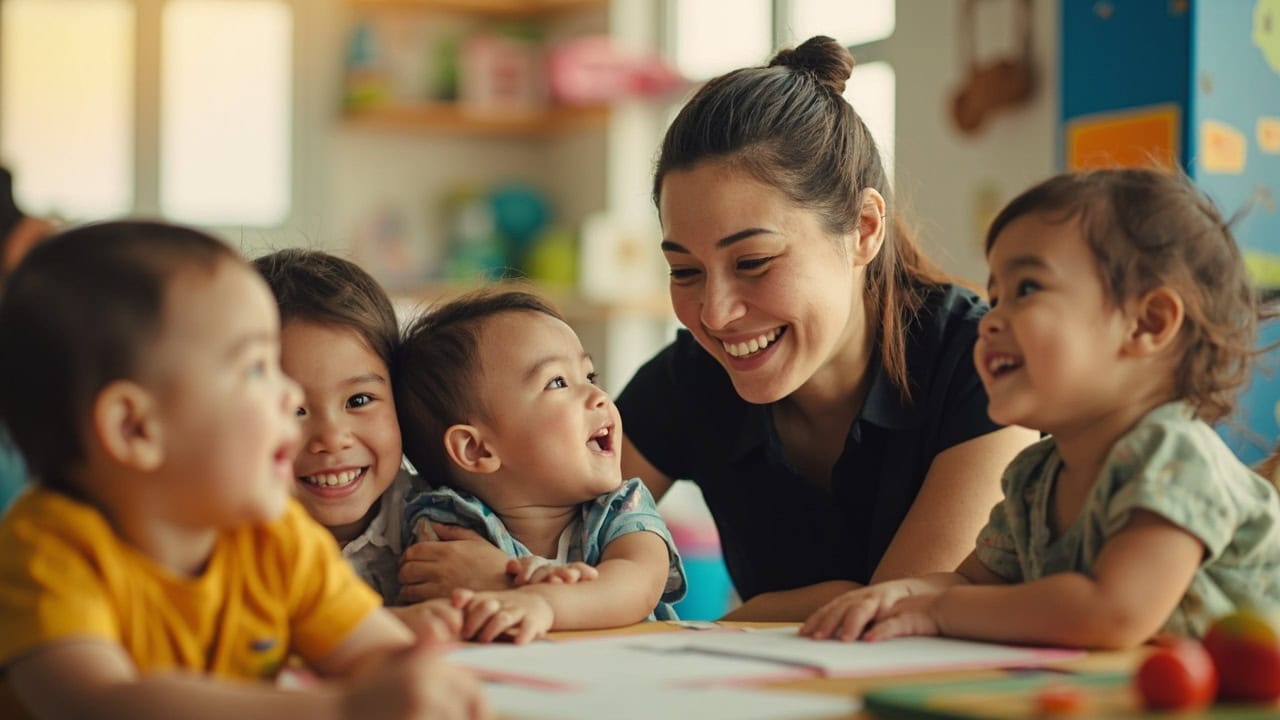
A skilled caregiver, whether in a centre or a home setting, builds school readiness through dozens of daily interactions:
- Helping children manage disappointment when a toy is taken by another child, and celebrate when another child succeeds
- Creating rhythms that teach children to regulate their bodies, to sit and listen, to transition between activities without distress
- Reading stories that expand vocabulary and model curiosity about the world
- Introducing early mathematical concepts through play, through blocks, through the simple act of sharing snacks equally
- Encouraging independence—allowing children to put on their own shoes, to wipe their own spills, to solve small problems before stepping in to help
Perhaps most importantly, quality care creates a shared language between parent and caregiver about the child. When that child enters Primary One, there is continuity between the two worlds. The parent, the caregiver, and eventually the teacher are all speaking about the same child, understanding the same child, supporting the same child.
In early childhood education, the transition to school is a field of research in its own right. Researchers have found that how children experience this transition—not just academically but socially and emotionally—has lasting effects on their relationship with learning.
Children who feel confident, who feel that school is a place where they can succeed, who have positive associations with the adults and peers in that new environment, tend to do better not just in Primary One, but in the years that follow. Conversely, children who feel overwhelmed, unprepared, anxious, carry that weight with them. It can shape their trajectory in ways that are difficult to reverse.
Signs Your Child Is Ready for Primary One
Here is what the transition-ready child looks like in practice:
- Settling into a new routine without weeks of protest
- Speaking up when something is wrong, or asking for help when needed, rather than shutting down
- Playing cooperatively with other children, navigating disagreements, recovering from frustration
- Showing curiosity about the world, asking questions, wanting to learn
- Sitting through a story without fidgeting, waiting for their turn, sharing materials
- Feeling a sense of belonging in the place where they spend their days
These are readiness signals. They are observable. They are meaningful. And they are built over time, in the ordinary texture of quality care.
If you are watching for them, you may notice them emerging in your child’s final year of childcare. You may have a conversation with your child’s caregiver and discover that they have been noticing the same things. That shared recognition—that moment when both of you see the same child growing into readiness—is one of the most affirming experiences of early parenthood.
EduNanny’s Approach to the Transition
EduNanny by BUTLER has built its approach on the understanding that the years before Primary One are not merely preparatory. They are foundational. They are when the architecture of who your child is as a learner, as a friend, as a person, is being built brick by brick by the adults who spend their days with them.
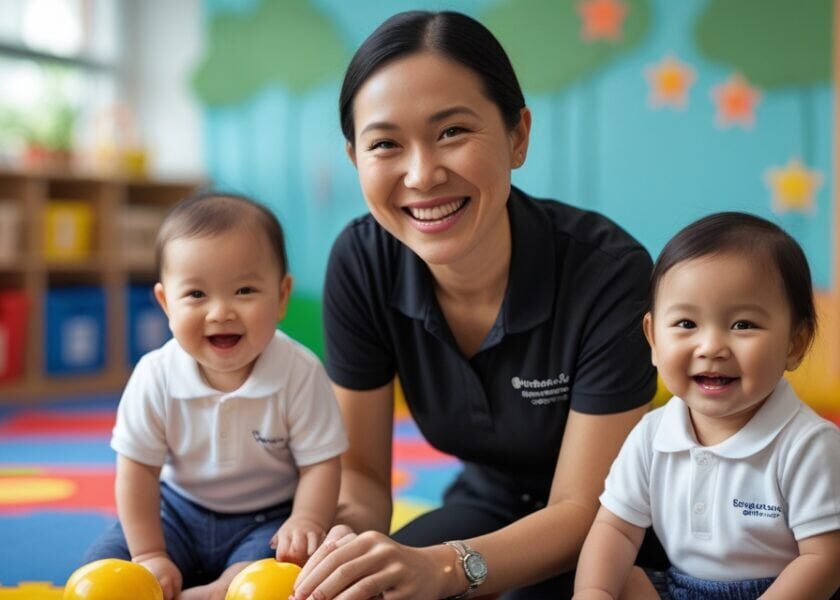
Working within the ECDA Childminding Pilot, EduNanny offers home-based childminding that is rooted in developmental knowledge. We maintain the ratios that allow for genuine connection, and we keep communication with parents transparent and ongoing.
When you choose EduNanny, you are not choosing a transactional childcare arrangement. You are entering into a partnership that spans your child’s early years and extends into the transition that so many parents find daunting.
Enrichment as Orientation, Not Add-On
What EduNanny means by enrichment is an orientation—a way of understanding every moment of the day as an opportunity for growth. It is the reason why our caregivers are trained not just in safety protocols but in child development. It is why we maintain communication with families, sharing observations, highlighting milestones, flagging concerns, celebrating progress.
Trust is not built by cameras alone. It is built by open doors, by honest conversations, by the small daily evidence that your child is known and loved in your absence.
When you drop off your child in the morning, you should know who will be caring for them, what the day will hold, what to expect. When you pick them up in the afternoon, you should hear about their day in enough detail to continue the story at home. When you have a concern, you should be able to raise it and know that it will be heard and addressed. When you have a win, a milestone, a moment of pride, you should have someone to share it with who will genuinely celebrate.
Making Quality Care Accessible
Under the ECDA Childminding Pilot, EduNanny is able to offer quality home-based care within fee structures that make it accessible to more families. Child Development Account (CDA) and Baby Bonus funds can be used, reducing the financial burden on parents who want quality care but need it to be affordable.
The pilot runs Monday to Friday, providing the consistency that developing brains need, the reliability that working parents require. Because EduNanny is part of a broader ecosystem with connections to resources and training, you can trust that your child’s caregiver is not operating in isolation. They have support, guidance, and pathways to refer families when needs arise that are beyond the scope of childminding.
Your Real Questions, Answered Honestly
“How do I know my child is actually ready?”
Readiness is observable. Watch for the signals: confidence at drop-off, ability to manage frustration, curiosity about learning, social comfort with peers. Have honest conversations with your caregiver about what they observe. That shared language between parent and caregiver is itself evidence of quality care.
“Should I enrol my child in preparation classes?”
Your child has been preparing for this moment for years. Every book you read together, every game you played that built vocabulary, every time you let them struggle with a puzzle and figure it out, every time you sat with them through a big feeling and helped them name it and move through it—all of that has been preparation. Every day your child spent in quality care, learning to be part of a group, learning to trust adults outside the family, learning to navigate the world with curiosity and resilience—all of that has been preparation.
If additional programmes feel right for your family, choose ones that support social-emotional development rather than those that add pressure. The academic demands of Primary One are manageable for a confident child. What is challenging is starting school already overwhelmed.
“How do I stay engaged when I am juggling work and logistics?”
The parents who make a difference are those who stay curious. Ask their caregiver how their day was and what they noticed. Reinforce at home what is being built at childcare. These small moments of attention teach your child that their growth matters to you—that you are paying attention, that you are proud of them not just for what they achieve but for who they are becoming.
Ready for Whatever Comes Next
It is easy to mentally check out of childcare once your child is older, once the daily anxieties of infancy have faded. It is easy to let drop-off moments become rushed, transactional, something to get through rather than something to be present for.
But the choice to stay engaged, to remain intentional, to continue partnering with your child’s caregiver through this final year, is itself an act of love. You are teaching your child that their growth matters to you. That you are paying attention. That you are proud of them.
As your child moves through their final year of childcare and into Primary One, you will face new questions, new anxieties, new decisions. Should you adjust their sleep schedule? Their routines? Their expectations?
These questions deserve thoughtful answers, but they do not deserve panic. Your child has been preparing for this moment for years. You have not been passive. You have been a parent, which is to say, you have been building a human being.
There is a moment coming—perhaps already here for some of you—when your child will walk through the gates of their primary school for the first time. They will be small. They will be brave. They will carry a school bag that seems too big for them and a heart that is both excited and afraid.
And if they have been prepared, not just academically but humanly, they will walk through those gates ready. Ready to learn. Ready to belong. Ready to become whoever they are meant to be.
That readiness is not accidental. It is the product of intention, of partnership, of love expressed through daily choices. It is the product of parents who showed up, caregivers who cared deeply, and a system that understood that the early years matter more than anyone can fully measure.
The transition that changes everything begins not at the school gates, but years before—in the quiet moments of quality care where your child first learned that the world is safe, that growth is possible, and that they are ready for whatever comes next.
EduNanny Singapore is proud to walk this path with families across our island. From the first days of infant care to the milestone of Primary One and beyond, we are here—not as a service you purchase and forget, but as a partner who grows with your child, who learns with your family, who understands that what we do in these years echoes far beyond them.
If you are searching for a childminding partner who will walk this transition with you—developing your child with intention, communicating with transparency, and growing alongside your family—we would love to hear from you.