Raising Children Who Carry Heritage and Confidence
“`html
The Cultural Tension at the Heart of Singapore Childcare
We understand this in the way we organize our lives, in the way we speak to our parents, in the way we move through our neighborhoods where three generations might share a meal under the same roof.
We carry within us a cultural architecture that has been built over generations—shaped by the wisdom of those who came before us, by the rhythms of our languages, by the flavors of our grandmother’s cooking, by the rituals that mark our festivals and our milestones. This is not background noise. This is the substance of who we are.
And yet, we are also raising children in a world that asks something different of us. A world that speaks about child-centered development, about independent thinking, about the capacity of every infant to learn and grow and become. We have absorbed these ideas, not because we have abandoned our roots, but because we want the best for our children. We want them to be capable, to be confident, to navigate a world that is increasingly complex and interconnected.
So here is the tension that defines modern Singapore parenthood.
We want our children to carry within them the full weight of who we are, where we come from, what we value. And we also want them to flourish in ways that we ourselves may not have had the opportunity to experience. We want them to belong to their heritage and to the world.
And somewhere in the middle of all that wanting, we are trying to figure out who will care for them while we work, while we provide, while we try to build the lives we promised them.
Through conversations with hundreds of Singapore families, we have come to understand something important: the childcare decision is never just a logistical decision. It is a statement about what we believe matters. It is a declaration of the kind of family we are trying to become. And it is, ultimately, an act of cultural parenting.
The Fear Beneath the Decision
At the heart of many parents’ hesitation is a fear: that quality professional childcare will erase or diminish their child’s cultural identity.
This fear misunderstands what culture actually is. And once you understand this, everything changes about how you view your childcare options.
Culture Is Not a Location
Culture is not a location. It is not something that can only exist in one place, under one roof, with one set of hands. If that were true, then every child raised by more than one caregiver, in more than one household, across more than one generation—every child in Singapore, really—would have a fractured sense of self.
That is clearly not what we see.
Culture is a living practice. It is something that is transmitted through language and laughter, through the way we greet one another, through the foods we share, through the stories we tell, through the values we model in the everyday moments of care.
This means something profound for your childcare decision. It means that the question is not whether your child will be cared for by family or by a professional caregiver. The question is whether whoever is caring for your child:
- Understands what matters to your family
- Honors the cultural context in which your child is being raised
- Actively participates in the transmission of those values
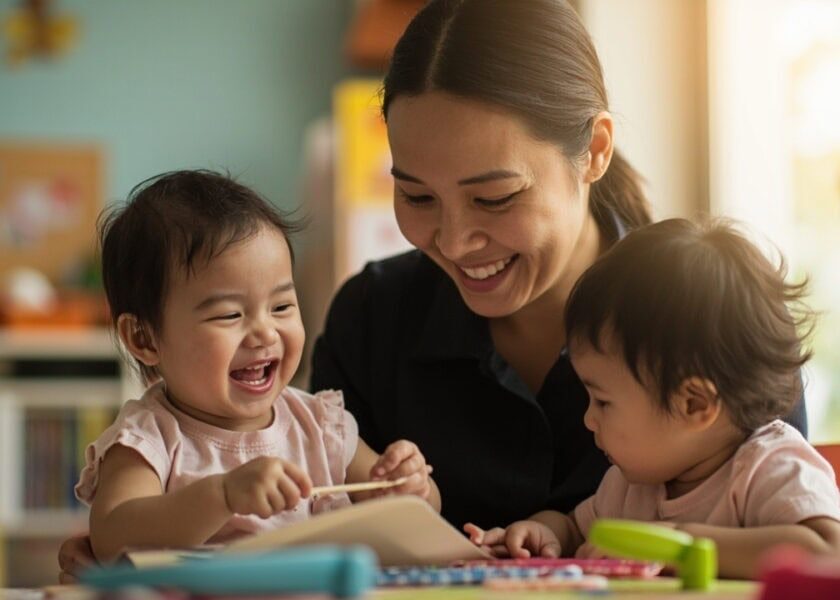
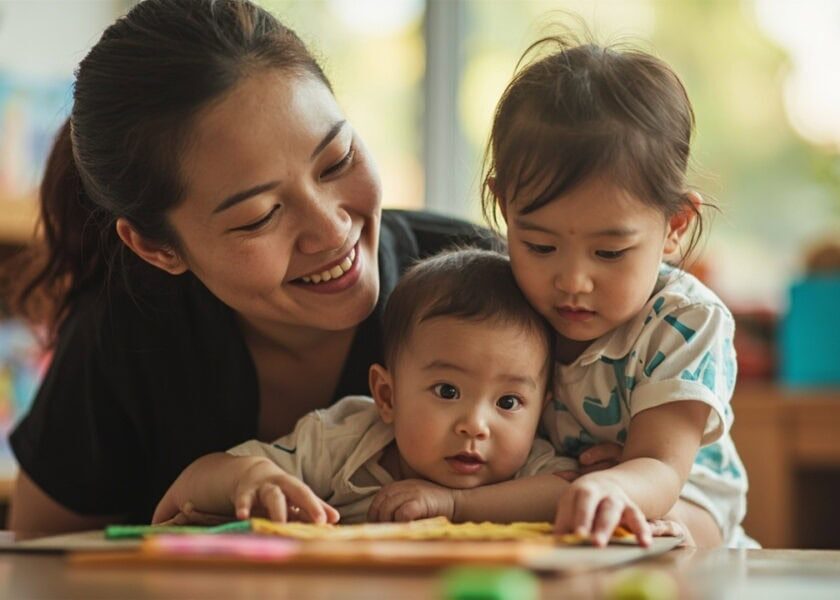
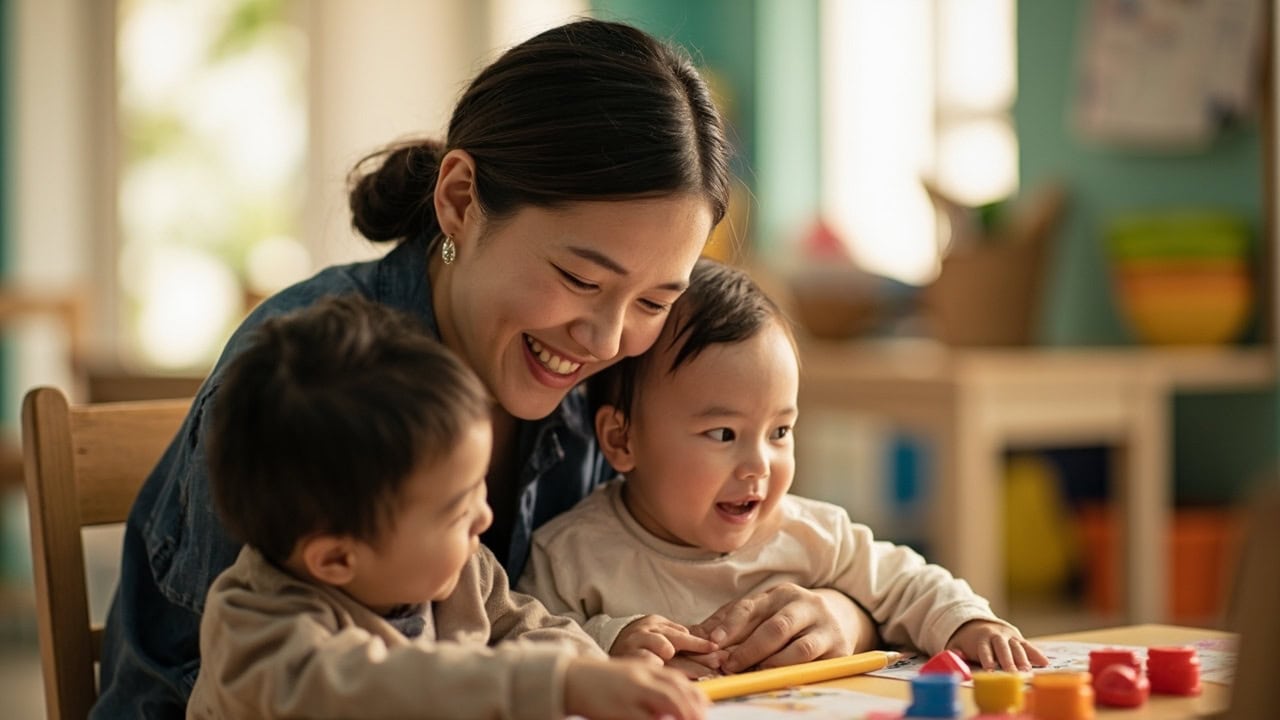
A caregiver who knows that your child responds to Mandarin lullabies. Who understands that certain foods carry comfort and memory. Who speaks to your child in the dialects your grandparents used. Who celebrates the festivals your family celebrates. Who teaches the manners and courtesies that are the fabric of your home.
This caregiver is not replacing your cultural influence. They are extending it.
They are holding it steady during the hours when you cannot be there yourself, so that when you come home, you are not starting from nothing. You are building on a foundation that has been maintained.
What Quality Childminding Actually Looks Like
When cultural continuity is understood as part of quality care—not an afterthought or an optional extra—then the daily experience of childcare looks quite different.
It looks like a caregiver who notices that your toddler calms when spoken to in Hokkien, and who learns enough to use it naturally during their time together. It looks like meals that reflect the foods your child eats at home, prepared with an understanding that eating is not just nutrition but connection. It looks like festivals observed in ways that make sense for your family—regardless of whether those observances follow the most common traditions.
The Elements of Culturally Grounded Care
Quality home-based childcare that takes culture seriously includes:
- Language exposure: Speaking to your child in the languages your family uses, including dialects that grandparents speak
- Food and comfort: Understanding that certain dishes carry emotional meaning and incorporating them into daily routines
- Ritual and rhythm: Maintaining the patterns of greeting, eating, and interacting that give your child a sense of predictability and belonging
- Family values in action: Teaching the courtesies and forms of respect that your family considers important—not imposed, but consistently modeled
- Story and tradition: Sharing songs and stories that reflect your child’s heritage alongside other enriching experiences
This is what we mean when we talk about cultural continuity in childcare. It is not about choosing between heritage and development. It is about finding a childcare arrangement that makes both possible.
Navigating Family Expectations
We know this is not simple. Navigating family expectations is one of the most delicate challenges Singapore parents face.
The voices of grandparents carry weight. They carry love, and they carry experience, and sometimes they carry concern that feels like judgment. When a grandmother wonders aloud whether your child will learn the proper respect for elders from a caregiver, she is not attacking your choices. She is asking you to see what she sees: the importance of the cultural transmission that happens in care.
When your parents question why you would not simply leave your child with them—as their own parents did—understand that they are defending something they believe is precious. They are not wrong to value it. They are simply operating from a framework where cultural transmission and family care were the same thing.
How to Respond to Grandparent Concerns
The answer to that concern is not to dismiss it or to compromise on the quality of care you are seeking. The answer is to look for a childcare arrangement that takes cultural transmission seriously—and to help your family see that this is exactly what quality professional care can offer.
Here is what you might share:
- Culture is not geography: It is not trapped in one house. It travels with your child, and it can be actively maintained by anyone who understands what matters to your family.
- Expertise enhances, not replaces: A caregiver trained in both child development and cultural sensitivity can do more than maintain your child’s heritage—they can deliberately nurture it during the hours when you are working.
- Your role remains central: The hours you spend with your child at home are still the foundation. Quality childcare builds on that foundation, not instead of it.
- Your child’s world is larger than one household: They will benefit from multiple sources of warmth, wisdom, and care—family and professionals alike.
When grandparents understand that you are not choosing between their wisdom and professional care, but rather extending their wisdom through capable hands, the opposition often softens.
A Partnership in Raising Your Child
When we designed our approach to infant care and childminding in Singapore, we did not separate cultural intelligence from developmental excellence. We understood that for Singapore families, these are not two different things. They are the same thing.
Our caregivers are not just trained in infant development, though they are. They are not just equipped with the skills to create safe, nurturing environments, though they are. They are also developed to understand the cultural contexts in which Singapore families live.
They learn to honor the languages spoken in your home. They learn to incorporate the rhythms and rituals that give your child a sense of belonging. They learn to be, in the truest sense, partners in the raising of your child—not replacements, not substitutes, but partners.
What This Looks Like in Practice
- Caregivers who understand Singapore’s multicultural landscape and can honor your specific cultural context
- Deliberate cultural transmission as part of daily routines, not a special add-on
- Consistent communication about how your child’s cultural learning is progressing alongside their development
- Flexibility to incorporate your family’s specific traditions, foods, languages, and values into the care experience
What We Have Seen
We have seen the child who greets her grandmother in perfect Cantonese and then turns around to explain, in English, why she thinks a certain way about something. We have seen the child who knows the stories of his heritage and tells them alongside stories he has learned from books and friends and teachers. We have seen children who belong completely to their families and completely to themselves.
There is a word we use when we talk about the children raised in our care. We call them culturally confident.
We do not mean this as a slogan. We mean that these children have been raised with a clear sense of identity, with the knowledge that they belong to something, that they carry within them the accumulated wisdom and beauty of their family’s culture. And they have also been raised with the confidence to be themselves, to think independently, to engage with the world on their own terms.
Choosing Infant Care That Honors Your Family
If you are researching childcare options in Singapore, here are the questions we encourage you to ask—not just of programs, but of yourself:
Questions to Ask Yourself
- What are the specific cultural traditions, languages, and values I most want my child to carry forward?
- How do my parents and extended family feel about my childcare choice, and how can I address their concerns with honesty and care?
- What does quality development look like for my child—and does it include cultural grounding?
- What hours and consistency do I need to build the life my family deserves?
Questions to Ask Potential Care Providers
- How do you incorporate cultural learning into daily routines?
- Can you accommodate specific dietary practices, language exposure, or family traditions?
- How do you communicate with families about their child’s cultural and developmental progress?
- What is your approach to teaching respect, manners, and social values?
- How do you handle the transition when parents have specific cultural expectations for their child?
Signs of Quality That Honors Culture
- Cultural transmission is discussed as part of the care philosophy, not as a special feature
- Caregivers ask about your family’s specific values and traditions
- Daily routines include language exposure, familiar foods, and culturally appropriate interactions
- Communication is ongoing and includes updates on cultural as well as developmental milestones
- The program respects that your family’s culture may differ from the most common patterns
Begin the Conversation
When you choose quality professional childcare, you are not choosing between tradition and modernity. You are choosing to believe that your child can have both.
You are choosing to invest in an approach that understands that the hours your child spends in care are not a gap in their cultural learning. They are part of it. They are, in the truest sense, a continuation of what you have started.
We know that the decision you are making matters more than any conversation can fully capture. We know that behind every childcare choice is a parent who is trying to do what is right, who is navigating pressures and expectations and hopes that are deeply personal.
You are not abandoning your heritage by choosing quality professional care. You are extending it.
You are making a choice that says: my child’s identity matters. My child’s development matters. And these two things belong together.
That is not a compromise. That is clarity.
If you are ready to explore childcare options that take cultural continuity as seriously as you do, we invite you to begin a conversation with us.
We will listen to what your family values. We will answer your questions honestly. We will help you understand how quality home-based care can serve as an extension of your own cultural influence—not a replacement for it.
To learn more about our approach to infant care and childminding, visit our website or get in touch to start a conversation about your family’s unique needs.
At EduNanny, we believe that raising a child in Singapore means weaving together the wisdom of generations with the possibilities of tomorrow. That is the work we are proud to be part of.
“`