The Childcare Choice Singapore Parents Make That Nobody Talks About
The Childcare Conversation Nobody Wants to Have
Your mother offers. She says, “I raised three children. I can do this again. Let me help.” And the love behind those words is real. It is not obligation, not entirely. It is the fierce, tender wish of a parent to give their child what they can—to remain needed, to be close to a grandchild in a way that feels like legacy.
We honor that love. We do not dismiss it. Grandparent care is not what this conversation is about.
But there is another conversation. The one where the parent who hears that offer feels something more complicated than gratitude. The one where love and obligation press against each other in ways that do not resolve easily.
The one where a parent thinks, “I want my child in my mother’s arms,” and also thinks, “I do not want my mother exhausted by six in the morning starts and five-day weeks and the relentless physical demands of infant care.”
The one where the parent wants grandparents to be the people who spoil and play and teach—not the people who are too tired to enjoy Sunday lunch.
This is the tension we do not name enough in Singapore. We talk about working parents and the guilt they carry. We talk about attachment theory and the science of early bonding.
What we do not talk about is the specific, culturally-shaped, emotionally-dense reality of being a parent in a family where childcare is not just a logistical question but a relational one. Where accepting or declining a grandparent’s offer is not just about who changes the nappies, but about who feels honored, who feels rejected, who feels caught in the middle.
What Singapore Parents Actually Want
The truth is that many Singapore parents want professional care. Not because they do not trust their parents. Not because they do not value family. But because they have looked honestly at what infant care requires—the consistency, the patience, the energy, the thousand small moments of attunement—and they have thought:
“I want this done with expertise. I want my child to have someone whose whole professional purpose is to understand how infants learn and grow.”
They have thought, “I want to come home to my child, not to a child I feel guilty for having handed over, and not to a parent I feel guilty for having exhausted.”
And yet they have not chosen. Or they have chosen, and they carry the weight of that choice like a stone in their chest. Because they do not know how to explain it to their own parents. Because they fear disappointment. Because they love their parents and do not want to wound them.
Because in Singapore, family is not just something you have—it is something you owe, and the debt of gratitude feels infinite.
What Happens When Grandparents Become Primary Caregivers
Choosing professional childcare is not the rejection you fear it is. And we do not say this to dismiss your parents’ feelings or to tell you that family obligations do not matter.
We say it because the evidence of what happens to grandparent-grandchild bonds under the strain of daily caregiving is real—and it is something we have watched break hearts in ways that no one anticipated.
When a grandparent becomes a primary caregiver, the nature of the relationship changes. It has to. The grandparent becomes responsible for the mundane, the difficult, the exhausting. They become the one who manages the tantrum at seven in the morning, who deals with the teething fever at three in the afternoon, who carries the child so much that their back aches.
They become the one who feels they cannot say no because their daughter or son is relying on them.
The child, in turn, begins to look to the grandparent not for the special delight of grandparents but for the daily, sometimes draining provision of needs. The warmth that was there can become tangled with obligation. The playfulness can erode under fatigue. The grandparent-grandchild bond—which should be the lightest and most joyful relationship in a child’s life—can become the heaviest.
We have seen this. We have seen grandparents who love their grandchildren dearly but who are depleted, who feel they cannot travel, cannot rest, cannot say no. We have seen children in the care of exhausted elders—not because anyone wanted it that way, but because the machinery of family obligation kept turning and no one stopped to ask what it was costing everyone.
We have seen the Sunday lunch become tense. The phone calls become careful. The unspoken resentment that grows in the cracks of good intentions.
This is not a failure of love. It is a failure of honesty about what love requires.
What Children Gain When Grandparents Are Free to Be Grandparents
What if the most loving thing you could do for your child, your parents, and yourself was to step into that difficult conversation and say:
“I want you in my child’s life, but not like this. I want you to be the grandparent, not the caregiver. I want my child to run to you at gatherings because you are the one who makes everything fun and special—not the one who has been up since five managing a fussy infant all week.”
What if choosing professional care was not a rejection of your parents but a protection of your parents? A way of keeping them in the role that serves everyone best?
What we mean when we talk about reclaiming family bonds is this: giving grandparents back to grandchildren. Allowing the multigenerational Singapore family to function the way it is meant to—close, warm, connected, but not stretched to the breaking point by expectations that were never discussed.
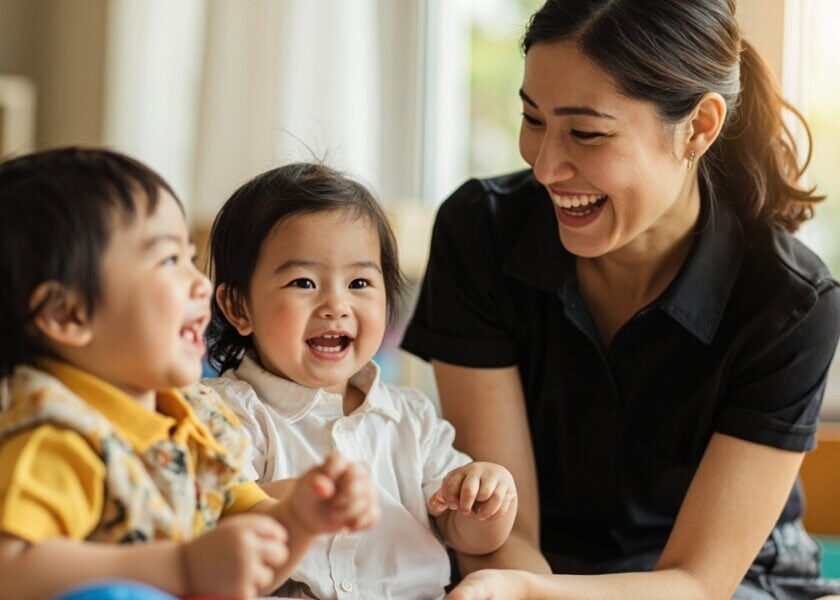
When a grandparent is not the primary caregiver, when they are freed from that weight, the relationship with the grandchild often deepens in unexpected ways:
- They become the person who takes the child on special outings
- The person who has energy for stories and games because they are not already depleted
- The person the child runs to with delight rather than need
- The person who can say yes to everything because they are not already saying yes to everything all week long
We have seen grandparents who, once they were no longer the daily caregiver, became advocates for professional care. Who said, “This is what we should have done from the beginning. I love my grandchildren more now because I am not exhausted by them. I enjoy them now the way grandparents should.”
And children notice the difference. They feel the tension in the room, the unspoken exhaustion, the weight of obligation that adults try to hide but cannot fully conceal. When a grandparent is present by choice rather than duty, the energy is different. The attention is fresher. The relationship is less complicated by resentment that no one asked for and everyone denies.
What children gain when grandparents are freed to be grandparents is not just a rested elder. They gain a model of what it means to love someone without losing yourself in the process.
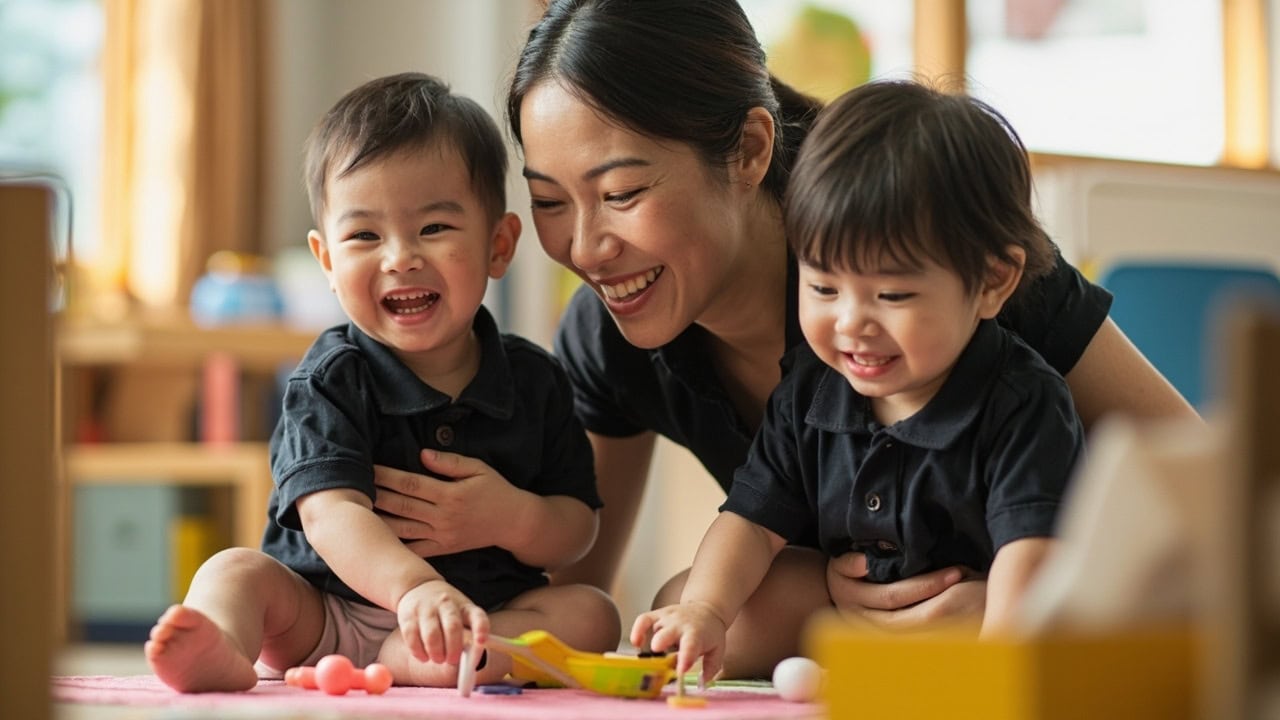
What Quality Professional Childcare Looks Like
Not all professional care is the same. When you choose to place your child in someone else’s hands, you want to know those hands are capable, that the environment is safe, that your child is not just supervised but nurtured in ways that support their development.
The early years are not filler before real life begins. They are the foundation on which everything else is built. The attachment patterns that become templates for future relationships. The sense of security or anxiety that colors how a child approaches the world. These are shaped by the quality of care your child receives.
Here are the markers of care you can trust:
- Trained professionals: Caregivers who understand child development, not just supervision
- Appropriate ratios: Small group sizes that allow genuine attention—up to 1:3 for infants
- Structured support: A program backed by recognized frameworks that prioritizes your child’s development
- Transparent communication: Regular updates and open channels so you never feel disconnected from your child’s day
- Consistent routines: Predictability that helps infants feel secure and thrive
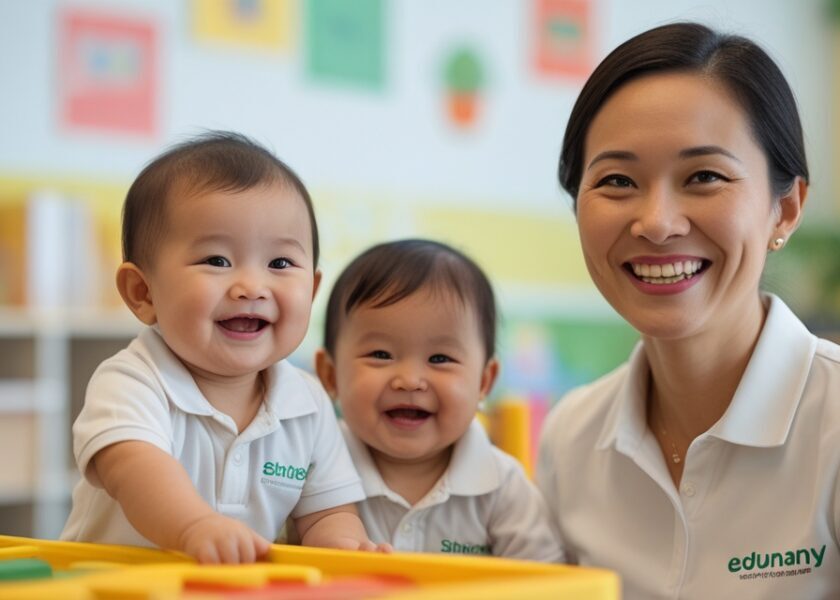
EduNanny by BUTLER was built on this understanding. Our childminders are part of a supported program rooted in the ECDA Childminding Pilot framework, maintaining up to 1:3 infant ratios. Care operates within Monday to Friday blocks, giving families the predictability they need to plan their lives.
We understand the practical realities of Singapore family life. Where applicable within pilot structures, families can utilize CDA and Baby Bonus funds, and fee structures are designed with affordability in mind. We do not want cost to be the reason a child does not receive the care they deserve.
Having the Conversation That Changes Everything
If you are standing at that crossroads, here is what we want you to know:
“Will my parents feel rejected?”
When a grandparent hears not rejection but protection—when the burden they may have been carrying without complaint is finally acknowledged and relieved—something often shifts. Many grandparents, once the initial disappointment passes, feel a profound sense of relief. They may not have known how to say no. Now they do not have to.
“Is my desire for professional care a failure of family loyalty?”
No. Your desire for professional care is an expression of care that extends beyond your child to everyone in your family. It means you have looked honestly at what infant care requires and chosen to protect your parents from a burden they may not have fully understood when they offered.
“What if the conversation goes badly?”
The conversation is not easy. We will not pretend it is. But it is possible, and it is worth having. The families who have navigated it tell us that something shifted—not just in their childcare arrangement but in the entire texture of their family life. The Sunday lunches became lighter. The phone calls became warmer. The grandparent-grandchild relationship became what it was always meant to be.
If you are wondering how to begin, here is what this conversation can look like:
“I love you too much to ask you to do this every day. I want you in my child’s life, but as a grandparent. I want you to have energy for the weekends, for the school events, for the years ahead. I want my child to grow up knowing you as someone who is present and joyful, not someone who is tired and resentful.”
This is not about rejecting tradition. Singapore’s multigenerational closeness is a gift, not a burden to be dismantled. The extended family is not the problem. The unexamined expectations, the conversations that never happen, the love that becomes obligation—that is what creates strain.
Naming that, honestly and kindly, is not a rejection of your culture. It is a refinement of it.
Begin the Conversation With EduNanny
There is a way to choose what you believe is best for your child without fracturing the relationships that matter most to you. It begins with a conversation. It continues with the right support.
EduNanny is part of that village. We are not your family. We are not your grandparents. We are professionals who have chosen this work and who do it within a structure that supports both them and you. We are the bridge that allows the grandparent-grandchild bond to remain what it should be—light, joyful, freely given.
We know that Singapore parents carry unspoken weight around childcare and family expectations. We know that the decision feels impossible because it always seems like someone will be hurt.
But we also know—and this is what we want you to hear with everything in us—that choosing professional care does not have to mean choosing against your parents. It can mean choosing for them, too. It can mean acknowledging that they have given enough, done enough, sacrificed enough, and that what they deserve now is to be grandparents in the fullest, warmest, most joyful sense of the word.
Choosing EduNanny offers not just childcare, but the preservation of everything that makes a family feel like family. It is the Sunday lunch that is relaxed because no one is depleted. It is the grandparent who walks in with energy because they have had a week to rest, to be themselves, to look forward to seeing their grandchild rather than dreading another week of caregiving.
It is the child who runs into arms that are genuinely glad to hold them. It is the whole family functioning better because everyone is in the right place.
The conversation you have been avoiding? It is not as hard as you fear. And on the other side of it is something that feels, at last, like relief. Like clarity. Like the beginning of something that works for everyone.
If you are ready to explore how EduNanny can support your family while preserving the bonds that matter most, we welcome the chance to speak with you. Because every family deserves childcare that feels right—and relationships that stay warm.