Why Home Matters What Science Says About Infant Brain Development
The Home Advantage: Why Where Your Baby Learns Matters
For parents in Singapore navigating the search for infant care, there is a tension that rarely gets named directly. You want your child to be safe, yes. You want reliable supervision while you work. But beneath those practical needs is something deeper: you want your baby to be in a place that genuinely supports who they are becoming—not just a holding space, but a developmental environment.
The problem is that most of us were not trained in neuroscience. We scan reviews, compare ratios, visit centres, and make the best decision we can with incomplete information. We trust our instincts, but our instincts sometimes conflict with each other.
The logical part of us says: a centre has qualified teachers, a curriculum, proven systems. But something in us—something older, more intuitive—whispers: but it’s not home.
That whisper, it turns out, is onto something. And the science of infant development is finally catching up to what parents have always sensed.
What Science Tells Us About Early Care
- The infant brain builds neural pathways faster in the first 18 months than at any other time in life—and the sensory environment literally determines which pathways develop and which are pruned away.
- Smell is foundational for infants, encoding emotional memories directly into the brain’s emotional centre in ways that visual and auditory information cannot match.
- A home environment offers a richer, more varied sensory experience than institutional settings by necessity can provide.
- The 1:3 caregiver ratio in home-based care enables individualized responsiveness that supports secure attachment.
- Secure attachment—built through consistent, attuned care—predicts better emotional regulation, stronger peer relationships, and higher academic performance years later.
The Neuroscience of Early Experience
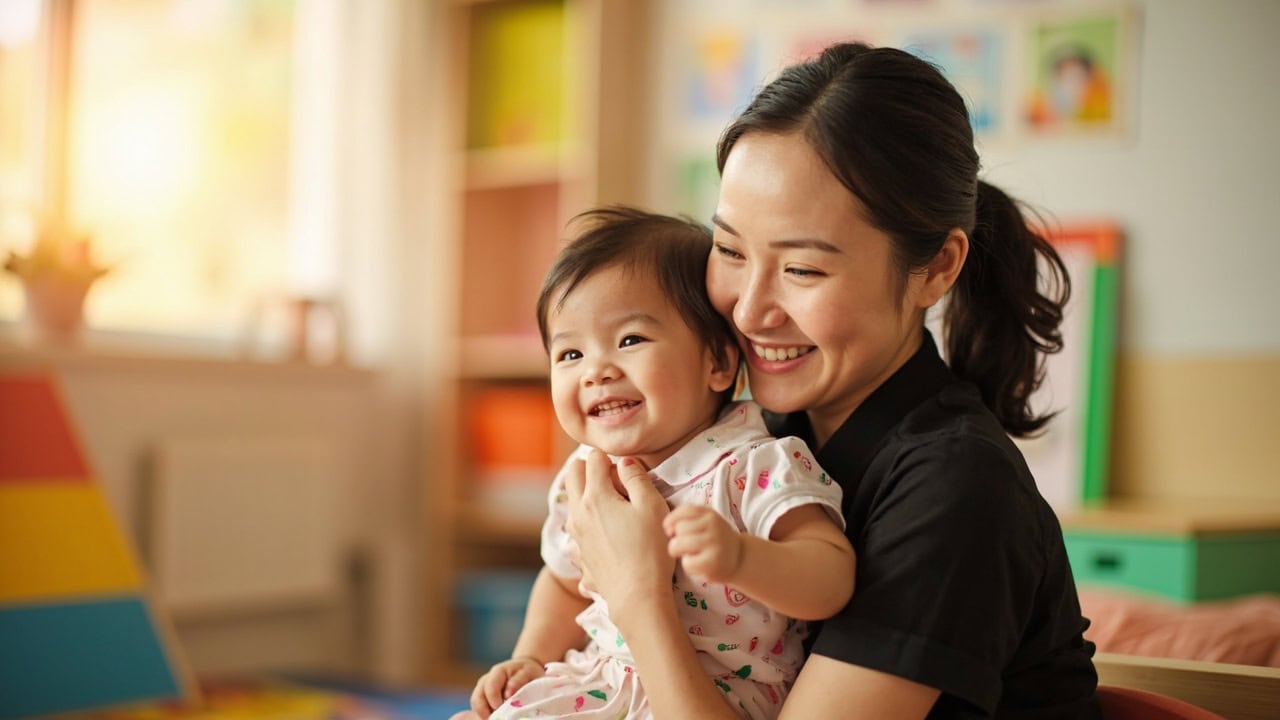
The past two decades have transformed what we understand about infant brain development. We now know, with a precision that would have seemed like science fiction to earlier generations, that the infant brain is not simply a smaller adult brain waiting to be filled with information. It is a dynamic, rapidly developing organ exquisitely sensitive to its environment—an environment that, for the first eighteen months of life, consists almost entirely of sensory input.
The sounds your baby hears, the textures their skin touches, the temperatures their body registers, the scents that drift through the air around them—these are not background noise to the business of development. They are development. They are quite literally constructing the neural pathways that will determine how your child processes information, manages emotion, relates to others, and understands the world for the rest of their life.
Smell: The Forgotten Sense
Consider smell, for example. We tend to think of olfaction as a minor sense—a pleasant but relatively insignificant channel through which we experience the world. But for infants, smell is foundational. The olfactory system is among the first to mature in the developing brain, and it is intimately connected to the limbic system—the brain’s emotional centre.
When your baby breathes in the scent of cooking rice, of orchid perfume, of the particular blend of humidity and air-conditioning that marks a Singapore home, those scents are being encoded directly into emotional memory in ways that visual and auditory information simply cannot match. A child raised in a home environment will carry, unconsciously, the olfactory signature of that home as a template for safety, for comfort, for what it means to be in a place where you belong.
This is not metaphor. This is measurable neuroscience.
Synaptic Pruning: Why Early Experience Lasts a Lifetime
In the first eighteen months of life, your baby’s brain is forming connections at a rate it will never again achieve. Synaptic density—the number of connections between neurons—reaches its peak in early infancy and then undergoes a process called pruning, where unused connections are eliminated and used connections are strengthened.
What this means practically is that the experiences your baby has are literally selecting which neural pathways will become permanent and which will be discarded. A baby who experiences rich, varied, responsive sensory input is building a brain prepared for a world of rich, varied, responsive input. A baby whose sensory environment is impoverished—predictable, monotonous, unresponsive—may find that some of the pathways that would have served them later in life simply were not developed.
This is not about creating geniuses or giving your child an academic head start. It is about something more fundamental: building a brain capable of engagement, of curiosity, of flexible response to the world.
The Sensory Architecture of Home vs. Centre
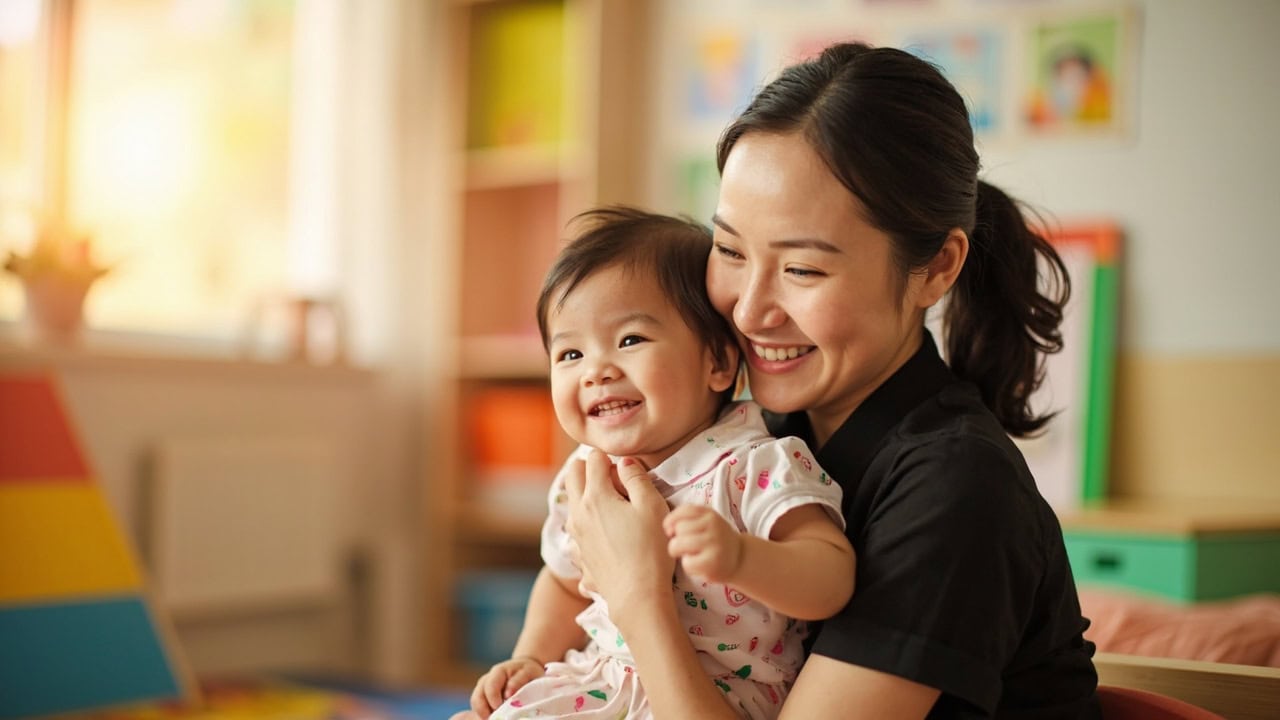
Now let us be clear: there is nothing inherently wrong with centre-based care. Many centres are well-run, staffed by dedicated professionals, and provide excellent care for thousands of Singapore families. But by their nature, centres offer a different sensory experience—and when we understand what we now know about infant sensory development, we recognize that these differences matter most in those critical first months when the brain’s architecture is being most rapidly and most durably formed.
The Soundscape
In a centre, the soundscape is necessarily different. There are overlapping voices of multiple caregivers addressing multiple children, intercom announcements, the echo of small feet on linoleum, scheduled music and activities. These sounds are not negative—they are the normal acoustics of a group learning environment.
But contrast this with a home. The hum of the refrigerator, the distant traffic, the neighbour’s dog, the caregiver’s conversation, the particular rhythm of a familiar voice reading or singing. This is not noise. This is data. This is the infant brain learning what the world sounds like, what variations are normal, what sounds mean what.
The Smellscape
Centres maintain institutional cleanliness—sanitised surfaces, communal meals, the neutral scent of professional cleaning products. These standards are appropriate and important for health and safety.
But a home smells different. It smells like cooking. Like the specific laundry detergent a caregiver uses. Like the particular blend of humidity and air-conditioning that marks a Singapore interior. These domestic scents, as we have seen, are not incidental. They are encoded into your baby’s emotional memory as the smell of safety.
Light, Space, and Touch
Centres typically feature fluorescent lighting that enables supervision and efficiency. It is uniform, bright, consistent. A home offers something different: warm, dappled, variable light. Curtains drawn against afternoon sun. Lamps switched on as evening approaches.
Think about the proprioceptive play that happens in a home setting too. The crawling baby who pulls themselves up on the sofa, who feels the resistance of carpet beneath their palms, who experiments with balance on cushions that are nothing like the smooth floors of an institutional space. Sofa fabric, wooden furniture, the varied textures of a lived-in home. The cool of the air-conditioned room, the warmth of the kitchen, the microclimate near the window where afternoon sun streams in.
These differences are not failures of the centre model. They are simply what institutional care, by necessity, provides. But when we understand what developmental science tells us about infant sensory development, we recognize that these differences matter—and that they matter most in those critical first months.
What Quality Childminding Actually Looks Like
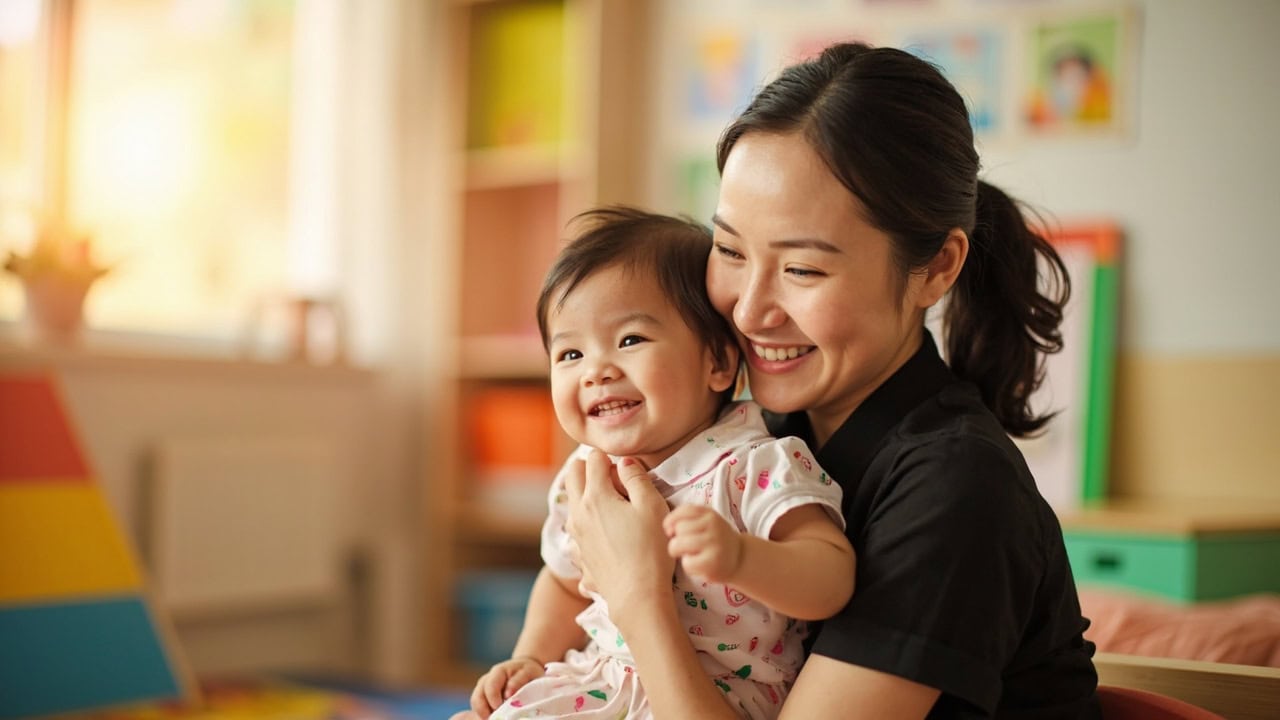
So what does good infant care actually look like when it is designed around what we know about development? It looks like specific things, not vague assurances.
Responsive Attention
When your baby signals—a slight change in vocalization, a particular kind of rooting movement, a shift in posture that indicates tiredness or discomfort—that signal can be noticed, interpreted, and responded to within seconds rather than minutes. This requires a ratio of caregivers to infants that makes this possible.
Attunement is not merely a warm word. It is a measurable contributor to secure attachment, which in turn predicts emotional regulation, social competence, and even academic achievement years down the line. The pathway to secure attachment runs, more than anything else, through the experience of having one’s needs consistently and sensitively responded to in the first eighteen months of life.
Calibrated Sensory Input
Responsiveness at a low ratio means the sensory input your baby receives can be calibrated to them specifically. Some infants are overwhelmed by strong stimulation; others crave more. In a home environment with a dedicated caregiver, that calibration happens naturally, through the intimate knowledge that comes from sustained attention over time.
The child who startles at sudden sounds is given a gentler soundscape. The child who reaches hungrily for every new texture is given a richer tactile environment. Care becomes not a standardised offering but an individualized response to a particular child at a particular moment in their development.
Consistency Over Time
Perhaps most importantly, quality childminding means the same caregiver, day after day. Not rotating staff, but a consistent presence who will know your child’s favourite song, who will notice when a tooth is coming through before your baby has even begun to fuss, who will remember that this particular child is fascinated by the pattern of light on the wall at four o’clock in the afternoon.
This consistency is not a luxury. It is the foundation on which trust is built—and trust is the soil in which secure attachment grows.
The EduNanny Model: Home-Based Care for Singapore Families
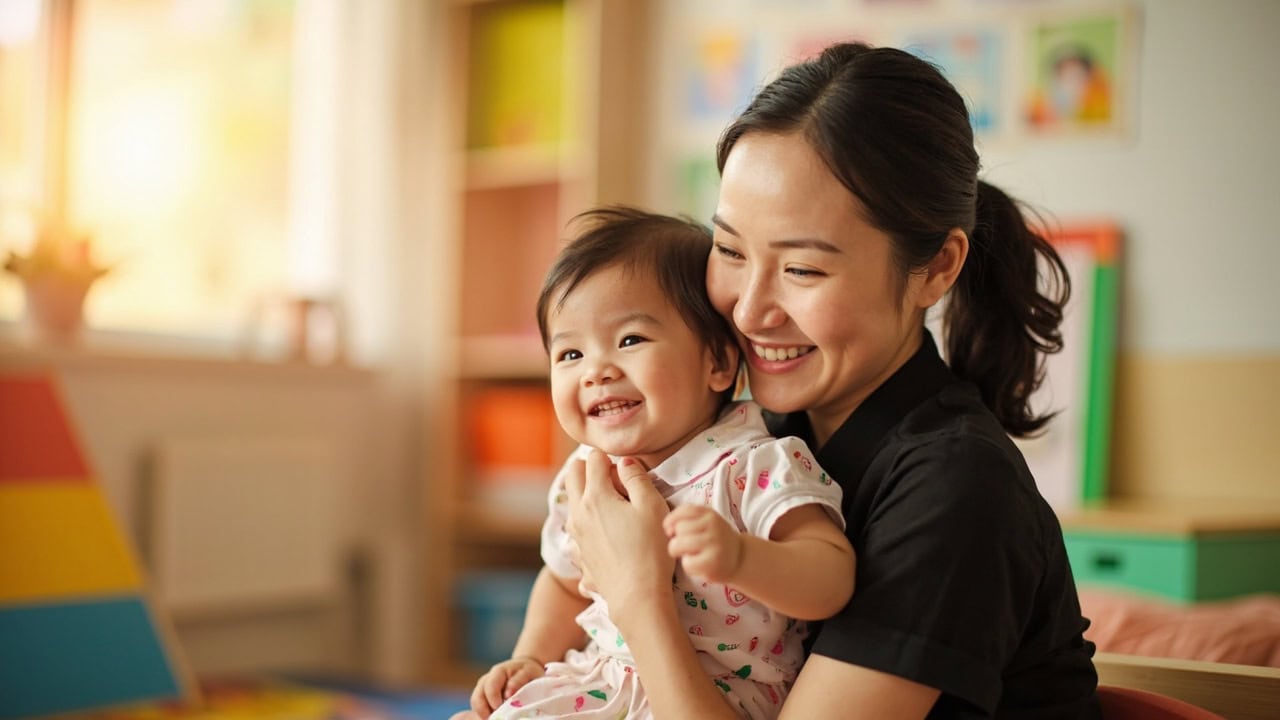
EduNanny Singapore operates under the ECDA Childminding Pilot, offering a model of infant care designed around what developmental science tells us about how babies learn and grow. The model is simple in concept but demanding in practice.
The Core Structure
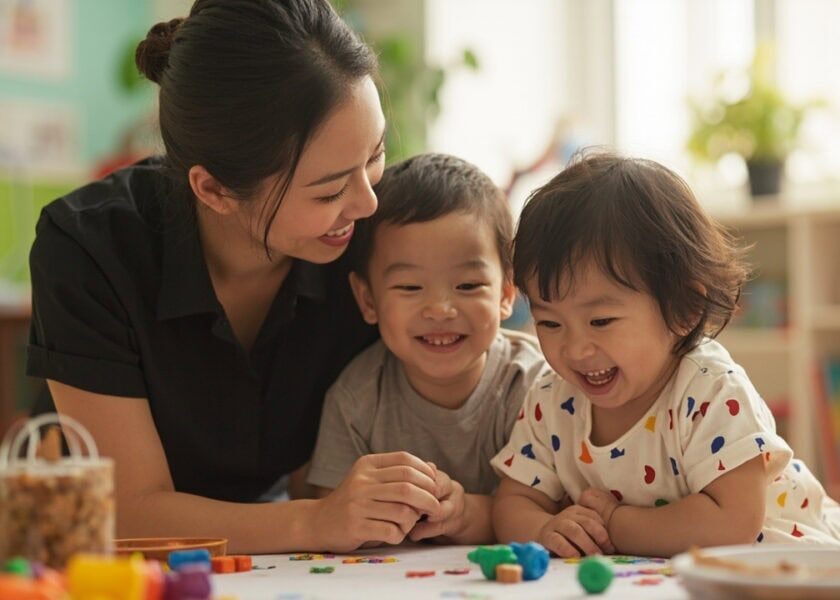
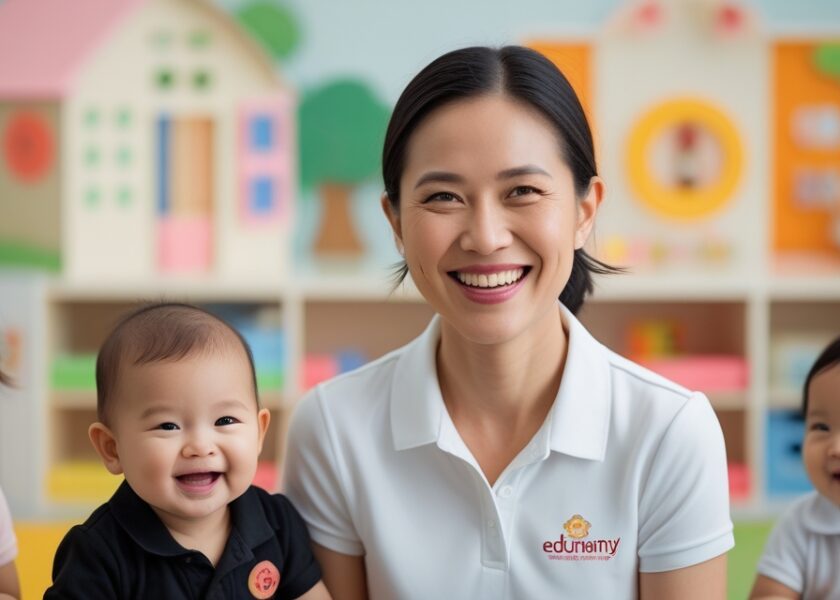
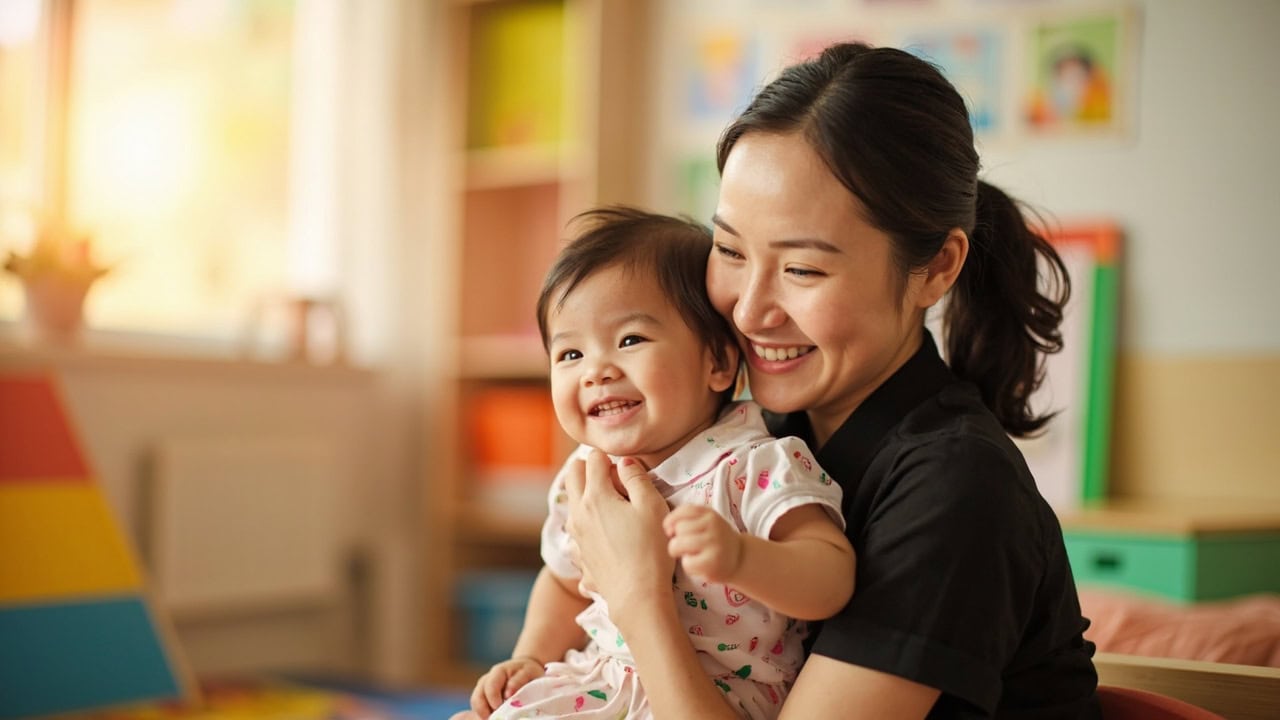
EduNanny places qualified, trained childminders in home environments, with a maximum ratio of three infants to one caregiver. Three infants. One adult. One home.
The mathematics of attention are transformed. Where a centre might have one caregiver for six, eight, or ten infants, EduNanny provides three to one. In those ratios, something extraordinary becomes possible—genuinely individualised care that can respond to your baby as the specific, unique person they are.
Trained, Vetted Caregivers
EduNanny understands that the model only works if the people delivering it are exceptional. These are not babysitters. They are trained professionals who understand infant development, who know the difference between normal developmental variation and signs that might warrant attention, who have been selected not just for their qualifications but for their temperament—their patience, their warmth, their genuine delight in working with very young children.
Designed for Working Families
EduNanny is not asking you to choose between the village and modern life. It is offering a model that fits within your reality—your HDB flat, your Monday-to-Friday work schedule, your CDA and Baby Bonus, your need for affordable and reliable care that you can trust.
- Monday through Friday care blocks, designed around the rhythms of working families
- Transparent communication so you always know how your child’s day is unfolding
- Where deployed, CCTV measures that provide additional reassurance
- A caregiver who is not a rotating staff member but a consistent presence
Making the Decision: A Framework for Parents
If you are weighing infant care options right now, here is a framework grounded in what development science tells us matters most:
Questions to Ask Any Provider
- What is the caregiver-to-infant ratio? Lower ratios enable more individualised responsiveness.
- Will my baby have the same caregiver consistently? Consistency is foundational to attachment.
- How is the daily environment structured? Rich sensory environments support neural development.
- How will I know what my child’s day was like? Transparent communication builds trust.
- What training do caregivers receive? Professional knowledge matters, but so does temperament and warmth.
What Research Suggests Matters Most in the First 18 Months
| Factor | Why It Matters |
|---|---|
| Consistent, attuned caregiver | Builds secure attachment, the foundation for emotional regulation |
| Rich sensory environment | Shapes neural pathways during peak brain development |
| Individualised responsiveness | Teaches baby their signals matter, the world is responsive |
| Low caregiver ratio | Makes individualised care possible in practice |
| Domestic, home-like setting | Provides olfactory, tactile, and ambient stimulation institutions cannot replicate |
Addressing Your Real Concerns
Is home-based care really as good as the science suggests? The science on sensory development and attachment is robust and well-established. What EduNanny offers is a care model designed to align with that science—not as an abstraction, but as a daily practice. The caregiver who notices your baby’s hunger cues before the crying starts. The caregiver who adjusts activities based on how your baby slept, who introduces new textures when your baby is in a receptive state, who creates moments of co-attention that are the building blocks of social cognition.
How do I know my child is actually developing well? EduNanny provides communication that keeps you connected to your child’s day. Not generic updates, but specific observations: about the new sound your child reacted to, the way they reached for a texture they had not noticed before, the moment when they laughed at something unexpected.
What about socialisation? With a maximum of three infants in a home setting, socialisation happens naturally but not overwhelming. Your child learns to be an individual first—to trust that their signals will be heard, that their presence matters, that the world is responsive. Later social skills build on this foundation.
Can I afford this? EduNanny operates as an approved provider under the ECDA Childminding Pilot, which means families may access applicable subsidies and support. The programme is designed to be accessible for working families navigating the real costs of childcare in Singapore.
The Village Is Closer Than You Think
There is a word that has come to define what many parents are seeking in this era of rapid change: village. We talk about needing a village to raise a child. We recognize that human beings evolved to rear their young in close community, with multiple caregivers, with the kind of support that distributed the burdens and multiplied the resources.
And we mourn, in some ways, the loss of that village in modern life—particularly in a city like Singapore, where mobility and nuclear family structures have scattered what might once have been a multigenerational household.
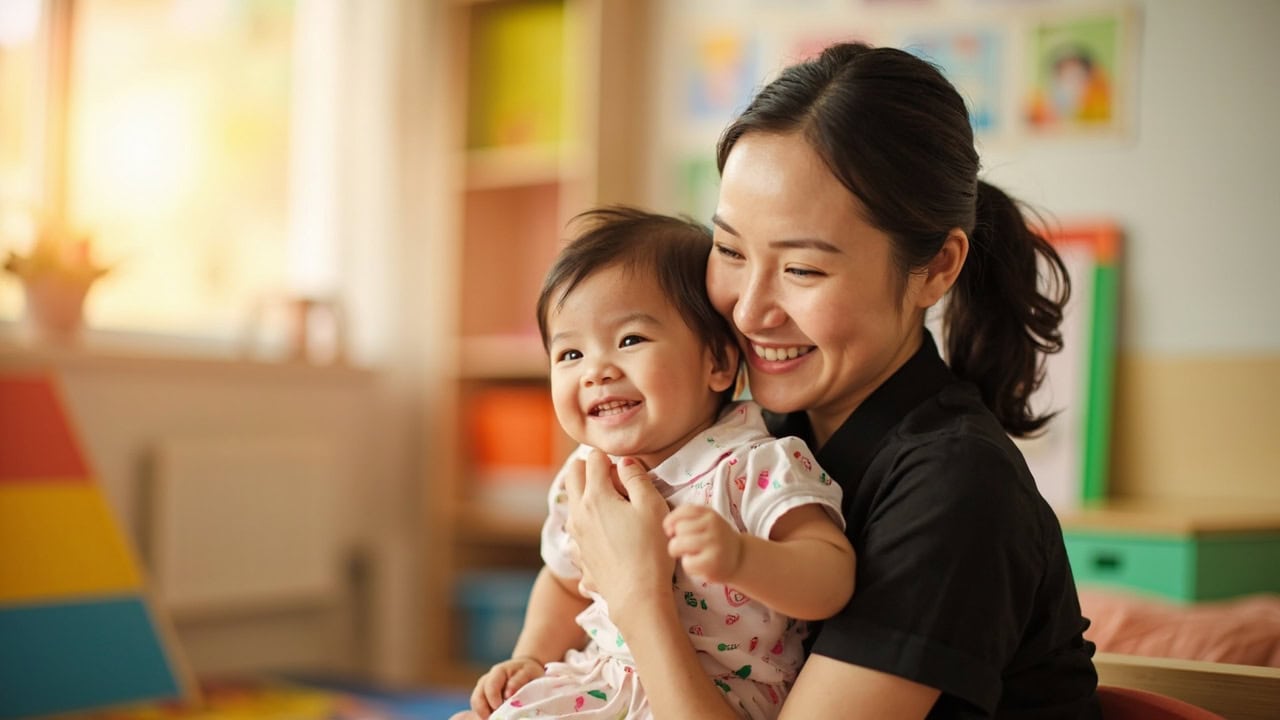
But here is what we want to suggest: the village is not a relic. It does not require you to move your family to a rural community or abandon the life you have built. The village can be, in a meaningful sense, one home. One attentive adult, with a small group of children, in a domestic space that smells like home and sounds like home and feels like home.
A place where your child is not a number or a classroom assignment but a known, named, individual person with preferences and rhythms and a developing sense of self.
EduNanny is that home. And by being that home for your child, it becomes part of your village—the extended network of care and trust that your child will draw on as they grow, that will give you the confidence to pursue your own work and goals knowing that your child is not just safe but thriving, and that will contribute, in ways small and large, to the kind of city Singapore is becoming: a place that does not just house its families but supports them.
It is late afternoon. The light is beginning to shift again, that particular quality of late Singapore light that turns everything golden for a brief window before the day ends.
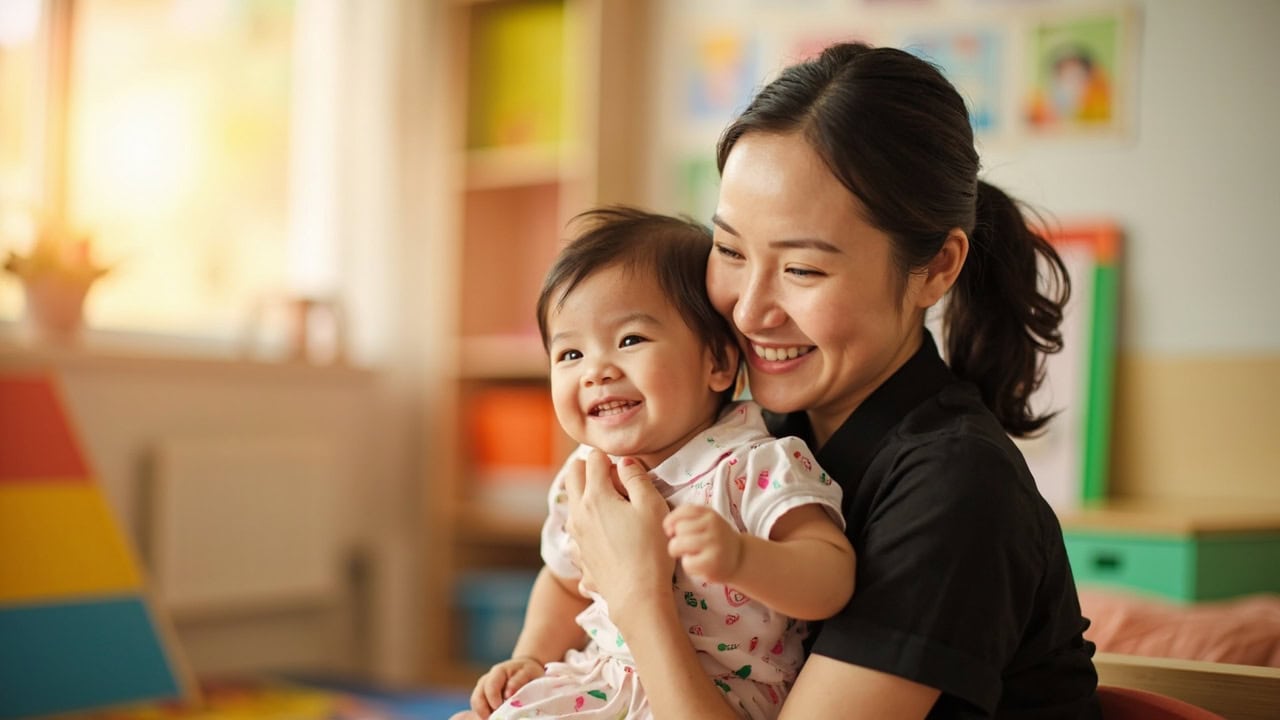
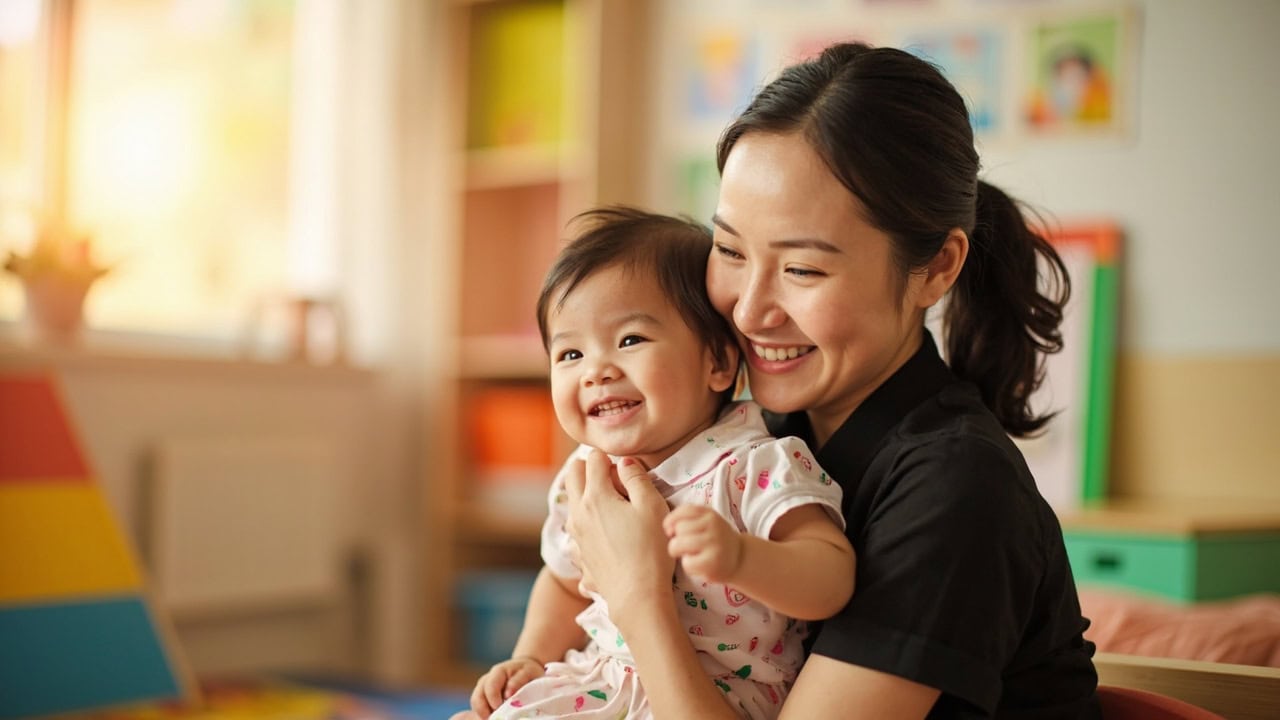
In a home somewhere in this city, a child who has spent the day in EduNanny’s care is being collected by a parent. The caregiver is kneeling at the child’s level, saying goodbye in the way she has said goodbye every day that week—warmly, specifically, with a small ritual that the child has come to recognise and trust.
The parent asks how the day was, and the caregiver tells them: about the new sound the child reacted to, the way they reached for a texture they had not noticed before, the moment when they laughed at something unexpected.
These are not generic updates. They are observations, shared between two people who both know this child deeply, who are both invested in her growth, who are both part of her village.
This is what EduNanny offers. Not just a service, but a relationship. Not just care, but attention. Not just safety, but a sensory environment shaped by love and science and the belief that every child deserves to wake up in a place that feels like home.
The village is waiting. And it is closer than you think.
If you are considering care options for your infant in Singapore, we invite you to learn more about how EduNanny’s model aligns with what developmental science tells us about how babies learn and grow. Every child’s journey begins with the environment you choose for them.