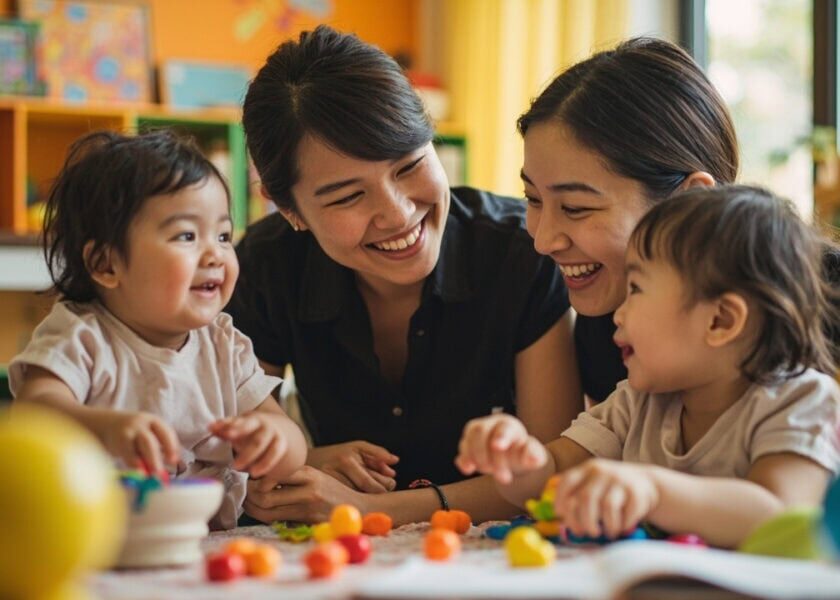
EduNanny Singapore A Living Blueprint for Safe Joyful Infancy and Near Home Childminding Across the Island

EduNanny Singapore: An Expert Editorial Long-Form Overview for Parents, Partners, and Professionals
Good evening to parents, caregivers, community partners, and friends across Singapore. This article expands the keynote on infancy care into a practical, editor-ready guide for families comparing, choosing, and partnering with EduNanny. We translate a powerful vision into actionable steps, real-world strategies, and concrete examples you can apply starting today. This is not merely philosophy; it is a living, measurable approach to the first thousand days of life.

EduNanny in Plain Language: What We Are and Why It Matters
EduNanny by BUTLER is a centre- and home-based childminding network designed for the first thousand days of life. We deliver an ultra-low 1:3 infant-to-educator promise, Monday through Friday, 7am to 7pm, islandwide. We serve families in modern, near-home centres and approved home premises so your baby’s care is close, your commute is short, and your day is easier. We align to the ECDA Childminding Pilot, are built as a National Social Initiative, and we carry a Maximum Employment Mandate—meaning the same infrastructure that cradles infants also dignifies work, grows skills, and creates jobs.
Key practical takeaways for families and caregivers:
- Proximity matters: near-MRT and community-based sites reduce daily stress and improve routine adherence.
- Transparency builds trust: daily updates, secure messaging, and opt-in video highlights keep families in the loop without sacrificing privacy.
- Affordability with value: programs start from affordable daily rates and accept CDA/Baby Bonus where eligible.
- Safety designed in: structured space, hygiene routines, and a robust 1:3 ratio create reliable, attentive care.
For families and educators, EduNanny is a platform for reliable, developmentally rich infant care—designed to be both practical and aspirational in today’s Singaporean context. Learn more at EduNanny.com and Childminding.EduNanny.com.

How EduNanny Makes Infant Care Great in Singapore
Infant care that is truly excellent happens in the minutes, not just in the minutes-to-come. Here is how EduNanny translates values into daily life for families.
- Proximity and presence: Centre-based and home-based sites near homes and workplaces minimize travel, support consistent routines, and reduce handover stress. Example: a family with an early-morning start can drop off near their MRT station and pick up after work with a predictable routine for feeding, nap, and playtime already aligned with the child’s schedule.
- 1:3 promise as a safety and attunement standard: Three infants to one educator enables real-time responsiveness, language-rich interaction, and gentle handling. Practical benefit: fewer missed cues, more individual attention, and safer, calmer transitions throughout the day.
- Transparent, data-informed practice: Daily notes, secure messaging, and opt-in video highlights give parents a dignified view of their child’s day, allowing them to participate in the micro-daily education that happens on the floor.
- Affordability with support: Pricing designed to be accessible and compatible with government support programs, ensuring early years support isn’t a luxury but a foundation for families of all backgrounds.
Practical actions for parents and caregivers:
- Ask for a sample day plan that shows how a typical 7am–7pm day unfolds (feeding windows, nap blocks, sensory play, and caregiver handovers).
- Request a demonstration of the daily updates and how to opt in to recorded highlights while ensuring privacy controls meet your expectations.
- Inquire about near-home site options and how mobility between centres can support family schedules during work changes or travel.

Topic 1: Pedagogy at the Low Horizon
Infants learn best when we meet them at their level—literally—on the floor. The low horizon is not a metaphor; it is a practice that grounds trust, attachment, and early learning. EduNanny’s pedagogy centers on Observe, Name, and Extend.
Observe
Observe means keen attention to curls of a hand, gaze, and bodily cues—rooting for feeding, tracking for curiosity, reaching for objects. Practical tips for families and educators:
- Document a child’s cues for hunger, tiredness, or overstimulation, then adjust the routine in real time (e.g., shorten transitions if a child looks overwhelmed).
- Maintain a small about-to-be-turned schedule card at handover noting what the child did in the last hour, what they attempted next, and any notable shifts in mood.
Name
Naming turns action into language. It connects emotion, movement, and meaning, building a bridge to later vocabulary and social understanding.
- Use simple sentences that describe actions and states: “You’re turning toward the rattle; your hand found it. You’re smiling.”
- Incorporate bilingual language gently to support bilingual development: pair routine words in English with the child’s home language when feasible.
Extend
Extend means offering a small, doable invitation to learn more—without overloading. Examples include:
- Roll, reach, rock: encourage a baby to practice rolling or reaching with a caregiver’s steady guidance.
- One new object, many senses: a textured fabric, a safe mirror, or a soft rattle to explore cause and effect.
Tools for the Low Horizon
- Heuristic play baskets: baskets filled with natural blocks, fabric scraps, and safe household items to explore textures and sounds.
- Bilingual soundscape: routine words in English paired with the child’s home language to contextualize language in daily life.
- Rhythmic care rituals: slow, sing-song diapering and feeding routines that create predictability and security.
Outcome: A micro-curriculum emerges from these moments—sensorimotor intelligence, secure attachment, and early executive function—without rushing toward milestones.

Topic 2: Safety by Design, Not by Luck
Safety is engineered, practiced, and verified. It is not a one-time checklist but an ongoing discipline.
Space
Modern layouts with clear sightlines, rounded edges, and safe sleep zones. Actionable examples:
- Designate distinct zones for movement, sleep, feeding, and quiet play.
- Use low-toxicity materials, ensure regular air and surface purification, and keep sightlines open so educators can supervise at a glance.
- Ensure sleeping areas have calm lighting, appropriate temperature, and rotation of sleep surfaces to meet individual needs.
Ratio
The 1:3 ratio is a safety net and a trust-builder. Practical implementation:
- Maintain a roster that ensures the educator can respond within seconds to a cue or distress signal.
- Rotate caregivers to maintain familiarity while preserving safety through consistent supervision.
Protocols
Robust protocols underpin confidence:
- Daily hygiene cycles; handwashing before meals and after diaper changes; safe sleep checks with timestamped logs.
- Allergen controls, bottle labeling with date/time, and explicit allergy action plans.
- Emergency drills (fire, evacuation, medical) with documented root-cause analysis after every drill.
Technology
Innovation CCTV and secure parental view options balance transparency and privacy:
- Access controls and opt-in visibility to protect dignity while meeting parents’ need to observe.
- Data security practices that comply with local regulations and industry standards.
Quality Assurance
Audits and continuous improvement ensure learning from every incident or near-miss:
- Islandwide practice audits against internal and pilot standards.
- Root-cause reviews and retraining triggered by any incident, with follow-up checks.
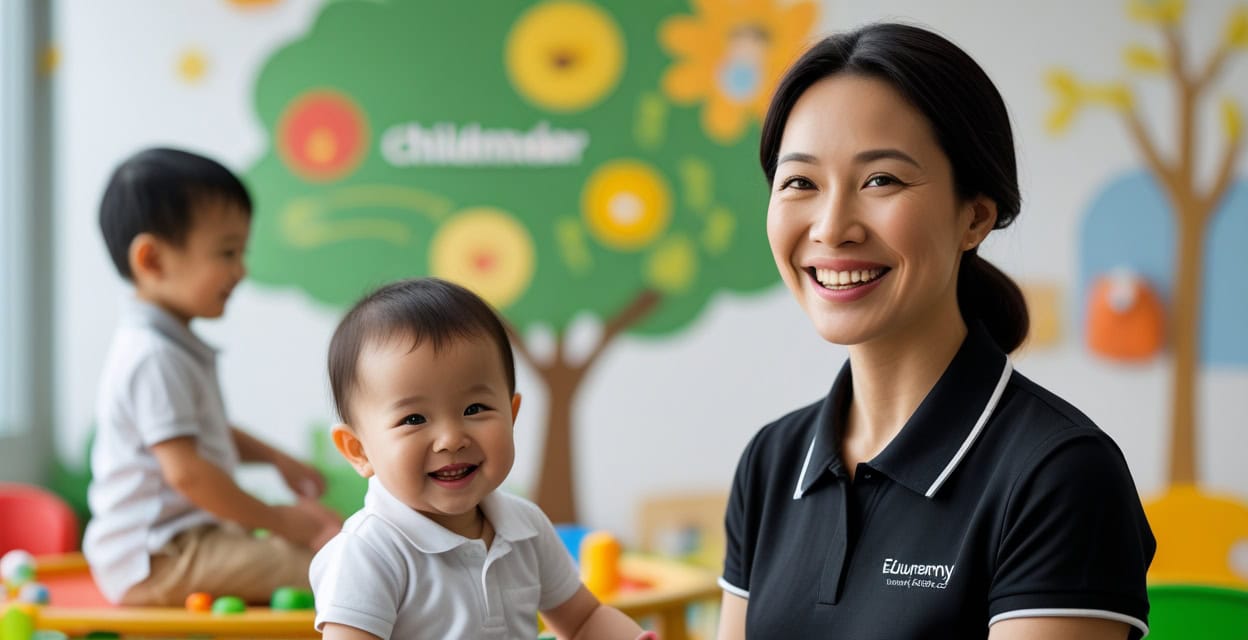
Topic 3: Development That Honors the First Thousand Days
The brain forms a vast city of connections in the first 1,000 days. EduNanny supports that build with six daily developmental anchors.
1) Touch and Tone
Responsive holding and calm touch set muscle tone and emotional baselines. Practical steps:
- Maintain gentle, consistent tactile routines during feeding and soothing times.
- Train caregivers to respond to cues with a calm, steady voice and slow movements.
2) Tummy and Turn
Floor-time progression from prone tolerance to rolling and crawling. Actionable plan:
- Personal sleep and activity plans adapted to each child’s pace, with progressive milestones built from observation notes.
- Provide ample tummy-time every day in a safe, padded area, increasing duration gradually as tolerated.
3) See and Say
Face games, tracking, and turn-taking babble build foundational communication:
- Interactive face-to-face play and object tracking games to encourage joint attention.
- Story murmurs and prosody paired with meaning to support early language development.
4) Rhythm and Rest
Predictable cycles of feeding, sleep, and play sustain regulation:
- Individual nap architecture tailored to each infant’s rhythms, including quiet wake windows to prevent overstimulation.
- Calm wake-ups with consistent cues to minimize cortisol spikes.
5) Nourish and Notice
Nutrition and transitions are respectfully managed with parent collaboration:
- Paceden feeding cues, texture progression, and safe handling of milk and formula choices.
- Regular coordination with parents on allergies, cultural foods, and feeding preferences.
6) People and Places
Consistent caregivers and safe exposure to outdoor light and air:
- Greet with ritualized routines that create a sense of belonging and security.
- Inclusive practices for infants with additional needs, with clear referral pathways and supports.
Each child’s portfolio documents not just milestones but the quality of engagement, regulation, and joy—capturing the human story behind growth.

Topic 4: Happiness and the Architecture of Belonging
Happiness in infancy is about coherence, not mere entertainment. EduNanny builds belonging through deliberate design and practice:
- Predictable hello and goodbye rituals to teach return and separation calmly.
- Micro-choices for agency—what to explore, which toy to choose—before language emerges.
- Ritual songs for transitions (feeding, diapering, settling) to create predictability and soothe routine changes.
- Family culture in the room: name cards in home languages and familiar lullabies to honor identity.
- Outdoor glimpses when safe: exposure to light, breeze, and birds to enrich sensory experience.
A happy infant is characterized by bright eyes, resilient recovery after distress, curiosity at the edge of comfort, and a body that relaxes into care. This is measured through ongoing observation, caregiver feedback, and family updates.

Topic 5: The Profession and Purpose of the Childminder
Childminders are entrusted with the nation’s future. EduNanny elevates the workforce through training, supervision, and humane pacing:
- A competency pathway that blends infant development science, attuned communication, safe handling, and reflective practice.
- Mentored onboarding and regular supervision huddles that convert experience into shared expertise.
- A humane schedule aligned to the 1:3 model to prevent burnout and errors.
- A Maximum Employment Mandate that dignifies care, supports career advancement, and makes care a publicly valued profession.
When childminders are supported, infants thrive, and families exhale—a professional ecosystem designed to sustain quality care over time.
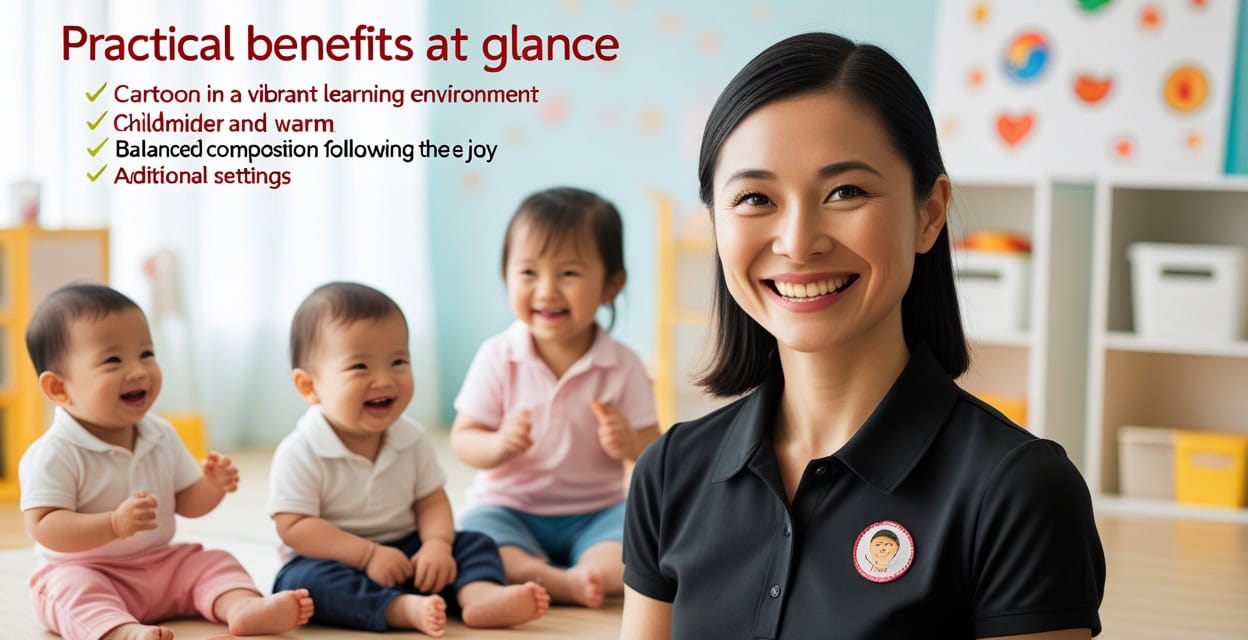
Practical Benefits at a Glance
- Access: Centre-Based and Home-Based Childminding in approved community and home premises across Singapore.
- Hours: Monday to Friday, 7am to 7pm, islandwide.
- Ratio: A 1:3 infant-to-educator standard for safety and individualized attention.
- Environments: Modern layouts with floor-level learning zones, sleep sanctuaries, and hygiene-forward design.
- Transparency: Innovation CCTV with secure, privacy-respecting parent access options and daily updates via the EduNanny app.
- Convenience: Near-home locations reduce travel and support seamless day-to-day connectivity during work hours.
- Affordability: Options from $33/day; CDA/Baby Bonus where applicable.
- Pilot and Purpose: Aligned to the ECDA Childminding Pilot; National Social Initiative with a Maximum Employment Mandate.
- Contact: Learn more at EduNanny.com and Childminding.EduNanny.com.
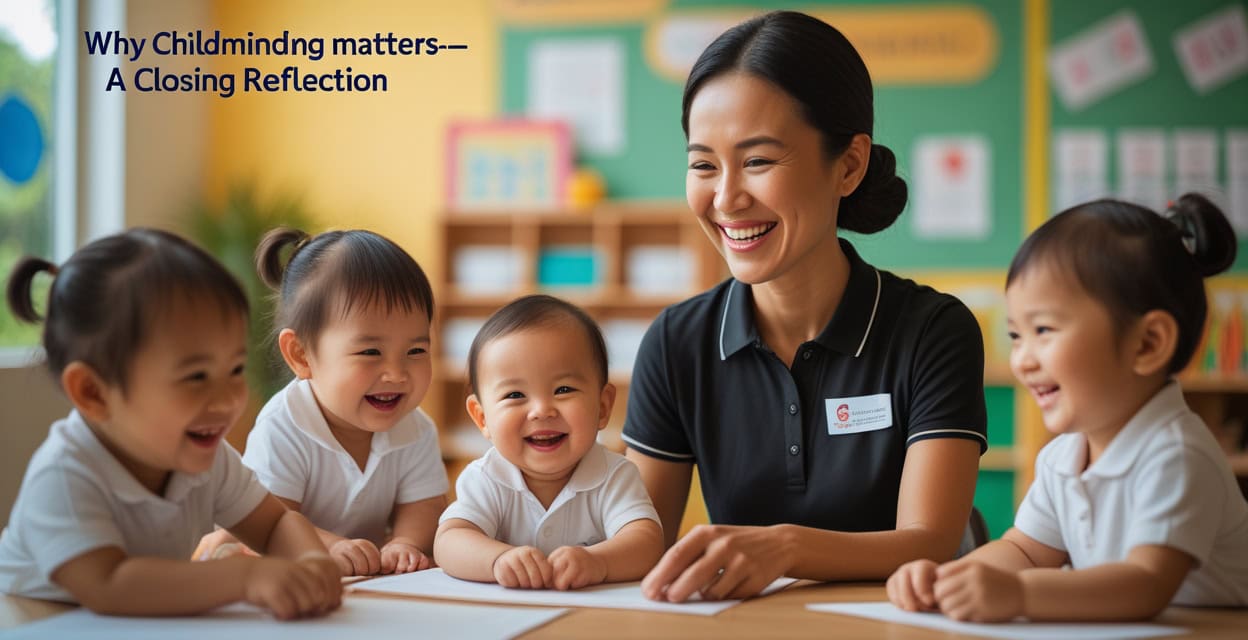
Why Childminding Matters—A Closing Reflection
Who benefits? Infants, parents, childminders, employers, and communities. A confident child nurtured in a calm, predictable environment becomes a more resilient classroom, a healthier workforce, and a kinder neighborhood. Childminding is public trust in private moments; it is not a parked pram but a living curriculum of attachment, self-regulation, and discovery performed minute by minute.
When you imagine your days with EduNanny, you can envision mornings without rush, workdays without worry, and evenings filled with stories instead of guesswork. For employers, imagine a workforce with fewer emergency absences and more focused hours because babies are cared for near home, calmly and well. For caregivers, imagine a calling that respects your time, trains your skill, and trusts your judgment. For neighbors, imagine a Singapore where small spaces produce big-hearted citizens, one quiet moment at a time.

Conclusion
This is not an advertisement for convenience. It is an invitation to build the future where it truly begins. Come see a site, meet an educator, read a day’s notes, and ask the hard questions. We welcome scrutiny; trust is earned in the open. Visit EduNanny.com and Childminding.EduNanny.com, or speak with our team to explore centre-based, home-based, or near-home options that fit your family. We are ready Monday to Friday, 7am to 7pm, in neighborhoods across the island.
The first thousand days are brief. Their effects are not. Let us make them excellent—together.
Thank you.
SEO keywords: [#infantcareSingapore, #SingaporeChildcare, #firstthousanddays, #EduNannySingapore, #nearhomechildminding]
Ready to Experience Excellence?
Transform Your Family’s Journey
Discover Singapore’s leading infant care and childminding services. Expert guidance for your little one’s first thousand days.