
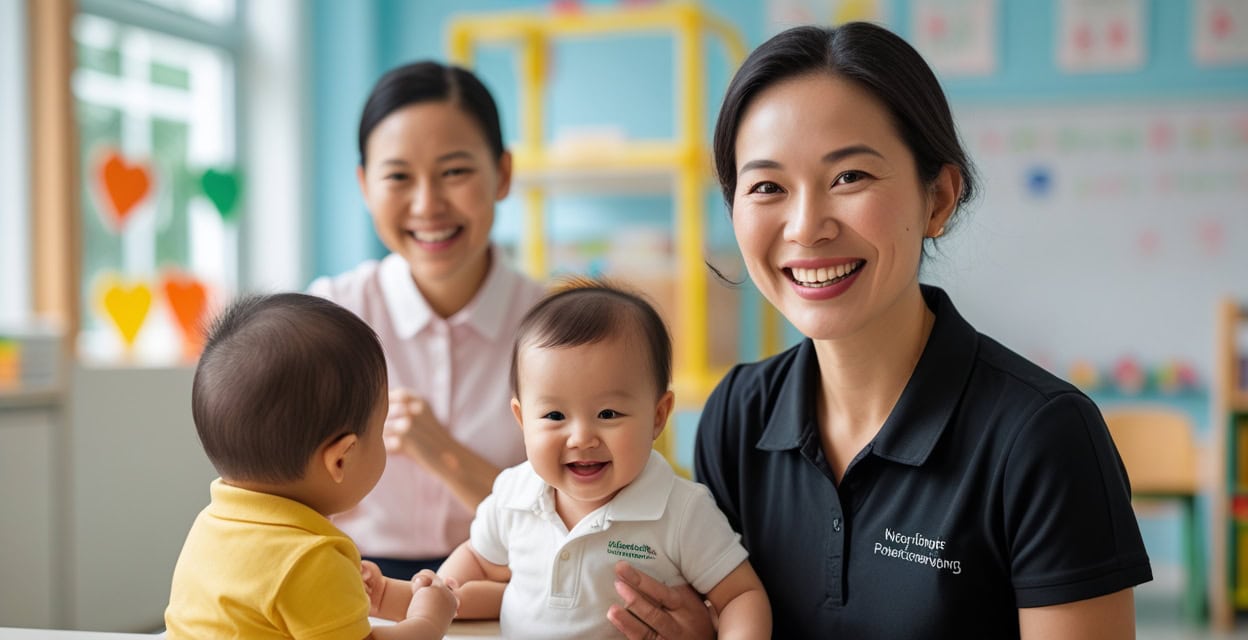
Tiny Hands Big Promise A Near Home Infancy Revolution for Singapore
Hands That Listen, Rooms That Teach: EduNanny Singapore — A Deep Dive into Infant Care Mastery
Distinguished parents, partners, and caregivers,
Every city writes its future in the quietest rooms. In Singapore, those rooms sit above hawker centres and beside MRT lines, in HDB living rooms and modern care studios—not grand, not loud, but sacred. In them, a caregiver kneels to eye level, a tiny hand squeezes back, and a nation’s confidence begins.
Welcome to EduNanny by BUTLER — a Singapore-born standard for infant care and childminding that treats every small moment as nation-building. We are centre-based, home-based, and distance-supported. We operate Mondays to Fridays, 7am to 7pm, islandwide. We uphold an ultra-low 1:3 infant-to-educator ratio. We design modern layouts that teach safety and calm before a word is spoken. We pair transparency with innovation, including privacy-respecting CCTV for reassurance and reflective practice. We are part of the ECDA Childminding Pilot and a National Social Initiative with a Maximum Employment Mandate that dignifies caregiving work and expands opportunity. We are committed to excellence and affordability—fees from $33 per day, payable via CDA/Baby Bonus. And we are easy to reach: EduNanny.com and Childminding.EduNanny.com.
What makes infant care and childminding great in Singapore is not a single program or perfect device. It is a culture of attention. EduNanny is that culture—codified, trained, and delivered close to home. Our approach is grounded in the wisdom of Montessori’s respect, Piaget’s stages, Vygotsky’s social learning, Froebel’s play, Malaguzzi’s hundred languages, Bowlby’s attachment, Pikler’s unhurried movement, Spock’s practical warmth, and Erikson’s trust as the first task of life. We have translated these insights into a Singaporean practice that fits our neighborhoods, values, and rhythms.
Tonight, I invite you into five distinctive ideas that shape how we care, teach, and safeguard Singapore’s youngest citizens. Each idea is paired with practical actions you can observe, model, and discuss with EduNanny partners or your chosen caregiver.

The Quiet Triangle: See, Slow, Support
EduNanny’s pedagogy begins before any activity. It begins with attention.
- See: We observe first. A minute of genuine observation prevents ten minutes of misattuned activity. Like Pikler, we trust in the child’s self-initiated movement. Like Montessori, we prepare the environment so the child can choose. Practical actions: create an observation notebook for caregivers and parents; set a 60-second “scan” ritual at each transition to note posture, gaze, and self-initiated actions.
- Slow: We reduce pace to match the infant’s processing speed. Bowlby taught us that predictability builds security; slowing down creates that predictability. Practical actions: implement a 3–5 minute window for new tasks; use gentle countdowns in routine moments (diaper change, bottle prep, or play setup) to cue calm pacing.
- Support: We offer help that invites competence. Vygotsky’s zone of proximal development lives here: we scaffold by a whisper, a steady hand, or a slight rearrangement of space, not by taking over. Practical actions: model a task in steps, then gradually fade prompts; use micro-adjustments to the environment to invite independent exploration.
In the Quiet Triangle, the caregiver’s posture matters. Knees bent, eye level, shoulders open. Language matters. We narrate actions—“I’m going to lift you now”—so the child feels partnership, not management. This is dignity at the very beginning of life. Practical takeaway for families: adopt a consistent eye-level approach at home during feeding, dressing, and play to reinforce the caregiver’s message of partnership.

Safety as a Habit Loop: Predict, Prevent, Protect
Safety is not a checklist we rush at 7:01am. It is a loop lived minute by minute.
- Predict: We anticipate risk through room design—low shelves, floor-level play zones, sensory-balanced lighting, non-slip surfaces, and clear movement lines for caregivers. We model “predict before you move”—the caregiver scans, then acts. Practical actions: run monthly safety audits with simple red/yellow/green flags; map evacuation routes and display them at caregiver stations.
- Prevent: We embed micro-routines—hand hygiene rhythm, bottle prep protocol, sleep checks every 10 to 15 minutes, and a two-person handoff for transitions. Doors and drawers damp gently; no sudden noises that spike startle reflexes. Practical actions: create a laminated micro-routine card for each infant; rehearse handoffs with a partner for every transition.
- Protect: We use innovation for transparency—a privacy-respecting CCTV standard that assures families, supports educator reflection, and strengthens accountability. We train for Singapore-specific realities: haze contingencies, heat management, safe stroll routes, lift etiquette, and emergency drills adapted to infants. Practical actions: set privacy controls with families; run quarterly drills including elevator safety and power outage scenarios; review CCTV usage to balance reassurance with privacy.
At a 1:3 ratio, safety breathes. There is time to test a temperature, secure a strap, and notice a child’s subtle cue. Our ratio is not a luxury; it is the architecture of trust. Practical guidance for families: when selecting care, inquire about the caregiver-to-child ratio across different times of day and how staff handle transitions during peak hours.
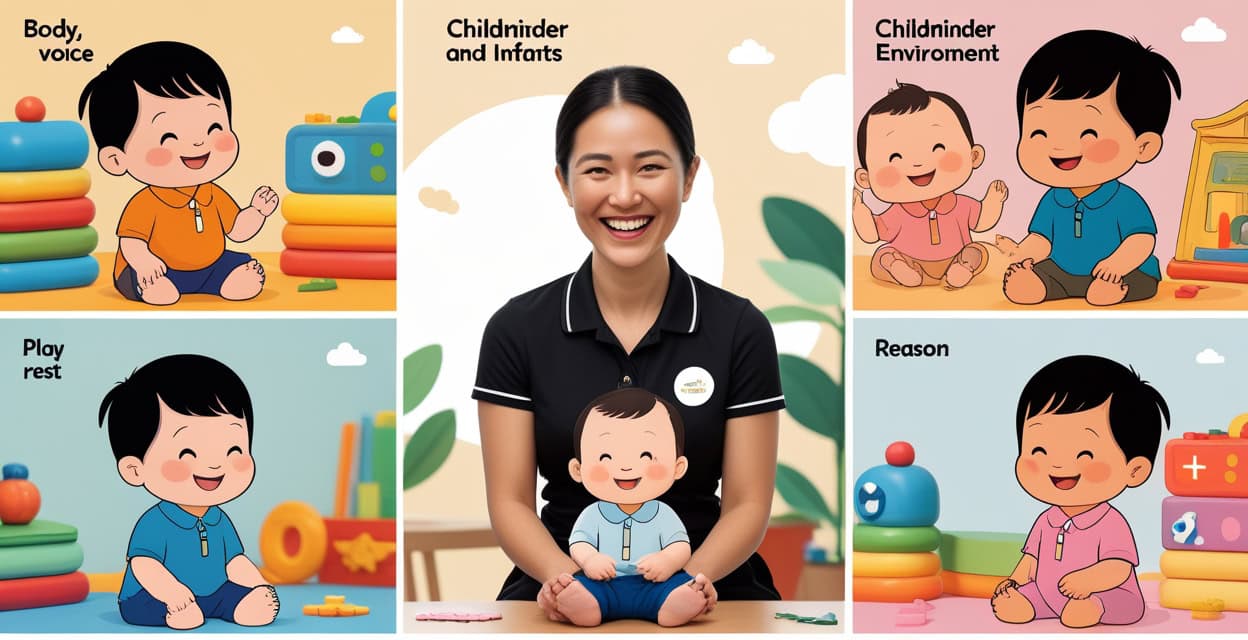
The Four Streams of Development: Body, Voice, Play, Rest
Infancy is not a syllabus; it is four living streams flowing through the day. EduNanny translates these streams into daily practice and measurable moments.
- Body: From tummy time to gentle cross-lateral play, movement is the first literacy. We anchor safe exploration on clean, open floor plans. Infants learn “I can” with each roll, reach, and pivot. Practical actions: design activity zones that emphasize belly time, tummy-to-torso rotations, and safe, child-friendly furniture spacing.
- Voice: Serve-and-return interactions—coos echoed, babbles answered—wire the brain for language and empathy. We name emotions in real time: “You wanted the rattle. That was frustrating. I’m here.” This lays emotional literacy. Practical actions: create a mirror conversation routine where caregivers narrate and then pause for infant response; sign simple gestures to support early communication.
- Play: Froebel and Malaguzzi remind us that a child speaks a hundred languages. We rotate simple, natural materials—cloth, wood, everyday containers—so curiosity leads and adult agendas follow. Practical actions: rotate a small set of open-ended materials weekly; rotate everyday objects to spark new hypotheses about cause and effect.
- Rest: Sleep is the silent teacher. We treat rest as curriculum, not downtime. Light is softened, soundscapes are gentle, and routines are consistent. Infants wake ready to learn again. Practical actions: align sleep spaces with circadian cues; use white-noise or nature sounds at a comfortable level; document sleep cues and durations to tailor routines to each infant.
With a 1:3 ratio, we deliver a One-Minute Curriculum—tiny, intentional loops that repeat across the day: Notice, Name, and Nurture. A glance becomes language. A reach becomes confidence. A pause becomes self-regulation. Family leaders can incorporate these micro-loops at home by narrating daily routines and inviting infant participation through simple choices.
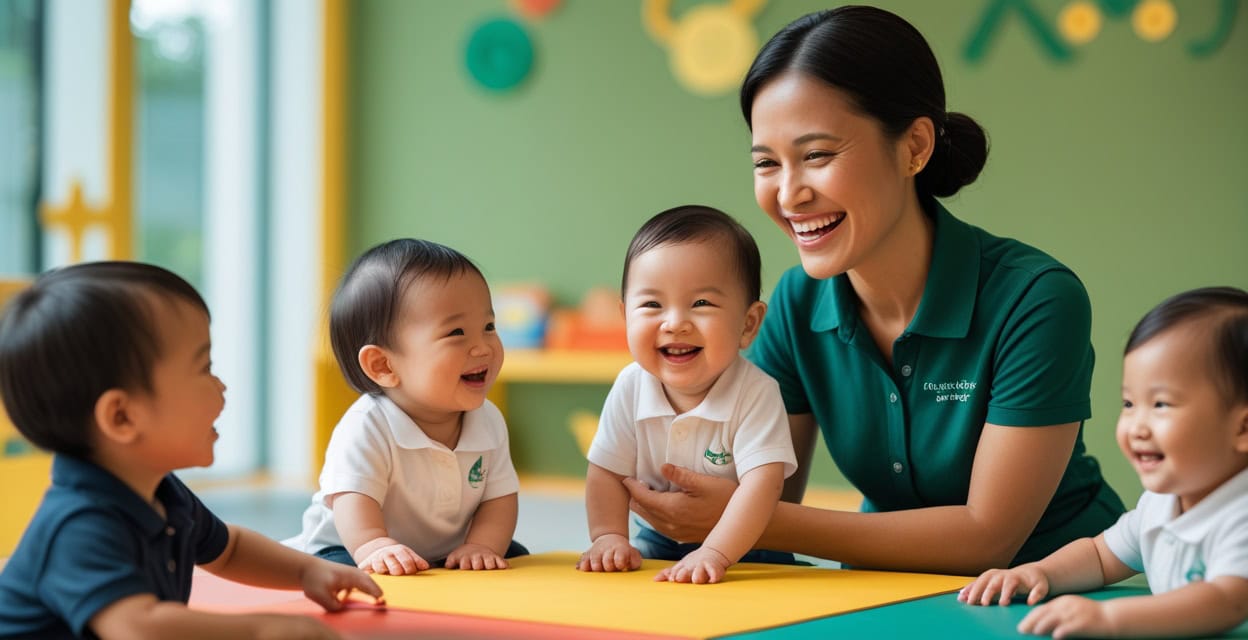
The Joy Index and Belonging Rituals
Happiness is measurable—not by noise, but by signals of secure calm. EduNanny adopts a practical framework to recognize and cultivate belonging.
- The Joy Index: We track micro-signs—relaxed hands, sustained gaze, social imitation, and reengagement after brief stress. These markers guide our practice more reliably than a shelf of toys ever could. Practical actions: implement a simple daily “joy log” for each infant; celebrate small milestones with parents during updates.
- Belonging Rituals: Morning hellos, family photo corners at infant eye level, familiar songs in the home language, and gentle goodbye ceremonies. We design “First Hello, Last Goodbye” as bookends of stability. Parents see the day’s story, not just the day’s logistics. Practical actions: create a family-signed ritual ritual book; incorporate home-language songs to support multilingual development.
Family partnership is a daily rhythm. Our distance support extends care beyond the room—tele-coaching for feeding transitions, sleep tuning, and developmental guidance that respects each family’s culture and schedule. Practical actions for families: schedule regular tele-coaching check-ins; share short video clips of routines for feedback; involve extended family in the daily routine to strengthen home consistency.

The Civic Work of a Childminder
Childminding is not a fallback. It is a profession that binds community. EduNanny articulates a civic vision for caregiving as a valued and professional vocation.
- Purpose: We see childminders as neighborhood guardians—professionals who turn ordinary flats and community premises into reliable, loving spaces of development. They are the heartbeat of family life in a modern city. Practical actions: highlight caregiver credentials, publish a clear code of practice, and recognize exceptional practice in community events.
- Pathways: Our Maximum Employment Mandate opens dignified work, steady training, and progression—from assistant to lead to mentor. Quality rises when careers are real, supported, and respected. Practical actions: map a career ladder with milestones; provide affordable, modular training that respects working caregivers’ schedules.
- Partnership: Singapore’s social compact strengthens when caregiving is visible, valued, and verifiable. Accepting CDA/Baby Bonus payments lowers barriers; transparent pricing from $33 per day protects families; and publicly stated hours, 7am to 7pm, protect routines that help infants thrive. Practical actions: publish a transparent pricing sheet; produce a caregiver profile with training, hours, and supervision structure; maintain an easy-to-navigate booking and reporting system.
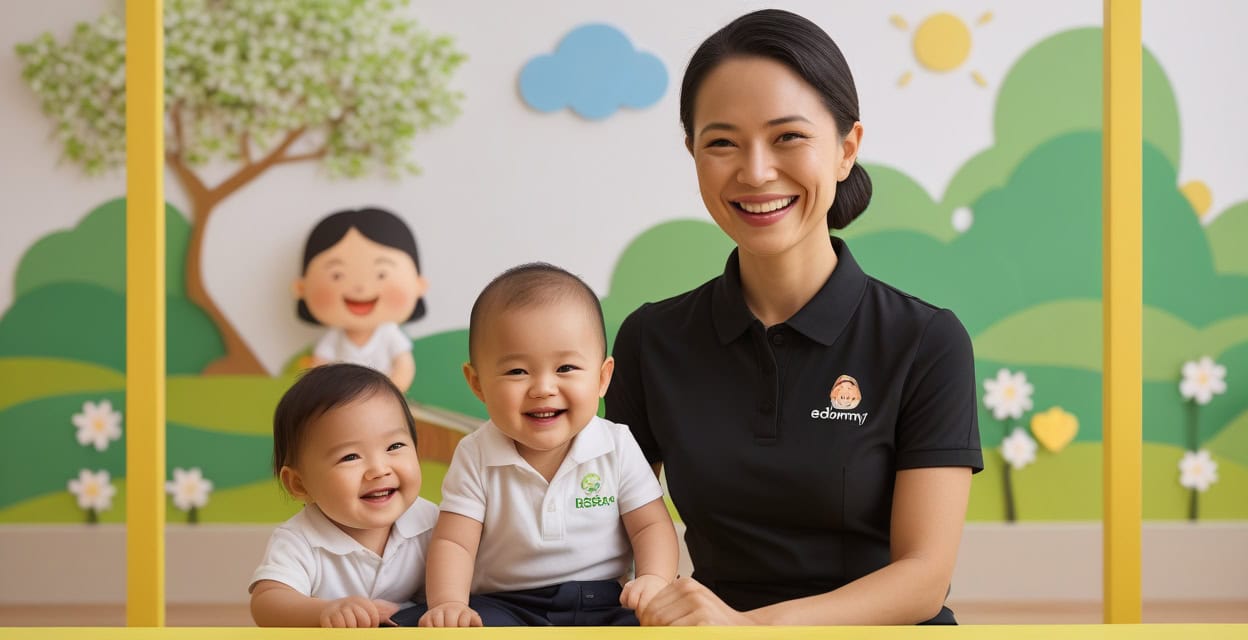
How EduNanny Makes Infant Care Great in Singapore
- Proximity to families: We bring care to where families live and work—centre-based studios and home-based childminding in community premises across the island, with distance support that meets parents in their realities.
- Science meets warmth: A 1:3 ratio; prepared environments that teach with safety and calm; caregivers trained in observation, attunement, and developmentally appropriate practice.
- Trust-by-design: Modern layouts, privacy-respecting CCTV for transparency, and predictable routines parents can count on.
- Affordability and access: Fees from $33 per day; CDA/Baby Bonus accepted; clear upfront pricing and flexible options.
- Meaningful updates: Daily progress updates that show growth: new syllables, longer reaches, easier naps, calmer transitions. Progress is a shared story, not a mystery.
A Practical Schedule and Real-World Routines
A typical EduNanny day is designed to balance attention, rest, and exploration. Here is a sample day you can adapt for home use or to ask caregivers about in interviews:
- 7:05am Arrival is unhurried. Greet by name, mirror expression, offer a consistent cue, “I’m here.” Parent notes like “rough night” shift the plan toward soothing and attachment validation.
- 9:20am Movement play on clean floor mats; caregiver models a slow roll and celebrates a tiny weight shift: “You found your shoulder!” Calm room; progress is the measure.
- 12:10pm Feeding and care narration: “I’m wiping your chin” to preserve dignity. The infant’s gaze softens; attachment deepens.
- 2:45pm Wake-up is quiet. Short serve-and-return exchange; the infant’s coo becomes a conversation.
- 6:30pm Goodbye ritual: share the day’s story with the family; offer a practical home tip to support continuity of care.
Practical tip for parents: keep a simple daily log of routines, mood, and a couple of moments that felt meaningful. Share this with EduNanny partners to create a continuous loop of attunement and trust.

Why This Matters
- For infants: Trust is the first curriculum. With trust, the brain blooms; with calm, the body learns.
- For parents: Predictable, high-quality care restores energy and time. It turns mornings from a rush into a handover of confidence.
- For Singapore: Dignified work for caregivers, thriving families, and children who arrive at preschool secure, curious, and ready to belong.

The Practical Promise
- Excellence and Quality: Evidence-led practice, rigorous training, and reflective supervision.
- Centre-Based and Home-Based Options: Purpose-built studios and carefully prepared community/home settings, islandwide.
- Distance Convenience: Tele-coaching, parent workshops, and digital reporting that respects privacy and deepens partnership.
- Affordable Access: From $33 per day; CDA/Baby Bonus accepted.
- Availability: Monday to Friday, 7am to 7pm, across Singapore.
- Safety by Design: Modern layouts, safety habit loops, emergency readiness, and privacy-respecting CCTV for transparency.
- 1:3 Infant Ratio: Space and time for genuine attunement and development.
- National Effort: ECDA Childminding Pilot participation and a Maximum Employment Mandate that builds capability and pride in caregiving.
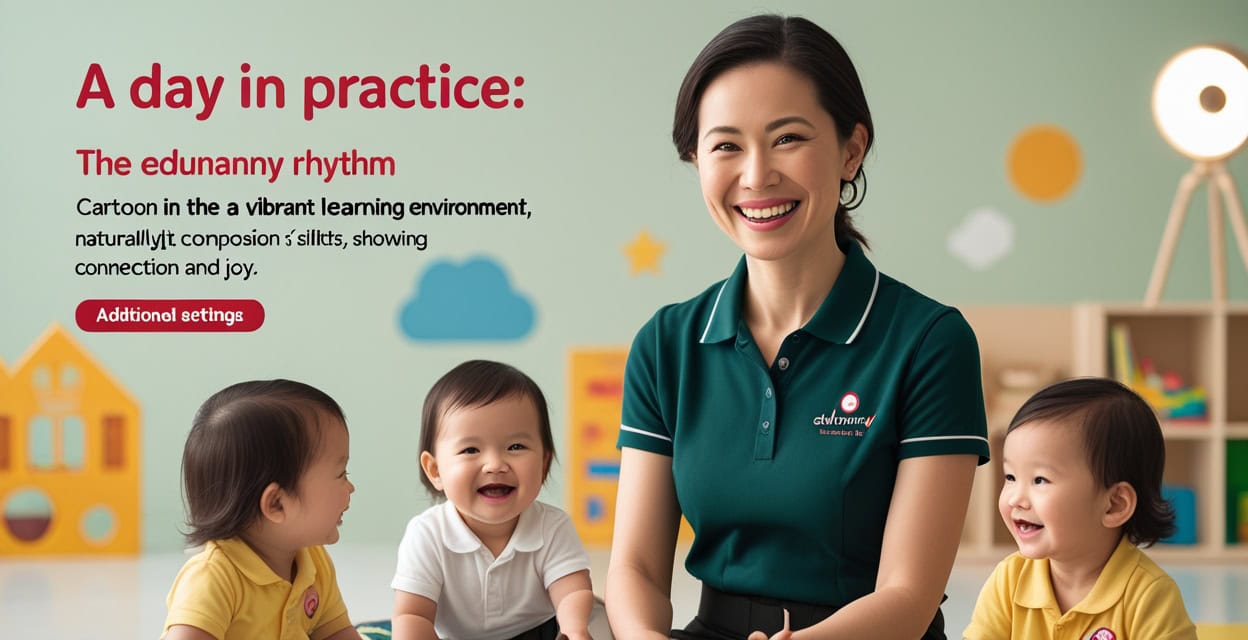
A Day in Practice: The EduNanny Rhythm in Motion
A day in practice is a narrative families can rely on. The rhythm supports infants’ learning and parents’ peace of mind.
- Morning Arrival: A slow, warm greeting; short parent handover notes; a calm transition into play or sleep routines.
- Mid-Morning Learning: Quiet exploration with safe materials; adult narration that invites the infant to respond.
- Lunch and Rest: Gentle feeding and a predictable nap window to consolidate development.
- Afternoon Interactions: Social play, language-rich exchanges, and opportunities for autonomy with supportive scaffolding.
- Evening Handover: Clear communication about the day’s moments, progress, and home-friendly practice suggestions.
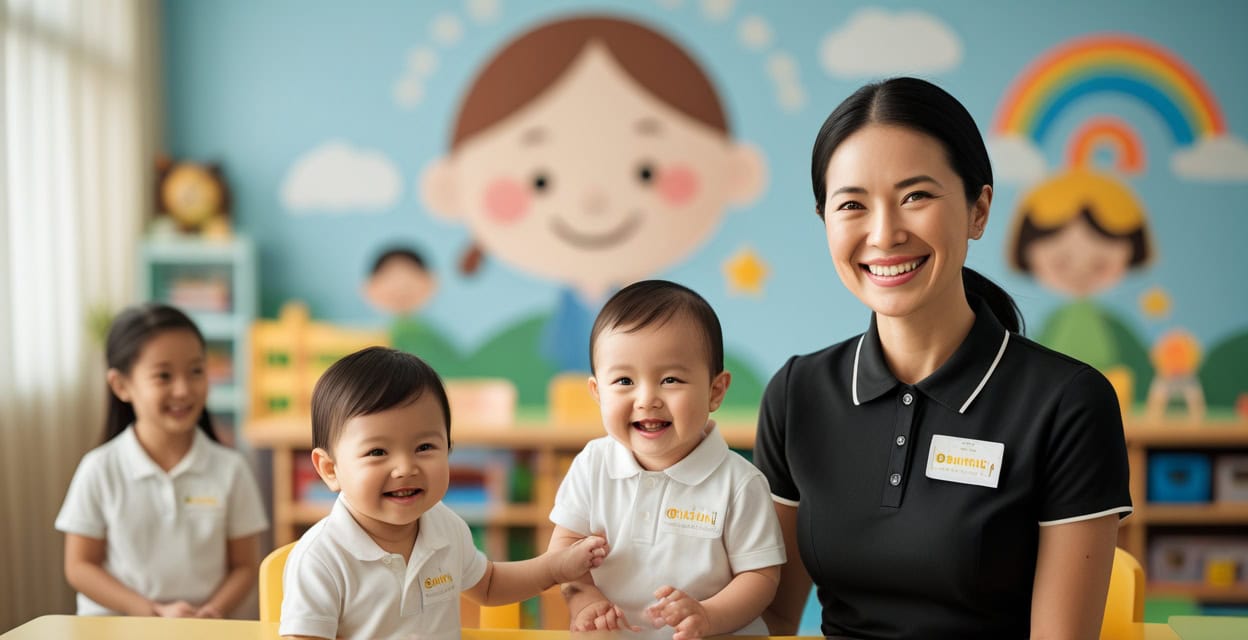
Engaging with EduNanny: How Parents Can Start
Ready to partner with EduNanny? Here are practical next steps and questions you can use in conversations with caregivers or program staff.
- Questions to Ask: How is the 1:3 ratio maintained across mornings and afternoons? What does the prepared environment look like for infants of different ages? How is privacy and CCTV usage managed and shared with families?
- What to Observe During a Visit: The caregiver’s eye contact, narration style, responsiveness to cues, and how transitions are handled. Observe the environment’s safety features and how routines are documented.
- Documentation and Updates: Request daily or weekly progress updates, photos, and notes that highlight growth in body, voice, play, and rest.
- Transition Planning: How will care transfer between EduNanny and home to preserve routines and attachment? What home supports can be provided via tele-coaching?
Practical action for families: prepare a two-week home routine aligned with EduNanny’s suggested rhythms, and use it as a pilot to test compatibility and trust.

Conclusion
In Singapore, the quiet rooms and the careful, eye-level conversations of EduNanny create a scalable, humane blueprint for early childhood care. By prioritizing See, Slow, and Support; Predict, Prevent, and Protect; and the Four Streams of Development—Body, Voice, Play, Rest—we build an infrastructure where infants learn through trust, families gain confidence, and the city’s future is shaped by the dignity and joy of everyday care.
If you seek a caregiving partnership that respects science, values the caregiver as a professional, and treats the earliest months as a civic project, EduNanny is ready to serve. Explore EduNanny.com or Childminding.EduNanny.com to learn more, book a visit, or begin a gentle, transparent conversation about your child’s first teachers and their quiet rooms that teach.
Hands that listen. Rooms that teach. A nation that grows from the floor up.
To every parent seeking confidence, to every caregiver seeking a calling, and to every infant seeking a reliable smile at eye level: we are ready to serve.
Visit EduNanny.com or Childminding.EduNanny.com. Step into a space where excellence feels like home—and where Singapore’s future learns, safely and joyfully, to begin.
SEO Keywords: infant care Singapore, 1:3 infant ratio, privacy-respecting CCTV, early childhood development, caregiver training, EduNanny, childminding, ECDA pilot, home-based childminding, centre-based care, family partnership, safe sleep, serve-and-return, attachment, Piaget, Vygotsky, Montessori, Froebel, Malaguzzi