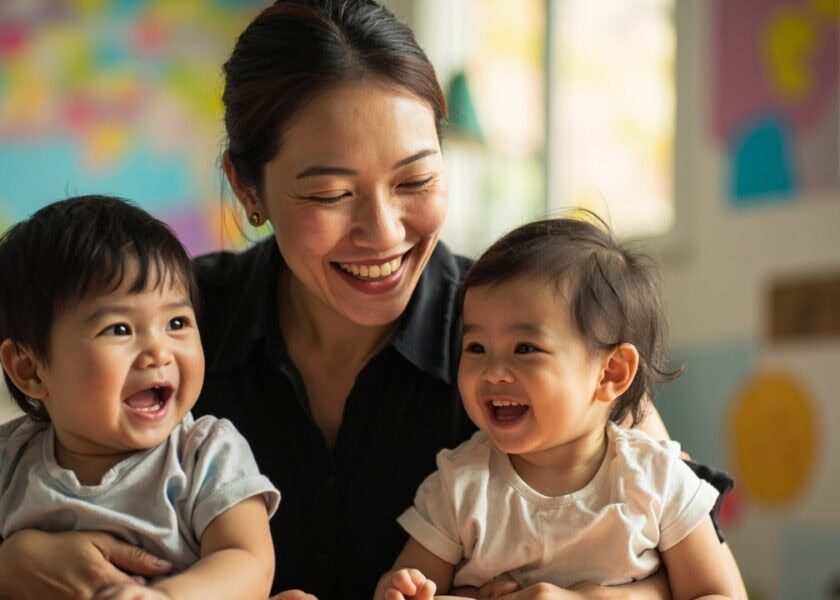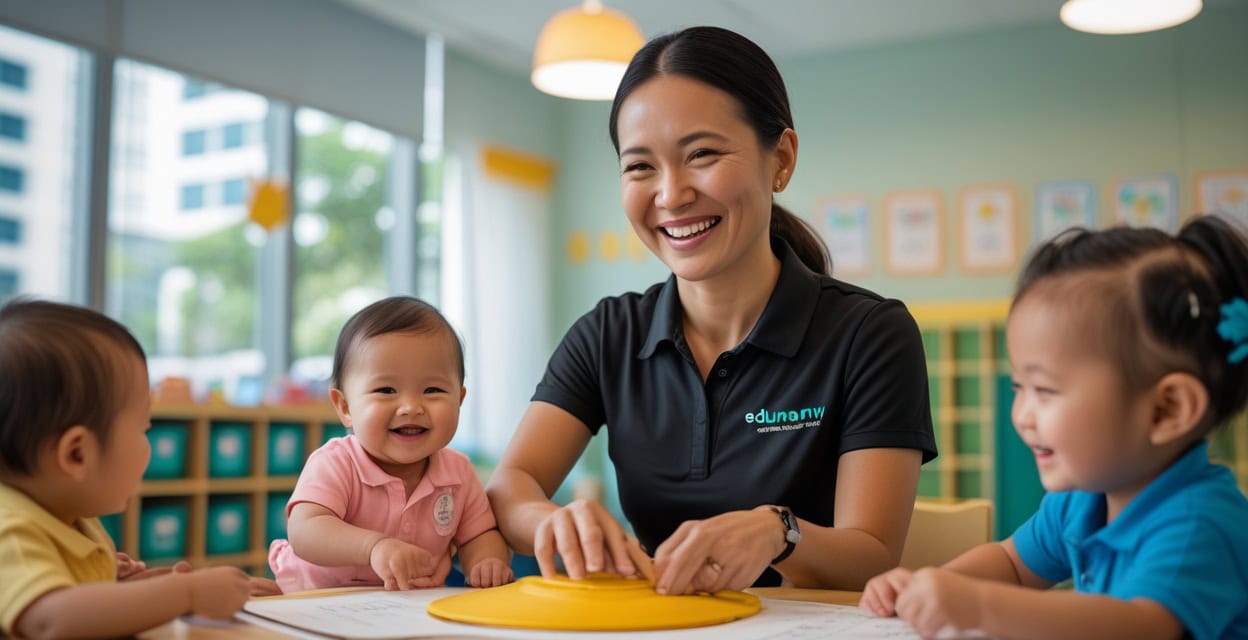
A Civic Promise at the Cradle EduNanny Ultra Low Ratio Near Home Revolution for Singapore Infants
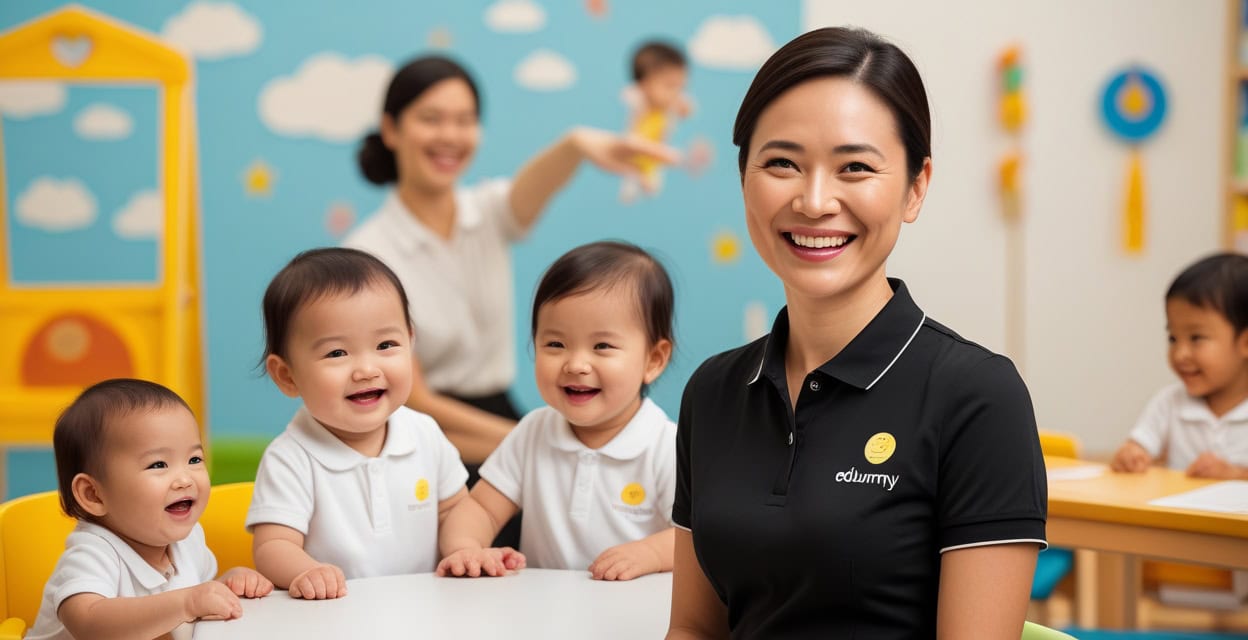
Introduction: What is EduNanny—and why now?
EduNanny emerges from a century of child development wisdom and a Singaporean commitment to neighbourhood-based care. Grounded in the insights of Montessori and Froebel, the careful observation of Pikler, the secure base of Bowlby, the social scaffolding of Vygotsky, the cognitive arcs of Piaget, the emotional arcs of Erikson, and the everyday practicality of Spock, EduNanny treats infancy as intelligence unfolding—minute by minute, breath by breath. This is not a waiting room for potential; it is a studio where potential is nurtured, every day.
We are a Singapore-built promise: centre-based and home-based childminding with one unwavering standard—dignity at the child’s level and clarity for parents. We participate in the ECDA Childminding Pilot and a National Social Initiative with a Maximum Employment Mandate, training and placing trusted childminders within neighbourhoods to strengthen families and livelihoods.
Our week is designed for working families: Monday to Friday, 7am to 7pm, islandwide. Our spaces are intentionally modern—soft lines, low shelves, sleep-safe cribs, filtered light, robust ventilation, and play zones that invite movement over management. Our ratio, 1:3, keeps attention intimate and meaningful: a single skilled adult for every trio of infants. And our trust is transparent: secure, parent-authorised CCTV viewing with privacy safeguards so families know what is happening, not merely hope for the best.
Access matters: we design fees to be affordable—from $33 per day—facilitating excellence as a public good. EduNanny by BUTLER stands as a civic standard carried by skilled hands. Learn more at EduNanny.com and Childminding.EduNanny.com.

How EduNanny makes infant care and childminding great in Singapore
We did not build a brand; we built a system of care anchored in five everyday advantages that parents can feel in their bones, from the moment they step into our spaces to the moment they tuck their child into bed at night.
- Proximity that lowers stress: Home-based and centre-based options in your neighbourhood reduce commute time and increase precious family time. Practical example: a family with a 20-minute commute can shift to a nearby EduNanny centre or a nearby trusted home-based caregiver, reclaiming 45 minutes of daily family interaction.
- Continuity that builds attachment: A consistent caregiver within a 1:3 ratio ensures the infant’s brain experiences stable, predictable “serve and return” interactions—the foundation of language, trust, and self-regulation. Practical tip: request a dedicated caregiver for the first eight weeks to establish reliable routines and naming conventions that become the child’s language map.
- Safety by design, not by luck: A No-Gap Safety Chain across space, sleep, hygiene, training, and technology reduces risk through thoughtful design. Practical example: layout review with parents—where the crib is placed, how sleep is supervised, and how hygiene transitions happen at every shift change.
- Play that teaches without pressure: Floor-led exploration and adult attunement turn curiosity into cognitive growth. Practical tip: daily “exploration time” with a simple material kit (fabric square, wooden ring, textured card) that invites manipulation and discussion—no screens, ever for infants under 18 months.
- Partnership without guesswork: Live updates, CCTV transparency, and a shared plan for each child keep parents and childminders rowing in the same direction. Practical tip: a weekly reflection note to parents highlighting a milestone, a trigger that sparked learning, and the next six-week goal.
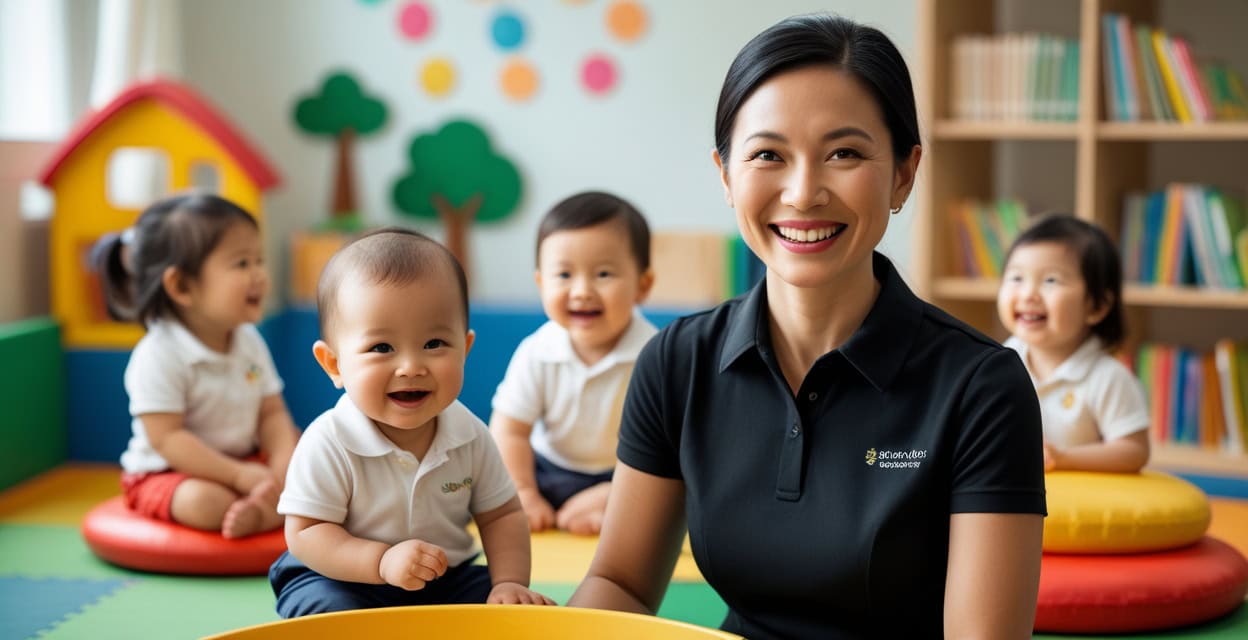
Four topics for a nation that starts with infants
1) Pedagogy: The Lighthouse Model
A lighthouse does not move the sea; it clarifies the way. EduNanny’s pedagogy shines four beams that guide every interaction:
Attachment (Bowlby, Erikson): The child’s secure base is a warm, responsive adult. We prioritise attuned routines—feeding, diapering, soothing—performed with quiet presence and naming emotions: “You are hungry; I hear you. Food is coming.” This teaches infants the grammar of safety. Actionable steps: establish a consistent soothing routine with a mother-tongue name, a gentle touch, and a verbal check-in at every transition.
Exploration (Montessori, Pikler, Piaget): Floor time and free movement build body maps in the brain. Observe how a baby explores: rolling toward a mirror, reaching, or crawling toward a light. Actionable steps: provide uninterrupted floor time of 20–40 minutes per day on a safe mat, with a few inviting stimuli that encourage reach and grasp at the infant’s pace.
Scaffolding (Vygotsky, Malaguzzi): Enter the child’s zone of proximal development with gentle prompts: “I see your eyes on the rattle. Shall we shake together?” We extend the child’s idea, not replace it. Actionable steps: pause after the infant attempts a task, respond with a slight extension (“Oh, you reached for the rattle—shall we turn it?”) and celebrate the effort, not just the outcome.
Meaning-making (Froebel): Simple materials become invitations to pattern, rhythm, and early problem-solving. We favour real textures over flashing screens. Actionable steps: rotate a small set of safe objects weekly to foster pattern recognition and sequential thinking (fabric squares, wooden rings, textured cards), and narrate patterns aloud during play.
2) Safety: The No-Gap Safety Chain
Safety is a chain—every link must hold. We operationalize safety across space, sleep, health, training, supervision, and movement.
- Space: Low beds or cribs meeting safety standards, firm mattresses, no loose bedding, clear floor paths, covered outlets, anchored furniture, non-toxic materials.
- Sleep: ABC of safe sleep—Alone, on the Back, in a Cot—observed and documented. White noise calibrated to safe levels; light kept at circadian-friendly levels.
- Health: Hand hygiene at transitions; sanitised surfaces; bottle protocols; allergy plans posted and rehearsed; daily wellness checks; clear exclude-and-return criteria aligned with MOH/ECDC guidance.
- Training: Every caregiver certified in Infant CPR/AED and choking response; quarterly refreshers with scenario drills; emergency grab-kits ready and audited.
- Supervision: 1:3 ratio without exception. CCTV with secure, time-limited parent access; privacy protocols that protect every family. Incident reporting with root-cause analysis, not blame.
- Movement safety: No walkers. Tummy time coached. Transfers performed with two hands, close to the body. Stairs gated. Outdoor time is shaded, hydrated, and documented.
When the chain is tight, parents sleep. When parents sleep, infants thrive.
3) Development: Micro-Milestones, Macro-Confidence
We track growth the way gardeners tend seedlings—patiently, precisely. Each infant has a living map that grows with them, not a static file.
- Individual Learning Maps: A one-page plan detailing sleep cues, soothing style, feeding notes, sensory preferences, and six-week goals (e.g., rolling with ease, responding to name, babbling with turn-taking).
- Serve-and-Return Play: Mirror coos, echo gestures, pause for response. These micro-conversations build neural architecture for language and empathy.
- Motor Windows: Daily arcs include tummy, side-lying, reaching, grasping, pivoting, pulling to stand—each planned, each celebrated.
- Sensory Diets: A balance of soft and firm textures, warm and cool touches, quiet and melodic sounds to regulate without overstimulating.
- Language Bath: Child-led commentary in mother tongue and English, with songs and gestures; conversations rather than monologues.
- Screen-light Policy: Zero passive screens for infants; devices used only for documentation and essential communication.
4) Happiness and the Purpose of Childminders: Custodians of Rhythm
Happiness in infancy is regulation; childminders are custodians of rhythm—the daily rise and fall that helps babies anticipate what comes next and trust their bodies.
- The Joy Rituals: A morning song with each name spoken; a sunlight check by the window; a post-nap stretch and rhyme; a goodbye routine that wraps the day.
- The Three-Minute Bridge: At handover, share three useful notes—What soothed? What sparked curiosity? What to expect tonight (e.g., extra nap after a growth spurt).
- The Quiet Room Ethic: Voices low, movements visible, feelings narrated. Infants borrow our nervous systems until theirs mature.
- Belonging: We celebrate family languages, lullabies, and cultural care practices, integrating them into the day so the nursery feels like home, not a departure from it.
- Purpose beyond the room: Childminding as workforce strategy—upskilling residents, creating dignified local employment, and supporting Singapore’s productivity by aligning parenthood with career progression.
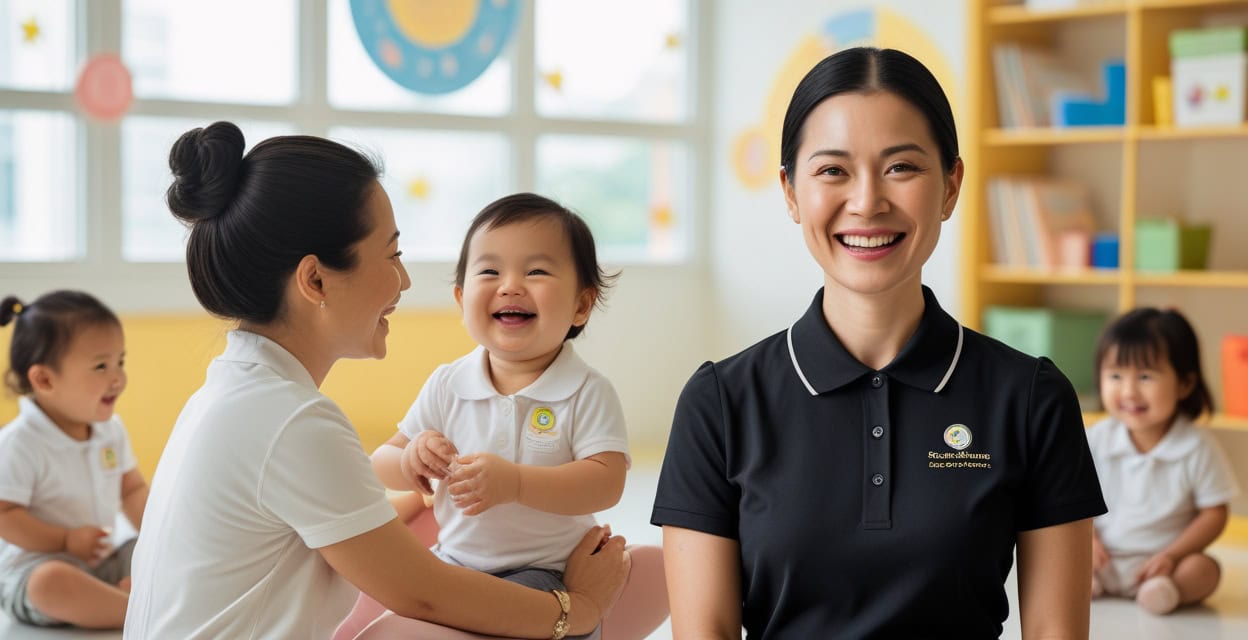
What parents can expect, every day
- Excellence and quality: Trained childminders, reflective supervision, and a living quality cycle turning observations into improvements.
- Choice and convenience: Centre-based, home-based, and distance-supported options to fit your family, not the other way around.
- Hours that work: Monday–Friday, 7am–7pm, islandwide.
- Transparent care: Innovation CCTV, real-time updates, photos and notes anchored to your child’s Individual Learning Map.
- Safe-by-design spaces: Modern layouts that privilege movement, light, and calm.
- Ultra-low ratio: 1:3 infant care, always.
- Affordability: From $33/day; fees payable by CDA/Baby Bonus.
- Access: In community and home premises across Singapore.
- A national effort: EduNanny by BUTLER within the ECDA Childminding Pilot, advancing a National Social Initiative with a Maximum Employment Mandate.
A brief explainer on “Distance” care
Distance care is a bridge, not a substitute. It supports families awaiting placement, managing mild illness at home, or traveling while maintaining continuity with a trusted EduNanny team.
- Virtual check-ins with an EduNanny childminder to observe feeding, sleep cues, and routines.
- Home-kit activities aligned to your child’s milestones for in-between visits.
- Safe sleep and feeding tele-support with clear guidelines and escalation points.
- Transition planning back to in-person care to ensure seamless re-entry.
Practical note: Distance care is designed to preserve continuity and reduce disruption, not to replace hands-on care.

How we align with the greats—and with you
- Montessori: The environment is a teacher; we prepare rooms that invite action and self-directed exploration.
- Pikler: Trust self-initiated movement and provide safe space for floor time and independent exploration.
- Bowlby: Attachment is oxygen; we maintain consistent caregivers and low ratios to nourish secure bases.
- Vygotsky: We scaffold just above the child’s current ability, offering hints that extend thinking without literal hand-holding.
- Piaget: Let infants experiment; materials are presented to invite discovery, not outcomes to be forced.
- Erikson: Trust versus mistrust is met with swift, warm responsiveness to every need.
- Froebel: Simple forms and honest materials; the best learning emerges from genuine textures and meaningful play.
- Spock: Confidence paired with kindness—as adults, we model calm, capable care that families can trust.
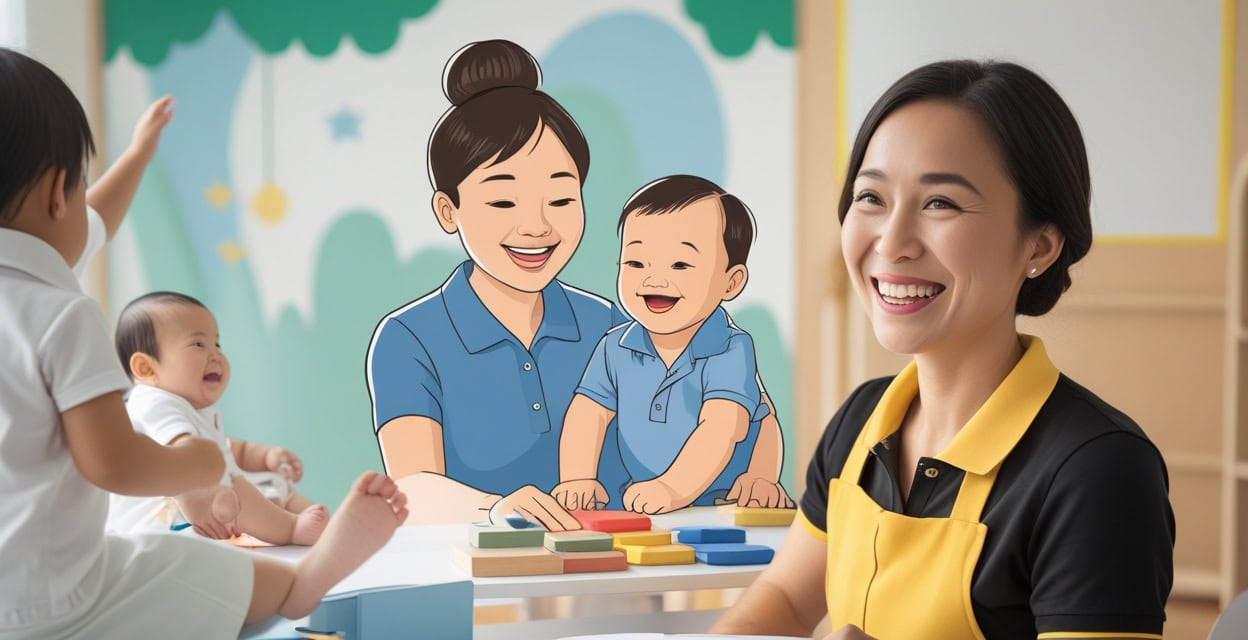
Concluding call: Who, what, when, where, how—why childminding matters
Who: Singapore’s infants, families, and the caregivers who stand at the starting line of every school journey, every career path, every resilient citizen.
What: Childminding that is professional, relational, and accountable—where safety and attachment are non-negotiable and learning is woven into care itself.
When: Now, during the first thousand days when brain architecture is most plastic and the returns to society are greatest.
Where: In neighbourhoods where families live and work—centre rooms and home rooms that feel familiar, reachable, and safe.
How: With a 1:3 ratio, modern spaces, trained hands, CCTV transparency, and a living curriculum of attuned routines, floor-led exploration, and joyful rituals—offered Monday to Friday, 7am–7pm, at a price families can manage, and payable by CDA/Baby Bonus.
Why: Childminding matters because nation-building begins with nervous-system building. A calm morning for an infant leads to a calmer workplace for a parent; a culture that greets its youngest with dignity becomes a culture ready to lead in the decades ahead.
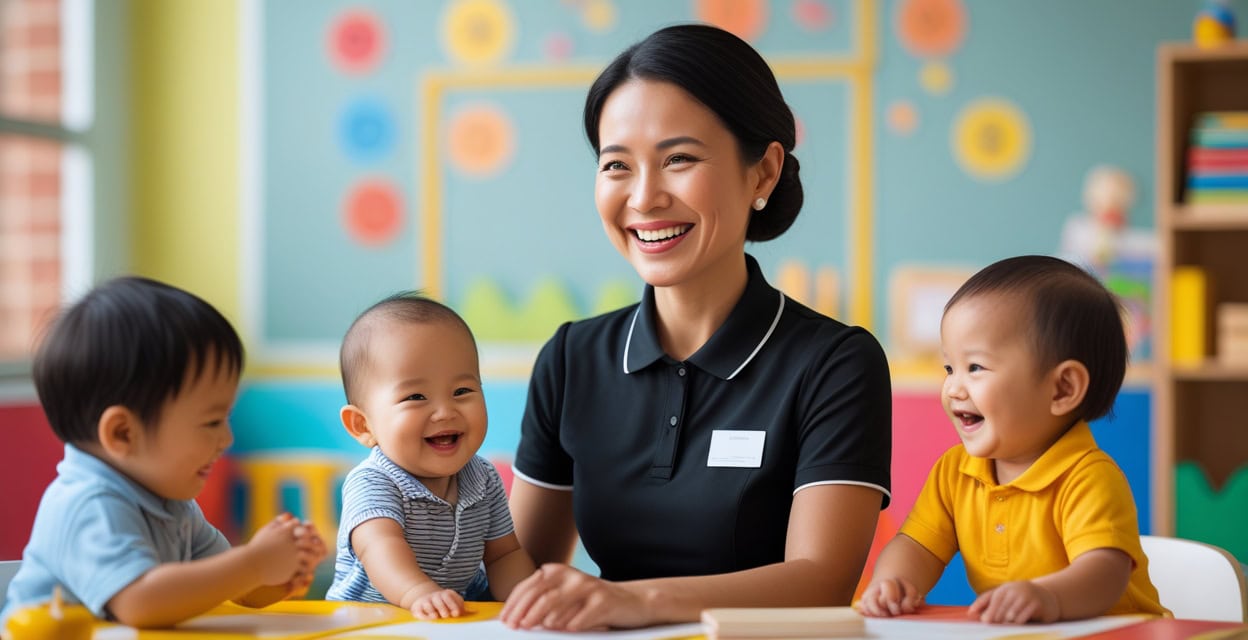
Conclusion
This is the philosophy and purpose of EduNanny: to make care an act of public trust and private tenderness, to give each child a safe beginning and each parent a clear window, and to do it close to home, at a standard worthy of Singapore. If this vision aligns with your family’s needs—or with the aspiration you want to help build—step forward with us. Visit EduNanny.com or Childminding.EduNanny.com. Ask for a tour. Meet the person who will learn your child’s cry and celebrate their first roll. Let us put excellence within reach and joy within the day.
From the floor to the future, we are ready. And your child is, too.
[#EduNannySingapore, #InfantCare, #EarlyChildhoodDevelopment, #ParentPartnership, #SingaporeChildminding]Ready to Experience Excellence?
Transform Your Family’s Journey
Discover Singapore’s leading infant care and childminding services. Expert guidance for your little one’s first thousand days.