
EduNanny by BUTLER The Attunement Roadmap to Safe Joyful Infancy in Singapore
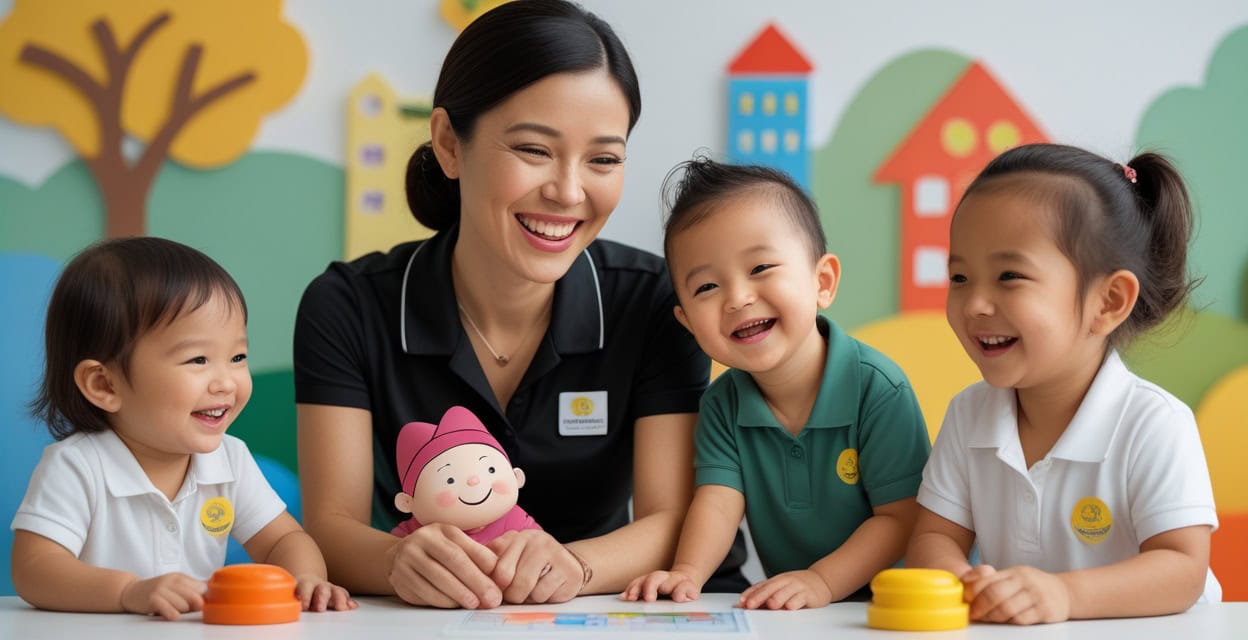
EduNanny by BUTLER: A Bold Vision for Infants and Families in Singapore
The smallest hands hold the largest promise. EduNanny is designed to protect that moment, multiply it, and make it reliably available to every family in Singapore. This article expands the keynote into a practical, actionable guide for parents, caregivers, and communities who want to understand what high-quality infant care looks like in daily life—and how to partner with EduNanny to support child development from the very first days.
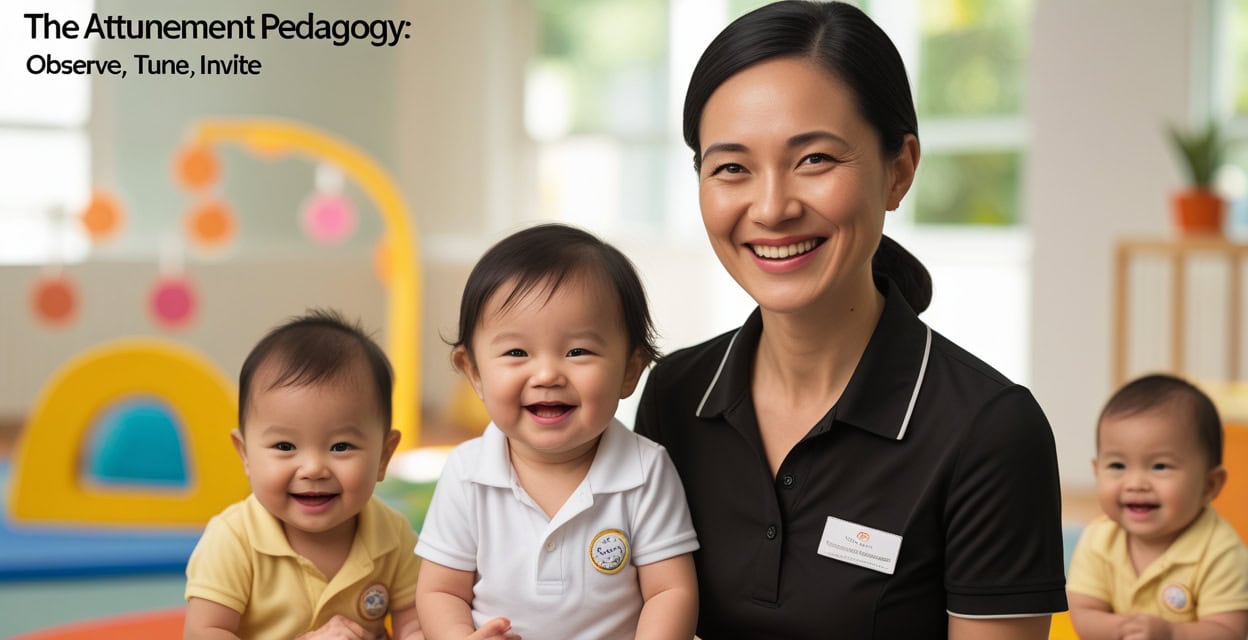
The Attunement Pedagogy: Observe, Tune, Invite
Education in the earliest months is less about instruction and more about relational artistry. The Attunement Pedagogy foregrounds presence, responsiveness, and purposeful opportunities for learning within a calm, predictable routine.
Observe: Presence as Foundation
- Caregivers read infant cues with patience, noting gaze, breath, and micro-signals between sounds. Observation becomes a living story of each child’s rhythms and interests.
- Practical example: Maintain a simple observation journal during the day—one newborn cue you notice, the context, and how you responded. Review weekly to identify patterns and adjust routines accordingly.
Tune: Respond with the Child’s Tempo
- Caregivers respond with slow hands, warm voice, and predictable touch. Narration of routines helps infants experience caregiving as partnership rather than procedure.
- Practical example: When a baby pauses before a smile, extend a soft greeting and wait a beat to allow joint attention to blossom before continuing feeding or a diaper change.
Invite: Purposeful, Simple Materials
- Provide carefully selected materials and change only one variable at a time to support just-enough challenge and sustained curiosity.
- Practical example: Offer a single safe mirror or a cloth with texture once per session, observe the child’s response, and gradually rotate materials to avoid overwhelm.
The Attunement Pedagogy integrates Piklerian respectful caregiving, Montessori prepared environments, and Vygotskian scaffolding—translated for Singapore’s daily life. It protects curiosity and nurtures agency from the very first interactions.

Safety as a System, Not a Slogan
Safety is the bedrock of trust and learning. EduNanny treats safety as a comprehensive system—design, practice, and transparency working in harmony.
Design Safety: Environment as Developmental Nutrient
- Centre-based and home-based spaces feature uncluttered layouts, soft lines, low-light glare control, stable furnishings, and clearly defined safe zones that encourage movement without hazard.
- Practical tip: Create a small, dedicated safe play area at home with a low shelf, a soft mat, and a few open-ended toys to reduce overstimulation during transitions.
Practice Safety: Hygiene, Routines, and Handovers
- Hygiene protocols, routine handwashing, and consistent handovers reduce the risk of illness while modeling healthy lifelong habits.
- Practical tip: Establish a simple pre-shift checklist for caregivers and a post-shift debrief to ensure continuity of care and quick identification of any concerns.
Transparent Safety: Visibility, Data, and Consent
- Innovation-led CCTV with consent and robust data safeguards provides transparent visibility. Supervisors use structured observation tools, and families receive timely updates.
- Practical tip: Agree on a simple “two-way updates” cadence—brief daily notes and a weekly photo summary—so families feel connected without feeling overwhelmed.
Ratio Safety: Deep Attention for Each Child
- The 1:3 infant-to-caregiver ratio is a deliberate design choice to enable unhurried feeding, safe movement, and meaningful conversations with families.
- Practical tip: During peak hours, schedule caregivers to focus on one infant with extra support for transitions, ensuring every child receives individualized attention.
Safety is the soil from which development grows. With it, infants dare to explore; without it, pedagogy cannot flourish.
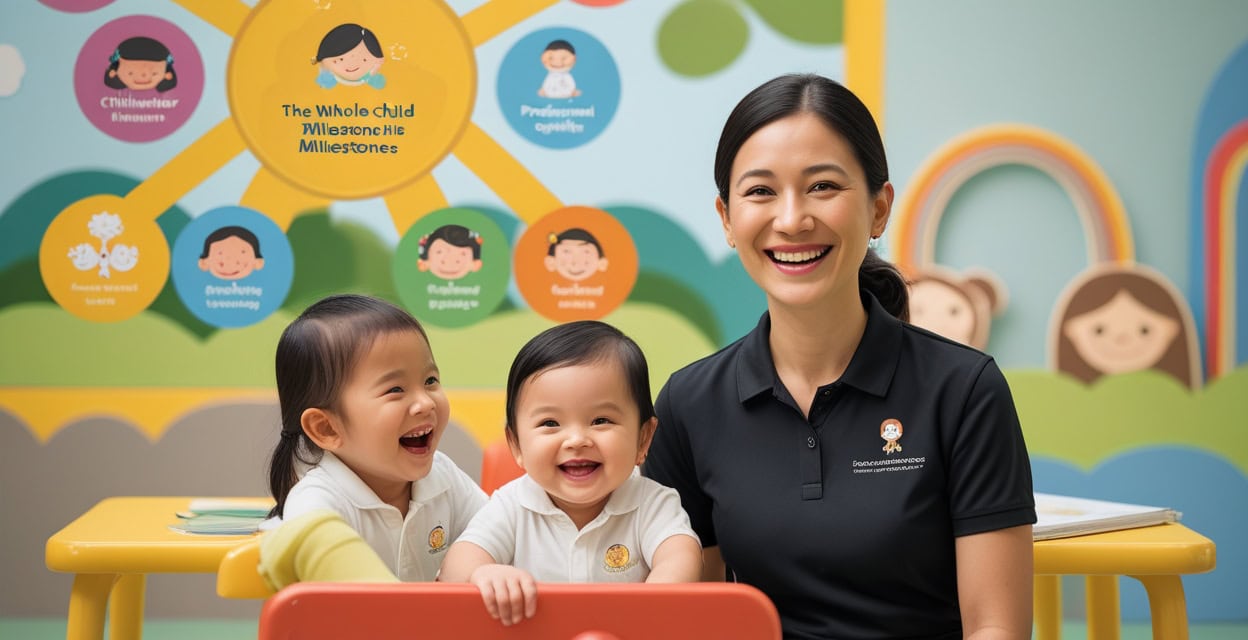
The Whole-Child Milestone Lattice
Development is a lattice of interwoven strands rather than a single ladder. EduNanny’s approach nurtures attachment, communication, movement, thinking, and self-care in harmony.
Attachment and Emotion
- Consistent caregiving, clear greetings and goodbyes, and rituals help infants feel secure as a base for exploration and learning.
- Practical activity: Create a predictable goodbye ritual (a wave, a song, and a special touch) to ease transitions and build trust.
Communication
- Responsive soundscapes, mirroring of facial expressions, and reading board books with expressive cadence support language development and social bonding.
- Practical activity: Narrate daily moments—“You’re reaching for the red ball”—to connect language with action and emotion.
Movement
- Safe floor time emphasizes rolling, pivoting, creeping, pulling, and cruising. Equipment is minimal and purposeful to encourage exploration.
- Practical activity: Design a short movement circuit on the floor with soft mats, a low incline, and a mirror to celebrate new skills as they emerge.
Thinking
- Cause-and-effect play, early categorizing, and simple sequences build memory and problem-solving through joyful experimentation.
- Practical activity: Offer hide-and-reveal activities with safe containers to invite prediction and curiosity.
Self-Care Foundations
- Unhurried routines for diapering, feeding, and dressing become rich classrooms for autonomy where infants participate and contribute.
- Practical activity: Involve the child in simple choices—“Would you like to hold the bottle or be fed from the spoon?”—to foster agency.
The lattice respects individual pacing. The result is sturdy competence and quiet pride that grows from secure roots.

The Joy Protocols: Happiness You Can Feel and Measure
Joy is not an accident; it is designed into the day. Joy Protocols translate happiness into observable, developmental outcomes.
Predictable Rhythm, Flexible Edges
- Infants thrive on sequence with gentle flexibility for feeding cues and naps. Maintain a predictable structure while honoring the child’s rhythm.
- Practical activity: Use a simple daily rhythm poster in the care space to help families see the day at a glance and anticipate transitions.
Sensory Sanity
- Natural textures, gentle contrasts, soft voices, and outdoor time support focus and sensory processing. Fewer toys, more wonder encourages sustained attention.
- Practical activity: Rotate a small set of textures weekly and incorporate nature-based materials such as leaves, wood, and water play in a controlled setting.
Social Warmth
- Small groups (never more than three infants per caregiver) promote turn-taking, joint attention, and early friendships.
- Practical activity: Facilitate guided “share a toy” moments to build early cooperation and empathy.
Family Bridge
- Parents receive meaningful updates with empathy and clarity—photos showing concentration, brief notes on new abilities, and a shared sense of progress.
- Practical activity: Create a monthly “milestone snapshot” for each child that families can store and reflect on together.
Celebration of Small Wins
- Mark the first reach, gaze, or shared laugh—celebrated with families as milestones of humanity, not mere checkboxes.
- Practical activity: Maintain a “joy journal” with a short sentence about a positive moment each day to reinforce positive associations with learning.
Joy is both a daily outcome and a developmental driver. A happy infant learns more because learning is experienced as attuned partnership, not entertainment.

The Purpose of the Childminder: A Civic Professional with a Tender Craft
EduNanny positions childminders as professionals practicing a public good. This is both a vocation and a community service—where dignity, career growth, and trusted family partnerships converge.
A Defined Vocation
- Each caregiver holds a clear role, code of practice, and pathway for growth. Ongoing mentoring, reflection, and supervision are integral to the weekly routine.
- Practical tip: Encourage caregivers to maintain personal reflection journals and to participate in monthly peer dialogue circles to share insights and challenges.
A Community Anchor
- Centre-based and home-based options bring care closer to where families live and work. Islandwide availability reduces commute time and supports family wellbeing.
- Practical tip: Map out local community hubs and collaborate with neighborhood organizations to create consistent, trusted care options in every district.
A National Social Initiative
- Aligned with ECDA’s Childminding Pilot and a maximum employment mandate, EduNanny dignifies caregiving work, creates meaningful jobs, and builds local expertise.
- Practical tip: Families can participate in feedback loops and volunteer opportunities to strengthen the public value of caregiving careers.
An Ethical Partner to the Family
- Caregivers honor family culture, routines, and hopes, becoming guests in the child’s story and stewards of trust.
- Practical tip: Start a family-cultural profile—favorite phrases, bedtime rituals, and preferred languages—to guide caregivers in daily routines.
When caregivers are respected and supported, infants feel it. Professional dignity translates into infant security and long-term developmental advantage.
- Availability and Convenience: Monday to Friday, 7am–7pm, with centre-based and home-based options islandwide to fit diverse family needs.
- Ultra-Low Ratio: A consistent 1:3 ratio enables deep attention during feeding, nap, and play times.
- Transparent Design: Innovation-led CCTV with consent, modern layouts, and clear, respectful updates to families.
- Flexible Access: Centre-based, home-based, and distance-supported engagements for transitional support or virtual check-ins.
- Affordable Excellence: Options from $33/day, with fees payable by CDA/Baby Bonus, making high-quality care accessible.
- One Movement, One Standard: EduNanny operates within ECDA’s Childminding Pilot to widen access, raise quality, and expand employment opportunities.
This section translates philosophy into everyday experiences for parents and caregivers, with concrete expectations and practical examples.
A Typical Day: Structure and Flow
- 7:00–9:00 am: Arrival, calm greeting rituals, and individualized routines (feeding, diapering, and gentle play).
- 9:00–11:00 am: Attunement play, floor time, and explorations designed to spark curiosity while ensuring safety.
- 11:00 am–1:00 pm: Feeding, nap preparation, and quiet wake-times with sensory-rich environments.
- 1:00–3:00 pm: Mobility activities, supervised exploration, and small-group interactions to foster social skills.
- 3:00–5:00 pm: Language-rich activities, storytime, and reflective caregiver updates for families.
- 5:00–7:00 pm: Departure routines, brief day-end notes, and transition planning for families’ evening schedules.
What Parents Receive: Updates, Access, and Peace of Mind
- Real-time visibility through consent-based CCTV and structured caregiver observation tools.
- Concise, meaningful updates: a short sentence capturing a new milestone, a photo, and a note about the day’s rhythm.
- Open channels for questions, concerns, and celebrations—supporting families in partnership with educators.
Home-Based and Community-First Implementation
- Care options in residential areas reduce travel time and improve punctuality of feeds and naps, supporting a stable daily rhythm.
- Community partnerships enable care in familiar neighborhood spaces while preserving safety and quality standards.
For families considering EduNanny, practical steps help ensure a smooth transition and a strong foundation for child development.
Questions to Ask During Tours or Meetings
- What is the exact caregiver-to-infant ratio for different times of day, and how is coverage ensured during breaks?
- What is the daily routine, including nap times, feeding cues, and sensory activities?
- How is privacy and data security managed for CCTV and parent access?
- How are home languages and family cultures incorporated into daily care?
- What professional development opportunities exist for caregivers, and how is quality maintained?
Preparing for the Drop-Off: Practical Transitions
- Introduce the caregiver to your child gradually with short visits to establish familiar faces and routines.
- Provide a small “child’s book” with familiar photos and comfort items to ease separation anxiety.
- Share a one-page daily routine and milestone sheet to align expectations and celebrate progress.
Home Practices that Complement EduNanny Care
- Establish predictable mealtime and nap routines at home to reinforce the child’s sense of security.
- Engage in language-rich activities, reading aloud in home languages and narrating daily actions to support early literacy.
- Practice slow, affectionate handling and gentle, respectful communication to mirror EduNanny’s attunement approach.
EduNanny is committed to affordable, high-quality care that respects families, supports caregivers, and strengthens communities. By combining a rigorous safety framework, a holistic development lattice, and a joy-forward daily routine, EduNanny helps families invest in a child’s most formative years with clarity and confidence.

Closing: A Call to Partnership and Action
To every parent: your child’s growth is our syllabus. To every caregiver: your calm, skilled presence is a public treasure. To partners in government and community: thank you for believing that quality care can be both excellent and accessible. The smallest hands hold the largest promise. Let us meet that promise with quiet skill, transparent care, and everyday joy.
To begin, visit EduNanny.com or Childminding.EduNanny.com. We are ready—Mondays to Fridays, 7am to 7pm, islandwide—to welcome your child, partner with your family, and serve Singapore with excellence, quality, convenience, and heart.

Conclusion: A Reflective Ending and Call to Action
In envisioning EduNanny, we imagine a Singapore where infant care is both science and heart—where safety is a plan, development is a lattice, and joy is a daily practice. This is not merely a service; it is a commitment to every family’s peace of mind and every child’s right to dignified, loving care. We invite you to participate in this movement—choose a path that fits your family, engage with caregivers as true partners, and watch your child flourish in a community that values them from first light to first steps.
SEO keywords: [#InfantCareSingapore, #AttunementPedagogy, #ChildminderProfession, #SafetyInChildcare, #EduNannyPilot]