Near Home 1 to 3 The EduNanny Standard for Safe Joyful Infancy in Singapore
EduNanny: Proximity, Ratios, and Transparency — A New Standard for Infant Care in Singapore
Thank you for joining in shaping the future of infant care in Singapore. EduNanny is designed for the critical first thousand days—the period when the brain is writing its lifelong operating system. Our model blends the science of development with the art of human presence, delivering a standard of care that can be near every home across our island. This article expands on the vision, pedagogy, safety systems, and practical steps families can use to nurture calm, curious, and confident infants from day one.

The EduNanny Pedagogy: See, Soothe, Seed
At the heart of EduNanny is a deliberate, relationship-first approach that translates a century of developmental insight into everyday practice. Our See, Soothe, Seed framework guides caregiver actions and daily routines.
- See: Observe closely, without rush or judgment. Read cues—eye gaze, breath, hand movements—and respond to the infant’s pace rather than the clock. Practical tip: keep a simple cue log during the day and note how infants initiate interactions—this informs responsive timing for routines and play.
- Soothe: Co-regulate before you stimulate. Security births exploration. In practice, establish predictable routines, gentle touch, and a familiar adult in a small pod. Practical tip: develop a 2–3 minute pre-activity routine (hug, gaze, soft talk) to help the infant transition into activity.
- Seed: Offer the next right challenge. Use scaffolded experiences—treasure baskets, soft ramps, sensory play, gentle turn‑taking, and multilingual songs. Practical tip: rotate a small set of play materials weekly to provide new challenges without overwhelming the infant.
With a 1:3 ratio, educators narrate caregiving, track micro-milestones, and tailor environments to each child’s zone of proximal development. Learning becomes the air of the day, not a single event.

Safety as a System, Not a Slogan
Safety is a living architecture that starts before a child arrives and remains active long after pickup. EduNanny’s safety model rests on four rings: People, Place, Process, and Proof.
- People: Rigorous staff selection, infant-first training, paediatric first aid and CPR, supervision ratios that exceed common standards, and reflective coaching to prevent complacency. Practical tip: require a standardized onboarding checklist for all caregivers and monthly refreshers on safety topics.
- Place: Safe sleep by default (supine, firm mattress, no pillows or loose blankets), hazard‑mapped rooms, air quality checks, heat/haze protocols, secure entry, and layouts designed for calm and micro‑movement. Practical tip: conduct quarterly safety walkthroughs with families to review room layouts and sightlines.
- Process: Digital health and hygiene checklists, feeding logs, medication double-checks, incident reporting with root‑cause analysis, evacuation drills, and a duty‑of‑care rhythm practiced regularly. Practical tip: use a simple daily health check app for quick parent–caregiver handovers and concerns.
- Proof: Privacy-respecting CCTV in designated areas, regular audits and coaching, daily family briefings, and transparent data that turn promises into evidence. Practical tip: publish quarterly safety and quality snapshots for families and the community.
In safety, repetition shapes excellence. The goal is a predictable, trustworthy environment where caregivers are continually reflecting and improving together with families.
Developmental Windows, Everyday Practice
Infants learn through the rhythm of daily life. Care routines are opportunities for learning, not interruptions to development. EduNanny integrates core developmental domains into everyday moments.
- Motor: Prioritize floor time, free movement, and minimal propping. Prioritize tummy time as relational and progressively challenging to build core strength that supports later speech and attention. Practical tip: embed short, unhurried movement breaks between activities and model safe mobility on a soft mat.
- Language: Warm, responsive talk with multilingual exposure reflects Singapore’s diversity. Narrate experiences, pause for child responses, and model turn‑taking. Practical tip: pair daily routines with language cues (e.g., during feeding say the steps in English, Mandarin, Malay, or Tamil as appropriate).
- Self-regulation: Gentle transitions, dim lights before sleep, and predictable routines cultivate calm neural pathways. Practical tip: establish a simple ‘comfort routine’ before nap and use a consistent transition song or phrase.
- Nutrition and Rest: Responsive feeding and safe sleep practices are foundational to growth. Practical tip: observe hunger and fullness signals, offer age-appropriate textures, and create individualized nap plans that respect each infant’s rhythms.
- Observation and Partnership: Short daily notes and periodic developmental check-ins keep families aligned. Practical tip: share a weekly milestone snapshot with parents and invite questions to co-create home activities that support progress.

Joy and Belonging as Vital Signs
Happiness is not a bonus in infancy—it is a determinant of learning. Joy and belonging are tracked as vital signs that guide care and curriculum decisions.
- Is the child eager to engage on arrival?
- Are play invitations sparking exploration at the child’s pace?
- Do routines feel unhurried, dignified, and predictable?
- Is the room calm enough to hear a giggle and warm enough to welcome a cry?
Culture is woven into daily life through lullabies, stories, familiar foods, and celebrations that reflect Singapore’s shared civic life. Belonging is both intimate and public: an infant who feels seen will grow to see others.
The Craft and Calling of Childminders
Childminding is both a profession and a public good. EduNanny’s caregivers are trained, coached, and valued as the first teachers of the first years. They keep journals, participate in supervision, and have clear pathways for growth. This is dignity in practice: investing in caregivers is investing in children—and in the nation.
- Professional pathways: structured coaching, reflective practice, and regular upskilling.
- Journaling and feedback: daily reflections that inform future interactions and home partnerships.
- Public trust: consistent standards across centre-based and home-based settings, supported by transparent communication with families.

A Day in EduNanny: A Practical Overview
What does a typical day look like when safety, learning, and happiness are woven together?
- 7:00–7:30 a.m.: Arrival and handover with a familiar caregiver. Brief health check, warm greeting, and soft tone to signal safety.
- 7:30–9:30 a.m.: Exploration on a low shelf of textures. Narrated play and micro-milestones tracked by the caregiver for developmental notes.
- 9:30–10:15 a.m.: Focused tummy time and floor play designed to strengthen core muscles and encourage exploration.
- 10:15–11:30 a.m.: Responsive feeding with a calm, predictable routine; caregivers narrate cues and anticipate needs.
- 11:30 a.m.–12:30 p.m.: Nap/quiet time with dim lights and familiar transitions, followed by re-entry into play.
- 12:30–2:00 p.m.: Language-rich activities—songs in multiple languages, turn-taking games, and social interaction with peers.
- 2:00–4:00 p.m.: Outdoor or sensory play, protected movement space, and safe exploration of new textures and materials.
- 4:00–6:00 p.m.: Closing routines, narrative notes for parents, and reflective feedback that links home practice to classroom observations.
- 6:00–7:00 p.m.: Handover, final health check, and a plan for the next day shared with families.
Safety, learning, and happiness are not separate tasks; they are woven into the fabric of every moment.
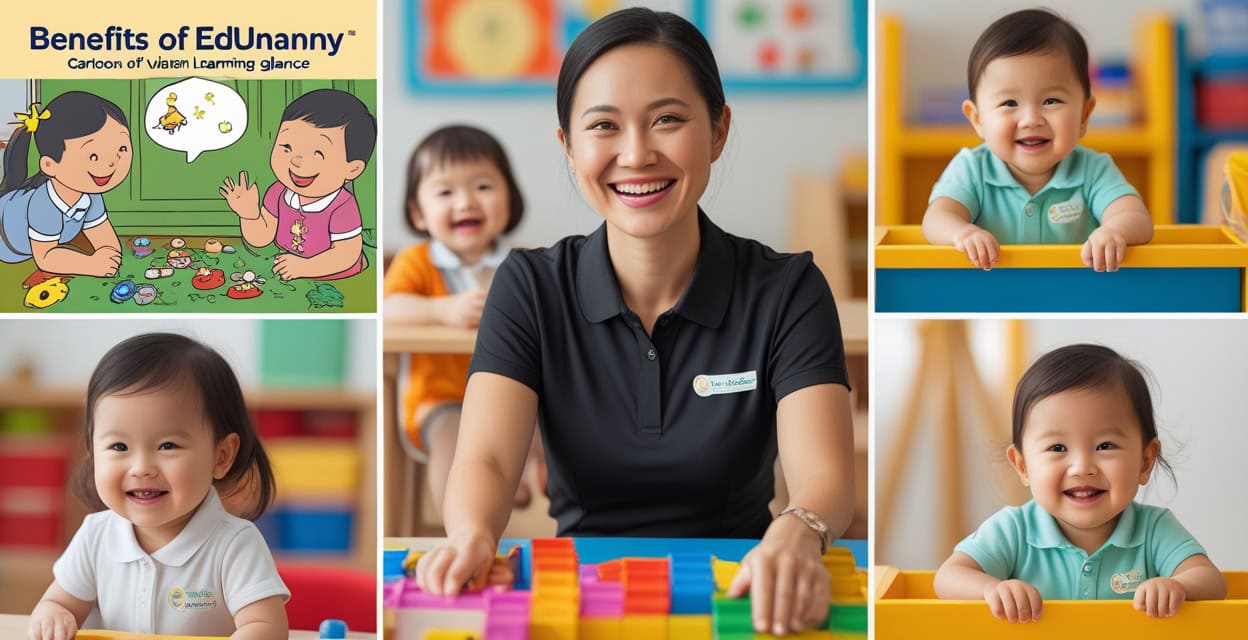
Benefits of EduNanny at a Glance
- Excellence and Quality: Consistent standards across centre-based, home-based, and distance support.
- Centre-Based and Home-Based: Modern centres or licensed home premises near you, with the same pedagogy and safeguards.
- Distance: Tele-coaching and parent support to extend learning beyond the classroom.
- Convenience: Monday–Friday, 7am–7pm, islandwide.
- Affordability: From $33/day; fees payable by CDA/Baby Bonus.
- Ultra‑Low Ratio: 1:3 infant ratio enabling true attunement and safety.
- Innovation: Privacy-respecting CCTV for transparency; modern layouts designed for calm movement and supervision.
- EduNanny by BUTLER: Hospitality-grade service systems adapted for early years.
- Childminding Pilot: Part of ECDA’s Childminding Pilot and a National Social Initiative focused on quality, access, and trust.
- Maximum Employment Mandate: Dignified roles and upskilling pathways for local caregivers while raising the standard of care.
- Islandwide Access and Choice: Both Home Base and Centre Based Childminding to fit family rhythms.
Learn more and book a visit at EduNanny.com and Childminding.EduNanny.com. The day-to-day practice is designed to feel familiar, supportive, and consistently excellent for every family.
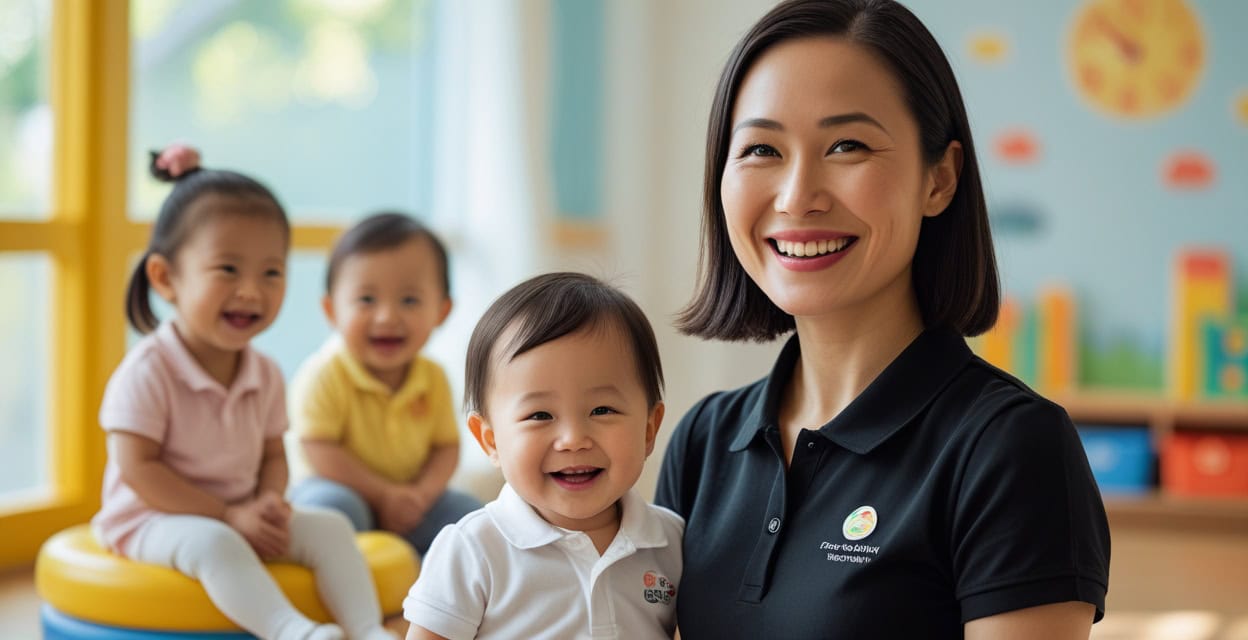
Concluding Call: Cradling Our Future with Intention
Let us cradle our future with intention. Proximity becomes presence; presence becomes trust; and trust becomes a generation ready to learn, relate, and lead. EduNanny invites families to visit, observe, and partner with us. Book a tour at EduNanny.com or Childminding.EduNanny.com. The first thousand days are underway—and they are worth every child’s potential and Singapore’s promise.
Key takeaways for parents and caregivers:
- Prioritize proximity to care for time savings, continuity, and peace of mind.
- Choose settings with a transparent, safety-by-design approach—look for the four rings of safety (People, Place, Process, Proof).
- Engage in See, Soothe, Seed practices at home: observe cues, co-regulate, and scaffold learning with simple, age-appropriate challenges.
- Foster joy and belonging through routine, culture, and responsive care that treats everyday moments as learning opportunities.
- Support caregivers through ongoing training, journaling, and collaborative partnerships with families.
Together, we can make the first thousand days rightly worthy—near at hand, near to home, and near to every family in Singapore.
SEO keywords: [#infantcare, #earlychildhooddevelopment, #attunement, #1to3ratio, #EduNannySingapore]