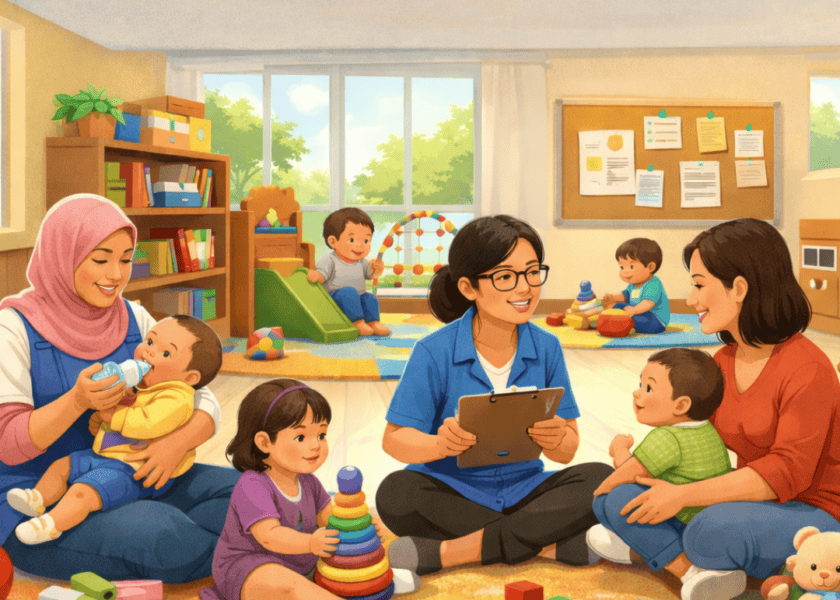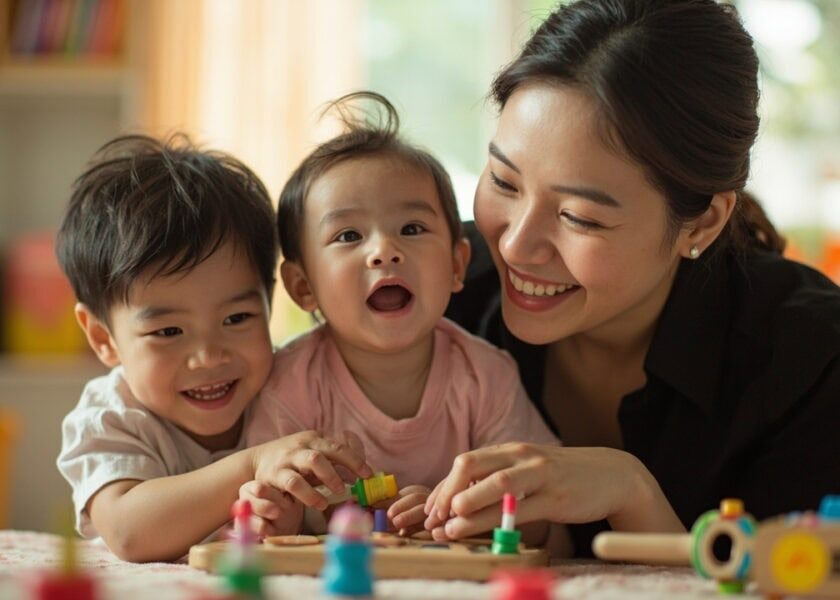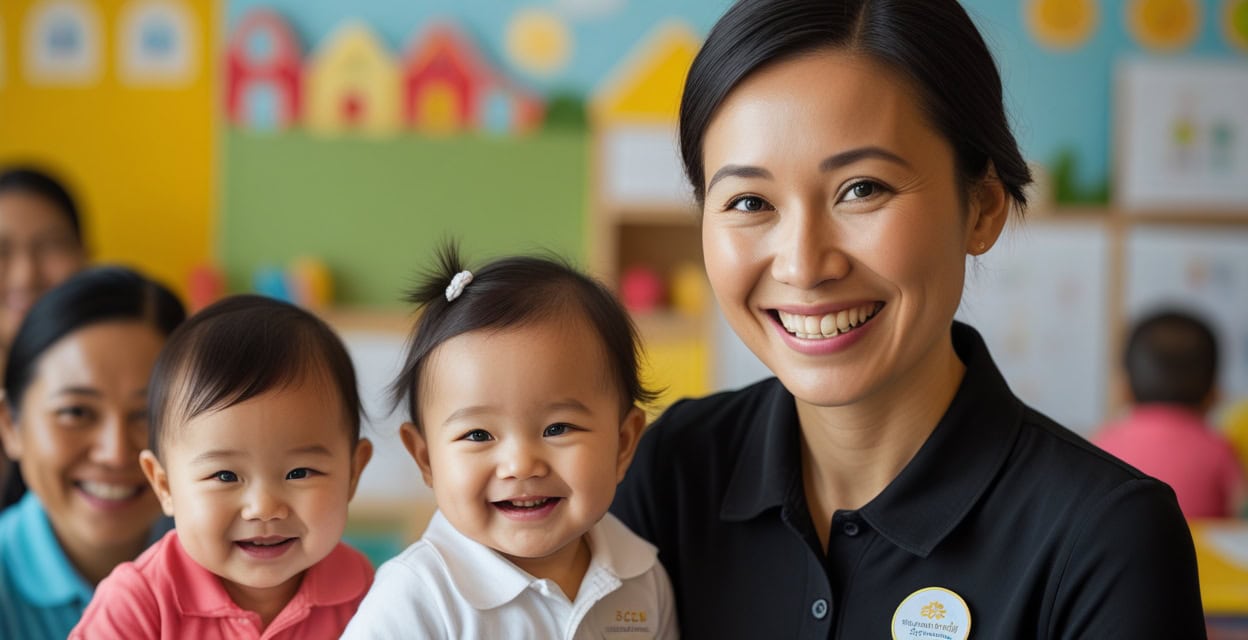
EduNanny by BUTLER The Public Spirit Guiding Singapore to Safe Joyful Infancy

EduNanny by BUTLER: A Public-Spirited Standard for Infant Care in Singapore
Good evening, Singapore—parents, grandparents, employers, community leaders, and, most importantly, those who rise each day to cradle the future in their hands. We present EduNanny by BUTLER, a new public-spirited standard for infant care and childminding: centre-based, home-based, and distance-enabled, designed for the realities of Singaporean life. We operate Monday through Friday, 7am to 7pm, islandwide and near to home in both community and home premises. We hold a 1:3 infant ratio as our ethical minimum for safety and attunement, supported by modern layouts and privacy-first innovation CCTV for secure visibility. We are affordable from $33 per day, with fees payable by CDA/Baby Bonus, and we are participating in Singapore’s ECDA Childminding Pilot. This work is a National Social Initiative with a Maximum Employment Mandate—in other words, it is about your child and about a stronger, more caring economy. Visit us at EduNanny.com and Childminding.EduNanny.com.
What makes EduNanny different is simple to say and careful to execute: we place the science of attachment at the center; we design safety as a habit, not a slogan; we teach through everyday life; and we bring care close—close to home, close to work, close to heart.
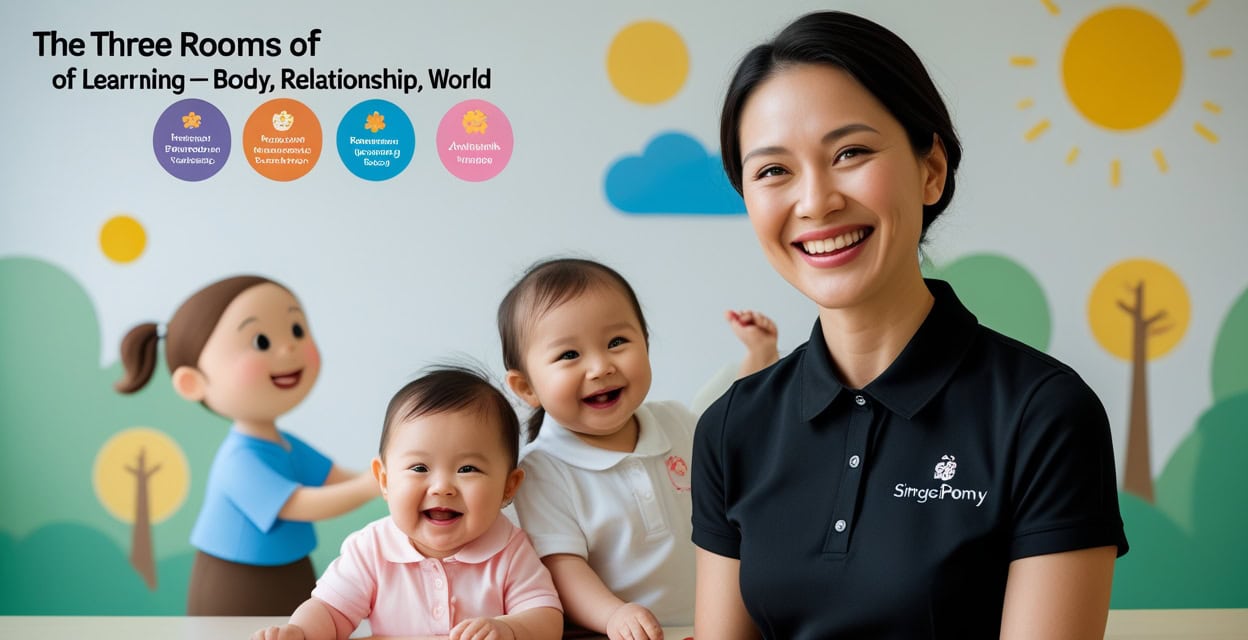
Topic One: The Three Rooms of Learning—Body, Relationship, World
The Room of the Body
Infancy is not a curriculum; it is a choreography. We shape each day around three interlocking “rooms.” In the Room of the Body, we honor Emmi Pikler’s evidence that free movement builds both confidence and brain architecture. Practical actions you can apply at home include:
- Design a safe, open space with low, rounded furniture, soft mats, and unobstructed floor time for crawling, scooting, rolling, and early walking.
- Encourage barefoot exploration to strengthen balance and sensory discrimination, while maintaining gentle supervision.
- Observe the child’s timing and signals—pause to watch a stretch, a reach, or a curious reach toward a new texture—and resist the urge to rush development.
- Build routines around movement: daily obstacle courses, guided tummy time, and guided reaching games that respect pacing.
EduNanny insight: when caregivers allow the child’s own rhythm, brain architecture forms more robustly, and confidence grows as a natural by-product of exploration.
The Room of Relationship
John Bowlby taught us that a secure base is oxygen for development. Our 1:3 ratio makes attunement—the noticing, mirroring, and naming of feelings—possible. At home, you can emulate this by:
- Maintaining consistent caregiver signals: a familiar voice and predictable routines reduce stress and foster trust.
- Narrating every care moment: “I see you,” “You’re safe,” and “I’m with you” help infants learn language of safety.
- Ensuring continuity of care, where possible, with the same caregiver across days to reinforce a secure base.
- Creating a quiet space for co-regulation during transitions—food, sleep, and play—so the child feels held and understood.
EduNanny insight: attunement is the daily currency of trust. When families and carers share a language of feelings, children grow into calm, curious explorers.
The Room of the World
Lev Vygotsky reminds us that the right scaffolds nudge discovery. In the Room of the World, we rotate simple, open-ended materials—objects to grasp, drop, mouth, and explore—and we model social rhythms that anchor learning in daily life. How to bring this home:
- Rotate age-appropriate materials to sustain curiosity and prevent overstimulation.
- Incorporate Singaporean textures and sounds: textures from wet markets, songs in mother tongues, and daily life rituals that bring dignity to the ordinary.
- Use turn-taking games, peekaboo, and cause-and-effect play to scaffold early problem-solving and social referencing.
- Integrate daily routines with learning moments—naming objects, counting steps, and describing actions during routine care.
EduNanny insight: learning happens best when children experience meaningful contexts—home, work, and community—where language, culture, and daily life converge.
Topic Two: Safety as a Habit Architecture
Quiet-Safe Protocols
Safety is not a poster; it is the design of every moment. Our Quiet-Safe Protocols translate safety into habit:
- Every carer conducts 60-second environmental scans on arrival, after transitions, and before sleep to anticipate risks.
- We perform 7-point handovers at drop-off and pick-up—health, mood, feeding, nappies, sleep, milestones, and notes—so no detail is lost.
- Parents stay informed with timely updates and collaborative problem-solving when adjustments are needed.
Layouts that Think
Spaces are designed with safety in mind as a daily practice:
- Use low-tox materials and rounded, reachable furniture to minimize sharp edges and chemical exposure.
- Transparent zones enable continuous supervision without sacrificing child autonomy.
- Nap zones are calm, ventilated, and monitored to support restorative sleep and mood regulation.
Innovation CCTV
We balance visibility with privacy. Parents may opt into a privacy-first view with time-bound, consent-based windows, designed not for surveillance theater but for trust, training, and reflection.
Safe Sleep and Feeding by Design
Evidence-based routines ensure safety and development:
- Flat, firm cots; no loose bedding; back-to-sleep positioning unless medically advised otherwise.
- Responsive feeding with paced bottle techniques and upright recovery after feeds.
- Routines treated as sacred spaces for brain growth and emotional security.
Topic Three: The Tiny Data of Development
Daily Stories, Not Just Logs
Big insights start with small observations. We translate a child’s day into a short narrative—
- What they reached for, how they soothed, where curiosity sparked.
- A focus on the person behind the schedule to support individualized growth.
Micro-Milestone Mapping
Track early markers that predict later success, including:
- Hand-to-hand transfers, sustained gaze, social smiles, babbling, rolling sequences, early cruising.
- When a milestone appears, we say something: early, gentle, constructive feedback shared with families.
Sleep Architecture
Nap cycles are treated as essential learning periods. We optimize:
- Consistent nap timing and a calm sleep environment to support memory consolidation.
- Light, sound, and timing adjustments to match each child’s sleep needs.
Nutrition as Learning
Feeding becomes a classroom for texture, grip, pacing, and autonomy:
- Coordinate with families on cultural foods, allergen plans, and responsive meal rhythms.
- Introduce textures and self-feeding opportunities appropriate to development stage.

Topic Four: Joy as a Measurable Practice
Co-Regulation Rituals
Joy arises from predictable, warm interactions:
- Songs for settling, predictable greetings, and narrations of feelings to validate inner experiences.
- Respectful pauses to allow self-regulation and autonomy to flourish.
The Joy Index
We measure joy through observable indicators:
- Agency (self-initiated play), curiosity (sustained exploration), and delight (shared smiles, vocal play).
- If joy dips, we adjust the room, rhythm, or caregiver approach to restore engagement.
Care as Curriculum
Every routine becomes a language-rich, relationship-rich learning moment:
- diapering, feeding, washing hands, tidying as opportunities for autonomy and vocabulary growth.
- Respectful, patient guidance that invites participation and mastery at the child’s pace.
Topic Five: The Calling of the Childminder—A Civic Profession
Professional Pathways
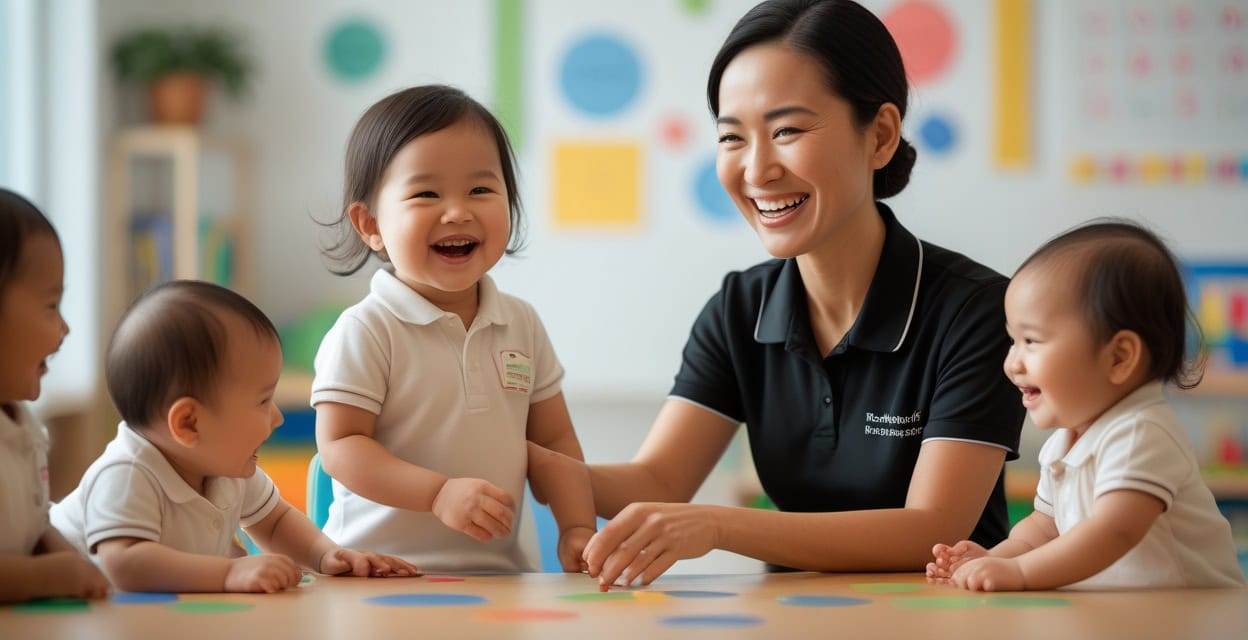
EduNanny builds a respected, trained, upwardly mobile profession with:
- Structured training, mentorship, and career ladders from home-based to center-based roles.
- Specialist tracks in infant development, inclusive practices, and family partnership.
A National Social Initiative
Through the ECDA Childminding Pilot, we contribute to a care economy that works for Singapore—jobs with purpose, families with options, employers with reliable support.
A Maximum Employment Mandate
We commit to growing dignified, skilled roles across neighborhoods, because the shortest commute for care delivers the longest runway for trust.
Community Weaving
Care near home strengthens families and communities—grandparents stay involved, siblings are not split, and parents reclaim hours lost to travel.

How EduNanny Shows Up for Families
- Excellence and Quality: A 1:3 infant ratio, trained carers, evidence-informed routines, modern, low-tox layouts.
- Centre-Based, Home-Based, and Distance: Choose a center near an MRT, a home-based pod in your block, or distance-enabled support with scheduled video check-ins.
- Convenience and Affordability: Monday to Friday, 7am to 7pm, islandwide. Fees from $33 per day, payable by CDA/Baby Bonus.
- Trust and Transparency: Privacy-first CCTV, daily narratives, and two-way respectful communication.
- Access and Scale: Part of a broader National Social Initiative to expand services and meaningful employment.
Why This Matters—Right Now—in Singapore
Our city moves fast; infants do not. We reconcile the two by bringing care closer and making the small moments count. Our families are diverse; attachment is universal. We honor culture while protecting developmental basics. Our workdays are long; childhood is short. We extend the adult day without stealing the child’s day.

Who, What, When, Where, and How—Why Childminding Matters
- Who: Singapore’s infants, their families, and the carers who become trusted neighbors.
- What: Professional childminding that blends safety, attachment, and everyday learning into a dependable rhythm.
- When: The first thousand days, when the brain builds at its fastest and trust becomes a lifelong template.
- Where: Near home and work—home-based pods, community spaces, and centers, Monday to Friday, 7am–7pm, islandwide.
- How: A 1:3 attunement model, safety-by-design routines, modern layouts, privacy-first CCTV, and a pedagogical approach that turns care moments into learning moments.
- Why: Because the quality of a nation’s future is drafted in the way it holds its youngest citizens today.
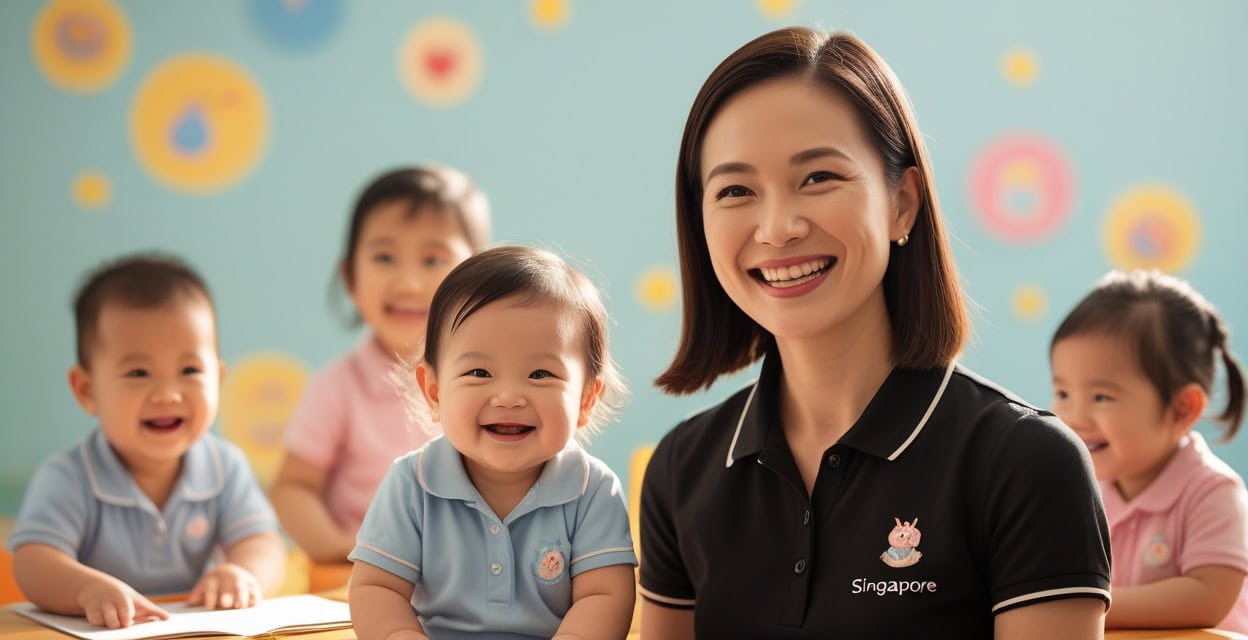
A Word to Employers
When your colleagues can rely on near-home, high-quality care, punctuality rises, stress falls, and loyalty deepens. Partner with us to reserve spaces near your sites, support staggered hours, and uplift working parents without forcing trade-offs they shouldn’t have to make.
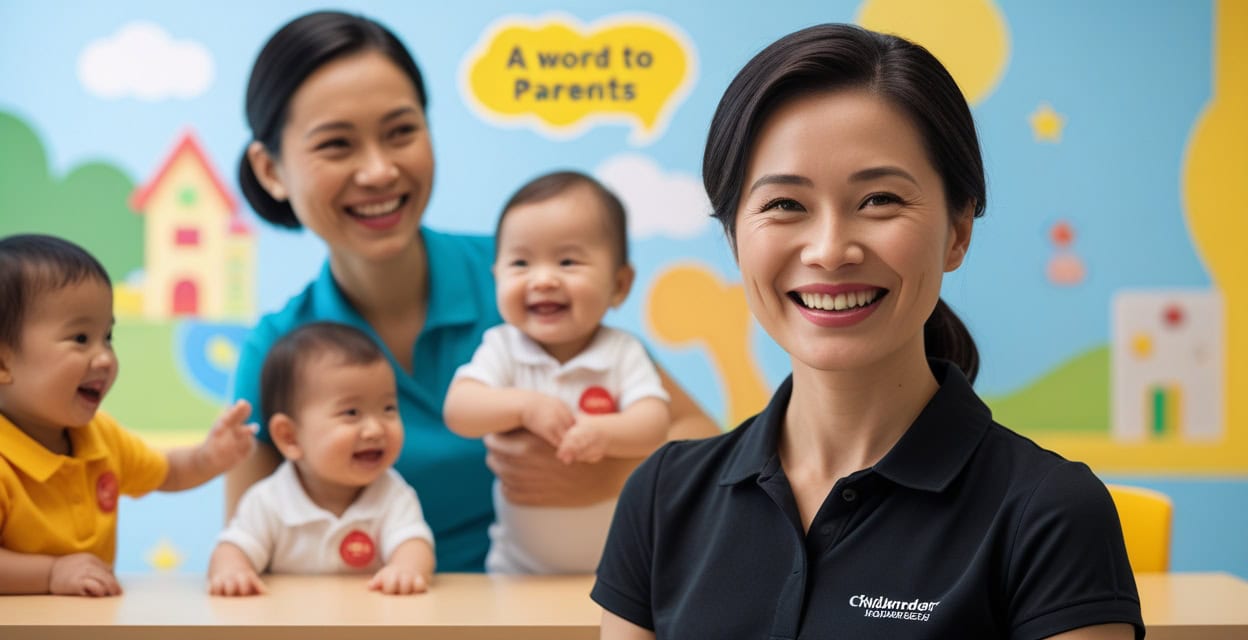
A Word to Parents
You do not have to choose between convenience and conscience. Visit a pod. Watch how a carer’s eyes soften before their hands move. See how a room invites movement without rushing it. Listen to the language we use as we change a diaper: steady, kind, and precise. This is the everyday artistry that builds secure, confident children.
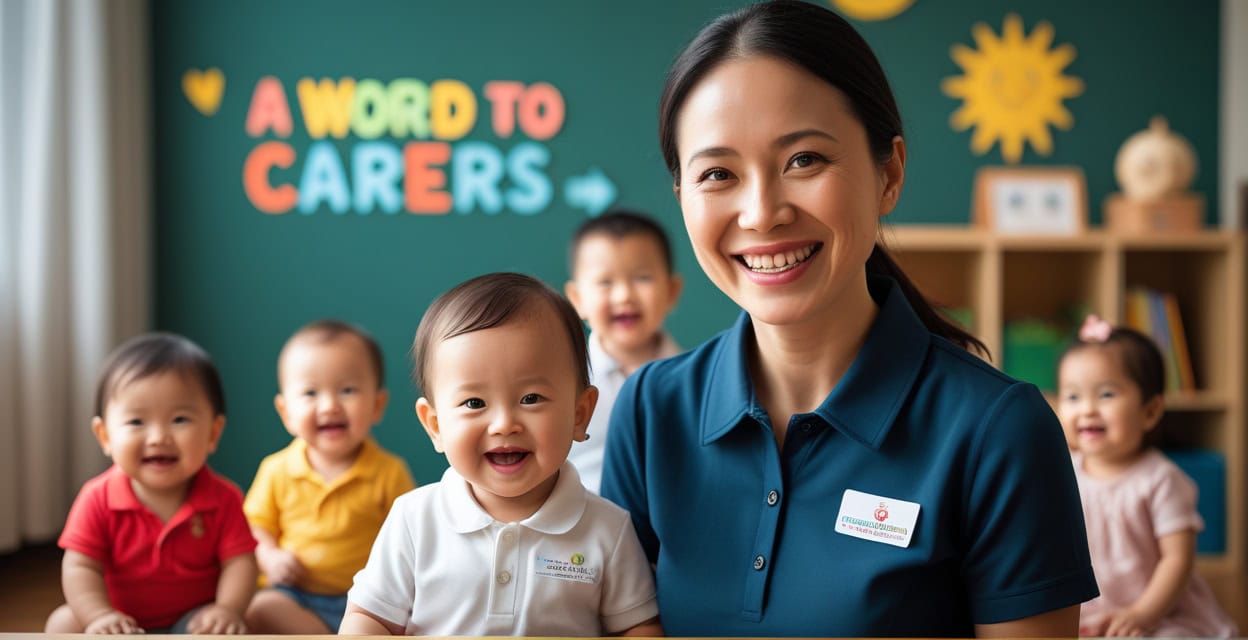
A Word to Carers
You carry a sacred craft. We will invest in your training, your growth, your dignity, and your voice. When you thrive, families thrive.

Our Invitation
Book a tour. Ask hard questions. Read our safety protocols. Try a transition week. Talk to a lead carer about your child’s rhythms. Explore options at EduNanny.com and Childminding.EduNanny.com. If you are a community group, employer, or town council, let’s place pods where families already live their lives.
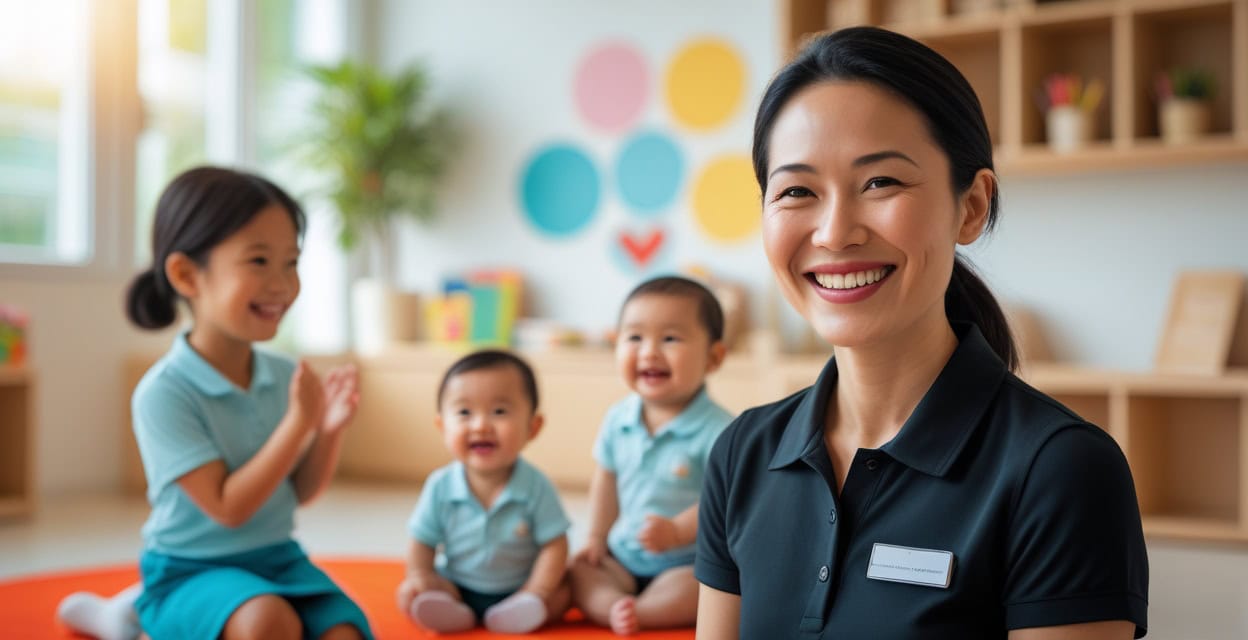
Closing
In a nation known for excellence, let us be equally known for tenderness. Let us build a childcare culture where proximity is a right, safety is a habit, learning is a rhythm, and joy is the proof. EduNanny by BUTLER stands ready—centre-based, home-based, and distance-enabled; Monday to Friday, 7am to 7pm; islandwide and near to home; affordable from $33 per day; payable by CDA/Baby Bonus; participating in the ECDA Childminding Pilot—so that every Singaporean infant grows up feeling what every parent hopes to hear: “You are safe. You are seen. You belong.”

Conclusion
EduNanny by BUTLER offers a practical, research-informed framework to support Singapore’s youngest learners while empowering families and communities. By embracing the Three Rooms of Learning, prioritizing safety as a habit, valuing tiny data, and recognizing joy as a measurable outcome, we create environments where children can thrive, caregivers can grow professionally, and employers can rely on dependable, near-home care. We invite you to explore the EduNanny model, book a tour, and participate in a care economy that is humane, efficient, and forward-looking. Together, we can shape a future in which every child feels safe, seen, and belonging—today and for years to come.
[#keyword1, #keyword2, #keyword3, #keyword4, #keyword5]