
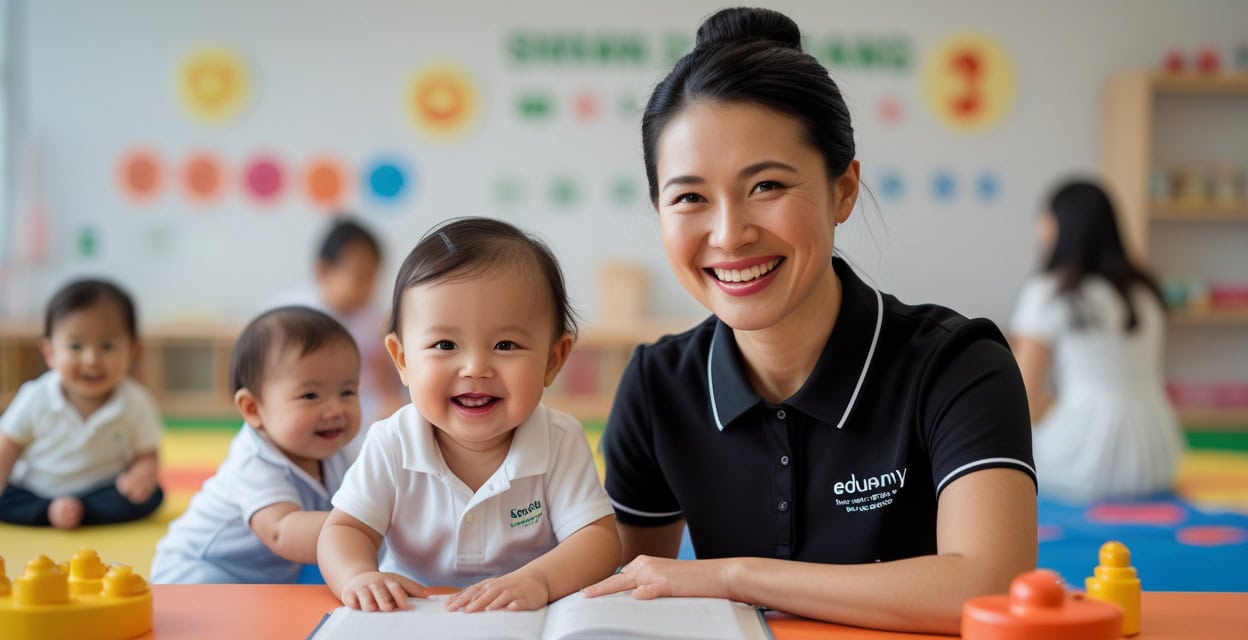
EduNanny Singapore Five Lenses for Infant Care Pedagogy Safety Development Happiness and Belonging A Near Home Blueprint
Introduction: A City of Beginnings Deserving Design, Safety, and Joy
Esteemed parents, caregivers, partners, and friends of Singapore, thank you for lending me your ears and your hopes. This article translates a vision into practice: a Singapore-built childminding movement that places the infant at the center of near-home care, with design that feels safe, pedagogy that is lived, and dignity that endures. EduNanny by BUTLER is part of the ECDA Childminding Pilot—a National Social Initiative with a Maximum Employment Mandate—to elevate standards of safety, pedagogy, and belonging in the earliest years, while creating meaningful jobs across neighbourhoods.
This long-form guide expands the five fresh lenses that guide our practice in Singapore: Pedagogy, Safety, Development, Happiness, and the Purpose of Childminders. It offers practical steps, home-ready activities, and EduNanny insights so parents can partner with caregivers to nurture early growth—without sacrificing convenience or affordability. Read on to discover how near-home care can become a reliable, joyful, and educational rhythm for your family.
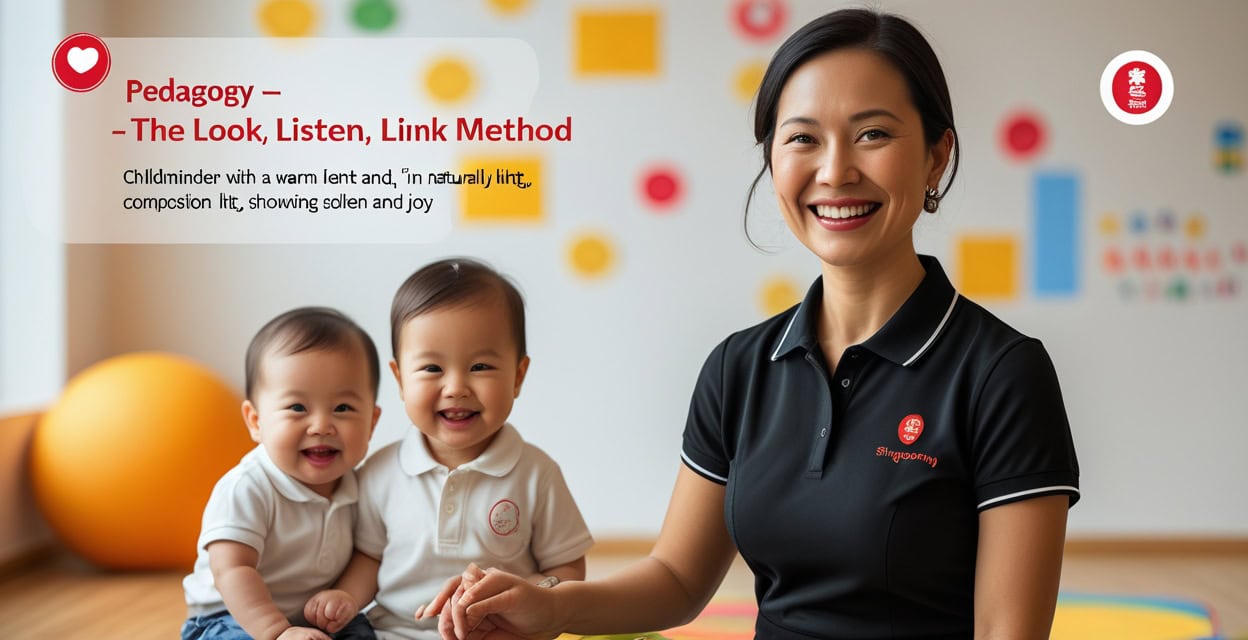
Pedagogy — The Look, Listen, Link Method
Great infant pedagogy is precise, observant, and tender. It shapes the environment and the relationship, not the child’s pace alone. Our Look–Listen–Link framework translates theory into daily practice, with clear, actionable steps you can adopt at home or discuss with your EduNanny team.
Look: Seeing with Careful Eyes
- Adopt a scientist-like gaze: Train caregivers (and parents) to observe posture, gaze, breath, and muscle tone. At home, spend 2–3 minutes observing your baby’s baseline before introducing new activities.
- Notice micro-cues: A slacked jaw may signal fatigue; a bright gaze may invite challenge; a tucked chin might indicate overstimulation. Keep a simple daily log of cues to identify patterns over a week.
- Create a “calm corner”: A low shelf with safe objects (soft toys, textured fabrics, a mirror) where the infant can calmly orient to the world. As you observe, rotate items to sustain curiosity without overload.
Listen: Tuning into Rhythm and Language
- Gauge rhythms: Listen for babbles, coos, sighs, and transitions. Use a predictable tempo—pause between activities to let the child respond, and repeat a preferred pattern to build memory.
- Engage in “responsive speaking”: Narrate daily actions (e.g., “Now we touch the cups gently,” “Your turn to roll over”). This builds language and anticipates the child’s next step.
- Observe the zone of proximal development (ZPD): Offer challenges just beyond current abilities and back off when stress signs appear. Gradual scaffolding accelerates learning without overwhelm.
Link: Making Learning Lived and Personal
- Turn routines into lessons: Diapering becomes social language; tummy time becomes a physics exploration of weight and balance; spoon use becomes early math (how many scoops did we take?).
- Narrate experiences: Describe what you see and invite the infant to participate (“You moved the toy—let’s try again”).
- Design for attachment and exploration: Pair exploration with soothing presence. A caregiver narrates while supporting independent movement, combining attachment with autonomy.
Practical home tips: Allocate a 15–20 minute daily Look–Listen–Link window. Create a dedicated, clutter-free space for play and quiet observation. Maintain a consistent routine to help infants anticipate the day and regulate arousal.
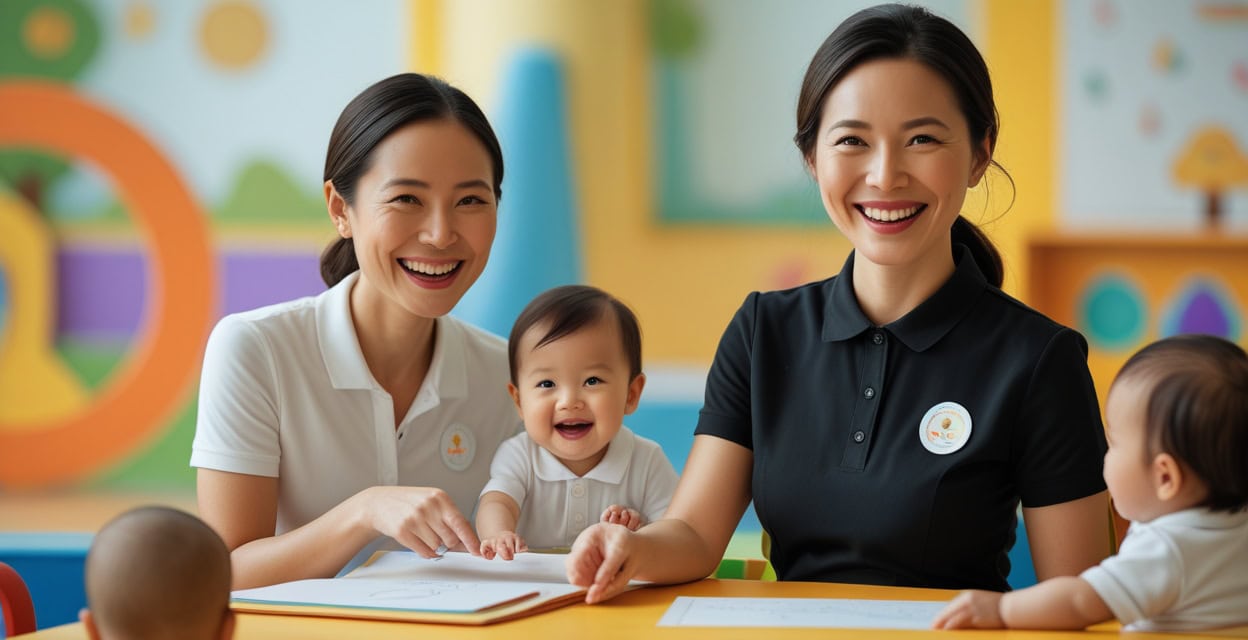
Safety — Rhythm Before Rule
Safety is a living rhythm, not a checklist. By choreographing care around predictable cycles, safety feels like a natural part of the day. Here are the practical rhythms that guide EduNanny and home routines.
- Predictable flow: Structure feed → play → rest cycles around the infant’s cues. A tired baby is more prone to overstimulation and falls, so prioritize gentle transitions and shorter, calm moments between activities.
- Sleep science that protects sleep: Safe sleep means back position, firm mattress, no pillows or soft toys, appropriate room temperature, and visual checks at set intervals. Use a simple sleep log to ensure consistency across caregivers and at home.
- Touch and transfer with respect: Employ two-hand holds and low-to-floor play to minimize fall risk. Practice respectful handling techniques that support autonomy and safety, inspired by Emmi Pikler’s principles.
- Hygiene and health: Meticulous hand hygiene, clean surfaces, curated toy rotation, and a humane sick-child policy. Share simple hygiene checklists with families to unify practices.
- Shared sightlines and trust: Secure parent access CCTV provides transparency while privacy protections stay robust. Use this tool as a reflective practice aid for caregivers and a reassurance for families.
- Preparedness is muscle memory: Regular infant-first aid certification, scheduled drills, and scenario training for choking, allergies, and evacuation. Practice makes safety instinctive.
Actionable steps for families: Create a one-page safety rhythm card to post in the living room: daily cycles, safe sleep steps, diapering handoffs, and emergency contact information. Review it monthly with your EduNanny team.
Development — Seven Micro‑Milestones Before Lunchtime
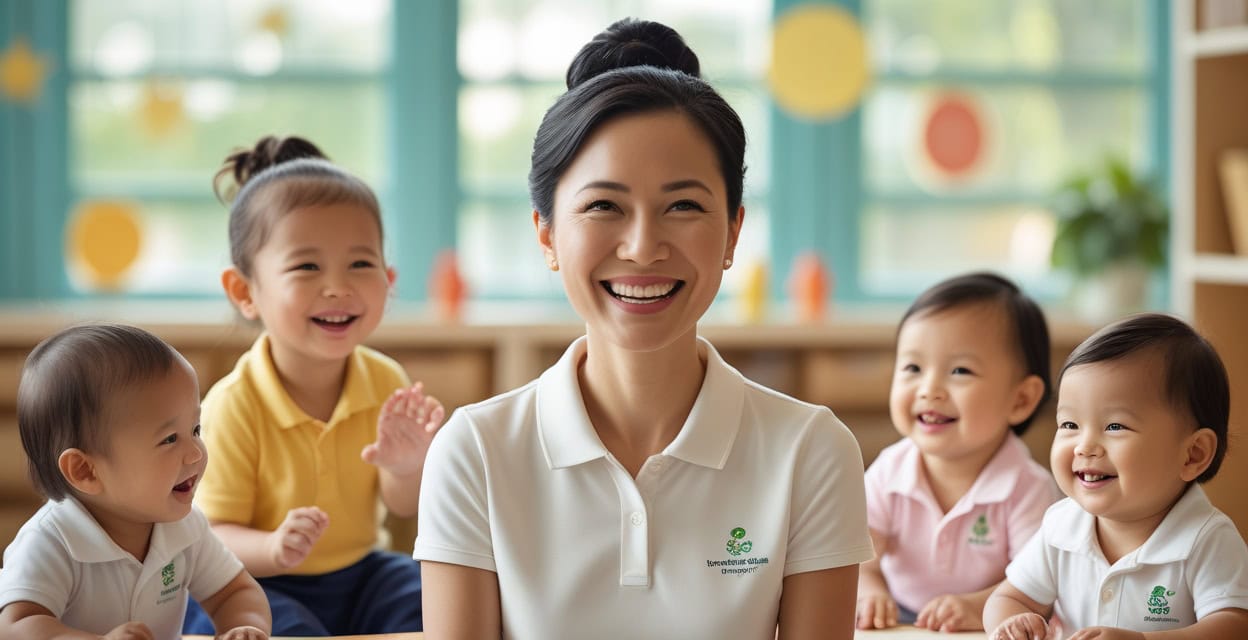
Infant development is a sequence, not a race. We celebrate seven micro-milestones that commonly unfold before midday in our learning spaces and home pods. Each milestone is a doorway to deeper skills, and educators tailor experiences to support each child’s pace.
- Eyes meet eyes: Social attention and early vision through caregiver faces and patterned objects. Tip: place high-contrast—black and white—objects at eye level during early weeks; gradually introduce varied colors as focus stabilizes.
- Hands discover hands: Midline play and grasping foster neural connections for self-care and later writing. Practice: guided reaching toward a favorite rattle or your finger, then pause to let the baby explore on their own.
- Voice finds a partner: Turn-taking coos and babble exchanges lay foundations for language. Tip: pause after sounds and wait for a vocal response; imitate and expand on the baby’s syllables.
- Tummies learn to fly: Core strength for rolling, sitting, crawling. Practice: gentle tummy time with varied textures and a caregiver’s placed hands for safety and encouragement.
- Ears learn patterns: Rhymes and songs cultivate phonemic awareness. Tip: sing simple repetitive songs daily and add finger play to reinforce memory and rhythm.
- Curiosity meets cause: Early experiments in physics—dropping, pushing, and exploring object permanence. Activity: stackable cups, safe mirrors, and soft blocks to explore cause-and-effect.
- Comfort becomes confidence: Reliable routines reduce anxiety and invite exploration. Offer predictable transitions and a calm, present caregiver during new experiences.
Educational practice at EduNanny emphasises depth over novelty, relationships over gadgets, and scaffolding that lets children lead while feeling secure.
Happiness — Joy as a Vital Sign
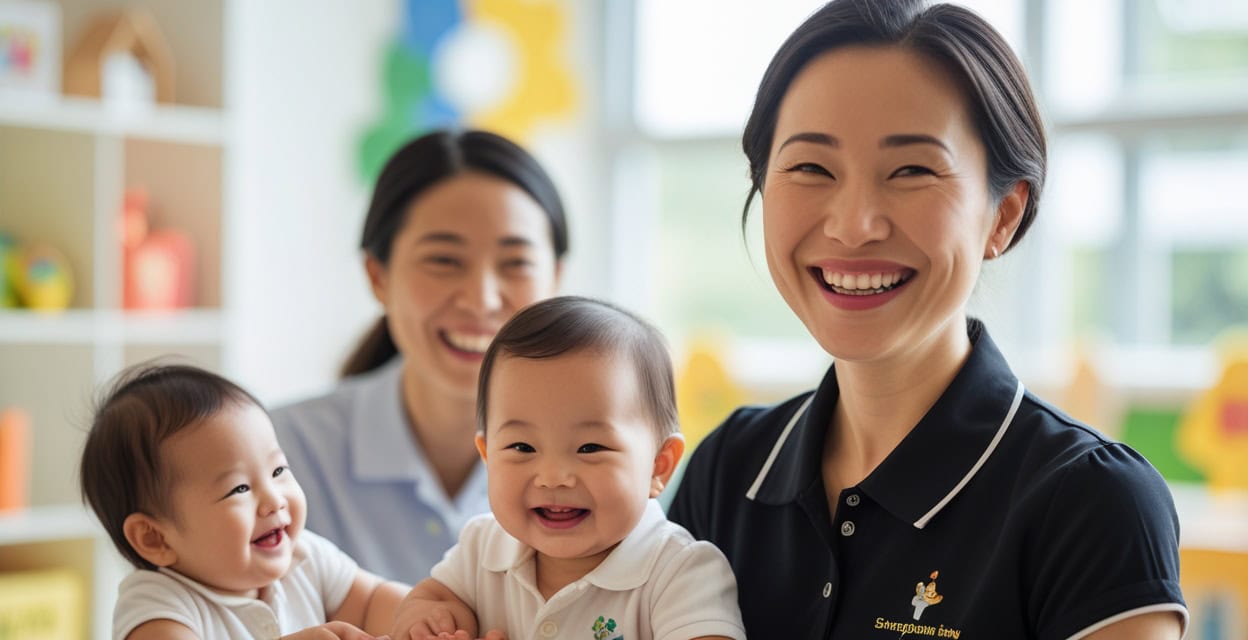
Happiness in infancy is not a frivolous flourish; it is essential data. Joy, playfulness, and contented rest indicate the nervous system is ready to learn. Treat joy as a vital sign—observed, tracked, and nurtured.
- Playface: Look for soft eyes, open mouth, and relaxed shoulders as indicators of delight and safety.
- The settle: Smooth nap transitions and the ability to regain calm after stimulation.
- The duet: A baby’s eagerness to engage with a known adult, responding to caregiver prompts with comfort and curiosity.
- Room hum: Balanced noise levels, comfortable lighting, and a calm visual environment that supports focus and relaxation.
- Parent confidence: A calm drop-off and positive home reports signal alignment between care, home routines, and caregiver practice.
Practical steps to cultivate happiness at home and in EduNanny spaces include maintaining a predictable day, celebrating small successes with gentle praise, and reducing sensory overload by pacing stimuli and transitions.
The Purpose of Childminders — First Artists of Belonging
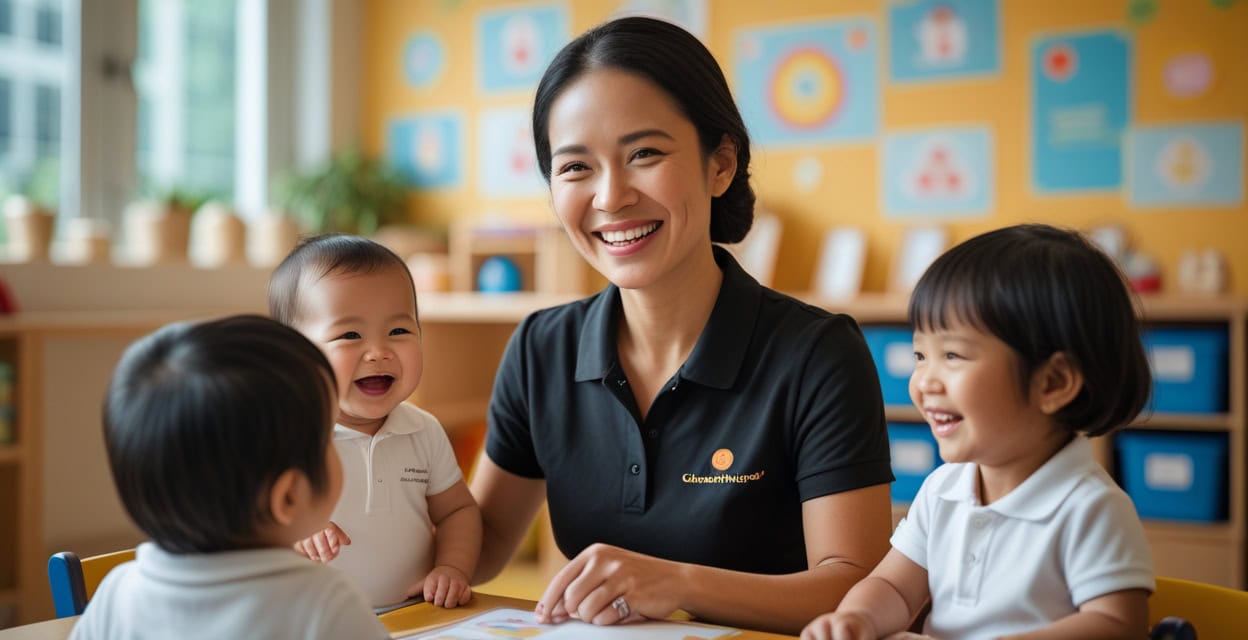
Childminders are not placeholders; they are the first artists of belonging. Their intimate settings—though small in canvas—have outsized impact on social, cultural, and emotional development.
- Translating culture: Infants hear songs, stories, and routines rooted in Singapore’s diverse homes, helping children sense belonging to multiple communities.
- Knit neighbourhoods: Near-home care forges familiar networks, connecting families, caregivers, and neighbours into supportive ecosystems.
- Uplifting families: Centre-based, home-based, and distance options give parents true choice—balancing work and caregiving with dignity.
- Uplifting care as a profession: The ECDA mandate elevates caregiving through training, progression, and prestige—attracting skilled workers into the field.
- Consistent reliability: Regular hours (7am–7pm, Monday–Friday) provide predictability that families can count on, enabling workforce participation and family stability.
When a childminder remembers a favourite song or waits five extra seconds for a child to try again, she shapes a citizen. When a parent peers into CCTV and finds calm, trust grows in the entire ecosystem—and public good is delivered in private moments.

What EduNanny Makes Possible in Singapore
EduNanny weaves together excellence, accessibility, and dignity through a practical set of offerings designed for urban families.
- Excellence and quality: A research-grounded, human-centered approach aligns global best practice with Singapore’s local context.
- Centre-based and home-based options: Modern, calm learning environments in centres and licensed home settings for near-home convenience.
- Distance support: Digital check-ins, video guidance, and continuity on days when a flexible touchpoint is needed.
- Convenience and affordability: Island-wide availability, Monday–Friday, 7am–7pm, with CDA/Baby Bonus support; rates starting at about $33 per day.
- 1:3 infant ratio: Sufficient time for educators to notice, respond, and tailor care to each child.
- Innovation CCTV: Secure access for parents and reflective practice for caregivers, with privacy controls.
- National Social Initiative: EduNanny by BUTLER within the ECDA Childminding Pilot, advancing a jobs-and-care agenda with dignity.
A Day in the Life, The Singapore Way
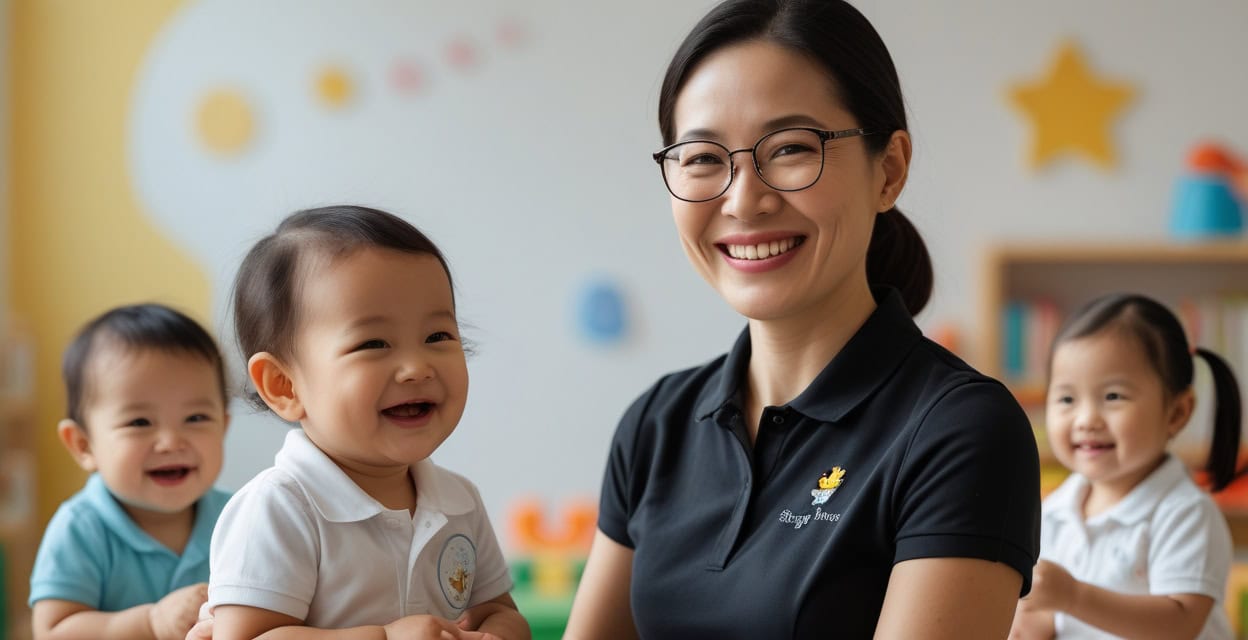
Imagine a morning in a Jurong home pod. A caregiver meets an infant at eye level, narrates the handover, and a father steps into the lift feeling seen. The room is quiet, sunlit, and ordered. A low shelf holds safe objects—scarves, rattles, a mirror. Tummy time is patient: the child lifts, tires, rests, and tries again. Mid-morning, the pod steps out under a sheltered walkway for fresh air and naming games—pigeons, buses, clouds. A nap comes easily, the room dims, the posture softens. After wake, a small group gathers around a rhythm game. The baby reaches for the drum, then for the educator’s face. Connection is the curriculum.
This is EduNanny in action: near home, with high standards, and with joy threaded through every moment.
Closing: Who, What, When, Where, How Childminding Matters
Who: Infants, parents, childminders, and the wider Singapore community. A circle wider than we think, where every calm infant strengthens a family and every supported family strengthens a city.
What: Childminding that fuses attachment, development, and safety—designed for the earliest years and delivered with professional discipline.
When: The hours that matter most—Monday to Friday, 7am to 7pm—when families build livelihoods and infants build brains.
Where: Neighbourhood centres, licensed home pods, and digital distance support when life requires flexibility—always near enough to belong.
How: Through an ultra-low 1:3 ratio, modern environments, rigorous safety rhythms, Look–Listen–Link pedagogy, secure CCTV, and affordability supported by CDA/Baby Bonus—within the ECDA Childminding Pilot, powered by EduNanny by BUTLER.
Our Philosophy and Purpose
EduNanny exists to turn everyday care into a cradle of trust, learning, and joy. We believe safety is the precondition of curiosity, that play is the engine of growth, and that belonging is the soil from which resilience grows. We are here to make world-class care accessible—centre-based, home-based, or distance-supported—so that Singapore’s smallest citizens can begin life not hurried, not hidden, but held and seen.
Parents, tonight I invite you to choose care that is close, consistent, and crafted. Childminders, I honour your craft and your courage. Policymakers and partners, I thank you for building an ecosystem where excellence can be both expected and affordable.
In a city that moves quickly, EduNanny chooses to move carefully—so our children can move confidently. In a nation that shines brightly, we guard the glow at its source: the infant’s steady breath, the caregiver’s steady hands, and the family’s steady heart.
If this vision resonates, visit EduNanny.com or Childminding.EduNanny.com. Come see a room designed for wonder. Meet a team trained to notice. Feel what it means when childcare is not a compromise, but a beginning worthy of Singapore.
Conclusion
EduNanny Singapore presents a holistic framework for infant care that blends pedagogy, safety, development, happiness, and belonging into everyday practice. By embracing Look–Listen–Link, maintaining rhythm-based safety, celebrating micro-milestones, prioritizing happiness as a data point, and elevating childminders as cultural custodians, families can access near-home care that supports mothers, fathers, and caregivers alike. This article offers practical steps, home-friendly activities, and a clear pathway to engage with EduNanny’s centre-based, home-based, and distance-supported options. Take the next step to partner with EduNanny and experience care that is deliberate, near, and worthy of Singapore’s youngest citizens.
Call to action: Explore room tours, meet the team, and join a community that believes in the earliest beginnings as a shared public good. Visit EduNanny.com or Childminding.EduNanny.com to start your journey today.
SEO Keywords
[#EduNannySingapore, #InfantCareSingapore, #EarlyChildhoodDevelopment, #ChildmindingPilot, #LookListenLink]