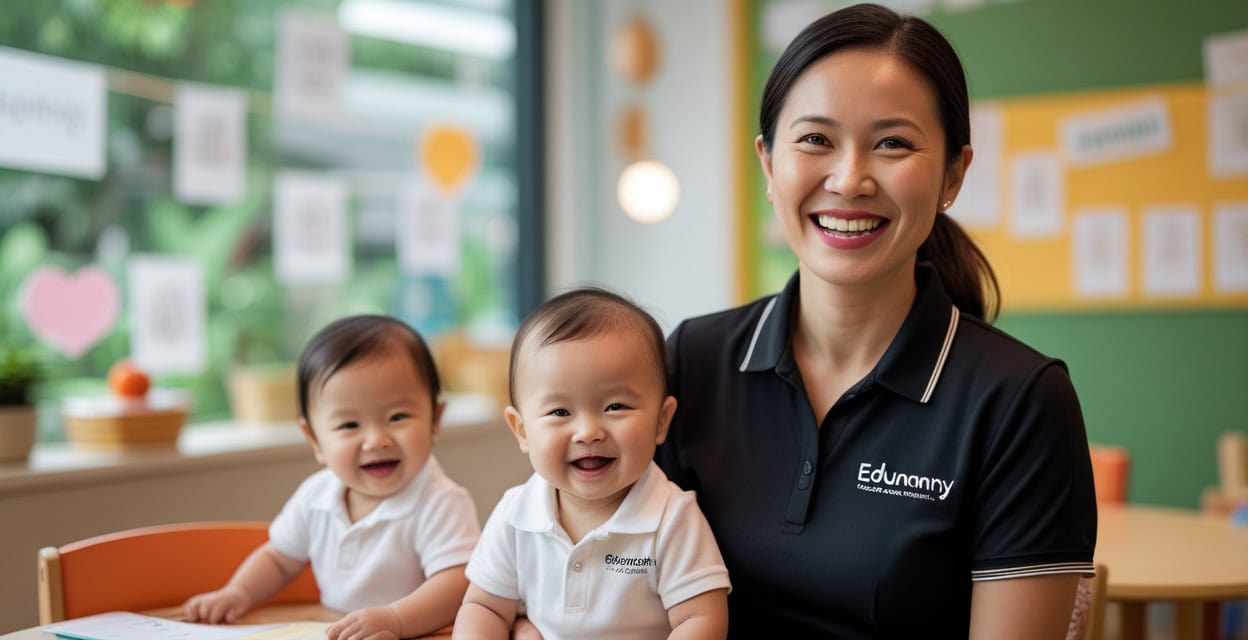
EduNanny Singapore Attuned Presence and Civic Care A Vision for Near Home Infant Care and Community Childminding

EduNanny Singapore: A Vision for Attuned Infant Care and Community Childminding
Ladies and gentlemen, parents, grandparents, caregivers, educators, and all who believe a nation’s future is held in its smallest hands—good evening. EduNanny brings world-class infant care and community childminding into the everyday life of Singapore—near your home, inside your neighborhood, and within your schedule. This article expands on the EduNanny ethos, offering practical, actionable guidance for families and caregivers to nurture early development with care, safety, and dignity.
Pedagogy of Attuned Presence: Learning Starts in the Pause
Infant learning is less about ticking milestones and more about the moments between actions—the pauses that invite meaning, attention, and connection. Here is how to implement attuned presence in daily life.
- Reading micro-cues: Train yourself to notice tiny signals—fluttering fingers, a gaze that lingers, a momentary pause before a reach. Practice a 3-second observation window before responding.
- Prepared environment: Create safe, low-clutter spaces with reachable shelves and varied textures at infant height. Use open floor space for exploration and place sensory items at the child’s level.
- Routine as curriculum: Narrate activities during feeding, diapering, and transitions. Instead of “time to sleep,” say, “Let’s slow down together; listen to the soft sounds.”
- Attachment as foundation: Foster secure attachment by responding promptly, consistently, and warmly to cues. This builds a robust sense of self and readiness to learn.
- Practical exercise: Implement a daily 20-minute “pause time” where the caregiver sits with the child, naming what they see and inviting simple choices (e.g., “Would you like the red block or the blue block?”).
Practical takeaway for parents: keep a simple daily journal of cues you observe—what excites your child, what signals stress, and how you responded. reflection strengthens attunement across home and EduNanny settings.

Safety by Design: See, Prevent, Protect
Safety is a system, not a poster. EduNanny blends layout, hygiene, and protocols to protect infants while enabling discovery.
- Environmental clarity: Maintain low visual clutter, cord-free blinds, secure gates, firm sleep surfaces, and clearly delineated safe zones that allow eye contact and supervision without stifling exploration.
- Process discipline: Establish safe sleep routines (on back, flat surface, no loose blankets), sanitation check-cycles (wash hands, sanitize high-touch areas), and hazard checks integrated into daily rhythms.
- People readiness: Ensure all caregivers hold infant first-aid certification, demonstrate responsive caregiving, and rehearse escalation protocols regularly.
- Privacy and trust: Use CCTV as a transparency tool with strict privacy safeguards and clear consent processes; involve parents in review of footage practices and access controls.
- Practical checklist: Daily safety rounds before first contact, mid-shift checks for hazards, and post-nap verification of sleeping surface and environment.
Parents can enhance safety at home by establishing a simple safety routine: secure sleep spaces, remove choking hazards from lower surfaces, and create a child-friendly play area with visible supervision and predictable transitions.
Development as Everyday Inquiry: Movement, Language, and Play
Infants learn by moving, speaking, and exploring. EduNanny translates developmental science into everyday practice.
- Movement: Prioritize floor-time play with stable surfaces, allowing rolling, reaching, crawling, and cruising. Offer a variety of textures and objects that encourage gentle challenges and mastery, but never pressure progress.
- Language: Create language-rich environments with warm narration, naming feelings and actions, and actively listening to attempts at communication. Responsive talk builds brain architecture for later literacy and social skills.
- Play: Rotate open-ended materials—soft items, cause-and-effect toys, natural textures—so infants can investigate, repeat, and refine without explicit goals.
- Playful mastery: Celebrate persistence and curiosity as primary indicators of learning, not speed or “perfect” performance.
Home implementation tip: set a daily language ritual—three cycles of “Name, Show, Imitate” where you name an action, demonstrate, and invite the child to imitate in a playful, unpressured way.

Happiness with Purpose: Rhythm, Relationship, and Respect
Happiness is the climate that makes learning possible. Here’s how to cultivate it at home and in EduNanny settings.
- Predictable rhythms: Establish consistent cues for transitions (a gentle song, a specific phrase, a calm handover ritual) to reduce stress and build trust.
- Relationships that protect curiosity: A stable caregiver who knows the child’s cues reduces fear and invites exploration; include space for informed protest when needed as part of healthy development.
- Respect that builds selfhood: Seek consent before touch and wait for the infant’s response; acknowledge feelings without rushing to fix them. Model dignity in every interaction.
- Joyful learning: Frame everyday routines as opportunities for discovery, not chores. Celebrate small achievements and reflect on what the child enjoyed most.
Practical guidance for families: design two 15-minute “quiet connection” windows per day to share a story, sing a song, or simply cuddle, reinforcing safety, warmth, and belonging.
The Purpose of Childminders: Craft, Care, and Civic Duty
In Singapore, childminding is a public good. EduNanny’s approach centers on building a skilled workforce and accessible care near home.
- Craft and care: Childminders translate science into touch, speech, and timing—infusing care with learning opportunities that travel from care setting to home.
- Parent partnership: Caregivers share observations, co-create routines, and align goals with families to ensure consistency across environments.
- Civic commitment: Every infant deserves safety, joy, and developmental opportunity within reach of home, regardless of background.
- Professional dignity: Training, fair employment, and public recognition reinforce the value of early childhood work as a respected vocation.
Actionable takeaway: ensure your chosen caregiver has a clear pathway for professional development, access to ongoing training, and a mechanism for transparent feedback from families.
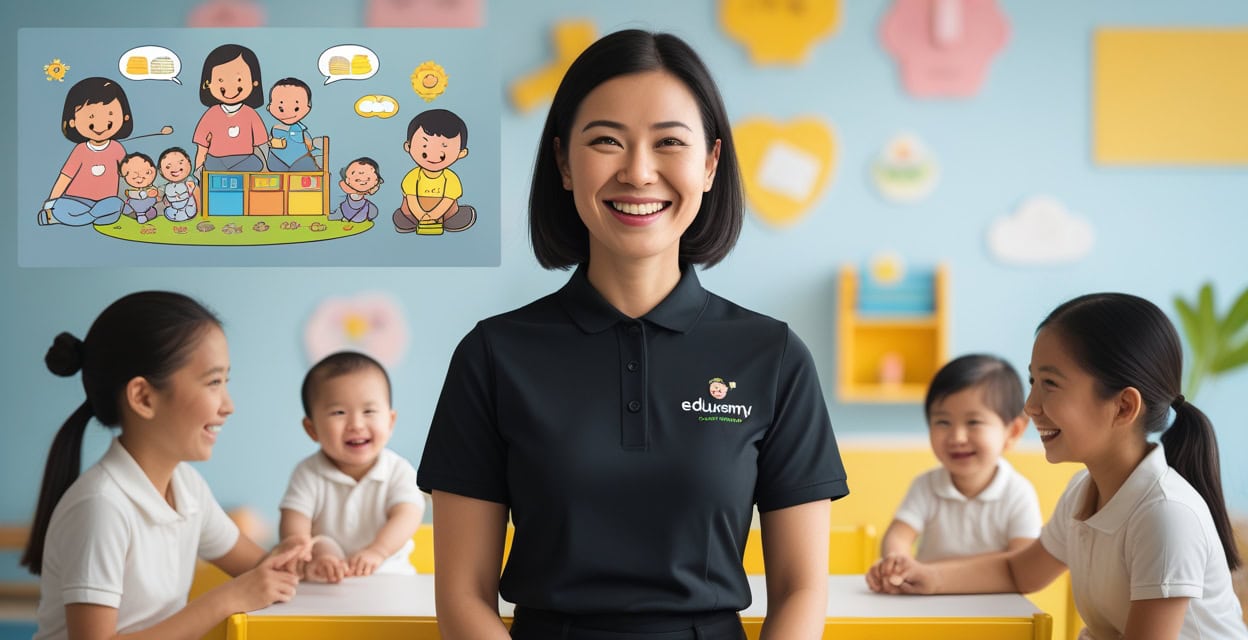
A Brief Tour of How EduNanny Works for Families
EduNanny is designed to fit real life—balancing choice, hours, and affordability with rigorous standards.
- Setting options: Centre-based for shared learning, home-based for continuity near home, and distance support for coaching and tele-check-ins when care is at home.
- Hours and reach: Monday–Friday, 7am–7pm, islandwide in Singapore.
- Ratios and transparency: 1:3 infant ratio; CCTV-enabled yet privacy-conscious; layouts designed for safety and calm.
- Affordability and access: From $33/day, with CDA/Baby Bonus support to reduce out-of-pocket costs.
- National initiative: Participation in ECDA Childminding Pilot as a National Social Initiative, integrating quality with broad access and family-centered employment.
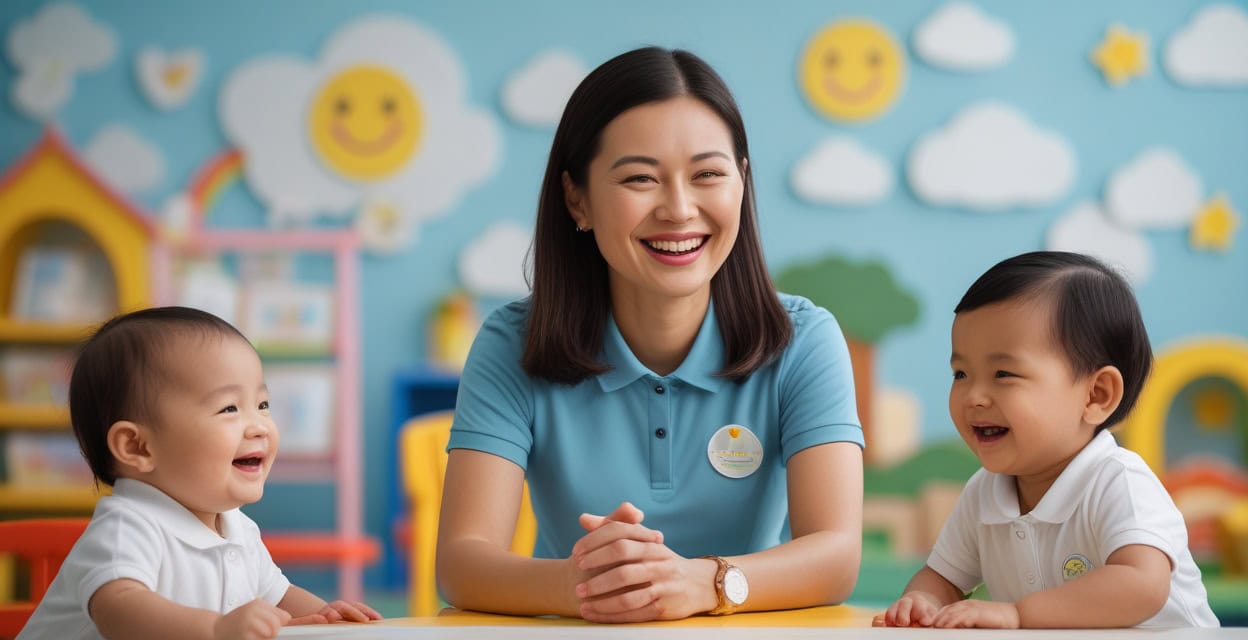
What Parents Experience
Parents who partner with EduNanny observe a meaningful daily workflow that supports both child development and family life.
- Warm handovers: Thoughtful mornings and reflective debriefs in the evening build trust and continuity.
- Beyond routine notes: Daily entries extend to observations, practices, and moments of joy—helping families stay engaged with their child’s growth.
- Shared cues: Caregivers who know each child’s cues help smooth transitions and co-create routines across home and care settings.
- Systemic confidence: A safety-forward system with clear standards reduces parental anxiety and strengthens family trust.
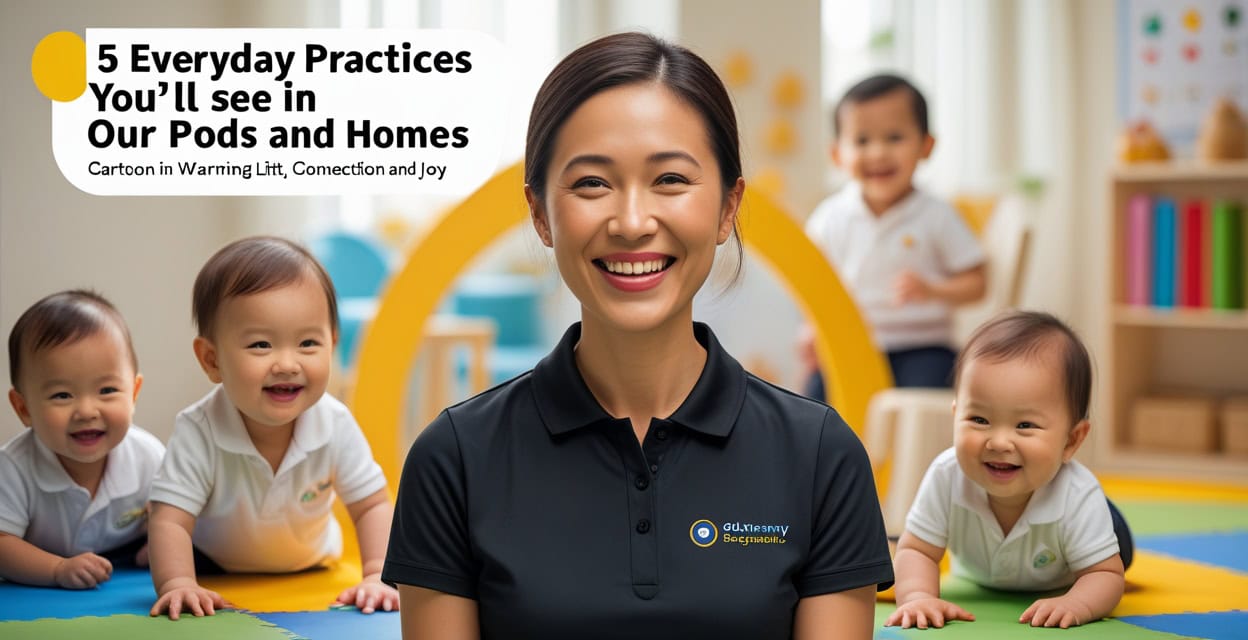
Five Everyday Practices You’ll See in Our Pods and Homes
EduNanny’s everyday practices are designed to embed development into the rhythm of life.
- Slow caregiving: Narrate, wait, and respond. Infants are partners in care, not tasks to be completed.
- Floor-time first: Prioritize large blocks of uninterrupted exploration to build gross motor confidence and body awareness.
- Language baths: Continuous, respectful talk—naming feelings, actions, and choices—supports language development and emotional literacy.
- Predictable rituals: Use consistent songs, words, and gestures to ease transitions and support sleep routines.
- Gentle documentation: Capture small triumphs, interests, and patterns so the curriculum lives in the child’s daily experiences, not just a binder.
Practical home tips: create a “language jar” with everyday words and phrases; rotate a small set of open-ended toys; schedule a weekly “family reflection” to discuss what worked well that week and what to adjust.
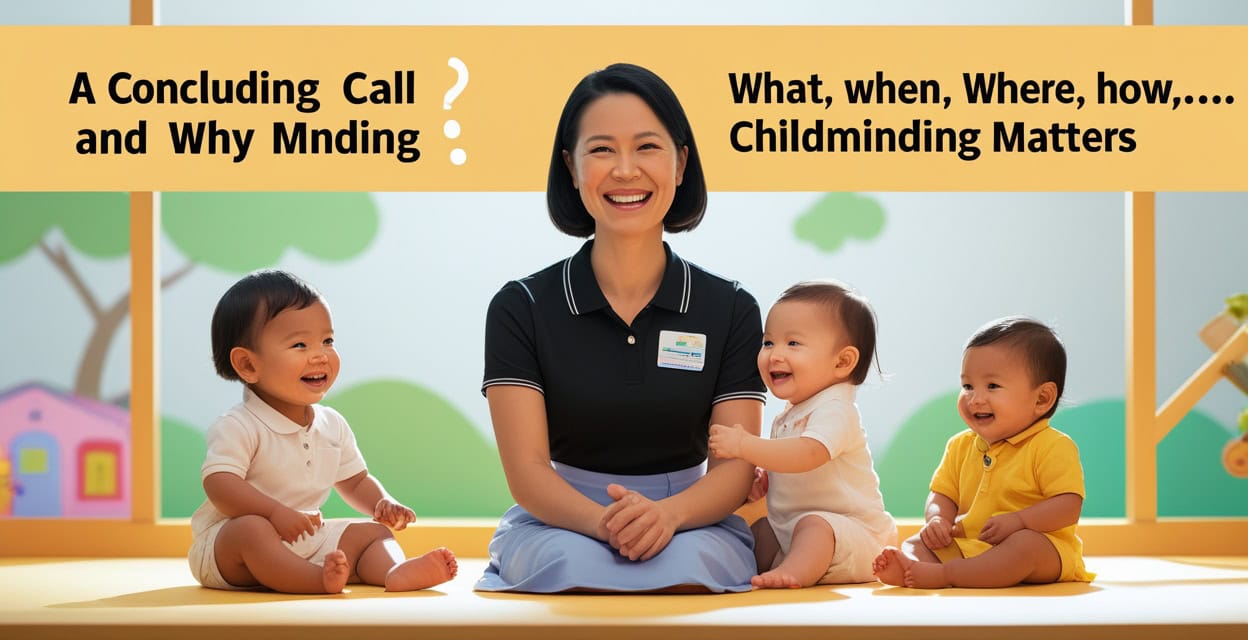
A Concluding Call: Who, What, When, Where, How—and Why Childminding Matters
Who benefits from thoughtful childminding?
- Every infant who deserves deep, safe, and developmentally appropriate care.
- Every parent who seeks a livelihood alongside a compassionate, reliable routine for their child.
- Every caregiver whose vocation is early childhood craft and community service.
What is childminding at its best?
- A human-scale, science-rooted, relationship-rich support system for the first years.
- Not a holding space, but a living curriculum of safety, attachment, and joyful discovery.
When does it matter most?
- Every day, but especially in the earliest months and years when the brain is wiring for trust, attention, and resilience.
Where should it happen?
- Near home, in the community, and in spaces designed for movement, continuity, and quiet.
How does it work?
- Attentive adults, safe environments, unhurried routines, and clear standards—supported by ultra-low ratios, professional training, and transparent practice.
Why does it matter?
- Because the first relationships and rhythms shape how a child learns, leads, and loves. When we get the beginning right, everything after becomes more possible.
EduNanny’s philosophy is simple: presence before program, safety before spectacle, relationship before routine. We aim to hold a secure, joyful space where infants grow confident bodies, curious minds, and trusting hearts—and where parents feel seen, supported, and strengthened. This is not just childcare; it is nation-building in soft tones and tiny hands.
To the families of Singapore: we are ready to serve you—center-based, home-based, and distance-supported—Monday to Friday, 7am to 7pm, islandwide. To caregivers: your craft is worthy of training, fair employment, and public honor, and we are committed to all three. To our partners in policy and community: thank you for believing that quality and access can live in the same sentence, and in the same neighborhood.
Visit EduNanny.com and Childminding.EduNanny.com to begin. Excellence, quality, convenience, affordability, and dignity in infant care are not dreams for tomorrow; they are practices for today—from $33/day, payable by CDA/Baby Bonus, with an excellent 1:3 ratio, innovative CCTV, and modern layouts designed for safety and calm.
In every gentle handover, in every unhurried pause, in every first reach toward a new possibility, we are building something larger than care. We are building trust. And trust, held daily, becomes a future.
Conclusion
EduNanny Singapore invites families to partner in a model of care that honors science, dignity, and community. By prioritizing attuned presence, safety by design, everyday developmental inquiry, and purposeful happiness, families gain not only care but a framework for lifelong growth. For caregivers, it offers training, respectful employment, and a sense of civic purpose. For policymakers and communities, it demonstrates how high-quality infant care can be scalable, transparent, and truly beneficial to the nation’s future. Consider how you can weave these practices into your daily life and how EduNanny can be a trusted ally in your child’s earliest years. Take the first step today—visit EduNanny.com and Childminding.EduNanny.com and begin your journey toward a secure, joyful, development-rich future for your child.
SEO Keywords: EduNanny Singapore, infant care best practices, childminding near me, Singapore early childhood development, 1:3 infant-to-educator ratio
[#EduNannySingapore, #InfantCareBestPractices, #ChildmindingNearMe, #SingaporeEarlyChildhoodDevelopment, #InfantToEducatorRatio]