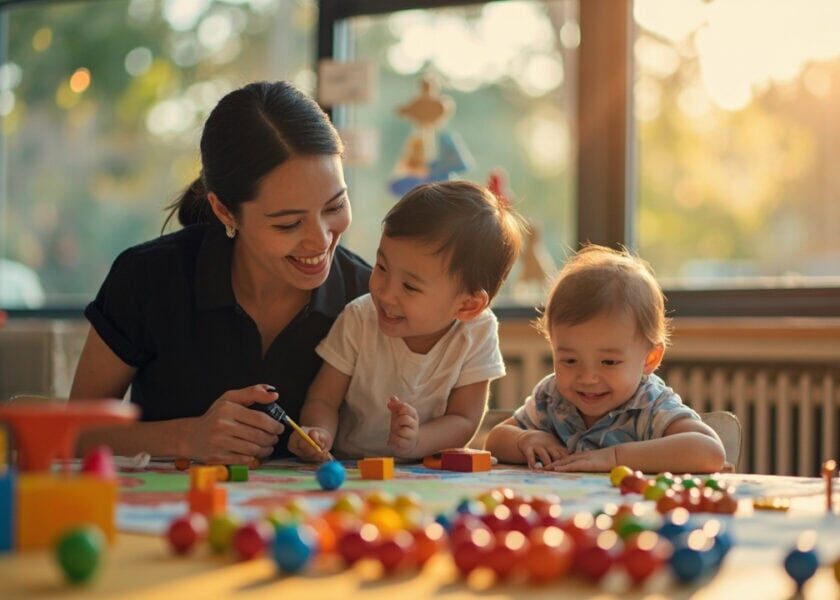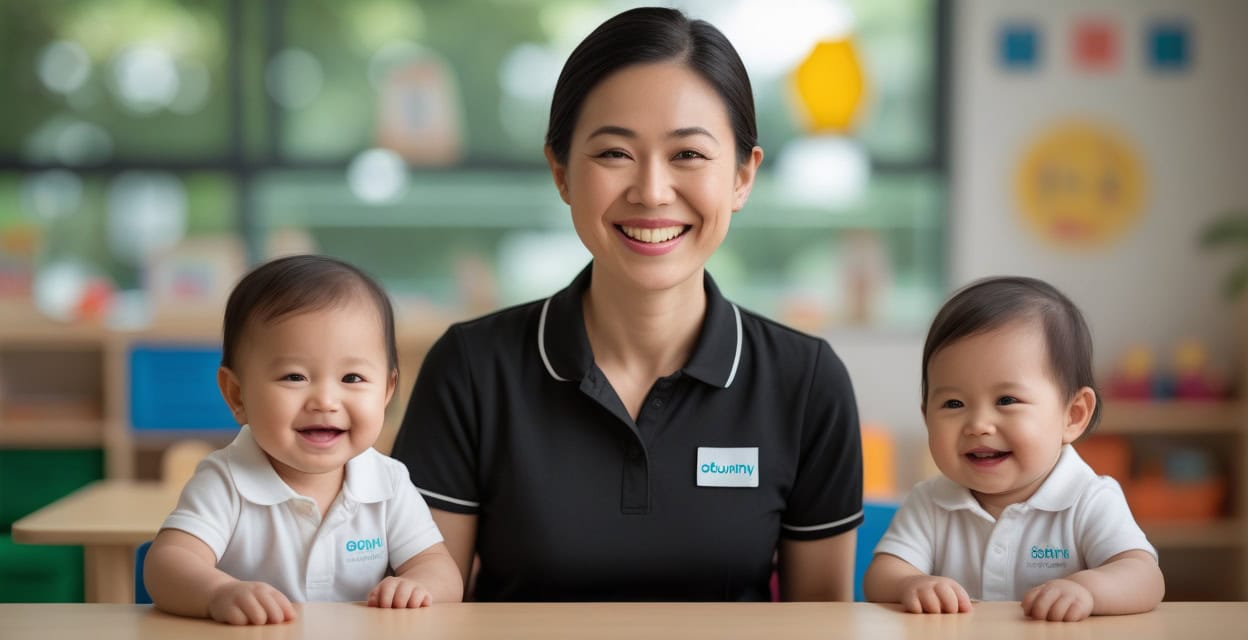
EduNanny A Human Centered Blueprint for Safe Joyful Infant Care Across Singapore

A Gentle Standard for a Bold Nation: The EduNanny Promise in Singapore
Good evening to parents, grandparents, caregivers, employers, and policy stewards of Singapore’s tomorrow. Thank you for coming with open minds and full hearts. This is a practical manifesto for turning care into capability, safety into trust, and routines into growth. Below is a deeply actionable exploration of EduNanny’s philosophy, structures, and everyday practices that make infant care both science-informed and profoundly human.
What is EduNanny?
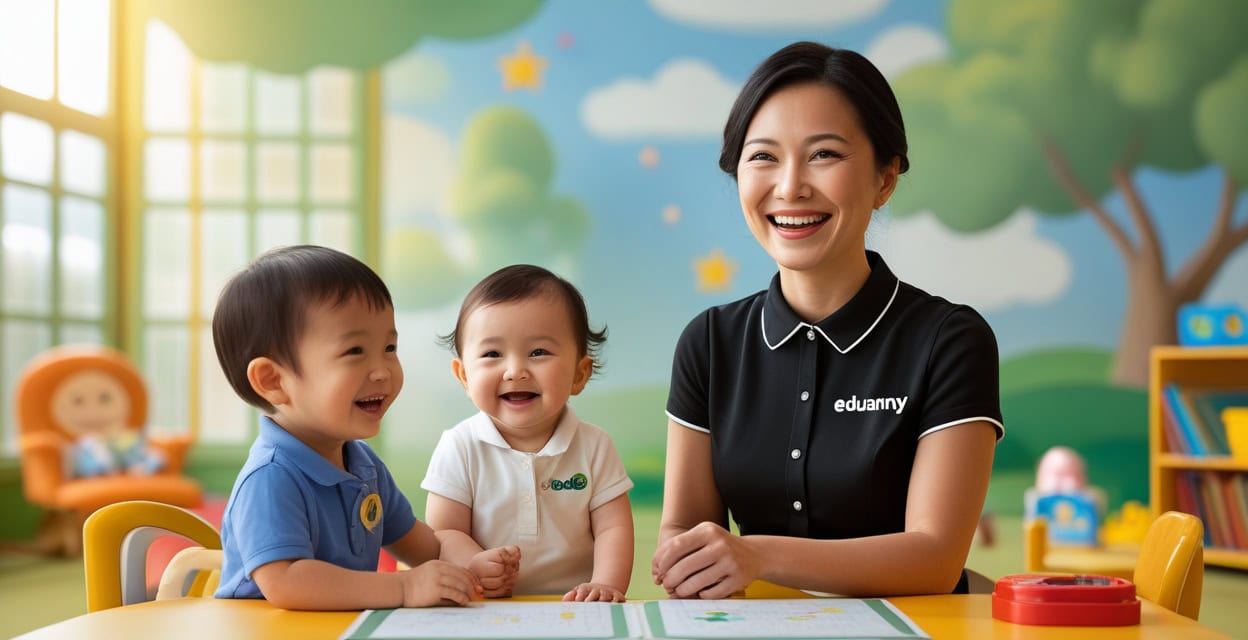
EduNanny by BUTLER is Singapore’s home-grown standard of infant care and childminding that fuses science, compassion, and civic purpose. We are centre-based, home-based, and near-home across the island. We operate Monday to Friday, 7am to 7pm, with an ultra-low 1:3 infant ratio. We bring modern layouts, transparent innovation CCTV for peace of mind, islandwide convenience, and affordability (from $33/day). We are part of the ECDA Childminding Pilot, aligned with a National Social Initiative and a Maximum Employment Mandate that dignifies care work as skilled, upwardly mobile, and essential. Fees are payable by CDA/Baby Bonus. You can find us at EduNanny.com and Childminding.EduNanny.com.
But beyond the facts and features, EduNanny is a philosophy made practical: a living approach to care in which the science of infant development meets the art of everyday tenderness.

How EduNanny makes infant care and childminding great in Singapore
1) The Science of Small: Why micro-interactions make mighty brains
Infants learn in tiny exchanges—what Harvard’s researchers call serve-and-return. A baby coos. An adult answers. The brain wires. At EduNanny, we design for thousands of these moments each day. Practical steps for families:
- Attunement in action: When an infant averts their gaze, pause for a beat, then respond with eye contact or a gentle touch. Track signals daily in a simple caregiver notebook—left textbox: “gaze, smile, touch.”
- Agency from day one: Offer two safe choices (bib style, song, or toy) during routines. The message: you are seen, you are capable, you matter. Document preferences and rotate options to support autonomy.
- Language as music: Narrate care with warm, simple sentences. For example: “We’re washing your hands now. One, two, three—all clean.” Use repetition to build schema; pair words with actions to scaffold thought.
- Practical home-application: Create a daily micro-curriculum at home with 3-4 easily repeatable exchanges (e.g., face-to-face feeding with naming, a short shared book moment, a slow dance during diaper changes). Track mood and engagement across the week to refine routines.
2) Safety by Design: The Five Rings of Protection
Safety is a system, not a slogan. Our Five Rings make care deeply safe without making it sterile. Actionable checkpoints for caregivers and families:
- Ring 1: Environment—Regular hazard mapping, floor checks, safe sleep practices (face-up, firm surface, no loose bedding), air quality monitoring, and zoned spaces that separate active play from quiet rest.
- Ring 2: Operations— Health checks at arrival, clear feeding plans, medication logs, diapering and handwashing protocols, incident logs, and emergency drills. Treat procedures as promises.
- Ring 3: Transparency— Authorized parent access to CCTV feeds, secure data handling, timely incident reporting. Trust grows when safety is visible.
- Ring 4: People— Rigorous hiring, background checks, ongoing infant development training, reflective supervision, and peer observation. Invest in practice because infants deserve professionals.
- Ring 5: Community & Compliance— Alignment with ECDA standards, neighbourly engagement for home-based care, and open channels with families. Safety amplifies when everyone is in the loop.
3) Developmental Spirals: Routines as the richest curriculum
We organise the day around six developmental routines. Each is care and learning—spiralling in complexity as the infant grows. Practical implementation for families and centers:
- Nourish: Focus on eye contact during feeding, naming tastes, and practicing patience. For older babies, introduce safe self-feeding with appropriate utensils and adaptive spoons to build fine motor skills.
- Rest: Predictable wake windows, gentle settling cues, and flexible adjustments based on stress signals. Learn to read cues like yawning, rubbing eyes, and fussiness to tailor nap times.
- Move: Daily floor time with open-ended materials; avoid rushing milestones. Provide safe exploration spaces with soft mats, mirrors, and texture-rich toys to encourage locomotion and balance.
- Relate: Small groups (1:3) enable deep bonds, joint attention, turn-taking, and shared delight. Use caregiver-led plays that model social scripts for early communication.
- Language: Soft talk during care, name-and-point activities, rhymes, and bilingual songs as families prefer. Language grows best through warm, ongoing conversation rather than flashcards.
- Play: Treasure baskets, sensorial trays, music, water exploration, and simple cause-and-effect materials. Let the infant guide with cues; the adult provides scaffolding guided by Piaget and Vygotsky principles.
This is our pedagogy: nothing flashy, everything intentional. Families can replicate this framework at home by tracking daily routines, naming actions, and pausing to engage when the child signals readiness to explore.
4) Joy as a learning signal, not an afterthought
Joy isn’t a bonus; it’s the brain telling us to keep going. We observe and document key cues:
- Engagement: Is the infant returning to a challenge with interest?
- Regulation: Do they settle with familiar routines and a trusted adult?
- Connection: Do they seek eye contact, share smiles, initiate sound play?
- Curiosity: Do they test, repeat, vary, and look for what happens next?
In practice, this means daily mood and engagement notes shared with families, and weekly reflections on pacing, stimulation, and caregiver support. Joy is tracked through a simple five-point scale (low–high) to ensure the environment remains safe enough to explore and rich enough to grow.
5) The Civic Craft of Childminding: Why the work itself matters to Singapore
EduNanny’s Maximum Employment Mandate recognises:
- Professional dignity: Tiered roles, paid training, reflective supervision, and clear career paths that reward mastery and leadership in infant care.
- Economic mobility: Stable hours (Mon–Fri, 7am–7pm), benefits aligned with standards, and opportunities to specialise (sleep support, language facilitation, inclusive practices).
- Social value: Near-home roles that strengthen neighbourhood ties, reduce commuting pressure for families, and keep infants cared for within communities.
- Public trust: Participation in ECDA Pilot programs, quality assurance, and transparent reporting to families and communities.
When we elevate caregivers, we stabilize care. When care is stabilized, infants thrive. When infants thrive, families and employers thrive. That is a virtuous circle worthy of a city-state with long-term horizons.
Our service architecture at a glance
- Availability: Monday–Friday, 7am–7pm, islandwide Singapore.
- Settings: Centre-Based, Home-Based in community or home premises, and Distance Support via video check-ins, coaching, and daily plans when families prefer supported home arrangements.
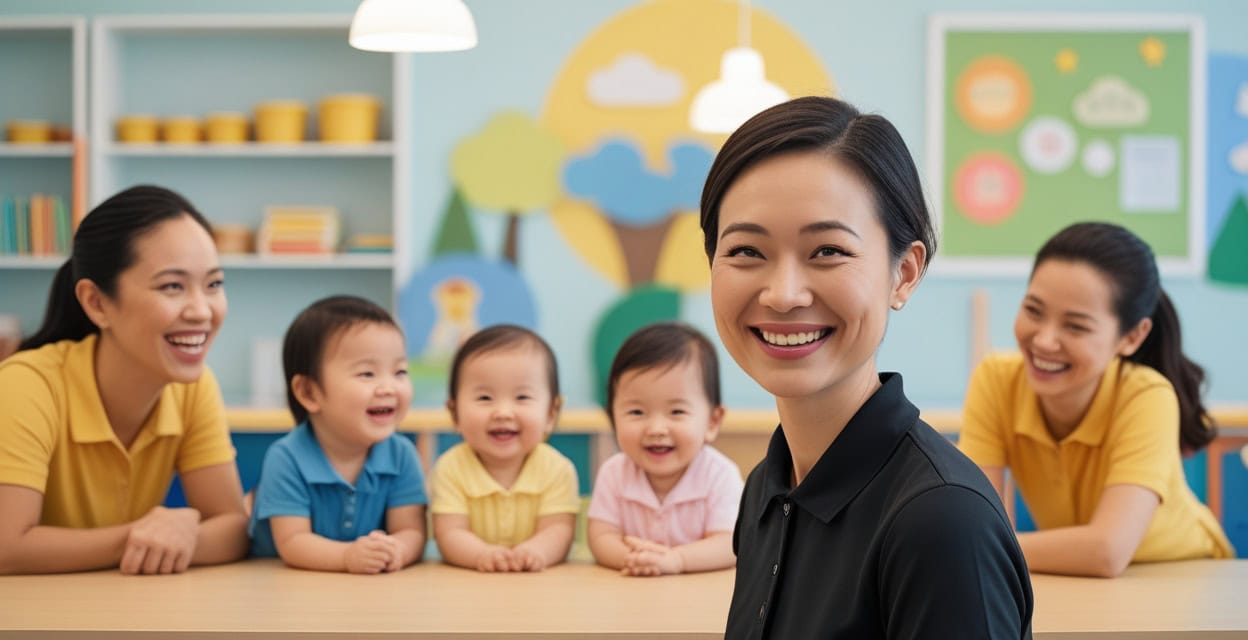
- Ratio: 1 caregiver to 3 infants. Small is safe. Small is human.
- Environments: Modern layouts, safe sleep zones, easy-clean surfaces, natural light, and materials curated for sensorial exploration.
- Transparency: Innovation CCTV with secure, parent-only access; daily notes; photos; and developmental observations.
- Affordability: Fees payable by CDA/Baby Bonus; accessible from $33/day.
- Access: EduNanny by BUTLER; explore at EduNanny.com and Childminding.EduNanny.com.
- Social Purpose: ECDA Pilot; National Social Initiative; Maximum Employment Mandate to grow a highly skilled caregiving workforce.

A day in the life, briefly
A parent arrives to a calm hello; a health and mood check-in; an infant settles to floor time with familiar materials and a known caregiver. Feeds are unhurried; naps are consistent; play is small-group, often one-on-one. Video access is available when you need it, and you’ll receive notes that feel human—shared observations rather than templated statements. When pickup comes, you are not only told what happened; you are shown how your child felt. That is respect. That is partnership.
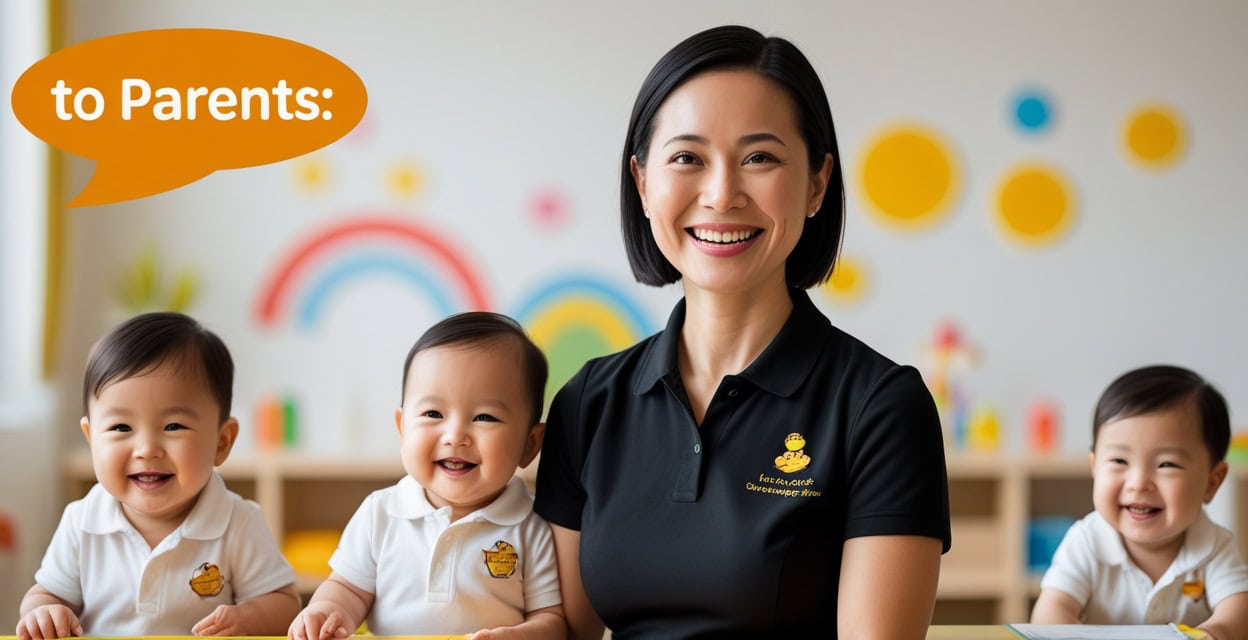
To parents: your role is central
We honour family culture, caregiving preferences, and language. We co-create daily routines and sleep/feeding plans. We share observations, not just outcomes. We can support transitions back to work, coach on home routines, and coordinate with grandparents and helpers. We are not replacing you; we are strengthening your circle.
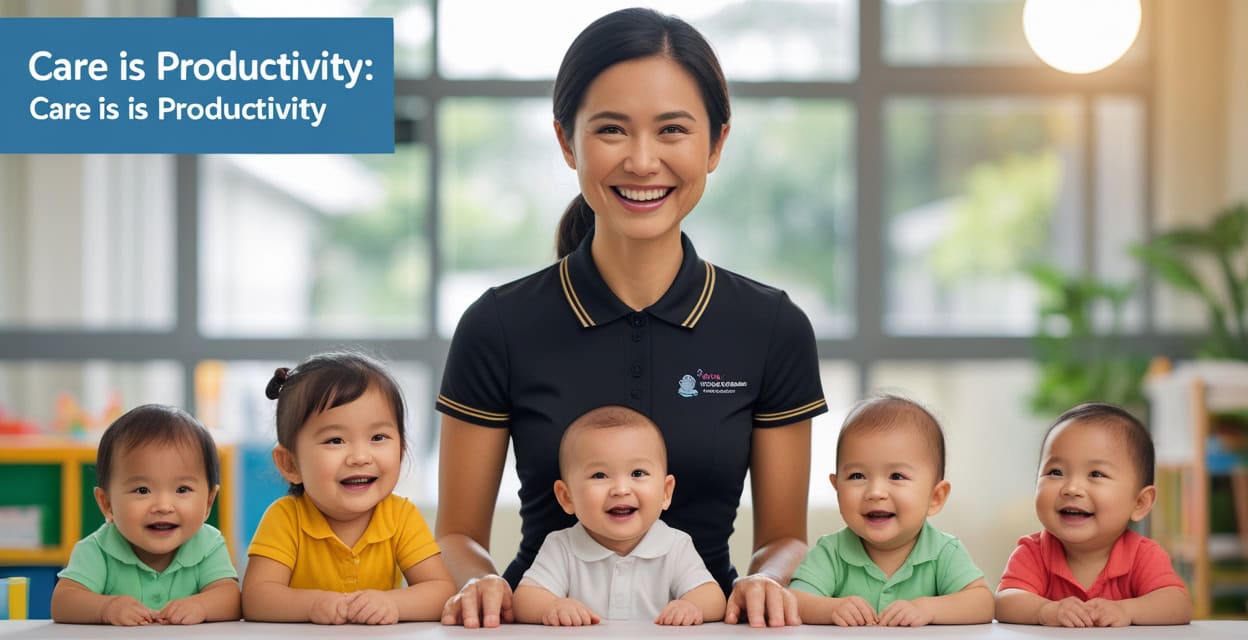
To employers: care is productivity
Reliable, quality childminding is a workforce solution. Practical benefits you can expect:
- Predictable hours reduce absenteeism and help staff plan around family needs.
- Transparent care reduces worry and builds trust among teams and leadership.
- Near-home options decrease commute stress and time away from family, boosting morale and retention.
- Partner with EduNanny to co-create return-to-work plans, easing transitions for new parents.
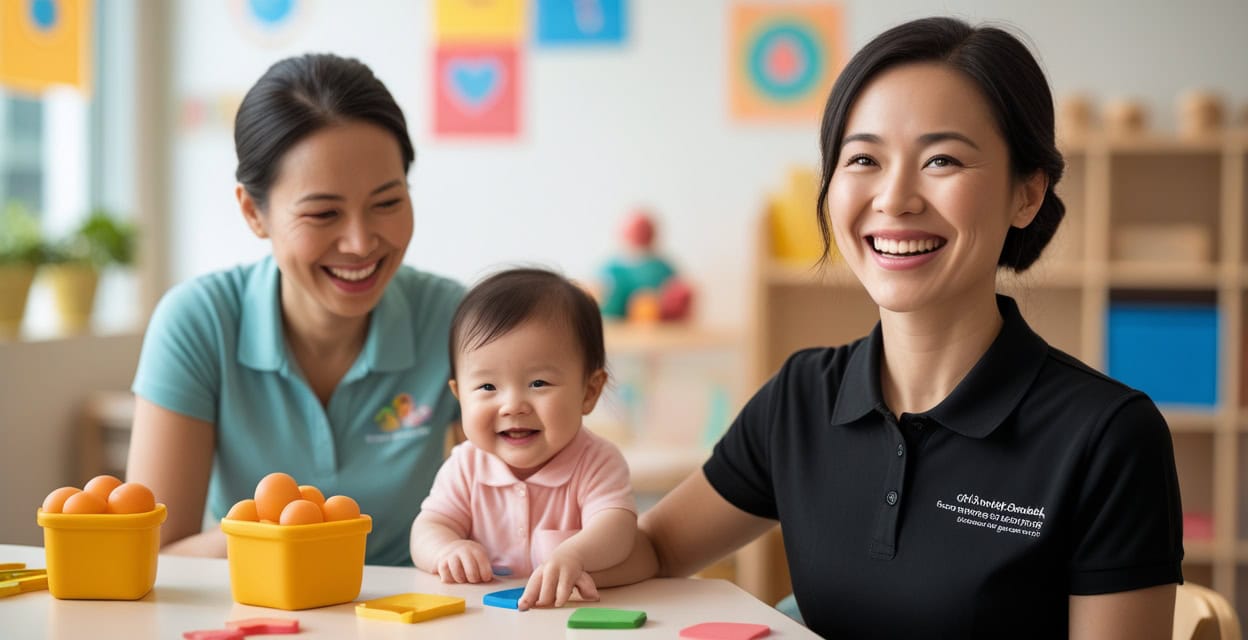
To caregivers: we see your craft
This profession demands presence, precision, and heart. We invest in you because infants depend on you. Your steady care today becomes a child’s confidence tomorrow. Practical supports include:
- Structured mentorship programs with reflective supervision cycles.
- Clear progression tracks to elevate specialization (sleep support, language facilitation, inclusive practices).
- Regular professional development opportunities tied to real-world caregiving outcomes.
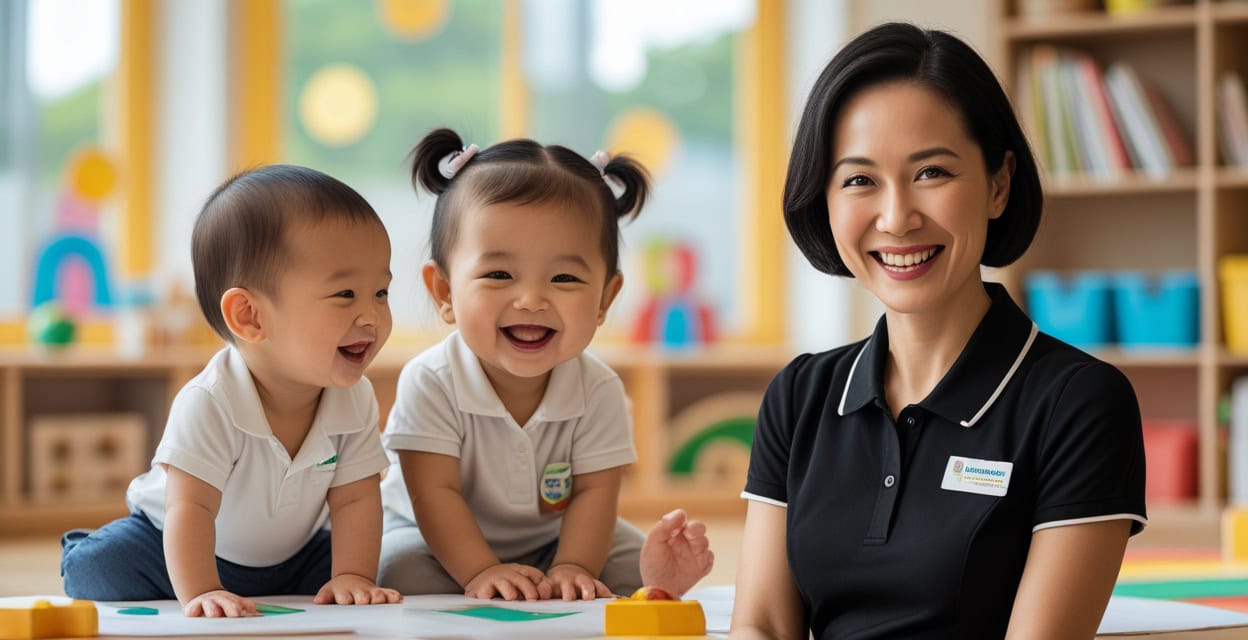
Closing: Why childminding matters—and why now
Who is this for?
- For infants who deserve safety, attunement, and delight.
- For parents who deserve trust, transparency, and support.
- For caregivers who deserve training, dignity, and progression.
- For employers who know family stability is strategic stability.
- For Singapore, which knows that tomorrow’s success is born in today’s quiet routines.
What is the promise?
- The highest standard of safety made visible, not performative.
- A pedagogy that treats care moments as learning moments.
- A 1:3 ratio that prioritises relationships.
- Access that is centre-based, home-based, and distance-supported.
- Affordability and inclusion through CDA/Baby Bonus.
When does it matter?
- In the first thousand days when the architecture of the brain is built fastest.
- Every weekday, 7am–7pm, when working families need steadiness most.
- At every transition—return to work, new foods, new sleep, first steps—when skilled guidance prevents stress and multiplies joy.
Where does it happen?
- In modern, child-centred centres.
- In carefully prepared home settings across neighbourhoods.
- In your home, with distance support and coaching when that best fits your family.
How do we deliver?
- With the Five Rings of Protection for safety.
- With a living curriculum grounded in Montessori, Piaget, Vygotsky, Bowlby, and Pikler—translated into gentle daily practice.
- With transparent technology, humane scheduling, and a workforce we train, mentor, and celebrate.
- With the accountability of the ECDA Childminding Pilot, the reach of a National Social Initiative, and a Maximum Employment Mandate that elevates the craft.
Conclusion: A nation’s strength measured in care
There are many metrics for national strength. We choose to measure it in the steadiness of a caregiver’s voice, the predictability of naps, the sparkle of shared discovery, the dignity of decent work, and the relief on a parent’s face at pickup. This is not sentimentalism; it is strategy. It is how a small country stays large in heart and future.
If this vision aligns with your family or your organisation, walk with us. Tour a centre. Visit a home setting. Speak to a caregiver. See the layouts. Glance at the live feed. Read the daily note. Feel the difference. Then ask your child—the most honest evaluator we have.
Your infant’s first community is here. Safe. Joyful. Attuned. Accessible. Professional. That is the EduNanny promise.
Thank you. Visit EduNanny.com or Childminding.EduNanny.com to begin.
Keywords for search optimization: infant care Singapore, childminding standards, EduNanny Five Rings, 1:3 infant ratio, ECDA Pilot
[#keyword1, #keyword2, #keyword3, #keyword4, #keyword5]