
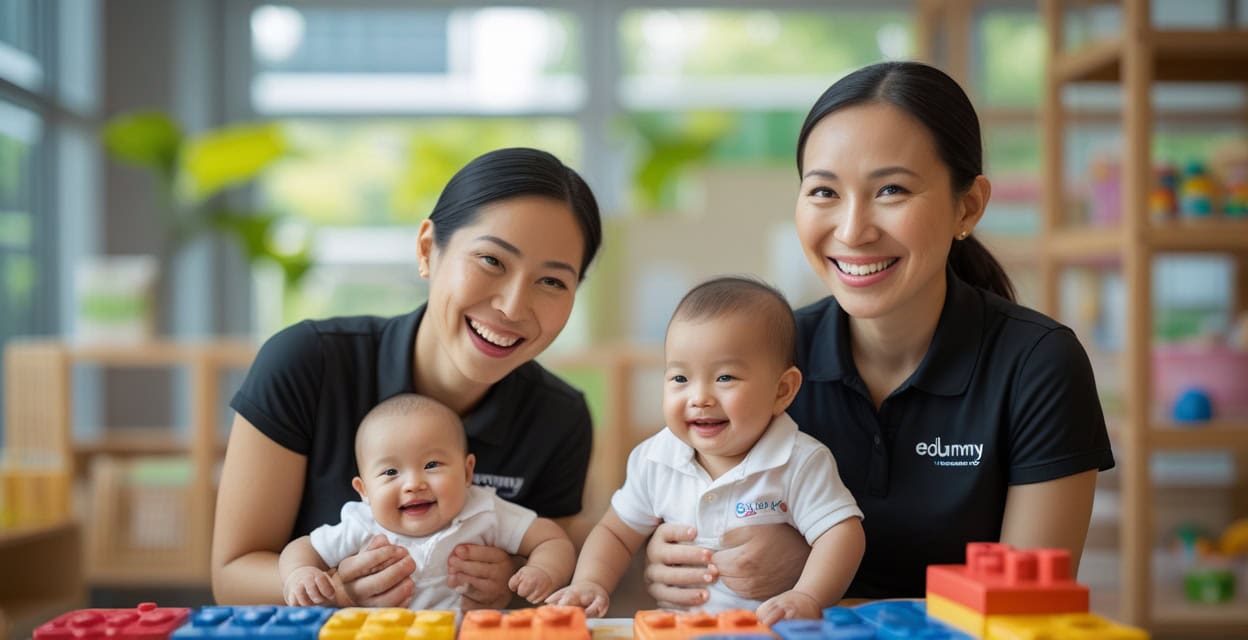
Cradling the First Thousand Days A Near Home Revolution in Safe Joyful Infant Care with EduNanny Singapore

Opening Vision: The First Thousand Days as the Overture
If the first thousand days are the overture of a life, then the way we hold an infant—how we respond, speak, play, and protect—becomes the music a child will carry into school, work, and citizenship. EduNanny Infant Childminding Service exists for that music. We are a national, near‑home, small‑group solution that treats care as curriculum, safety as dignity, and connection as the bedrock of development—delivered with the precision Singapore expects and the tenderness every baby deserves.
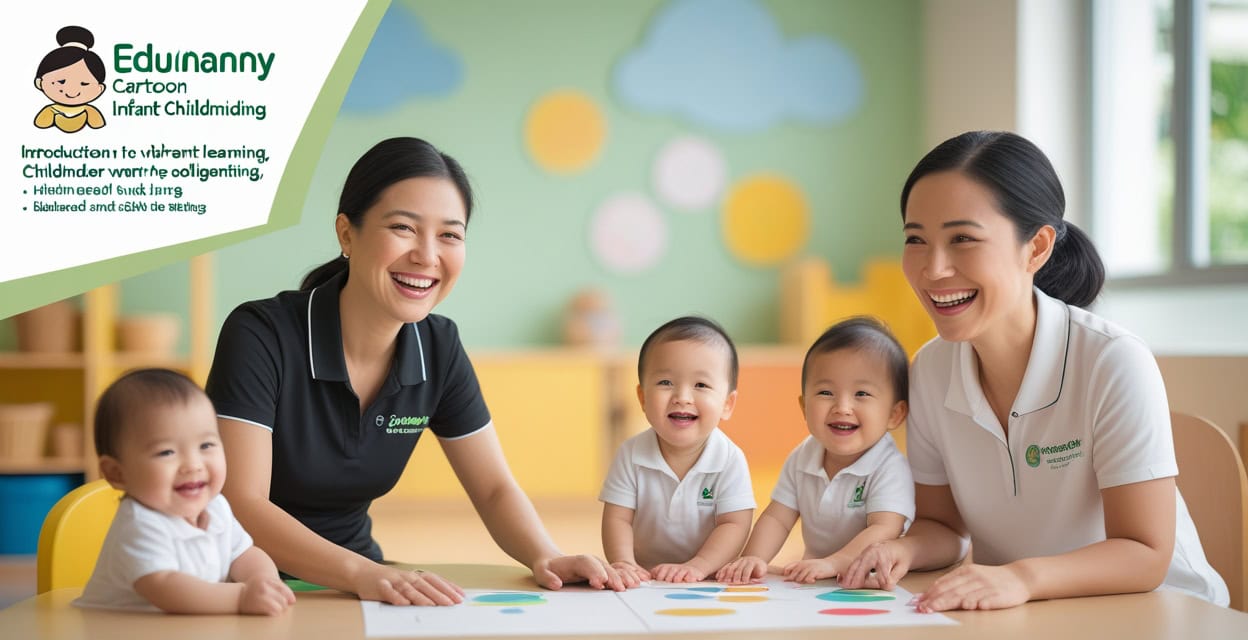
Introduction to EduNanny Infant Childminding
EduNanny by BUTLER has been appointed by the Early Childhood Development Agency (ECDA) to operate under Singapore’s Childminding Pilot for Infants from 1 December 2024 to 31 December 2027. Our service is designed for Singapore Citizen infants aged 2 to 18 months, offered islandwide in curated community sites and in approved childminders’ homes, Monday to Friday, 7am to 7pm.
Our promise is simple and exacting:
- Ultra‑low ratio, ultra‑low density care: 1 childminder to a maximum of 3 infants.
- Affordability by design: subsidised hours at $16.50 (half-day, 5 hours) or $33.00 (full-day, 10 hours) before GST, payable with CDA/Baby Bonus.
- Safety without compromise: certified, background‑checked childminders, CCTV provided at community sites and encouraged in home settings, modern layouts that prevent crowding and reduce risk, and a clear no sick child policy to protect all infants.
- Choice with convenience: centre‑based community spaces and home‑based options across neighborhoods—close enough to be part of your daily rhythm, structured enough to be an anchor.
- Transparency that builds trust: an EduNanny Concierge, parent communications that are timely and human, and innovation in CCTV and reporting that keeps you in the loop.

How EduNanny Makes Infantcare and Childminding Great in Singapore
We designed for the city we live in: working families who need reliable hours and real affordability; estates where short, safe commutes matter; and a multicultural society where childminding must honor both science and the soul of a family. We took the best of the world’s early childhood thinking—Montessori’s respect for independence, Bowlby’s secure attachment, Pikler’s gentle caregiving, Froebel’s play, Vygotsky’s scaffolding, Malaguzzi’s hundred languages—and scaled it down to pods of three, where relationships can breathe and infants can truly be seen. We refused the false choice between “care” and “learning.” Every feed, bath, nap, song, and crawl is a learning moment in a carefully prepared environment. That is our craft.
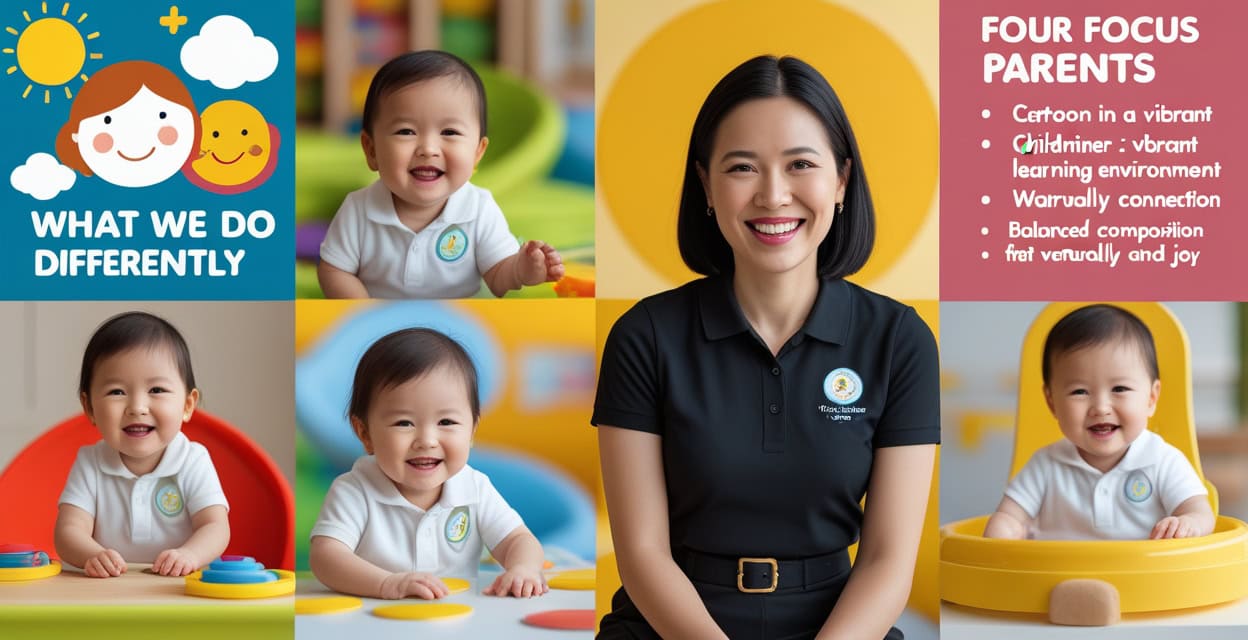
Four Focus Topics for Parents: What We Do Differently
1) An Attachment‑First Pedagogy in Micro‑Pods
Infants learn best in relationships. With a 1:3 ratio, each childminder can be genuinely responsive—reading cues, soothing promptly, and alternating between shared attention and independent exploration. We assign a primary caregiver within each pod to build predictability and trust; continuity becomes our curriculum. Grounded in Bowlby and Pikler, we slow down caregiving routines—nappy changes, feeds, transitions—so they become moments of dialogue and mutual respect. Montessori informs our design to enable independence, while Vygotsky reminds us to scaffold it. Expect low shelves with safe materials, a calm floor culture, and language woven into every routine. Your infant isn’t “kept busy.” Your infant is invited into the world.
Practical tips for parents:
- Ask about the pod’s primary caregiver assignment and how continuity is maintained during staff rotations.
- Inquire about daily routines—nappy changes, feeds, sleep—so you can mirror a familiar rhythm at home.
- During site visits, observe how caregivers initiate interactions, use gentle touch, and offer age‑appropriate materials at eye level.
2) Safety by Design, Not by Slogan
In infant care, safety is a system:
- People: Every EduNanny childminder is certified, trained in infant first aid and basic infant care, and background‑checked. For home‑based services, ECDA extends checks to household members with regular access. We uphold a strict no sick child policy to protect infants and staff. It is firm because it is kind.
- Places: Community sites feature modern layouts—clear sight lines, separated sleep zones, dedicated sanitisation stations, safe sleep furniture, and CCTV as standard. In home‑based settings, we encourage cameras in caregiving zones during care hours to balance privacy with transparency.
- Practices: Daily risk scans, safe sleep protocols (supine positioning, empty cots), food safety routines, and infection control are non‑negotiables. We document, audit, and improve. An incident response plan is in place and communicated to families, because trust is earned in quiet days and proven in difficult ones.
3) Development, Joy, and the Everyday Brain
The infant brain grows through micro‑moments of meaningful engagement. Our experiences are simple, sensory, and joyful:
- Movement: Plenty of floor time for rolling, reaching, and crawling; we avoid rushing to seat or containerize.
- Language: Constant warm narration, songs, and book sharing; bilingual exposure aligned to family preference; joint attention games for social language.
- Cognition: Schema‑rich play—filling, emptying, stacking, hiding—so infants test hypotheses the Piagetian way.
- Emotion: Co‑regulation rituals, gentle transitions, and responsive routines that support steady cortisol patterns and restorative naps.
- Community: Small pods foster early peer awareness and social turn‑taking; parents gain peace of mind at work.
4) The Purpose of Childminding: A Civic Promise, A Family Relief
Childminding is not a stopgap. It is a public good. As part of a national social initiative and ECDA’s three‑year pilot, EduNanny contributes to a broader ecosystem: more affordable, reliable infant care; dignified employment and training through a maximum employment mandate; and a network of near‑home options that strengthen neighborhoods. When families can choose high‑quality care close by, commutes shorten, stress falls, and evenings fill with presence rather than logistics. That is development for the whole family.
5) Radical Transparency, Real Partnership
Parents are not spectators; they are co‑authors. We invest in:
- Clear onboarding and care agreements.
- Daily updates on feeds, sleep, nappies, and highlights.
- Open channels via our EduNanny Concierge for scheduling and feedback.
- Respect for family preferences—feeding plans, sleep cues, cultural rhythms—within safe practice.
- CCTV at community sites and encouraged video solutions in home caregiving zones during care hours.
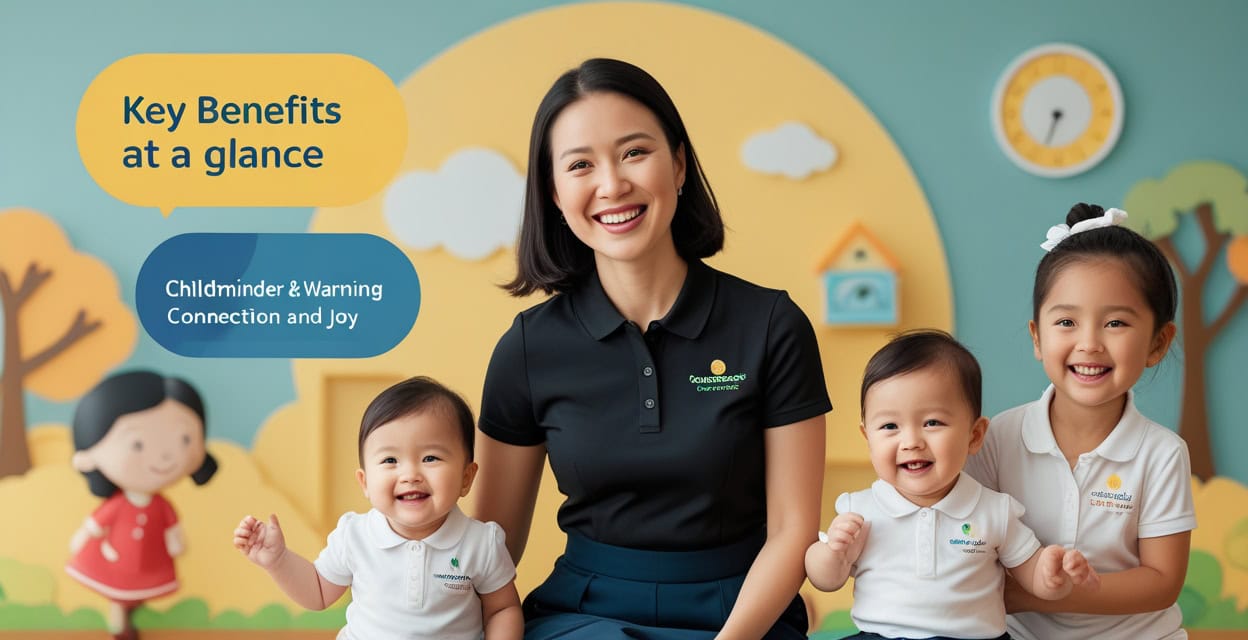
Key Benefits at a Glance
- Ultra low density, 1:3 infant ratio
- Centre‑based community sites and home‑based options, islandwide
- Monday–Friday, 7am–7pm; half‑day (5h) or full‑day (10h) blocks
- Affordability from $33/day (full‑day, before GST) during subsidised hours; $16.50 half‑day; CDA/Baby Bonus accepted
- Certified, background‑checked EduNanny childminders
- CCTV provided at community sites; encouraged in home caregiving zones
- No sick child policy to protect all infants
- Modern, calm layouts designed for safe sleep, clean care, and joyful play
- A national social initiative under the ECDA Childminding Pilot; EduNanny by BUTLER
- Convenience near home; excellence without compromise; quality you can feel

Who, What, When, Where, and How Childminding Matters
- Who: Singapore Citizen infants aged 2–18 months—and the families who love them.
- What: Small‑group infant childminding, 1 childminder to 1–3 infants, delivered in community or home settings by certified professionals, guided by an attachment‑first pedagogy and rigorous safety.
- When: Weekdays, 7am–7pm, in half‑day and full‑day blocks; the Pilot runs 1 December 2024 through 31 December 2027.
- Where: Islandwide, near your home—centre‑based community premises and approved childminders’ homes curated by EduNanny.
- How: With training, background checks, clear standards, modern environments, CCTV in community sites, encouraged monitoring in home caregiving zones, and family partnership baked into daily practice.
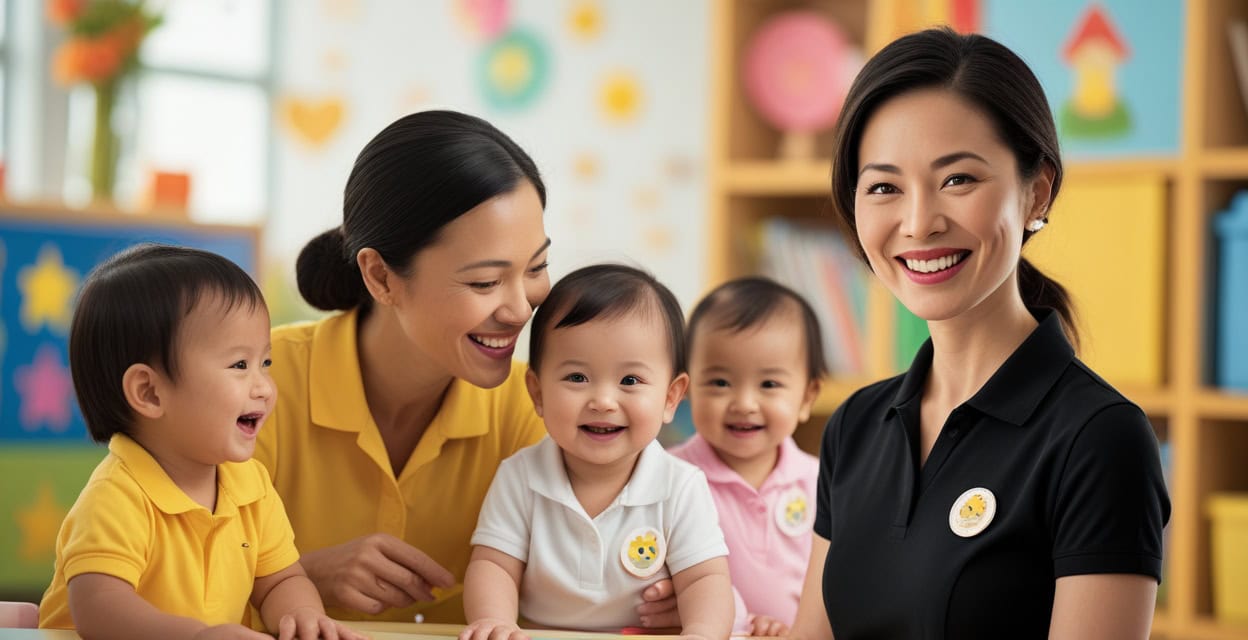
Our Philosophy and Purpose
EduNanny exists to turn ordinary routines into formative experiences. We believe:
- Safety is love made visible.
- Attachment is the engine of learning.
- Play is the child’s serious work.
- Transparency invites trust; trust frees parents to thrive at work and at home.
- A society that dignifies infant care dignifies its future.
For parents, our purpose is peace of mind that does not ask you to sacrifice quality or affordability. For infants, our purpose is steady wellness and joyful curiosity, day after day, in places they learn to trust and with people who truly see them.
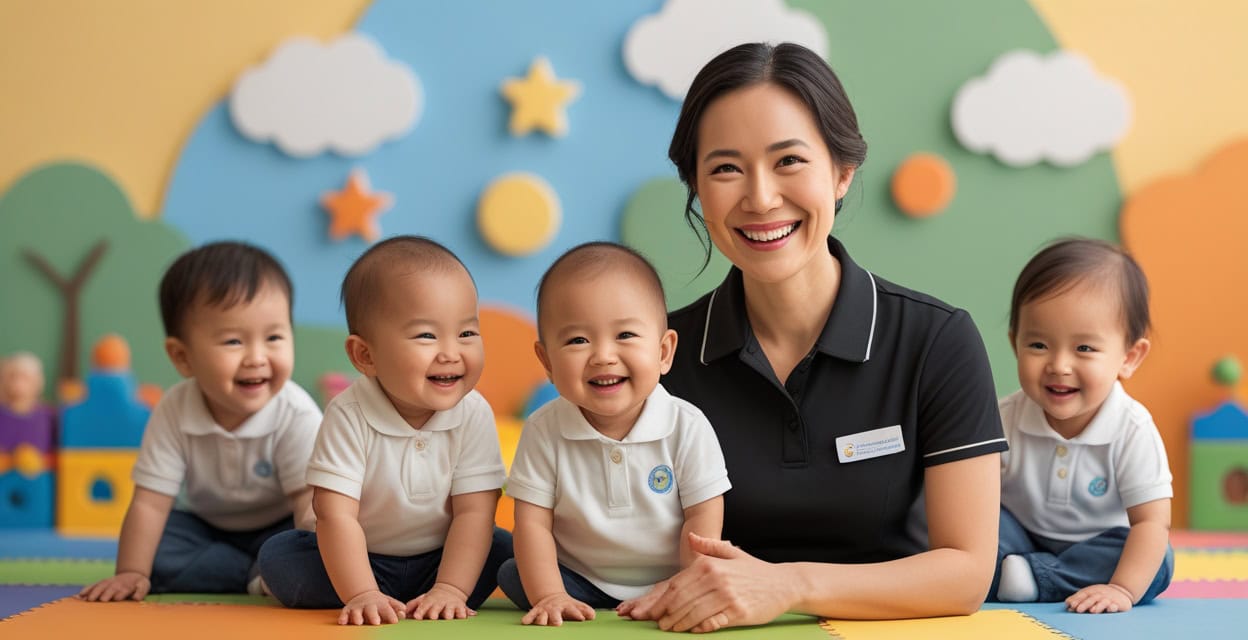
Enrollment: How to Get Started
Ready to begin? Here’s a practical, step‑by‑step pathway to enroll with EduNanny:
- Visit https://edunanny.com/edunanny-ecda-childminding-service/ or Childminding.EduNanny.com and fill out the enquiry form, or message us via WhatsApp.
- Receive a prompt response from our EduNanny Concierge Team.
- Confirm your appointment for a site visit—community space or prospective childminder’s home—so you can see, feel, and ask.
- Enrol, finalise your schedule (half‑day/full‑day blocks), and set up payment. CDA/Baby Bonus may be used for subsidised hours.
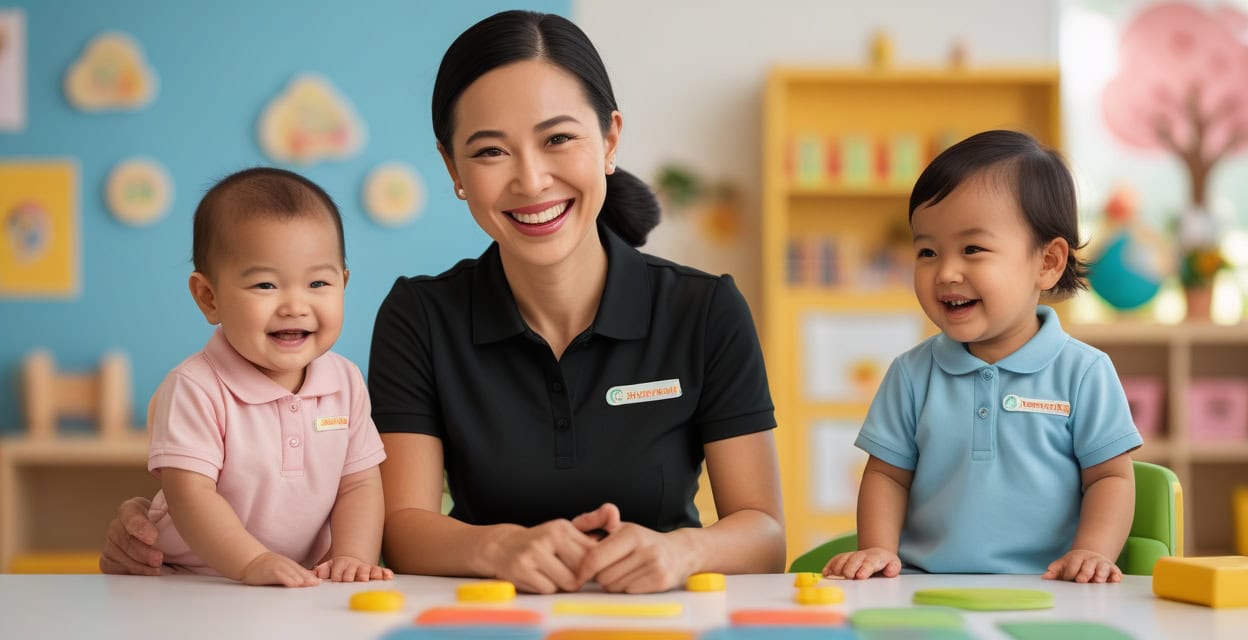
Practical Guidance for Parents: Making the Most of EduNanny
To maximise benefits, combine EduNanny routines with home practices:
- Share your family’s feeding and sleep cues with the EduNanny Concierge and the pod caregiver to ensure consistency across locations.
- Introduce a simple daily ritual you want mirrored—such as a goodbye cuddle ritual at drop‑off and a consistent bath routine before sleep—to reinforce attachment across settings.
- Prepare a bilingual or language preference sheet for caregivers to support language development in your child’s natural home environment.
- During site visits, bring a photo album or a favorite toy to help your infant build familiarity with the space and the caregiver.
- Review the no sick child policy and the incident‑response plan so you know how care is adapted during illness or public health events.
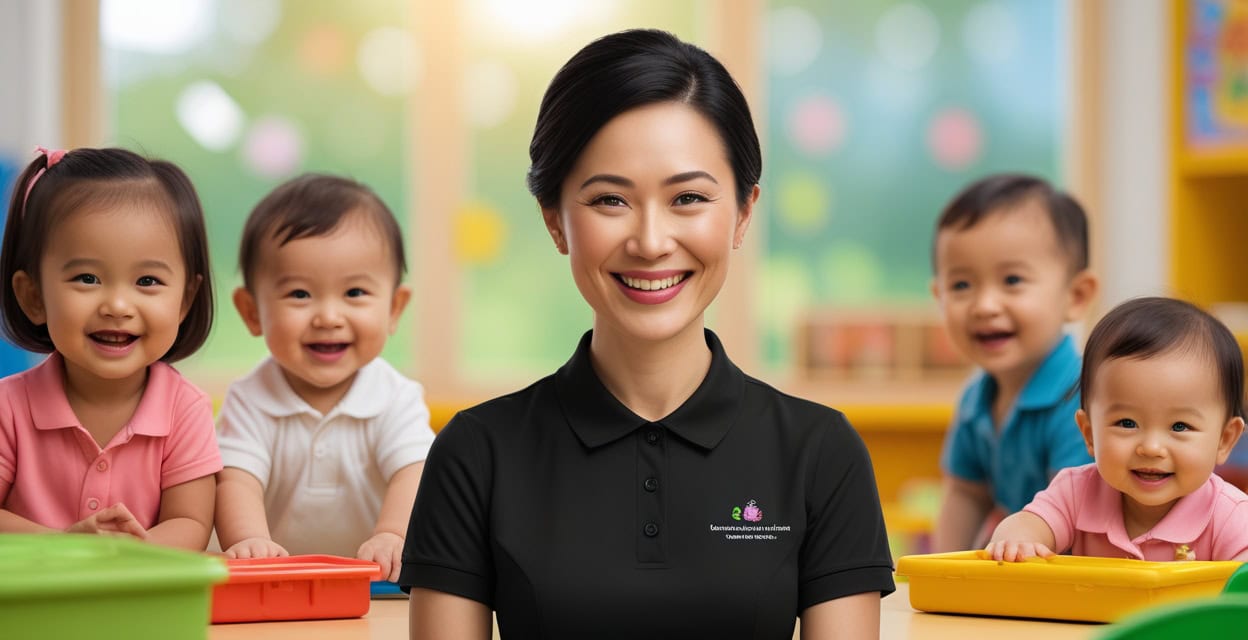
Conclusion
In a city built on precision and aspiration, the quiet work of holding a baby well is nation‑building in its purest form. Childminding matters because families matter; because early relationships wire resilience; because safe, joyful beginnings become confident childhoods and compassionate adulthood. EduNanny is proud to be part of Singapore’s public promise to its youngest citizens: to make the first thousand days not only safe and affordable, but beautifully human.
Come and see how a pod of three can change a day—and how a thousand good days can change a life. We look forward to welcoming your family to EduNanny.
Enrollment Reminders: For updates, visits, and capacity, contact our EduNanny Concierge or visit the official EduNanny site and social channels. We are here to support your family’s journey with empathy, evidence, and excellence.
SEO keywords: [#EduNannySingapore, #InfantCareSingapore, #EarlyChildhoodDevelopment, #ECDAChildminding, #SingaporeParents]