Why Your Child’s First Friends Are Their Most Important Teachers
There is a moment familiar to every parent who has placed their child in someone else’s care. You stand at the gate and watch them run toward a group of children already playing. You have spent the morning preparing them—packing their bag, reminding them to share, kissing their forehead before the handoff. And then you leave.
What happens in those hours, in the spaces between your direct supervision, is the first chapter of a story your child is writing without you.
Most parents evaluate a childcare setting by observing the environment, asking about the curriculum, watching how the caregiver responds when a child cries. They check the safety measures, the cleanliness, the food. These are not wrong things to notice. But there is something deeper, something quieter, that often goes unseen—and it may matter more than any of these.
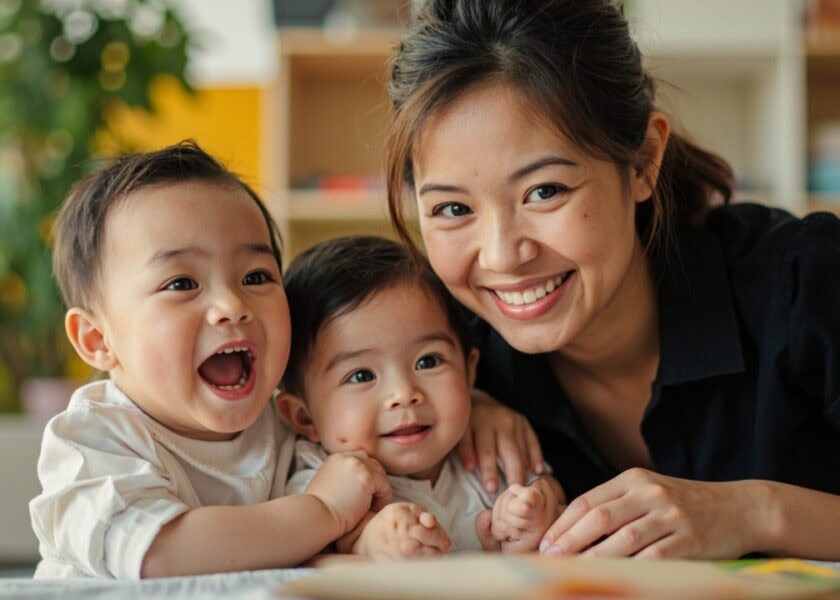
It is the world your child is building with other children. The friendships forming. The small alliances taking shape. The way your child learns to navigate the most complex environment they have ever encountered: a community of their peers.
Peer Relationships Are Not a Bonus—They Are the Foundation
We have a tendency, especially here in Singapore, to think about children’s development in terms of readiness. Readiness for school. Readiness for Primary One. We ask: Can they sit still? Can they follow instructions? Can they recognize letters, numbers, colours?
These are not trivial questions. But they are incomplete ones.
The child who arrives at Primary One with every academic skill but no understanding of how to make a friend, how to share a toy without an adult stepping in, how to read the emotional temperature of a room—that child is not ready. They may be prepared, but they are not ready.
Readiness for life is social before it is academic. It is relational before it is cognitive. And the first place where this becomes evident is not in a classroom. It is in the sandbox, on the mat during free play, in the way a two-year-old offers a cracker to a crying peer not because anyone told them to, but because they have begun to understand that other people have feelings—and that those feelings matter.
What Children Learn From Other Children
Every child enters the world as a social being. Long before they can speak in full sentences, they are watching faces, responding to voices, seeking connection. By the time they are ready for group care, they are already primed for relationship. They want to be near other children. They are fascinated by them—sometimes intimidated, sometimes delighted, always learning.
What they encounter in those early peer interactions becomes the template for every relationship that follows.
The child who learns, at age two or three, that other children can be trusted, that sharing leads to more fun, that conflicts can be resolved without violence or abandonment—that child carries those lessons into primary school, into secondary school, into marriage, into parenthood, into the workplace.
The opposite is equally true. The child who learns that peers are unpredictable, that sharing leads to loss, that adults only intervene when things get bad—that child also carries those lessons forward, wearing them like invisible glasses through every social encounter that follows.
This is not sentiment. Developmental science has documented these patterns across cultures and across decades. But what matters more than the research is what you already know in your heart: that the way your child experiences their first community will stay with them. It will become part of their story.
Why Siblings Are Not Peers
There is an important distinction worth pausing on. In a family, a child has siblings—but siblings are not peers. They are older or younger, and the dynamic is always coloured by birth order, by the parental relationship, by the history of the family.
In a peer group, children meet others who are neither above nor below them in the social hierarchy. They learn to navigate equality, to share space with someone who has equal claim to resources, equally strong desires, equally valid feelings. This is a fundamentally different lesson than anything a family can teach.
And it is a lesson that compounds. The child who learns, in a childcare community, that they can be friends with someone who is not like them—who comes from a different background, speaks a different language at home, has different preferences—that child is developing a capacity for relationship that will serve them in the most multicultural city on earth.
The Singapore Tension: Is There Time for Both?
Many parents in Singapore are navigating a tension that is particularly acute. You want your child to be happy, socially confident, to have friends. But you also feel the weight of a culture that prizes academic achievement. You hear from grandparents, from neighbours, from the school system itself, that the window for academic preparation is small and narrowing.
You enroll your child in music classes, enrichment programmes, Mandarin tuition—sometimes before they have fully mastered walking. And you wonder: is there time for play? Is there time for friendship? Is there time for the slow, unscripted work of becoming socially intelligent?
Here is the reframing that may help: social-emotional intelligence is not in competition with academic success. It is the foundation of it.
The child who can regulate their emotions, who can focus despite distractions, who can collaborate with peers and navigate social conflict—these children learn better. They retain more. They are more resilient when things get hard. They do not burn out as easily.
Belonging is not the opposite of achievement. Belonging is the precondition for it.
What Quality Peer Interaction Actually Looks Like
So what separates an environment where children are simply coexisting from one where they are truly learning from one another? Three markers are worth understanding.
1. Unhurried Time
The first marker is unhurried time—time when children are not being led from activity to activity, when they are allowed to simply be together.
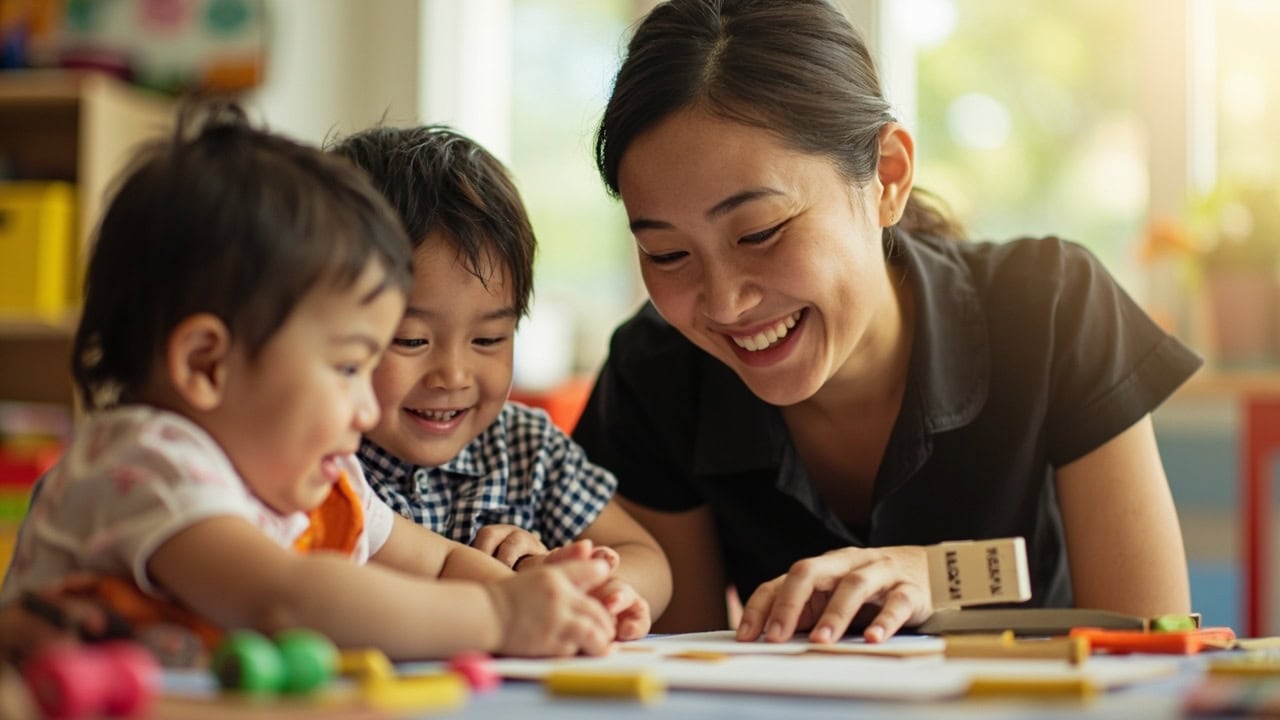
In those spaces of unstructured time, something extraordinary happens. A three-year-old offers a puzzle piece to another child who is struggling. A toddler notices that a peer is upset and brings a soft toy to offer comfort. These are not teachable moments in the traditional sense. They are not planned by educators. They emerge organically from the social environment—and they are only possible when that environment is structured to allow them.
2. The Right Ratios
The second marker is ratios, and this matters more than most parents realize when they are evaluating a childcare setting.
When there are too many children and too few caregivers, peer interactions become chaotic, sometimes overwhelming. Children do not learn cooperation from chaos. They learn vigilance, defensiveness, withdrawal.
In a smaller group, a child can learn another child’s name, anticipate their reactions, build a genuine relationship rather than simply tolerating presence. They are not just sharing space—they are learning what it means to belong to a community.
3. Facilitation Without Interference
The third marker is facilitation without interference. This is a delicate balance, and it is what distinguishes excellent care from adequate care.
Children need adults who are present and attentive, who create the conditions for positive peer interaction, who step in when aggression escalates, but who also know when to step back and let children negotiate their own small conflicts.
The child who is allowed to work out a toy dispute with minimal adult direction—guided but not controlled—develops skills that no amount of adult instruction can teach. They learn negotiation. They learn perspective-taking. They learn that they have agency in social situations, that their voice matters, that the world is not something that simply happens to them.
Questions to Ask Before You Choose
When you visit any childcare setting—ours or otherwise—do not just ask about the curriculum. Ask about the social environment. These questions will reveal more than any tour of colourful classrooms or explanation of enrichment programmes.
- How do the children interact when no structured activity is underway?
- What happens when there is a conflict between two children?
- How does the caregiver support peer friendships?
- What is my child learning about other people, about cooperation, about belonging, during the hours they are here?
- What is the child-to-caregiver ratio, and how does that shape the kind of peer interactions that are possible?
These are not questions that every setting will be prepared to answer well. That itself is information. The hidden curriculum—the one that does not appear on any report card, but which shows up in how your child navigates the world—is worth investigating with the same seriousness you would bring to safety or curriculum.
Why the EduNanny Singapore Model Was Built Around Connection
At EduNanny Singapore, seeing peer relationships as the foundation rather than a bonus is not just a philosophical position. It is a practical commitment that shapes how we operate every day.
We are part of the ECDA Childminding Pilot, a programme that recognizes what small-group, home-based care can offer children that larger centre-based settings sometimes cannot. In our home-based model, children experience the intimacy and consistency of a small community. They build real relationships—not just with caregivers, but with the other children in their care group.
The ratios we maintain mean that every child is seen, known, and given space to grow at their own pace. This is not an accident. It is a structural choice—because we believe that the social environment your child inhabits during those early years is not a backdrop to their development. It is the environment in which their sense of self, their understanding of others, and their capacity for connection are being quietly, powerfully shaped.
What You Can Expect as a Parent
We know that trust is not built on philosophy alone. It is built on transparency.
Where deployed, our settings include communication measures that keep parents informed about their child’s day—not just that they were safe, but how they played, who they played with, what small moments of growth occurred. Some of our settings include CCTV measures, not because we doubt our caregivers, but because we believe that parents deserve to feel confident in the environment they are entrusting with their most precious responsibility.
For families navigating the practical realities of childcare in Singapore, we also want to be transparent about what we offer. Our care operates Monday through Friday, in structured blocks that give families the consistency they need. We are part of the Baby Bonus ecosystem, which means CDA and Baby Bonus funds can be utilized—because we believe quality care should not only be available to families with unlimited resources.
Common Questions Worth Addressing Directly
Will my child be safe? This is always the first question, and it should be. Quality care holds safety and social development as equally foundational. You should expect clear safety protocols, consistent caregiver presence, and open communication about how your child’s day unfolds.
Will my child make real friends, or just be around other children? These are not the same thing. A child can spend years in a large centre and never develop a genuine peer relationship. What makes the difference is scale, time, and the quality of adult facilitation. Small groups, consistent attendance, and unhurried time together create the conditions for real friendship to emerge.
Is this the right choice for my family? No single model is right for every family. What is worth considering carefully is what you are really choosing when you choose a childcare setting. You are choosing the first community your child will belong to outside of your family. You are choosing the social template they will carry into every relationship that follows. You are choosing, in a very real sense, the first chapter of their social biography.
The Weight of This Decision
Choosing a childcare setting is, at its surface, a logistical decision. It is about hours and proximity and cost and convenience. But underneath these practical considerations is something much larger.
A child can be safe, can be taught, can be well-supervised, and still not be thriving. Thriving requires relationship. It requires peers who challenge and delight them. It requires the experience of being part of something, of belonging not just physically but emotionally, of mattering to someone who is not an adult, who has no obligation to them, who chooses them anyway.
At EduNanny Singapore, we are building not just a childcare service, but a community. A place where children learn that they are not alone, that other children are not threats but companions, that the world is large enough for many voices and small enough for real connection.
The children who come through our doors will carry what they learn here for the rest of their lives. Some of them will become the kind of adults who make friends easily, who navigate conflict with grace, who feel a genuine sense of belonging wherever they go. Some of them will be the ones others turn to in times of trouble, because they learned early that showing up for other people matters. Some of them will lead teams, build families, contribute to communities—all because they learned, in a small group setting with a handful of peers, that other people are worth knowing and that they themselves are worth knowing too.
This is what we are really offering. Not supervision. Not enrichment. Not even education, in the narrowest sense. We are offering your child their first community—and the beginning of everything that grows from belonging to one.
If you are exploring childcare options in Singapore and want to understand how we think about your child’s social world, we would welcome that conversation.