Why Singapore’s Most Confident Learners Started With Play
What School Readiness Actually Means
Let us talk about what school readiness really means. Not the version that sells workbooks and promises acceleration, but the version that Primary One teachers quietly wish for—the child who arrives in August with something that no worksheet can teach.
A school-ready child is not necessarily a child who can write their name or recognise twenty words. A school-ready child is a child who can walk into an unfamiliar room and not fall apart. They can sit with discomfort. They can ask for help when they do not understand. They can take turns, share, and negotiate with other children without an adult mediating every exchange. A school-ready child is curious—genuinely, stubbornly curious—about what the teacher is saying and why the world works the way it does.
These are not soft skills. These are not optional extras. These are the infrastructure of learning. Without emotional regulation, a child cannot access what the teacher is offering. Without social confidence, a child spends their school days managing anxiety instead of managing ideas. Without curiosity, a child who has been drilled through worksheets will perform for a while and then stop. The children who thrive through Primary school and beyond are the ones who wanted to be there.
The Internal Architecture of Learning
Here is what quality developmental care actually does, because I know it can look, from the outside, like children are just playing. And yes, they are playing. But play is the work of early childhood, and it is extraordinary work.
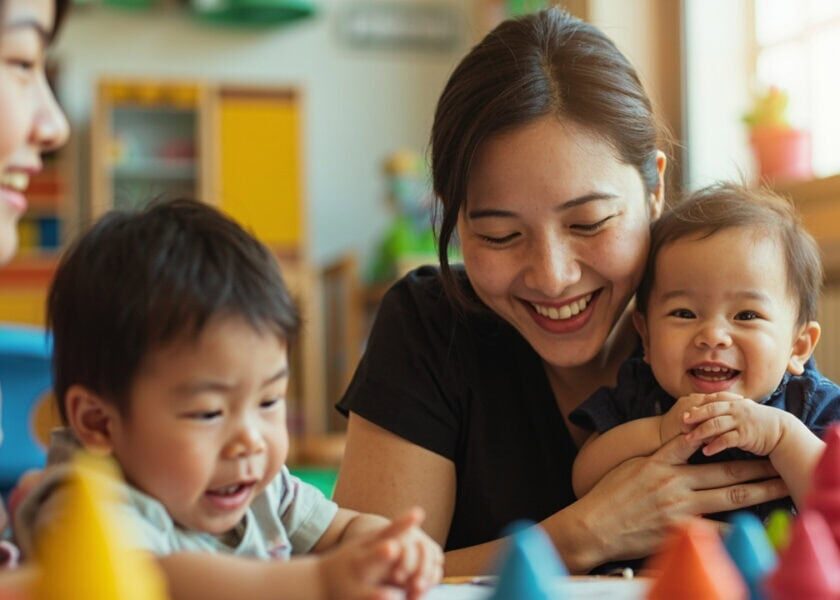
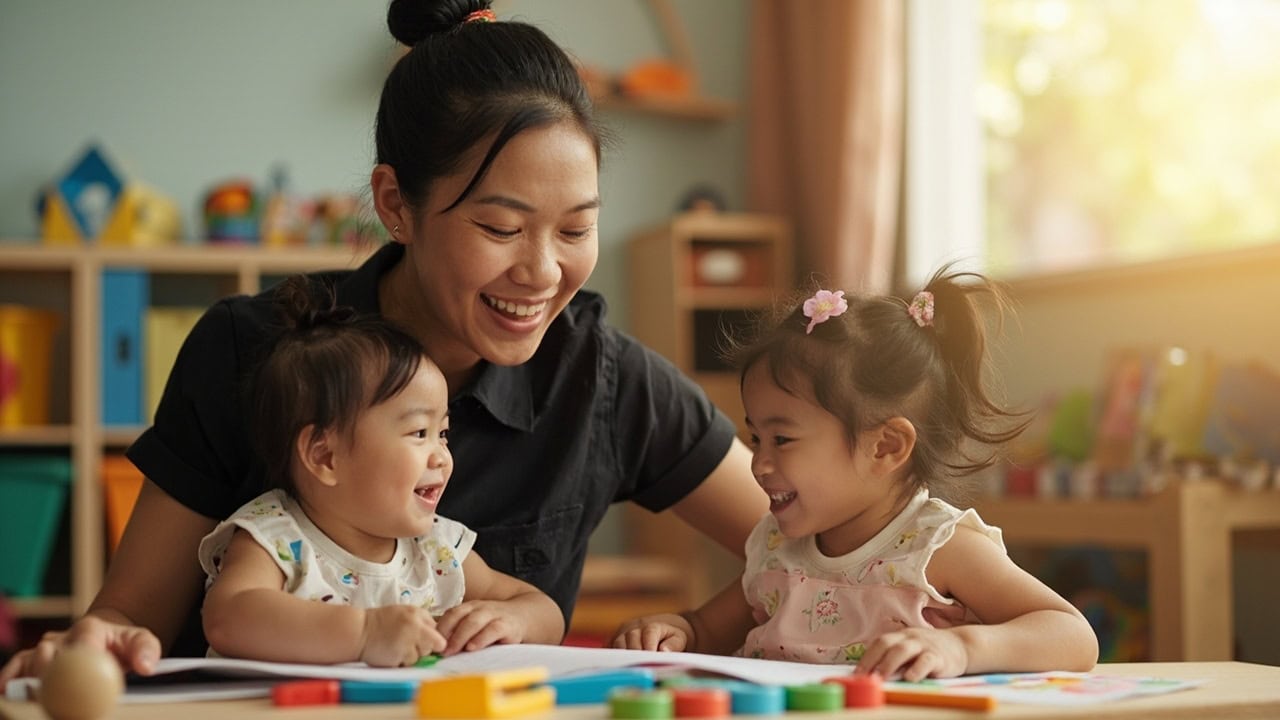
When a toddler builds a tower and watches it fall and builds it again, they are learning persistence. When a small group of children negotiate who gets the red block, they are learning the most complex social skills humans possess—the ability to communicate, to compromise, to read another person’s emotions, to solve problems together. When a child is asked a question and has time to think, to wonder, to answer incorrectly and try again, they are building the neural pathways that will eventually support independent thinking in a classroom.
A child in a warm, responsive childcare environment is not missing academic input. They are building the foundation without which academic input cannot land.
- Imagine trying to teach a child who is too anxious to listen.
- Imagine trying to challenge a child who has learned that mistakes are dangerous.
- Imagine trying to develop a love of learning in a child who has been made to feel that learning is something that happens under pressure, under performance, under fear.
This is what happens when we mistake school preparation for school readiness. We gain a few months of performance and lose years of genuine capacity.
Why Singapore Parents Face Unfair Pressure
Singapore parents face a particular kind of pressure that deserves to be named honestly. The PSLE hangs in the distance. The streaming conversations begin early. The academic track record of schools shapes choices that feel, to many parents, like permanent determinations of their child’s future.
I am not going to tell you that this pressure does not exist or that it does not matter. It does. But I am going to tell you something important: the children who navigate this system most successfully are not the children who started Primary One with the most preparation. They are the children who arrived with the most stability.
A child who is emotionally secure, who trusts that the adults in their life are reliable and kind, who believes that learning is something wonderful rather than something punishing—that child will learn. They will learn at their own pace. They may not be the fastest in the room in September, but by March they will be among the most engaged, the most resilient, the most genuinely capable.
The system tells you that readiness means results. The market tells you that readiness means starting earlier. And what it never tells you is this: the most school-ready children in Singapore are often the ones who played the most, who were held securely enough to explore the world without fear, who developed the internal architecture of a confident learner before they ever sat at a desk.
What Quality Childminding Actually Looks Like
When you choose quality developmental care over accelerated preparation, you are not choosing the easier path. I want to be honest about that. It takes more confidence to trust the process than to follow the checklist. It takes more faith to believe that your child’s joy and curiosity are preparing them for something real than to be reassured by the appearance of academic work.
Here is the truth that the acceleration industry does not want you to understand: you cannot rush the development of a human being. You can only create conditions that support it. And the conditions that support it are not workbooks. They are:
- Safety—physical and emotional
- Warmth—a consistent presence that responds to your child’s needs
- Responsiveness—not just supervision, but attunement
- Time to explore—freedom within boundaries
- Time to fail—and recover
- Mastery at their own pace—not someone else’s schedule
These are the conditions under which a child builds the genuine readiness that Primary One teachers value most. A caregiver who notices when a toddler is frustrated before that frustration becomes a meltdown. Who responds to a baby’s first communication attempts with warmth that tells them their voice matters. Who creates the consistency that makes a child feel safe enough to explore.
The EduNanny Difference
EduNanny by BUTLER operates within the ECDA Childminding Pilot, and this matters for a reason that goes beyond policy. The pilot reflects a government commitment to recognising that infant and early childcare is not a luxury service or a parental convenience. It is developmental infrastructure. And the structure of EduNanny’s approach reflects this understanding.
When you choose care through EduNanny, you are not simply finding someone to watch your child. You are accessing an environment designed around ratios that allow for genuine attention—one to three, at most, in the infant years. This is the ratio that makes it possible for a caregiver to actually see your child.
EduNanny offers pathways that suit the reality of Singapore family life:
- Home-based care—keeps your child in a familiar environment with dedicated, individualised attention
- Community and centre-based options—where children benefit from peer interaction, broader social experiences, and enrichment from a carefully designed early learning environment
The point is not that one structure is right for everyone. The point is that EduNanny is designed around what your family actually needs.
And the practical details matter too, because they reduce the stress that Singapore parents carry unnecessarily:
- Pilot fee structures designed to be affordable
- CDA and Baby Bonus funds are usable
- Care available Monday to Friday, in blocks that work with the rhythm of real working lives
When parents are constantly calculating whether they can afford the care that is best for their child, something is wrong with the system. EduNanny is part of correcting that.
You will hear, if you work with EduNanny, about communication and transparency. Some deployments include CCTV access. This is not because EduNanny does not trust its caregivers. It is because Singapore parents should not be expected to trust blindly. You should be able to see what your child’s day looks like. You should receive updates that are meaningful, not just pleasant. You should be able to ask questions and receive honest answers. This is what partnership means in practice—not a contractual relationship where you hand over your child and hope for the best, but a working alliance where your peace of mind is considered part of the service.
There is something else that EduNanny offers, and it reflects a genuine understanding of the modern parent: the Thomas AI Chatbot. Parenting in Singapore is relentless. You are navigating systems, researching options, worrying about decisions in the middle of the night when your mind will not quiet. Thomas is there—not as a replacement for human guidance, but as a resource that makes information accessible when you need it, that answers questions without judgment, that helps you think through decisions rather than just providing answers. It is the kind of innovation that actually serves parents rather than creating dependency.
Addressing Your Real Concerns
If you are researching infant care or childminding in Singapore, you likely have specific worries. Here are the most common ones, addressed directly.
“Will my child fall behind if they are not doing academic work?”
The children who struggle in Primary One are rarely the ones who lacked worksheets. They are the ones who lacked emotional regulation, social confidence, and genuine curiosity. These are the things that actually transfer to a classroom setting. Everything else can be taught. The internal motivation to learn cannot be drilled into a child—it must be grown.
“But the PSLE is real. The pressure is real.”
Yes. And the children who navigate that pressure most successfully are not the ones who were pushed earliest. They are the ones who developed resilience and intrinsic motivation before external pressure arrived. A child who believes learning is wonderful will find a way to learn. A child who associates learning with anxiety will find ways to avoid it—especially when the stakes get higher.
“How do I know if a caregiver or centre is actually quality?”
Look for evidence of responsiveness, not just activity. Ask yourself: Does the environment feel warm? Do the caregivers seem attentive? Is there time for child-led play, or is every moment scheduled and directed? Are children’s emotions acknowledged and named, or just managed? These are the markers of genuine developmental care.
“What if I cannot afford the ‘best’ option?”
The “best” option is not always the most expensive one. The ECDA Childminding Pilot exists precisely because Singapore recognises that developmental care should not be a privilege. Affordable, quality care is available—and it may be more aligned with what your child actually needs than an expensive programme built around visible academic output.
Your Child Is Building Something That Lasts
Let me come back to you, standing at that gate.
What you are choosing, when you choose quality developmental care over accelerated preparation, is something profound. You are building something that will last.
The child who enters Primary One with emotional regulation, with genuine curiosity, with social confidence and the belief that learning is wonderful—that child does not lose those things. They carry them forward. They ask questions in class. They raise their hand when they do not understand. They form friendships that support them. They recover from setbacks because they have learned, in their earliest years, that falling down is not the end of anything. They stay curious longer—which means they keep learning longer—which means the long-term outcomes are not even comparable.
The children who are pushed too early, who learn that school is performance and learning is pressure, who associate education with anxiety—they may do well for a while. But the fire goes out. Somewhere around Secondary school, or A-levels, or university, the external motivation stops working and there is nothing inside that keeps them going.
The children who were allowed to develop internally—who were loved into confidence and played into capability—those are the ones who sustain a lifetime of learning.
You are not risking your child’s future by choosing warmth over worksheets. You are building it. You are building it slowly, carefully, brick by brick, in the conversations and the cuddles and the moments your child spends with a caregiver who sees them as a whole person. You are building it in every time they are comforted instead of shushed, challenged without being overwhelmed, allowed to be exactly the age they are.
EduNanny is part of that building. It is designed to be part of that building. The caregivers who work within the EduNanny framework are not babysitters filling time. They are early childhood professionals who understand what they are actually doing when they sit on the floor with a toddler and follow their lead, when they name a baby’s emotions instead of ignoring them, when they create a day that balances security with stimulation. This is not accidental. This is the work.
Ready for What Comes Next
So when you stand at the gate, and the doubt comes, I want you to remember this: the very fact that you are wondering whether play is enough is evidence that you understand what your child needs.
The parents who never question whether they are doing enough are often the ones following the crowd without understanding why. You are paying attention. You are asking the right questions.
And the answer to those questions is not in a workbook.
The answer is in the way your child looks at the world. The answer is in their laughter, their questions, their confidence, their capacity to be surprised and delighted and challenged without breaking. The answer is in the child you are raising—not the child you are preparing for a test, but the person you are equipping for a life.
That is what EduNanny is here for. That is why childminding matters in Singapore—not as a service for parents who cannot manage, but as a choice for parents who understand that the earliest years are not a waiting room before the real education begins. They are the education. They are the foundation. And they are, without exaggeration, everything.
Your child is ready. More ready than you know. And so, I think, are you.
If you are considering your options for infant care or childminding in Singapore, EduNanny by BUTLER offers a pathway built on what children actually need to thrive—not just in Primary One, but for everything that follows. Explore EduNanny’s approach to developmental care or connect with their team to find the arrangement that works best for your family.
Learn more about EduNanny’s story and values or discover how their ECDA Childminding Pilot is shaping quality childcare in Singapore.