Why Singapore Parents Should Think Early About Childcare
Why the Early Years Shape Everything
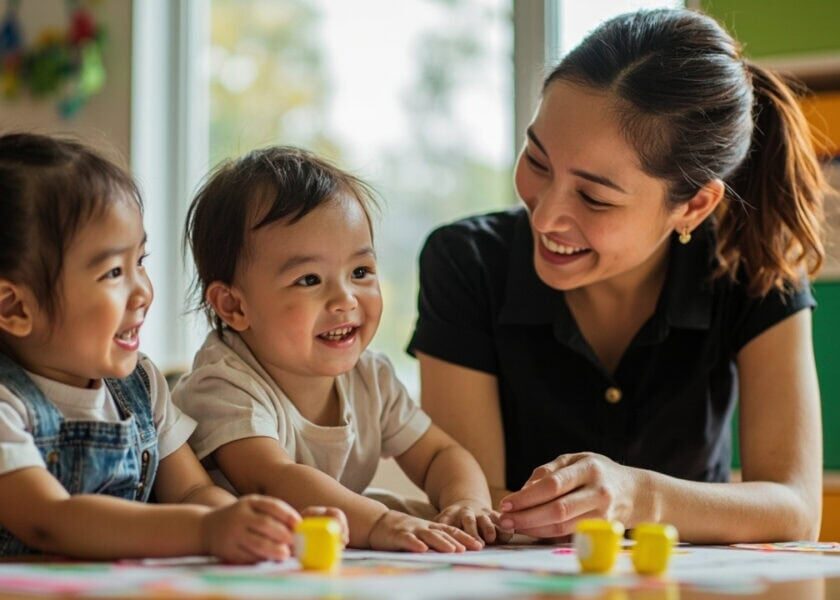
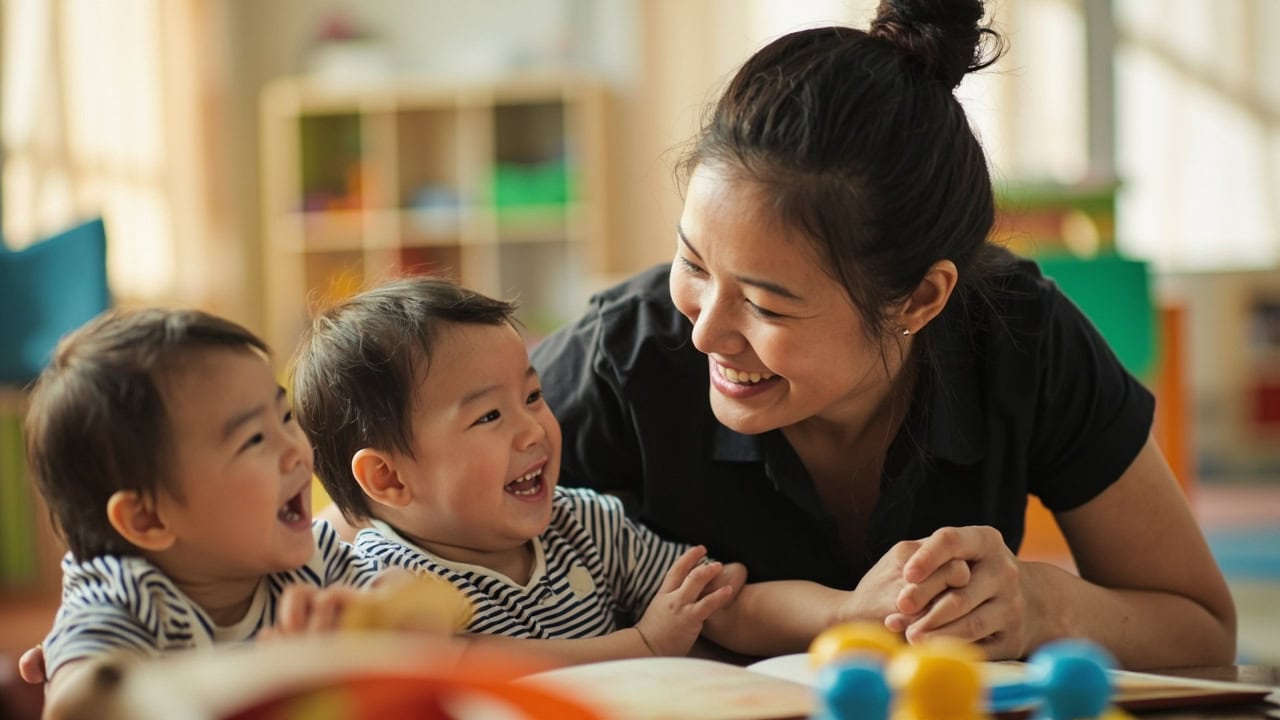
There is a moment, unremarkable by most measures, that happens every morning in homes across Singapore. A child waves goodbye at the door—not with anxiety, but with a small, confident nod, as if to say, “I’ll be fine, and I know where I’ll be.” Their caregiver catches this gesture, responds to it, and turns the child’s attention toward the day ahead.
In that exchange, something passes between them that takes perhaps two seconds. But what happens inside that child in those two seconds—the sense of being understood, the reassurance that leaving is not abandonment—will not stay contained to this morning. It will echo.
For Singapore parents, this moment represents something larger than it appears. It is the visible tip of an invisible process—the slow, steady building of a child’s inner architecture. And it is the source of a tension that every parent in this city knows intimately: the need for reliable childcare now, and the deeper, quieter anxiety about whether this choice will shape who your child becomes at five, at ten, at the start of their adult life.
This article is about that tension. Not to deepen it, but to resolve it—to show you how the daily, ordinary moments of quality childcare compound into capacities that last a lifetime, and what that means for the decision you are making right now.
What Research Tells Us About Early Childhood Care
- The early years are not a waiting room before development—they are development itself. Neural pathways governing stress management, attention, relationship-building, and language are laid down in these years.
- Quality childcare does not replace parental care; it complements and extends it, giving children richer experiences than any single caregiver could provide alone.
- School readiness is built through emotional security and social competence, not academic drilling. A child who feels safe learns better.
- The effects of quality care are longitudinal—they show up not just today, but in five years, in ten years, in the kind of person your child is becoming.
- What you can observe in your child—curiosity, emotional vocabulary, the ability to persist and recover—offers real evidence that deep development is happening.
The Blind Spot in Singapore’s Planning Culture
We live in a city that plans. Singaporeans are, by nature and by culture, forward-thinking people. We plan for retirement, for our children’s secondary school, for the renovation timeline of a home we may not move into for two years. We are good at seeing what is coming and preparing for it.
And yet, when it comes to our children’s earliest years, there is a strange blind spot—a tendency to treat those first five years as a holding period, a waiting room before the “real” development begins.
Here is what research, accumulated across decades and continents, tells us with growing clarity: the experiences a child has in the first years of life are not simply precursors to development. They are development. The neural pathways that will govern your child’s ability to manage stress, to focus attention, to form relationships, to learn language with joy rather than effort—these are being laid down right now, in these ordinary days, in these seemingly unremarkable moments of play, response, and connection.
This is not a comfortable truth, because it raises the stakes of parenting in a way that can feel overwhelming. But it is also an empowering truth—because it means that what you do today matters in ways you may not yet see, and that every day of quality care is not just solving a logistical problem for today but is quietly, steadily building something inside your child that will be with them for years.
How Your Child’s Brain Is Being Built
The brain is not simply growing larger during these years; it is being sculpted. Every experience—every moment of being comforted when distressed, every time a caregiver narrates what a child is looking at and doing, every instance of a child being helped to navigate a conflict with another child—these experiences are not just passing through. They are leaving their mark.
Neuroscientists use the metaphor of construction: the early years are when the scaffolding is built, when the foundations are laid, when the circuits that will run everything from emotional regulation to problem-solving are first established. What is built on those foundations can flourish. What is built without them can struggle—not because the child lacks intelligence or potential, but because the supports were not there at the right time.
A child who learns, in these early years, that the world is generally safe, that people respond when they reach out, that their needs will be met—this child carries that template forward. Not as a rigid rule, but as a starting point, a default orientation that colours every new relationship and new experience.
It is important to say clearly: this is not determinism. It is probability. Most parents are doing the best they can with what they have, and children are remarkably resilient. What research describes is not inevitability but likelihood—the understanding that certain kinds of experiences, repeated over time, make certain outcomes more likely. And that if we have the chance to tilt the odds in our children’s favour, it is worth understanding how to do so well.
What This Looks Like in Singapore
For Singapore parents, this research arrives in a specific context. You are navigating a world where academic achievement is not just valued but treated as essential, where the race begins early and the pressure is real. You may feel, as many parents do, caught between wanting your child to be prepared for this world and wanting them to be happy, curious, and secure.
Here is what is worth understanding: the skills that will serve your child best in Singapore’s schools and in Singapore’s life are not skills that can be drilled into them at age four. They are skills that develop slowly, through thousands of small experiences of being challenged and supported, of learning to persist and knowing when to ask for help, of being part of a group and finding their place within it.
A child who has spent their infant and toddler years in an environment where their communications are responded to, where their curiosity is encouraged, where they have had consistent, attuned caregivers who help them understand and regulate their emotions—that child is not just emotionally prepared for school. That child is cognitively prepared, because emotional regulation and cognitive function are not separate systems in the brain; they are deeply intertwined.
A child who is anxious, who is dysregulated, cannot learn well. A child who feels secure can direct their full attention toward exploration and discovery. This is the foundation that quality childcare provides: not just care, but the conditions under which learning becomes possible.
The Longitudinal Story: How Development Unfolds
The story of quality childcare is not one story—it is many stories, unfolding across developmental stages. Understanding how your child’s needs and experiences evolve can help you see why consistency and quality matter so deeply.
In Infancy: Building the Foundation
In the first year, the work is fundamental. It is about trust, yes, but it is also about the building blocks of everything that comes next. A baby who experiences consistent, responsive caregiving is building the neurological infrastructure for attention, for communication, for the sense that their efforts to connect with the world will be rewarded.
This is why caregiver-to-infant ratios matter. When ratios are kept low—allowing for individual moments of response, eye contact, being held and comforted—those interactions become the raw material of development. They are not luxuries. They are the foundation.
In the Toddler Years: Learning to Be Social
As your child moves into the toddler years, the developmental picture shifts. This is when peer interaction begins to matter in new ways. A toddler in quality childcare is not just playing next to other children; they are beginning to learn complex social skills that no amount of adult instruction can teach: how to read another’s intent, how to negotiate, how to manage the frustration of not getting what you want, how to delight in another’s success.
These skills are built in the friction of real social life, but they need scaffolding. They need caregivers who are present, who intervene with wisdom and restraint, who help children name what they are feeling and guide them toward solutions rather than simply solving problems for them.
Toward School Readiness: The Accumulation
By the time your child is approaching school age, something remarkable happens when all of these experiences have accumulated: the child becomes ready—not in the narrow sense of knowing letters and numbers, but in the deeper sense. They are ready to learn because they are curious. They are ready to be part of a classroom because they understand the basics of social negotiation. They are ready to try difficult things because they have been supported in trying difficult things before, and they know what it feels like to succeed after effort.
They are ready, in short, because they have been ready all along—built up day by day in the thousand ordinary moments that you may not have thought to notice.
Signs of Quality Childcare
You might be wondering: how do I know if the childcare I choose is actually building this long-term foundation, rather than just keeping my child safe and occupied?
The effects of early care are not always visible in the short term. You will not see the neural pathways forming. You will not always see the social competencies developing in real time. But there are signs—observable, tangible signs—that indicate whether your child is in an environment that is supporting their development in meaningful ways.
What You Can Watch For
- Your child’s relationship with challenge: Does your toddler approach new situations with curiosity, or with fear?
- Emotional vocabulary: Does your preschooler have a growing language for their emotions—not just “I’m sad” but “I’m frustrated because I wanted to do it myself”?
- Engagement with their day: Does your child talk about their day with interest, mentioning friends, activities, a caregiver’s name with warmth?
- Social recovery: Does your child seem, increasingly, to be able to wait, to share, to recover from disappointment?
These are not magic. They are the visible surface of deep development, and they are the evidence that the invisible work is happening. Quality childcare leaves traces. It leaves children who are curious, capable, and connected—and these are qualities you can observe, in small ways and large, as your child grows.
Partnership With Families
Quality childcare also means keeping you connected to what is happening in your child’s day. Regular updates, transparent processes, and open communication matter—not just for your peace of mind, though that matters enormously. They matter because when you know what your child did today, you can extend the learning, reinforce the language, continue the narrative of their development in your own home.
The childcare environment and the family environment become complementary rather than separate, and this continuity is itself a powerful developmental force.
Choosing With Confidence
You are choosing how to entrust the care of your most precious responsibility to someone else, for some portion of the day, during the very years when your child’s brain is being built, when their sense of the world and their place in it is being formed. This is not a small thing. It is one of the most consequential decisions you will make as a parent.
And yet, it is also an opportunity—an opportunity to give your child more than you could give them alone. More social experience, more varied interactions, more challenges and supports, more exposure to the world beyond your home.
Questions to Ask Yourself
- Does this environment feel warm and responsive, or transactional and hurried?
- Are caregivers consistent, or does your child encounter a rotating cast of faces?
- How are children’s emotions handled? Is there language used to name feelings, or are incidents simply managed?
- Do caregivers engage with children at eye level, following the child’s lead, or is the pace primarily adult-directed?
- Is there evidence of intentional development—not just activities for their own sake, but experiences designed to build specific skills?
- How does the setting communicate with families? Is there transparency about daily life and development?
Questions to Ask the Provider
- What is the caregiver-to-child ratio, especially for infants and toddlers?
- How are caregivers trained, and what ongoing development do they receive?
- What does a typical day look like? Is there a balance of free play, guided activities, and rest?
- How do you handle separation anxiety, conflicts between children, and other relational moments?
- What would a typical communication update to parents include?
Addressing Common Concerns
“Will my child feel abandoned or anxious?”
Some adjustment anxiety is normal when any child begins a new care arrangement. But in quality care with consistent, attuned caregivers, this typically resolves within weeks. What you want to watch for over time is whether your child develops that confident morning nod—whether they come to trust that goodbyes are temporary and that their caregiver will be there when they return.
“Can anyone really care for my child the way I do?”
No—and that is not the goal. Quality childcare does not replace parental care. It complements it. It gives your child more: more social experience, more varied interactions, more challenges and supports, more exposure to the world beyond your home. The most confident, securely attached children often come from homes where they have had positive experiences with other attuned adults. This expands their world; it does not divide their loyalties.
“What if I make the wrong choice?”
Children are remarkably resilient. If you have done your research, visited the setting, and made a thoughtful decision based on what you value, you have given your child a solid foundation. Watch for the signs of quality care described above. If your child is curious, emotionally articulate, and developing social skills, the environment is likely serving them well. And remember: you can always reassess. The childcare relationship is not permanent; it is a partnership that can evolve as your family’s needs change.
Your Child’s Story Is Still Being Written
I want to close with something simpler, something more human.
You love your child. This is the one thing that is certain, regardless of who you are, what you do, or what choices you have made so far. You love your child, and you want the best for them, and that love is what brought you here—to this article, to this moment of considering what kind of care will serve your child’s whole life.
That love is enough. It is more than enough. It is the thing that will guide you, even when the research is confusing, even when the choices seem impossible, even when you are tired and overwhelmed and not sure if you are doing this right.
We do not have all the answers. No one does. But we believe in the work of caring for children well, in the long view, with patience and skill and genuine attention. We believe that the ripple effects of this work extend further than we can measure, and that the children who grow up in environments of quality care carry something forward—something that serves them, and in serving them, serves all of us.
Your child’s future is not a single moment of decision. It is a thousand daily moments, strung together into a life. And the choice you make today, in the ordinary logistics of childcare, is one of those moments—one that will echo longer than you know.
If you are exploring thoughtful, development-oriented childcare options in Singapore, we would be glad to hear from you. At EduNanny Singapore, we believe in the quiet, steady work of building foundations—one ordinary day at a time.
Learn more about EduNanny · Get in touch