How Singapore Parents Know Their Child Is Thriving at Childcare
The Question Every Singapore Parent Carries After Drop-Off
There is a moment, familiar to every parent who has left their child in care, that happens after the goodbyes have been said and the door has closed. It is the moment when you stand outside—on the sidewalk, in the car park, on the train platform—and you wonder.
Not about curriculum frameworks or teacher qualifications or activity schedules. You wonder whether your child is okay. Whether they are settled. Whether the space they have entered feels safe to them in some way that you cannot see, cannot measure, cannot know for certain.
This question lives beneath the surface of every drop-off. It is the question that parents in Singapore carry quietly, sometimes for months, sometimes for years. And it is a question that almost no one gives them the language to ask—let alone answer.
The Landscape of Your Child’s Experience
The world your child lives in during the hours they spend in childcare is not the world you experience when you visit for a birthday celebration or attend a parent observation session. It is a world filtered through senses that are far more acute than yours, interpreted by a nervous system that is still learning to separate threat from safety, comfort from discomfort.
For a young child, the childcare environment is not a backdrop. It is the entire landscape of their experience. And in that landscape, every detail matters.
Light: The Environment That Shapes the Nervous System
Light is not neutral. The quality of illumination in a space shapes how the nervous system settles or strains. Harsh fluorescent glare creates a low-grade physiological stress response that a child cannot name but certainly feels. Warm, natural light—or light that has been thoughtfully designed to mimic it—creates conditions for the body to rest.
When you enter a childcare space, notice how the light feels against your own skin. Then consider how much more sensitive your child is to it. A room bathed in gentle, diffused light is not a luxury aesthetic choice. It is a physiological gift to the developing brain.
Texture: The Vocabulary of the Body
Consider, too, the texture of the environment. The surfaces your child touches, the materials they mouth and manipulate, the ground beneath their feet as they learn to walk—these are the vocabulary through which they read a space.
In a quality childcare environment, textures are chosen deliberately: natural wood instead of cold plastic, soft textiles in quiet corners, rounded edges rather than hard corners. These are not merely safety precautions. They are an invitation to the body to relax, to explore, to feel at home in a space that is, in truth, another kind of home.
Sound: The Most Overlooked Quality Indicator
The acoustic environment of a childcare setting is one of the most overlooked quality indicators in the field. Young children hear differently than adults. Their middle ears are still developing, their auditory processing still forming. A room that feels merely noisy to you may be genuinely overwhelming to them.
The sound environment in a well-designed childcare space is considered—not silent, because children need to hear human voices and the joyful chaos of play—but regulated. The surfaces absorb sharp sounds. The activities are paced so that children are not barraged by competing noises. The adult voices are warm in pitch, calm in rhythm, present without being intrusive.
When a child can hear clearly—when the sound environment is one they can tolerate and thrive within—their body shows it. They are not flinching. They are not crying without apparent cause. They are listening, responding, learning. A regulated acoustic environment is one of the quietest indicators of genuine quality.
Rhythm: The Gift of Predictability
Children live in their bodies in a way that adults have largely forgotten. They do not experience time as an abstract concept. They experience it as hunger, as tiredness, as the need for sameness and the terror of surprise.
A child whose body is regulated by a predictable rhythm—consistent mealtimes, rest periods, transition cues, and a clear beginning and end to the day—is a child whose nervous system can settle into safety.
This is not about rigid scheduling. It is about the gift of predictability. When a child knows, in their body, that the morning will flow into rest, and rest will flow into lunch, and lunch will flow into the arrival of parents—they develop what might be called an internal compass. They know where they are in time. They know what comes next. And this knowing is a profound form of safety.
A quality childcare environment respects the child’s temporal experience. Transitions are announced before they happen. Changes are prepared for, not sudden. The rhythm of the day is visible not just in a schedule posted on the wall but in the lived experience of the children themselves.
When your child comes home and can tell you what they did, when they did it, and what comes next at childcare—they are telling you that they have internalized the rhythm. They are telling you they have settled. Settled children are the truest measure of quality there is.
Is My Child Emotionally Safe?
There is a question that lies deeper than rhythm, deeper than light and sound and texture. It is the question that keeps parents awake at night, the question that surfaces in whispered conversations between partners, the question that mothers and fathers carry into every drop-off with a bravery they may not recognize in themselves.
Not physically safe—we assume that. Not fed and napped and changed—we hope for that. But emotionally safe. Held. Seen. Cared for in the way that only a human being can care for another human being. Safe in the knowledge that when they cry, someone will come. When they need comfort, someone will provide it. When they are overwhelmed, someone will hold them until the overwhelm passes.
How Children Read Their World
Young children are not blank slates. They are extraordinarily perceptive. They read faces before they read words. They feel the emotional temperature of a room long before they can articulate what they are feeling. They know—not in the way adults know, but in the deep cellular way that children know—whether the adults around them are truly present, truly attentive, truly caring.
In a quality childcare environment, this reading happens both ways. The caregivers are reading the children—their cues, their cries, their half-formed expressions of need. But the children are also reading the caregivers. And what they are looking for is not perfection. It is presence. Warmth. The willingness to be interrupted, to be needed, to say “I am here” in a hundred small ways throughout the day.
Presence in Practice
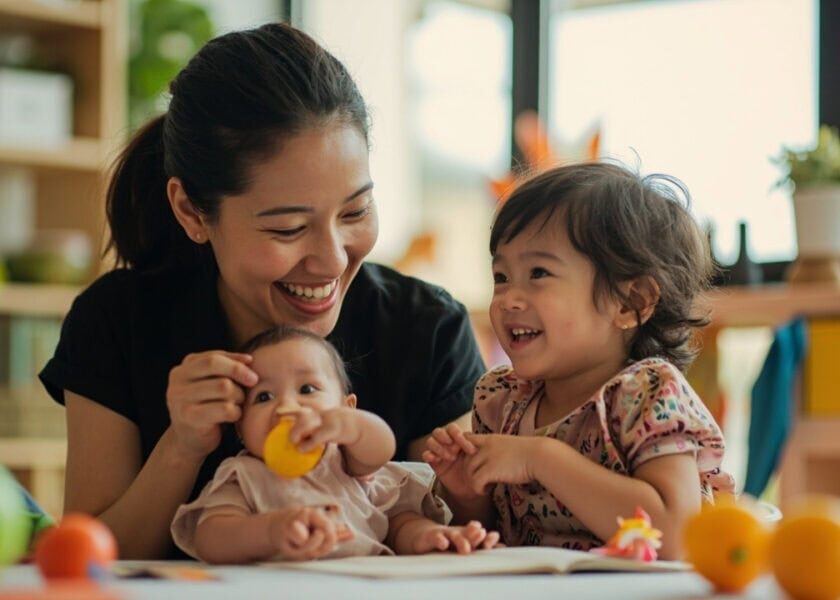
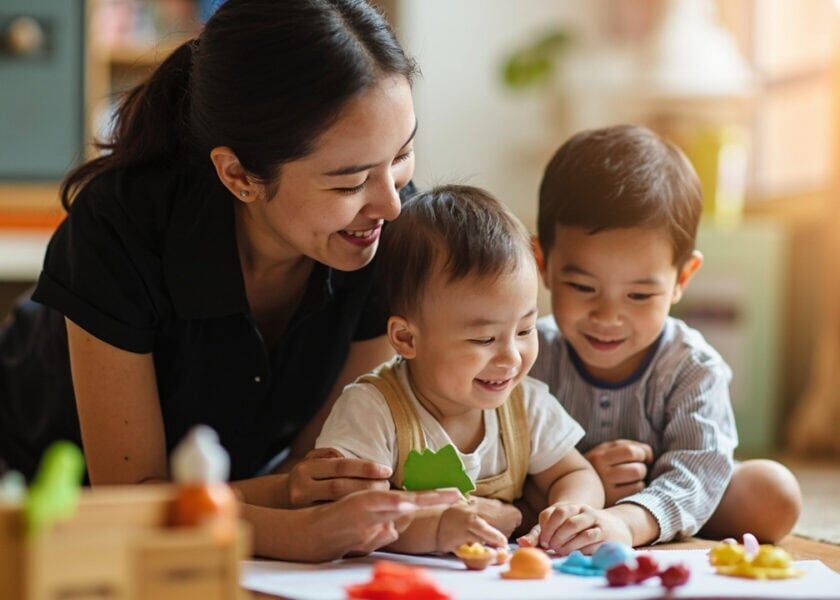
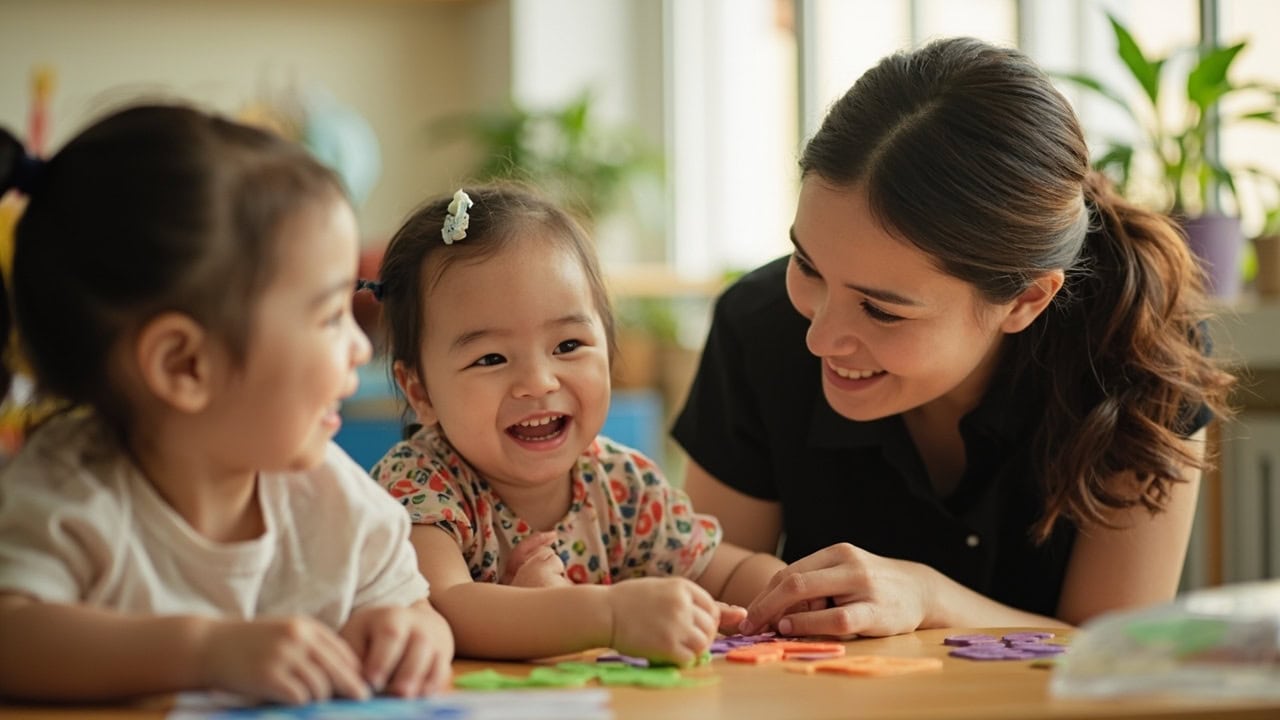
When a caregiver sits on the floor and enters a child’s play—not directing, not teaching, just being present—the child notices. When a caregiver names what a child is feeling before the child has the words for it—”You are feeling frustrated that the block keeps falling”—the child is being seen.
When a caregiver holds a crying toddler with patient steadiness, neither rushing to silence them nor matching their distress, but simply offering the steady presence of another human being—the child is being soothed at the deepest level of their nervous system.
These moments are not visible on any quality checklist. They are not captured in any curriculum framework. But they are the emotional curriculum of quality childcare—the hidden syllabus that shapes a child’s sense of whether the world is a safe place to be. And it is this curriculum, more than any activity or lesson, that determines whether a child arrives home drained or restored, closed or open, stretched thin or growing into themselves.
Questions Parents Often Ask
“How will I know if my child is really okay?”
You will know by watching your child. By noticing their body, their behavior, their play. By paying attention to whether they come home like themselves or depleted from pretending to cope. Open, ongoing communication between caregivers and families is essential—no parent should have to guess.
“What if my child cries every morning at drop-off?”
Some separation anxiety is developmentally normal, especially in the first weeks. What matters is what happens after. Does your child settle within minutes? Does the caregiver respond with warmth and patience? Does your child eventually engage in play? A child who cries at drop-off but settles quickly is communicating something very different from a child who cries all morning. Trust your instinct. Ask questions. Watch closely.
“Is home-based or center-based better?”
There is no single answer. What matters is fit for your family. Smaller home-based settings offer intimacy and a homelike feel. Center-based environments offer structure and peer interaction. Both can be excellent. Both require the same underlying qualities: sensitive caregivers, appropriate rhythm, sensory consideration, emotional warmth. The ECDA Childminding Pilot allows families to explore both pathways, and we are happy to help you consider what might suit your child best.
What Your Child Is Already Telling You
Here is a truth that may change how you think about choosing childcare: your child has been communicating the quality of their experience all along. Not in words, but in the language of their body, their behavior, their play.
A child who runs to their caregiver at drop-off without looking back is telling you something. A child who clings and cries, day after day, is telling you something else. Neither message is simple, but both are important.
Reading Your Child’s Body
The child who settles quickly, who is able to engage in play, who rests when rest is offered, who approaches new experiences with curiosity rather than fear—these children are communicating that the environment is working. Their bodies are telling the truth.
Watch your child in the moments after pickup:
- Notice whether they are depleted or restored. A child who comes home spent may have been holding themselves together all day in an environment that did not match their needs.
- Notice the quality of their eye contact. Children who feel safe can look at you fully. Children who are struggling may look away or seem distant.
- Notice the relaxation in their shoulders and the ease in their movement. Tense bodies carry the residue of tense environments.
- Notice whether they are eager to share or withdrawn. A settled child often wants to tell you about their day. An overwhelmed child may need a period of decompression first.
The Language of Play
Watch, too, what your child plays. Play is not frivolous. It is the child’s laboratory for understanding their experience.
- When a toddler acts out the drop-off and pickup, they are processing the day’s most significant events.
- When a child builds elaborate structures and then gently knocks them down, they may be expressing something about control, about order, about the day’s rhythms.
- When a child chooses to play alone after a day of community, they may be telling you they need quiet after intensity.
All of this is information. All of this is your child speaking. Learning to hear this language is not a special skill reserved for experts. It is what parents do. It is what parents have always done. The childcare environment simply offers a new set of contexts in which to listen.
EduNanny Singapore: Designed Around Your Child’s Inner World
EduNanny Singapore was built with this understanding at its center. We believe that quality childcare begins not with what we teach, but with what children feel. With the sensory world they inhabit. With the emotional safety they need. With the deep, quiet work of creating environments where children can settle, explore, and grow into themselves.
We are proud to be part of the ECDA Childminding Pilot, offering pathways that include home-based and community-based options alongside our center-based services. This means that wherever your family feels most comfortable—your child’s home, a caregiver’s home, or one of our centers—there is a pathway that fits.
What We Offer
- Infant-to-caregiver ratios that ensure every child receives the attention and attunement they deserve.
- Team training not only in early childhood development, but in the art of being present—reading cues, responding with warmth, creating the emotional conditions for genuine safety.
- Open communication between caregivers and families, with clear visibility into the daily experience of your child.
- Accessible fee structures designed with Singapore families in mind, including CDA and Baby Bonus usability where applicable.
We know that trust is earned through transparency. We want you to see what we see. We want you to know what your child knows.
The hours your child spends in our care are not just hours. They are the hours in which they are forming their sense of the world, their trust in others, their capacity for wonder and connection. We do not take that responsibility lightly.
Every decision we make—about light and sound, about rhythm and routine, about the warmth of our caregivers and the design of our spaces—is made with your child’s inner experience in mind.
Begin the Conversation
Here is what we want you to carry with you from this article: the question you have been asking—”Is my child okay?”—is not a question you need to stop asking. It is a question that reveals your love, your attentiveness, your deep parental instinct.
Perhaps you can ask it with a new set of eyes:
- Not “Is the checklist complete?” but “How does my child seem?”
- Not “Are the standards met?” but “What is my child’s body telling me?”
- Not “Are they safe?” but “Are they settled?”
Your child has been answering you all along. They have been telling you through the ease in their shoulders and the curiosity in their eyes and the way they run toward the door on weekday mornings. They have been telling you through their play and their sleep and the way they reach for you at pickup with a smile that says, “I was okay. I am okay. And now I am glad to be home.”
That smile is the answer. That relaxed body is the answer. That willingness to return, to explore, to grow—that is the quality you have been looking for.
We are here to help you listen. If you are exploring infant care or childminding options in Singapore, we invite you to connect with us and experience what it feels like when childcare is designed around your child’s inner world.
EduNanny Singapore is part of the ECDA Childminding Pilot, offering home-based, community-based, and center-based pathways for families across Singapore. Contact us to learn more about our approach and how we support your child’s sensory, emotional, and developmental wellbeing. You can also read about our story.