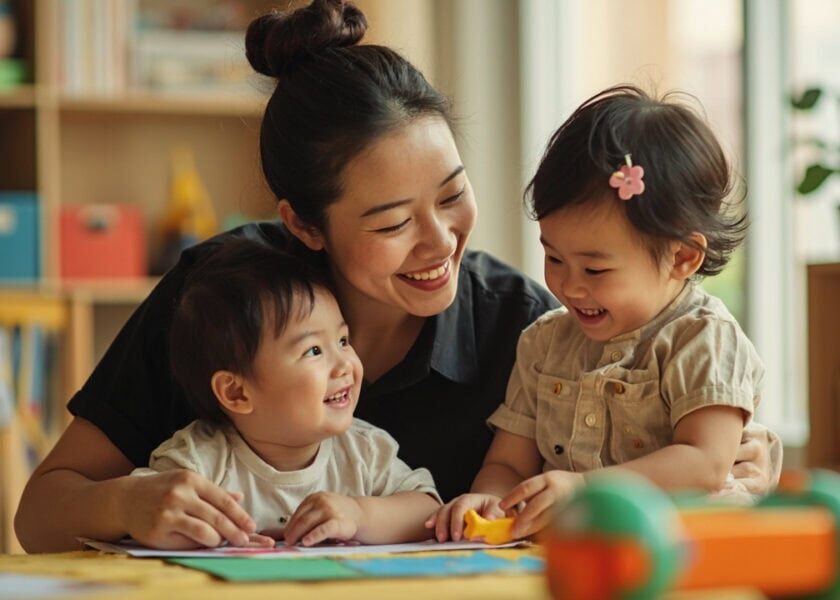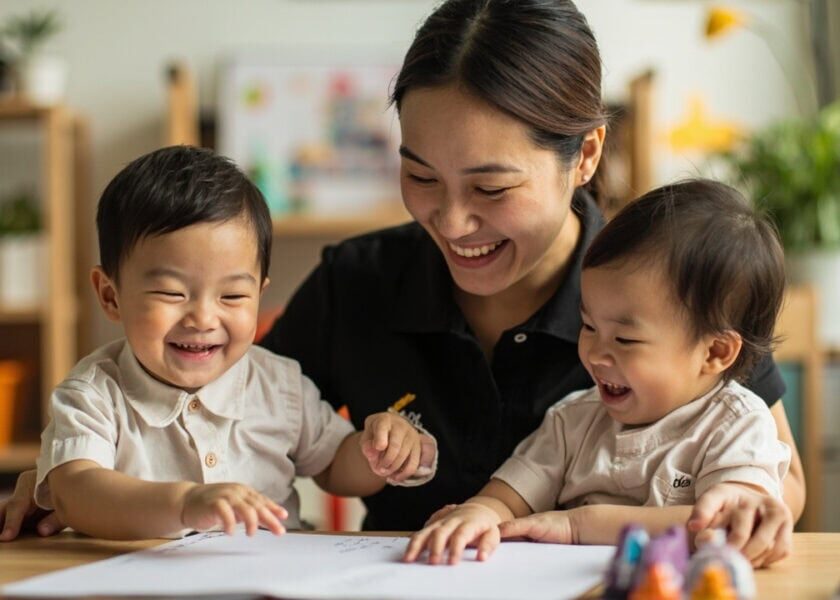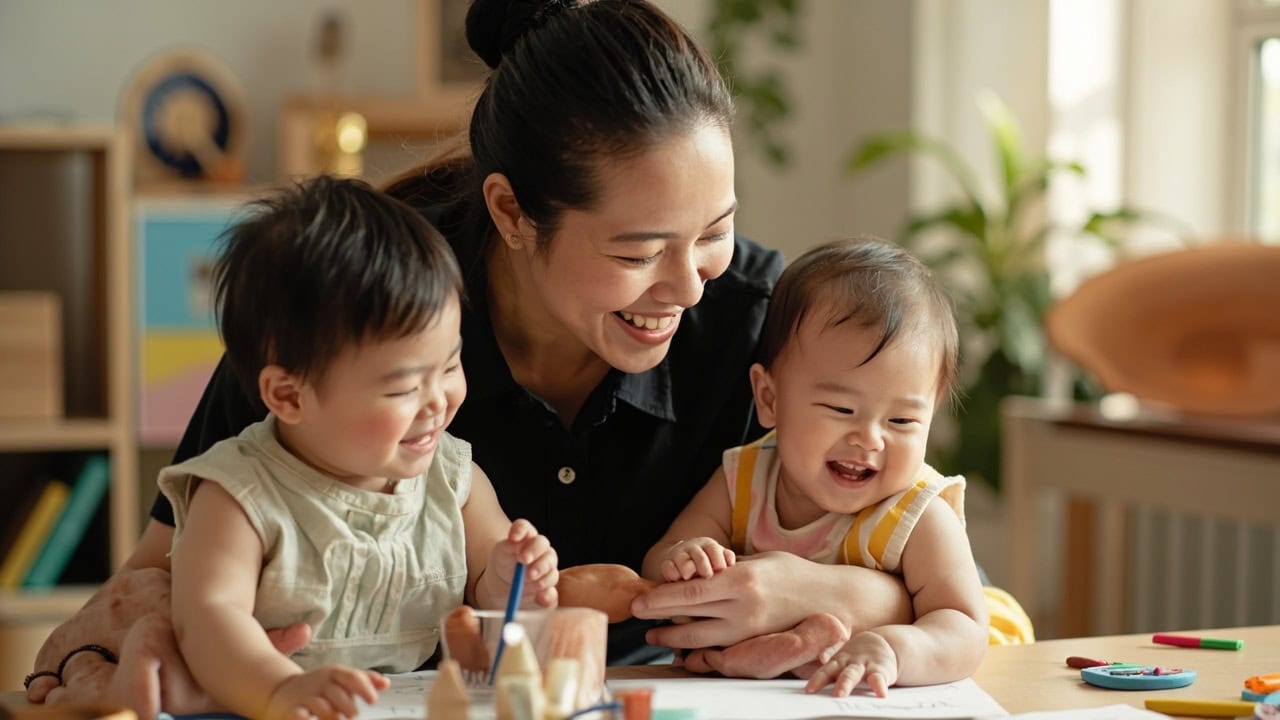
Why Siblings Thrive When Childcare Is Designed With Intention
The Quiet Question Singapore Parents Carry About Their Children in Care Together
There is a question that many Singapore parents carry quietly. Sometimes it surfaces in the car on the way to school. Sometimes it arrives in that still moment before sleep, when the house finally settles and the mind wanders to the things that matter most.
It is not the question they ask at orientations or bring up at playdates. It lives deeper, woven into the architecture of how they have chosen to raise their children.
When my children are in the same care environment, are they growing together—or getting in each other’s way?
If you have found yourself sitting with this question, you are not alone. And you are not wrong to ask it. This question deserves honest, thoughtful answers—not because there is a single right answer for every family, but because your children deserve a care environment that has been designed with their relationship to each other in mind.
This article is for parents in Singapore making decisions about childcare for multiple children. It is for those who sense that siblings in quality shared care can become something remarkable together. It is also for those who worry that keeping siblings together might complicate rather than enrich their development.
Both instincts are worth taking seriously. And together, they point toward something important: the need to design sibling care with intention, not leave it to chance.
The Hidden Opportunity: What Siblings Offer Each Other in Shared Care
Most conversations about childcare in Singapore focus on one child at a time. We picture a single infant being held, fed, watched, loved. And that picture is right. Every child deserves that quality of attention.
But families with multiple children face a different question. A question about whether the people they love most are being shaped by the same hands, breathing the same air of curiosity and calm, learning to be siblings in a place that takes siblinghood seriously.
Peer Modeling: When Children Teach Each Other
When siblings are cared for together in a quality environment, they begin to learn from each other in ways that home—alone with its familiar rhythms—cannot always replicate.
Consider what happens when an older child watches a younger one discover something for the first time. The eighteen-month-old finally stacks three blocks after many failed attempts, and the three-year-old witnesses not just a physical achievement, but a lesson in persistence. She is reminded, through witnessing her sibling’s triumph, that trying again works.
Or consider what the younger child absorbs when watching an older sibling navigate a social situation—a moment of sharing, a turn taken, a frustration expressed and then resolved. The younger child is learning not just what is done, but how it is done: the tone, the patience, the subtle negotiation of needs.
Researchers sometimes call this peer modeling, and it is extraordinarily powerful. Children learn from adults, yes. But they also learn from each other with a particular kind of immediacy that shapes them in ways adult instruction alone cannot reach.
The Architecture of Sibling Partnership
Here is what matters most: this kind of mutual learning does not happen automatically. Siblings who share a space are not necessarily siblings who grow together.
In a quality care environment with carefully considered infant ratios, peer modeling becomes part of the daily fabric. Caregivers notice these moments. They facilitate them. They create opportunities where siblings are invited to collaborate rather than compete, to notice each other rather than simply coexist.
This is the first thing worth understanding: siblings in shared quality care do not just happen to be together. When the environment is designed with their relationship in mind, they become something together. They become partners in their own development.
Managing Conflict or Designing Partnership?
Let us be honest with each other, because honesty is what Singapore parents deserve. There are real fears that come with the idea of siblings sharing a care environment. These fears deserve to be named, not dismissed.
The Fear of Comparison
Parents worry that caregivers will naturally favor one child—the older one who is more verbal, the younger one who is more adorable, the easier one who causes less disruption. And they worry that the other child will feel this, quietly and deeply, over time.
The Fear of Jealousy
When siblings share a room, they witness each other’s moments of attention and achievement. Parents wonder if this proximity breeds a different kind of resentment than siblings might develop if they each had entirely separate worlds—separate caregivers, separate milestones, separate spaces where no comparison is possible.
The Fear of Enmeshment—or Distance
Some parents worry that siblings who share everything will lose their individual identities. Others worry that siblings who share care will somehow grow apart rather than together, their sibling bond diluted by the absence of separation and longing.
These are not irrational fears. They are the concerns of parents who are paying attention. And they point to something important: the difference between environments that merely tolerate siblings together and environments that actively design for their flourishing.
What Quality Care Actually Changes
A quality care environment does not eliminate sibling conflict. Siblings who share a home, share a classroom, share a life will argue. They will push boundaries. They will sometimes make each other cry. That is what it means to be human and close.
But there is a profound difference between managing sibling conflict and designing sibling partnership.
Most of us grew up in environments where sibling conflict was managed after it erupted. Someone was separated. Someone was reprimanded. Someone was reminded to share. And that is necessary, absolutely. But it is reactive.
What if the environment itself was designed to cultivate the capacities that make sibling partnership possible?
- The capacity to notice another person’s emotional state and respond to it
- The capacity to wait, to take turns, to understand that another person’s needs are as real as your own
- The capacity to solve problems together rather than compete for solutions
A quality care environment teaches these things through its architecture, its routines, and its caregiver attunement. It teaches co-regulation—the ability to calm yourself not in isolation but in relationship.
When a caregiver models calm in the presence of a child’s big emotion, both siblings witness it. When a caregiver helps one child name their frustration and helps the other child witness that naming without fear, both siblings are learning. They are learning that emotions can be held. That conflict can be navigated. That the people we love most are also the people we must learn to negotiate with most thoughtfully.
This is what we might call sibling design—and it is the difference that separates care environments that merely contain siblings from care environments that cultivate them.
What Quality Childminding Looks Like in Practice
For parents in Singapore researching infant care and childminding options, it helps to understand what quality care actually looks like when sibling partnership is part of the design.
Signs of a Quality Environment That Supports Sibling Flourishing
- Caregiver attunement to sibling dynamics: Caregivers notice not just individual children’s needs but how siblings interact, support, and occasionally challenge each other. They understand that siblings have their own relationship, and they respect it.
- Designed moments of collaboration: Activities are structured to invite siblings to work together—not forced, but offered. A caregiver hands one child a book and invites the other to listen. Two siblings are given a shared problem to solve.
- Individual recognition within the group: Each child is seen as an individual, not just as part of a sibling unit. The older child is not always the helper. The younger child is not always the one who needs support. Roles rotate and individual strengths are noticed.
- Responsive conflict facilitation: When conflict arises, caregivers intervene in ways that teach skills rather than simply stop behavior. They help children name what happened, understand what they felt, and find paths forward together.
- Transparent communication with parents: Quality care means parents feel connected to what is happening—not as surveillance, but as partnership. Regular, genuine updates allow parents to understand their children’s dynamics and reinforce learning at home.
The Singapore Context: Why Design Matters Here
Singapore families face particular pressures that make intentional sibling design especially valuable. The costs of childcare are real. The expectations are high. The complexity of decisions—from infant care to childminding to centre-based options—can feel exhausting.
In this context, parents need more than a service. They need a partner who understands that childcare is not just about keeping children safe and occupied. It is about shaping the people they will become—and the relationships that will define much of their lives.
When siblings share quality care, they are not just being watched. They are being shaped together, in ways that extend beyond what any single-child care arrangement could offer. And in a city where families are navigating dual-income pressures, where extended family is not always close at hand, and where children spend significant hours in care settings—this shaping matters enormously.
How to Know If Your Siblings Are Thriving Together
Parents often ask: How will I know if this is working? How will I know if my children are flourishing together in care rather than merely tolerating each other?
The signs are not dramatic. They are subtle, daily, almost invisible. But they accumulate into something you can recognize.
What Thriving Siblings Look Like
Siblings who are flourishing together in care often come home with a different quality of connection:
- They reference each other in stories—”Remember when we…”—sharing experiences that feel significant to them both
- They ask about each other when apart—”Is Aiyden napping yet?”—demonstrating an awareness of the other’s rhythms and needs
- They have inside references, shared jokes, a language of familiarity that goes deeper than what they could build if they only saw each other at home between separate childcare arrangements
- They collaborate without being asked—one child helps another with a task, offers a toy during a moment of frustration, makes space for the other’s presence
When Each Child Remains Visible as an Individual
Thriving together also means that each child is still visible as an individual. Watch for this:
- The older child is not just the older sibling. She has her own interests, her own way of being in the world, her own moments of triumph.
- The younger child is not just the baby. He is known, responded to, seen for who he is—not merely as a younger version of someone else.
- When care is designed well, sibling partnership enhances individuality rather than diminishing it. The children grow more themselves because they have each other to reflect against.
When to Look More Closely
If you ever wonder whether the balance is off—whether one child is always in the shadow, whether conflict is dominating collaboration—that is a conversation worth having with your care partner. That is exactly the kind of observation that quality care welcomes.
Quality care is not a fixed system. It is a responsive relationship. And it adapts when parents and caregivers are in genuine communication.
Ask yourself: Do both of my children come home from care feeling seen? Do both of them have stories to tell, moments they want to share, a sense that their individual self mattered in that space?
If the answer is yes, the sibling dynamic is likely flourishing. If the answer is uncertain, that uncertainty is worth exploring—not as a failure, but as an invitation to deeper partnership with your care provider.
Questions to Ask When Choosing Sibling Care
If you are a parent with multiple children making decisions about childcare, here are the questions worth sitting with—not to find a single right answer, but to clarify what matters most to your family.
Questions About Your Hopes for Your Children
- What do I want for my children in relation to each other?
- What kind of siblings do I hope they will become?
- What role do I want the sibling relationship to play in their lives—as children, as teenagers, as adults?
- What am I hoping a shared care environment will offer that separate arrangements might not?
Questions to Ask Potential Care Providers
- How do you support sibling dynamics in your environment? Is this something you think about intentionally?
- How do you ensure that each child remains visible as an individual—not just as part of a sibling unit?
- How do you handle sibling conflict when it arises? What is your approach?
- How will I know how my children are doing—both individually and together?
- What does communication look like between caregivers and parents?
Questions About the Practical Fit
- Do the hours and structure work for our family’s rhythm?
- Is the environment designed in a way that supports both individual development and sibling collaboration?
- Do the caregivers seem attuned not just to individual children but to how siblings interact?
- Do I feel heard and respected as a parent? Is this a partnership I can trust?
There is no perfect answer to any of these questions. There is only the answer that fits your family—your children, your circumstances, your hopes. But asking the questions is itself a form of care. It means you are designing with intention, not leaving sibling care to chance.
The Long View: Why the Sibling Relationship Is Worth Designing For
When we talk about siblings in quality care, we are ultimately talking about a long-term investment in a relationship.
The sibling relationship is one of the few bonds in human life that typically lasts longer than any other. Parents die. Friends come and go. Partners may or may not stay. But siblings, when the relationship is strong, are often the longest thread in a person’s life.
And that relationship is not formed by accident. It is not simply a product of shared genetics or shared bedrooms. It is built in moments:
- In the moment when a caregiver hands one child a book and invites the other to listen
- In the moment when two siblings negotiate who gets to be the line leader and the caregiver notices, names, and facilitates the resolution
- In the moment when one child is struggling and the other offers a toy without being asked
These are not big dramatic moments. They are small, daily, almost invisible. But they accumulate. They become the texture of a relationship.
Quality childcare, designed with siblings in mind, creates a density of these moments. It protects and grows the sibling bond as a family investment. It does not guarantee that siblings will always be close—that depends on many factors, some of which no environment can control. But it gives the sibling relationship the best possible soil to grow in.
Where Sibling Design Becomes Reality: EduNanny by BUTLER
EduNanny enters this conversation in a way that matters—not as a generic childcare service, but as an approach built around the recognition that siblings in quality care can become partners in their own development.
EduNanny is part of the ECDA Childminding Pilot, which means it sits within a framework that takes the role of the childminder seriously. Not as a stopgap. Not as a convenience. But as a developmental relationship of genuine importance.
The pilot is designed to offer families real support, with care structures that include home-based pathways and community or centre-based options. Because Singapore families are not all the same, and their needs deserve responsive design—not a one-size-fits-all solution dressed up as flexibility.
What EduNanny Offers for Sibling Care
- Infant ratios that allow for genuine attention—not just supervision, but the kind of attunement that sees individual children and sibling dynamics
- Care structures designed with the whole family unit in mind—routines and transitions that understand how siblings move together, push each other, and support each other
- Monday to Friday care blocks that give families the consistency children need for these sibling dynamics to develop and deepen over time
- Transparent communication systems so parents can trust what is happening in their children’s day—not as surveillance, but as partnership
- Accessible fee structures within the pilot’s framework, recognizing that quality sibling care should not be only for families with unlimited resources
What EduNanny is building goes beyond the transactional. It is creating a place where siblings can be known as siblings—where the childminder understands not just one child’s temperament, but how two or three siblings move together as a system.
Where the routines are designed with the whole family unit in mind. Where collaboration is invited, not just coexistence. Where each child remains visible as an individual even as they grow together.
This is not a promise that sibling dynamics will always be harmonious. Conflict will happen. It always does. But the environment is designed to use those moments—teaching co-regulation, building conflict navigation skills, cultivating the capacities that make sibling partnership possible.
When communication is clear, when there are systems in place that allow for genuine insight into the care environment, parents can trust. And when parents can trust, something opens up. They can stop worrying about whether care is happening well and start noticing how their children are changing—growing, becoming more themselves and more connected.
For Singapore Parents: You Are Already Doing This
Parenting in Singapore is exhausting. The costs are real. The expectations are high. The complexity of decisions can feel overwhelming. And somewhere in all of that complexity, you are quietly hoping for something simple:
- That your children will be okay.
- That your children will know they are loved.
- That your children will have each other.
That last hope—that your children will have each other—is not a small thing. It is everything. And it is not something you can take for granted. It is something you design for.
Siblings who grow up together in quality care have the opportunity to become something unexpected. They have the chance to be more than people who share a family name. They can become first teachers, confidants, collaborators. They can be the people who know each other’s histories most deeply, who have witnessed each other’s small triumphs and big struggles, who carry forward a shared understanding of what it means to be loved and to belong.
The siblings your children will become are being shaped right now. In the decisions you are making today. In the environments you are choosing. In the people you are trusting with the most important work: helping your children learn to be human, together.
If you are looking for a care partner who understands sibling design—who takes sibling partnership seriously, who is part of a pilot designed to offer genuine support to Singapore families—we invite you to begin a conversation with EduNanny.
Explore the options available to you. Understand the pathways that fit your family’s life. See how quality care can be not just aspirational but accessible.
Because your children deserve more than just care. They deserve environments that shape them—not just individually, but in relationship with each other.
The sibling bond is worth designing for. And there is no time like the present to begin.
EduNanny is a Singapore childminding service built on developmental care, thoughtful attention, and the belief that every child—and every sibling relationship—deserves to be understood. Learn more about EduNanny or read about our approach.