When an Infant Turns Away from Play
An infant turning away from a toy need not mean that play has gone wrong. Learn how a childminder can notice the cue, ease the interaction, offer fitting support and leave room for the infant to respond.
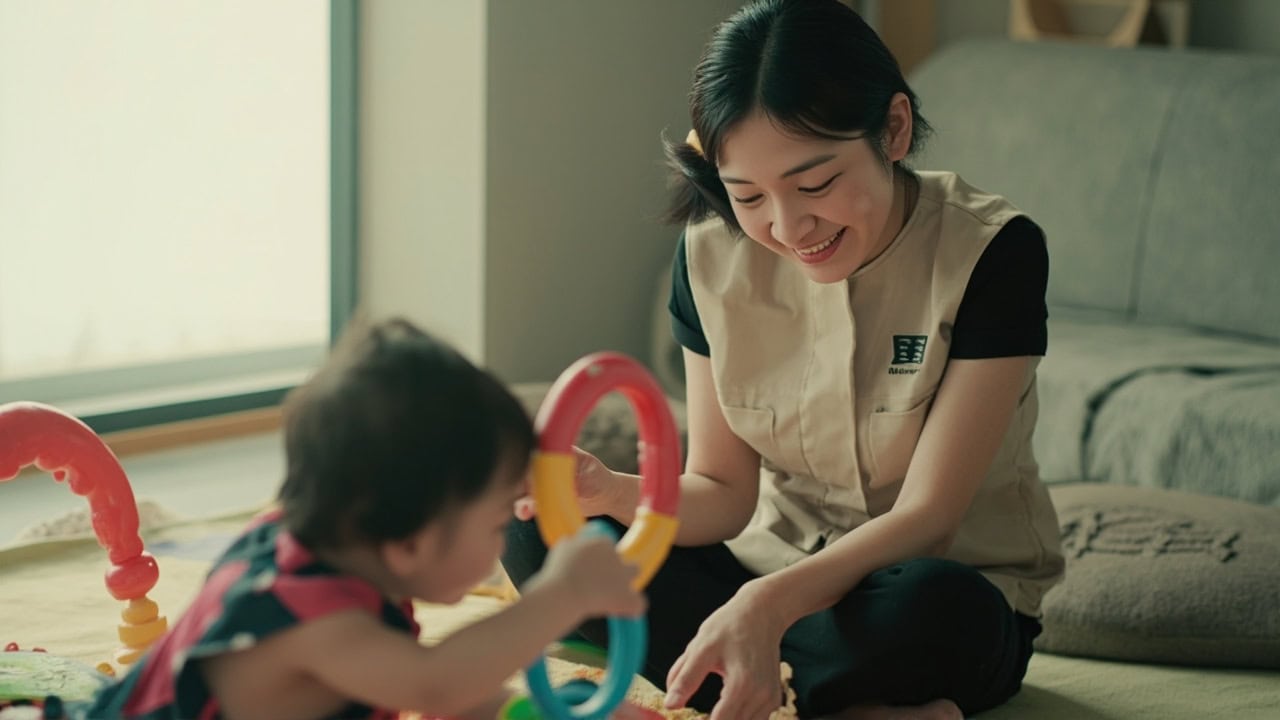
Picture a childminder holding up a soft toy midway through a song. The infant turns their head and looks towards a cushion instead. The childminder can keep the toy moving, pause the interaction or offer support. Responsive care means letting the infant’s response shape what happens next.
Responsive infant care begins with a willingness to change course. In its guide to serve and return, the Center on the Developing Child at Harvard University explains that responding to a young child’s signals and needs creates an environment rich in serve and return experiences. In practical terms, the childminder can notice a change, ease the interaction and give the infant room to respond. A good day of infant care can include pauses.
A Turn Away Needs Context
A head turn, becoming still or letting go of a toy may be part of different patterns of behaviour. The childminder can consider what happened just before, whether the infant’s signal continues and what happens when they reduce movement, sound or contact. These observations help place a single cue in context.
This fits the principle described in research on caregiver and infant coregulation. Supportive, sensitive caregiving involves accurately perceiving an infant’s signals and responding promptly to the infant’s needs. A childminder does not need to decode one glance perfectly. They can keep observing, adjust their part and let the infant’s next response guide the next step.
Responsive care also recognises that children have individual needs and preferences. Research on responsive caregiving describes meeting a child’s needs with empathy and timeliness while recognising those differences. For example, the same song may invite one infant to rejoin the interaction and another to turn away again. Knowing an infant’s usual patterns can shape the response, while their signals in the moment guide the care that follows.
Pause, Support and Make Space
When an interaction needs to change, the childminder can reduce the input, offer comfort or practical help that fits the moment, and leave space for the infant to respond. This helps the childminder consider whether the infant needs less input, practical help or another opportunity to engage.
A childminder can lower the toy, slow a gesture, use a quieter voice or let a song end. If needed, they can assist with the toy or routine, or stay nearby without asking for a response. This sequence remains flexible, so the childminder can adjust as the infant responds.
The Center’s guide for caregivers says to support and encourage a child’s contribution, then give the child a chance to respond. The childminder can answer with a look, sound or movement. Reducing input is another response. If the infant reaches again, the childminder can return to play. If the infant stays turned away for the moment, the childminder can wait. The infant’s response guides the next move.
A pause can simply remain a pause. If help is offered and the infant turns away, more space may be suitable. The same cue can lead to a different response on another occasion. Responsive care depends on noticing, adjusting and staying open to what follows.
Questions Parents Can Ask
Parents may not see every exchange, but they can ask how a childminder makes these judgements through the day. Specific questions about observable actions can turn a general promise of attention into something concrete:
- How do you notice a change in an infant’s interest or comfort?
- What do you do when play stops?
- How do you decide whether to wait, change the activity or offer help?
- How do you fit everyday play, rest and routines around the infant’s pace?
- What observations would you share with me if you noticed a repeated pattern or a change over time?
A specific answer can describe both the action and its purpose. A childminder might say that they lower a toy, allow a pause, help with a routine or watch for another signal. Parents can then understand how that childminder turns noticing into a practical response.
At EduNanny, we tailor care to each child’s personality, pace and developmental needs. This includes considering a child’s pace when deciding whether an interaction should continue or change.
Returning to the opening scene, the childminder lowers the toy out of view and waits. The infant may look back, reach for the toy, remain still or move on. Play may remain unfinished, and that is part of responsive care. Thoughtful attention lies in noticing when to adjust, offering support that fits and leaving the infant room to shape what comes next.
Sources and further reading
- A Guide to Serve & Return · Center on the Developing Child at Harvard University
- Caregiver and infant coregulation research · PubMed Central
- Responsive caregiving practices and outcomes · PubMed Central
- 5 Steps for Brain-Building Serve and Return · Center on the Developing Child at Harvard University
- About Us · EduNanny
The images in this article were generated with AI for illustration. They do not show actual EduNanny staff, children or facilities.
Every family has different care needs. Speak with EduNanny to discuss care that is right for your child.