What Your Child Is Really Telling You After Childcare in Singapore
The Quiet Voice Every Singapore Parent Knows
There is a moment familiar to every parent who has walked through the doors of a childcare centre or welcomed a childminder into their home. The paperwork is signed. The settling visits are underway. The arrangements that once felt abstract and daunting have become woven into the rhythm of your week.
And in that moment, a strange thing happens. A quiet voice inside you begins to ask a different question.
Not: Have we chosen well?
But: How do I know?
How do I know if this is truly right for my child? How do I know if the care my son or daughter receives each day is the kind that will stay with them, shaping them, accompanying them through life? How do I know if I am learning to see what is actually happening, or if I am simply hoping?
This is where the real journey begins. Not in the choosing—that is merely the threshold. The journey lives in the days and weeks and months that follow, when a parent steps into the role of something more than a decision-maker.
You become an observer. A reader of signs. Someone who learns, slowly and sometimes uncertainly, to interpret the language your child speaks without words. And this is exactly what EduNanny Singapore has been designed to walk alongside you through.
Reading Your Child’s Signals After Childcare
Consider, for a moment, what your child brings home each evening. A change of clothes. A tired body. Perhaps a painting, a song learned, a new word picked up from their caregiver. But beneath these surface details, something else is communicating—whether the day was spent in safety or in stress, in engagement or in mere waiting.
Children are extraordinary communicators, even when they cannot yet speak in full sentences.
Signs of Safety and Security
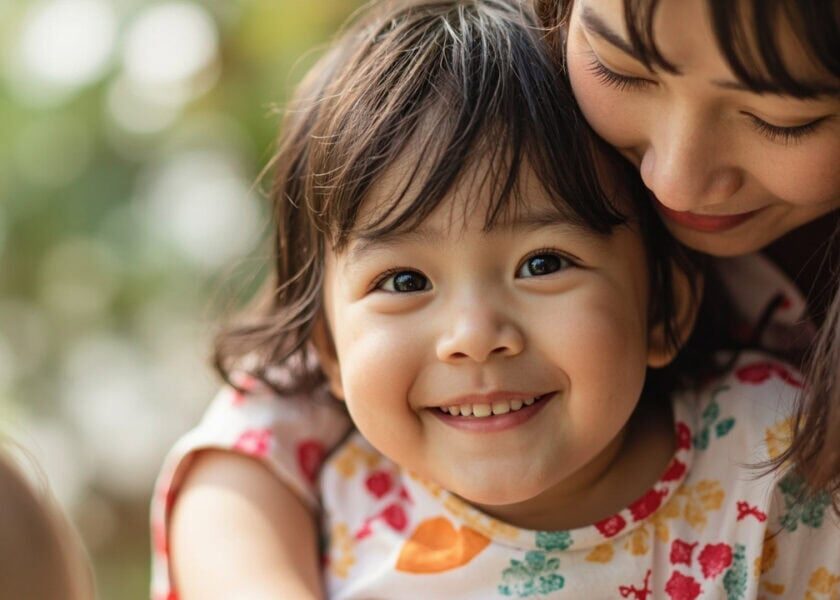
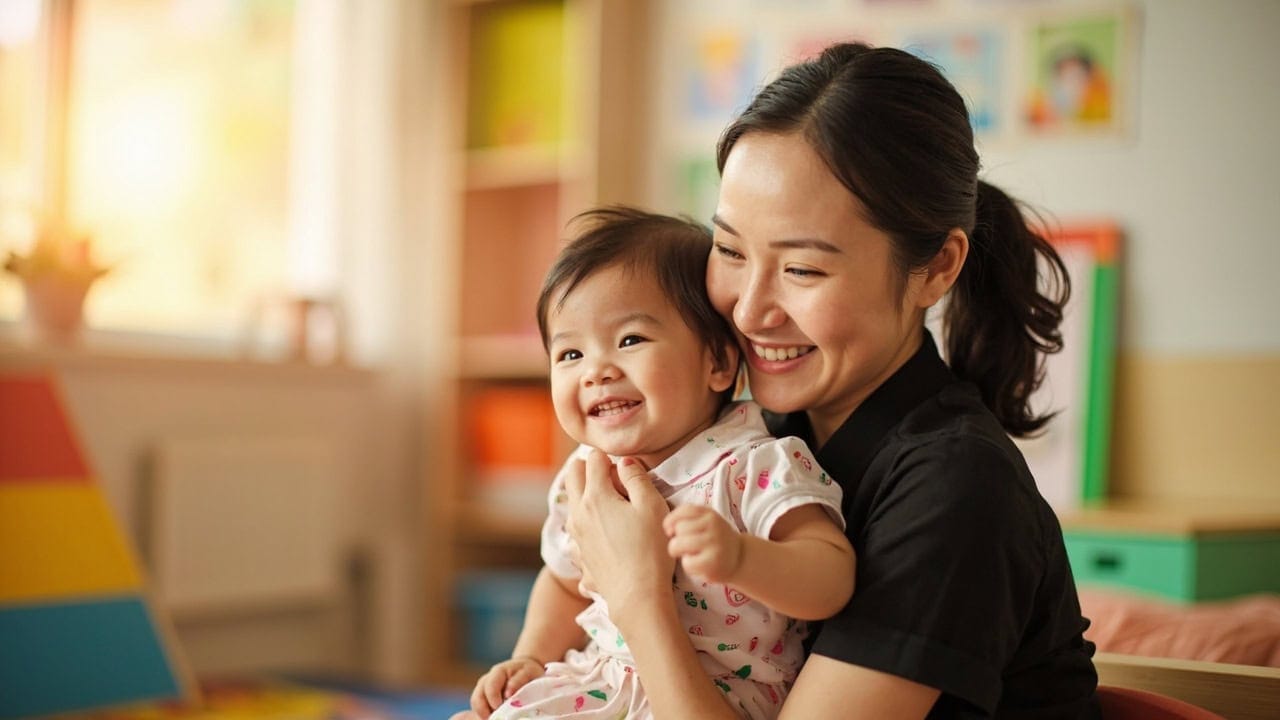
A toddler who returns from quality care will often carry subtle signatures of that experience in their mood, their play, their curiosity, the way they reach for you or move independently around the room. A baby who feels genuinely held and responded to will show it in the quality of their attention, the ease with which they settle, the trust that radiates from their body when a familiar caregiver approaches.
What does a child look like when they feel safe? They explore freely. They are not constantly checking for reassurance. They can lose themselves in play because the world feels predictable, because the adults around them feel reliable, because their nervous system has learned that it can rest.
When your child returns from childcare and plays freely, when they engage in imaginative play that stretches their thinking, when they are curious about the world rather than guarded against it—these are not small things. These are profound signs that the environment is doing what it should.
Signs of Being Valued and Known
What does a child look like when they feel valued? They are more likely to initiate interaction, to show pride in small accomplishments, to seek connection not out of desperation but out of genuine warmth. A child who runs to greet their caregiver in the morning, who waves goodbye with calm rather than distress, who speaks about their day with pleasure rather than vague indifference—these are the communications of a child who knows, at some deep level, that they matter in that place.
In Singapore’s fast-paced environment, where dual-income households are common and reliable childcare is essential, these signs become especially important to watch. The demands on parents are real, but the need to stay attuned to your child’s inner world does not diminish. If anything, it deepens.
Adjustment Versus Genuine Concern: Knowing the Difference
And what about the harder signs? The ones that give a parent pause?
This is where wisdom is needed, because not every moment of hesitation or resistance means something is wrong. Adjustment takes time. Every child moves through transitions differently, and some children are more sensitive to change than others. A first week of tears is not a warning sign. A month of difficulty separating may simply reflect a temperament that needs more time, more consistency, more patient reassurance.
But there is a difference between the normal texture of adjustment and the signal that something is genuinely misaligned.
Signs That May Warrant Closer Attention
- When a child’s distress does not ease over time despite consistent, warm care
- When they seem to regress rather than grow into the experience
- When the joy seems to drain from them week after week rather than slowly return
- When a child stops speaking about their day entirely
- When they become withdrawn or aggressive in ways that feel unfamiliar
- When your caregiver cannot offer clear, honest observations about what they are seeing
These are not moments to ignore. They are moments to trust yourself and to ask harder questions—not in panic, but in purposeful curiosity.
Growing Perceptiveness, Not Anxiety
There is a distinction worth making here, because it is one of the most important things a parent can learn: the difference between growing perceptiveness and growing anxiety.
What Anxiety Looks Like
Anxiety looks inward. It fixates on worst-case scenarios. It interprets ambiguity as danger. It whispers that you are not doing enough, that something is surely wrong, that you cannot trust anyone else with what matters most. Anxiety is exhausting, and it can distort your perception of your child, making you see distress where there is merely normal tiredness, dysfunction where there is simply the ordinary complexity of growing up.
What Perceptiveness Looks Like
Perceptiveness looks outward. It observes your child with curiosity rather than fear. It notices patterns over time rather than reacting to single moments. It holds space for uncertainty without collapsing into panic.
The goal is not to eliminate all uncertainty. The goal is to become someone who can sit with uncertainty and still read clearly. This is the kind of parent EduNanny wants to help you become—not more anxious, but more present. Not more watchful in a way that drains joy, but more attuned in a way that deepens connection.
What Quality Childminding Actually Looks Like
Quality childcare is not just about what happens during the hours of care. It is about the transparency, the communication, the willingness to be a true partner in your child’s wellbeing.
Parents deserve to know not just that their child was fed and slept and played with, but how. What did they enjoy? What challenged them? Who were they today?
- Consistent, warm updates that go beyond logistics to share genuine observations about your child’s day
- Honest communication even when it includes challenges or difficulties
- A caregiver who knows your child as an individual—not just as another child in their care
- Small ratios that allow for individual attention and genuine attunement
- Partnership mindset where the caregiver sees themselves as working with you, not for you
- Respect for your parental insight and willingness to integrate what you share about your child at home
The EduNanny Partnership in Perception
And here is what we have learned from working with families across Singapore: this kind of perceptiveness grows best when it is met with the right kind of partnership.
When you have a childcare arrangement that prioritises honest, consistent communication, you are not left to decode your child’s signals alone. The caregiver becomes a collaborator in understanding. They see your child in contexts you cannot see, and when they share what they observe with genuine care and attention, you are better equipped to integrate those observations with your own knowledge of your child.
The EduNanny by BUTLER approach exists because we understood that Singapore parents need more than a service. They need a relationship—a sustained, trustworthy partnership in which both sides are committed to the child’s flourishing.
Through our ECDA Childminder Pilot Programme, we have created pathways that bring quality care into the home environment or connect families with carefully supported community-based options, always with the infant ratios and safety standards that allow for the kind of individual attention every child deserves.
Our caregivers are not just trained. They are companions in your child’s development, and they understand that their role includes helping you become the perceptive, confident parent you are meant to be.
Skills That Last a Lifetime
There is a wisdom that comes from this kind of sustained attention. It is quiet, unhurried, accumulated through thousands of small observations over months and years. It is the wisdom of a parent who has learned to read not just their child’s behaviour but their child’s inner life, who can sense the difference between a bad day and a difficult season, who knows when to step in and when to trust the process.
This is not a skill that serves you only in the years of childcare. It is a skill that serves you through every phase of your child’s development. When they start school, you will read their social world with the perceptiveness you are building now. When they face challenges, you will trust the attunement you have practiced. When they grow into adolescence and young adulthood, you will have the foundation of a relationship built on genuine understanding, not just assumption.
Quality childcare, when it is done well, does not replace the parent-child bond. It deepens it. It gives your child additional experiences of warm, responsive care that reinforce the attachment style you are building at home. It gives you—the parent—more data, more insight, more opportunities to know your child in their fullness.
Your Next Steps on This Journey
Common Questions Singapore Parents Ask
“Am I relying too much on childcare?”
No. What you are doing is building a village. Quality childcare supplements the love and attention you provide; it does not substitute for it. Children thrive when they have multiple secure relationships to draw from—and parents who stay actively engaged with their child’s care experience develop deeper understanding, not shallower bonds.
“How do I know if I can trust my caregiver’s observations?”
Look for alignment over time. A caregiver who consistently shares thoughtful, detailed observations that ring true with what you know of your child at home is a caregiver you can trust. A caregiver who only tells you positive things, who is vague when asked specific questions, or whose account of your child feels disconnected from the child you know—this is worth paying attention to.
“What if I keep worrying no matter what?”
Some parental vigilance is healthy. But if worry feels constant, draining, or disruptive to your daily life and your relationship with your child, it may be worth speaking with someone—a trusted friend, a parenting support group, or a professional who understands the pressures Singapore parents face. The goal is not to eliminate care but to care with confidence.
Practical Steps for Building Your Perception
- Observe patterns, not moments. One bad afternoon does not indicate a problem. A consistent pattern over weeks may warrant closer attention.
- Ask specific questions. “What was she like at snack time?” will tell you more than “Did she have a good day?”
- Notice the shift toward independence. A child who can separate calmly, who trusts that you will return, who engages with their caregiver—this is healthy development.
- Trust your instinct, then verify. If something feels off, observe more closely before acting. If the feeling persists, ask your caregiver directly and without accusation.
- Stay curious about the whole child. Their day, their friendships, their frustrations, their joys—not just whether they ate and slept.
You are already learning. Even now, as you read this, as you think about your child, as you wonder whether you are seeing clearly or merely hoping—you are already developing the perceptiveness that will serve you for the rest of your parenting journey. Every time you observe your child’s mood after a day of care and ask what it means, you are building that capacity.
You do not need to be perfect at this. No one is. But you can be intentional. You can be present. You can be the kind of parent who notices, who asks, who reflects, who grows.
Ready to Explore Your Options?
EduNanny Singapore stands beside you in this journey. Whether your family participates in our home-based childminding pathway, our community-based options, or any of the flexible arrangements we have designed to meet the real lives of Singapore parents—Monday to Friday care blocks, CDA and Baby Bonus usability, accessible pilot fee structures, transparent communication including CCTV measures where deployed—we are here not as a service provider you hire and forget, but as a sustained partner in your child’s development and your own growth as a parent.
We believe in the intelligence of Singapore parents. We believe in your capacity to read your child with depth and wisdom. And we believe that quality childcare, when it is built on trust, communication, and genuine care, does not weaken the parent-child bond—it strengthens it.
The journey you are on is not easy. But it is deeply meaningful. And you are not walking it without guidance. You are not walking it without support.
You are walking it with a growing ability to see your child as they truly are—and that, more than anything else, is an act of love.
To learn more about EduNanny Singapore and how we support families through quality childminding, visit our homepage or read about our ECDA Childminder Pilot Programme. If you have questions about finding the right care arrangement for your family, we welcome you to reach out to us directly.