What Your Child Is Really Learning in Quality Childcare
What Your Child Experiences in Quality Childminding
When you step through the door of a childcare setting, your child is taking in far more than activities and toys. They are reading the room at a level that runs deeper than words.
Security comes first. Before anything else, your child notices whether this place feels safe. That feeling shapes everything that follows.
Curiosity takes flight. A child who feels secure stops defending against the world and starts engaging with it—watching ripples in water, studying a leaf’s veins, absorbing every texture and sound.
Real friendships form. Those “parallel play” moments? Watch more closely. Real social emotions emerge—the joy of a favourite companion arriving, the careful offering of a toy, the puzzled look when a friend is absent.
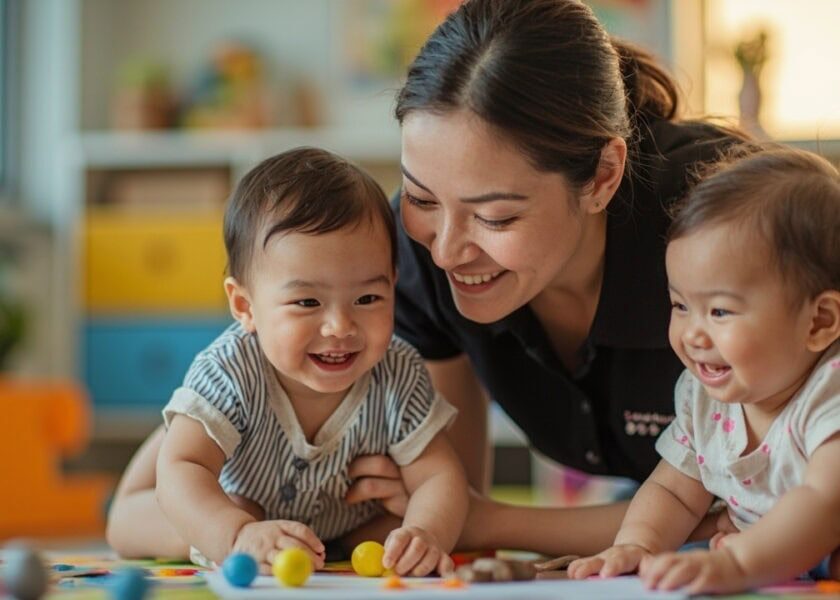
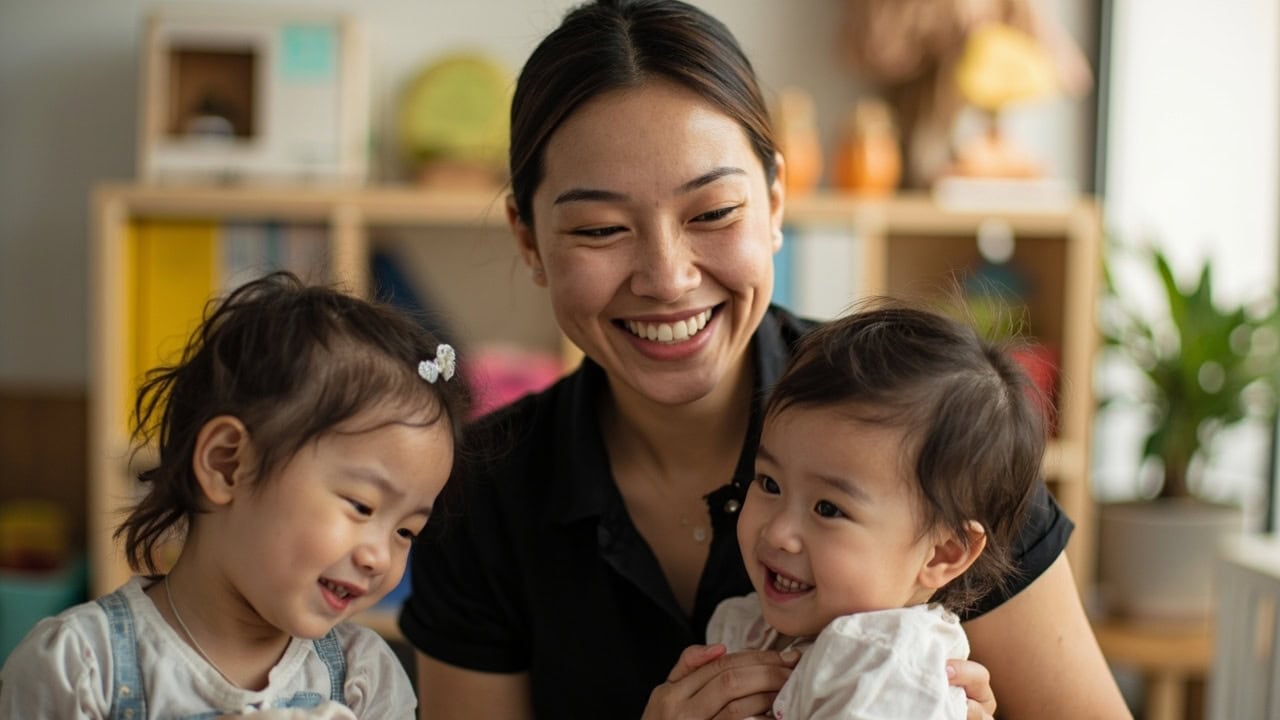
The caregiver is the landscape. From your child’s perspective, the caregiver is not a backdrop. They are the consistent, attuned presence who meets the child at the door, notices tiredness before it shows, and becomes a compass in unfamiliar moments.
Rhythms feel like home. The predictable sequence of greetings, snack time, nap time, and pickup creates an architecture of safety. Knowing what comes next allows your child to relax into the present.
The Foundation: Security and What Your Child Notices First
Before the toys. Before the other children. Before the morning activities have even been named.
What your child notices first is whether this place feels safe.
There is a word that educators and developmental psychologists use often—security—and it can sound abstract, something that belongs in a research paper rather than a morning drop-off. But watch a child who has just entered a space where they feel secure. There is a visible softening. Their shoulders drop. Their hands, which may have gripped yours tightly in the lobby, begin to release. They look around not with apprehension but with interest. The world of the room becomes a place worth exploring rather than a place to be defended against.
This is not a small thing. This is the beginning of everything.
Security Is Built in Small, Repeated Moments
Security is not merely the absence of fear. It is the presence of trust—trust that the environment is consistent, that the adults are reliable, that this is a place where needs are heard and met.
In quality childcare, this trust is built in small, repeated moments throughout every single day:
- The caregiver who bends down to a child’s eye level before speaking
- The way the routine holds a familiar shape even when activities change
- The voice that acknowledges a child’s frustration without dismissing it
Each of these moments is a small deposit into what developmental psychologists call the child’s internal working model—an unspoken understanding of how the world responds to them.
And here is what is remarkable: once that foundation of security is in place, something extraordinary begins to happen. The child stops defending against the world and starts engaging with it. The launchpad has been built. And from a secure launchpad, curiosity takes flight.
Curiosity and the World of Peers
Curiosity is one of the most beautiful things you will ever witness in a young child. It is not the same as excitement. It is quieter, more deliberate, more alive.
Curiosity is a child crouched over a bowl of water, watching the way it ripples when they drop a wooden block into it—watching it again, and again, and again, as though the discovery is brand new each time.
Curiosity is a child reaching for a leaf they have never seen, turning it over in their palm, bringing it close to their face to study the veins, the texture, the smell.
In quality childcare, curiosity is not interrupted by anxiety. It is not distracted by the need to monitor an unfamiliar adult’s mood or to keep track of whether the door will open. Curiosity is allowed to unfold because the child already knows, in their body, in their nervous system, that they are safe. They can afford to look away from the door. They can afford to be absorbed.
When a caregiver understands this, they become a curator of curiosity. They notice what holds a child’s attention and create space for that attention to deepen. They do not rush the block into the water. They do not redirect the child before the wondering is done.
You may drop your child off in the morning and hear nothing more detailed than “We played” at pickup. What you are not seeing is the morning your child spent discovering the weight of sand running through their fingers, the texture of torn paper, the sound of their own footsteps on different floor materials, the way paint moves when mixed with a brush or a stick or a hand.
These are not filler activities. These are the raw materials of a mind that is learning how to learn.
The Social World of Peers
There is another dimension of the child’s day that rarely gets spoken about: the world of peers—the friendships that form, the social discoveries that are made, the way a child begins to understand themselves in relation to others.
When we think of a toddler’s friendships, we tend to think of something simplistic—children playing side by side without real connection, the famous “parallel play” that developmental stages describe. But watch more closely:
- Watch the child who has found a favourite companion in their childcare group.
- Watch how their face changes when that child arrives.
- Watch the careful, deliberate way they offer a toy.
- Watch the brief, puzzled look when the companion is absent.
These are real social emotions, emerging in real time, in the hours you are not there to witness them.
A child in quality childcare learns something profound about relationships: that other children have feelings, that sharing is complicated but possible, that conflict can be navigated, that joy is amplified when it is shared.
These are not lessons delivered from a curriculum. They are lessons absorbed through living.
The Caregiver: The Landscape of Your Child’s Day
The caregiver is not a backdrop to the child’s experience. The caregiver is the landscape.
From the child’s perspective, the relationship with their caregiver is unlike any other. It is not the same as the relationship with a parent—it does not replace it, and it does not try to. But it is real, specific, and deeply felt.
The caregiver is the person who met them at the door each morning. The caregiver is the one who noticed they were tired before they themselves knew it. The caregiver is the voice that sang the same song, at the same moment, in the same gentle way, so many times that it has become a kind of compass—something the child can orient by in an unfamiliar or overwhelming moment.
What Caregiver Quality Really Means
When we speak about caregiver quality—and this is worth pausing on—we are not speaking about credentials alone. Credentials matter. But quality in this context is ultimately about attunement: the ability to read a child in real time.
- To know when a child’s silence means they are overwhelmed and when it means they are deeply, peacefully absorbed
- To know when to offer help and when to offer just enough challenge to let a child feel the pride of doing something themselves
- To notice the small things: one child’s voice gets louder when excited versus when upset
- To understand how another child’s appetite shifts with the seasons
- To recognize that a third child always settles best after a few minutes of being held
These observations are not incidental. They are the foundation of responsive, individualized care.
Why Ratios Matter
In quality childcare, the ratio of caregivers to children makes this kind of attunement possible. When caregivers are not stretched across too many needs at once, they can be fully present. They can notice the small things. They can respond with intention rather than react out of overwhelm.
At EduNanny by BUTLER, the infant ratio of up to one to three ensures that caregivers have the space to truly know each child in their care—not just their schedules, but their rhythms, their preferences, their ways of expressing joy and distress.
The Rhythms That Feel Like Home
There is a rhythm to the child’s day in quality childcare that deserves its own quiet attention. The rhythms may seem mundane from the outside—morning greetings, snack time, nap time, outdoor play, the return home.
But to the child, these rhythms are not routine. They are architecture. They are the structure within which freedom becomes possible.
A child who knows that snack time comes after free play, and that nap time follows circle time, and that pickup always comes at the end of the day—a child who knows this can relax into the present moment. They do not need to hold anxiety about what comes next because the sequence is reliable, the adults are consistent, the day has a shape they can count on.
This is what makes a childcare setting feel like home. Not the furniture, not the decorations—though these matter—but the consistency of care:
- The way the caregiver greets the same child by name each morning, with the same warmth, on good days and difficult days alike
- The way the lullaby is sung at the same point in the schedule, so that the child’s body begins to recognize and respond to it even before sleep arrives
- The way the goodbye routine is the same every single day, giving the child confidence that parting is predictable and reunion is certain
These are the textures of a life that feels safe, and it is from this safety that a child can branch out, explore, take risks, grow.
What your child brings home at the end of the day—in their body, in their play, in the new words they say, in the way they climb or draw or ask questions—is the residue of this life. It is not separate from what happened during the unseen hours. It is the evidence of it.
What to Look For: Choosing Quality Childminding in Singapore
If you are researching infant care or childminding options in Singapore, here are the qualities that matter most when you step through the door—whether physically or in your mind during those drop-off moments.
Signs of Quality Care
- Caregivers who get down to eye level: Notice whether the adults kneel or bend to speak with children, rather than towering over them.
- Responsive interaction: Does the caregiver notice when a child is frustrated, tired, or absorbed? Can they tell the difference?
- Predictable routines: Is there a consistent sequence to the day that gives children confidence about what comes next?
- Space for child-led exploration: Are children allowed to persist with activities, or are they constantly redirected?
- Real relationships: Does your child have a primary caregiver, or are they passed between many different people?
- Warmth without intrusion: The caregiver is present but not hovering. Children are allowed to struggle slightly, to try, to succeed on their own terms.
Questions to Ask
- What is the caregiver-to-child ratio, especially for infants?
- How would you describe your approach to supporting a child’s emotional regulation?
- What does a typical day look like from arrival to pickup?
- How do you communicate with parents about their child’s day?
- What training or background do your caregivers have?
- How do you handle situations when a child is struggling?
Your Real Concerns, Addressed
“How do I know my child is actually happy?”
Look for the evidence that accumulates over time. Does your child settle more quickly at drop-off as the weeks pass? Do they mention their caregiver or friends by name? Does their body language suggest ease rather than vigilance? The absence of distress is meaningful. The presence of engagement is even more so.
“What if something happens and I’m not there?”
Ask about communication practices. Quality providers share not just logistics but glimpses—a photo of a moment of concentration, a note about a new skill attempted, a quiet mention that today was hard but your child was brave. These are not administrative extras. They are windows.
“Am I doing the right thing?”
You made a choice with the information you had, at a time when you had to make it. That choice was an act of love—of wanting the best for your child, of providing, of showing up. The question is not whether you should have chosen differently. The question is whether the choice you made continues to serve your child well, and whether the people caring for your child are worthy of the trust you have placed in them.
Your Child Is Living a Full Life
There is something that may sit quietly in many parents’ minds, something they do not always have the language for. You may have chosen your childcare arrangement carefully. You may feel, intellectually, that your child is well cared for.
And yet there can remain a question—a soft, persistent question—about what your child is actually becoming in those hours.
Your child is becoming.
They are becoming a person who knows how to be in a group. A person who can manage big emotions because someone taught them, gently and patiently, that big emotions are not dangerous. A person who knows how to be curious, how to ask a question and wait for the answer, how to try something and fail and try again. A person who carries inside them the accumulated sense of being known, being valued, being met where they are.
These are not outcomes you can measure on a drive home. But they are there. They are growing in the unseen hours like roots beneath the surface—not visible, but holding everything up.
Here is the reframe I want to offer you, not as comfort but as recognition of what is already true. You are not an anxious observer of your child’s care. You are someone who looked at the landscape of options—the demands of work, the needs of your family, the complexity of raising a child in Singapore—and made a choice. Not a perfect choice, because there is no such thing, but a real one, made with love and discernment.
You chose a world for your child. And in that world, during the hours you are not in the room, your child is not waiting for you.
Your child is living.
Quality Childminding, Thoughtfully Delivered
EduNanny is part of the ECDA Childminding Pilot because we believe in the importance of this work at a systemic level. We believe that childminding—done with skill, with care, with genuine understanding of child development—is not a lesser path. It is a meaningful, dignified, essential pathway for families in Singapore.
The ECDA Childminding Pilot represents a recognition—at the policy level, at the community level—that the way we care for our youngest children matters enough to be taken seriously, to be structured thoughtfully, to be made accessible.
When you choose care through this pilot with EduNanny, you are not choosing between quality and affordability. Both are part of the design. Fee structures are designed to be within reach, and CDA and Baby Bonus can be applied. This is not a compromise. It is a commitment to making good care real for families across Singapore.
Beyond the logistics—schedules, ratios, documentation, communication platforms—EduNanny is built on a conviction that every child deserves to live a full life in the hours they are away from home. Those hours are not a gap to be survived. They are a world to be inhabited.
We know that parents want to understand what their child’s day looks and feels like. Communication matters—that being kept informed is not a luxury but a basic expectation of modern parenting. We have built structures to support that transparency, because we want the unseen hours to be a little less unseen, for the parents who want to know.
And for parents who simply want to trust, we want to be worthy of that trust.
Begin the Conversation
If you are exploring infant care or childminding options in Singapore, we would love to walk this path with you. Let’s talk about what your child needs, what your family needs, and how quality care can meet you there.
You can learn more about who we are and the values that guide our work, or explore our services to see how EduNanny by BUTLER might fit into your family’s story.