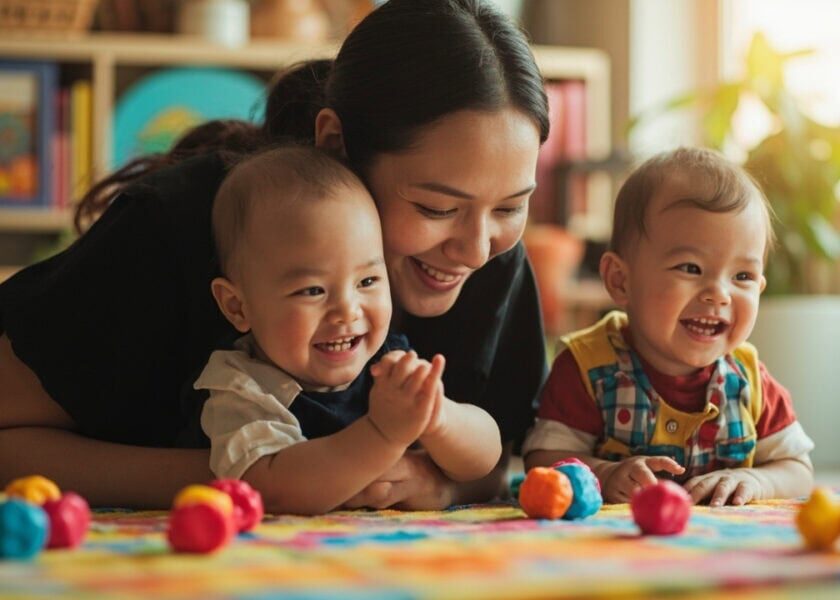
What Long-Term Childcare Delivers for Singapore Families
Beyond the Decision: What Actually Unfolds
We have been taught to think of choosing childcare as a decision. A box to check. A logistics problem solved. But if you are here, reading this, you already know that the decision is not the end of something. It is the beginning of something that will unfold for months, for years, across developmental thresholds you cannot yet imagine, in ways that will compound quietly but unmistakably.
The choice to place your child in quality professional care is not a single act. It is the opening move in a long game. And the families who understand this—who stay, who commit, who allow the relationship to deepen—are the ones who eventually look back and realize they did not just solve a childcare problem. They designed a developmental partnership that grew alongside their child, and in doing so, grew alongside their family.
This is not about the search. Not about comparison shopping or the anxiety of that first interview. This is about what comes after. About the years that matter. About why Singapore parents who choose professional childcare with intention, and stay with it with trust, are not making a compromise. They are making one of the most overlooked and quietly powerful decisions of modern family life.
Starting at the Beginning: The Work of Attunement
Every long story has a beginning, and in early childhood, that beginning is mostly sensation. Hunger and comfort. Warmth and alert states. The quality of being held.
In those early months, the work of a skilled caregiver is largely invisible from the outside but profoundly active within it. It is the work of attunement—of learning the specific rhythms of one small person. Which infant needs to be walked before settling. Which one goes still and watchful when the room fills with new sounds. Which one signals distress in ways that look like nothing until you have been watching long enough to recognize them.
At EduNanny Singapore, we have built our infant care around one simple but demanding principle: that ratio matters. With up to one to three infants per caregiver in our program, we create the conditions for attunement to happen. Not as an aspiration. As a practice.
Because a caregiver who knows three infants deeply can respond to each one as an individual. A caregiver who is stretched across eight or ten begins to manage groups. The difference is not just logistical. It is developmental. It shapes the quality of attention, the speed of response, the depth of the bond forming.
What Parents Often Discover
Here is what many parents do not realize until they see it themselves: that bond does not replace your bond. It grows alongside it.
The infant who comes home from trusted care carrying the ease of a secure morning is not missing you during the day. The infant who has learned that the world is responsive and reliable in your absence carries something back to you that enriches every interaction you have together in the evening, on weekends, in the long gentle hours of being a family. Secure attachment is not diminished by professional care. When that care is quality care, it is built upon.
The first months of professional childcare are, for many parents, the most anxiety-producing. There are the morning goodbyes. The check-in texts. The leap of faith that someone else will notice what you notice, respond as you would respond, love your child as you love your child.
What we have learned, working with families across Singapore through the ECDA Childminding Pilot, is that this anxiety is not a problem to solve. It is a bridge to cross. And the families who cross it—who stay long enough to see the bridge become solid ground—are the ones who come to us months later and say something we hear often: I did not expect to feel this way about it.
What they mean is this. They did not expect the relationship to deepen. They did not expect to receive not just care but insight. To have a caregiver who could tell them, with specificity and warmth, that their child had mastered a new grip, or was suddenly interested in cause and effect, or had been reaching for other children’s toys with a new kind of intent.
They did not expect a daily partnership that would, over time, give them back something they did not know they had lost: the perspective of someone who sees their child in motion, in play, in the full hours of the day—not just in the crystalline but limited moments of family time.
The Shift: When the Infant Becomes a Toddler
There is a shift that happens, and it happens differently for every child, but it happens.
Somewhere between twelve and eighteen months, the infant becomes a toddler. The word is small but the change is enormous. Suddenly the child who was content to be held is pulling away. The child who slept easily is testing the boundaries of nap time. The child who looked to caregivers for comfort now looks to them for something more complex: permission to explore, a secure base from which to range, and—critically—a guarantee of return.
This is the stage where the value of consistency becomes visible, even to those who did not fully understand it before.
A toddler in quality professional care has the extraordinary luxury of exploring with a caregiver who already knows them. Who knows their fears, their thresholds, their particular version of brave. Who does not need to start from zero every Monday morning rebuilding trust. Who can say, with the authority of accumulated relationship: I know you. I know you will be uncertain at first, and I know you will go. I will be here when you return.
The Emotional Architecture of Exploration
At EduNanny, this is the work we take most seriously. Not just the physical safety of the exploring toddler—we take that as given. But the emotional architecture of that exploration. The daily ritual of greeting and separating and reuniting. The communication between caregiver and parent that makes sure both worlds feel connected, that the child is not managing two disconnected experiences but one integrated life where family and care are in conversation.
This is why we built our communication structures the way we did. Not as an app you check occasionally, but as an ongoing dialogue. Photographs that capture not just activity but developmental moment. Notes that say, she did this for the first time today. Updates that say, he seemed frustrated this morning, here is what we tried.
For parents who are navigating the particular pressures of Singapore’s working life—the long hours, the commute, the distance between the morning rush and the evening calm—these small acts of transparency are not luxuries. They are lifelines. They make distance feel like partnership instead of absence.
Research in early childhood development consistently points to the importance of consistent, responsive caregiving relationships in the first three years. When caregivers are attuned to a child’s signals and respond consistently, children develop what researchers call internal working models—mental templates for how relationships work. These templates shape how they will approach relationships for the rest of their lives.
This is not about any single day or any single caregiver interaction. It is about the accumulated weight of consistent, responsive care over months and years. Which is why the choice to stay with quality care, rather than switching between arrangements, matters more than most parents realize when they first begin their search.
The Progression: From Exploration to Social Confidence
By the time your child approaches preschool age, something remarkable has often happened.
The child who once clung to your leg now runs toward their caregiver with familiarity and ease. The child who needed constant physical reassurance now initiates play, solves problems, negotiates with peers. The child who absorbed everything now begins to articulate: what happened today, who played with me, what I learned, why it mattered.
In quality professional care, this progression is not accidental. It is designed.
A skilled caregiver does not simply keep children safe and stimulated. They are tracking development—cognitive, social, emotional, linguistic—and adjusting their engagement accordingly. They are building on what the child mastered last month to introduce what the child is ready for this month. They are creating the scaffolding that will carry a child from parallel play to cooperative play, from single words to sentences, from concrete thinking to the beginnings of imagination and symbolic thought.
The Real Curriculum of Early Childhood
What parents tell us, when their children have been with us for a year or two or three, is that they feel like they have gained something unexpected. Not just childcare. Not just peace of mind. A second set of eyes on their child’s development. A collaborator who has watched the full arc of change and can help them understand it. Someone who has seen what they could not see, because they were inside the experience rather than beside it.
This is what we mean when we talk about compounding benefits. Each month in quality care builds on the month before.
- The trust established in infancy enables the exploration of toddlerhood.
- The exploration of toddlerhood builds the social skills of the preschool years.
- The child who enters primary school from a stable, long-term care environment does not just have academic skills. They have the foundations of confidence, curiosity, and the ability to form meaningful relationships with adults who are not their parents.
These are not soft outcomes. They are the bedrock of everything that follows.
The Parent’s Journey: What Long-Term Care Gives You Back
But we have been speaking mostly about the child. Let us speak now about you.
One of the things that surprises parents most about long-term professional childcare is what it does to their own parenting. Not that it makes them better parents in some abstract, guilt-assuaging way. But that it gives them something they often did not know they had lost: perspective.
When you are with your child all day, every day, especially in the early years, it can be impossible to see the forest for the trees. You know your child intimately but also exhaustively. You see every frustration, every setback, every moment of resistance. You may find yourself anxious about milestones, worried about development, uncertain whether what you are doing is enough. This is not weakness. It is the nature of immersion. You cannot see the pattern when you are inside the tapestry.
Seeing Your Child From a Different Angle
But when you have a caregiver who sees your child in a different context—playful, social, less triggered by the accumulated fatigue of a long day together—you begin to receive a different picture.
Your child laughing with peers. Your child concentrating on something for twenty uninterrupted minutes. Your child asking for help instead of tantruming. These moments, reported back to you with care and specificity, do something quietly transformative. They remind you who your child is becoming. They give you language for development you might have missed. They restore the confidence that close, continuous presence can sometimes erode.
This is what long-term professional childcare offers the parent, not as a side effect but as a central gift: it gives you back to yourself as a more confident, more informed, more present parent. Not because you are doing less, but because you are seeing more. Because you have a partner who reflects your child’s development back to you in ways that help you understand it, celebrate it, and respond to it.
The families who have been with EduNanny through multiple developmental stages often describe this shift. They talk about how the relationship with their caregiver deepened from professional to personal. How they began to share concerns and celebrate milestones with someone who genuinely knew their child. How the evening handover became less transactional and more like consulting with someone who had been part of their child’s life in a meaningful way.
This is not what everyone expects when they sign up for childcare. But it is what happens, reliably, when the conditions are right—when the caregiver ratio is low enough to allow genuine relationship, when communication is consistent and transparent, when both sides commit to the long game.
What Quality Childminding Actually Looks Like
For parents beginning their search, understanding what separates quality care from adequate care is essential. Here is what to look for, and why each element matters.
Caregiver Ratio and Consistency
- One-to-three or better for infants: This is not a luxury. It is the ratio that allows genuine attunement—the caregiver learning your child’s specific rhythms rather than managing a group.
- Consistency of caregivers over time: A rotating cast of caregivers means your child is constantly rebuilding trust from zero. Long-term relationships, where the same caregiver sees your child through multiple developmental stages, are foundational to the compounding benefits described above.
- Low staff turnover: Ask about retention. Providers with high turnover are not building the relationships that matter.
Communication Structures
- Daily updates that go beyond activity: Look for notes that track development—new skills, emerging interests, social observations, emotional patterns.
- Photographic documentation: Images that capture developmental moments, not just posed smiles.
- Two-way dialogue: The best caregivers ask questions too. They want to know what you are seeing at home, because context matters.
- Responsive handover conversations: Five minutes at pickup should feel like a consultation, not a transaction.
Observation and Developmental Tracking
- Individualized attention to developmental stages: Caregivers should be able to articulate where your child is in key developmental domains and what they are working toward next.
- Documentation over time: Portfolios, progress notes, or developmental summaries that show growth across months—not just snapshots.
- Parent partnerships in goal-setting: When you share concerns or hopes for your child’s development, quality providers respond with specific, thoughtful strategies.
Emotional Environment
- Secure base philosophy: The caregiver’s role is to be a stable, predictable presence from which your child can explore and to which they can return.
- Warmth that is genuine, not performed: You should be able to observe—not just imagine—that your child is genuinely cared for, not merely supervised.
- Transparent practices: Providers who welcome observation, answer questions freely, and have nothing to hide are demonstrating the kind of trust that makes long-term partnership possible.
Addressing What Singapore Parents Actually Carry
We would be doing you a disservice if we did not acknowledge something plainly.
Singapore parents face pressures that are real and particular. The cost of living. The demands of dual-income households. The cultural expectations that can make choosing professional childcare feel like a confession rather than a choice. There are relatives who do not understand. There are friends who imply, gently or otherwise, that presence equals quality. There are mornings when the voice in your own head asks whether you are doing enough, being enough, giving enough.
A Plain Word About This
The choice to place your child in quality professional care, made thoughtfully and maintained with intention, is not a compromise. It is not a failure of parental devotion. It is an act of family design.
You are building something. A partnership that will serve your child’s development, yes, but also your family’s stability, your own capacity to parent from a place of abundance rather than depletion, your child’s future ability to form healthy relationships with trusted adults outside the family.
The families who thrive in long-term professional childcare are the ones who stopped asking whether they were doing the right thing and started asking what they could build together. How could this relationship deepen? How could communication improve? How could we both show up as partners in this child’s life?
These questions transform childcare from a service into a collaboration. And it is in that collaboration that the compounding benefits become visible—not all at once, not dramatically, but slowly, reliably, across developmental stages that you will one day look back on and recognize as the architecture of your child’s early life.
The EduNanny Difference: How We Build for the Long Game
We operate across Singapore, and we have designed our program to be accessible to families navigating real financial realities. The ECDA Childminding Pilot that we participate in offers fee structures that make quality care achievable for households who might otherwise feel priced out of the choice they want to make. CDA and Baby Bonus funds are usable, reducing the administrative and financial friction of maintaining care. Monday to Friday care blocks are structured around the actual rhythms of working parents, not around an idealized notion of flexibility that does not exist in most households.
These are not incidental details. They are the infrastructure that allows families to sustain the commitment long enough to see the benefits compound.
What We Offer Across Developmental Stages
| Stage | Our Approach | What Families Experience |
|---|---|---|
| Infancy | One-to-three caregiver ratios. Attunement as daily practice. Daily developmental notes and photographs. | Trust-building. Parents receiving insight into their child’s first milestones. Bridge from anxiety to confidence. |
| Toddlerhood | Emotional scaffolding for exploration. Consistent caregivers who know each child’s thresholds. Daily communication on social-emotional development. | Secure base formation. Children who explore with confidence because they trust their caregiver will be there on return. |
| Preschool Years | Developmental tracking over months and years. Social skills scaffolding. Language and cognitive enrichment. School readiness preparation. | Children who enter primary school with confidence, curiosity, and the ability to form meaningful relationships. Parents who have a collaborator who knows their child’s full arc. |
Transparency as Trust
Where we deploy transparency measures like CCTV, we do so not as surveillance but as reassurance—a signal that we have nothing to hide and every interest in maintaining the kind of trust that makes long-term partnership possible. We offer home-based care for families who want their child in a familiar environment, and community and centre-based pathways for families who value peer interaction from an early age. We meet families where they are, and we stay with them as they grow.
The Daily Partnership
What we offer at EduNanny is not just a service. It is a long-term commitment to being the kind of partner that families can trust across the full arc of early childhood. We track development over months and years. We communicate not just what happened today but what it means in the context of your child’s trajectory. We build relationships with families that evolve as the child evolves, from the trust-building of infancy to the social confidence of the preschool years.
The parents who benefit most from professional childcare are not the ones who hand off and step back. They are the ones who lean in. Who ask questions. Who read the notes and follow up at dinner time. Who treat the caregiver not as a vendor but as a colleague in the most important work of their lives—their child’s development.
This is the daily partnership we talk about. It is not metaphorical. It is practical, deliberate, and profoundly rewarding when both sides commit to it.
Staying: The Word That Captures What Statistics Cannot
There is a word we want to leave you with, because it captures something that statistics and program descriptions cannot.
That word is: staying.
The decision to choose professional childcare is a single act. But the choice to stay—to recommit each month, each year, to a partnership that requires trust and communication and the willingness to be changed by what you observe—this is where the real work and the real reward live.
The families who stay in quality care long enough to see it work are not the ones who got lucky. They are the ones who decided, at some point, that they were not going to let uncertainty undermine a good decision. They chose to trust the process, to invest in the relationship, to believe that the compounding benefits were real even when they could not see them yet.
This is what we believe. That the early years of your child’s life are not just a period to be survived or outsourced or optimized. They are the foundation of everything that follows. And that foundation is built not by any single intervention, however brilliant, but by the consistent, loving, skilled presence of people who know your child and work alongside you to help them flourish.
Beginning the Conversation
If you are already in this partnership with us, thank you. For trusting us with the most important work of your lives. For showing up, day after day, to build something that will outlast these years.
If you are considering it, we want you to know that this is not a short-term arrangement. It is the beginning of a long relationship. And like all relationships that matter, it asks something of you—not perfection, not certainty, just willingness.
Willingness to trust. Willingness to communicate. Willingness to stay long enough to see what becomes possible when a child is known deeply, cared for consistently, and loved by more than the people who share their name.
We are here for that. For all of it. For the years that matter.
And we believe, with quiet confidence, that when you look back—five years from now, ten years from now—you will see this not as a chapter in your family’s story but as one of its defining decisions. The one that gave your child a secure beginning. That gave you back your confidence as a parent. That built something, over time, that you could not have imagined when you first walked through the door.
Ready to explore what a long-term partnership could look like for your family? Speak with our team about your child’s care, your family’s needs, and the journey ahead.
At EduNanny Singapore, we believe every child deserves to be known deeply, cared for consistently, and loved well. We invite you to learn more about our approach and begin a conversation about what we can build together.