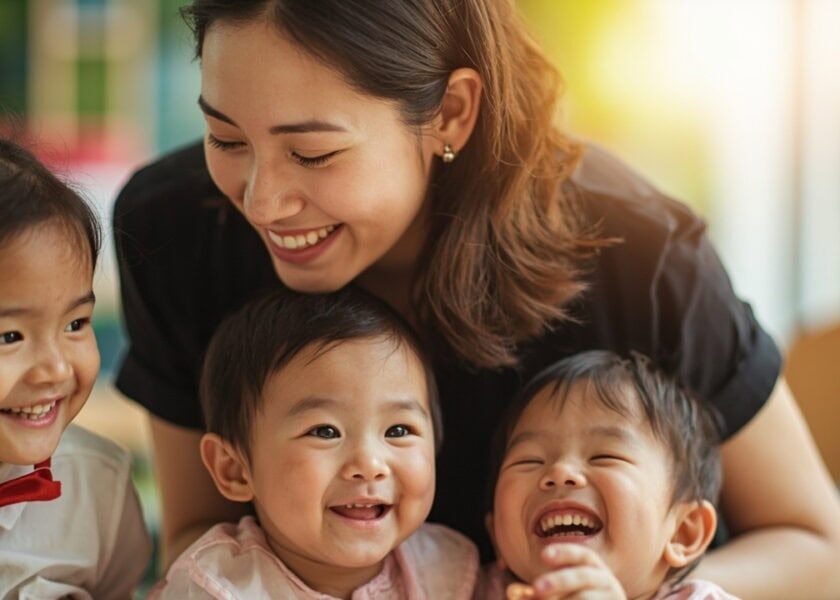
The Unexpected Way Singapore Parents Are Giving Back to Their Parents
The Unspoken Tension Every Singapore Parent Carries
You want the best for your child. You have done the research, toured the options, and found a childcare arrangement that feels right — whether at a centre or through a trusted childminder who can support your little one’s growth in these critical early years.
But something keeps pulling at you.
It might be a comment from your mother over dinner. It might be the assumption in your extended family’s voice when they ask, “So who’s looking after the baby?” It might be the quiet guilt that whispers you are somehow failing the people who raised you.
This tension is not weakness. It is not indecision. It is the mark of someone who takes both their role as a parent and their role as a child seriously — and who wants, more than anything, to honor both.
Singapore’s Cultural Context and What Has Changed
Singapore has long been a society built on family. The expectation that grandparents will be part of raising children is not merely cultural habit; it is woven into how we understand what family means, what parents owe to their parents, what villages are supposed to look like.
And for good reason. Multigenerational care has real value. Children benefit from knowing their extended family deeply. Parents benefit from practical support that allows them to work, to rest, to breathe. Grandparents have historically played a vital role, and many find genuine joy in the closeness that caregiving brings.
But the world has changed in ways that make the old arrangements harder to sustain — and the people we are asking to sustain them are not the same people our parents asked.
Today’s grandparents are living longer, staying more active, and often working well beyond the age their own parents retired. Many are still building careers, still pursuing interests, still very much in the prime of their lives — and they are being quietly exhausted by the assumption that they will simply step into childcare because that is what grandparents do.
When we talk to Singapore parents about why they are drawn to professional childcare, the stories are remarkably consistent:
- A grandparent who is tired, who has quietly admitted — in a kitchen conversation, over the phone, in a moment of rare honesty — that the full-time care they have been providing is more than they bargained for
- Grandparents who love their grandchildren fiercely but who feel trapped by an arrangement that was never explicitly agreed upon, that simply became the way things are
- Parents who sense the strain but do not know how to name it without feeling like they are failing everyone
There is a quiet exhaustion in families across Singapore that no one quite has the language to address.
What Is Really at Stake: Beyond the Surface Conversation
The research bears out what parents intuit. Grandparents who provide regular, intensive childcare report higher levels of stress and lower levels of life satisfaction than those who are involved as grandparents rather than substitute caregivers.
The emotional quality of the relationship with grandchildren suffers not when grandparents are less present, but when they are present out of obligation rather than desire.
And for many grandparents, the very thing they wanted — closeness, joy, the pleasure of spoiling a grandchild — gets buried under the relentless work of full-time care.
This is not a failure of love. It is a failure of the old script to match the new reality.
A Better Way: Professional Childcare as Restoration
There is a way forward that does not require anyone to choose between what is best for their child and what honors their parents. Professional childcare, chosen thoughtfully, is not a rejection of your family. It is a gift to your family. And in many cases, it is the most respectful thing you can do for the very people you are most worried about disappointing.
Think about what you actually want for your parents. You want them to be present in your child’s life. You want their relationship to be built on joy rather than duty, on weekends at the park rather than endless afternoons of managing a toddler’s energy. You want your child to run to them not because they are the ones who are always there, but because they are the ones who are always happy to see them.
Professional childcare gives all of that room to exist.
We have seen this transformation in families across Singapore:
- A grandmother who spent years as the primary daytime caregiver, exhausted and isolated, rediscovering her relationship with her granddaughter as someone who comes with treats and songs and fun
- A grandfather who finally had time to take up photography again, to travel, to live a full life — and who now tells anyone who will listen that his grandson’s eyes light up when he arrives because the visits mean something again
- A family where the tension that once lived between generations dissolves into something simpler and warmer: gratitude
This is what we mean when we talk about restoring the village. Not the old village where grandparents were default, where no one asked what they could sustain, where care was assumed rather than chosen. The new village, where every relationship — parent to child, grandparent to grandchild — is built on what it can actually give rather than what it is obligated to provide.
What Quality Childcare Looks Like — and How to Evaluate Your Options
We know this sounds simple when stated plainly, and we know that the reality of making this choice is anything but simple. So let us be practical, because the emotional part and the practical part are not separate.
What professional childcare does, when it is done well, is something no grandparent should be asked to replicate:
- Structured, developmentally appropriate care that supports your child’s growth in the earliest and most critical years — not as a substitute for family, but as a complement to it
- Consistent ratios of trained caregivers to infants, ensuring that your child receives attentive, responsive care rather than being one of many demands on a single overwhelmed adult
- Regulatory oversight within frameworks established by our authorities, subject to standards that parents can trust and verify
- Transparent communication with parents — daily updates about your child’s progress, their eating, their sleep, their milestones
- Safe, nurturing environments designed specifically for infant development
When evaluating your options, look for arrangements that offer:
- Caregivers with proper training in infant care, first aid, and early childhood development
- Caregiver-to-infant ratios of up to 1:3 for attentive, responsive attention
- Daily updates, photos, and transparent reporting on your child’s day
- Participation in recognised frameworks that signals serious, intentional care
- Clean, baby-proofed spaces designed for infant exploration and development
Finding Care That Serves Your Whole Family
EduNanny Singapore works in partnership with established names in quality care like BUTLER, participating in pathways such as the ECDA Childminding Pilot — pathways that reflect a serious, intentional approach to raising the standard of home-based and community-based care across Singapore.
Where measures like careful caregiver-to-infant ratios of up to one to three are maintained. Where communication with parents is ongoing and transparent. Where families have access to arrangements that fit Monday through Friday care blocks and that can be made more affordable through eligible structures including CDA and Baby Bonus provisions.
This is not about finding the cheapest option or the most convenient one. It is about finding care that you can trust with complete confidence — care that communicates with you daily about your child’s progress, care that operates with the transparency that modern parents rightly expect. And it is about doing this in a way that leaves your family stronger, not divided.
Navigating the Conversation with Your Family
The fear that parents often carry — “Will my parents feel rejected?” — is valid, and dismissing it would be disrespectful to the real complexity of family relationships. These tensions exist whether or not you choose professional care. Families navigate these dynamics in many ways.
What we have seen, consistently, is that when parents approach this decision from a place of honesty and care — acknowledging what grandparents have given, and expressing a desire for their relationship with grandchildren to be built on joy rather than obligation — the response is often relief that no one expected.
Common Concerns, Honestly Addressed
“What if my parents need the income from childcare?” This is a different situation that requires its own honest conversation. If grandparents are relying on childcare income, that is a financial reality that needs to be addressed separately from the emotional question of what serves your child best. Families in this situation often find creative solutions, but the conversation must be had with transparency and care.
“How do I explain this to extended family who won’t understand?” You are not obligated to defend your parenting decisions to everyone. Sometimes the most loving thing you can do is make the right choice quietly, without seeking approval from those who may not yet understand it. Over time, as they see the results — a happier child, more present grandparents, a less stressed family — understanding often follows.
How to Begin the Conversation
In our experience, these conversations often begin with honesty:
- Not asking permission, but offering explanation
- Acknowledging what they have given, what they have meant to your child’s life
- Expressing what you hope they will continue to give — not out of obligation, but out of the fullness of who they are
Many families find that once the initial adjustment passes, the response from grandparents is relief they did not expect:
- A parent who said, “I think I finally understand what you did for us, and I don’t want you to have to do it again”
- A grandparent who admitted, quietly, that they had been waiting for someone to give them permission to step back
- A relationship that deepened precisely because it was no longer carrying a weight it was never designed to bear
The Choice for Your Whole Family
This is the choice we are inviting Singapore parents to make: not a choice between family and quality, not a choice between your child’s needs and your parents’ feelings, but a choice that honors the full complexity of what it means to care for everyone you love.
We believe that what Singapore parents are doing when they choose thoughtful, professional childcare is not turning away from their families. They are turning toward a better version of family life — one where grandparents stay the people their grandchildren look forward to, where parents have the confidence that comes from knowing their child is thriving, and where children receive the quality of care and attention that sets them up for everything that comes next.
The first thousand days of a child’s life are not just a developmental window. They are the foundation of everything that will be built upon them. And the decisions made in those days — the ones that feel small, the ones that keep you up at night, the ones that involve everyone you love — matter in ways that compound over time.
Choose what you know is right. Choose what serves your whole family. And trust that when you choose well, you are not letting anyone down.
You are giving everyone back something precious: the freedom to be exactly who they are meant to be in your child’s life.
When you are ready to learn more about what thoughtful, professional childcare can look like for your family, we would be glad to hear from you. Not to tell you what to decide, but to walk alongside you as you explore the options available — and to help you find an arrangement that you can feel confident and clear about.
Thank you for trusting us with this conversation. It has always been more than just about childcare. It has always been about family.