The Three Signals Your Child Brings Home From Care
The Pickup Moment Every Singapore Parent Knows
You arrive at the childcare door in the late afternoon, your bag still heavy with the morning’s urgency. There is your child. Perhaps running toward you with arms open. Perhaps hesitating at the threshold. Perhaps already crying before you have even come into full view.
The reunion happens in seconds. But something has been building all day—something you did not witness, cannot see now, and yet somehow feel pressing against your chest like a question you cannot quite ask.
Was there patience when the separation anxiety peaked? Was there genuine engagement, or merely supervision? Was your child held with kindness when the tantrum came, or simply managed until you arrived?
You cannot step inside the classroom. You cannot rewind the afternoon. But you are not, in fact, without information. Your child has been speaking to you all along—in the way they run, in the way they pause, in the pitch of their cry, in the absence of their usual smile.
The only question is whether you know how to listen.
What Quality Care Looks Like
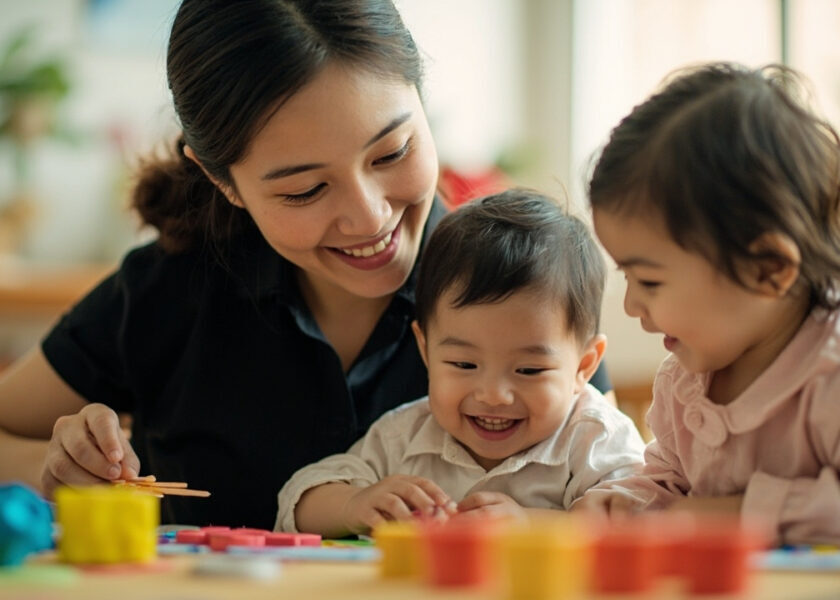
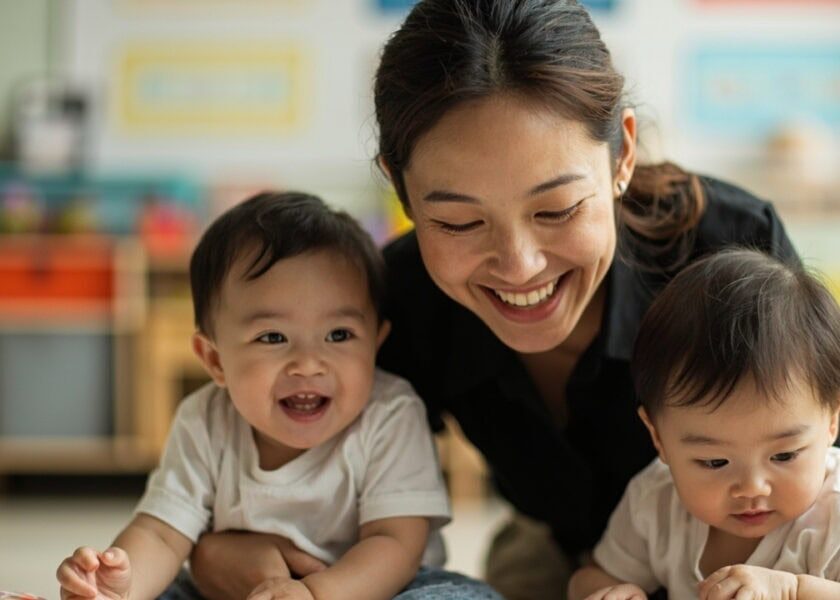
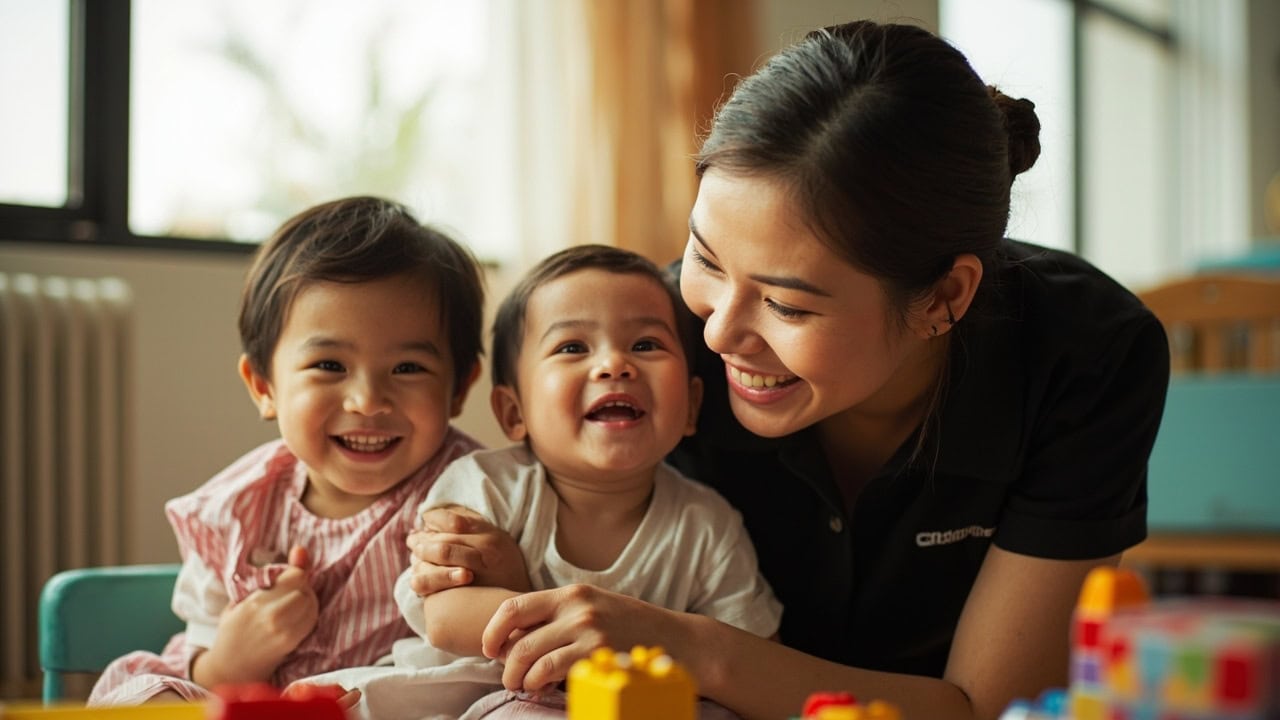
When your child spends their day in an environment designed for young minds—where the ratio of caregivers to infants allows for real attention, where feeding, sleeping, and playing unfold with consistent warmth—something begins to show in the child.
Not immediately. Not dramatically. But steadily, over weeks and months, the evidence accumulates. A child in excellent care does not merely pass the time. They develop. And development in young children is not internal or abstract—it is expressed outward through behavior.
Quality care produces observable outcomes: emotional ease, physical vitality, social engagement, and language development that accumulates over time. You may not be able to name the difference at first. But your body knows. The ease in your chest. The lightness in the room. The way your child settles into your arms and remains settled.
These are not imagined. They are the visible results of a day that went well.
The Three Signals Your Child Is Showing You
Children communicate through behavior. Once you know to look for it, these signals organize themselves into categories that become useful and clear.
Signal 1: Emotional Register at Reunion
At reunion, notice the emotional tone your child enters. Is there a burst of genuine joy—the kind that is almost too big to contain? Is there relief, yes, but relief without panic?
A child who has spent the day in a secure, warm environment does not typically arrive in a state of high distress. The baseline emotion at pickup from quality care tends to be contentment mixed with excitement, not anxiety mixed with grief.
Of course, all children have difficult days. Teething, tiredness, ordinary toddler turbulence will show up regardless. But the child who is chronically arriving home in a state of emotional dysregulation—unable to calm, unable to settle, spending the first hour after pickup in tearful distress—is communicating something important about what the day held.
Signal 2: Physical Presence and Vitality
Notice your child’s body when they arrive. Are they moving with ease and confidence? Is there a relaxed physicality, a willingness to run and climb and explore that carries into the home environment?
A child in quality care tends to arrive home with energy—not exhaustion, not listlessness, but the kind of alert tiredness that comes from a day of meaningful activity. Their motor development has been supported. They have had space to move, to push boundaries, to test their growing capabilities in a safe environment.
Signal 3: Social and Language Development
Listen to the language your child brings home. Quality infant care is rich in interaction—conversational, responsive, attuned.
A child in a high-quality setting hears language constantly: being narrated to, being sung to, being responded to with genuine attention when they point or babble or cry. This accumulates. By pickup, you may notice new words, new sounds, new gestures they did not have before.
The social and language development that happens in quality care is not accidental. It is the direct result of caregivers who have the time, the training, and the ratios to truly interact with each child rather than merely watch them.
Why This Matters in Singapore
Singapore parents face a childcare landscape that is stretched, competitive, and often opaque. The infrastructure exists—centres, home-based care, community pathways—but the quality within that infrastructure varies enormously, and parents have limited access to the information that would help them choose wisely.
There is also the matter of time. Singapore parents are working. Long hours, demanding careers, the particular intensity of urban professional life mean that parents are often dropping off and picking up in states of their own exhaustion. They want to trust their childcare, but trust is hard when you are running on four hours of sleep and your child is screaming at the door.
The gap between what you want to believe and what you actually know can feel enormous. You arrive home wondering. You lie awake second-guessing. You replay the morning’s goodbye and wonder if there was something you missed.
The goal is not a perfect child. It is a child who arrives home whole—ready to share the day rather than recover from it. When these outcomes appear consistently, you do not have to take anyone’s word for it. You have evidence. You have your own eyes.
EduNanny: Partnership, Not Just Care
EduNanny exists to close that gap—not by making promises we cannot keep, but by creating the conditions that produce the observable outcomes you can verify for yourself.
We participate in the ECDA Childminding Pilot and operate within the fee structures and funding pathways that Singapore has thoughtfully provided for families raising young children. This is not charity. It is infrastructure, designed to make quality care accessible.
Ratios That Allow Real Attention
In our home-based and community pathways, and in the centre-based settings where our model applies, we maintain ratios that allow for genuine interaction. With up to one to three infants in our infant care arrangements, each child receives real attention, real conversation, real presence—not the diffused oversight that comes when one caregiver is responsible for too many.
Communication as Trust
Our caregivers are trained to be your eyes and your partners in reading your child. They do not simply care for your child and send them home at the end of the day. They document. They share. Through the communication channels built into our model—transparent, consistent, and responsive—our caregivers make visible what would otherwise remain hidden.
In certain settings, we offer CCTV access not as a surveillance feature but as a trust feature—because we understand that parents in Singapore need to feel, at some level, that they can reach into the day. We believe in earning that trust through what we do, not merely promising it.
Support That Extends Home
Childcare does not end when you walk through your own front door. Our Thomas AI Chatbot is available to answer your parenting questions, to help you understand what you are seeing in your child, to provide guidance on infant development, sleep, feeding, and the thousand small concerns that arise when you are raising a child under three.
Parents deserve support that is responsive and intelligent, available in the moment rather than scheduled for some future appointment. Thomas is there when you need it.
Your Questions, Answered
How do I know if the care is actually good?
You already know more than you think. Your child’s behavior at pickup is a legible signal. The question is whether you have a childcare partner who helps you interpret it—and who produces the kind of care that makes the signals unmistakably positive.
What if my child has an off day?
All children have difficult days. Teething, growth spurts, disrupted sleep, ordinary toddler turbulence will show up regardless of care quality. What you are looking for is not perfection. You are looking for pattern. A child who arrives home consistently dysregulated may be telling you something important. A child who has occasional rough days but returns to ease is exactly what healthy development looks like.
I don’t have time to analyze all of this.
You do not need to become a childcare expert. You need a framework that confirms what you already intuitively sense, and a partner who actively helps you see what is happening during the day. That is our job—to give you the information you need in a form you can use, so that every pickup leaves you feeling clear rather than uncertain.
What makes EduNanny different?
We are not simply another childcare option in a crowded market. We are a different kind of commitment—to the infant care pilot that ECDA has recognized as worth investing in, to the home-based model that brings care into a domestic environment rather than an institutional one, to the community model that builds neighbourhood into the childcare experience.
Our caregivers are trained professionals who understand infant development, who have been equipped to notice and document the signals we have been describing, and who see their work as part of a larger purpose: raising children who are secure, curious, and ready for the world they will grow into.
We believe in the dignity of the childminder. We believe that the woman or man who spends eight hours a day attending to your infant’s needs is doing meaningful, skilled, important work. And we believe that when this work is done well, you will see it—in your child’s face, in your child’s body, in your child’s voice.
Come and See for Yourself
Return with us, one final time, to that moment at the pickup door.
You arrive. You see your child. And what you see now—the ease in their face, the way they reach for you without desperation, the way they are happy to see you but also seem to have been happy where they were—tells you something.
It tells you that the morning was good. That the hours were not merely survived but inhabited, explored, enjoyed. That your child was known, attended to, responded to with warmth.
You do not have to guess anymore. You do not have to go home wondering. You can read the evidence. And when the evidence is consistently good, you can rest in a way that Singapore parents rarely allow themselves—not because you have been reassured by marketing, but because you have seen it with your own eyes, in your own child.
Bring your child to a place where the signals will be unmistakably positive. Where the reunion will be joy, not distress. Where your child’s behavior will tell you everything you need to know—and where we will help you learn to read it.
You came here looking for reassurance. You leave with evidence.
And that changes everything.
If you are exploring quality childcare and childminding options in Singapore, we welcome you to learn more about EduNanny, our approach to developmental infant care, and how we support families through the ECDA Childminding Pilot. You are also welcome to reach out to us directly with any questions.