The Signs Your Child Is Showing You About Their Thriving
The Insight That Changes Everything
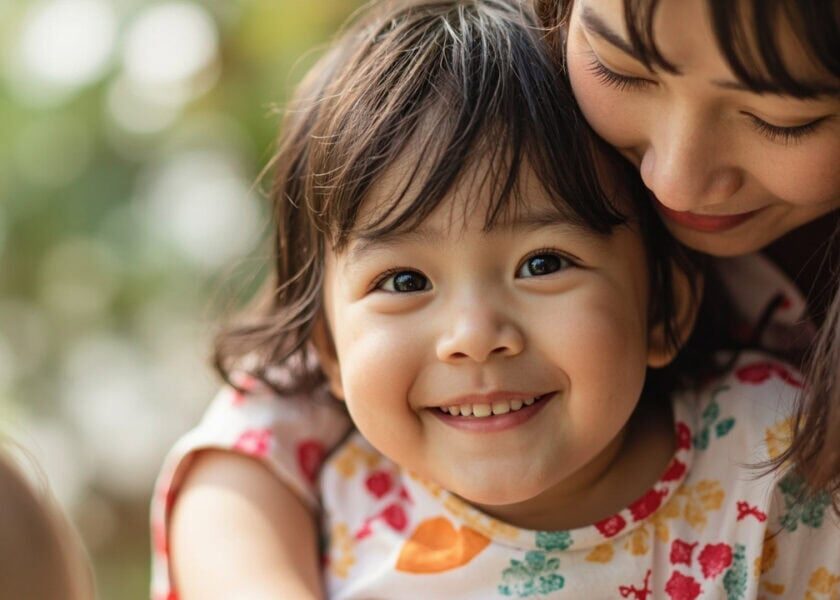
Here is what we believe at EduNanny Singapore: Your child has been answering that question all along. Not in the reports or the photos, though those matter. Your child has been answering in every hug that lingers a little longer at drop-off, or the way they pull away confidently toward their teacher. In the songs they hum without realizing they learned them. In the way they talk about their friends, or refuse to leave the playground, or come home hungry in that particular way that means they were too busy playing to remember to eat.
Children are not passive recipients of childcare. They are, in the most profound sense, its primary witnesses—and they are always, always telling us the truth.
This is the insight at the heart of everything we do. Not that parents should become detectives, or that quality can be reduced to a checklist of observable behaviors. But that children themselves are the most honest, most accessible, most meaningful evidence of whether the care they receive is truly excellent.
When we learn to read that evidence—when we understand what a thriving child actually looks like in their specific, individual way—we gain something no tour, no certification, no caregiver conversation can fully provide. We gain confidence that comes not from trusting someone else’s word, but from seeing the truth written in our own child’s development.
The most powerful evidence of quality childcare is not the credential on the wall or the ratio on the form. It is the child who runs toward the door each morning. The child who talks about their day in the car, not because they have been coached, but because they have something they genuinely want to share. The child whose milestones arrive not as isolated achievements but as part of a visible unfolding—language arriving in clusters, social confidence emerging in waves, emotional regulation becoming possible because the foundation of security has been built well.
What Thriving Actually Looks Like: Reading Your Child’s Signals
Understanding what your child shows you is not surveillance. It is connection. It deepens your relationship with your child and affirms the caregivers doing excellent work. Here is what to look for.
The Language Your Child Brings Home
When a child comes home and talks about their day, the content matters less than you might think. The fact that they are talking at all—that they have language available to them, that they want to use it to share their experience—this is the signal.
A child who is developing well in a high-quality environment will often come home with stories, even small ones. Not detailed reports, not curated summaries, but fragments of experience rendered into language because the experience was vivid enough to remember and important enough to share.
For Singapore families, this might show up as your toddler suddenly singing a Chinese nursery rhyme you have not taught them, or naming fruits in Malay during meals, or using English phrases that clearly came from their care environment. These language gifts are not just adorable—they are evidence that your child has been in an environment rich with interaction, repetition, and genuine engagement.
What Your Child’s Play Reveals
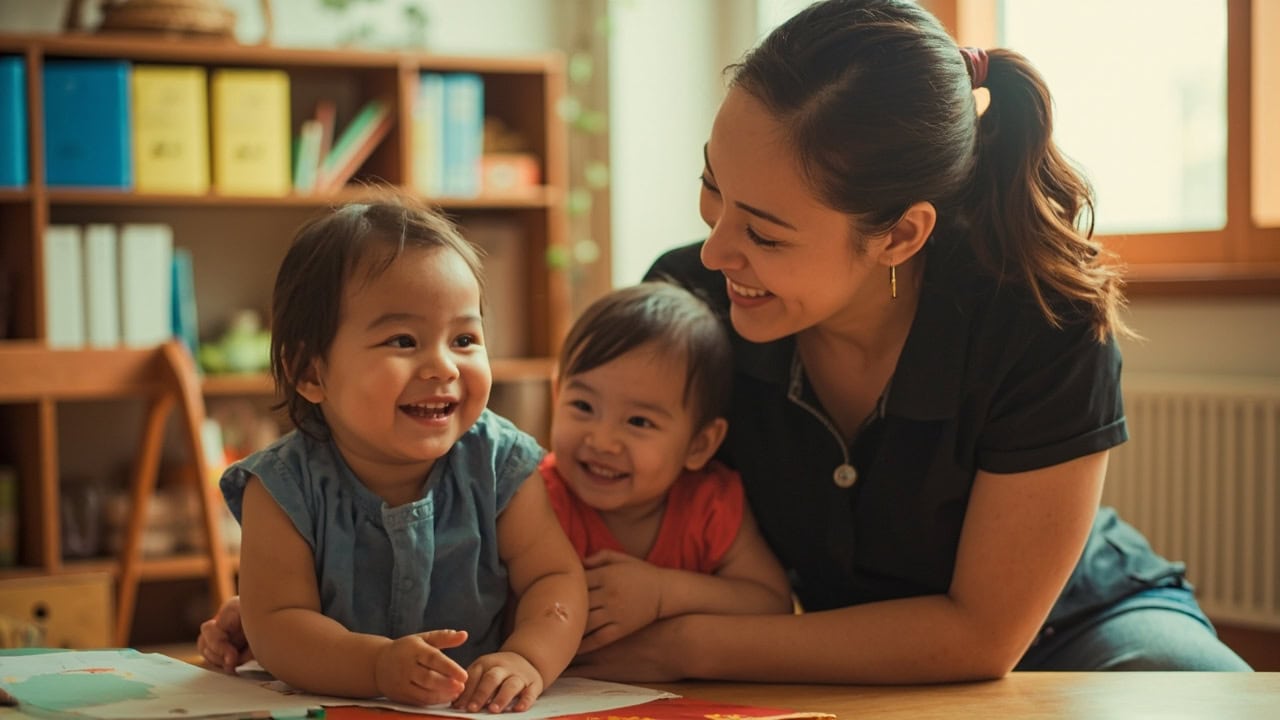
Consider what your child’s play tells you. Play is not decoration on the surface of a child’s day. It is the medium through which children process experience, build cognitive capacity, develop social intelligence, and reveal their emotional state.
When your child comes home and plays, watch what they do:
- Do they play alone with confidence, inventing scenarios, building complexity?
- Do they include others, negotiate roles, manage conflict within the play itself?
- Do they return to themes from their childcare day—a song from circle time, a character who represents a teacher or friend?
A child who plays with imagination and persistence and social engagement is a child who is developing well in all the domains that matter. And that development does not happen in a vacuum. It happens in environments that support it.
The Daily Pattern of Settling and Returning
There is also the question of settling—the daily ritual of separation and return that happens every single morning and every single afternoon. How your child moves through these transitions tells you something vital about the quality of their childcare experience.
Not because a child who cries at drop-off is being poorly cared for—many secure, thriving children take time to warm up to new routines, and separation distress is a normal developmental phenomenon. But because the pattern over time reveals something.
- A child who struggles intensely at drop-off for months, who seems to have no positive associations with the place, who comes home depleted rather than energized, is communicating something important.
- A child who settles reasonably quickly, who begins to show anticipation or even excitement over time, who comes home ready to engage but not wrecked from the day—that child is telling you something different.
The daily pattern of settling and returning is not noise. It is signal.
The Broader Arc of Development
And then there is the broader arc of development—the way milestones arrive, the rhythm of your child’s growth over weeks and months. When care is excellent, development tends to cluster.
- Language explodes not in isolation but alongside social initiation.
- Motor skills develop alongside cognitive problem-solving.
- Emotional regulation emerges alongside peer relationships.
This clustering is not coincidental. It reflects the kind of integrated, responsive environment that supports the whole child. When you can see your child’s development as a coherent unfolding rather than a series of isolated checkboxes, you gain the ability to trust what you are seeing, to feel confident that the visible thriving is real and meaningful.
What Quality Childminding Actually Looks Like in Singapore
For infants and young children, quality is not abstract. It shows up in the small moments that add up over time: the way a caregiver responds when a baby fusses, the attention available when a toddler is working through a big emotion, the consistency that allows a child to feel secure enough to explore.
This is why the ratio matters so much in infant care. When one caregiver is responsible for too many children, responsiveness becomes impossible. The crying baby is not picked up quickly. The emerging language is not reflected back. The individual child gets lost in the logistics of management.
When ratios are thoughtful—particularly in home-based settings—each child can be truly known. Each interaction can be calibrated to the individual child. Each moment of emerging development can be noticed and supported.
Why Ratio Matters
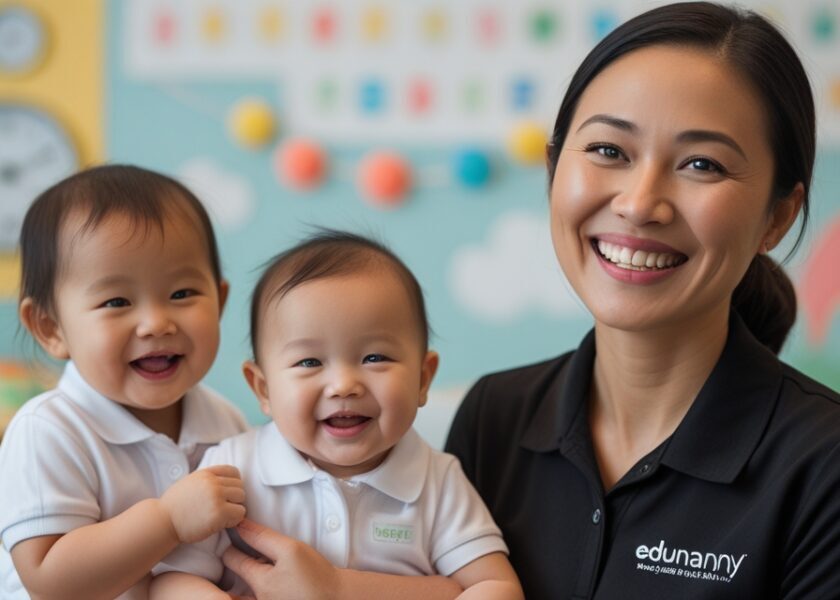
At EduNanny Singapore, our commitment is to ratios of up to one caregiver to three infants. We say “up to” deliberately, because in practice we often maintain even lower ratios when the needs of the children in our care call for it.
It means that in our home-based settings, a caregiver can truly know each child—can notice the slight changes in mood, can respond to distress before it escalates, can engage in the kind of back-and-forth interaction that builds language and emotional regulation. It means that the reports we send to parents are not summaries of activities. They are observations of individual children, grounded in real attention.
The ECDA Childminding Pilot
EduNanny Singapore, part of the BUTLER family, is proud to participate in the ECDA Childminding Pilot. This framework reflects years of thoughtful policy development aimed at raising the quality and accessibility of infant and toddler care across Singapore. By operating within this framework, we are committed to standards that prioritize the child’s experience first and foremost.
Our home-based care model reflects our understanding that infants and young children thrive in environments that feel nurturing and consistent—environments where the ratios allow for genuine responsiveness, where every interaction can be calibrated to the individual child.
Addressing the Practical Concerns Singapore Families Have
On Affordability
We understand that for many families, the question of affordability is not secondary—it is primary. We believe that high-quality infant care should not be a privilege available only to those with significant means.
Within the ECDA Childminding Pilot framework, our fee structures are designed to be accessible. Many families are able to utilize their Child Development Accounts and Baby Bonus funds to offset costs. Our team is prepared to help families navigate the administrative landscape so that financial concerns do not become a barrier to excellent care.
On Part-Time Arrangements
For families whose circumstances call for part-time arrangements—those who need Monday to Friday care blocks rather than full-time enrollment—our model accommodates that reality as well.
The quality of your child’s experience does not depend on the number of hours they spend in care. It depends on what happens during the hours they are there. A child who spends focused, attentive mornings in a high-quality environment, with consistent caregivers who know them well, will often show development that rivals children in full-time programmes. Duration matters less than quality.
A New Way of Seeing Your Child
When we talk about reading your child’s signals, we are ultimately talking about something that goes beyond childcare assessment. We are talking about a deeper, more intimate relationship between parent and child.
Most parenting advice focuses on what parents should do to or for their children. What we are suggesting is something different: that children have something to say to us, and that listening to them—not just hearing them, but really listening—transforms the way we experience parenthood.
When you come home and ask your child about their day, and they tell you something small and specific and real, you are receiving a gift. Not the gift of information, but the gift of connection. The gift of being included in a life that moves forward whether or not you are present for every moment of it.
This is what we want for every family in our care. Not just a childcare service, but a partnership in your child’s development. Not just a caregiver, but someone who knows your child well enough to notice when they are thriving, and to help you notice it too.
The Question Worth Sitting With
At the end of every day, that is what matters most. Not the checklist or the tour or the qualification on the wall. The child. The actual, specific, irreplaceable child who comes home to you.
And what that child shows you, when you know how to read it, is everything.
If you have ever stood in that suspended space—if you have ever wondered what your child experiences during the hours you are apart, if you have ever wanted to trust your childcare choice not just because someone told you to, but because you could see it in your own child—then I want you to know that this is possible.
You do not have to choose between trust and evidence. You do not have to accept secondhand reassurance when your child is a firsthand witness. The signals are there. Your child is telling you the truth. And when you learn to hear it, you will find something you may not have expected: not just confidence in your childcare decision, but a deeper connection to the child who is, in the end, the whole reason any of this matters.
We would be honored to walk this path with you. To be the people your child tells stories about. To be the environment that produces the play, the language, the settling, the development that tells you everything is right.
At EduNanny Singapore, we believe that quality is not a promise we make. It is a result we help produce—visible in every thriving child, legible to every parent who is paying attention.
Your child has always been showing you the truth.
Let us help you read it.
Ready to learn more about how EduNanny Singapore can support your family? We invite you to schedule a conversation with our team to explore how our home-based childminding programme—within the ECDA Childminding Pilot—might be the right fit for your child and your family.