The Morning Goodbye as a Skill Singapore Parents Can Master
The Morning Goodbye: Understanding This Moment
There is a moment that happens every morning in homes across Singapore. A small hand holds yours a little tighter. A voice asks, “Do you have to go?” And in that moment, something in you wants to stay.
You are not alone. This is the experience of hundreds of thousands of working parents in this city, and it is time we stopped treating it as something to simply endure and started recognizing it for what it truly is: one of the most important emotional lessons you will ever teach your child.
Here is what research tells us about this moment:
- The morning goodbye is not a problem to solve. It is a skill to build.
- Your child is more capable than your anxiety tells you.
- Consistent, calm morning rituals build neural pathways that say, “This is safe. I know what comes next.”
- Quality childcare does not replace you. It extends your emotional presence.
- The morning goodbye shapes your child’s capacity to learn, connect, and face the world with confidence.
If you take nothing else from this article, let this be it: you are not failing your child by leaving. You are teaching them that love is not dependent on constant physical proximity. You are teaching them that people leave and return, and that both parts of that cycle are safe.
The Science of the Secure Base
Consider for a moment what your mornings look like. The alarm that feels too early. The bag you check twice. The breakfast negotiations. The nappy changes and the searches for the left shoe. And then, at the end of all of it, the moment you pick up your child and deliver them to the care of someone else.
For many parents in Singapore, this is where anxiety lives. You hand your child over, and a thousand questions follow: Will she cry when I leave? Will he feel abandoned? Is he ready for this? Am I failing him by leaving?
These are not small concerns. They are the weight of love, and they deserve more than dismissal. They deserve honesty. They deserve a reframing.
Here is the honest truth: your child is more capable than your anxiety is telling you. And the morning goodbye, when handled with intention and care, is not a moment of loss. It is a moment of teaching.
In child development research, this is called the concept of the secure base. Your child uses you as a launching point. When you are present, consistent, and emotionally attuned, your child feels safe enough to explore. They feel secure enough to leave.
Here is what most parents in Singapore do not realize: the morning goodbye is not the opposite of that security. When done well, it is the proof of it.
Think about what your child experiences in those morning moments when you prepare to leave. Their nervous system is registering a change. A transition is about to happen. The familiar figure who has been their primary source of comfort is going to disappear, and something new is going to begin.
For a child who has not been taught that this is manageable, that transition can feel like a small emergency. But for a child who has been guided through it, again and again, with the same calm and confident rituals, the same loving words, the same predictable sequence of events, the transition becomes something else entirely.
It becomes a signal. A signal that says, “The world is about to get interesting.”
Building a Morning Ritual That Teaches Resilience
Consistency matters more than perfection. Your child is not just learning to say goodbye. They are learning the rhythm of a world that changes predictably.
When you kiss them at the same moment. When you say the same words. When the transition from your arms to the caregiver’s arms follows a pattern they recognize. You are not being rigid. You are being architectural.
You are building neural pathways that say: “This is how we do this. This is safe. I know what comes next.”
And when your child knows what comes next, they do not need to panic. They can trust the process.
What Your Child Reads From You
Your child reads you. Not just your words, but your body, your pace, your tone.
- If you rush through the goodbye because you are anxious about being late, your child reads that urgency as evidence that something is wrong.
- If you linger in a way that is hesitant, your child reads that hesitation as permission to doubt.
- But if you move through the goodbye with calm confidence, if you name the moment, if you say clearly and warmly what is happening and when you will return, your child absorbs that steadiness. They carry it into the hours ahead.
Elements of a Confident Morning Goodbye
A morning goodbye that teaches resilience contains these elements:
- Predictability: Follow the same sequence of events every morning. Same kiss. Same words. Same caregiver handoff.
- Clarity: Name what is happening. “I am going to work now. Auntie Sarah will take care of you. I will come back after snack time.”
- Confidence: Move through the goodbye with calm steadiness. Your child catches your emotional state.
- Return language: Always tell your child when you will return. Use concrete references they understand: “After nap” or “When the clock says three.”
- Brief goodbyes: Resist the urge to linger. A long, tearful farewell does not comfort your child. It teaches them that leaving is frightening.
What Quality Childcare Looks Like
The morning goodbye is not only your teaching. It is a collaboration.
The quality of the childcare you choose does not just affect your evenings. It affects your mornings. It affects whether your child can trust that the world on the other side of your goodbye is one where they will be held, engaged, and supported until you return.
This is not about finding a caregiver who will replace you. No one can replace you, and any honest conversation about quality childcare begins with that acknowledgment.
What quality childcare does is something different and, in its own way, just as important: it extends your emotional presence. It creates a bridge between your home and the hours you are away.
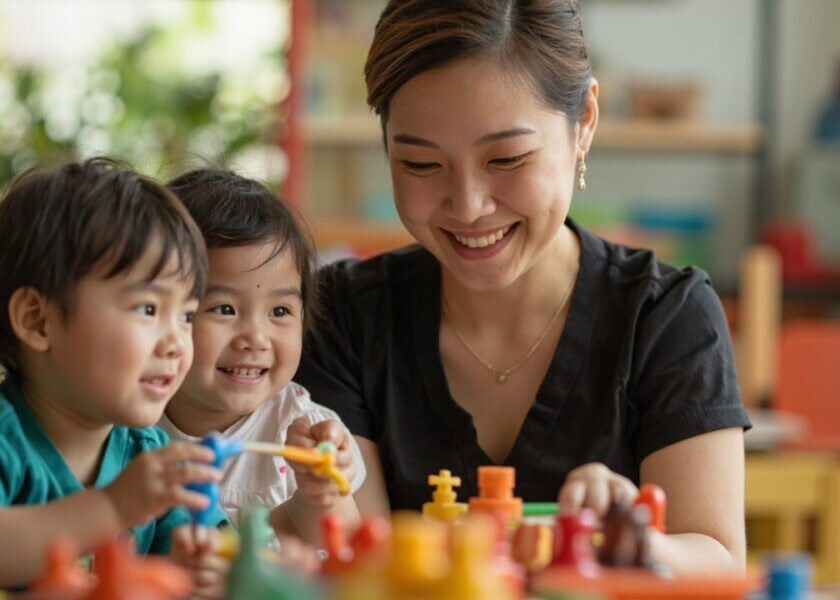
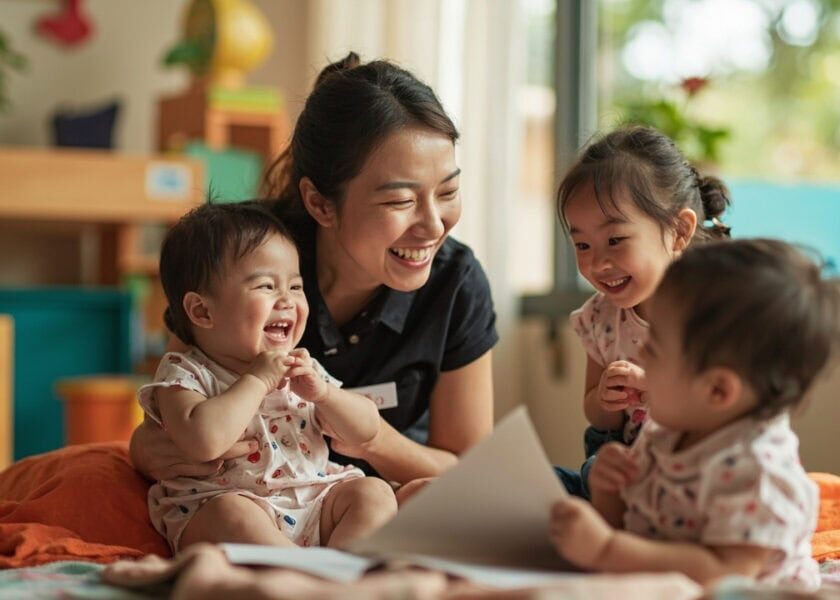
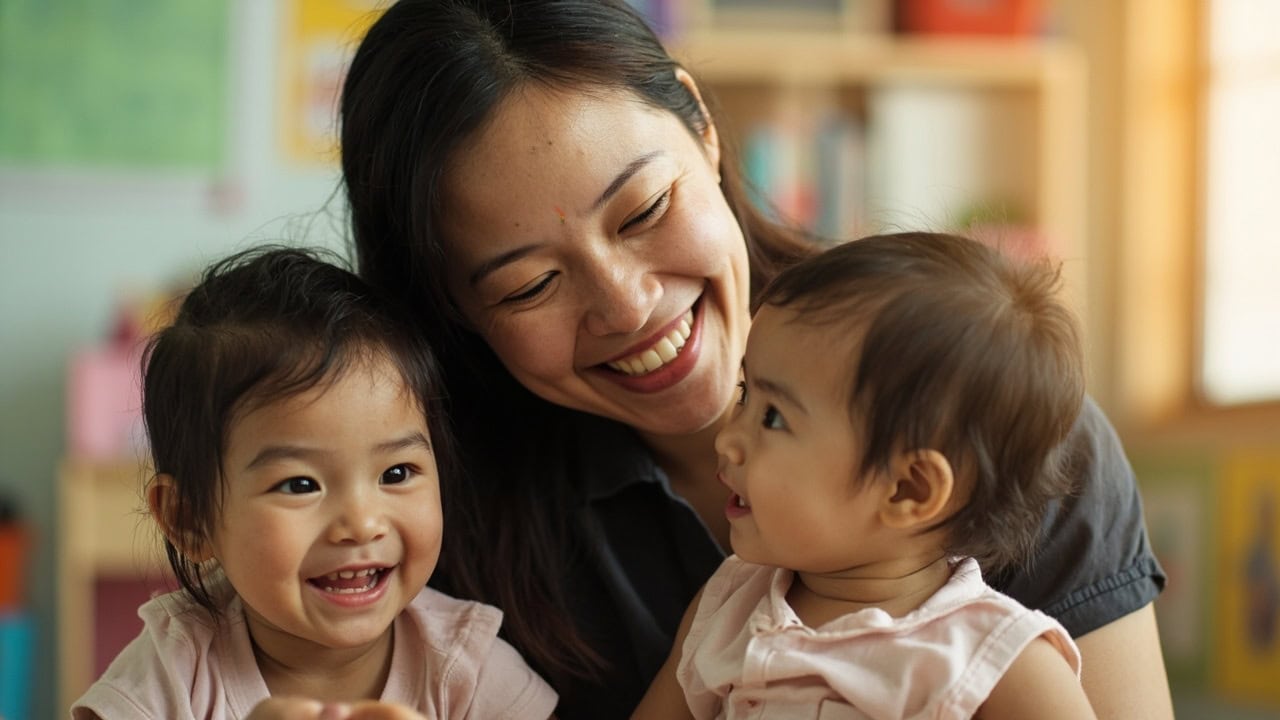
When your child walks into a space where the caregiver is warm, attentive, and prepared to receive them with genuine care, your child does not experience your absence as a void. They experience it as a transition to a known and trusted territory.
Signs of Quality Morning Transitions
A caregiver who understands the morning goodbye does the following:
- They do not rush your child past their feelings.
- They do not dismiss the moment with a hurried, “Mummy’s coming back, now let’s play.”
- They receive your child with patience, with presence, and with an understanding that this child’s morning has just included a significant emotional event.
- They give your child space to arrive. They give them time to settle.
- They carry forward the same consistent, calm attention that you have been building all morning.
Questions to Ask Your Childminder
When evaluating a childcare arrangement, ask yourself these questions about the morning transition:
- Does my child arrive to a calm, prepared environment?
- Is the caregiver present and attentive during drop-off, not distracted or rushed?
- Does my child feel received, not just accepted?
- Are there consistent rituals for morning arrival, similar to what we have at home?
- Does the caregiver communicate with me about how my child settles?
Questions That Keep Parents Up at Night
Is My Child Ready?
Readiness is built through repetition, not through waiting for some magical moment of independence. Your child learns readiness by practicing readiness. Every morning you walk through that door with calm confidence, you are building readiness.
Am I Failing My Child by Leaving?
This belief comes from a place of love, and love deserves respect. But the version that goes unchallenged can keep parents in a state of guilt that does not serve them or their children.
Your child does not need your constant presence to feel loved. They need your consistent presence in the moments that matter, and they need the world you create for them when you are not there to be an extension of the love you carry in you.
What you build is more important than what you provide constantly. The rituals you establish. The emotional skills you teach. The environment you choose. The caregiver you trust. These are the things that carry your influence beyond the walls of your home.
What If My Child Cries Every Morning?
Tears during the morning goodbye are not evidence that something is wrong. They are often the expression of a child who has a healthy attachment and is processing a real transition. What matters is not the absence of tears, but what happens after.
A child who cries at drop-off but settles within minutes, who is engaged and curious once you are gone, who returns to you at the end of the day still attached and warm—that child is learning exactly what they need to learn.
A child who never cries but also never engages, who seems flat or withdrawn—that child may need a different approach to the morning transition.
Pay attention to what happens after you leave. Ask the caregiver. Watch for signs of genuine engagement, not just compliance.
The Long Game: How This Shapes Your Child’s Future
Every morning, your child is learning something about themselves and about the world:
- Whether the people who love them can be trusted to return.
- Whether the world outside their home is a place they can explore.
- Whether their feelings during transitions are valid and witnessed, or dismissed and rushed past.
- Whether leaving someone you love is something that breaks you, or something that makes you more whole.
You have more influence over that learning than you know. And so does the childcare you choose.
When your child walks into a childcare setting each morning and can do so with relative calm, with an expectation that the next few hours will be engaging and safe, they arrive ready to learn. They are not depleted by anxiety. They are not spending their cognitive and emotional energy managing fear. They are present, available, curious.
This is the connection between the morning goodbye and Primary One readiness, and it is one of the most underappreciated relationships in early childhood development.
Redefining Parental Presence
You are not the only emotional provider in your child’s life, nor should you want to be.
A child whose entire emotional world depends on one person is a child who is vulnerable. A child who has learned to trust other caring adults, who has experienced that your goodbye leads to a warm reception and engaging activities and someone who will comfort them when they are sad—that child is a child who is becoming resilient.
That child is learning what psychologists call earned security: the understanding that while attachment figures are essential, they are not the only source of safety in the world.
This is not a call to do less for your child. It is a call to do differently, and to trust that different does not mean worse. It means bigger. It means your child’s emotional world is expanding, and that expansion is one of the primary tasks of the early years.
Moving Forward With Confidence
Every morning, across Singapore, parents and children are living through a moment that most parenting content ignores. They are standing at the door, holding each other, preparing to separate.
And for most of them, this moment is clouded by anxiety, by guilt, by uncertainty.
It does not have to be.
The morning goodbye is a gift you give your child. Not because leaving is easy, but because teaching your child to leave well is one of the most profound acts of love you can offer.
You are not leaving them. You are launching them. You are showing them that the world is large and that they are capable of navigating it.
And every morning you walk through that door with calm confidence, you are writing a message into your child’s nervous system that says: “You are ready. I trust you. And when I come back, we will have so much to share.”
The door is not an ending. It is a beginning. And every morning, you and your child walk through it together, even when you walk in opposite directions.
You are doing something remarkable. You just may not know it yet.
EduNanny Singapore offers infant care and childminding services grounded in the understanding that every morning is a developmental opportunity. Our ECDA Childminding Pilot framework is designed to support your child’s emotional development from the very first goodbye—and to give you the confidence that comes from knowing they are in trusted, thoughtful hands.
To learn more about how EduNanny can support your family, visit our homepage or get in touch with our team.