The Hidden Gift of Quality Childcare for Companionable Siblings
Quick Summary: What Siblings in Quality Childcare Really Gain
- The bond deepens, not just coexists. In quality care, siblings learn each other on their own terms—without parents mediating every interaction.
- Co-regulation happens naturally. When one child fusses and another moves closer to comfort them, both are learning empathy that lasts into adulthood.
- Shared hours create a private language. The experiences only your children share in childcare become the foundation of a bond that outlasts childhood.
- Quality matters more than quantity. A low caregiver-to-child ratio means siblings have space to find each other without chaos crowding out connection.
- The right childcare extends your family. It creates conditions where siblings practice being companions, not just housemates.
The Quiet Hope Every Parent Carries
There is a quiet hope that lives inside most parents, long before they even put a name to it. It is the hope that their children will not merely share a home, not merely share a surname or a birthday tradition, but that they will actually choose each other. That when the world is complicated and the years press forward, their children will look to one another and find something familiar, something safe, something that no amount of distance or disagreement can fully erase.
You feel it when you watch your toddler reach for a crayon and your older child instinctively hands them the blue, knowing it is the favorite. You hear it in the way your six-year-old asks you to save the last bite of cake, not for herself, but for her brother. These moments are small. They are easily overlooked in the rush of schedules and groceries and the weight of everything you carry as a parent. But they are also everything.
Long before you brought your second child home from the hospital—or even before you decided to have a second child—you may have imagined something specific. You imagined your children as adults, finding their way through the world, and knowing that somewhere in the distance, someone who shares their blood and their earliest memories would always be there.
This is not wishful thinking. It is one of the most profound investments parents make when they choose to expand their family: the hope that their children will be companions through life, not just people who share an address.
But here is the tension that silently weighs on many Singapore parents: you want your children to companion each other. You want the morning car rides and the shared toys and the quiet moments of connection. Yet you also have a life to return to—deadlines, commutes, the real economics of raising a family in Singapore. You need childcare. And somewhere in the back of your mind, a question lingers: does childcare support the sibling bond, or does it simply supervise siblings in the same space?
What Quality Childcare Actually Looks Like
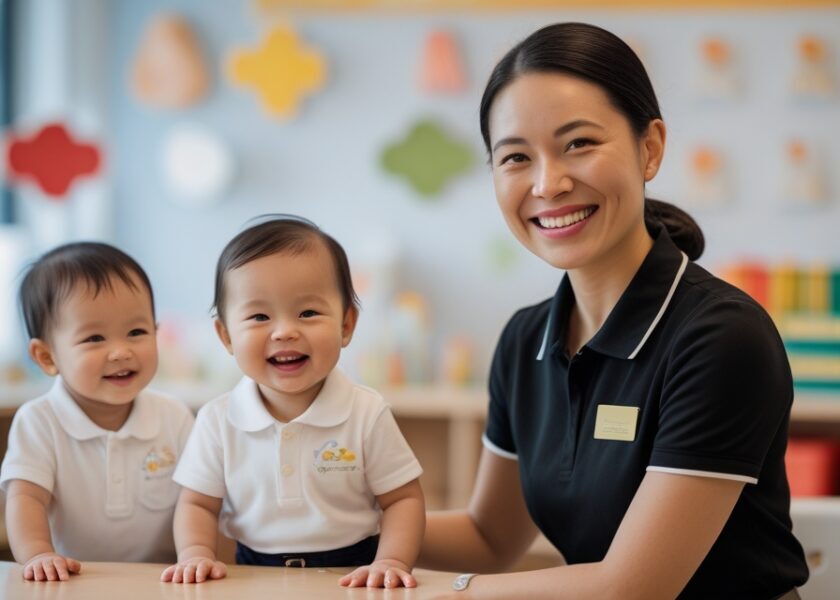
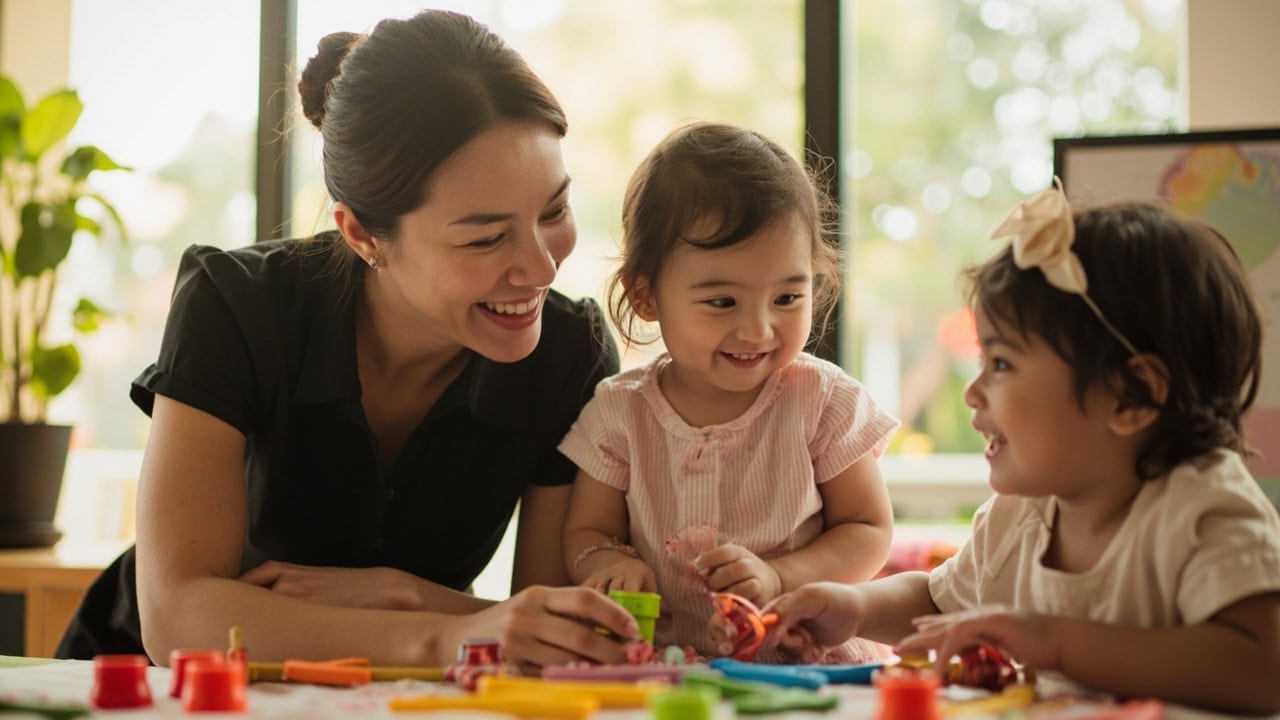
When siblings are in quality care together, something ordinary and extraordinary happens in the same breath. The hours are not dramatic. There is no ceremony, no milestone marker on a chart. Two siblings may sit at the same low table during snack time, reach for the same block in free play, or nap in cots separated by only a few feet of floor. The world sees two small children in a room.
But inside that room, something is being built that no amount of adult attention or engineered curriculum can replicate.
The Difference Between Coexisting and Connecting
In quality childcare, siblings learn each other on their own terms—not in the way they learn each other at home, where parents mediate, where the rhythm of the household shapes who speaks first and who waits. In quality care, siblings discover each other through their own interactions, their own negotiations, their own moments of friction and resolution.
They learn that when they cry, someone who looks a little like them and shares a little of their world will sometimes look over. Sometimes offer comfort. Sometimes simply sit nearby in a way that says you are not alone. They learn the texture of each other’s moods, the rhythm of each other’s laughter, the particular silence that means a sibling is tired or frustrated or quietly content.
This cannot be taught. It can only be experienced, repeatedly, over time, in the presence of safety and space.
What Creates Connection
This is precisely why the quality of the childcare environment matters so deeply. When siblings are in a space that is merely supervisory, they may be kept safe, fed, changed, and watched. But safety alone does not create the conditions for connection.
What creates connection is:
- Low caregiver-to-child ratios that allow caregivers to notice when children gravitate toward each other
- Philosophy over protocol—a setting where caregivers trust the process and do not interrupt bond-building with excessive intervention
- Consistent routines where siblings share the same morning light, the same rooms, the same sounds and rhythms
- Space to reach for each other—enough freedom to take small risks in connection, enough safety to be helped up when they fall
When you observe your children at the end of a long day—the way your older child tells your younger one something that happened during the day, a small joke, a shared look that requires no translation—you are witnessing something that took months or years to build. That shared language did not emerge from instructions. It emerged from hours spent together in a space where they were genuinely present to each other.
Co-Regulation: The Skill Siblings Teach Each Other
One of the most meaningful things that happens in quality sibling care is what educators call co-regulation. You may have heard this term in relation to the bond between caregiver and child—and it is true that a warm, responsive caregiver helps a child learn to regulate their own emotions. But co-regulation does not only happen between an adult and a child. It happens between siblings.
When your toddler sees your baby begin to fuss and instinctively moves closer—perhaps patting their back or bringing a soft toy into view—something meaningful is occurring. Your toddler is learning to read emotional cues, to respond with care, to take on a small measure of responsibility for another’s wellbeing.
Your baby is learning that distress can be met, that another person can be a source of comfort, that the world contains someone who will come toward them when they call.
These moments happen dozens of times in a single day in quality sibling care. They are not scripted. They cannot be rushed. They require an environment where children have enough freedom to reach for each other, enough safety to take small risks in their connection, and enough consistent presence from caregivers who trust the process.
What This Means for Your Children’s Future
The child who learns to soothe a fussy sibling becomes the child who notices when a classmate is hurting. The baby who is comforted by a sibling’s presence becomes a child who reaches out to others in distress. This is not sentiment. This is the beginning of empathy—and empathy is one of the most durable gifts a sibling can give another, not just in childhood but in every chapter of life that follows.
The Shared Story Only Your Children Know
Here is something that often surprises parents: the hours children spend in quality childcare are not lost hours. They are not a pause in family life. They are an extension of it, in ways that are both practical and profound.
When your children wake in the same home, travel in the same morning light to the same place, spend their day in the same rooms with the same sounds and rhythms, and then return to you at the end of the day—they are sharing an experience that belongs only to them. You were not there. Your parents may not have been there. But they were there, together, and the hours they spent navigating the small social world of their childcare day become a private language only they fully understand.
This is why the sibling bond in quality care is different from the sibling bond in a home where children are raised primarily by one caregiver, or where siblings are in different rooms, different programs, different buildings. When children share the same space, the same caregivers, the same routines, the same small triumphs and small frustrations, they are writing a shared story that no one else can edit.
And that shared story becomes the thing they return to when they are twenty-five or forty or sixty. The thing that reminds them they came from the same place, the same people, the same early years of learning who they were in relation to another.
The Evening Moment That Captures Everything
There is a moment that captures something essential about what quality sibling care makes possible.
It is a weekday evening. You have finished work. You have traveled home through the familiar Singapore traffic or the MRT crowds. You open your door, and your children come toward you—not just with the eagerness of seeing you, but with something else. They are talking to each other. Perhaps your older child is telling the younger about something that happened during the day, a small joke, a shared discovery, a private reference that makes you realize they have been building a world together that does not include you.
And you feel it. That particular relief that is not just about them being safe, not just about the day being over. It is the relief of knowing that they have each other. That even when you are not there, they are not alone. That the bond you hoped for is real and growing and will be there in the mornings and the weekends and the years to come.
How EduNanny Singapore Supports the Sibling Bond
This understanding—of sibling connection as a developmental gift of quality childcare—sits at the heart of everything EduNanny Singapore does. It is not an accident or a byproduct. It is a deliberate philosophy woven into every element of our service.
The ECDA Childminding Pilot Framework
EduNanny operates under the ECDA Childminding Pilot, and this is significant. The pilot framework reflects Singapore’s commitment to developmental standards, safety, and a philosophy of care that supports the whole child—including how children relate to the siblings beside them. When you choose EduNanny, you are choosing a service that has been recognized for meeting these standards, not just for individual care, but for relational care.
Home-Based Childminding: Where Siblings Feel At Home Together
Our home-based childminding option means your children are cared for in an environment that feels like home. The routines of daily life—shared meals, shared play, shared rest—create the natural conditions for sibling connection. There is no artificial separation, no forced scheduling that pulls siblings apart. Instead, there is the gentle, consistent rhythm of siblings learning to be together because they are simply living together, in a space outside your home but shaped by the same values you hold.
For families who prefer a community or centre-based pathway, EduNanny also offers options where siblings move through the same spaces, encounter the same caregivers, and build their shared world within a carefully considered environment.
Infant Ratios That Make Connection Possible
Our infant ratios of up to one to three mean that when your children are in our care, they are not numbers in a room. They are individuals whose relational lives are seen and supported. When a caregiver is responsible for only a handful of infants, she can notice when your children gravitate toward each other. She can allow space for the small reaches and responses that build the sibling bond. She does not have to manage chaos. She can attend to the quiet, meaningful moments that define a childhood.
Trust Through Transparency
We know that trust is earned through transparency. Where deployed, our CCTV measures and open communication policies mean you are not guessing about what your children are experiencing. You can see. You can ask. You can rest knowing that the hours your children spend in our care are hours spent in a space that values what you value—your children growing up together, companioning each other, building the bond that will outlast all of us.
Support That Meets You Where You Are
When it comes to the practical realities that matter to you—the fee structures within the pilot, the usability of CDA and Baby Bonus, the Monday to Friday care blocks that fit around your working life—EduNanny has been designed to meet you where you are. We know Singapore parenting. We know the cost of quality, the weight of returning to work, the guilt and the gratitude that can live in the same chest as you hand your children over in the morning. We have built our service to honor that complexity, not to erase it.
What to Look For: A Parent’s Guide to Choosing Quality Sibling Care
If you are beginning to search for childcare in Singapore, here are the questions worth asking—not just about safety and credentials, but about whether the environment will genuinely support your children in learning to companion each other.
Questions to Ask During Your Visit
- What is the caregiver-to-child ratio? Lower ratios mean more attention to relational moments, not just supervision.
- Do siblings spend time together, or are they separated by age groups? Both models have merit, but if you want your children to build a bond, ask how the programme facilitates sibling connection.
- How does the daily routine support free play and unscheduled interaction? Some of the most meaningful sibling moments happen when children are not directed to interact but are simply allowed to be together.
- What is the philosophy around caregiver intervention? You want caregivers who notice sibling interactions, allow natural resolutions, and resist the urge to mediate every small disagreement.
- How does the environment handle moments of friction? Friction is where siblings learn to negotiate, compromise, and repair. The best childcare settings allow this to happen with gentle oversight, not constant interruption.
Signs of Quality to Observe
- Siblings who seek each other out during free play
- Older siblings who naturally help younger ones without being asked
- Children who show awareness of each other’s moods and respond with care
- A caregiver who notices these moments and creates space for them
- Routines that allow siblings to share meals, rest, and transitions together
The Reframe That Changes Everything
When you choose quality care for your children, you are not outsourcing your role. You are expanding it. You are creating a second home where your children learn to be siblings, where they practice the art of companionship, where they discover in each other the first enduring friend they will ever have.
The sibling bond is one of the most resilient forces in human development. It outlasts friendship, outlasts school, outlasts many of the certainties of adult life. And it begins, quietly, in the shared hours of a quality childcare day—when two small children reach for each other and find, for the first time, someone who understands what it means to be them.
What quality sibling care offers is not just supervision. Not just safety. A companion. A witness. A person who shares the same first memories of a place outside the home, the same first friendships, the same small joys and frustrations of the early years.
At EduNanny Singapore, we do not take this lightly. We know that the hours your children spend in our care are not ours. They are yours, extended. They belong to your family, to your children, to the bond you hoped for and are now watching grow.
We are honored to hold that space. We are honored to be part of what your children give each other.
Because what your children give each other—that is something no one else can give. And it is the quietest, most enduring gift of quality childcare of all.
If you are ready to explore how EduNanny Singapore can support your children’s bond—through home-based childminding, centre-based care, or anything in between—we would love to hear from you. Schedule a conversation with our team, ask your questions, and let us show you what quality sibling care looks like up close.
Your children are already learning to companion each other. Let us help them do it well.
Learn more about EduNanny Singapore and our approach to quality childminding.