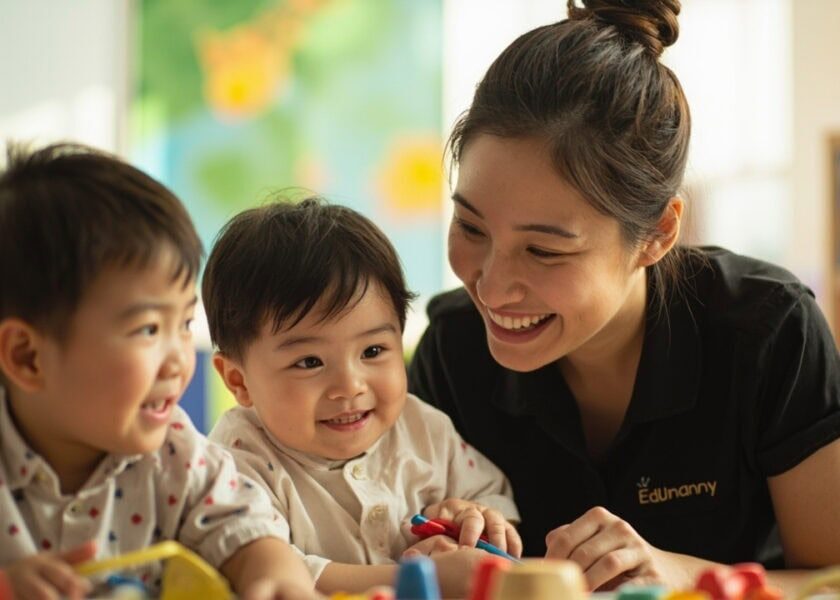
The Freedom to Be Fully Human as a Singapore Parent
The Question Singapore Parents Don’t Ask Out Loud
There is a question that many Singapore parents carry quietly. Sometimes it surfaces in the car before you pull into the office car park. Sometimes it surfaces late at night when the house is finally still.
It is not a question about whether your child is ready for school, or whether the infant care curriculum is developmentally appropriate. It is a question you rarely say aloud because it feels almost shameful to ask.
It sounds like this: Am I allowed to want more than this?
More than the morning routine. More than the commute, the meeting, the report, the presentation, the dinner you heat up while your child reaches for your phone. More than being someone’s parent—which you love, profoundly, and which also exhausts you in ways that are difficult to describe to people who do not live inside them.
The question is: Am I allowed to want my own life to flourish too?
If you have ever felt that question rise in your throat and then pushed it back down, I want you to know something. You are not a bad parent. You are a whole person who happens to be a parent, and that wholeness is not a betrayal of your family. It is, in fact, the very thing your family needs.
This is the conversation we want to have with you—not as a lecture on child development, though we care deeply about that. Not as reassurance that your child will be safe, though we care about that too. We want to speak with you about something that most childcare conversations in Singapore never touch. We want to speak with you about you.
Quality Childcare Is Infrastructure, Not Compromise
Singapore has a way of making parents feel that wanting your career to flourish alongside your family is somehow a compromise. That asking for space to breathe, to think, to be something other than Mum or Dad is an admission of failure. That quality childcare means you are handing off your responsibilities to someone else.
We are here to reject that story.
Quality childcare is not a compromise. It is not a necessary burden you endure while your child is young so that you can get back to your real life later. Quality childcare is infrastructure. It is the foundation that allows your entire family to thrive—not just your child, but you, and your partnership, and the home you are building together.
When we talk about infrastructure, we mean it in the same way you would talk about roads, or reliable public transport, or good schools in your district. These are the structures that make a functioning, flourishing city possible. They are not luxuries. They are the basic architecture of a life that works.
Quality childcare is that kind of architecture for your family.
Here is what we have observed, working with families across Singapore: when children are in environments that genuinely nurture their development, something shifts in the family ecosystem. The background hum of anxiety that many parents carry—the mental load of wondering if your child is okay, if they are being stimulated enough, if they are safe, if they are happy—quietens. Not because the questions disappear, but because the answers become visible.
You receive updates. You see photographs. You hear about the morning song circle and the afternoon sensory play and the way your child laughed when the caregiver made a funny face. And something inside you unclenches.
That unclenching is not a luxury. It is the thing that makes you present at dinner. It is the thing that allows you to listen when your partner talks about their day without your mind half-calculating tomorrow’s drop-off schedule. It is the thing that gives you the cognitive space to think about a promotion, or a career pivot, or simply to rest—actually rest—because you are not running on fumes.
Consider the average Singapore morning in a dual-income household. The alarm goes off at six. By seven, you are already negotiating with a toddler who refuses to wear the socks you chose. Breakfast is eaten standing up, if at all. You drop your child at infant care with a lingering look in the rearview mirror, then spend the first fifteen minutes of your commute wondering if they settled in okay.
That morning—the friction, the guilt, the divided attention—it does not just affect your morning. It follows you. It erodes your reserves. It makes you less patient at the 10am meeting, less creative in your afternoon presentation, less present at dinner.
Now imagine a different morning. Your child is dropped off with a caregiver who already knows their favourite stuffed animal, who greets them by name, who sends you a quick photo within the first hour. You drive to work knowing your child is settled, stimulated, and cared for.
That is what quality childcare does. It changes the energy you bring to everything else.
The Paradox of Letting Go to Be More Present
There is a paradox at the heart of quality childcare, and we want to name it because it is the most beautiful thing about what genuine, thoughtful childcare can offer families.
The paradox is this: when you entrust your child to the right people, you become a better parent.
Not because you are replaced. Not because the caregiver does what you would do. But because you are freed.
- You are freed from the exhausting performance of perfection.
- You are freed from the guilt that tells you wanting time for yourself means you are failing your child.
- You are freed to be present in the moments that matter, because the moments that used to erode your energy—those frantic mornings, that background worry—are no longer eroding you.
This is not wishful thinking. This is what we see families experience when childcare is done well.
- A parent who has space to work with focus returns home with patience.
- A parent who has time to pursue something that matters to them comes back renewed, not depleted.
- A partnership that has breathing room—time to be husband and wife, not just Mum and Dad—has more to give to their child, not less.
Singapore asks so much of its families. The cost of living, the competitive professional culture, the relentless pace—it creates a pressure cooker environment where parents feel that they must choose. Choose between career and family. Choose between ambition and presence. Choose between being a whole person and being a good parent.
But here is the truth that no one tells you enough: you do not have to choose. And the way you refuse that false choice is by building the right infrastructure around your family.
Quality childcare is not the alternative to being present. It is the thing that makes presence possible.
What Quality Childminding Actually Looks Like in Singapore
If you are researching infant care options in Singapore, you have probably encountered a wide spectrum of choices—from large centre-based infant care facilities to home-based childminding arrangements. Understanding what quality actually means can help you make a decision that serves your whole family, not just your childcare logistics.
The Elements That Matter Most
When evaluating childminding options, these are the elements that research and experience tell us matter most:
- Caregiver ratios: In infant care, smaller numbers mean more responsive attention. For infants, having up to three children in care with one attentive caregiver allows for genuine responsiveness to each child’s cues and needs.
- Communication and transparency: Parents need to know what happens during the day—not through intrusive updates, but through thoughtful, regular communication that lets you feel connected to your child’s world.
- Caregiver consistency and warmth: Children thrive with consistent caregivers who know them—who understand their rhythms, their preferences, the little things that make them feel safe.
- Developmental appropriateness: Quality care is not just supervision. It is intentional engagement with the child’s developmental stage, through play, interaction, and responsive caregiving.
- Parent partnership: The best childcare services see themselves as working with parents, not replacing them. They communicate honestly, welcome questions, and support the family’s overall wellbeing.
Home-Based vs Centre-Based: Understanding Your Options
In Singapore, parents generally have two pathways for infant and childminding care:
| Approach | Key Features | Considerations for Parents |
|---|---|---|
| Home-Based Childminding | Trained caregiver comes to your home; smaller ratios; child stays in familiar environment | Often feels more personalised; child may be more comfortable; caregiver becomes part of family rhythm |
| Centre-Based Care | Child attends a dedicated care facility; structured environment; more children in group settings | Structured schedules and programmes; socialisation opportunities; different environment from home |
Both approaches can serve children beautifully when delivered with care and intention. The right choice depends on your child, your family rhythm, and what works best for your situation.
Addressing the Concerns Singapore Parents Don’t Voice
We know that choosing childcare is not a simple decision. It is loaded with emotion, worry, and the weight of wanting to do right by your child. So let us address some of the concerns we hear most often from parents in Singapore.
“I feel guilty for leaving my child”
Guilt is not a sign that you are doing something wrong. Guilt is a sign that you care deeply. But here is what we want you to consider: the guilt you feel about leaving your child is often connected to not knowing whether they are okay once they are in care.
That is not vanity. That is not helicopter parenting. That is a legitimate need—the need to trust that your child is in good hands. Quality childcare addresses this directly. When you can see your child’s day unfolding positively—when you receive updates, hear about what they did, see photographs of them engaged and happy—the guilt quiets. Not because you stop caring, but because caring and confidence start to coexist.
“Will my child be safe and truly cared for?”
This is the foundational question, and it should be asked of any service you consider. Look for evidence of quality: training and credentials, ratios that allow for genuine attention, communication practices that keep you informed, and transparency about how care is delivered.
Where our services are deployed, we implement communication protocols that keep parents connected—not with constant interruptions, but with thoughtful updates that let you breathe. In locations where CCTV measures are in place, we ensure they are deployed with transparency and purpose. These are not surveillance measures. They are trust measures. They are the things that allow you to let go.
“Can we afford quality childcare?”
Affordability is a real consideration for Singapore families, and we take it seriously. We work within the ECDA Childminding Pilot fee structures to ensure that quality care is accessible. We also support the use of the Child Development Account and Baby Bonus schemes where applicable, because we know that Singapore families plan carefully, and we want to be part of that planning, not an obstacle to it.
“What if the caregiver is not the right fit?”
Finding the right caregiver is not unlike finding the right teacher for your child—it matters, and it is worth getting right. Quality services invest in matching processes that consider your family’s values, your child’s temperament, and your preferences as parents.
The relationship between caregiver and family should feel like partnership, not transaction. If something is not working, good services listen and adapt.
How to Choose Childcare That Serves Your Whole Family
If you are in the research phase—comparing options on your lunch break, reading reviews, asking other parents—here is some practical guidance for making a decision you will feel confident about.
Questions to Ask Any Childcare Provider
- What are your caregiver-to-child ratios?
- How do you handle communication with parents during the day?
- What is your training and qualification process for caregivers?
- How do you support a child’s developmental needs in daily care?
- What does a typical day look like for a child in your care?
- How do you handle situations when a child is unwell or upset?
- How can parents give feedback or raise concerns?
Signs of Quality to Look For
- Caregivers who seem genuinely warm and engaged with children, not just attentive to rules
- Communication that feels thoughtful and regular, not intrusive or sparse
- A service that asks about your child—your child’s preferences, temperament, routine
- Transparency about how things work, including how concerns are handled
- Flexibility within structure—willingness to adapt to your family’s specific needs
The Decision Factor Most Parents Overlook
When choosing childcare, parents often focus entirely on whether the service is good for their child. This is natural and important. But we encourage you to also ask: Is this service good for me?
Does this arrangement give you cognitive and emotional space? Does it reduce your background anxiety, or add to it? Do you feel respected and supported as a parent, or merely accommodated?
The best childcare decisions serve the whole family. When parents thrive, children thrive. When parents have room to breathe, they have room to be present. Choose a service that understands this.
EduNanny Singapore: Built for the Whole Family
EduNanny Singapore is a service built on a simple but profound conviction: that every family deserves access to childcare that works for the whole family, not just the child.
We are part of the BUTLER ecosystem, and we operate under the ECDA Childminding Pilot, which means we are part of a deliberate, government-supported effort to create more options for Singapore parents—options that are affordable, accessible, and grounded in real quality.
We offer home-based childminding through trained caregivers who come to you, who become part of your family’s rhythm, who learn your child’s cues and preferences and the little things that make them feel safe. We also work within the centre-based pathway for families who find that environment works better for them.
Our caregiver ratios are designed with your child’s wellbeing at the centre. With up to one to three infants in care, we ensure that every child receives the attention and responsiveness that their development requires. In those early years, in the first thousand days especially, the quality of human responsiveness that a child receives shapes so much of who they become. We build our service around this knowledge because we believe every child deserves to be truly seen.
Our Monday to Friday care blocks are structured around the rhythms of working families. We know that the logistics of childcare can sometimes feel like an equation that never balances—pick-up times, work meetings, that gap between school end and care start. We design with these realities in mind, not because we assume families fit a perfect mould, but because we know they do not.
We are always working to make this easier. Our Thomas AI Chatbot is one example—a tool designed to answer the questions that arise at odd hours, to help parents navigate the practical and emotional terrain of childcare with more confidence and less friction.
But here is what matters more than any feature or service detail. What EduNanny Singapore offers is not just a childcare arrangement. What we offer is partnership. We are not here to replace you as a parent. We are here to stand beside you, to hold up part of the weight so that you can carry the rest with more strength, more joy, more of yourself intact.
Your Family Is Not a Compromise
The families that thrive in Singapore’s demanding environment are not the ones who have figured out how to do everything alone. They are the ones who have built the right team around them. The caregiver who becomes a trusted presence in your child’s life. The childcare service that communicates with honesty and transparency. The community of other parents who understand that everyone’s journey looks different.
These are not crutches. They are architecture. They are the structures that allow a family to flourish.
There is a version of parenthood that many Singapore parents end up living, and it looks like this: quiet exhaustion. A sense that you are always behind, always choosing between things that should not be in conflict. A feeling that the person you were before children has been stored away in a box marked “later,” and later never quite arrives.
If you know this version of parenthood, I want you to know that it is not inevitable. It is not the price of having a family in Singapore. It is a solvable problem.
Quality childcare is the beginning of the solution. Not because it fixes everything, but because it creates space for everything else to follow. When your child is thriving, you are free to thrive too. When your family has the infrastructure it needs, you can stop running on anxiety and start running on purpose.
EduNanny Singapore was built for families like yours. Not the idealised family that exists in a brochure. The real one. The one with two careers and a toddler who refuses to eat anything green. The one where Mum is exhausted but also ambitious and also deeply in love with her children and also yearning for something that is just hers. The one where Dad wants to be present but also knows he cannot pour from an empty cup. The one where both parents wonder if they are doing enough, and whether wanting more for themselves makes them selfish.
It does not.
Your family is not a compromise. Your family is an investment. And the people who care for your child are not babysitters filling a gap. They are contributors to the ecosystem you are building. They are part of your team. And when they are the right people, with the right training, the right ratios, the right values, they give you something invaluable: the freedom to be fully human.
So if you have been carrying guilt about wanting your own life to flourish alongside your family, set it down. Not because you do not care about your children—clearly, deeply, you do. Set it down because that care is exactly why you deserve support. Set it down because a parent who is whole, growing, and present is the greatest gift you can give your child.
EduNanny Singapore is here for your whole family. For the child who deserves responsive, nurturing care. For the parents who deserve to thrive, not just survive. For the partnership that deserves time and attention. For the home you are building, which needs foundations as strong as your love.
We would be honoured to be part of your story. And we believe—deeply, truly—that when childcare serves the whole family, everyone grows.
If you would like to learn more about how EduNanny Singapore supports working families, please reach out to us. You can also read more about our approach and the values that guide our work with families across Singapore.