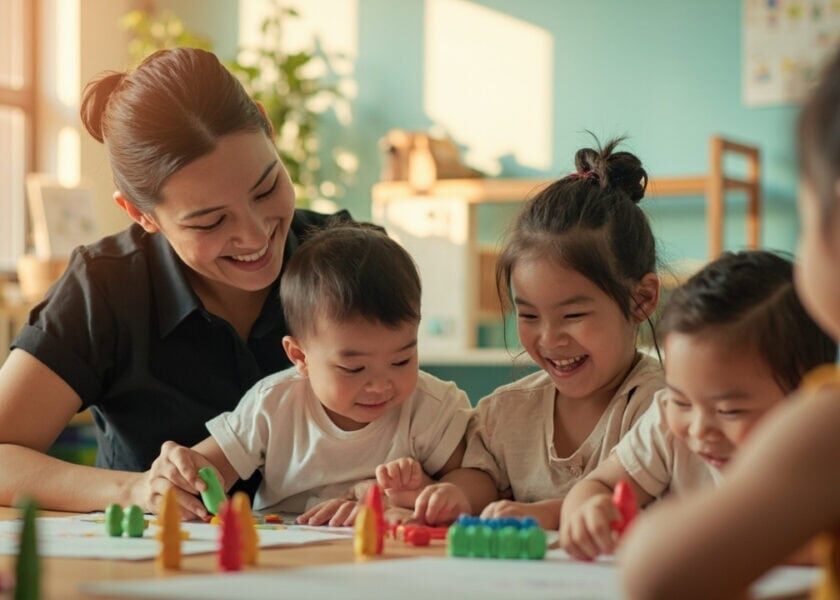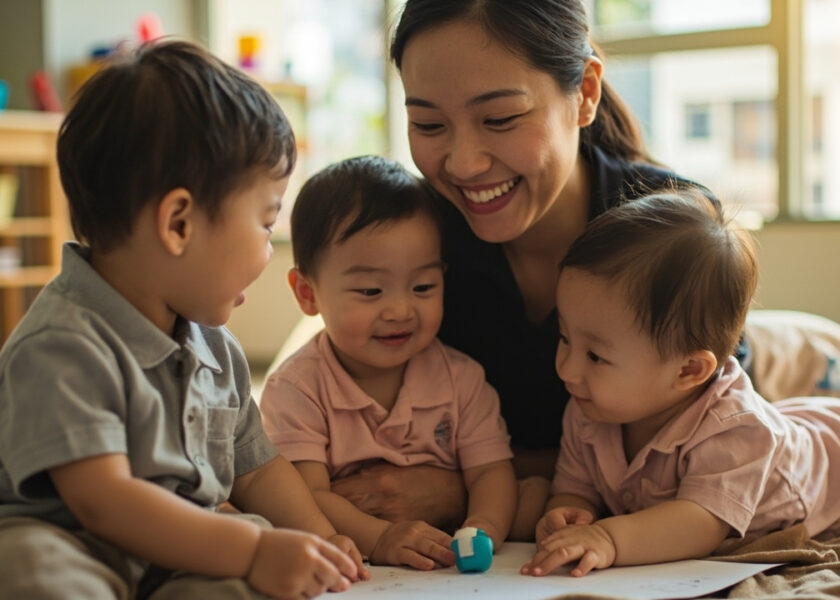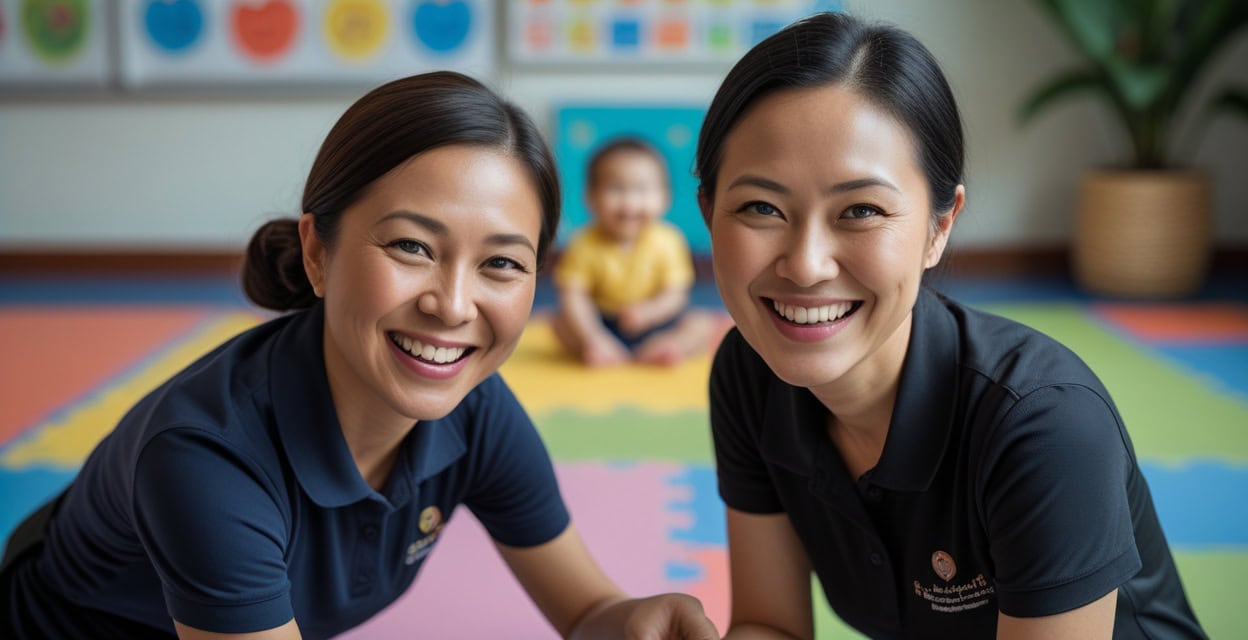
The Floor as Classroom, A Living Public Promise for Safe Joyful Infancy in Singapore
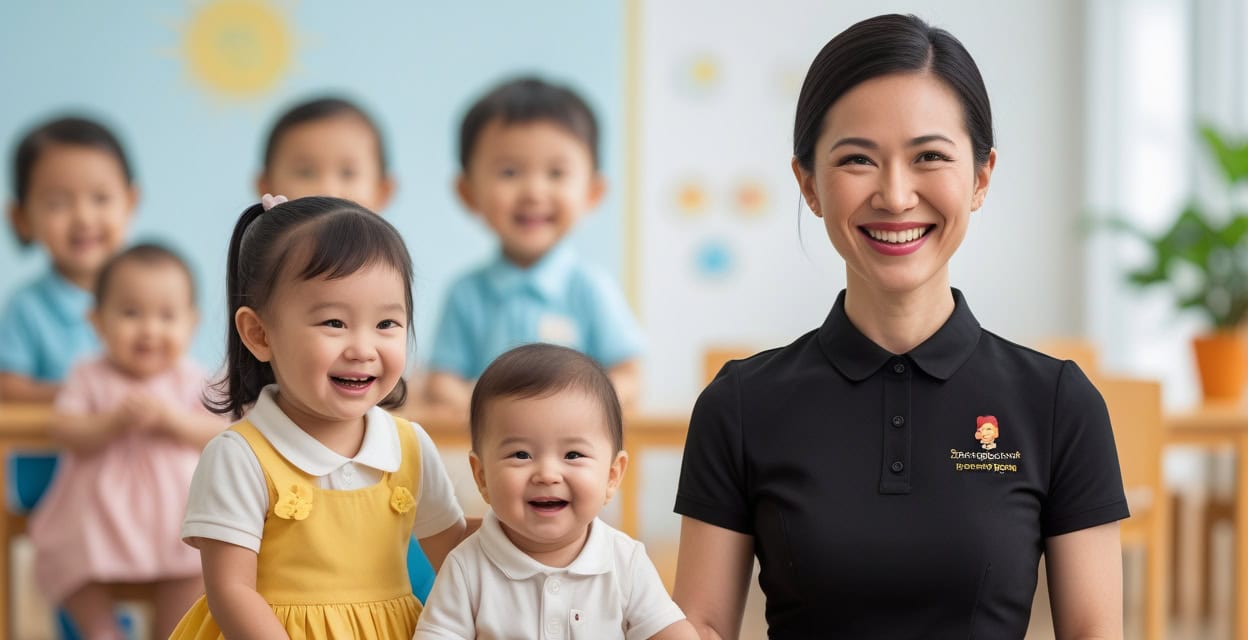
Introduction
Welcome to EduNanny Singapore—where science-led early childhood care meets everyday warmth, dignity, and workable access for families across the island. This article expands on a vision that places infants at the centre of a thoughtfully designed care ecosystem: prepared environments, trained childminders, and partnerships with families that honour culture, language, and curiosity. Drawing on Montessori, Pikler, Piaget, Vygotsky, Bowlby, Malaguzzi, Erikson, and Spock, EduNanny translates timeless educational principles into practical routines, safety, and joy in daily care.
What is EduNanny?
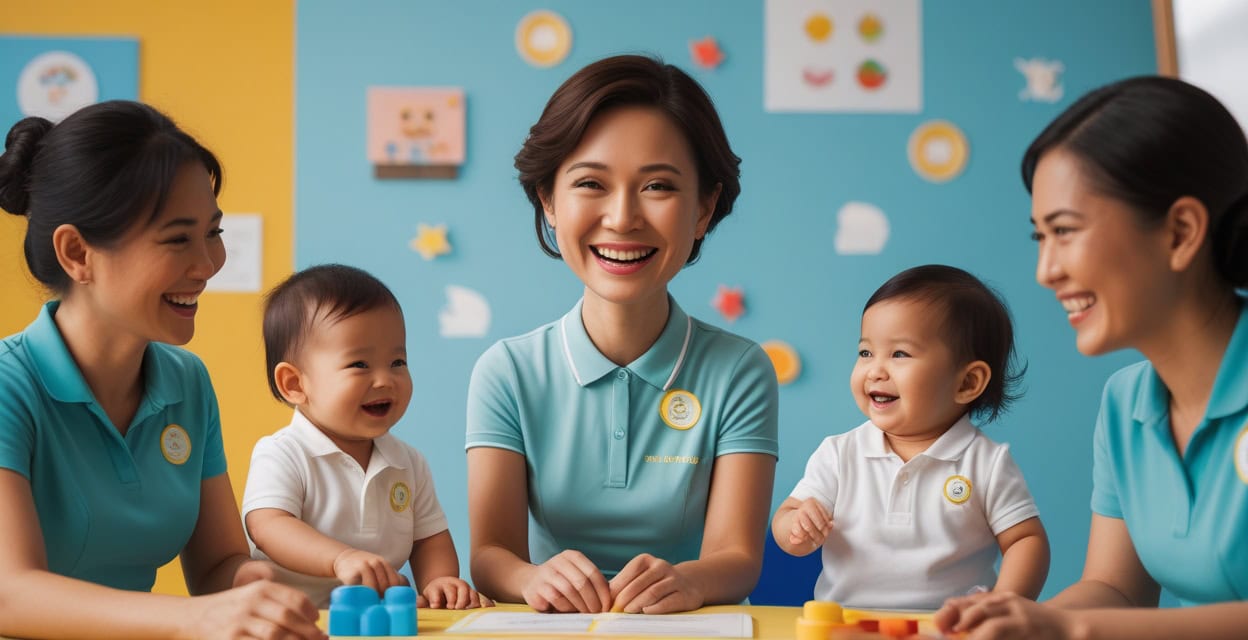
EduNanny is a Singapore-born childminding standard for the earliest years—a human-scaled system that places trained childminders and small groups of infants in prepared, modern environments across both centre-based and home-based settings, with a consistent 1:3 infant ratio. We operate Monday to Friday, 7am to 7pm, islandwide—close to where families live and work—so parents can choose convenience without compromising quality. We pair thoughtful pedagogy with safety by design, transparent CCTV for peace of mind, and layouts tuned for free movement, floor-level learning, and calm transitions. Fees are made accessible (affordable from $33/day) with payment options that include CDA/Baby Bonus where eligible.
Core commitments
- Safety by design: modern layouts with rounded edges, clear sightlines, non-toxic materials, and space zoning to separate sleep, feeding, and exploration.
- Dignity and relationship-rich care: routines that honour each child’s voice, pace, and family culture; trained hands and calm presence as the baseline for trust.
- Learning through everyday moments: turning nappy changes, feeds, and rest into opportunities for language, social connections, and early cognitive engagement.
- Access and equity: affordable pricing and payment options that keep quality care within reach; distance supports for families remote from centres.
- Transparency and partnership: family-view CCTV in designated areas, regular updates, and a shared language of progress and needs.
- Professional growth and national alignment: a national pilot framework (ECDA Childminding Pilot) that expands employment pathways and enhances care standards.
How EduNanny works
- Enrollment and spaces: flexible centre-based and home-based options; a consistent 1:3 ratio across settings to preserve attention and attunement.
- Daily rhythm: a predictable schedule that supports attachment and development; families contribute to routines that respect home culture.
- Safety and oversight: design-forward spaces, routine hygiene protocols, and supervision that maintains warmth and trust.
- Support beyond the classroom: tele-coaching, daily developmental notes, and access to childminding experts for guidance at home.
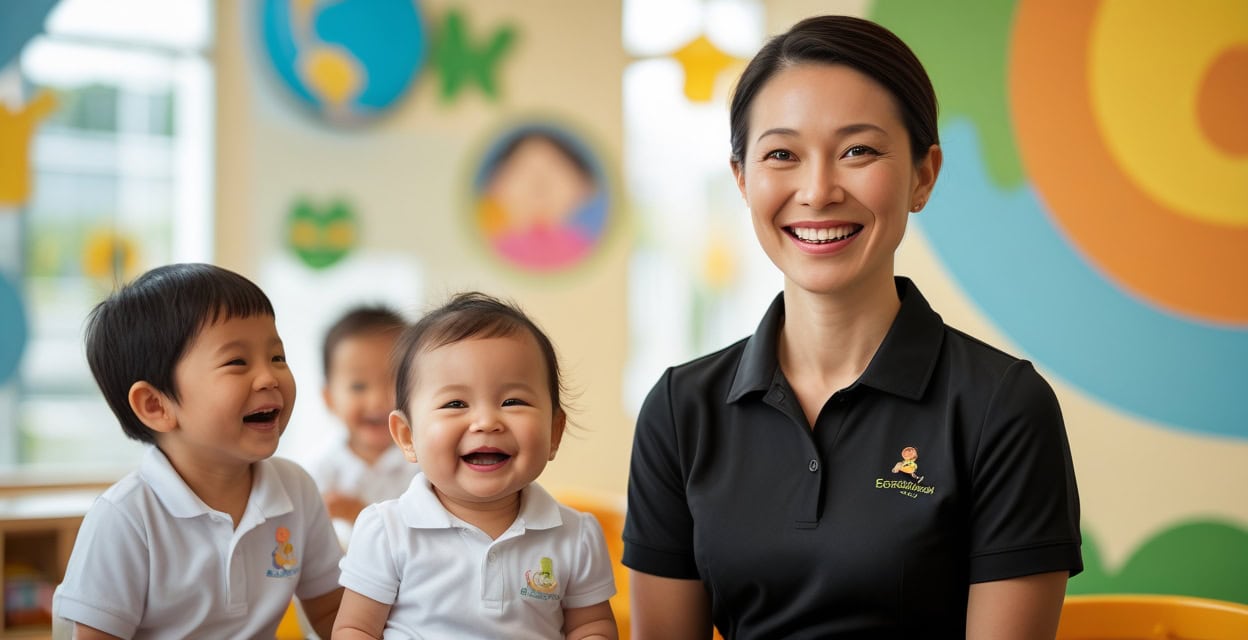
EduNanny’s Bridges: How we connect home, community, and learning
The Bridge to Home
EduNanny aligns routines, songs, and soothing methods with each family’s culture. Parents remain the child’s expert; EduNanny provides trained hands, calm presence, and a predictable rhythm that honours the family voice. Practical actions you can implement at home today include:
- Create predictable routines around key moments (upon waking, post-bath, pre-nap) and narrate actions in simple language to support language development.
- Share two to three favourite family songs or rhymes and imitate a similar cadence during care moments to strengthen attachment cues.
- Develop a family “handover ritual” for caregivers—one sentence about mood, one cue for soothing, one celebration of a small achievement.
The Bridge to Community
Care is placed in neighbourhoods to shorten travel for little bodies and to foster trust among parents, childminders, supervisors, and allied professionals. Actionable ideas include:
- Introduce a simple neighbourhood-care map: where to find the local childminder, nearby parks for safe outdoor play, and routine drop-off/pick-up routes with clear signage.
- Establish a monthly community update: share a short note about new infants, caregiver rotations, and safety reminders to maintain continuity and transparency.
- Encourage collaborative events: family-engagement mornings, caregiver training drop-ins, and parent forums to share best practices and concerns.
The Bridge to Learning
EduNanny designs environments where safety is invisible because it’s built in, play is purposeful, language is abundant, and every micro-moment grows attachment, motor skills, curiosity, and confidence. Practical recommendations for home or school include:
- Low shelves at child-eye level; floor mats and soft textures; a mirror for self-recognition; tactile baskets and cause-and-effect toys at reachable heights.
- Daily language-rich routines: narrate actions, describe objects, and ask open-ended questions to encourage thinking and expressive language.
- Multi-sensory invitations: simple instruments, scent-safe playdough, and textured materials integrated into daily play to deepen attention and curiosity.
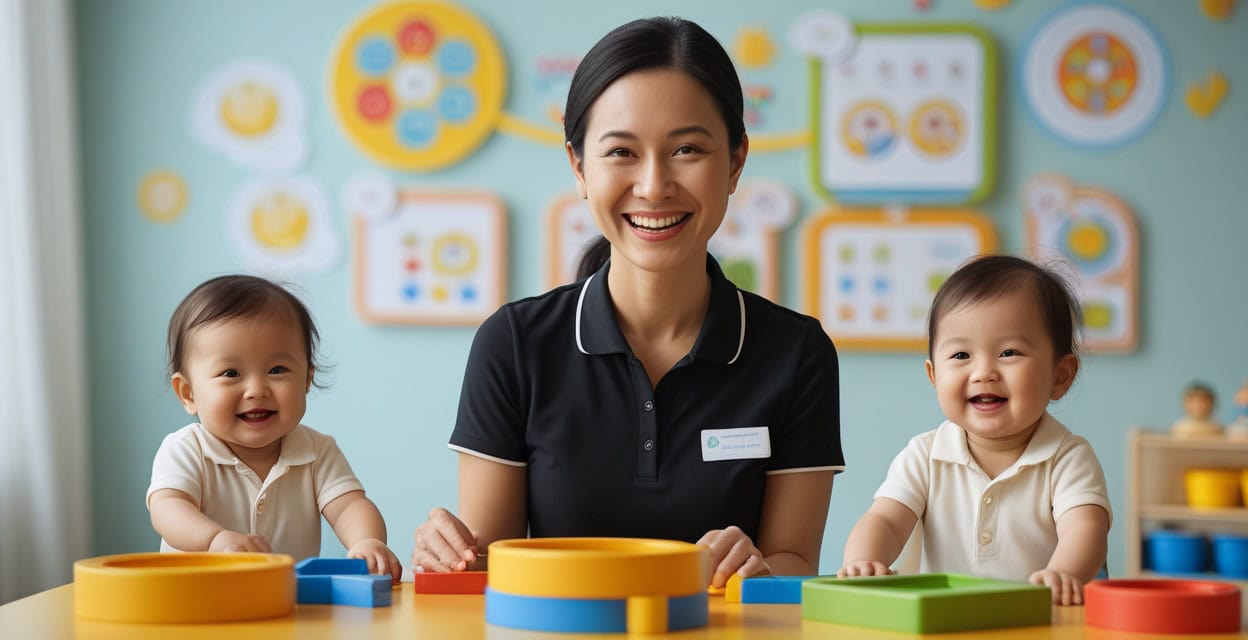
Five Topics for a Modern Infant-Care Practice
1) Pedagogy: The Floor is the First Classroom
What it means in practice and how to apply it at home or in a centre:
- Free movement and attuned hands: infants explore on safe, soft floors with low shelves and reachable objects. Caregivers hold the space and scaffold with timing, rather than rushing discovery.
- One-Minute Curriculum: convert ordinary care into learning moments: during diaper changes, describe textures, names of objects, and actions; maintain eye contact and warm tone.
- Multisensory invitations: tactile baskets, mirrors at floor level, simple percussion toys, and musical cues that help infants anticipate events and engage with the environment.
- Language everywhere: narrate, describe, and model turn-taking games to support early speech and social interaction.
2) Safety: Designed, Rehearsed, and Visible
Safety as a living practice:
- Safety by design: rounded corners, clear sightlines, non-toxic materials, and properly ventilated spaces; zones for sleeping, feeding, and exploration are clearly separated.
- Safety by choreography: routine hygiene, bottle handling, safe sleep, and emergency drills practiced regularly so good practice becomes automatic under pressure.
- Safety by transparency: family-view CCTV in designated areas, comprehensive checklists, and supervisor audits to maintain standards without dampening warmth.
- Safety by ratio: 1:3 infant ratio enables eye contact, gentle touch, unhurried feeding, and swift response, enhancing trust and security.
3) Development: The Attachment-to-Autonomy Pathway
A developmental journey grounded in attachment and growth:
- Begin with Bond: Bowlby’s security enables exploration; consistent caregivers and predictable routines build trust that fuels curiosity.
- Motor to Mind: movement supports cognition; provide appropriate challenges, celebrate effort, and allow time for mastery at the child’s pace.
- Co-Regulation to Self-Regulation: soothe first, then invite gentle self-regulation cues; over time, infants learn to regulate emotions and needs with growing independence.
- Micro-Assessment: short, regular observations shared with families; focus on strengths and next-step goals rather than labels; maintain hopeful progression.
4) Happiness and Emotional Health: Measuring Joy in Daily Practice
Joy is a measurable, actionable indicator of well-being:
- Gentle transitions: unhurried handovers, familiar songs, and comforting routines; consistency supports emotional anchoring.
- Joy indicators: bright eyes, easy laughter, relaxed limbs, sustained play, soft babble, and ready cuddles. If joy dips, respond with extra soothing, familiar routines, and targeted language cues.
- Culture, comfort, and belonging: honour home languages, rituals, and dietary preferences; environment should reflect each child’s sense of self.
- The quiet arts: soft reading, close singing, and gentle rocking as legitimate educational strategies for developing self-regulation and calm focus.
5) Purpose of Childminders: Singapore’s Everyday Architects of Trust
Caregivers are skilled professionals with a civic mission:
- Craft and calling: training blends developmental science with ethics of care—discretion, consistency, and respect.
- A civic role: neighbourhood-based care supports families at work, strengthens community fabric, and creates meaningful employment opportunities.
- Partnership as policy: a transparent compact among families, childminders, supervisors, and oversight to observe well, respond early, and protect child dignity.
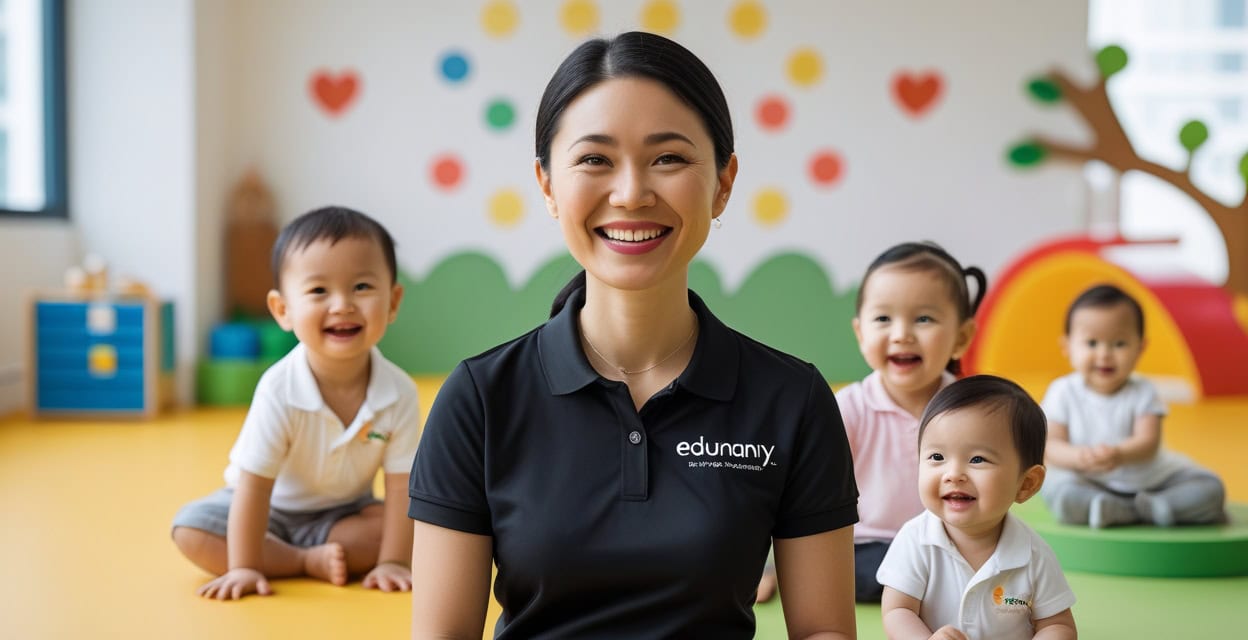
What makes EduNanny different, in practice
- Consistent 1:3 infant ratio for depth of attention and individualized care.
- Flexible scheduling: Monday to Friday, 7am–7pm, islandwide availability.
- Centre-based and home-based options in modern, prepared spaces designed for ease of movement and learning.
- Distance supports: tele-coaching, daily developmental notes, and parent guidance to extend learning into home routines.
- Family-view CCTV: designated areas provide added assurance while preserving trust and warmth.
- Affordability and access: fees from $33/day with CDA/Baby Bonus eligibility where applicable.
- National alignment: ECDA Childminding Pilot integration to widen access and uphold quality across the nation.
- Enrolment and partnership: streamlined processes through EduNanny portals for families and caregivers alike.
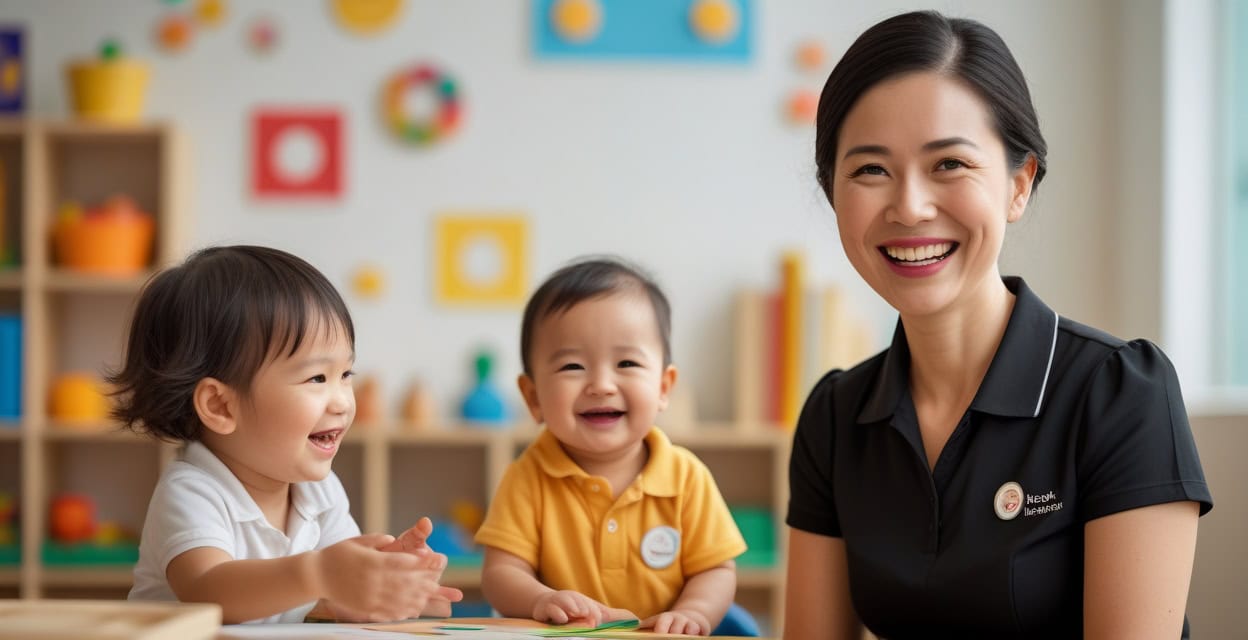
Daily rhythm: a short explainer of practice
- Arrive and Settle: one-to-one greeting, wellness checks, and a comforting handover ritual tailored to your child.
- Slow Play, Deep Play: floor exploration with carefully chosen materials; rich language and turn-taking as default modes of interaction.
- Care Moments as Curriculum: feeds, burps, diapering, and rest become predictable rituals that nurture attunement and language exposure.
- Fresh Air or Gentle Movement: outdoor time when possible, or indoor gross-motor paths to support physical development.
- Rest with Respect: safe sleep spaces with individual soothing cues honored; nap routines built on your child’s signals.
- Review and Share: observations recorded and shared with families, emphasizing strengths, progress, and next steps.

For parents deciding between centre-based, home-based, or distance support
Centre-Based
Ideal for families seeking modern environments with stable peer micro-groups and on-site supervision. Practical considerations:
- Structured daily rhythm with consistent caregivers and clear safety protocols.
- Opportunities for social interaction with peers in small groups that mimic a classroom-like learning environment.
- Ease of access to supervision and professional development for caregivers—ensuring high-quality practice.
Home-Based
Perfect for those who value intimacy, family routines, and familiar neighbourhood settings. Practical considerations:
- Smaller group settings with highly customised routines that mirror home life.
- Strong emphasis on family partnership and language around the child’s daily experiences.
- Flexible scheduling that aligns with parental work patterns and home-based safety standards.
Distance Support
For families who prefer to care at home but want expert guidance and structure, distance support offers:
- Tele-coaching on routines, developmental milestones, and responsive caregiving strategies.
- Regular development notes and activity ideas that align with the child’s age and interests.
- Access to a professional network for quick advice and problem-solving without sacrificing warmth or relationship.
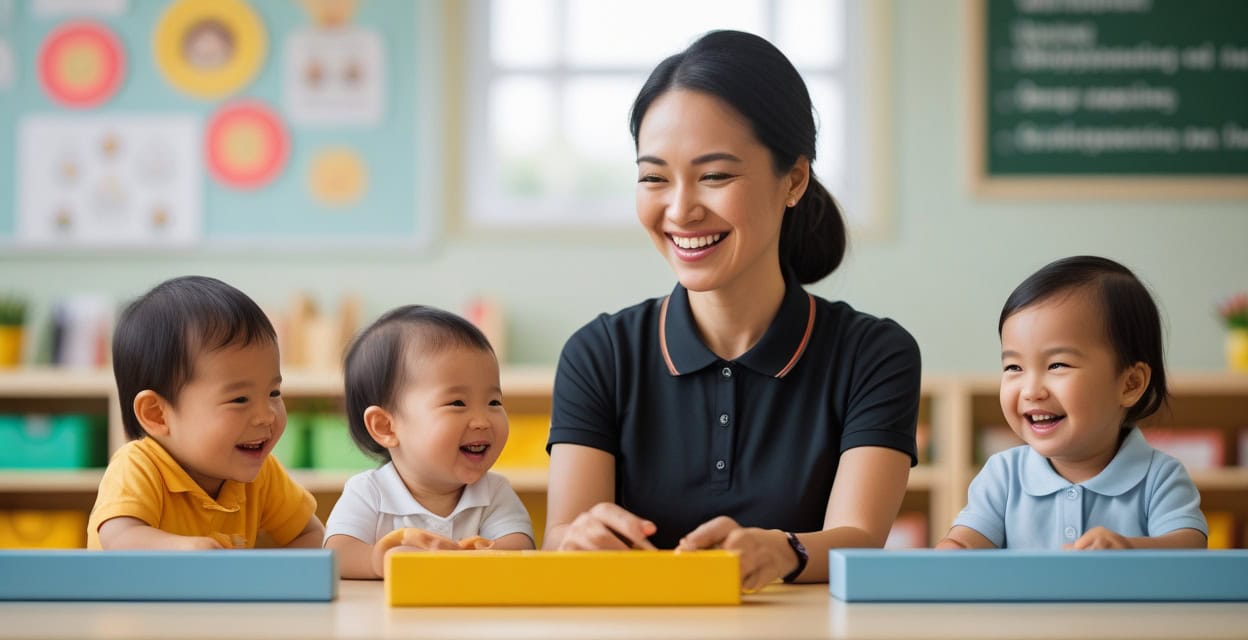
Concluding Call: Who, What, When, Where, and How Childminding Matters
Who matters? Every baby in Singapore—and every parent who seeks an attentive, unhurried start. Our childminders are trained, supervised, and supported to be the steady adults babies can depend on.
What matters? Trust, safety, and development—measured not only by milestones but by the warmth of everyday interactions, the calm of transitions, the delight of discovery, and the competence that grows from doing and trying.
When does it matter? From the first months onward, in the small minutes that shape brain architecture and emotional templates. These minutes are the nation’s most precious compound interest.
Where does it matter? In your neighbourhood, in prepared rooms that feel like home; in centres with modern layouts and strong oversight; and through distance supports that keep home rhythms coherent.
How does it matter? Through a clear standard: 1:3 ratios, science-led practice, safety you can see, learning you can feel, and transparency you can trust—Monday to Friday, 7am–7pm, at a price point that meets families where they are.
And why does it matter? Because a baby who is held with respect learns the world is dependable; a baby who explores at her own pace learns she is capable; a baby who hears language in gentle loops learns his voice is welcome. Tomorrow’s innovators, carers, and leaders are shaped not by hurry, but by human presence.
EduNanny’s purpose is simple and bold: to turn everyday care into a national habit of excellence. We are building a Singapore where infantcare is near, trustworthy, affordable, and deeply human—where families choose between centre-based, home-based, and distance supports without ever trading warmth for convenience or safety for access.
If this vision is yours, join us. Visit EduNanny.com or Childminding.EduNanny.com to explore centre-based and home-based options across the island. Enrol with confidence—fees are available from $33/day, with CDA/Baby Bonus payment options where eligible. Stand with a national social initiative that grows both children and careers, that pairs innovation with heart, and that treats every care moment as a chance to teach the language of trust.
Together, let us give Singapore’s youngest citizens what they need most: patient eyes, safe hands, and a steady rhythm of love. From these beginnings, resilience takes root, curiosity awakens, and the future learns to stand.

Conclusion
EduNanny presents a practical, compassionate, and scalable approach to infant care—the kind of framework that supports families, strengthens communities, and nurtures the next generation of Singaporean citizens. By centering attachment, movement, language, and safety in every moment, we can turn everyday caregiving into a durable, beloved national habit. This is not merely care; it is early childhood as public-spirited learning, crafted with warmth and rigor. If you share this belief, consider taking the next step with EduNanny: explore options, speak with a caregiver specialist, and begin a partnership that respects your child’s dignity while expanding access to high-quality learning from the very start.
[#keyword1, #keyword2, #keyword3, #keyword4, #keyword5]Ready to Experience Excellence?
Transform Your Family’s Journey
Discover Singapore’s leading infant care and childminding services. Expert guidance for your little one’s first thousand days.