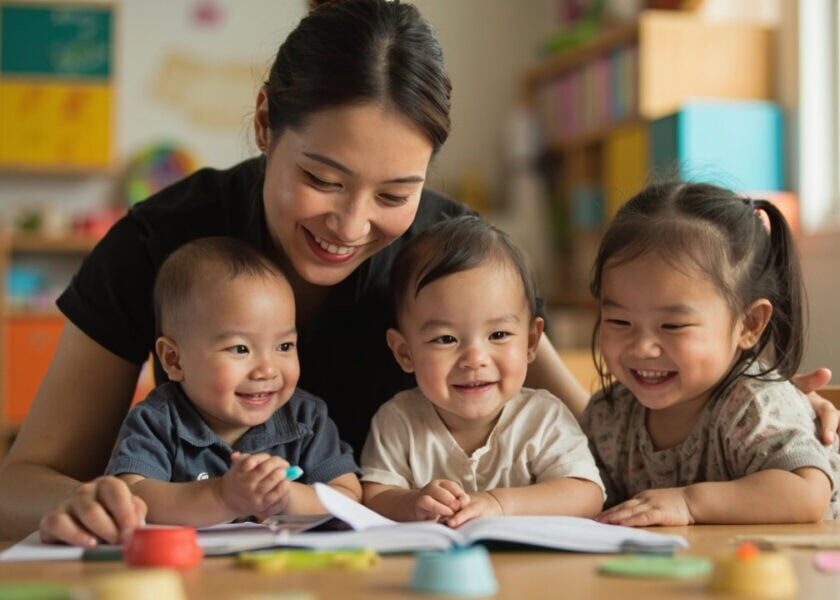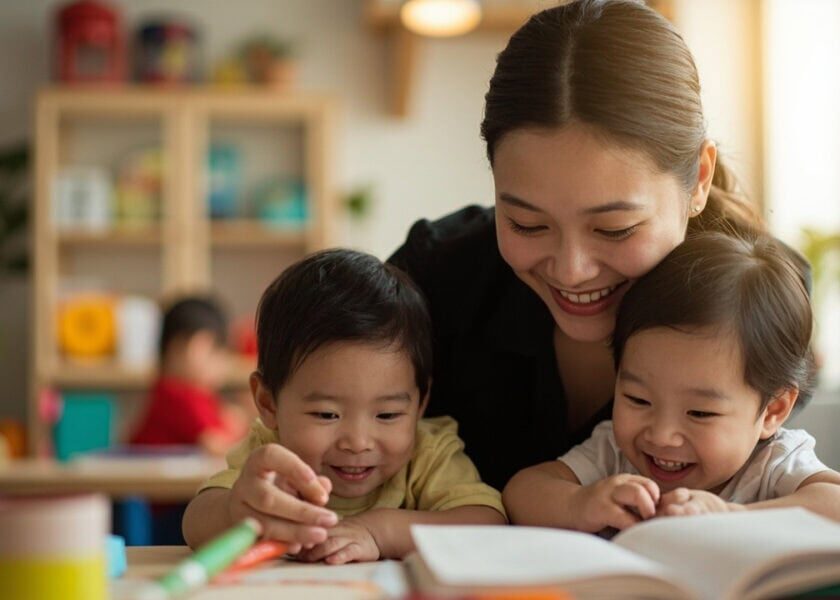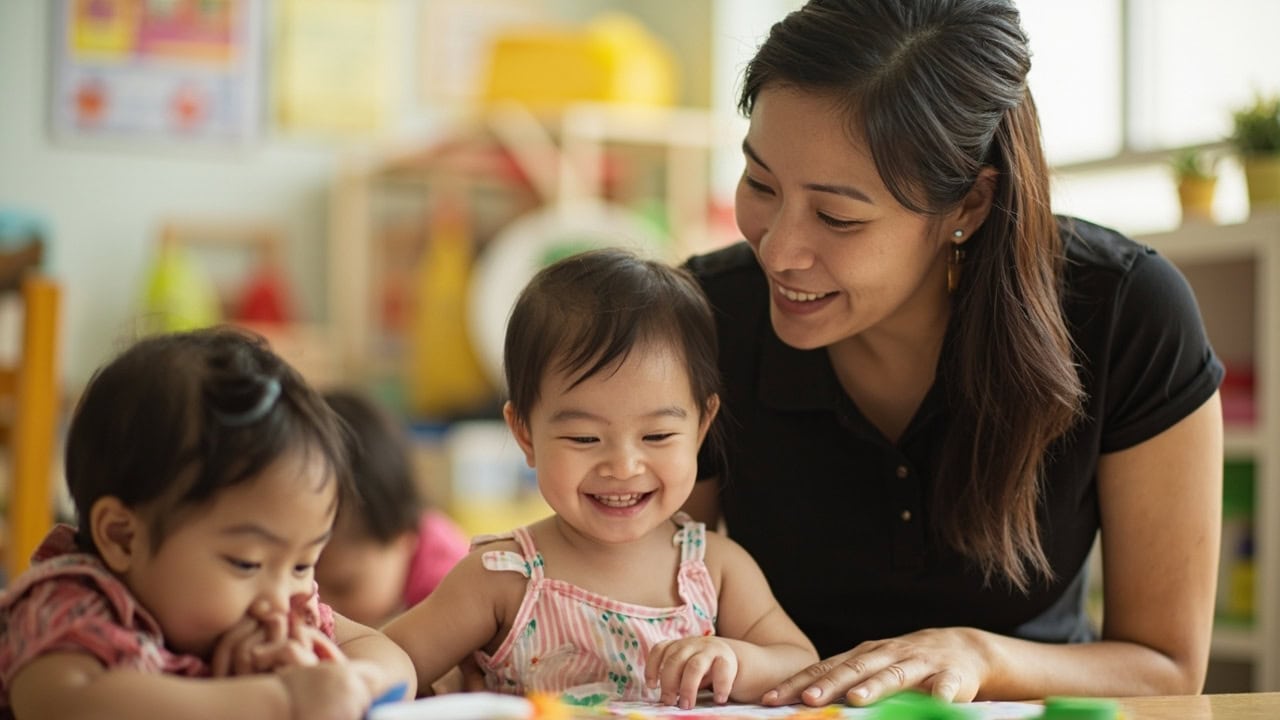
The First Thousand Days: What Your Child Learns Before School Matters
What Your Child Is Actually Learning in the First Thousand Days
For the first thousand days of a child’s life — from birth to roughly age three — the architecture of the self is being built in ways that will endure far longer than any lesson learned in school. Not the academic self, but the emotional self. The self that knows how to trust. The self that believes its needs will be heard. The self that looks at a new experience and thinks, with quiet confidence: I can try this.
These are not abstractions. These are the quiet foundations upon which a lifetime of learning, relating, and resilience is constructed.
In those early years, children do not learn the way older children or adults do. They do not sit down with a concept and understand it through explanation. They learn through experience — through the accumulation of felt moments, of sensations, of the quality of attention they receive. Every interaction in a young child’s day is a data point in their understanding of the world:
- Is this place safe?
- Are these people responsive?
- When I reach out, will someone reach back?
The child who learns that expressing distress brings comfort becomes a child who trusts their own emotions. The child who learns that their curiosity is welcomed becomes a child who approaches the world with openness. The child who experiences consistent, warm, attuned care develops what researchers call internal working models — deep-seated beliefs about how relationships work and how worthy they are of love and attention.
This is the invisible curriculum of early childhood. It is operating whether or not we can see it.
Signs Your Child Is Thriving in Childcare
So what does it look like when a child is genuinely flourishing in their childcare environment? You may not see it in test scores or achievements. For young children, the signs are quieter — and often easier to miss if you’re not looking for them.
The Morning Drop-Off
You may notice it in the way your child approaches the morning transition. Not every child will bound in with enthusiasm — that is not the measure. But you may notice a quiet willingness. A settling. A trust that the transition will be okay, that the caregiver at the door will receive them warmly, that the day ahead holds something worth exploring.
End-of-Day Observations
You may notice it in your child’s questions and observations after pickup. Not elaborate explanations — young children communicate differently. But a comment about a friend, a reference to something they made, a spontaneous mention of a caregiver’s name. These are the fingerprints of a day that meant something to them.
Emotional Resilience Over Time
You may notice it in the emotional resilience your child is building — the understanding, accumulated over months and years, that separation ends in reunion. That people leave and return. That the world can change and still be okay. This is not a lesson taught in words. It is taught through the accumulated experience of being dropped off and picked up, of crying and being comforted, of feeling uncertain and finding that the caregiver stays present through all of it.
A Growing Sense of Self
And you may notice it in what researchers call the development of self-concept — the earliest sense of oneself as a person with preferences, abilities, and worth. The child who tries something new and feels proud. The child who says “I did it.” The child who shows you something they made and watches your face for your reaction.
These moments, so small and so frequent, are building the self that will carry your child through school, through friendships, through challenges you cannot yet imagine.
What Genuine Quality Looks Like in Childcare
In Singapore, where childcare options range from large centres to home-based arrangements, how do you distinguish between environments that merely supervise and environments that genuinely nurture?
Quality is not about the newest toys or the most elaborate curriculum. It is about the quality of attention your child receives — and whether that attention sees them from the inside out.
Small Ratios Matter
One of the most tangible indicators is caregiver-to-child ratios. When a caregiver is responsible for fewer children, they can hold more of each child in mind. They can notice when a toddler is feeling overwhelmed before they erupt. They can recognize when an infant needs comfort versus when they need space to explore. Attention is finite — and the quality of attention your child receives is directly tied to how many children each caregiver is tending at any given moment.
Consistent Relationships
Young children do not form attachments to institutions. They form attachments to people. When your child has consistent caregivers — the same faces, the same voices, the same presence over time — they can build the trust that enables exploration and growth. Frequent caregiver changes interrupt this process, leaving children in a state of constant adjustment rather than flourishing.
Communication That Goes Beyond Logistics
A truly quality environment will tell you not just what your child ate or when they napped, but what caught their interest, what challenged them, what made them laugh. The small details of a child’s day are not administrative data. They are windows into your child’s inner world — and a good caregiver will help you see through those windows.
Observational Attunement
The best caregivers are trained not just in safety protocols and developmental milestones, but in the art of observation. They notice the subtle shifts in mood and engagement that tell a fuller story than any checklist can. They understand that behavior is communication — and they are paying attention to what your child is trying to express.
The EduNanny Approach: Seeing Children From the Inside Out
At EduNanny Singapore, this understanding is not an add-on to our approach. It is the foundation of it.
We were founded with a clear conviction: that every child deserves to be seen — not just as a small person in need of supervision, but as a full human being whose inner experience matters as much as their physical safety. We believe that the hours your child spends in our care are not filler between mornings and evenings. They are hours of profound developmental significance, where your child’s sense of self is being formed, their understanding of relationships is being shaped, and their capacity for joy and resilience is being nurtured.
Our Structure Under the ECDA Childminding Pilot
We offer pathways that recognize the diversity of Singapore families:
- Home-based arrangements — for families who prefer the intimacy and familiarity of care in their own space
- Community and centre-based options — for families who value the social environment and structured opportunities those settings provide
We maintain small ratios — up to one to three for infants — because we know that attention is finite, and the quality of attention your child receives is directly tied to how many children each caregiver is holding in mind at any given moment.
Transparency and Trust
We know that trust is not built on promises alone. It is built on transparency, on communication, on the willingness to show rather than just tell. Where CCTV measures are deployed, they are deployed not as surveillance but as assurance — a commitment to openness that reflects our respect for you as parents.
We communicate regularly, not just about logistics, but about what caught your child’s interest, what challenged them, what made them laugh. Because you deserve to know not just that your child was cared for, but what their inner experience was during the hours you were apart.
Support for Parents Too
We have developed tools to make this easier — including our Thomas AI Chatbot, designed to support parents and caregivers in navigating the questions and uncertainties of early childhood with timely, thoughtful guidance. Because being present for your child means being supported yourself.
Making Quality Care Accessible
We also know that quality care must be accessible. The ECDA Childminding Pilot offers fee structures designed to make thoughtful, responsive childcare a realistic option for families across Singapore — not just those with significant financial resources.
- CDA and Baby Bonus funds are usable where applicable
- Monday to Friday care blocks are structured to align with the real rhythms of working family life
This is not charity. This is our belief that every child deserves an environment where they can flourish — and that flourishing should not be reserved for the privileged few.
Questions to Ask When Choosing Infant Care in Singapore
If you are researching childcare options, here are the questions that go beyond the surface to get at what actually matters:
Questions About Attention and Ratio
- What is the caregiver-to-child ratio, especially for infants?
- How many primary caregivers will my child have? How often might those caregivers change?
- How does the team handle situations when someone is absent or sick?
Questions About Observation and Communication
- How will I know what my child’s day was like — not just logistically, but emotionally?
- Can you tell me about a time when a caregiver noticed a child’s emotional state and responded to it?
- How do you document and share observations about each child’s development and wellbeing?
Questions About Philosophy and Approach
- How do you approach a child who is distressed at drop-off?
- How do you support children who are shy versus children who are outgoing?
- What does a typical day look like in terms of routine versus free exploration?
Questions About Transitions and Adjustment
- How do you help a new child settle in during their first weeks?
- What does the settling process look like, and how do you involve parents?
- How do you handle the transition when a child moves to a different group or program?
The answers you receive — and how comfortable you feel asking these questions — will tell you a great deal about whether a childcare environment truly sees children from the inside out.
A Promise to Singapore Parents
When you pick your child up at the end of the day, and they look at you with whatever expression they bring — tired or energized, talkative or quiet — we want you to be able to trust that something meaningful happened in the hours you were apart.
Not just care. Not just supervision. Growth. Development. The quiet, invisible construction of the person they are becoming.
There is a truth that every parent eventually learns, usually in the small hours when their child is finally asleep: you cannot be with your child every moment. You cannot protect them from every stumble, every sadness, every small heartbreak. What you can do is choose environments that reflect your values, that see your child as you see them, and that honor the trust you are placing in them.
When you bring your child to EduNanny, you are not leaving them in a service. You are entrusting them to a community that understands what is at stake in these early years. You are choosing a partner who believes that your child’s inner world — their sense of security, their growing confidence, their capacity for genuine joy — is the true measure of quality.
We cannot promise that every day will be perfect. No one can. Children are complex, and early childhood is full of transitions, adjustments, and moments that are more difficult than we wish they were.
But we can promise this: when your child walks through our doors, they will be met by adults who are paying attention. Who are noticing. Who are treating each moment as an opportunity to build something lasting — a sense of self, a trust in others, a belief that the world is a place where they can flourish.
Every drop-off is hard. Every wondering moment after is real. And every parent who has felt that quiet ache of separation deserves to know that their child is not just safe — but seen, known, and flourishing in the hours they are apart.
We see children from the inside out. And we would be honored to welcome yours.
To learn more about how EduNanny supports families in Singapore, visit our homepage or explore our ECDA Childminding Pilot page. If you have questions about finding the right fit for your family, we welcome you to reach out to us.